 United States Army Heritage and Education Center, Carlisle, Pa
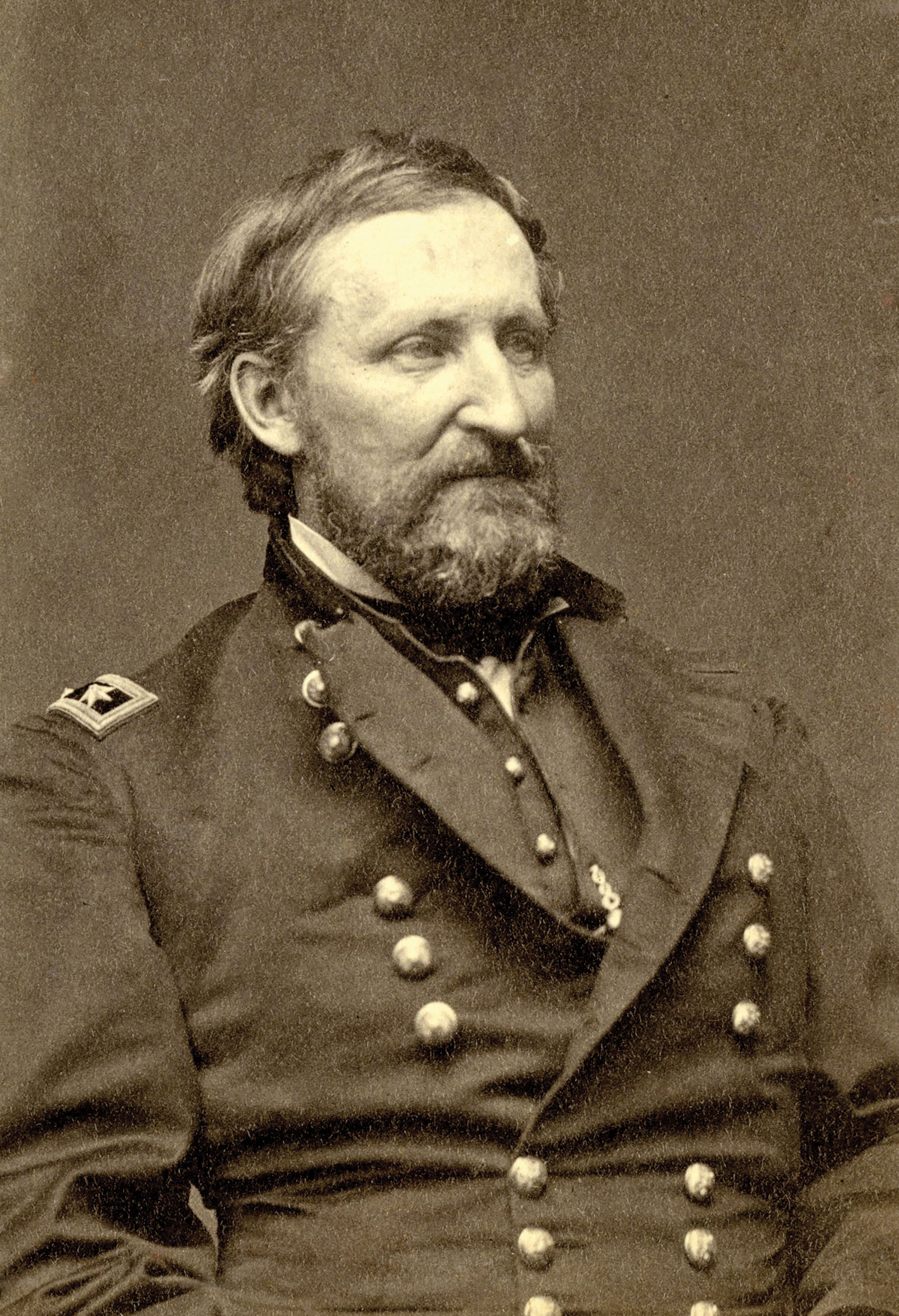
Major General William Starke Rosecrans
Until his defeat at Chickamauga in September 1863, Major General William Starke Rosecrans was one of the Union’s most successful commanders. Rosecrans was certainly not without his flaws: He had a bad temper, swore and smoked incessantly, barely slept, and distrusted most of his superior officers and many of his subordinates. But he was also a brilliant engineer, devout Catholic, abhorrer of slavery, and hardworking officer. Rosecrans won victories that helped secure western Virginia for the Union in 1861, defeated two Confederate armies in Mississippi in 1862, provided a badly needed if bloody victory at Stones River in January 1863, and captured the important railway hub of Chattanooga that summer. Ultimately, though, his weaknesses contributed to costly losses at the Battle of Chickamauga—the worst defeat for the Federals in the conflict’s western theater—and undermined his promising career. In addition to his mistakes at Chickamauga, his long feud with Ulysses S. Grant, who savagely criticized Rosecrans in his famous Memoirs, has hurt his reputation with many scholars. As a result, Rosecrans’ substantial efforts on behalf of the Union cause have been all too often underappreciated or forgotten.
William S. Rosecrans was born on September 6, 1819, in Delaware County, Ohio. Both his father, a veteran of the War of 1812, and his mother, a devout Protestant, greatly shaped young William’s future. In 1838, lacking the money to attend college, he applied for and was received into the United States Military Academy at West Point. Despite his lack of formal education, Rosecrans graduated fifth in his class in 1842. He was so highly thought of that he was brought back to West Point in 1843 to serve as an engineering professor under noted military theorist Dennis Mahan for several years. Sometime in 1844 or 1845, Rosecrans left behind his family’s Protestant faith and converted to Catholicism. Before long, he had converted most of his family and set up a religious confraternity in the U.S. Army, for which he was thanked personally by Pope Pius IX himself. Indeed, Rosecrans was as devout in his faith as any of his fellow West Point alumni, including the deeply pious Thomas J. “Stonewall” Jackson and Oliver Otis Howard.1
By 1854 Rosecrans had left the army, having missed the Mexican War while serving in a number of engineering roles. He went into the mining business in western Virginia and Cincinnati, while also working on several related inventions, including a process to refine petroleum into an odorless oil and two new oil lamps.2 At the outbreak of the Civil War in April 1861, Rosecrans, though a Democrat, firmly supported the Union cause. He later explained his decision to rejoin the army to his wife by telling her that a “sense of duty impelled me to seek posts of usefulness regardless of personal danger and I trust that God in his infinite goodness will protect and sustain [me] in soul and body.” Rosecrans immediately began training with a local Ohio militia group, but more important things were in store for him. In early June he was appointed as Chief Engineer of the State of Ohio, and just a few days later he assumed command of both Camp Chase and the 23rd Ohio Infantry as its first colonel. After cultivating a relationship with President Abraham Lincoln’s treasury secretary, his fellow Ohioan Salmon P. Chase, Rosecrans was appointed brigadier general in the regular army to date from May 16, 1861. Shortly afterward he received orders to report to Major General George B. McClellan, who was conducting a campaign against Confederate forces in western Virginia.3
Rosecrans’ collaboration with McClellan would be short and strained. The two men came up with a plan of attack that called for a two-pronged assault on Confederate positions near Rich Mountain. Rosecrans’ brigade had the difficult task of marching “over pathless mountains” to flank the Rebels while McClellan kept them distracted to their front. Rosecrans attacked and drove the Confederates from the field on July 11, but McClellan never launched his promised supporting assault. Yet “Little Mac” received much of the credit for the victory—and after the disastrous Union defeat at the Battle of Bull Run on July 22, he would take over command of the force that would become the Army of the Potomac. The fight at Rich Mountain highlighted two important aspects of Rosecrans’ generalship. First, he firmly believed that providence was on his side. “The blessing of God was on me and on the expedition,” he told his wife after the battle. “I was as collected under the enemy’s fire and as little sensible of danger as at any time in any ordinary business.” Second, it foreshadowed his troubled relationships with his superiors. Although Rosecrans assumed command of the Department of the Ohio, a vast department encompassing western Virginia, Ohio, Indiana, Michigan, and Illinois, from McClellan, good relations between the two soured as both men grew to resent the other’s conduct during and after Rich Mountain. As Rosecrans bluntly wrote in 1865, “McClellan, contrary to agreement and military prudence, did not attack.” Indeed, Ohio journalist Whitelaw Reid later claimed that Rosecrans publicly criticized McClellan’s failure to attack after his superior’s departure. Such criticism, if it had reached McClellan’s ears, would have been unlikely to win him the love of the man who would soon be general-in-chief of the Union army.4
 Harper's Weekly
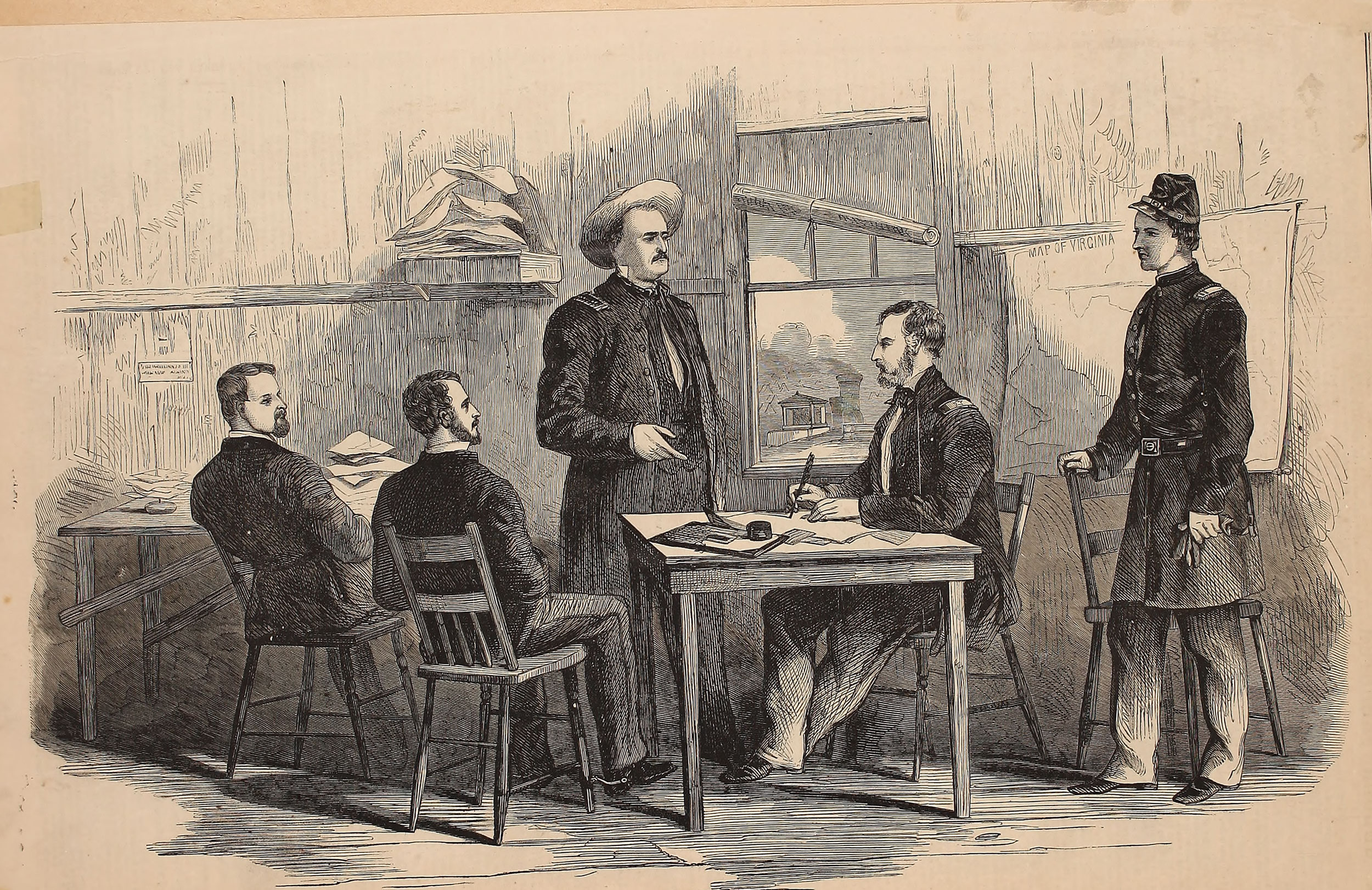
Department of the Ohio commander William S. Rosecrans (seated at table) consults with his staff in the fall of 1861. During this period, Rosecrans faced off against Confederate forces in western Virginia and continued his feud with fellow Union general George B. McClellan.
Rosecrans set to work fortifying his new command and dealing with the difficult supply situation in the mountainous region. On September 10, he won an important albeit small battle at Carnifex Ferry that helped secure the future independence and statehood of West Virginia. While holding Robert E. Lee, who commanded Confederate forces in western Virginia, at bay that fall, Rosecrans continued to clash with McClellan. In the months after, McClellan, who assumed the position of general-in-chief in November, rejected Rosecrans’ plan to attack and capture the strategic town of Winchester, siphoned off most of Rosecrans’ troops to other armies, and placed the incompetent political general John C. Frémont in charge of his department, leaving Rosecrans without a command. Appealing to Secretary of War Edwin M. Stanton for a new position, Rosecrans was given a thankless task of babysitting Brigadier General Louis Blenker’s division, which had become lost en route to the Shenandoah Valley after being detached from the Army of the Potomac. Not content with such obvious busywork, Rosecrans twice made an intelligent but unsolicited suggestion for the creation of an overall command structure for the multiple Union armies in the Shenandoah Valley. This infuriated Stanton, who simply wanted Rosecrans to keep quiet and obey orders. Rosecrans had made another powerful enemy. Nevertheless, the wisdom of his strategic suggestion would be proven when Stonewall Jackson exploited the uncoordinated, divided Union forces in the area during his famous Shenandoah Valley campaign of 1862. Such a victory would have been “impossible,” Rosecrans later noted, had Stanton followed his plan.5
In May 1862, Rosecrans was reassigned to a command under Major General John Pope in Mississippi. When Pope soon thereafter headed east for his infamous and ill-fated career as head of the Army of Virginia, Rosecrans assumed control of the Army of the Mississippi, in which role he was subordinate to his old West Point friend Ulysses S. Grant, who both commanded the Army of the Tennessee and oversaw the military District of West Tennessee. Grant was at first delighted to have his old friend nearby. The two men greeted each other cordially, with Rosecrans declaring Grant “an honest man” in a letter to his wife while Grant privately noted, “I regret that Gen. Rosecrans has not got rank equal to his merit.” While the country’s attention was on Lee’s and Braxton Bragg’s respective invasions of Maryland and Kentucky, Grant and Rosecrans would work together to deal with Confederate forces under Sterling Price and Earl Van Dorn.6
 Library of Congress
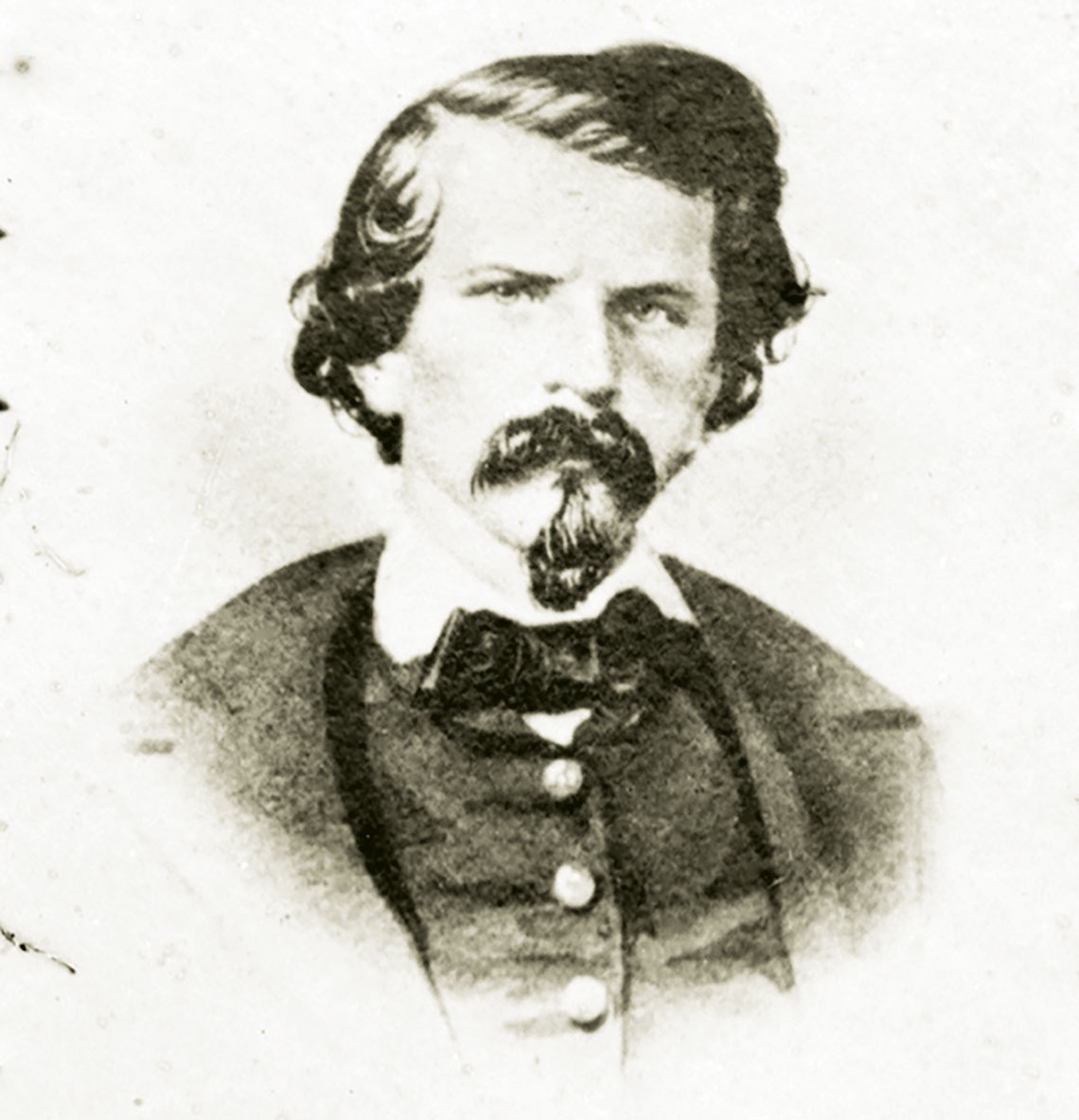
Earl Van Dorn
Rosecrans soon proposed a plan to Grant that was reminiscent of the one he devised at Rich Mountain: While Grant kept Price’s army near Iuka, Mississippi, occupied, Rosecrans would march his men around the Confederates and hit them with a surprise attack in the rear. If they were successful, Price’s army would be trapped between Grant and Rosecrans and utterly destroyed. Unfortunately, not all went according to plan. Some of Rosecrans’ men took a wrong road during their flanking march, which delayed the attack by a day. A breakdown in communication between Grant and Rosecrans further complicated matters. When Rosecrans began his attack on September 19, he fully expected that Grant would launch his assault—in the form of three Army of the Tennessee divisions commanded by Brigadier General Edward Ord—when he heard the sounds of Rosecrans’ guns. A northerly wind, however, may have caused an acoustic shadow, preventing the sounds of battle from reaching Grant and Ord, whose troops remained in place a few miles away and who learned of the fighting only after it was over. By day’s end, Price and his army, far from destroyed, had escaped by way of a road left unguarded by Union forces. While Grant praised his old friend in his first report of the Battle of Iuka (“I cannot speak too highly of the energy and skill displayed by General Rosecrans in the attack”), rumors that Grant had been drunk soon appeared in newspapers friendly to Rosecrans and began to poison relations between the two men.7
An even bigger problem than Price’s escape at Iuka was Van Dorn’s army. Reinforced by Price’s force, it soon moved to attack the strategically important, Union-occupied city of Corinth in northern Mississippi. Rosecrans, who had returned to Corinth after the fighting at Iuka, put a group of African-American laborers to work rebuilding the city’s fortifications in preparation for Van Dorn’s expected attack. On October 3, Van Dorn assaulted the Federal defenses north of the city, driving Rosecrans’ troops back to their inner works. “Things is workin'” was Rosecrans’ confident message to his staff at the end of the first day of fighting. True to his word, Rosecrans—through a combination of his own bravery, superior Union artillery, and the dogged tenacity of his troops—delivered a major blow on October 4 to the Confederates, sending them into full retreat by early afternoon. Believing that his exhausted army was outnumbered, Rosecrans did not begin pursuing the retreating Confederates until the 5th, only to be recalled by Grant a few days later despite Rosecrans’ pleas that he could take Jackson, Mississippi, and by implication Vicksburg if allowed to continue.8
 Library of Congress
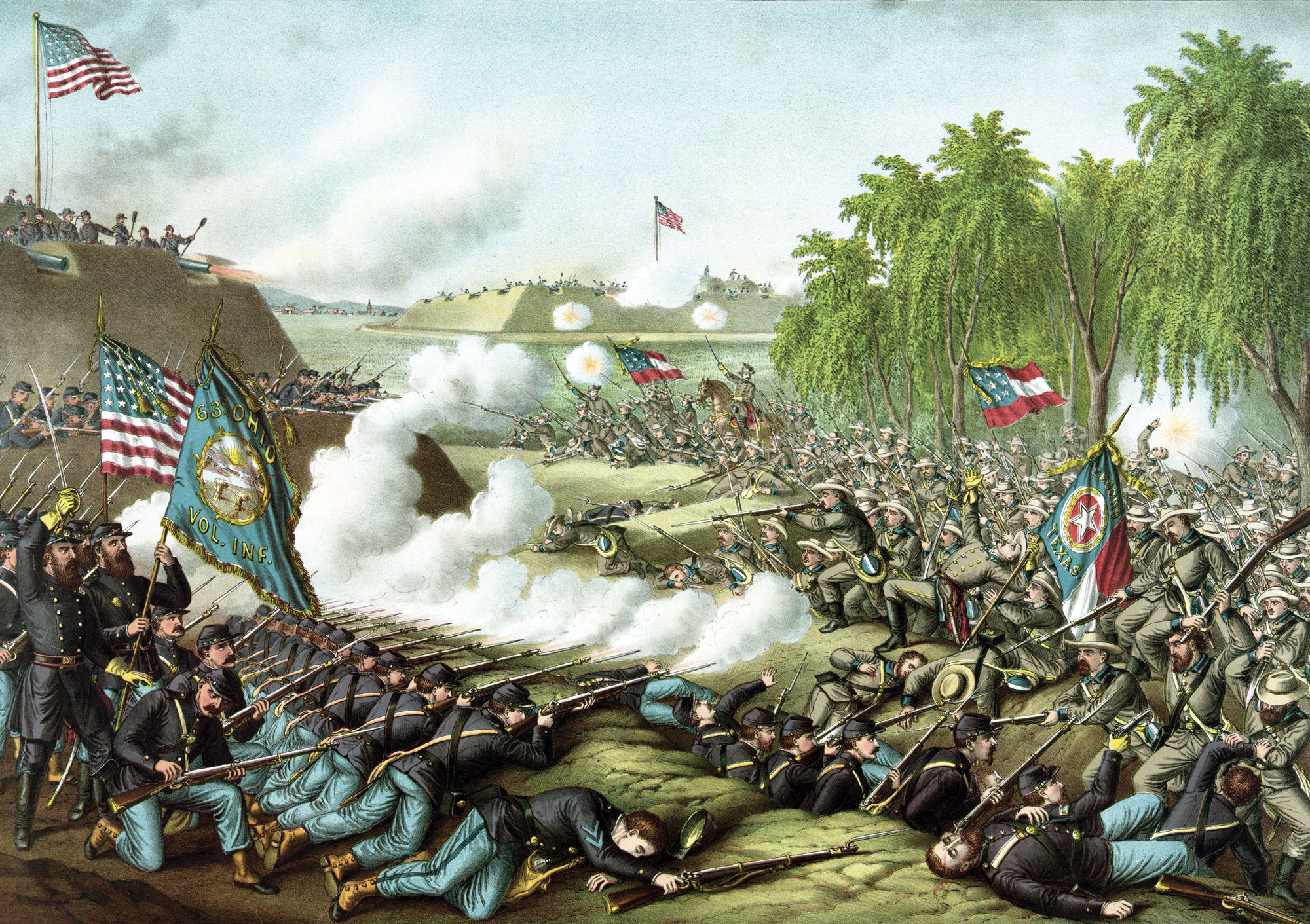
While Rosecrans defeated Confederates commanded by Earl Van Dorn at the Battle of Corinth (depicted above) in early October 1862, the victory did little to repair the quickly crumbling relationship with his old friend—and superior officer—Ulysses S. Grant.
By this point, Grant had lost all faith in his old friend. Not only was he critical of Rosecrans’ delayed pursuit at Corinth, but he continued to blame him for the negative newspaper reports that appeared in the wake of the Battle of Iuka. Remembering the harsh criticisms of his generalship after Shiloh, Grant and his staff were determined to punish anyone who threatened his authority, even someone who had just won two important battles for the Union. Grant issued General Orders Number 88 on October 7, in which he both minimized Rosecrans’ achievements at Corinth and implicitly criticized Rosecrans and his men for the apparent strain that existed between them and the command of General Edward Ord. Rosecrans quickly took offense, writing Grant that there was “no foundation” for such an accusation. To Grant’s charges that his staff was spreading rumors about Grant, Rosecrans assured his superior that “no headquarters in these United States [are] less responsible for what newspaper correspondents … say of operations than mine.” Ultimately, only the timely intervention of President Lincoln, who in late October saw fit to promote Rosecrans to an independent command away from Grant, prevented the latter from relieving Old Rosy from duty. Although Rosecrans would always maintain they parted as friends, Grant’s retaliation was only the beginning of a decades-long feud between the two men, one that did neither of them any credit.9
On October 27, Rosecrans officially assumed Don Carlos Buell’s command—which had just been renamed the Army of the Cumberland—after Buell was relieved for his lackluster performance against Braxton Bragg’s Army of Tennessee at the recently fought Battle of Perryville, Kentucky. The next month Rosecrans advanced his new force to Nashville and began repairing the railroad connecting the city to his main base of supply in Louisville. Rosecrans believed the railroad too brittle and susceptible to enemy cavalry raids to be relied upon, so he decided to accumulate 20 days of supplies in Nashville before advancing against Bragg’s forces near Murfreesboro. In a letter to his brother, Rosecrans admitted that he hoped “to induce the rebels to concentrate their forces and fight us near Nashville, thus saving the wear, tear, detachments and delays of pursuing them through the mountains and fighting them in force.” But with no sign of a Rebel attack on his position imminent, intense pressure from Washington urging him to advance, and his supplies gathered, Rosecrans finally prepared to move his army south toward his foe. His chief of staff, an old army friend and devout Catholic, Colonel Julius Garesché, however, prevailed upon Rosecrans to delay the march by one day so the troops could properly celebrate Christmas. On December 26, the army marched.10
 Library of Congress
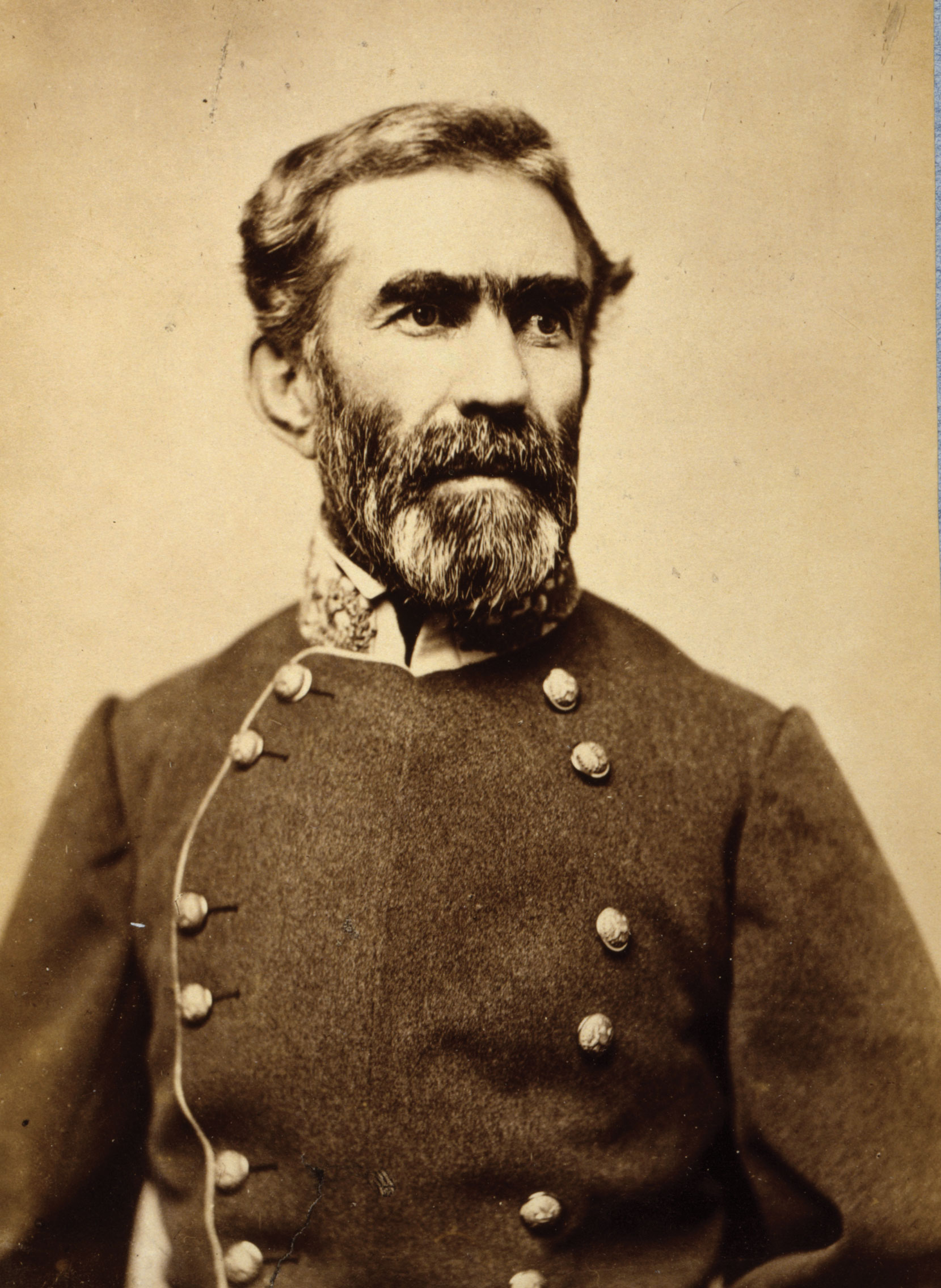
Braxton Bragg
After some skirmishing, Rosecrans’ and Bragg’s armies met each other head on outside Murfreesboro, Tennessee, on New Year’s Eve. Rosecrans’ plan was for the left wing of his force to swing across Stones River and attack Bragg’s army by surprise on its right flank. However, Bragg’s plan also called for an attack against his enemy’s right flank, and Bragg struck first. Chaos ensued as attacking Confederates drove the soldiers comprising Rosecrans’ right wing into a hasty retreat that was saved from becoming a complete rout only by the dogged fighting of Union troops commanded by Brigadier General Philip Sheridan and by the arrival of reinforcements that Rosecrans had hurriedly dispatched to the scene. The situation was so desperate that Old Rosy personally rushed from crisis to crisis with his staff, using his personal charm and exhortation to urge his men to hold firm. As the men rode from one spot of danger to another, they were exposed to constant fire. Before the first day’s fighting was over, Colonel Garesché was decapitated by a Rebel cannonball as he rode alongside Rosecrans; his blood covered the uniform of the nearby commanding general. At a council of war he held that night to decide the army’s next move, Rosecrans resolved with his staff to stay on the field and fight it out the following day.11
Fortunately for the Army of the Cumberland, Bragg didn’t attack on January 1, allowing Rosecrans to reposition his troops and receive badly needed ammunition from Nashville. On January 2, Bragg renewed his assault but was bloodily repulsed by massed Union artillery. Through heavy rains Bragg retreated south to Tullahoma that night while Rosecrans’ forces moved a few days later to occupy Murfreesboro. “Thank God and our Lady for the victory,” he wrote to his wife. When he filed his official report of the battle in February, Rosecrans made sure to give “public acknowledgement due to Almighty God.” He ended his report with a Latin prayer from Psalm 113:9, “Non nobis Domine! Non nobis sed nomini tuo da gloriam” (“Not to us, O Lord, not to us; but to thy name give glory”).12
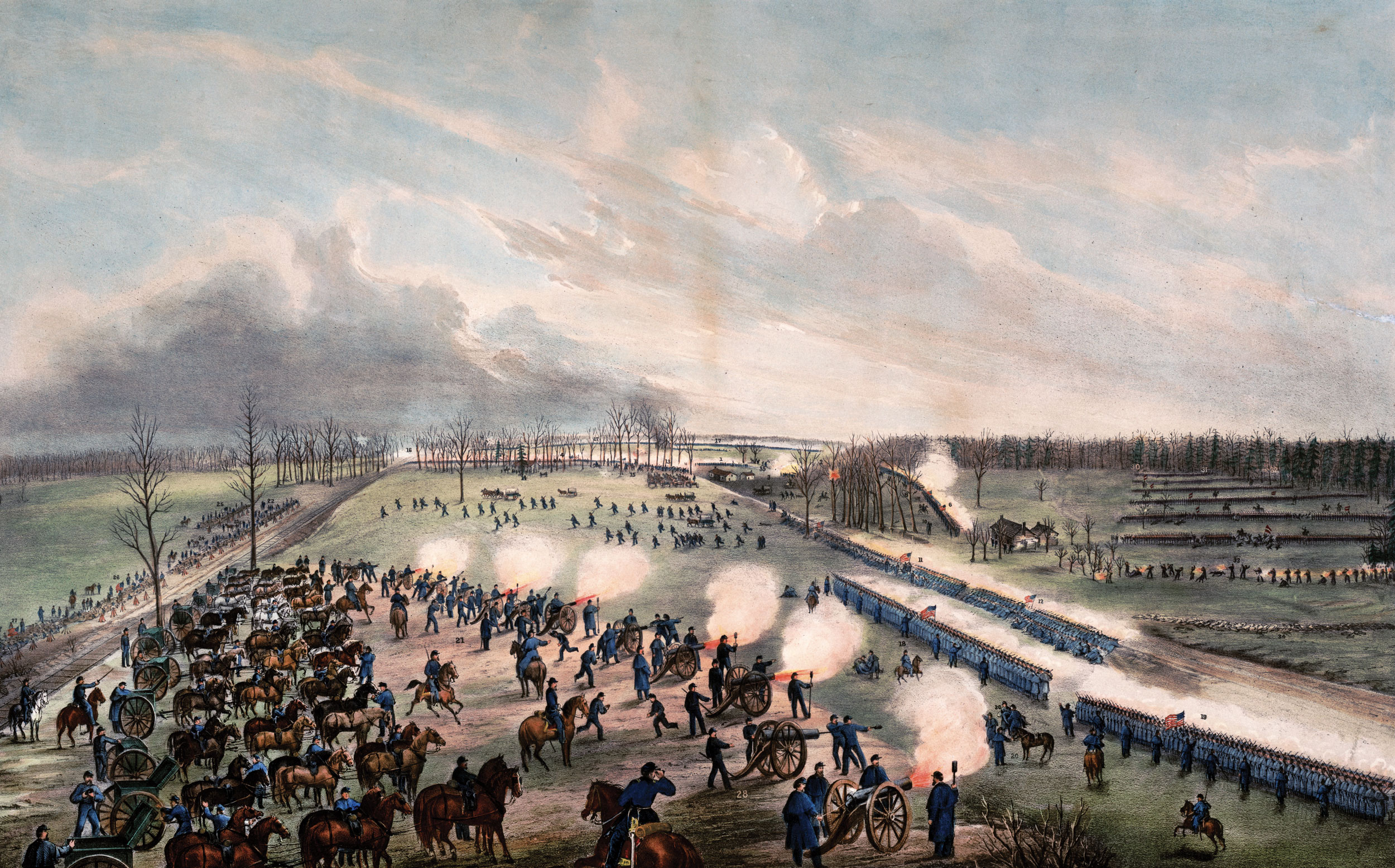 Anne S.K. Brown Military Collection
After his January 1863 victory at the Battle of Stones River (depicted above) against Braxton Bragg (left) and the Army of Tennessee, Rosecrans was hailed as a hero in the northern press. “[A]t the present moment Gen. Rosecrans, if success be the standard, stands at the very head of the Union Generals,” declared The New York Times.
While Rosecrans had suffered heavy casualties at the Battle of Stones River and thus did not attempt a serious pursuit of Bragg, his triumph was an important one coming on the heels of horrible Union defeats at Fredericksburg in Virginia and near Vicksburg in Mississippi just weeks before. President Lincoln was especially grateful for the developments in Tennessee. He wrote to Rosecrans on January 5, “God bless you and all with you. Please tender to all, and accept for yourself, the Nation’s gratitude for yours, and their, skill, endurance, and dauntless courage.” Both he and Secretary of War Stanton would personally promise to do anything they could to help Rosecrans in the future. “Your country owes you an immense debt,” wrote Rosecrans’ benefactor, Salmon Chase, on January 6. “God grant that you may quadruple the obligation.” The northern press also heaped praise upon Rosecrans. Harper’s Weekly lauded him as a strategist “second to none,” while The New York Times declared that “at the present moment Gen. Rosecrans, if success be the standard, stands at the very head of the Union Generals.” The Catholic Herald of Philadelphia held the general up as a role model for young Catholics while hoping that his victory at Stones River would force nativist northerners to renounce their religious prejudices once and for all.13
In the coming months, Old Rosy further endeared himself to Republicans, especially those in the party’s “Radical” faction, by writing fierce denunciations of the anti-war Democrats known as “Copperheads” and against the institution of slavery. “Slavery is dead,” Rosecrans informed Father Edward Purcell, the editor of The Catholic Telegraph, in April 1863. “Nothing can resuscitate it…. No statesman will vindicate it, no friend of human progress will stretch forth a hand to break its fall, no lover of humanity and religion will grieve for its overthrow.” These letters were soon widely reprinted in papers throughout the North; the antislavery editor of the New York Tribune, Horace Greeley, even sent an intermediary to sound Rosecrans out for a possible presidential run in 1864.14
Rosecrans spent most of the spring of 1863 reorganizing the Army of the Cumberland, standardizing its regiments’ weapons, repairing the railroads that supplied it, and amassing supplies in Murfreesboro prior to the resumption of his campaign against Bragg, whose army now occupied Tullahoma in Middle Tennessee. He took both Lincoln and Stanton at their word and constantly called for more supplies and men for his army, particularly additional cavalry and repeating rifles to better deal with the more numerous and experienced Confederate horseman who opposed him. Although Rosecrans’ cavalry had won a number of small engagements against their Rebel counterparts during recent months, the bulk of the Army of the Cumberland remained behind heavy fortifications, where the general hoped the Confederates would attack him as they had at Corinth. As he wrote to Chase in mid-January, “My view from the beginning has been that it is cheaper and better for us to compel the enemy to come to us than for us to go to him. If we can whip [him] at all we can whip him on ground that we know and understand.” When General-in-Chief Henry W. Halleck urged him to advance, Rosecrans responded by arguing that the landscape that confronted him was “full of natural passes and fortifications and demands [a] superior force to advance with any success—What can you send?” Such missives soon destroyed the goodwill with the War Department he had won at Stones River. Even after his eventual advance in June, Stanton and Halleck besieged him with admonitions to move now.15
Rosecrans’ period of inactivity in early 1863 not only earned him the ire of his superiors, but has also drawn the disdain of modern-day historians, one of whom declared it “always required the largest of Archimedes’ levers” to get Old Rosy to move at all. Even though Rosecrans’ wasn’t the only army to sit idle for months at a time during the war, the criticism—then and now—is largely fair. An earlier movement against the Confederates in Middle Tennessee would only have helped Grant’s army, which had begun its operations against Vicksburg, and could have resulted in the defeat of Bragg’s army before it was reinforced later that year by a force commanded by Lieutenant General James Longstreet. Still, Rosecrans was making meaningful changes to the Army of the Cumberland, some of which would bear fruit even after his removal as its commander that October. When Halleck denied his request for new engineering regiments, Rosecrans enlisted black laborers as engineers and authorized groups of artisans from various white regiments to form a “Pioneer Brigade” to support his army’s engineering and construction needs. Faced with a shortage of cavalry, he created mounted infantry units. The resulting “Lightening Brigade,” commanded by Colonel John T. Wilder, would perform admirably in the coming months. Rosecrans also designed a mobile pontoon bridge system for crossing rivers and a system of maps that relayed information from his regiments’ colonels back to his headquarters.16
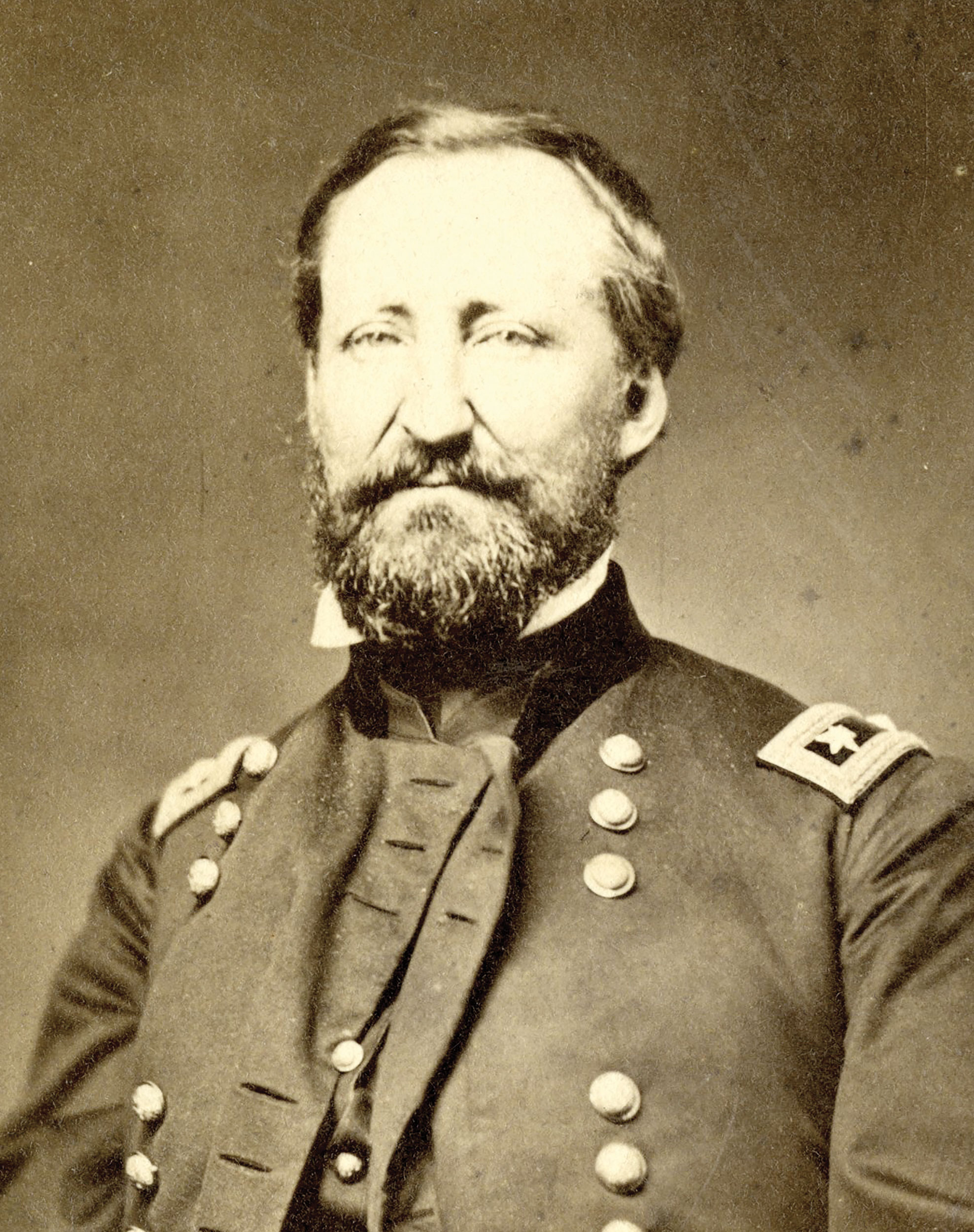 United States Army Heritage and Education Center, Carlisle, Pa
The Tullahoma Campaign of 1863 saw Rosecrans (left) repeat his well-known routine of caution and delay before eventual victory—followed by further caution and delay. It was a pattern that frustrated even Rosecrans’ allies in the army, including James A. Garfield, who criticized Old Rosy’s “slow progress” in a letter to Treasury Secretary Salmon Chase that July.
As he began to plan for his campaign against Bragg, Rosecrans received at his headquarters Major General James A. Garfield, an ambitious Ohio politician who had joined the Union army in 1861 and whom Rosecrans would soon appoint as his chief of staff. The two men took to each other immediately, as evidenced by their letters to their wives. “General Rosecrans thinks rapidly and strikes forward into action with the utmost confidence in his own judgement. In this he is perfectly unlike McClellan,” declared Garfield. Rosecrans called Garfield “a very superior man” at the same time, telling his wife, “I like him.” Their growing friendship aside, the more aggressive Garfield would later lament the Army of the Cumberland’s relative inactivity and its commander’s “conservative and cautious” approach to fighting the enemy.17
That summer, though, the Army of the Cumberland would see its faith in Rosecrans vindicated by his brilliant campaign of maneuver against Bragg, which began on June 24 and became known as the Tullahoma Campaign. Rosecrans utilized a series of feints and the local road network to move Bragg out of his heavily fortified positions. By July 3, Rosecrans’ force had—with remarkably few casualties—all but liberated the remainder of Middle Tennessee and stood poised to follow Bragg to Chattanooga and capture it as well. This accomplishment, however, was overshadowed by the Union victories at Gettysburg and Vicksburg in early July. Stanton telegraphed him on the 7th: “Lee’s Army overthrown; Grant victorious. You and your noble army now have the chance to give the finishing blow to the rebellion. Will you neglect the chance?” Rosecrans was predictably incensed: “You do not appear to observe the fact that this noble army has driven the rebels from Middle Tennessee, of which my dispatches advised you. I beg in behalf of this army that the War Department may not overlook so great an event because it is not written in letters of blood.”18
Again Rosecrans paused to repair the railroad, resupply his army, and prepare for his next move. Again the government urged him to action. Again Rosecrans noted the increasingly difficult terrain he faced, his lack of sufficient cavalry, and the need to secure his supply lines, which had increased in length as his army got farther away from Nashville and Louisville. Even Garfield had had enough. On July 27, he wrote to Salmon Chase about their mutual friend, criticizing the army’s “slow progress” even if it meant doing “injustice to a good man and say[ing] … things which were better left unsaid.” Despite his growing list of critics, when Rosecrans finally began his advance against Bragg in August, he again outmaneuvered the Confederates, forcing them to abandon Chattanooga and leading to the capture of the important railway hub on September 10. Characteristically, Rosecrans celebrated this latest triumph in religious terms: “Request the most Reverend Archbishop & his clergy to offer the divine Sacrifice for our success in the great cause of truth, justice, & human liberty,” he wrote to his wife.19
 Library of Congress
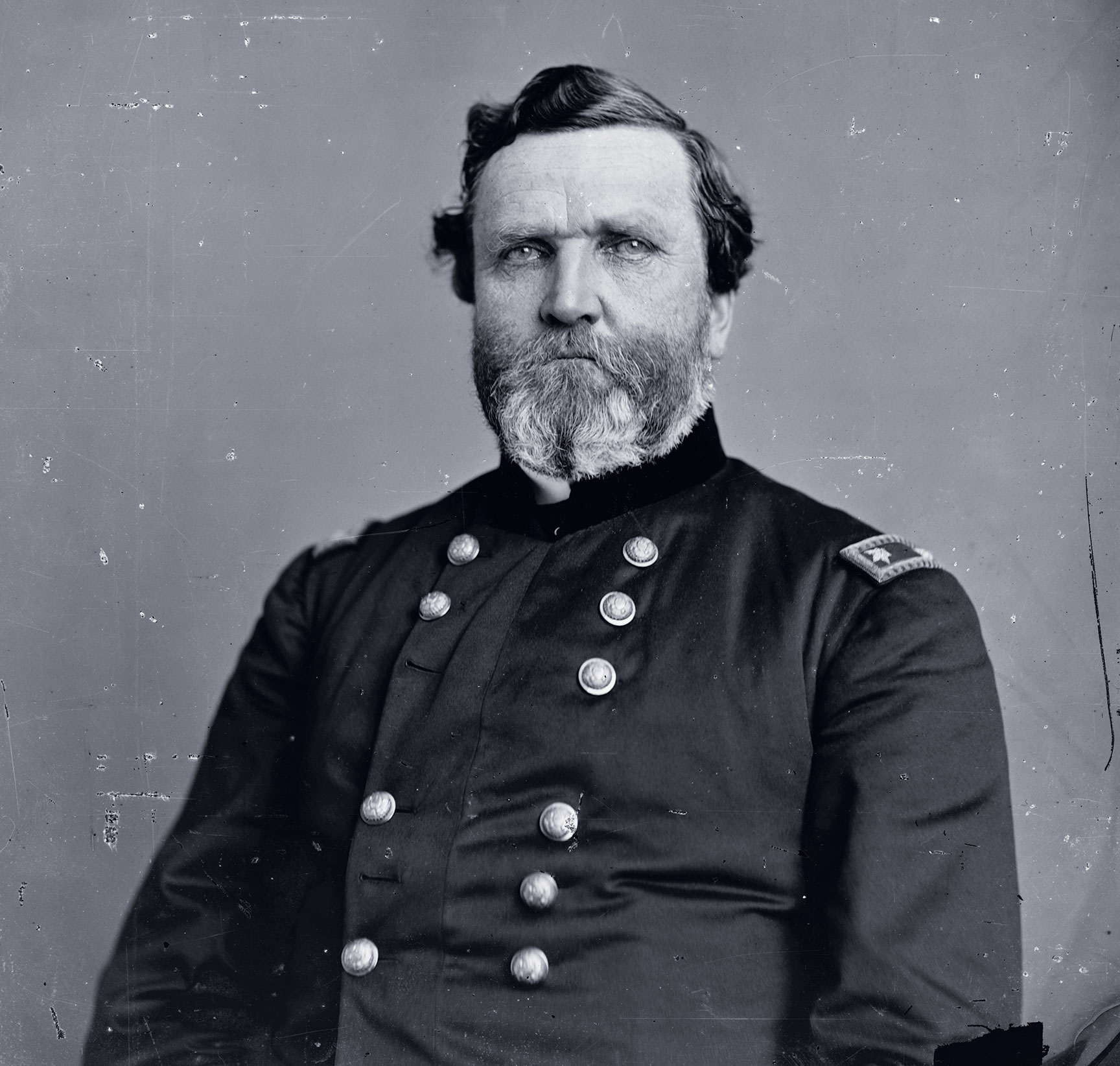
George H. Thomas
Flushed with success, constantly prodded by the administration, and believing that Bragg’s army was finally ripe for the taking, Rosecrans threw caution to the wind and advanced his army by three separate mountain passes well south of Chattanooga. By the time he realized the trap that Bragg’s reinforced army had set for him, he only barely managed to get his own army back together and in fighting shape by September 19, when Bragg attacked him near Chickamauga Creek in northern Georgia. After holding his own on the first day’s fighting despite being outnumbered, Rosecrans resolved with his generals to fight it out in the morning. On the 20th, Rosecrans continually fed reinforcements to his men under Major General George H. Thomas on his left, dangerously weakening his right. Late in the morning, a staff officer erroneously reported that there was a gap in the Union lines. Without checking, Rosecrans hastily issued orders to General Thomas Wood to move his men to fill the non-existent gap, which in turn created a very real gap that Longstreet’s advancing Confederates exploited. In the ensuing minutes, Rosecrans and a large portion of his army were driven from the field in disarray.20
What happened next has been a subject for debate ever since. While Thomas remained on the field, earning the sobriquet “Rock of Chickamauga” for holding off subsequent Confederate attacks and thereby allowing the eventual escape of the entire Army of the Cumberland, Rosecrans retired to Chattanooga to secure his communications and prepare what was left of his forces to defend the city against the victorious Confederates, who soon occupied the surrounding heights and besieged Union forces. Given his personal bravery at Corinth and Stones River, it is hard to see this action as one of simple cowardice, as his detractors alleged, although Rosecrans clearly should have remained on the field. Calling the hours after Longstreet’s breakthrough “the most trying and anxious period of my life,” Rosecrans sought solace in prayer and the attention of his personal chaplain, Father Jeremiah Trecy. Long, hard-working days with little sleep had clearly worn Rosecrans down and affected his judgment. As his friend and former cavalry commander David Sloane Stanley recalled later:
Rosecrans habitually used himself badly in time of excitement. He never slept, he overworked himself, he smoked incessantly. At Iuka, at Corinth and Stone River, the stress of excitement did not exceed a week. His strong constitution could stand that, but at Chickamauga, this strain lasted a month and Rosecrans’ health was badly broken. Many of his best friends think that this accounts for his debatable order to Wood to close up promptly on Reynolds and support him, so written, ignorant of the situation and undoubtedly causing the loss of a great battle.21
Despite his two egregious mistakes at Chickamauga, Rosecrans still retained Lincoln’s confidence in the early days after the battle. The general’s usual optimism quickly returned; he called the overall campaign “substantially triumphant” in a letter to his wife on September 25. Now seriously outnumbered and with a weakened army, Rosecrans once again begged for reinforcements. This time the government listened, sending him two corps from the Army of the Potomac under Major General Joseph Hooker and, eventually, troops from Grant as well. Rosecrans made plans to relieve and resupply his men and attack the Confederates. Unfortunately, negative reports from subordinates, including Garfield and especially Assistant Secretary of War Charles A. Dana, soon undermined his standing with Lincoln. His calls for help were interpreted as evidence of his willingness to abandon Chattanooga and forfeit the gains of his campaign. When Grant was given command of the newly formed Military Division of the Mississippi, effectively placing him in control of all Union military efforts in the war’s western theater, Lincoln did not stop him from promptly replacing Rosecrans on October 19. Too embarrassed to meet his men, Rosecrans left in the middle of the night to Cincinnati to await further orders. Grant would soon execute Rosecrans’ plan to open the so-called “Cracker Line,” ultimately driving Bragg’s forces back into Georgia by the end of November.22
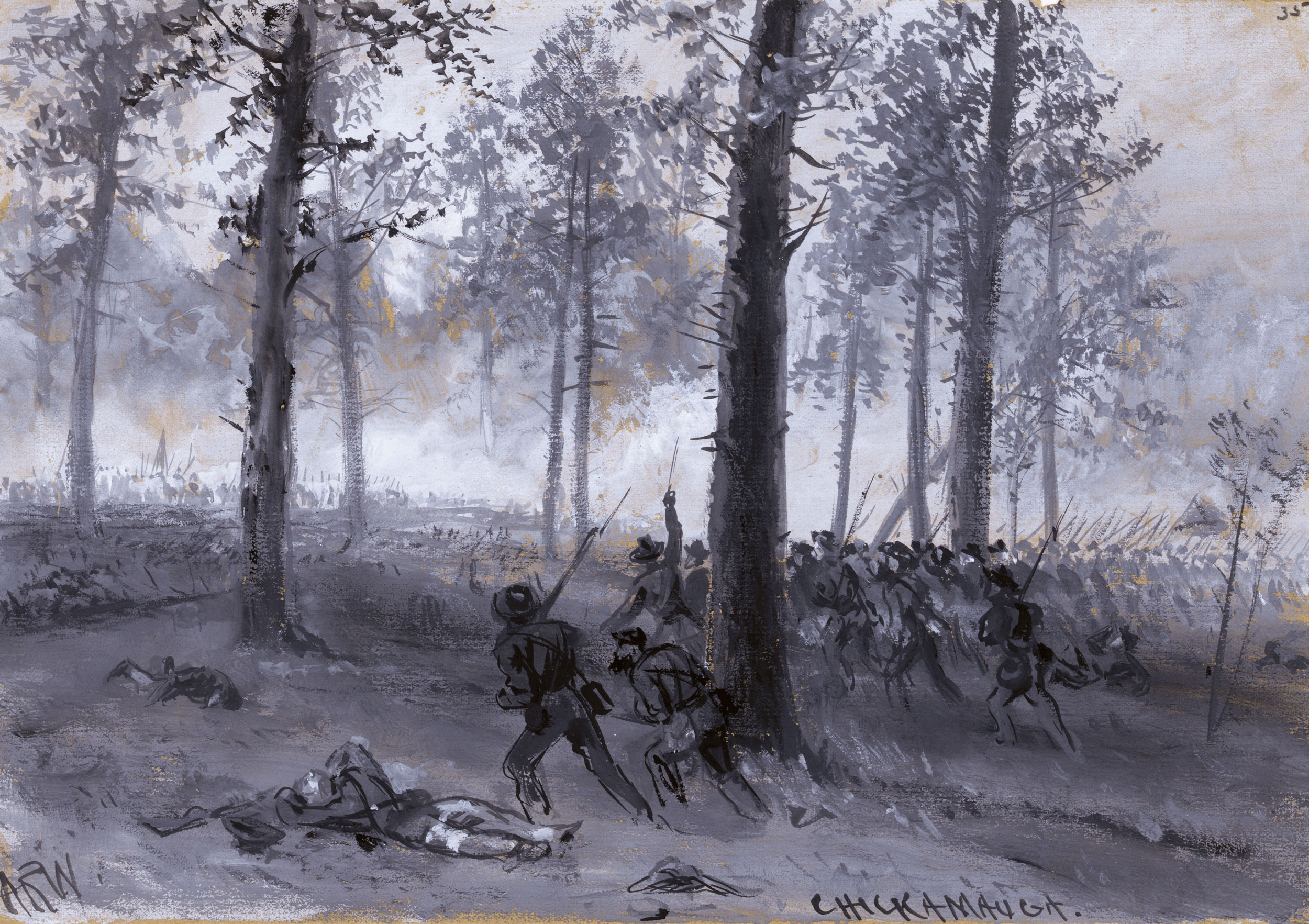 Library of Congress
Rosecrans’ subpar performance at the Battle of Chickamauga (pictured above)—where Major General George H. Thomas (opposite page) would save the Army of the Cumberland from complete disaster—marked the beginning of the end of his Civil War military career. By the end of 1864, Rosecrans was back home in Ohio awaiting a future assignment that would never come.
Rosecrans was given a second chance to prove himself in late January 1864, when he was put in command of the Department of Missouri. Beset by constant guerrilla warfare between Unionists and pro-Confederate bushwhackers, Rosecrans’ new command was an impossible one. His self-confessed political “naiveté” was on full display when he bragged to his wife about upsetting conservatives in the state legislature on his arrival. Soon the radicals would be upset at him as well for not prosecuting pro-southern sympathizers strongly enough. He unsuccessfully tried to convince the Lincoln administration of the danger posed by the Order of American Knights, a secret society supposedly bent on overturning the federal government in the Midwest. Despite these early troubles in adjusting to his new command, Rosecrans’ residual popularity was great enough that he was considered briefly as Abraham Lincoln’s running mate in the 1864 presidential election.23
Yet Rosecrans’ difficulties in Missouri did not let up. His superior officers repeatedly stripped his command of troops, leaving him with few men to fend off Major General Sterling Price’s Confederate invasion of the state in September. That Rosecrans managed to do so was made possible only by his foresight in recruiting 12 regiments of one-year volunteers and delaying the departure of troops meant for other stations, including General A.J. Smith’s XVI Corps. Despite this, Grant criticized Rosecrans for hoarding troops while not dealing Price a significant enough defeat, even though the Confederates never again seriously threatened the state. When asked by Stanton on December 2 where Rosecrans might be reassigned, Grant responded: “Rosecrans will do less harm doing nothing than on duty. I know no department or army commander deserving such punishment as the infliction of Rosecrans on them.”24
A few days later Rosecrans was officially relieved of duty. He would spend the remainder of the war at his home in Cincinnati awaiting a future assignment, which never came. Rosecrans was particularly incensed to have been relieved a second time “without a single official, or private reason ever having been communicated to me for this treatment.” Garfield, still his friend, helped arrange for him to give testimony before the Joint Committee on the Conduct of the War in April 1865, where Rosecrans attempted to repair his name while drawing attention to what he considered his unjust removal. He also composed a 28-page narrative of his wartime service, which, while admittedly self-serving, nonetheless accurately pointed out his many accomplishments in all of the war’s major theaters. In 1866, over the objection of his implacable enemy Grant, he received a brevet promotion to major general in the regular army in tribute to his performance at Stones River.25
Rosecrans left the army in 1867 in order to pay off his debts and pursue fame, fortune, and redemption in the western U.S. and Mexico in various mining, land, and railroad ventures. Although postwar success in business proved elusive, he was elected to Congress in 1880, serving two terms as the San Francisco district’s representative. And his feud with Grant continued. In 1885, while serving as chairman of the House Committee on Military Affairs, Rosecrans unwisely tried to block a pension bill for the dying ex-president. Grant got the last laugh in his famous Memoirs, however, with harsh and largely inaccurate criticisms of his former friend’s generalship. Rosecrans died in California in March 1898 at age 78, outliving Grant by nearly 13 years.
Rosecrans is remembered today more for his failures and weaknesses than his triumphs, personal courage, or gifts. Too often, he has been summarily dismissed with a citation to Grant’s biased memoirs, his string of victories from the summer of 1861 to the summer of 1863 unfairly ignored. The courage he displayed as a fierce opponent of slavery, at a time when most northern Catholics and Democrats hated abolition more than the peculiar institution, has been all but forgotten as well. Certainly Rosecrans did himself no favors by repeatedly refusing to write his own memoirs, largely confining his public writings on the war to a few published essays and one article. Still, despite his many shortcomings as a person and at Chickamauga, Rosecrans deserves to be understood on his own merits—and in his own words, which are available in letters at the UCLA Library Special Collections in Los Angeles, and too seldom used. Although there is plenty to criticize about his generalship, Old Rosy is nonetheless due more credit for the Union’s eventual victory.26
In 2013, 150 years after Rosecrans’ victory at Stones River, a group of Ohio Union reenactors erected an equestrian statue in his honor in Sunbury, Ohio, near his hometown. Recent books by Albert Castel, David Moore, and Frank Varney have also tried to rehabilitate his reputation by pointing out that his quarrels with Grant, whose reputation has rightly risen in the esteem of modern scholarship, should not overshadow Old Rosy’s patriotism or battlefield victories. Nor does his defeat at Chickamauga cancel out his important victories in western Virginia, Mississippi, Tennessee, and Missouri. It remains to be seen whether such tributes are evidence of a coming greater appreciation among Civil War enthusiasts and scholars of William S. Rosecrans and his flawed but nevertheless largely successful Civil War career.27
William B. Kurtz is the John L. Nau III Center for Civil War History’s managing director and digital historian. He is the author of Excommunicated from the Union: How the Civil War Created a Separate Catholic America (Fordham, 2016) and co-editor of the forthcoming Soldiers of the Cross, the Authoritative Text: The Heroism of Catholic Chaplains and Sisters in the American Civil War (University of Notre Dame Press, 2019). He is working on a biography of William S. Rosecrans.