J.E.B. Stuart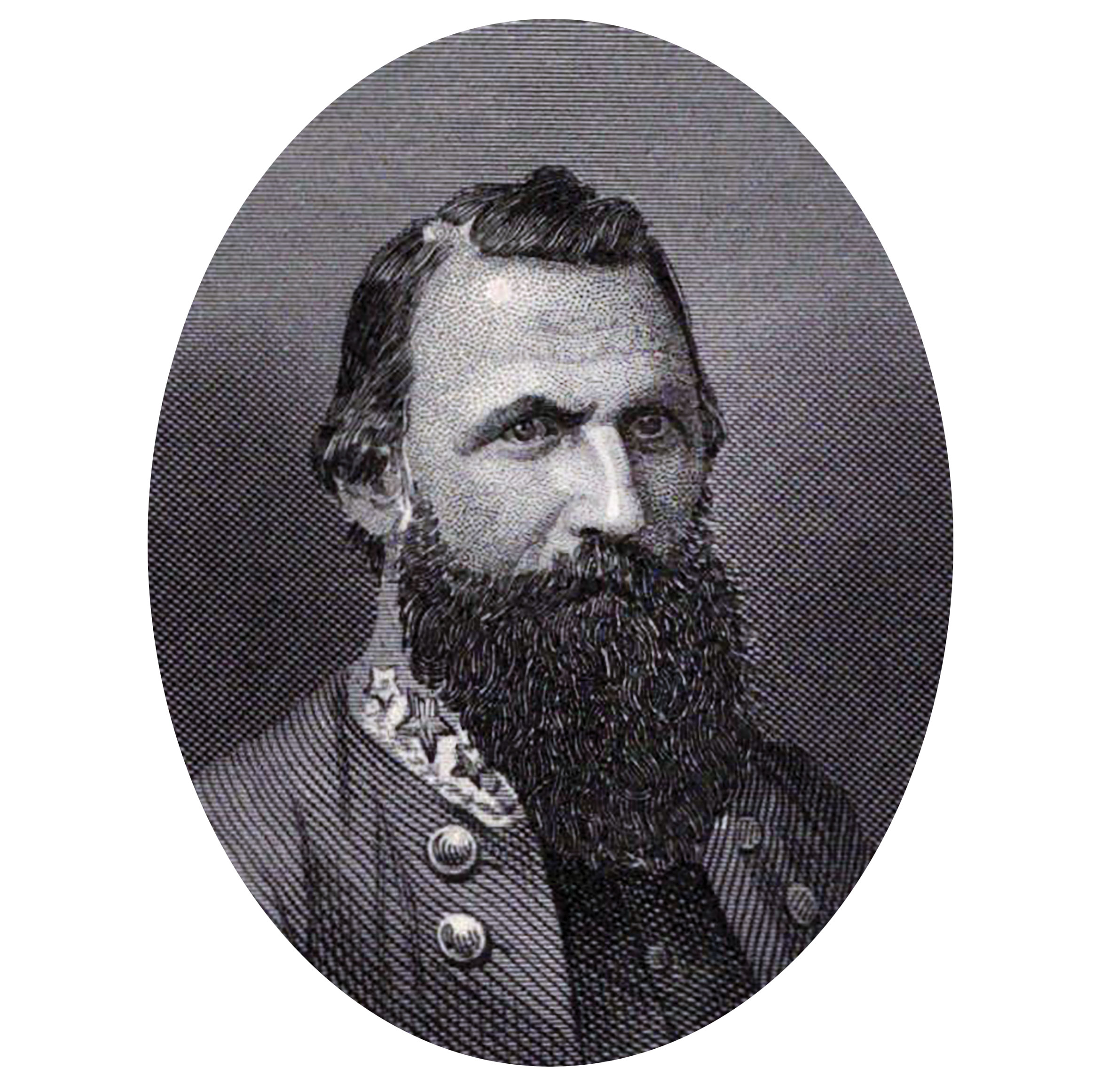 The War With the South
“Go back, go back, and do your duty, as I have done mine, and our country will be safe.” So Major General James Ewell Brown Stuart reportedly remarked to his retreating troops as he was carried, wounded, from the field at Yellow Tavern, Virginia, on May 11, 1864. The following day, the 31-year-old Confederate cavalry commander died, leaving behind an impressive yet imperfect Civil War record—one marked by fearless charges on the battlefield and bold raids behind enemy lines; versatility (he led infantry at Chancellorsville after Stonewall Jackson’s wounding); and questionable decisions (such as the one that led to his long separation from the Army of Northern Virginia during the Gettysburg Campaign).
To get a sense of where Stuart’s legacy now stands, we asked a panel of historians to assess the record of the flamboyant Confederate cavalier.
Was J.E.B. Stuart the Civil War’s most talented cavalry commander?
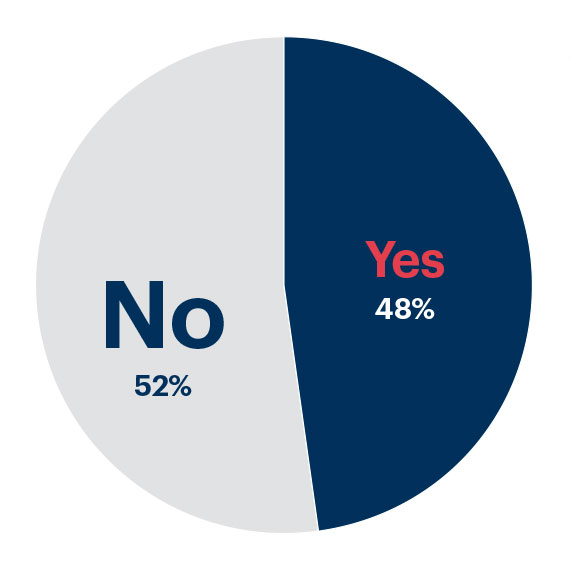
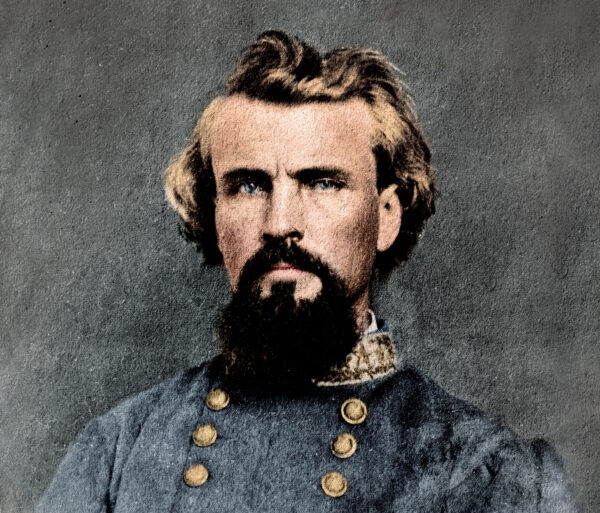
“No. Jeb was one of the best, no doubt, but my money is on Nathan Bedford Forrest for the top spot.” —A. Wilson Greene
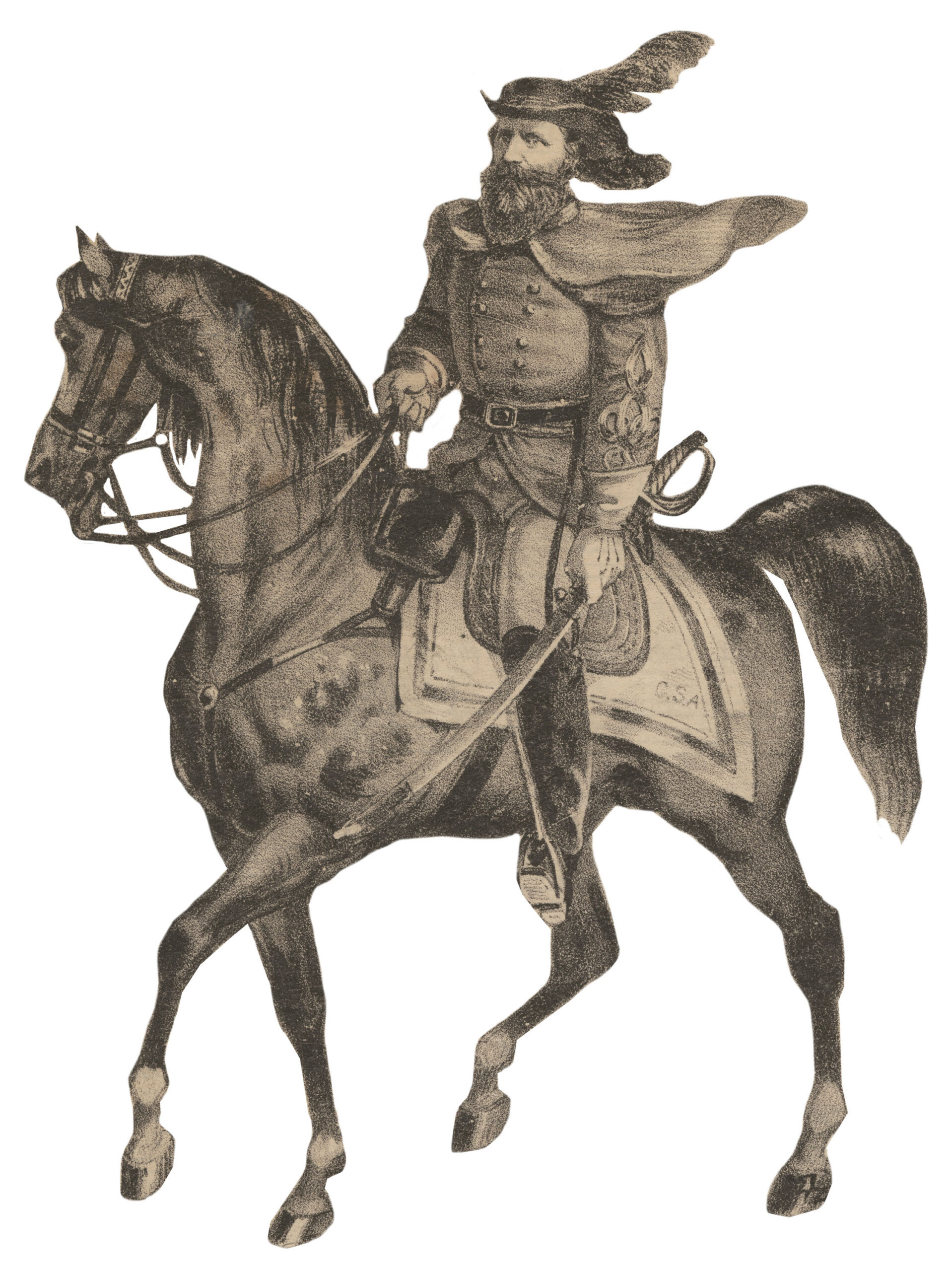 Anne S. K. Brown Military Collection
J.E.B. Stuart on horseback.
What do you most admire about Stuart…
“Panache.” —Peter C. Luebke
“His intelligence, readiness, resoluteness, and flexibility.” —Glenn W. Lafantasie
“His extraordinary gift for performing the traditional roles of cavalry: scouting, screening, and reconnaissance.” —Eric J. Wittenberg
“His excellent eye for terrain.” —Joseph T. Glatthaar
“He brought energy to the Army of Northern Virginia. Every organization needs an element that generates energy.” —John H. Hennessy
…and what was his biggest flaw?
“He created a myth about himself and could not live up to it.” —Joseph T. Glatthaar
“His need for recognition and praise.” —Stephen W. Sears
“Stuart often underestimated the capabilities of his foe.” —Timothy J. Orr
“His burning ambition.” —Jeffry Wert
“Pride.” —Frank O’Reilly
When was Stuart at his peak?
We asked our panelists to rank Stuart’s performance in nine major campaigns, giving the highest mark for his best performance and the lowest for his least impressive. This chart represents an average of all responses.

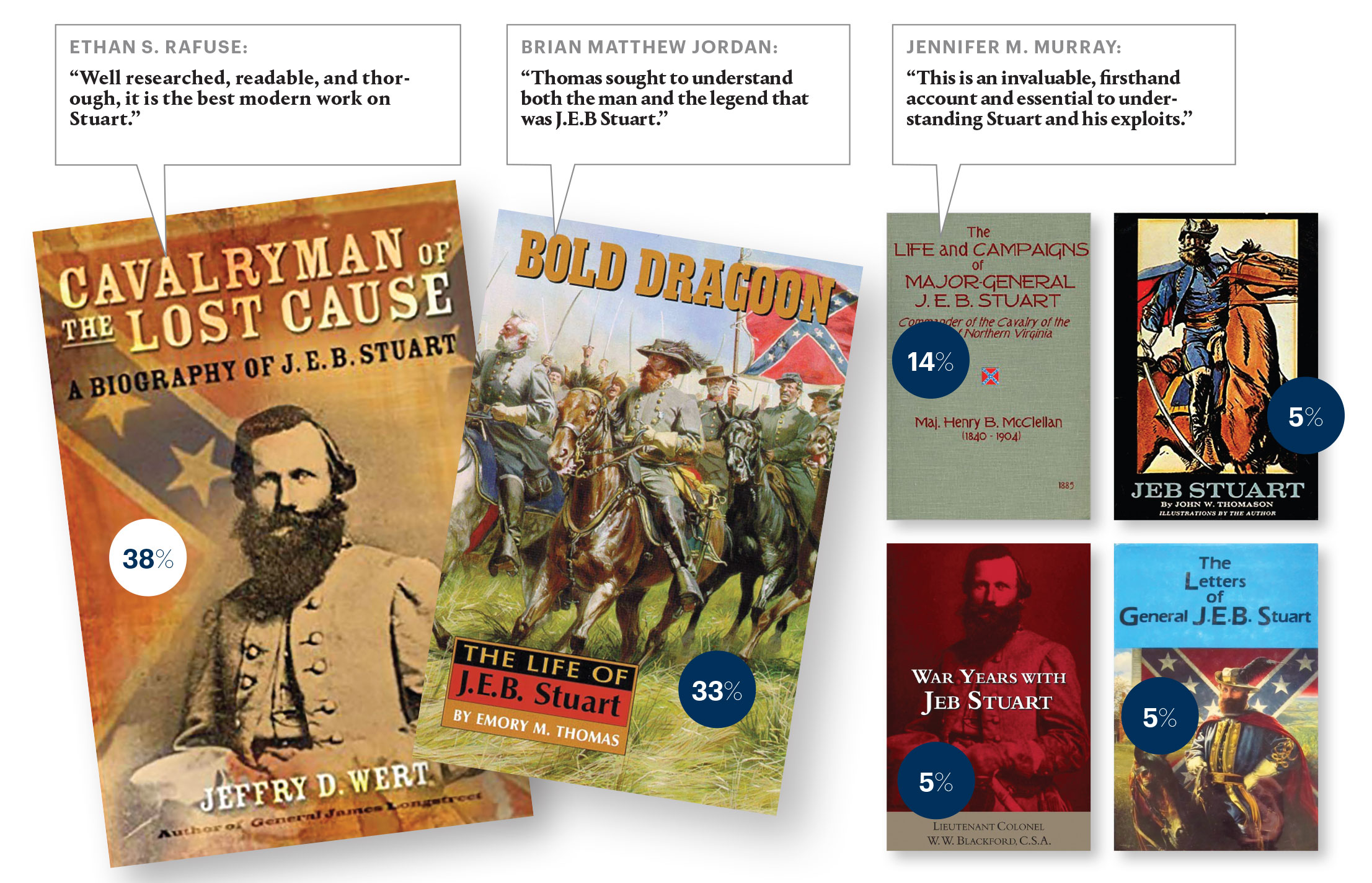
What is your favorite book about Stuart?
What is your favorite quote by or about Stuart?
“I intend to make the Yankees pay for that hat.”
—Stuart, in a letter to his wife, after his near capture by Union forces—and loss of his new plumed hat—at Verdiersville, Virginia, in August 1862. [Ethan S. Rafuse]
“Raiding with General Stuart is poor fun and a hard business. Thunder, lightning, rain, storm, mud, nor darkness can stop him when he is on a warm fresh trail of Yankee game.”
—George M. Neese, a member of Stuart’s horse artillery, in his postwar memoir. [A. Wilson Greene]
“I realize that if we oppose force to force we cannot win, for their resources are greater than ours. We must make up in quality what we lack in numbers. We must substitute esprit for numbers. Therefore, I strive to inculcate in my men the spirit of the chase.”
—Stuart, in an early war letter to his brother. [John J. Hennessy]
“He never brought me a piece of false information.”
—Robert E. Lee’s alleged comment about Stuart upon hearing of the cavalryman’s mortal wounding at Yellow Tavern [Jennifer M. Murray, Stephen W. Sears, Brooks D. Simpson]
Extra Dossier: J.E.B. Stuart
Space prevented us from providing all of our panelists’ answers in full detail in our print edition. Read more of our panelists’ thoughts on Stuart here.
Panelists
Patrick Brennan, Peter S. Carmichael, Gary W. Gallagher, Joseph T. Glatthaar, A. Wilson Greene, John J. Hennessy, Wayne Hsieh, Brian Matthew Jordan, Glenn W. LaFantasie, Peter C. Luebke, Jennifer M. Murray, Kenneth W. Noe, Frank O’Reilly, Timothy J. Orr, Ethan S. Rafuse, Stephen W. Sears, Aaron Sheehan-Dean, Brooks D. Simpson, Christopher S. Stowe, Jeffry Wert, and Eric J. Wittenberg.