 Library of Congress
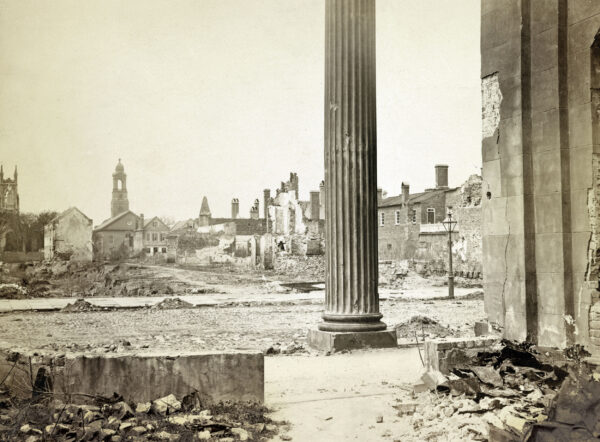
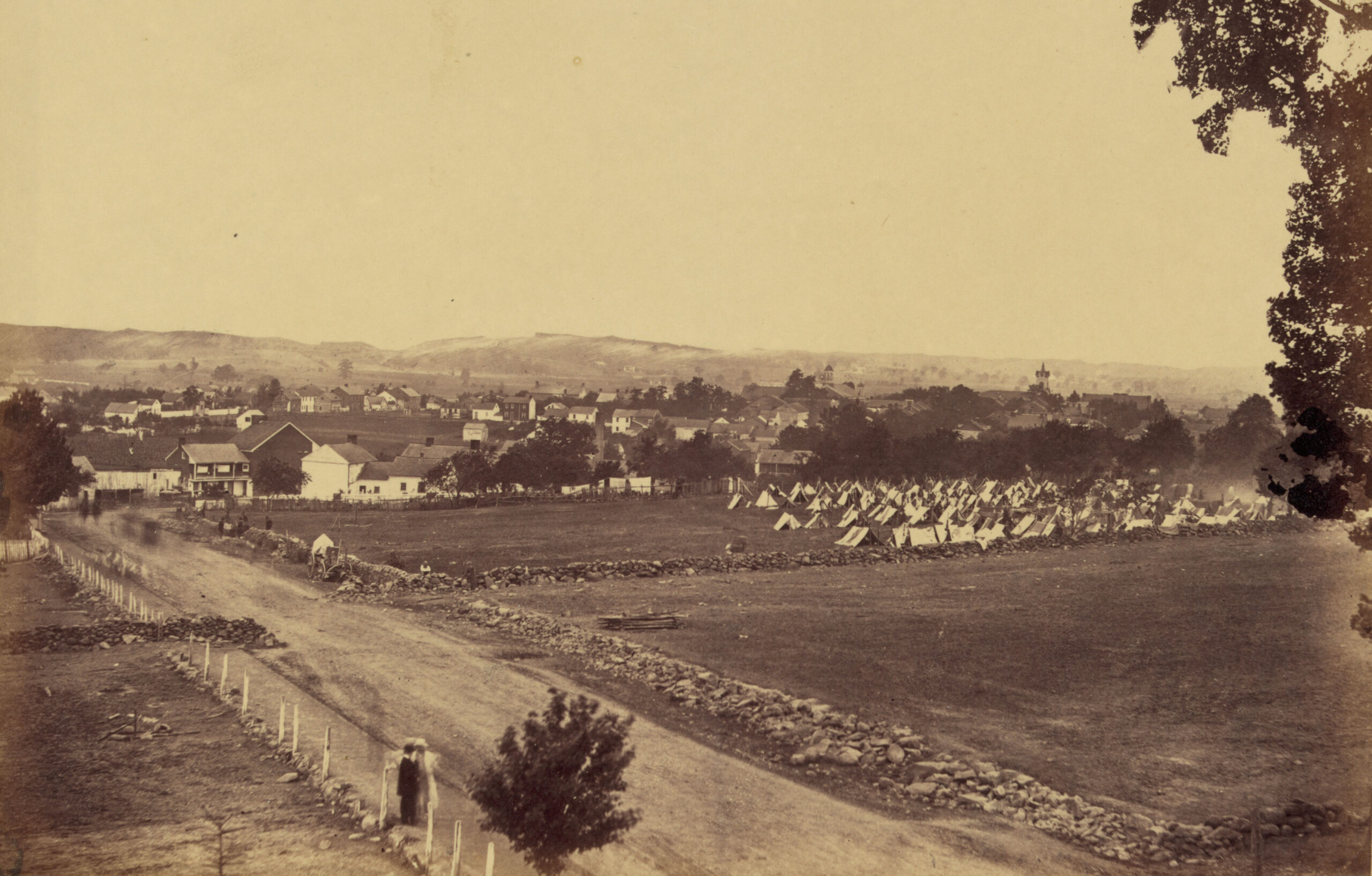
This image made by Timothy O’Sullivan shows a portion of the town of Gettysburg, Pennsylvania, not long after the epic battle there in July 1863.
The people came in droves. Despite the unbearable stench from fresh graves and unburied matter, they slowly combed the battlefield in search of artifacts, relics, and trophies.1 The Army of the Potomac had just won a major victory at the Battle of Gettysburg and thousands of citizens flocked to the fields in the weeks and months that followed. Unlike the scores of nurses, doctors, and worried families who rushed to the small Pennsylvania town to offer aid and succor to the wounded, these everyday Americans came to bear witness, to slake their own curiosity—or, at worst, to loot. And loot they
did, in scenes that beggar description: They took away shot and shell, uniforms and caps, buttons and bullets, and even bones. These early battlefield sightseers blurred the lines between “genteel visitors” and “tasteless gawkers.” One contemporary observer called them “pestiferous sight-seers.” Indeed, the gawkers and ghouls who descended on Gettysburg can be considered among the earliest audiences to engage in behavior we might liken today to dark tourism.2
Civil War Americans’ fascination with the aftermath of battle has been matched only by scholars’ limitless curiosity about why people came to the killing fields and how they understood them.3 The late public historian Gregory A. Coco offered perhaps the most perspicacious account of battle’s aftermath in his foundational 1995 work, A Strange and Blighted Land. Seeking to explore “the bitter truth of war and all of its unspeakable and damnable horrors,” Coco’s often gruesome study uncovered the conflict’s darkest corners.4 All accounts of the Gettysburg battlefield—both during the fighting and in its aftermath—are indeed difficult to read, being as they are replete with unspeakable scenes of suffering. But Americans were living in a time of transition. A clear-eyed pragmaticism would eventually replace an idealistic romanticism.5 And the boundaries separating the battlefield’s gawkers, ghouls, and guests were blurry at best. Ultimately, although a culture of sentimentalism pervaded how Americans understood their civil war, the throngs of visitors who came to the conflict’s killing fields in the aftermath of Gettysburg force us to consider also the emergence of a grim realism. Their sensibilities were not ours. And their reactions may surprise modern-day audiences.
Gettysburg was forever changed after the Fourth of July 1863. It became a destination for tens of thousands of visitors during the war years alone. That number eventually increased to the millions each year. The space became at once sacred and profane, or, as historian Jim Weeks observes, “a site of commemoration and an object of commerce.”6 As plans were being developed for the Soldiers’ National Cemetery in 1863, a cottage industry quickly grew for relics and artifacts from the battlefield. Efforts to preserve portions of the battlefield competed with the development of lodgings and restaurants for tourists. Rival groups of sightseers and pilgrims descended on Gettysburg to engage in activities that ranged from the voyeuristic to the solemn.7
While opinions about Gettysburg’s earliest visitors varied, their inclinations were not unusual. In America, the years between the early Republic and the antebellum era saw the transportation revolution, national ardor, and aesthetic romanticism propel and compel people across the American landscape.8 Tourists to the battle sites of 18th-century conflicts formed, in historian Thomas A. Chambers’ estimation, “their own emotional, patriotic memories based on romantic ideals of the picturesque, melancholy, and nostalgia, as well as a generic Revolutionary War history.”9 Nineteenth-century observers were critical of those who visited the fields close to the time of fighting but applauded later pilgrims who were driven by a sacred obligation to honor and remember the dead.10 The quest to seek out battlefields was not confined to the United States: Europeans, too, were known to visit sites associated with the Napoleonic Wars and other conflicts. Famously, many went to Waterloo and robbed the dead of their teeth.11
 Library of Congress
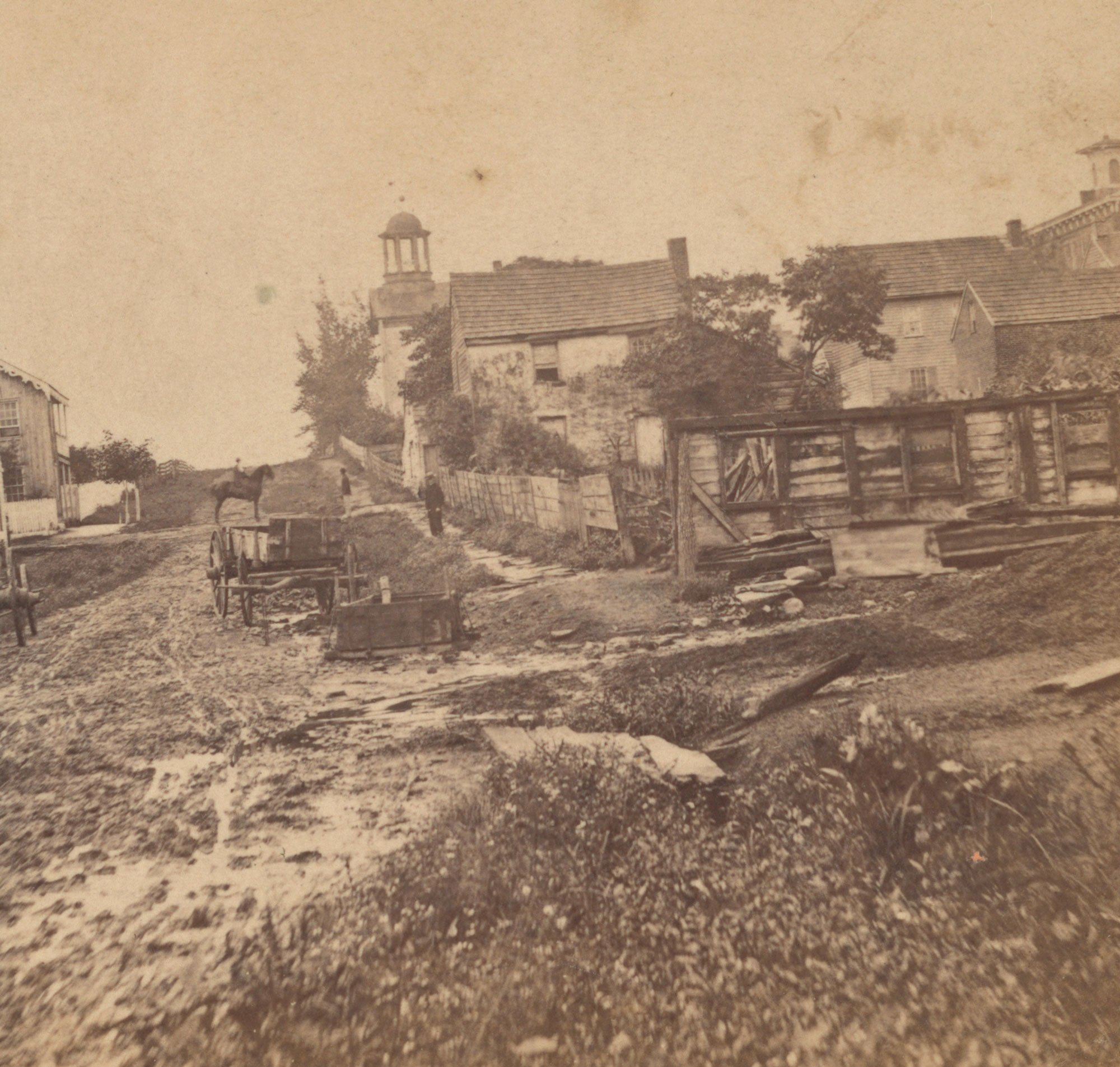
Charles J. Tyson made this image of Gettysburg’s Stratton Street—where Union troops retreated on July 1, 1863—sometime after the battle. Before long, throngs of civilians flocked to the now famous town in search of relics of the epic fight.
The Civil War fundamentally altered the ways in which Americans interacted with their battlefields. By the summer of 1863, citizens were a regular feature on the war’s contested fields. Infamously, crowds of spectators gathered at Bull Run to witness the war’s opening battle. It was a huge event: numerous politicians and notable citizens endured the long ride by horse and by carriage from Washington City to Centreville, Virginia, on July 21, 1861. Because of the considerable distance, many packed picnics. While mostly safe from the actual fighting, civilians became entangled in the chaotic Federal retreat. The scene became the stuff of legend. Countless scholarly and popular histories have used the episode to illustrate the holiday-like atmosphere of the conflict’s early days to suggest that civilians had learned their lesson and would steer clear of all subsequent battles and battlefields. In fact, many northern and southern noncombatants regularly appeared on battlegrounds, returning over the course of the war as collectors and sightseers. As one New York Times correspondent succinctly concluded after revisiting the Bull Run battlefield to relic hunt with colleagues in March 1862, “Beyond a doubt, Manassas will supersede Saratoga and Sharon [Springs] during the coming Summer. A trip to Bull Run and beyond, will be considered the thing.”12
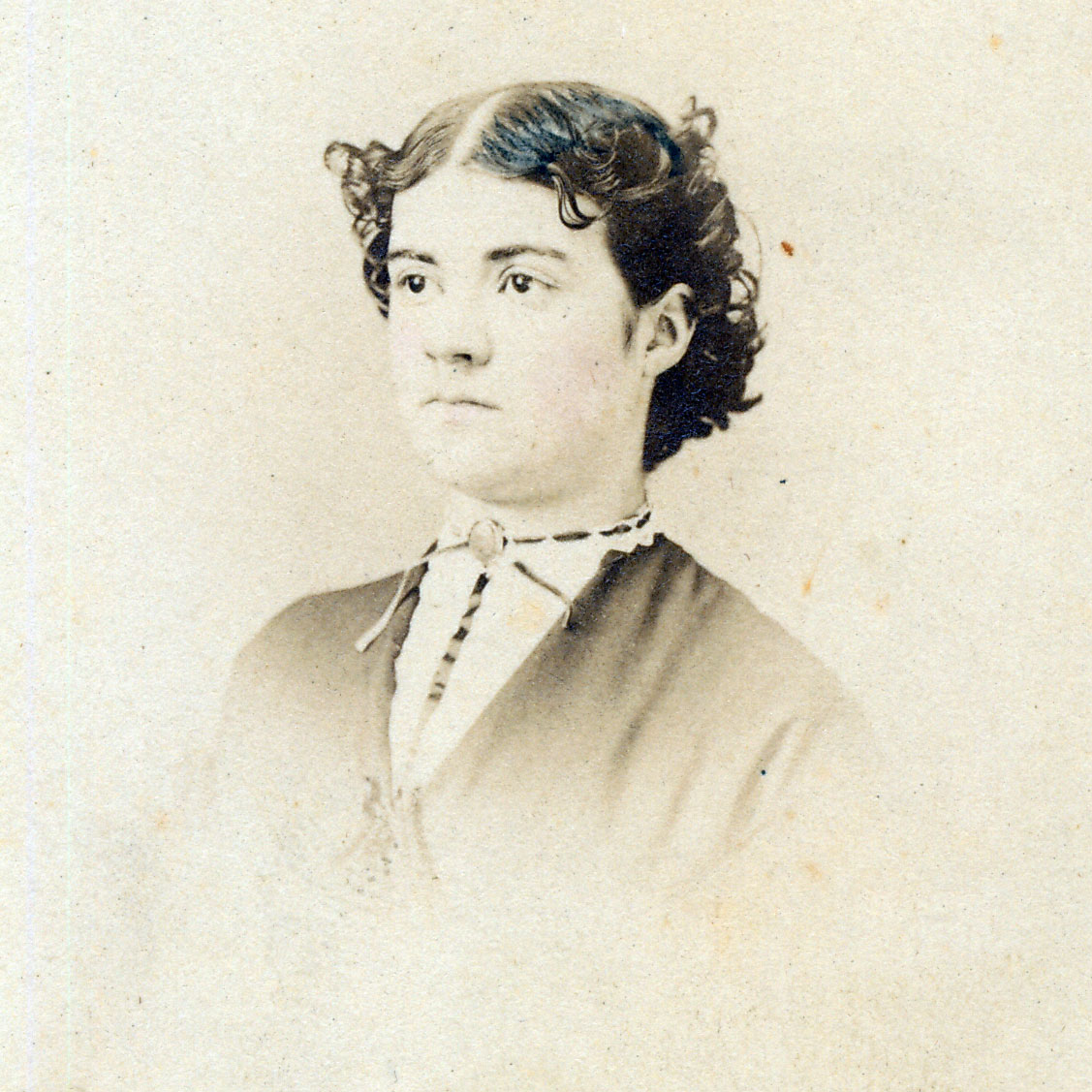
As great battles like Gettysburg unfolded, word quickly spread—and galvanized audiences. A teenage civilian of Gettysburg named Liberty Hollinger remembered how the “town began to fill with friends and strangers, some intent on satisfying their curiosity, and others, alas! to pick up anything of value to be found.”13 Hollinger’s observation isolated the tensions between the curious and the collectors. Detritus lay scattered for miles. Discarded boxes, fouled guns, canteens, and knapsacks were strewn across the fields. Scores of dead lay unburied. Their sunburnt bodies had rotted in the heat and were now soaked by pouring rains. People trembled at the horrifying sights they encountered. One soldier recounted, “No pen can paint the awful picture of desolation, devastation and death that was presented here to the shuddering beholders who traversed these localities…. Festering corpses at every step…. It was a hideous and revolting sight.”14 Hogs rooted among the dead. Cultivated fields were in ruins. The hand of war had cruelly altered the picturesque countryside. Another young local resident, Tillie Pierce, described Gettysburg and its environs as “a strange and blighted land.”15
 Adams County Historical Society
Liberty Hollinger
And yet, the contorted landscape inexorably drew visitors. Michael Jacobs, a professor at Gettysburg’s Pennsylvania College, recounted, “Scarcely had the booming of cannon and the rattling of musketry ceased before anxious crowds of visitors began to throng the town of Gettysburg and the surrounding hills and valleys which had so recently been the scenes of slaughter and death.”16 Another visitor to Gettysburg noted: “Today the people from the surrounding country began to come into the town. Hundreds of wagons and carriages from every direction filled the place.”17 As one chagrined townsperson lamented: “Where the late thousands wrestled in wrath … those who now traverse the field” were intent on plunder.18 Many of those who came to nurse the wounded or to find lost loved ones chafed at the curious visitors and relic-hunters who descended on the area in droves. The Rev. E.W. Hutter of Philadelphia’s St. Matthew’s Lutheran Church, who visited the battlefield in early-to-mid July with fellow Philadelphians to succor the wounded, noted encountering “the morbid sight-seers, whom curiosity impelled to tread a field of battle when the guns were silent.”19 Warming to the subject, Hutter went on to call this group the “greatest croakers conceivable.”20
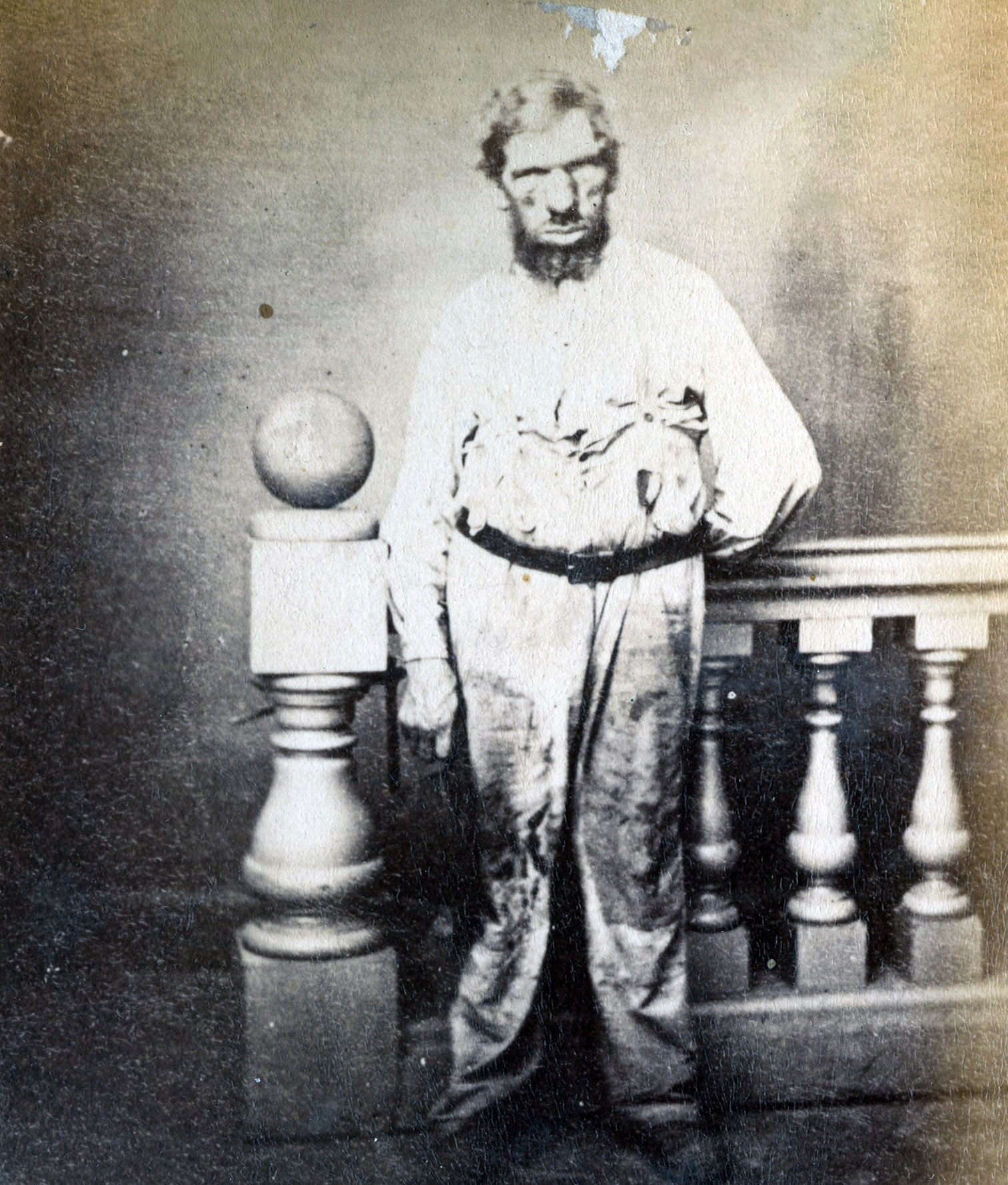
Although the boundaries between curious visitor and voyeuristic sightseer blurred, certain behavior explicitly defied social convention. One man, who has gone down in lore as the “Ghoul of Gettysburg,” was accused of robbing soldiers’ dead bodies. A surviving stereo view depicts the purported figure and is captioned: “A Battle-field Vulture, Godfor by name—one of those inhuman creatures who follow in the wake of armies, robbing the field of blankets, clothing, turning the pockets of the dead, &c.”21 Little else is known about this shadowy man. Yet, those quick to censure him might have been surprised to learn that troops themselves peddled in plundered souvenirs. A soldier from the 148th Pennsylvania Infantry complained, “It was a rare occurrence to find one who had not been robbed by the battlefield bandit or robber of the dead.” These soldiers cut open the pockets of the fallen and rifled through the contents. “The battlefield robbers,” he continued, “were well known by the large amounts of money they had, and the watches, pocketbooks, pocket knives and other valuable trinkets they had for sale after the battle.” He concluded, “All regiments had them.”22
Practices beyond the pale continued in the months after the battle. Augustus Shriver, a Maryland citizen, traveled to Gettysburg in the fall of 1863. In a letter to his family, he wrote that near the Round Tops he had come across the “remains of Rebel sharpshooters which have never been buried, laying, with the bones bleaching in the sun, where they had fallen.” While Shriver had been saddened by witnessing the effects of battle, a “Boston lady” he came across horrified him. The woman had been using a stick to smash the “teeth out of a rebel skull to take home as relics.”23 On that same battlefield a local citizen picked up a dried hand and took it home as a “relic.” This person’s family found nothing repulsive about it but instead “remarked on the smallness of the fingers.”24 While most Victorian Americans upheld the sanctity of the dead, others clearly showed no remorse as they crossed over the boundaries of socially acceptable relic hunting and collecting.
 Adams County Historical Society
The behavior of some battleground visitors clearly defied social convention, such as by the man known as the “Ghoul of Gettysburg” (pictured here), who was accused of robbing soldiers’ dead bodies.
Far from flinching at the continued disruptions to their little town, Gettysburg’s youth reveled in the holiday-like atmosphere in the days after battle’s end. Having just celebrated a massive Union victory and the Fourth of July, the youngsters roamed the area’s forests and fields looking for treasures. Charlie McCurdy remembered traveling around with “other boys looking for relics of various kinds.” They gathered piles of bullets—and prized those deformed into “grotesque shapes” because they had hit stones or trees. “It was,” McCurdy concluded, “a busy and exciting summer that followed for thousands of visitors [who] flocked to Gettysburg; our relics were in great demand, for everybody wanted a souvenir.”25 Young Gettysburg resident Albertus McCreary agreed, noting that he and others had found bullet-in-wood pieces to be highly popular with collectors. Thus, he wrote, every “boy went out with a hatchet to chop pieces from the trees in which bullets had lodged.”26
The thousands of early visitors to Gettysburg seemingly all desired memory tokens. McCreary offers the best description of how the burgeoning business in relics developed. In the days, weeks, and months after the great fight, McCreary noted, visitors came to “see the battle-field, and all wanted relics.”27 McCreary himself, along with other local boys, were only too happy to oblige. They started a veritable industry selling “bullets and pieces of shell,” and found that pieces of tree with bullets embedded became a “great prize and a good seller.”28
It is worth pausing at McCreary’s remark because the bullet-in-wood souvenirs are deserving of distinction and discussion. These artifacts proved immensely popular. They were a visceral testament to the ferocity of the battle. The damage done to forests and the destruction of trees reflected the power of massed small arms and cannon fire, which could be both deadly accurate and wildly erratic. “The ruination of forests” as the result of the war, writes historian Megan Kate Nelson, “created novel scenes” that transformed the natural environment.29 Contemporary Americans looked on with horror and awe. The peculiar mixture of reactions can, in a sense, be seen in the battle-scarred wood. Around Culp’s Hill, musket and cannon fire destroyed a “thick forest.”30 Union general Oliver O. Howard was amazed to go over the ground five years later and still encounter “marks of the struggle.” “The trees,” he noted, were “cut off, lopped down, or shivered,” and “stumps and trees were perforated with holes where leaden balls had since been dug out.”31
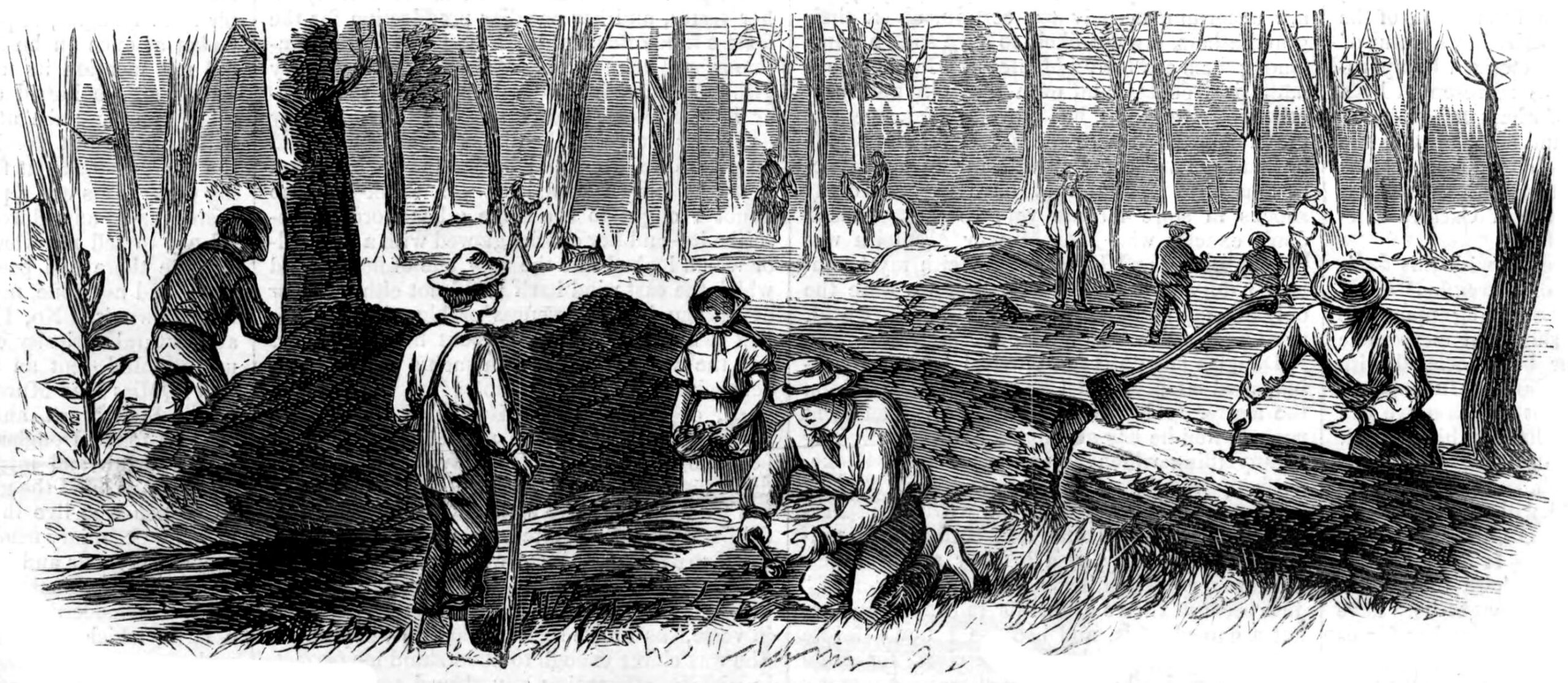 Harper's Weekly
As depicted in the above illustration from Harper’s Weekly, many of Gettysburg’s younger residents were eager collectors—and sellers—of battlefield souvenirs. “[Every] boy went out with a hatchet to chop pieces from the trees in which bullets had lodged,” reported one local youth.
Another account from Federal officer Frank Haskell noted that the trees at Culp’s Hill “were almost literally peeled, from the ground up some fifteen or twenty feet, so thick upon them were the scars the bullets had made.”32
Civilians flocked to the area’s damaged woodlands. With pocketknives and hatchets, they cut out pieces and lopped off limbs. By so doing, they excised the plant’s wounds and created jarring objects composed of manmade projectiles and natural elements. The wood now marked a moment in time. The objects were used to cope with the violence enacted upon the natural environment. And they reflected the vagaries of war. Some were rendered into anonymous blocks, whereas others were deliberately curated and marked. They carefully cataloged provenance. Large pieces were publicly displayed while others were transformed into personal walking sticks and baseball bats. The consequences of the relic-hunters’ work were profound. As early as 1869, The New York Times recorded that Culp’s Hill was ruined: “The trees are scarred and mutilated all around, and what war has spared, the chisel and the knife of the relic-hunter have destroyed, so that the whole place is a perfect wreck. These relics, in the shape of bullets and broken pieces of shells, are becoming very scarce, and if the demand continues it will be necessary, as in other similar cases, to manufacture them to order.”33
The wave of collectors and sightseers who spread across the Gettysburg battlefield prompted government action. On July 6, 1863, Army of the Potomac commander George G. Meade ordered Major General William F. Smith to the town to protect the hospitals and secure the countryside.34 Meade recognized the chaos that would surely descend upon south-central Pennsylvania once his army departed the next day. Medical personnel soon cared for the wounded, small detachments of troops policed the battlefield, and some semblance of order was restored. Yet, what of those relic-hunters and throngs of tourists? While the minie balls, shell fragments, and battle-scarred wood that so many collected were of some interest, droves of peoples also carried away discarded leather equipment, rifled muskets, live ordnance, and other materiel not only essential to the war effort but also government property. Two men, Captain W. Willard Smith, an aide-de-camp on the staff of General-in-Chief Henry W. Halleck and acting provost marshal, and Captain Henry B. Blood from the Quartermaster Department, were put in charge of the massive reclamation operation. The 2nd Pennsylvania Cavalry soon joined to help as did the 36th Regiment Pennsylvania Militia.35
Battlefield collectors and local residents soon frustrated military personnel. Less than a month after the battle, Smith complained to Montgomery C. Meigs, the army’s quartermaster general, that “three to five thousand persons” came to the battlefield daily. “Most of them,” he opined, “carrying away trophies.”36 In many cases the “trophies” were government property and Smith, along with Blood, labored to find and seize the items. Smith quickly posted broadsides throughout town warning citizens against carrying away government property.37 Chief Quartermaster Rufus Ingalls complained to Meigs on July 8: “I saw citizens carrying off arms, and doubt not it will require coercive steps to recover them…. The people there are doubtless loyal, but they seemed to be very simple and parsimonious, and evinced but little enthusiasm.”38 By July 10, Smith and his men had arrested 75 citizens for the theft of property. In punishment, he tasked them with burying the dead horses on the battlefield.39
Smith and Blood ordered parties to go out into the countryside to locate and recover stockpiles of stolen militaria. Writing to Meigs, Smith reported that his men traveled five to 15 miles from Gettysburg. They picked up “some very good Horses, Sabres, & Guns.” With that said, he lamented, “I occasionally find parties who positively refuse to give up the property, in two instances persons have drawn revolvers to frighten us away, in both instances we got a wagon load of property.” The troops had grown frustrated. Smith continued, “I am not very careful how I treat such parties, yesterday, I took from George & Wm. Keefauver, Guns, Blankets, Axes, Picks, &c. I left with him two axes, one Pick, Shovel, Forks, & one Gun, claimed by one of the women as their property.”40 Some locals took umbrage at such treatment. Nathaniel Lightner, whose farm was two miles from Gettysburg, recalled an unhappy encounter with Captain Blood, whom he deemed to be “the meanest man in the world,” as he sounded out citizens about government property. Blood ultimately had Lightner arrested.41 In other cases, the encounters went better but remained tense. The young Gettysburg resident Tillie Pierce kept a musket as a souvenir of the battle. Before long, she wrote, soldiers called. “They replied that the Provost Marshal had sent them after it, and that they would have to take it.” Pierce indignantly replied that if they were “mean enough to take the gun they can have it,” but she remained firm that it was hers.42 They eventually relented, and thus she kept her prized keepsake, though she did apologize to the men for her brusque behavior.
Most visitors came to Gettysburg seeking souvenirs. Some treated the artifacts as sacred relics. The term souvenir was relatively new at the time, first appearing in the mid-18th century. But its usage greatly increased throughout the mid-to-late 19th century.43 Souvenirs were used as a form of remembrance and kept as a reminder of place.44 With these changing attitudes toward what might be collected came the need for new words to give meaning to the collections. While countless individuals sought items as souvenirs, some accorded their artifacts a higher value. The word relic immediately conjures to mind pieces of the true cross or the bones of saints. Indeed, the Old French relique (derived from the Latin reliquiae) “refers specifically to the remains of a martyr or other deceased person.”45 Thus, the most familiar reference point for most audiences was, and remains, the holy relic.
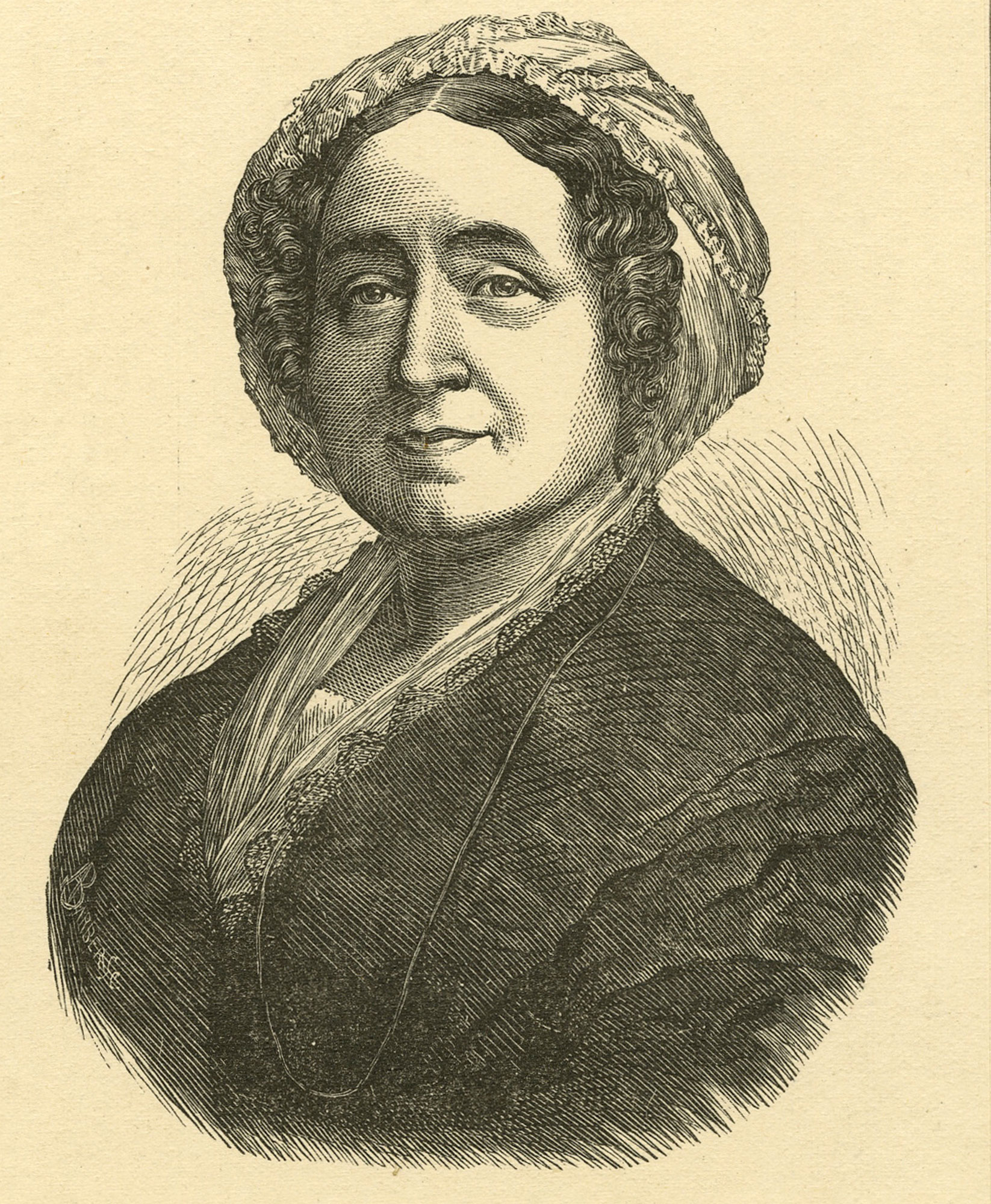 Woman’s Words (January 1878)
During her time tending to the wounded in Gettysburg, United States Sanitary Commission volunteer Almira Lincoln Phelps collected a few battlefield keepsakes she came to cherish, including a damaged New Testament she referred to as a “holy relic.”
Almira Lincoln Phelps, an acclaimed American scientist, educator, and author, worked for the United States Sanitary Commission during the Civil War and in 1864 published a description of her experiences titled Our Country, In Its Relations to the Past, Present and Future. The book contains a moving chapter titled “A Visit to the Battle-field of Gettysburg: The Four Relics.” Her account once again calls into question the line between genteel visitor and tasteless gawker. Phelps traveled to Gettysburg after the battle and soon visited the Theological Seminary, which housed a massive field hospital. Before setting about the important work of tending to the wounded, the women toured the battlefield and collected relics. Nearby the Seminary they encountered a party of soldiers gathering items—likely part of the massive military-led clean-up previously discussed. The women obtained, or viewed, a series of objects, which Phelps referred to as relics. She described a bowie knife, taken from one of the Louisiana Tigers, as being “such as any gentleman would like to own and keep as a parlor ornament, to be handed down to posterity as a memento of a civil war destined to be memorable through all coming time.”46 The soldiers also took a button inscribed with South Carolina’s motto, “Animis opibusque parati” (“prepared in mind and resources”). Insightfully, Phelps wrote: “Such things may seem to many the merest trifles,—but they are trifles which tell.”47 It was this concept of telling that attracted her to a slip of coarse yellow paper, folded and refolded countless times, shown to her by a fellow collector. “It told its own story much more forcibly than any poor words of mine can do. It was evidently a communication from a young wife to a young husband, the father of their two small children.”48 The owner of the paper only showed the women his great prize but would not surrender it. Phelps transcribed the letter for her own keepsake. She and her companions then traveled to Cemetery Hill and the surrounding area. They perused the grounds in search of another memento. They settled on a severed New Testament—their fourth and final relic. Once home Phelps stored the broken book in a private space. “I drew from a drawer in which I had carefully laid it, the holy relic, and read the whole of it attentively from beginning to end.”49 The object transported her back to the fight in powerful terms.
Phelps’ account is particularly revealing because of how evocative the relics she collected became. The items clearly spoke to her. And had power. While souvenirs certainly conjured responses, relics held deeper meanings and produced fuller emotions. They were, moreover, often linked to a specific individual. Although Phelps did not personally know the owners of the items she came to cherish, she did possess broad biographical details, especially with the letter fragment, that created a more meaningful narrative and connection. Phelps’ activities as a nurse and her quest to obtain relics powerfully illustrates the reigning tensions between the sacred and the profane, the pilgrim and the gawker.
Gettysburg would remain as a place for tourism and commemoration. As historian Jennifer Murray observes, “within weeks after the battle, local residents began to preserve key areas of the battlefield to further commemorate the Army of the Potomac’s grand victory.”50 Soon, the tourists became something more. Many styled themselves pilgrims who traveled to hallowed ground. The Soldiers’ National Cemetery featured prominently for such travelers. As did the battlefield. But so, too, were taverns, hotels, relic museums, and souvenir stands prime destinations. John Rosensteel, whose first artifact was a Confederate rifle picked up on the battlefield, created a private museum in 1888 near Little Round Top.51 The throngs of tourists prompted new businesses and tourism increasingly became a commercial enterprise.52 From railroad excursions to personalized battlefield tours, audiences clamored to see the fields over which the epic battle was fought. Businesses would now always be part of Gettysburg.53 But it all started in early July 1863 with the thousands of tourists, sightseers, and spectators who descended on the small Pennsylvania town to collect relics and gather artifacts. They pushed the boundaries of sentimentalist culture and understood the war differently. Their macabre fascination with the dead and eagerness to take items from the field forces us to consider how the Civil War produced a clear-eyed realism and a crass commercialism that rejected any competing tropes of romanticism.
James J. Broomall holds the William Binford Vest Chair in the Department of History at the University of Richmond. He is the author of Private Confederacies: The Emotional Worlds of Southern Men as Citizens and Soldiers (University of North Carolina Press, 2019).
Notes
1. J. Howard Wert, “In the Hospitals of Gettysburg, July 1863,” Harrisburg Telegraph, July 25, 1907. On dark tourism see especially, Tiya Miles, Tales from the Haunted South: Dark Tourism and Memories of Slavery from the Civil War Era (Chapel Hill, 2015).
2. See especially, Gregory A. Coco, A Strange and Blighted Land; Gettysburg: The Aftermath of a Battle (Gettysburg, 1995), Franny Nudelman, John Brown’s Body: Slavery, Violence and the Culture of War (Chapel Hill, 2004), Drew Gilpin Faust, This Republic of Suffering: Death and the American Civil War (New York, 2008), and Ian Finseth, The Civil War Dead and American Modernity (New York, 2017).
3. Coco, A Strange and Blighted Land, 79.
4. See especially, Louis Menand, The Metaphysical Club: A Story of Ideas in America (New York, 2001) and Peter S. Carmichael, The War for the Common Soldier: How Men Thought, Fought, and Survived in Civil War Armies (Chapel Hill, 2018).
5. Jim Weeks, Gettysburg: Memory, Market, and An American Shrine (Princeton, NJ, 2003), 4.
6. On the broader categories of visitors and pilgrims, see David W. Lloyd, Battlefield Tourism: Pilgrimage and the Commemoration of the Great War in Britain, Australia and Canada, 1919-1939 (Oxford, 1998), 13–21.
7. Thomas A. Chambers, Memories of War: Visiting Battlegrounds and Bonefields in the Early American Republic (Ithaca, 2012), 7–12.
8. Chambers, Memories of War, 3–4.
9. Lloyd, Battlefield Tourism, 13–21.
10. “Waterloo and Its Dental Legacy,” British Dental Journal, vol. 218, no. 12 (June 2015).
11. “Another Visit to Manassas,” The New York Times, March 15, 1862.
12. Liberty Hollinger quoted in Coco, A Strange and Blighted Land, 7.
13. Quoted in Coco, A Strange and Blighted Land, 6.
14. Tillie (Pierce) Alleman, At Gettysburg or What a Girl Saw and Heard of the Battle. A True Narrative (New York, 1889), 84. See also, Jim Slade and John Alexander, Firestorm at Gettysburg: Civilian Voices (Atglen, PA, 1998), 145.
15. M. Jacobs, “Later Rambles over the Field of Gettysburg,” The United States Service Magazine (New York, 1864), I: 66.
16. Leonard Marsden Gardner, Sunset Memories: A Retrospect of a Life Lived During the Last Seventy-five Years of the Nineteenth Century, 1831-1901 (Gettysburg, 1941), 75.
17. J. Howard Wert, “In the Hospitals of Gettysburg, July 1863,” Telegraph, July 2, 1907.
18. Ibid.
19. Ibid.
20. “A battle-field Vulture,” circa 1863, Shelby White and Leon Levy Digital Library, The New York Historical Society, digitalcollections.nyhistory.org/items/163879-battle-field-vulture-godfor-name-one-those-inhuman-creatures-who-follow-wake-armies (accessed March 2, 2025).
21. The Story of Our Regiment: A History of the 148th Pennsylvania Vols., Written by the Comrades, ed. by J. W. Muffly (Des Moines, 1904), 465.
22. Aug[ustus] Shriver to “Dear Andrew,” October 21, 1863, in Pastime: Life and Love on the Homefront During the Civil War, 1861-1865, ed. by Helen Drury Macsherry (Westminster, MD, 2013), 189.
23. Quoted in Margaret S. Creighton, The Colors of Courage, Gettysburg’s Forgotten History: Immigrants, Women, and African Americans in the Civil War’s Defining Battle (New York, 2005), 149.
24. McCurdy quoted in Coco, A Strange and Blighted Land, 346.
25. Albertus McCreary, “Gettysburg: A Boy’s Experience of the Battle,” McClure’s Magazine 33 (May-October 1909): 253.
26. Ibid.
27. Ibid.
28. Megan Kate Nelson, Ruin Nation: Destruction and the American Civil War (Athens, 2012), 104.
29. J. Howard Wert, A Complete Hand-Book of the Monuments and Indications and Guide to the Positions on the Gettysburg Battle-Field (Harrisburg, PA, 1886), 200–201.
30. O.O. Howard, “Campaign and Battle of Gettysburg, June and July 1863,” The Atlantic Monthly, vol. XXXVIII (Boston, 1876), 66. See also, Randolph H. McKim, “Steuart’s Brigade at the Battle of Gettysburg,” Southern Historical Society Papers, vol. 5 (Richmond, VA, 1878), 296–297.
31. Frank A. Haskell, The Battle of Gettysburg (1908), 172.
32. “Gettysburg. Present Appearance of the Village and the Battle-Field—The Grounds and the Monuments,” The New York Times, August 16, 1869.
33. S. Williams to Gen. William F. Smith, July 6, 1863, in United States War Department, The War of the Rebellion: A Compilation of the Official Records of the Union and Confederate Armies 128 vols. (Washington, DC, 1880-1901), Series I, Vol. 27, Part III, 579 (hereinafter OR).
34. D. Scott Hartwig, “The Quartermaster’s Tale,” March 23, 2013, at The Blog of Gettysburg National Military Park. (accessed March 3, 2025).
35. W. Willard Smith to Meigs, July 29, 1863, quoted in Coco, A Strange and Blighted Land, 324. See also, D. Scott Hartwig, “The Quartermaster’s Tale.”
36. Coco, A Strange and Blighted Land, 311.
37. Rufus Ingalls to M.C. Meigs, July 8, 1863, OR, Series I, Vol. 27, Part III, 607.
38. Greg Goodell, “From Battlefield to Exhibition: The History and Evolution of Archives and Museum Collections at Gettysburg,” Preservation and Progress: A Publication of the Gettysburg Foundation, vol. 35, issue 1 (February 2024): 4.
39. W. Willard Smith to M.C. Meigs, July 25, 1863, quoted in Hartwig, “The Quartermaster’s Tale.”
40. Slade and Alexander, Firestorm at Gettysburg, 167.
41. Pierce, At Gettysburg, 107.
42. “Souvenir,” Oxford English Dictionary.
43. Ibid.
44. Matthew Dennis, American Relics and the Politics of Public Memory (Amherst, 2023), xi.
45. Mrs. [Almira] Lincoln Phelps, Our Country, In Its Relations to the Past, Present and Future (Baltimore, 1864), 268.
46. Ibid., 269.
47. Ibid.
48. Ibid., 282.
49. Jennifer M. Murray, On a Great Battlefield: The Making, Management, and Memory of Gettysburg National Military Park, 1933-2013 (Knoxville, 2014), 11.
50. Goodell, “From Battlefield to Exhibition,” 4.
51. Amy J. Kinsel, “‘From these honored dead’: Gettysburg in American Culture, 1863-1938,” Ph.D. dissertation, Cornell University, 1992, 264.
52. Kinsel, “‘From these honored dead,’” 264.
53. Civil War Americans often interchangeably used the terms artifact, relic, and trophy. But each word has a distinct history and definition and, where possible, will be used with greater nuance in this article.