 Library of Congress
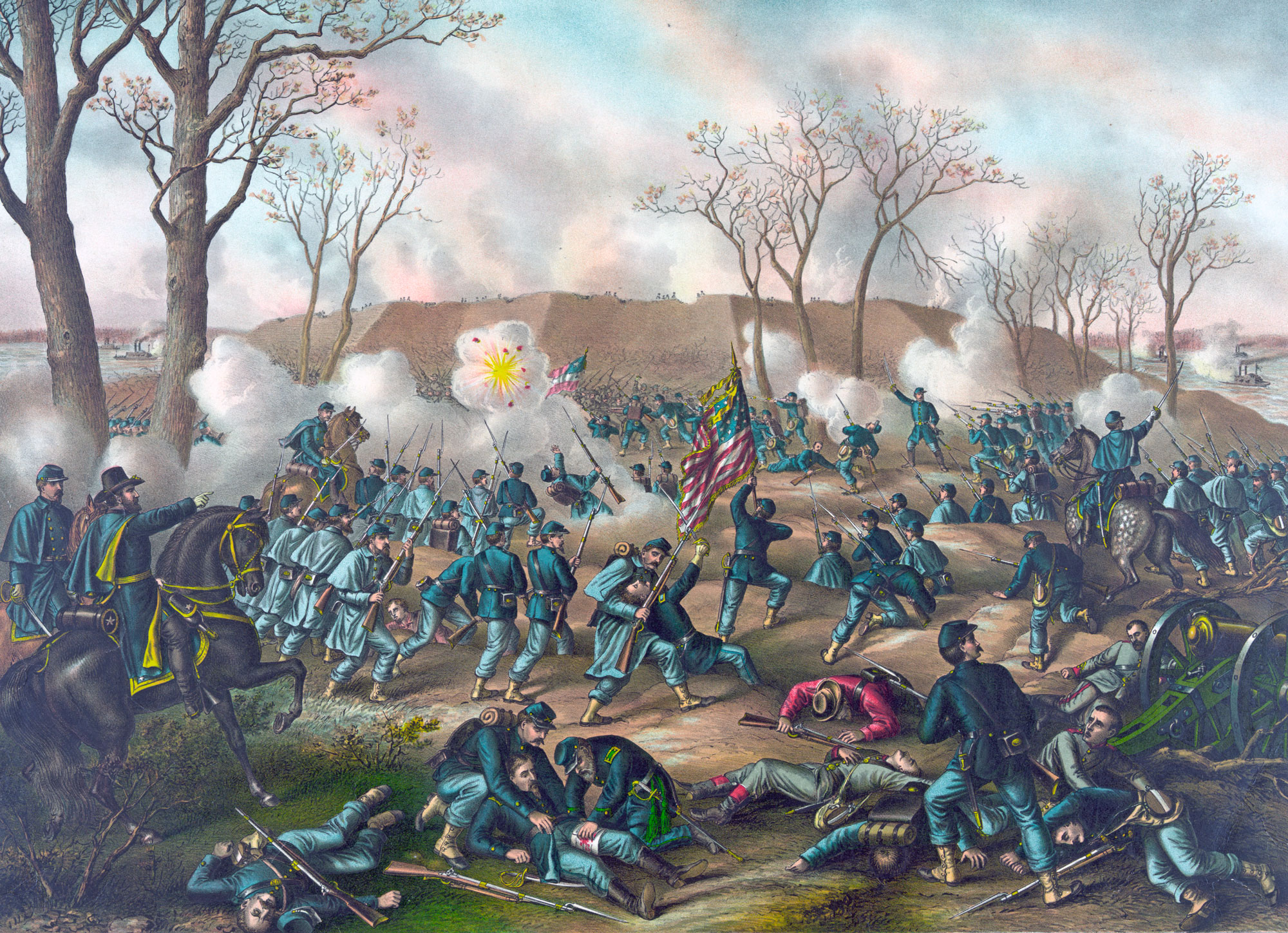
In this lithograph by Kurz & Allison, Union forces are depicted storming Fort Donelson during the battle fought there on February 15, 1862. The decisive Union victory was aided in part by incompetence among the fort’s Confederate commanders.
In February 1862, the Battle of Fort Donelson in Tennessee marked an early turning point in the American Civil War. It not only represented a major Union victory under Brigadier General Ulysses S. Grant, but it also exposed critical weaknesses in Confederate leadership and command structure. Decisions were marked by palpable confusion among the southern high command and resulted in missed opportunities, indecisive actions, and, ultimately, surrender.
Fort Donelson, on the Cumberland River near the Tennessee–Kentucky border, was an important obstacle to Union invasion of the South. Donelson, along with nearby Fort Henry, was part of the Confederate defense set up on the Tennessee and Cumberland rivers and intended to block Union incursions into the southern heartland. Behind that defensive line lay Nashville and the Tennessee interior, so Confederate leadership desperately wanted the forts held.
But Fort Henry fell quickly on February 6, and attention shifted to Fort Donelson, which was more heavily fortified and manned by a larger force. As Grant advanced overland to threaten the fort, he coordinated his movements with Union gunboats on the Cumberland commanded by Flag Officer Andrew H. Foote. By February 15 Union forces had survived some difficulty and had the Confederates at Fort Donelson bottled up and surrounded.
The commanders at the fort were several high-ranking officers with overlapping or unclear authority. Brigadier General John B. Floyd, a former U.S. secretary of war with little battlefield experience, was in nominal command. Under him were Gideon J. Pillow and Simon B. Buckner, both brigadier generals. Pillow had more military experience than Floyd, while Buckner was a capable officer and former classmate of Grant’s at West Point. The lack of a unified and stable command hierarchy set the stage for dysfunction.
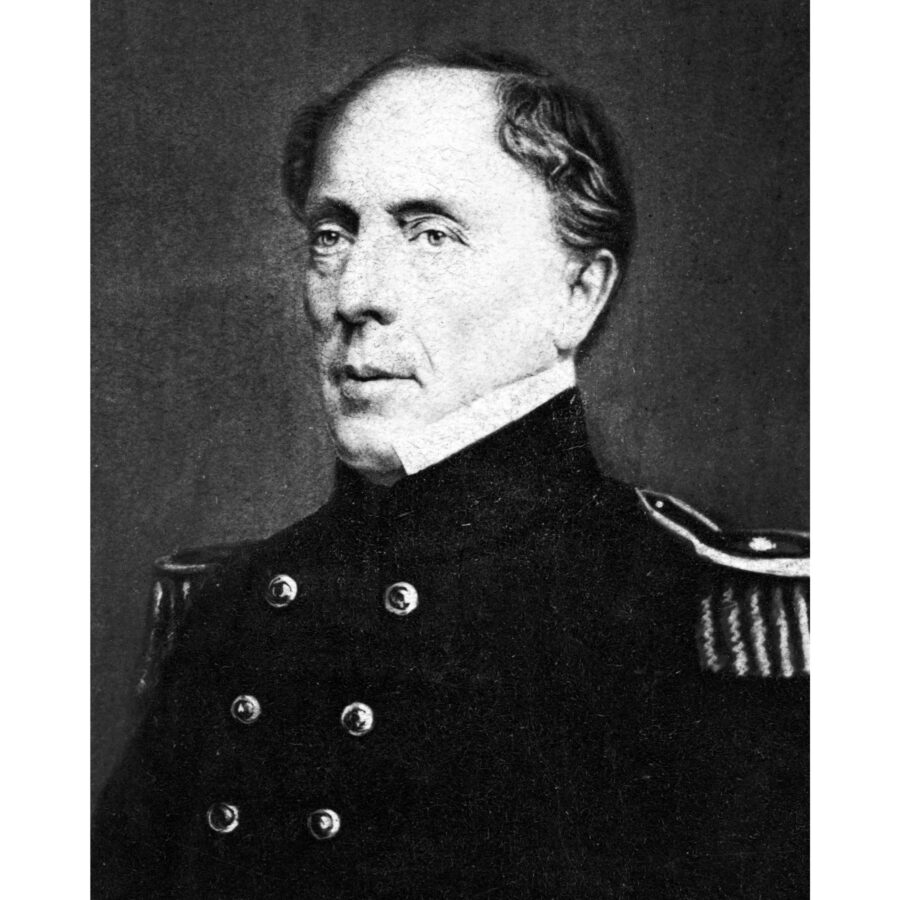 Library of Congress
John B. Floyd
Command confusion became evident even before the fighting intensified. Pillow had held command at the fort; when Floyd arrived, he took over, despite being less qualified. But Floyd was to waver in his leadership role, often deferring to Pillow, who was brash and prone to poor strategic decisions. At times, orders were given and then countermanded with no clear strategic purpose, undermining troop morale and operational coherence.
This lack of clarity culminated in the events of February 15, when the Confederates launched a surprise breakout attempt aimed at opening an escape route to Nashville. Grant had made plans that day to visit Foote at his flagship, and left his army without designating a second-in-command. The breakout attack, led by Pillow and supported by Buckner, aimed at the relatively unprotected right flank of Grant’s army, and Pillow initially succeeded in driving those forces back.
After achieving this tactical success, Pillow ordered the troops to return to their trenches, thus forfeiting the opportunity for escape. This critical decision was made without clear communication or consensus among the Confederate commanders; Pillow apparently believed the best course would be to withdraw and prepare for evacuation. Bewildered at this, Floyd chastised Pillow, who would later sniff, “I was conscious of the commission of no errors.”1
Buckner, who was prepared to continue the breakout, was also left frustrated and confused, but when he protested, Floyd told him to follow Pillow’s orders. This indecision, coupled with a lack of coordination, surrendered the initiative and allowed Union forces to regroup and reoccupy the positions the Confederates had temporarily cleared. Grant quickly exploited the enemy’s blunder, tightening the noose around the fort.
On the night of February 15-16, realizing the situation was hopeless and that Union reinforcements had made escape unlikely, the three Confederate commanders conferred on what to do next. Floyd, fearing capture and prosecution for treason (he had, after all, been a U.S. Cabinet secretary), decided flight was the prudent option for him.
Pillow favored an aggressive approach and was supported by cavalryman Nathan Bedford Forrest when he proposed fighting through the Union stranglehold to escape. Buckner and Floyd demurred. Pillow claimed he told the others, “Gentlemen, if we cannot cut our way out or fight on there is no alternative left us but capitulation, and I am determined that I will never surrender the command nor will I ever surrender myself a prisoner. I will die first.”2 Forrest, disgusted at the back-and-forth and determined not to needlessly squander his troops, decided to lead his command out on his own, which he did successfully.3 Pillow—to whom Floyd had turned over his command—then proceeded to change his mind, and in turn passed command to Buckner before fleeing by riverboat across the Cumberland. This chain of abandonment represented a shocking collapse of leadership under pressure and deeply tarnished the reputations of Floyd and Pillow.
Buckner—now the ranking officer (Floyd, accompanied by several Confederate regiments, also escaped by boat)—was left, in an ironic twist, to negotiate surrender terms with his old friend Grant, who famously demanded and received “unconditional and immediate surrender.”
The confusion and mismanagement at Fort Donelson had several far-reaching consequences. First, the loss of the fort gave the Union control of the Cumberland River, opening a pathway into the southern interior and forcing the Confederates to abandon large portions of Tennessee. Second, it elevated Grant’s reputation in the North and began his rise to high command. Conversely, it exposed the weakness of Confederate command structures and the problematic ineptitude in officers like Floyd and Pillow.
Moreover, the events at Fort Donelson became a case study in the critical importance of unified, decisive command during wartime. The Confederate high command’s failure to act cohesively, and their leaders’ inclination to prioritize personal concerns over military necessity, not only led to a humiliating defeat but also squandered what could have been a successful breakout.
The Confederate command confusion at Fort Donelson was not merely a tactical failure; it was a symptom of broader issues within the southern war effort—namely, poor leadership selection, fragmented command structures, and insufficient communication. The surrender of Fort Donelson was a critical point in the war, and much of its happening can be traced to the indecisiveness and disorder among its Confederate commanders. Their inability to coordinate and lead effectively in a moment of crisis ensured not just the fall of a fort, but the unraveling of an entire defensive line.
Andrew S. Bledsoe is professor of history at Lee University in Cleveland, Tennessee. He is the author of Citizen-Officers: The Union and Confederate Volunteer Junior Officer Corps in the American Civil War (Louisiana State University Press, 2015); co-editor, with Andrew F. Lang, of Upon the Field of Battle: Essays on the Military History of America’s Civil War (LSU Press, 2019); and author most recently of Decisions at Franklin: The Nineteen Critical Decisions That Defined the Battle (University of Tennessee Press, 2023).
Notes
1. United States War Department, The War of the Rebellion: A Compilation of the Official Records 129 vols. (Washington, 1880–1901), Series I, Vol. 7, 333.
2. Ibid., 288.
3. Ibid., 295–296.