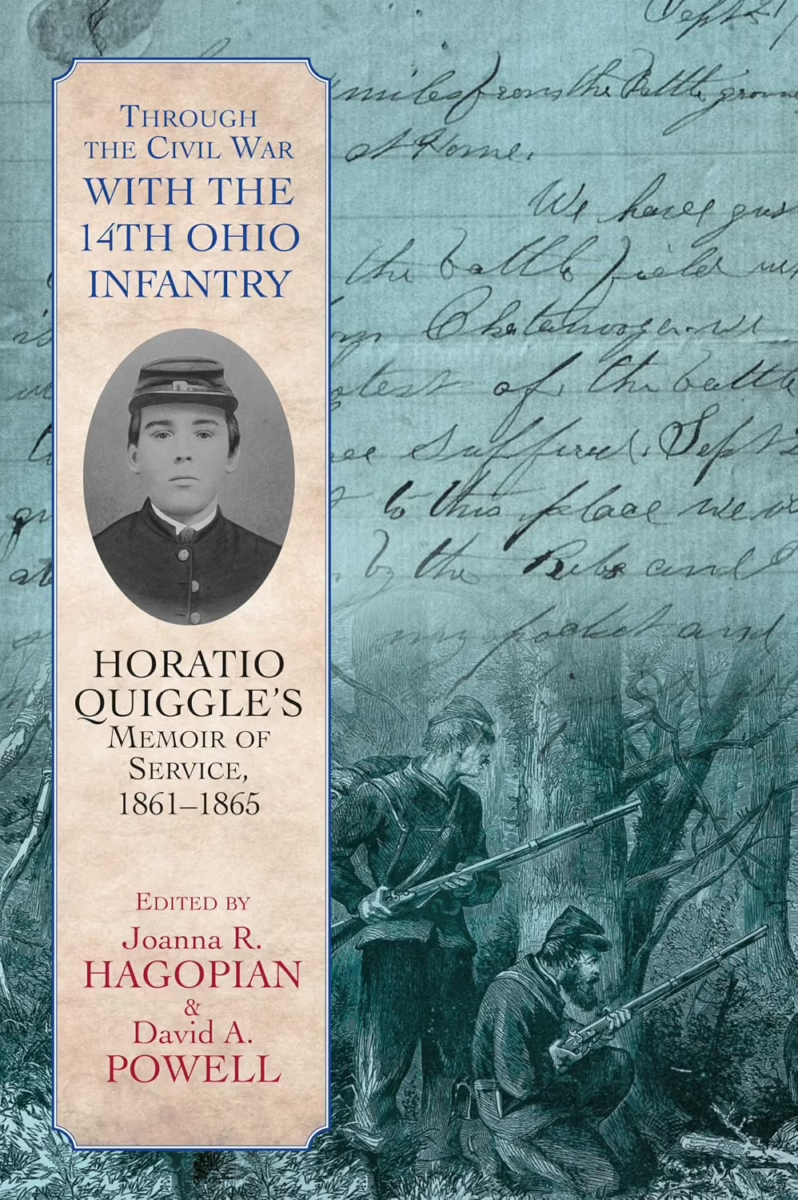
The Civil War recedes ever farther into the past, though this has done little to hinder the steady flow of publications of the letters, diaries, and reminiscences of those who experienced the conflict. Through the Civil War with the 14th Ohio Infantry is one of the newest additions to the genre. In this work, editors Joanna Hagopian and David Powell present the memoir of Horatio Quiggle, a private in the 14th Ohio Volunteer Infantry who composed this account of his service for his family near the turn of the twentieth century.
Originally from northwestern Ohio, Quiggle enlisted at the age of twenty-three upon hearing news of Fort Sumter’s surrender; he served until the war’s end, mustering out shortly after participating in the Grand Review in Washington, D.C. During that time, Quiggle confronted many of the challenges commonly experienced by infantrymen, including subpar rations, boredom while in camp, and long marches made miserable by a lack of water (or an excess thereof). Quiggle’s account further demonstrates to readers the many minor tragedies that befell regiments over the course of the war. Besides the near-constant casualties incurred by disease, the 14th Ohio lost men to accidental discharges, drownings, or shootings by nervous sentries—a far cry from the heroic deaths in battle the volunteers had envisioned.
One notable aspect of Quiggle’s service was the fact that he was joined by his younger brother, Osro, who enlisted as a drummer boy in 1861. Quiggle provides insights into the experiences of the many soldiers who fought alongside their kin; he addresses the moments of anxiety or relief as the brothers saw one another through years of illnesses, battles, and brief separations. Quiggle even went against his better judgment by reenlisting at the end of his three-year term of service because Osro had already done so without consulting him; Horatio felt duty-bound to stay with his brother as long as he was in the service. It is therefore quite moving to read of Quiggle’s reaction to the news that Osro had been killed while foraging during Sherman’s March to the Sea, which Quiggle admitted “was a terrible shock to me and I haven’t ever gotten over it to this day” (84).
While Quiggle’s descriptions of his role in earlier engagements such as the Battle of Philippi or the Siege of Corinth are relatively brief, his narratives of later battles are clear highlights. Quiggle devotes a significant portion of the memoir to the Battle of Chickamauga, which he felt was “the greatest battle of the war” (41). From there, Quiggle’s accounts of surviving off cow’s brains during the Siege of Chattanooga, charging rebel fortifications during the Atlanta Campaign, and contending with bushwhackers during the March to the Sea constitute a valuable narrative of how he and his comrades experienced this final portion of the conflict.
In addition to Quiggle’s writings, the editors’ contributions enhance the book’s value through numerous annotations. These footnotes provide more detail on individuals or events that are mentioned in the text. They also “provide the odd minor correction to an old man’s memory” when Quiggle misstated certain details (vi). The editors also include letters sent into the Toledo Blade by other men in the 14th Ohio, which are helpful in further contextualizing the service of Quiggle and his regiment.
Skillful editing, Horatio Quiggle’s breadth of experiences over more than four years of service, and his vivid descriptions of camp life and battles combine to make Through the Civil War with the 14th Ohio Infantry a fine addition to the body of Civil War soldiers’ memoirs. Readers interested in Ohio troops or the war’s Western Theater will no doubt appreciate Quiggle’s attention to detail throughout this book.
Jeremy Knoll is a Ph.D. candidate in the Department of History at The Ohio State University.