 Library of Congress
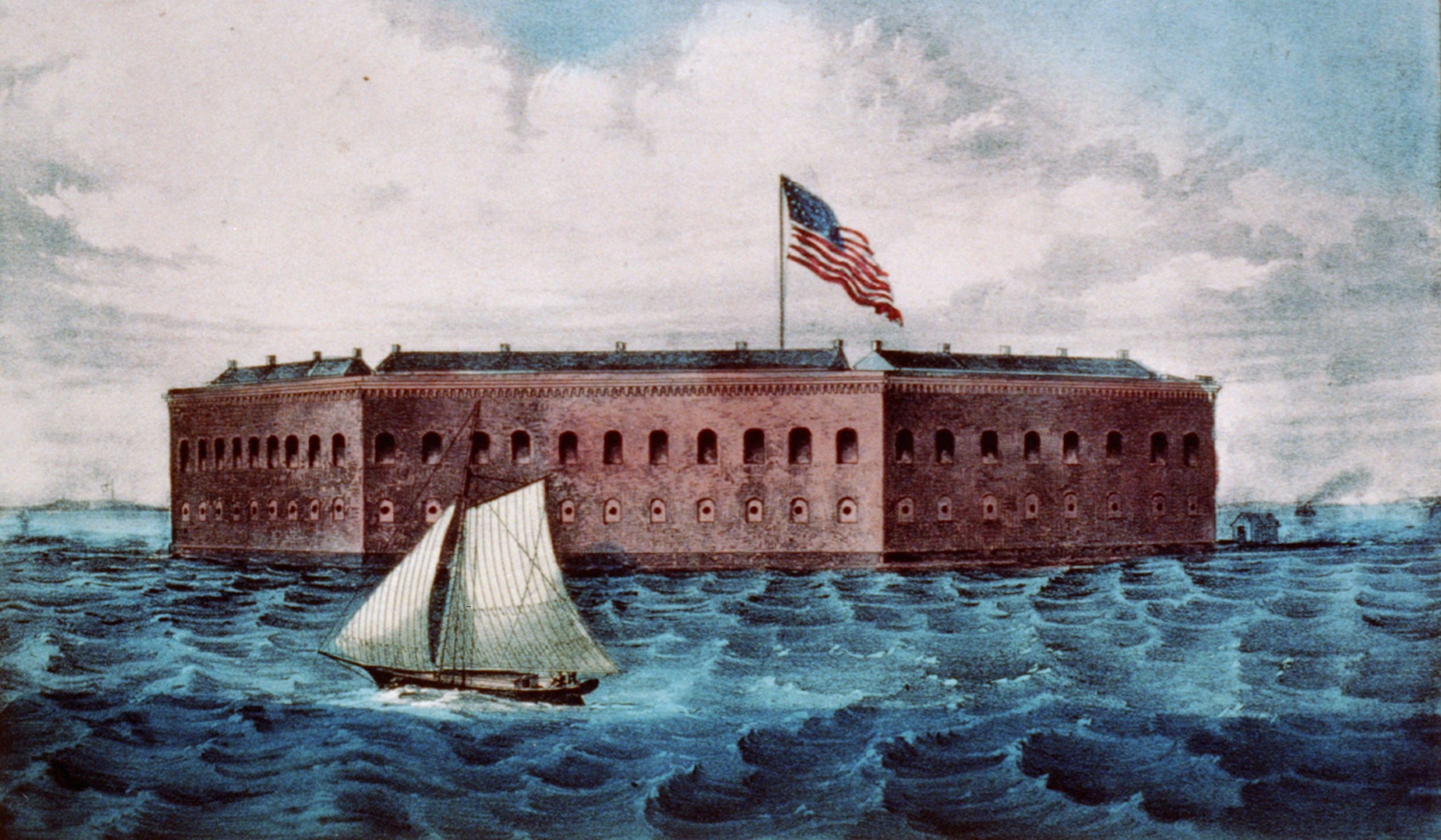
This Currier & Ives illustration depicts Fort Sumter as it appeared before the bombardment of April 1861.
“All is over now—the peril, the anxiety, the conflict—the result is known; and the details which led to that result—the inner works, upon which speculation so persistently blundered, may as well be known also.” So wrote Miss A. Fletcher about the months-long struggle for Fort Sumter in Charleston Harbor after Union forces formally surrendered and evacuated the bastion on April 14, 1861. Fletcher, wife of the captain of the steamship Baltic, which ferried Sumter’s garrison to New York after the surrender, published a gushing account of the bravery and patriotic resolve demonstrated by the embattled Union garrison led by Major Robert Anderson. Fletcher’s tale focuses attention not only on the political and military struggle, but also on the approximately 45 women and children—the families of Union officers and enlisted men—who lived in the fort in early 1861 before being evacuated to New York in February. Part of her account, spanning from December 1860 to January 1861, is reproduced below:
On the 20th of December, a State Convention, then assembled in Charleston, unanimously resolved on secession, and, on the 24th of that month the Declaration of South Carolina, withdrawing herself from the Federal Union, was publicly announced and acted upon. The excitement among the Revolutionists was intense, Fort Moultrie was in danger of attack, and, Captain Foster reporting to Major Anderson the fitness of Fort Sumter for occupation, measures were immediately taken to effect a silent and speedy removal.
On Wednesday evening, the 26th of December, just after sun-set, three little schooners, with four or five barges, were anchored under the walls of Fort Moultrie; and the little company were busily engaged in the work of transferring their effects on board. The Surgeon, with all the essentials of his office, and the Hospital furniture, were moved first; then the women, with their children and household treasures; next went the light arms and ammunition—the soldiers and their equipments; and last the officers, who, all through that night, had stood around their Commander, as true and brave men always do in hours of emergency. The flight was effected without discovery….
 National Archives
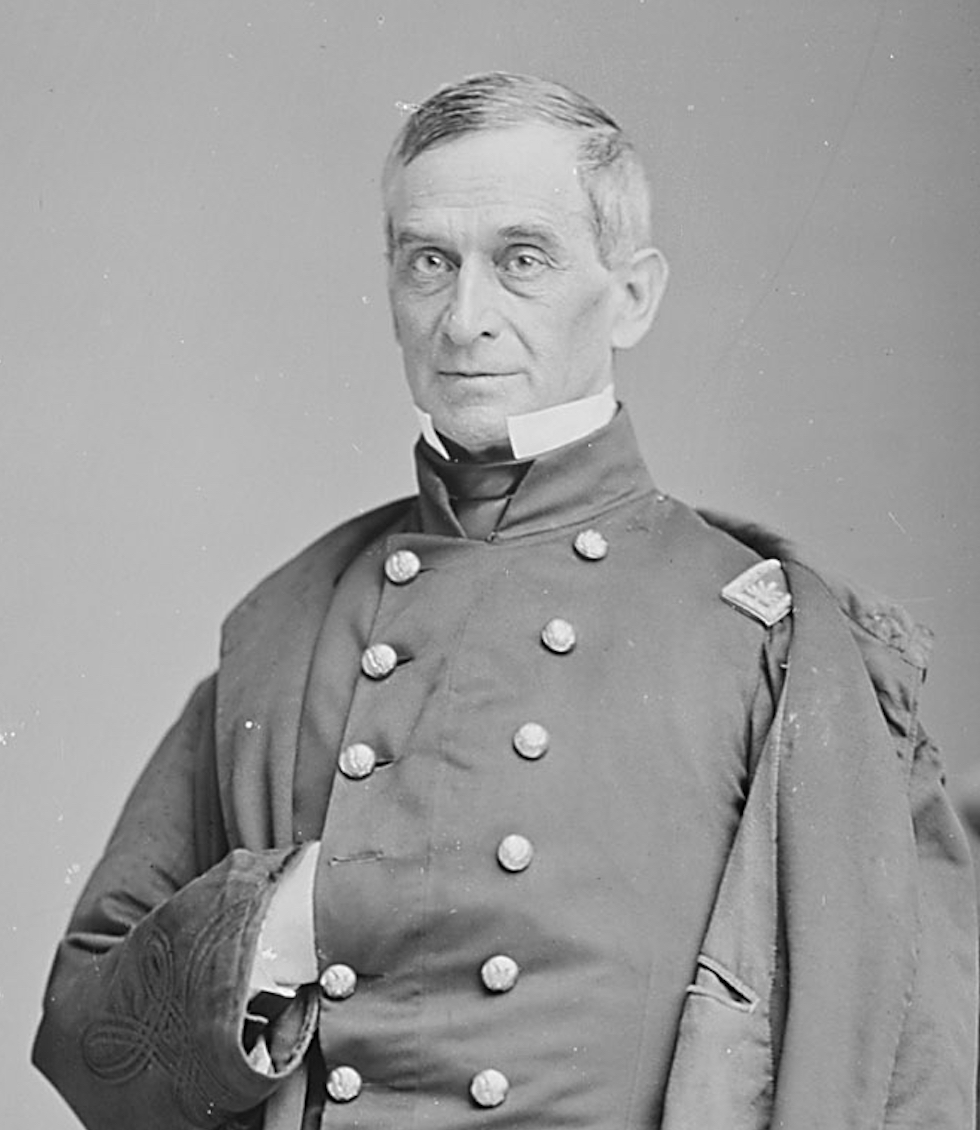
Major Robert Anderson, the commander of the Union garrison at Fort Sumter
[T]he Commander of Fort Sumter is busily preparing for expected action. All is activity within the stronghold; the men engaged in strengthening defenses and mounting guns, the women in arranging the quarters. The latter soon discovered that the sudden and hasty removal had not been without inconvenience, in a pecuniary sense, —furniture and clothes had been damaged, and small valuables lost; but there was no murmuring. To one couple the loss amounted to two hundred dollars’ worth; but the wife smiled as she re- marked: “We have one another yet, though, thank God.”
All honor to such soldiers’ wives! May the country never supply to her fighting sons any less worthy!
The single men had less to lose, but they fared no better, for their barrack contained only empty walls. Bunks were put up, into which shavings were thrown, to serve as beds; and rude, and hastily constructed tables and benches completed the furniture; but, brave fellows, no thought of personal discomfort mingled with their deep sympathy in their commander’s stern and trying position, and the all pervading feeling of every heart was the manly determination to do their whole duty to the last.
And so they worked heartily, day after day, more securely fortifying their stronghold; and feeling confident in its capacity for either resistance or attack, whichever might be demanded of it. Upreared from the water it was only assailable by a fleet; and the outer wall, of solid, concrete masonry, twelve feet in thickness and sixty feet in height, bid bold defiance to invading force. It was pierced for one hundred and forty guns, but was not furnished with much more than half that number. These, however, were mounted and placed in the most salient points, looking formidably forth on the surrounding scene, able and willing for effective work.
Nor was the busy garrison unobservant of what was going on outside. They could see the Secessionists, also at work, restoring Fort Moultrie and building batteries. And O! how they longed to open the mouths of their cannon upon them, and put an end to preparations which, they knew, were intended for their own injury! But no warlike demonstration would Major Anderson make, so long as the other party were willing to remain at peace; besides that he had hopes of a favorable termination of the difficulty being effected in Washington….
At last, on Wednesday morning, January 9, [1861,] the long-looked-for succor appeared: a steamer bearing the American flag, was approaching. The garrison were in ecstacy: but their joy was soon turned to indignation, for scarcely had the vessel entered the waters of the harbor, when the revolutionary batteries opened fire upon her. The time for action seemed to have come now; and every man rushed to his post, ready for the word of command. But the word came not. The Major stood on the rampart, the glass to his eye, scanning the scene, until the steamer, shocked and insulted at her rude reception, turned and put back to sea. Then the Major descended, retired to his apartment, and wrote a letter, which he deputed Lieutenant Hall to bear to the Governor.
The boat with its white flag departed, while excitement reigned through the garrison. The men—even the women were wild with impatience to avenge the affront put upon their country’s flag. A United States vessel fired into and the daring act unpunished! It required all the authority of the officers to keep the guns from speaking: it took all their affection for, and all their faith in the judgment of their commander to keep the men still, while the women urgently offered their own assistance. One fair enthusiast bared her white arm, and, with a friction tube in her fingers, sprung to a gun, declaring she would fire it herself. She was a tall, young, bright-looking woman; a fine specimen of proud Virginia’s daughters.
 National Archives
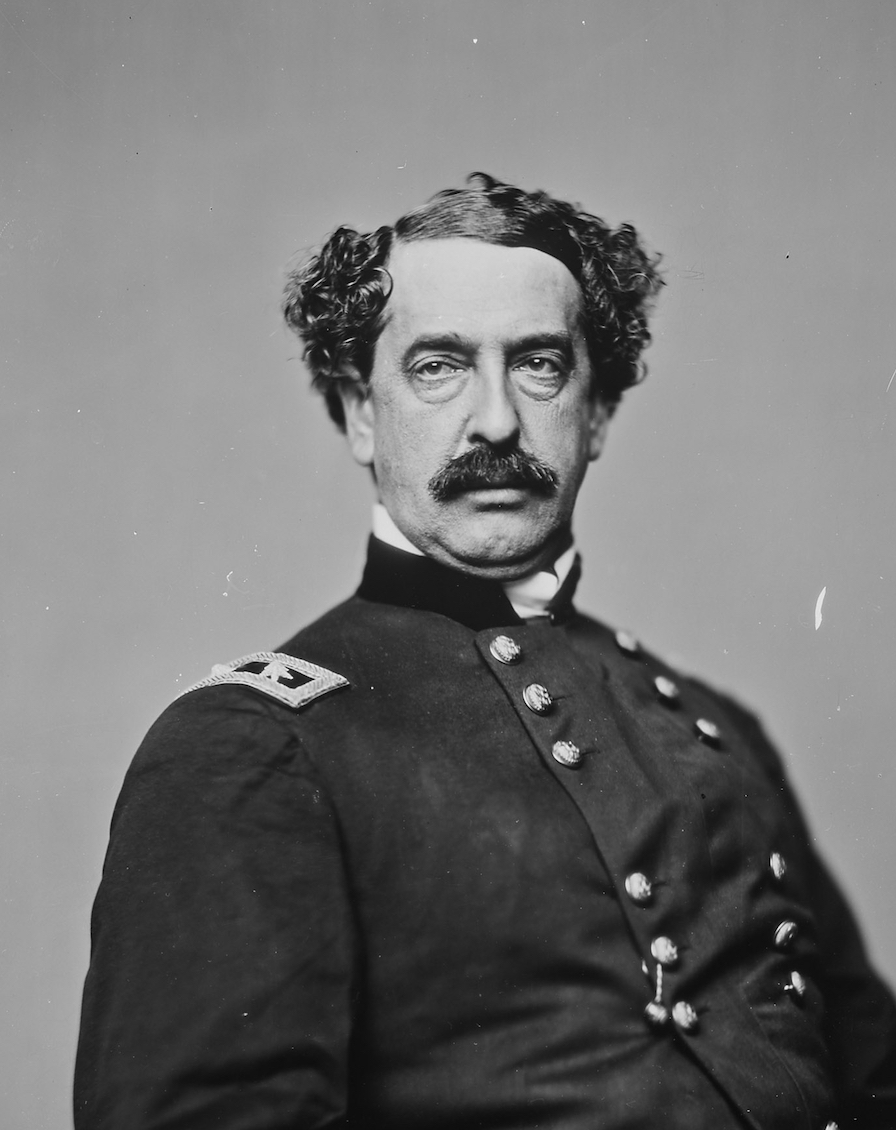
Abner Doubleday
“You have a great deal of courage,” said Captain [Abner] Doubleday, as he gently drew her back from the gun.
“Courage!” she exclaimed—and her form became erect, and her eye lighted up, —“I should think, Sir, a soldier’s wife ought to have courage!”
This lady’s husband, John H. Davis, was a Marylander; and here we may mention that of all the loyal hearts in that loyal little band, none beat more truly than those of natives of Southern States….
About this time [early January] rumors got afloat of disaffection and mutiny among the soldiers of the fort; and the indignant blood rushed to the honest cheek of every man and woman of the little band as they read, in the newspapers, these cruel and injurious calumnies. They thirsted, more than ever, for an opportunity to display their staunch devotion to the cause of Government. Before their bravery was to be tested, now their honor was to be vindicated; and each heart panted for the hour when, either with their arms or their lives, they should wipe out the treacherous falsehood.
This feeling pervaded the whole company; and when, on the 11th of January, commissioners from Charleston, under a flag of truce, came to Major Anderson to demand the surrender of the fort, the reply was, “We will fire the Magazine, and be buried in one common ruin, before we will surrender!”
The sentiment was echoed by loud and prolonged cheers from every voice in the garrison.
What use to propose base terms to such men?
Still under the hope, however, of a peaceable adjustment of the national difference, Major Anderson consented to unite with South Carolina in sending a deputation to Washington to ask the evacuation of Fort Sumter; and, accordingly, on the 12th of January, Lieutenant Hall, on the part of Major Anderson, and Colonel Hayne on that of South Carolina, departed on that mission.
January 18 brought the return of Lieutenant Talbott, with the reply of the Administration to the despatches of which he had been the bearer; by which the Commander of Fort Sumter was advised that his line of action was highly approved by his Government; that it was decided not to make another attempt at reenforcing him at present; and also instructing him to suffer no indignities to the American flag, —if any such were again offered, to open his batteries upon the perpetrators.
The want of fuel began to be felt now in the garrison. The weather had been mostly pleasant, so that they had been permitted to use their store with economy; but it would hold out no longer—it must be replenished. With this view a boat containing nine men was sent to shore; but the men were seized and made prisoners. The Governor, however, when made aware of the fact, ordered their discharge….
January 23d. The Southern Confederacy became organized. It was no longer the State of South Carolina, with which the Federal Government had to contend, but several States combined. An amicable settlement seemed farther off than ever.
That an attack would soon be made upon Fort Sumter was evident: preparations with that intent were fast progressing; and this consideration, joined to the desire to reduce the consumption of his store of provisions, decided Major Anderson to send from the fort all but the efficient fighting men.
To the soldiers’ wives this was a distressing contingency; but no word, no sign showed an unwillingness to comply with whatever was best under the circumstances. With smothered sighs and suppressed tears the women prepared to depart—very different was the cheerful alacrity with which the same preparation was entered upon a month before: poor things! they left Moultrie with their husbands, they left Sumter without them. January 25th the removal took place: the women and children, and such of the workmen as were not willing to serve in a military capacity, left the fort—the strong and brave were alone. Perhaps it should have been written the stronger and braver, for many a woman and child departed that day who, to the utmost of their ability, would have done and dared as much as their husbands and fathers. This had been seen in all their bearing; and, even in the last hour, when the sobbing farewells were spoken, words of hopeful encouragement were all that flowed from their gentle lips—in not one case did affection breathe the dastardly counsel to self-preservation.
“We have been seven years married” said one, “and I never had reason to find fault with you; now, whatever may happen, I shall never have cause to blush for you.”
“And I don’t want you to think of us, Ben,” said another, though her swollen eyes belied her words; “the children and myself will get along, and you’ll have enough to think of here.”
And another, holding a large, coarse hand between her own, and leaning her head against the brawny shoulder, whispered with quivering lips: “May God bless, and take care o’ you, Thomas—I’ll never cease to pray for you; but do your juty, do your juty, darlint—God forbid that my love should intherfere with that.”
This last, from her tongue, was a child of green Erin; and her husband, Thomas Carroll, did his “juty” well, when the hour for duty came—and carried a wounded face away from Fort Sumter.
There was bright and beautiful weather in Charleston Harbor; but the light was all gone from the stronghold over which the American banner waved. What were sparkling waters and gay sunshine to those who had just lost the sweet smile of woman—the merry laugh of childhood? Nothing was around them, or before them, now, but hard, stern service….
Sources
[Mrs. A. Fletcher,] Within Fort Sumter: Or, A View of Major Anderson’s Garrison Family for One Hundred and Ten Days (1861); Jo Ann Daly Carr, “The Families of Fort Sumter and the Crib Left Behind,” Battlefield Photographer Vol. 22, No. 3 (December 2024): 17, n. 44.
Related topics: women