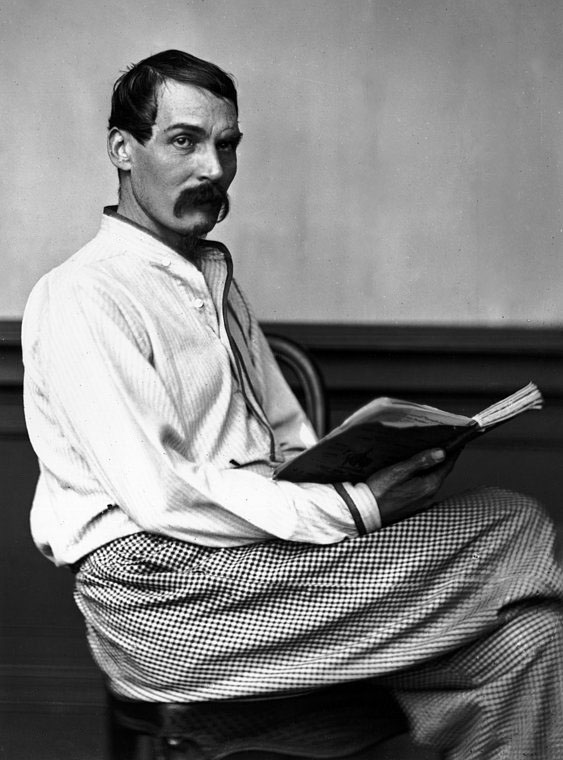
 Hulton Archive
Sir Richard Francis Burton in 1864
British explorer Sir Richard Francis Burton led an explorer’s life. He was among the first Europeans to see Lake Tanganyika, on a famed expedition to locate the source of the Nile. He was a veteran of the Crimean War. An accomplished linguist who spoke dozens of languages, he translated Arabian Nights for an English audience. And in 1853 he undertook a journey to Mecca, the holiest city of the Islamic faith. Few men saw more of the 19th-century world than did Burton, who recorded his explorations of Asia, Africa, and South America for eager readers.
Given that Burton typically traveled to exotic locales, one might suspect Google’s AI overview of his life for claiming that “he did not visit Australia or North America” in his seven decades (1821-1890) on earth. But Google’s AI is wrong. Burton visited the United States in 1860. Still, it feels fair to ask, when Bombay, Medina, and Zanzibar beckoned, why would Burton visit Philadelphia, New Orleans, or St. Louis?
To see the Great Salt Lake—to visit the American West. That is why Burton set out for St. Louis in the spring of 1860. He was undertaking a new pilgrimage, he told his readers, to “a young Meccah in the West.” Burton came to the United States on the eve of the American Civil War not to observe the strained relations between North and South, not to record his impressions of the barbarism of American slavery, not to hunt big game on the prairies, but to learn more about the Mormon faith, and the migration of its adherents to Utah. Burton traveled by stagecoach and followed the principal route of the Oregon Trail, leaving from St. Louis and journeying through Kansas, Nebraska, and Wyoming before reaching Utah.
As his guide, Burton took Randolph B. Marcy’s The Prairie Traveler, published by the United States War Department in 1859. Marcy is perhaps best known to Civil War historians as George B. McClellan’s father-in-law and chief of staff (he was an 1832 West Point graduate), but was known in his own time as the leading authority on western travel and exploration. Sales figures are difficult to recover, but it is safe to say that The Prairie Traveler reached an audience far beyond the westbound pioneers for whom it was written. In 1861, one of the nation’s leading publishing houses, Harper and Brothers, brought out an edition of the original War Department publication. Just two years later, Burton offered the tome to his English audience, accenting Marcy’s text with his own observations and experiences of the American West.
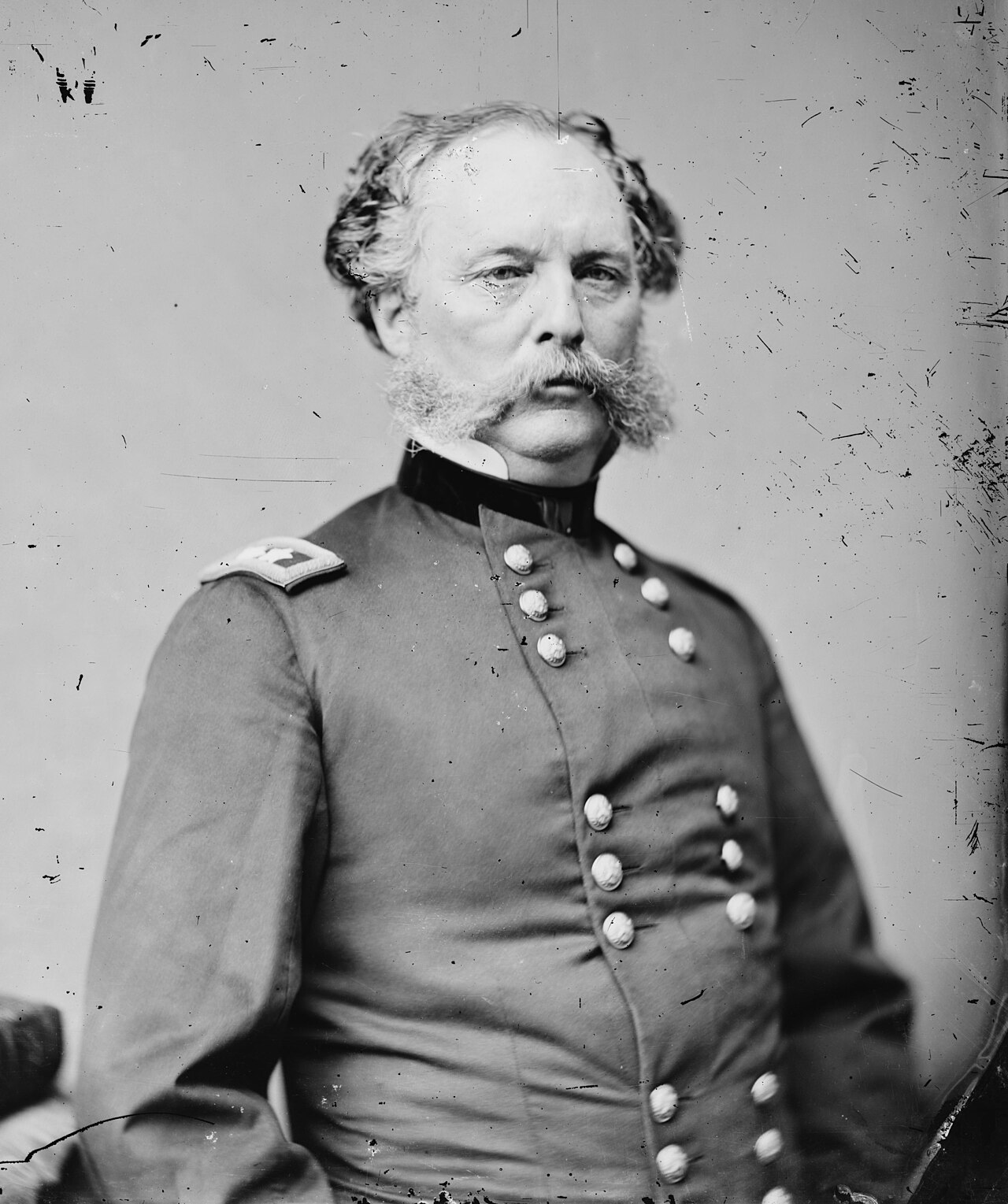 Library of Congress
Randolph B. Marcy, author of “The Prairie Traveler.”
And while Burton did not make military affairs or politics the subject of his journey to the United States, he arrived as the nation lurched toward civil war. In fact, Burton’s western travels coincided with one of the most divisive years in American history. Abraham Lincoln’s candidacy for the presidency, the collapse of the Democratic Party into northern and southern factions, the fissure of traditional faiths into regional sections, and John Brown’s execution in December 1859 all formed the backdrop for his visit. Burton’s indifference to America’s sectional conflict might seem strange, but it was consistent with his interests. He was not a political observer. He studied cultures, religions, and landscapes. His fascination with Mormonism was part of a broader attempt to make sense of the world’s faiths, not as an entry point to mock a young, and distinctly American, religion.
Burton left St. Louis in May 1860 and quickly discovered the miseries of traveling overland in the West. Stagecoaches were hot and cramped, with plush suspension only a dream to be contemplated as passengers were frequently jolted from their seats. Even worse, the food along the way proved offensive in its blandness. Yet Burton delighted in the frontier scenery. Passing through Missouri into Kansas, he described the rolling prairie as monotonous, yet sublime. The endless grasslands reminded him of Arabia and the deserts of East Africa. Along the Platte River, Burton encountered emigrant trains heading west, soldiers stationed at frontier posts, and Indigenous peoples struggling against the relentless tides of white American settlers pushing into the West. Like many European observers, Burton was impressed by the rich culture of Native Americans of the West. He noted differences in dress, language, and subsistence—but like so many of his contemporaries, still described Native Americans as “savages” and did little to advocate on their behalf.
When Burton finally arrived in Utah, he settled into a comfortable routine in Salt Lake City. Unlike many contemporary visitors, who derided Brigham Young and the Mormon practice of plural marriage, Burton reserved judgment. He observed Mormon worship services, visited with settlers, and studied the social order they had established. While he did not embrace Mormon theology, he marveled at the organizational abilities of the community—and the spirit with which Mormon people approached their new lives in Utah. He likened Salt Lake City to a desert Mecca, a place of refuge where the faithful had gathered against the hostility of outsiders (and frequent political and even military attacks).
Burton’s writings sought to bring the unfamiliar before his readers, not simply as curiosities but as objects of study worthy of respect. He took his subjects seriously. In comparing Mormon Utah to Mecca, he was not mocking a backwater theocracy. He was situating the American West within a global frame of religious experience. To Burton, Salt Lake City was not merely a frontier settlement but a pilgrimage site. His visit was part of a lifelong attempt to map the spiritual and cultural diversity of the globe.
Burton left the United States just as the election of 1860 sent Lincoln to the presidency and pushed the nation toward secession. He never returned to North America, but his journey produced an enduring record. His account, The City of the Saints, was read on both sides of the Atlantic and remains a valuable—if idiosyncratic—source for historians of the Mormon past. And also for historians of the American Civil War, who should recall more often that amid the military and political fracases of the era, questions around the right to occupy land in the West would also be decided by the conflict’s outcome.
For Americans, Burton’s writings offered an unusual mirror. At a moment when the nation was tearing itself apart over slavery and disunion, a foreign traveler largely ignored those issues to focus on what many contemporaries regarded as a marginal sect in an isolated desert valley, a community they disdained, if they thought about it at all. Yet Burton’s instincts were not misguided. The Mormon story was central to the 19th-century American experience: migration, persecution, settlement, and the creation of distinct religious identities. It was central to the story of the development of the American West. And it played a part in the era of political disagreement that preceded the Civil War, much of which centered on the question of who could be an American citizen and receive the benefits of that status.
Burton’s American sojourn thus occupies a unique place in his travels. It was not about charting lakes or fighting wars, but about exploring a religious experiment on the far western frontier of the young United States. In so doing, Burton left behind a portrait of Mormon Utah that, even in its prejudices, was more empathetic and intellectually generous than most contemporary accounts. And perhaps he was correct to think that Mormons wished for greater understanding and recognition of their faith and their struggles. Despite the persecution they experienced at the hands of the federal government in the antebellum era, Mormon leaders pledged their loyalty to the Union. Several hundred Mormon men took up arms for the Federal cause. And perhaps they all hoped, as so many Americans did, that in the wake of the war, this service would be recognized as worthy of equal rights in the reconstructed nation.
Cecily Zander is an assistant professor of history at the University of Wyoming. She is the author of The Army Under Fire: Antimilitarism in the Civil War Era (LSU Press 2024) and is writing a history of Abraham Lincoln and the American West, to be published by Liveright.