 Library of Congress
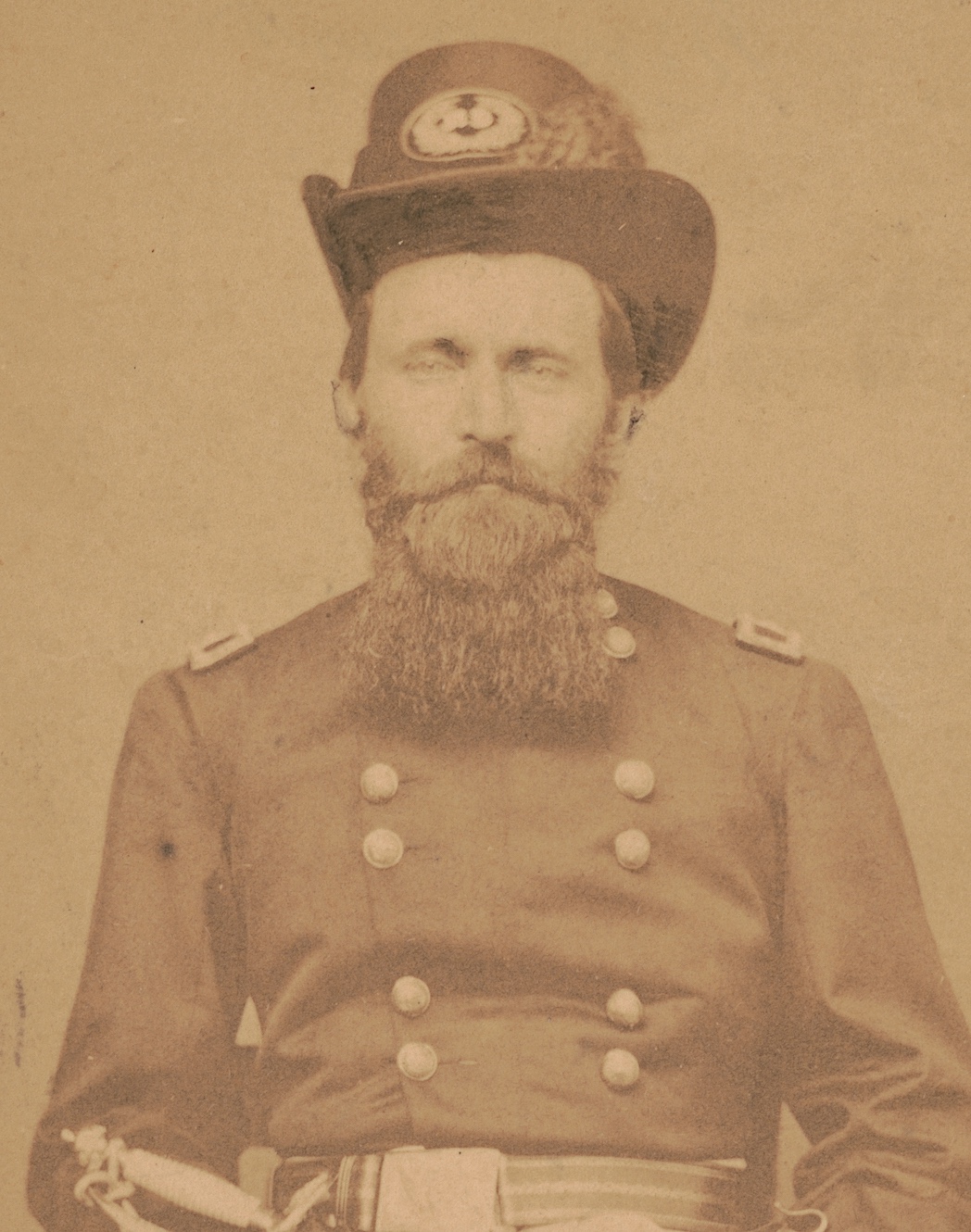
Ulysses S. Grant as he appeared in October 1861
While he ended the Civil War as general-in-chief of all Union armies, Ulysses S. Grant’s wartime service began much more modestly: as colonel of the 21st Illinois Infantry. In July 1861, a month after assuming command of the regiment, Grant and the 21st found themselves in Missouri with orders to advance against Confederates commanded by Colonel Thomas Harris, whose men had encamped near the small town of Florida. Though he was a seasoned combat veteran of the Mexican War, this was Grant’s first time in command of troops, and he was uneasy. What follows is Grant’s account of the experience—and the valuable lesson he took from it—from his memoirs of the war:
I remained in Springfield with my regiment until the 3d of July, when I was ordered to Quincy, Illinois. By that time the regiment was in a good state of discipline and the officers and men were well up in the company drill. There was direct railroad communication between Springfield and Quincy, but I thought it would be good preparation for the troops to march there. We had no transportation for our camp and garrison equipage, so wagons were hired for the occasion and on the 3d of July we started. There was no hurry, but fair marches were made every day until the Illinois River was crossed. There I was overtaken by a dispatch saying that the destination of the regiment had been changed to Ironton, Missouri, and ordering me to halt where I was and await the arrival of a steamer which had been dispatched up the Illinois River to take the regiment to St. Louis. The boat, when it did come, grounded on a sand-bar a few miles below where we were in camp. We remained there several days waiting to have the boat get off the bar, but before this occurred news came that an Illinois regiment was surrounded by rebels at a point on the Hannibal and St. Joe Railroad some miles west of Palmyra, in Missouri, and I was ordered to proceed with all dispatch to their relief. We took the cars and reached Quincy in a few hours.
When I left Galena for the last time to take command of the 21st regiment I took with me my oldest son, Frederick D. Grant, then a lad of eleven years of age. On receiving the order to take rail for Quincy I wrote to Mrs. Grant, to relieve what I supposed would be her great anxiety for one so young going into danger, that I would send Fred home from Quincy by river. I received a prompt letter in reply decidedly disapproving my proposition, and urging that the lad should be allowed to accompany me. It came too late. Fred was already on his way up the Mississippi bound for Dubuque, Iowa, from which place there was a railroad to Galena.
My sensations as we approached what I supposed might be “a field of battle” were anything but agreeable. I had been in all the engagements in Mexico that it was possible for one person to be in; but not in command. If some one else had been colonel and I had been lieutenant-colonel I do not think I would have felt any trepidation. Before we were prepared to cross the Mississippi River at Quincy my anxiety was relieved; for the men of the besieged regiment came straggling into town. I am inclined to think both sides got frightened and ran away.
I took my regiment to Palmyra and remained there for a few days, until relieved by the 19th Illinois infantry. From Palmyra I proceeded to Salt River, the railroad bridge over which had been destroyed by the enemy. Colonel John M. Palmer at that time commanded the 13th Illinois, which was acting as a guard to workmen who were engaged in rebuilding this bridge. Palmer was my senior and commanded the two regiments as long as we remained together. The bridge was finished in about two weeks, and I received orders to move against Colonel Thomas Harris, who was said to be encamped at the little town of Florida, some twenty-five miles south of where we then were.
At the time of which I now write we had no transportation and the country about Salt River was sparsely settled, so that it took some days to collect teams and drivers enough to move the camp and garrison equipage of a regiment nearly a thousand strong, together with a week’s supply of provision and some ammunition. While preparations for the move were going on I felt quite comfortable; but when we got on the road and found every house deserted I was anything but easy. In the twenty-five miles we had to march we did not see a person, old or young, male or female, except two horsemen who were on a road that crossed ours. As soon as they saw us they decamped as fast as their horses could carry them. I kept my men in the ranks and forbade their entering any of the deserted houses or taking anything from them. We halted at night on the road and proceeded the next morning at an early hour. Harris had been encamped in a creek bottom for the sake of being near water. The hills on either side of the creek extend to a considerable height, possibly more than a hundred feet. As we approached the brow of the hill from which it was expected we could see Harris’ camp, and possibly find his men ready formed to meet us, my heart kept getting higher and higher until it felt to me as though it was in my throat. I would have given anything then to have been back in Illinois, but I had not the moral courage to halt and consider what to do; I kept right on. When we reached a point from which the valley below was in full view I halted. The place where Harris had been encamped a few days before was still there and the marks of a recent encampment were plainly visible, but the troops were gone. My heart resumed its place. It occurred to me at once that Harris had been as much afraid of me as I had been of him. This was a view of the question I had never taken before; but it was one I never forgot afterwards. From that event to the close of the war, I never experienced trepidation upon confronting an enemy, though I always felt more or less anxiety. I never forgot that he had as much reason to fear my forces as I had his. The lesson was valuable.
Source
Personal Memoirs of U.S. Grant: Volume 1 (1885)