 Harper's Weekly
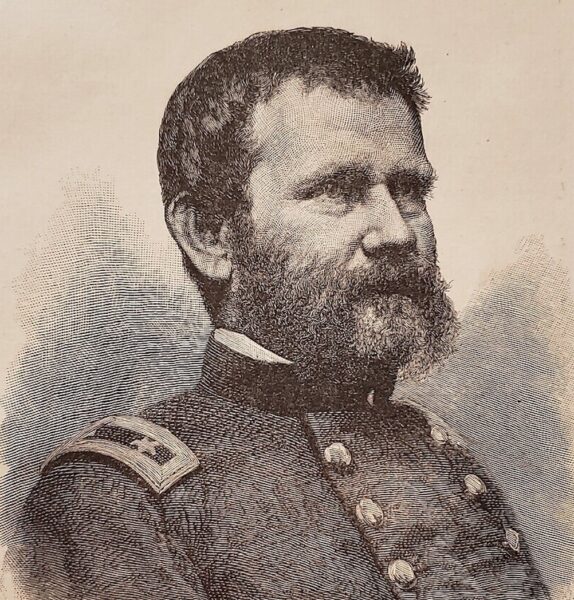
Union general William B. Franklin
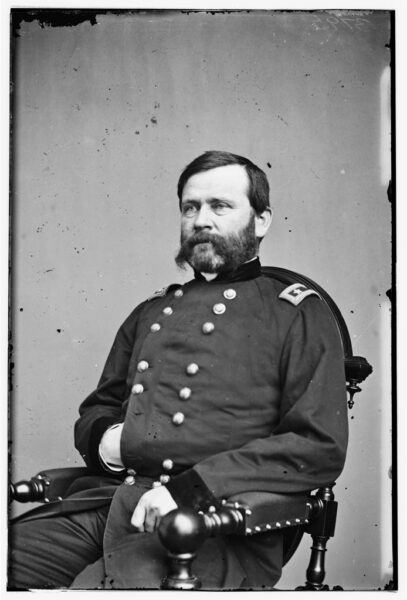
In the summer of 1864, Union major general William B. Franklin had a harrowing experience. The 41-year-old Pennsylvania native, who had commanded troops at a number of battles (including South Mountain and Fredericksburg) was headed east on medical leave to recover from a wound he received at the Battle of Mansfield in Louisiana. While traveling by train near Washington, D.C., he was among Union troops captured by Confederate partisan leader Major Harry Gilmor. What follows is a detailed account of Franklin’s capture and escape as told in a letter he sent to a cousin shortly afterward:
Portland, Maine, Aug. 26th, 1864.
My dear Cousin Anne —
In compliance with your request, I will give you a detailed statement of my capture by the rebels, and my escape from them in July last.
I left this place on July 4th, to make a visit to General Grant, at his headquarters at City Point, Va. I arrived there on the 7th, stayed with him until the 10th, in the mean time making a visit to General W.T. Smith before Petersburg, and left City Point on the 10th.
I arrived at Baltimore early in the morning on the 11th, and finding that there was no excitement in the city, and that the Philadelphia trains were to run as usual, no military pass being required, I started for Philadelphia in the first train, which left Baltimore at 8.30 a.m. I was suspicious of an attack upon the road that day, and took the earlier train, because I gained an hour at the dangerous end of the road by taking it.
I considered the Gunpowder Creek Bridge, about fifteen miles from Baltimore, as the dangerous point. It, however, was crossed in safety, and I imagined that the danger was over.
But I was mistaken; for at Magnolia Station, a mile further, the rebels made their appearance just as the train stopped! The train was at once captured, and guards were placed over every car, so that all chance of escape was cut off. The rebels were a portion of a rebel Maryland regiment, under the command of Major Gilmor, a Baltimore man, and they numbered about one hundred and twenty-five men.
There were about twenty Union officers on the train in uniform, who were soon marched out. I was in citizen’s dress, and flattered myself that I would not be recognized. But there was a rebel officer on the train in citizen’s dress, a spy, who pointed me out to the rebel captors as soon as the train arrived, and my car was particularly well guarded.
 National Archives
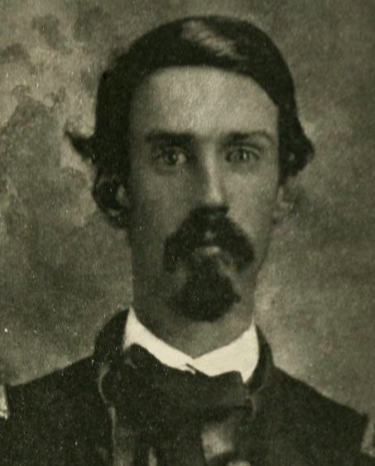
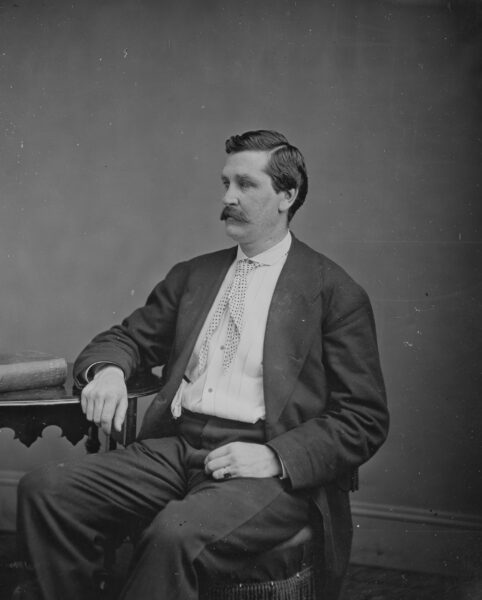
Major Harry Gilmor
After about half an hour Major Gilmor came into the car, and asked an officer who was sitting in front of me whether his name was Major-General Franklin; when he replied in the negative, he searched his papers, and then returned them to him. He then asked me my name, and not wishing to have my papers searched, as one of them contained information that would have been exceedingly valuable to the rebel authorities, I at once replied, “I am the person that you are looking for.” He then said, “My name is Major Gilmor, and you will have to go along with me.” I replied that I was disabled by a wound, and could not walk or ride on horseback, and did not think my detention would be legitimate. He intimated that his opinion was different, and I left the car with him. He obtained my valise from the baggage-car, and I was placed in charge of two men. A buggy was procured from the station, and I was seated in it. In about half an hour the second Philadelphia train came up, and was captured just as the first had been. In the mean time a party had been sent out to Gen. George Cadwallader’s place, a few miles distant, to steal horses. There were about one hundred and twenty-five horses on the place, but the General’s manager knew what was going on at Magnolia; and I have learned since that they only succeeded in stealing twelve or thirteen horses, the manager having hidden the others.
Both trains were burned; and that which arrived last, was backed on to the Gunpowder Bridge, which consequently was destroyed for a distance equal to the length of the train. Some of the baggage was rifled by the rebels, and some of the passengers were robbed by them. So far as I could observe, the robbery of individuals was not general, but the rifling of baggage was; for I saw scarcely a rebel, from Major Gilmor down, who did not have about him some article of private property, taken from the trunks of the passengers.
About one o’clock p. m. the cavalcade started from the station, in a southwesterly direction. I accompanied it in the buggy; another captured officer driving me and two others on horseback. The remainder, who were captured, were set free or paroled, and some escaped before we started.
We crossed the Gunpowder Creek five or six miles from the railroad, and had a good view of the burning bridge.
About ten o’clock p.m. we arrived at Towsontown, a village near the Northern Central Railroad, ten miles from Baltimore. I believe we remained here for a short time, when a skirmish began between the rebels and a party of our cavalry, which had been sent out to intercept them. I do not know its result, for, as soon as it commenced, I was sent off in charge of Capt. Owens, and a party of six or eight men, which was increased by stragglers coming up to about twenty. We travelled in a southwesterly direction and at a fast trot for about two hours, and then for another hour at a walk. By this time we had crossed the Reisterstown turnpike, ten miles from Baltimore.
At this point we stopped on the road to feed and rest the horses. I was allowed to get out of the buggy, and some hay was brought for me to lie upon in a fence corner. A sentinel was placed over me, and Capt. Owens was sent off to a house near by to get something to eat for us all.
As soon as he left, another sentinel came to keep the first one awake; but finding him quite wakeful, he “went to sleep” himself.
When Capt. Owens returned, the first sentinel soon went to sleep; and the captain, who found him wide awake when he arrived, went to sleep himself almost immediately.
During this time I had been wide awake, scarcely daring to hope for what had just occurred. But this was the fifth night that these marauders had had no sleep, and as they had drank a good deal of whiskey during the day, the fatigue had been too much for them.
I now saw that the opportunity for which I had been anxiously watching, ever since my capture, had arrived, and with an earnest prayer for strength, I resolved to attempt an escape.
I rose to a sitting posture, coughed, yawned, and finally got up, and hobbled to the buggy. Seeing that these movements attracted no attention, I deliberately walked through the line of sleeping troopers! A dark wood bordered the road where I had been lying, and further on a thick row of trees ran along the road for some distance. I attained the shelter of these trees, and kept along the road for about two hundred yards. Then I crossed the road and went through an open grass-field, in a northwesterly direction, for about three-fourths of a mile. Then I went through a thick wood, and upon emerging from this, found myself upon the brink of a broad, well-cultivated valley. As it would have been broad daylight before I could have crossed this valley, I determined to hide myself for the day, near where I then was. I therefore went through a wood which I knew no mounted man could pass through, and finding beyond it a small stream of water, and a clump of blackberry bushes and weeds, I crept into the clump, and burrowing a passage for myself, laid there securely all day; merely leaving my hiding-place to get water.
 Library of Congress
William B. Franklin
I had become so exhausted from want of food and the fatigue of my lame leg, I could go no further; and yet from about one o’clock, when I escaped, until broad daylight, about four o’clock, I learned afterwards that I had not gone more than two miles. Before I lay down for theday, I found three ripe blackberries, which I ate, and drank a little whiskey which remained in my pocket-flask.
In my weak state, annoyed by the sun and musquitoes, I passed an exceedingly uncomfortable day. I distinctly heard my rebel friends inquiring of the harvesters, in the fields near by, if they had seen me, and could hear their conversation at a picket-post on the turnpike. But I wasnot disturbed during the day. My imagination, however, got the better of my senses, and several times I thought I heard the tramp of large bodies of men and trains of artillery passing towards Baltimore.
The noises were caused by reaping-machines in the fields near me; but even after I became convinced of this fact, the hallucination would return.
About nine o’clock, in the evening, I started to cross the valley, keeping the course upon which I had travelled in the morning. The valley was about one mile broad, but I was three hours crossing it.
About the middle of the valley was a large cornfield, through which I was obliged to go. Here again my weak state forced itself upon my notice very unpleasantly. While waiting to gather strength to get over the fence, I imagined that the field was filled with men armed in antique style, with shields, lances, battle-axes, and coats of mail!
Knowing that it was an illusion, I crossed the fence, but the illusion was not dispelled until I placed my hands upon the cornstalks, which were the imaginary soldiers.
On the further side of the valley I passed through a garden, in which were some cabbages; I pulled up one of these, and was a good deal refreshed by eating its leaves. Then I reached a wood which bordered the valley, and finding in it a small stream of water, spent the remainder of the night there.
I had become so exhausted that I was determined to get something to eat on the next morning, either from friend or foe; so, at daylight, I went through the wood towards a small house. When I arrived near, I saw two men coming from its direction, with bundles of hay, and accosted them, telling them that I was a refugee, and asking for breakfast.
They told me that they were Union people, and sent me to the house, where I saw the proprietor of the place. I was treated in the kindest and most hospitable manner by him and his family. They gave me an excellent breakfast; and afterwards, the proprietor (whom I shall call Mr. B.), with a friend who was staying with him, went out to learn whether any rebels were in the vicinity.
I returned to the wood; and while I was there, eight rebels passed along the road near the house, within two hundred yards of where I was hidden! Shortly afterwards I returned to the house, and stayed there during the remainder of the day.
Mr. B. and his friend returned about twelve o’clock, and reported that the country was still infested with straggling parties of rebels. Mr. B. offered to take a note from me to the commanding general in Baltimore, and started off with it about one o’clock. In the note I informed the general of my escape, and asked him to send out to Mr. B.’s some cavalry as an escort, and a buggy for me, as I was unable to ride on horseback.
About 1 a.m., on Thursday, the cavalry and buggy arrived, and Mr. B. drove me into Baltimore, escorted by the cavalry. We arrived at Barnum’s Hotel about four o’clock; and I was once more within our lines, in the hands of friends, thankful that I had this time escaped the horrors of a rebel prison!
I am glad to be able to state that my kind friend, Mr. B., has reason to believe, through the liberality of my friends, that he did the most profitable day’s work of his life, when he devoted the 13th of July to my service.
Affectionately, your cousin,
W.B. Franklin
***
The rest of Franklin’s career was limited by his wound; he no longer served in a senior command position. After the war, he moved to Connecticut and became vice president of the Colt Firearms Manufacturing Company. He died in Hartford in 1903 at 80.
Source
Soldiers’ Letters, from Camp, Battlefield and Prison (1865)