march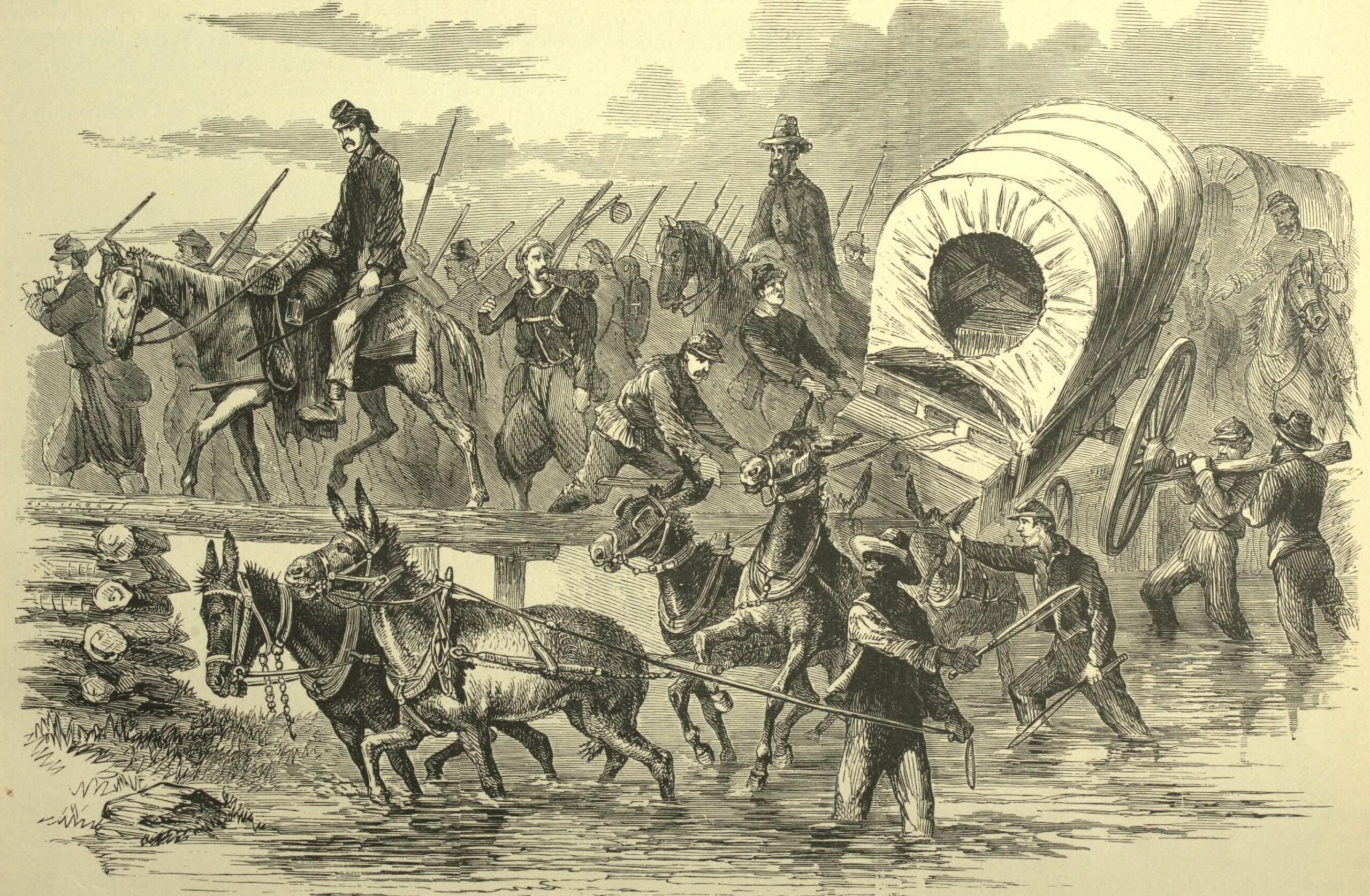 Frank Leslie's Illustrated History of the Civil War (1895)
In the Voices department of our Fall 2026 issue we highlighted quotes by Union and Confederate soldiers about the challenges they often faced while on the march. Unfortunately, we didn’t have room to include all that we found. Below are those that just missed the cut.
“The few men who fell out of the ranks from faintness and exhaustion were of the reputed tougher sort—men of out-door life and pursuits. Your professional men and clerks, clean-limbed and elastic, are the men to endure hardships, all the talk to the contrary notwithstanding.”
—Zenas T. Haines, 44th Massachusetts Volunteer Militia, on a recent 14-mile march his regiment endured, in a letter home, October 11, 1862
“We trudged through the mud and darkness as well as we could. There was nothing to disturb the silence except the occasional clanking of some soldier’s tin cup against his canteen, or perhaps a half muttered curse as some unfortunate fellow would slip and fall full length in the soft mire.”
—Micajah D. Martin, 2nd Georgia Battalion, on his unit’s march on the eve of the Battle of Chancellorsville, in a letter to the Atlanta Southern Confederacy, May 8, 1863
“We had a dreadful march … to reach this place. It was a killing march…. [T]he march began at sunrise and ended at ten o’clock that night. It was a retreat, a perfect rout…. Through great forests and corn fields without end standing above our heads, in the hottest sun I ever felt, the army became a regular mob, every man for himself. Men threw aside their coats and blankets their testaments and their shirts. Hundreds lay down in the corn rows, under the trees and on the banks of the creeks. Many of them in the faint of a sunstroke, others fanning themselves or cursing those in command…. I had thrown away a woolen shirt and torn my blanket in two and left a part of that to lighten my load. My cartridge box was the heaviest thing we had, every man was loaded with all the bullets he could carry, for we expected to need them. I was just about fainting with the heat when one of the … boys said, ‘my boy you better lay down, your face is awful red.’ We were on the bank of a muddy creek. I walked away from the road up among the trees and after taking a drink from the creek I lay down in the shade of a tree with no one in sight and fell asleep. When I opened my eyes the sun was down and it was just getting dark. For a minute I didn’t know where I was nor what had happened. Then the march and the mix-up of the day all came back to me.”
—Chauncey Cooke, 25th Wisconsin Infantry, in a letter to his sister from Haines Bluff, Mississippi, during the Vicksburg Campaign, June 11, 1863
“That night’s march will ever be remembered by the brigade…. The mud in many places was absolutely leg deep! We had no alternative but to pitch right through, or take to the woods, which half our regiment did. So dark, impressively dark, were these woods that half of them were lost, and many did not find the regiment until the next day.”
—Virgil A.S. Parks, 17th Georgia Infantry, on an especially difficult march, in a letter to a Georgia newspaper, June 4, 1862
“The suffering of the day before was now renewed and intensified. The heat was more severe, not a breath of air was stirring, the dust kicked up by our feet hung in stifling clouds around us, and the line moved quicker than yesterday. Before noon it was evident that whoever led the line knew not, or cared not, for the condition of his troops following. Scores upon scores fell out, unable to proceed a step further without rest. Some of the poor fellows traveled as long as they could endure the heat, and then dropped dead in their tracks…. I myself counted over fifty cases of sunstroke in the space of a few miles, but whether they proved fatal or not, I never knew.”
—George H. Allen, 4th Rhode Island Infantry, on a march during the Peninsula Campaign, in his journal, July 3, 1862
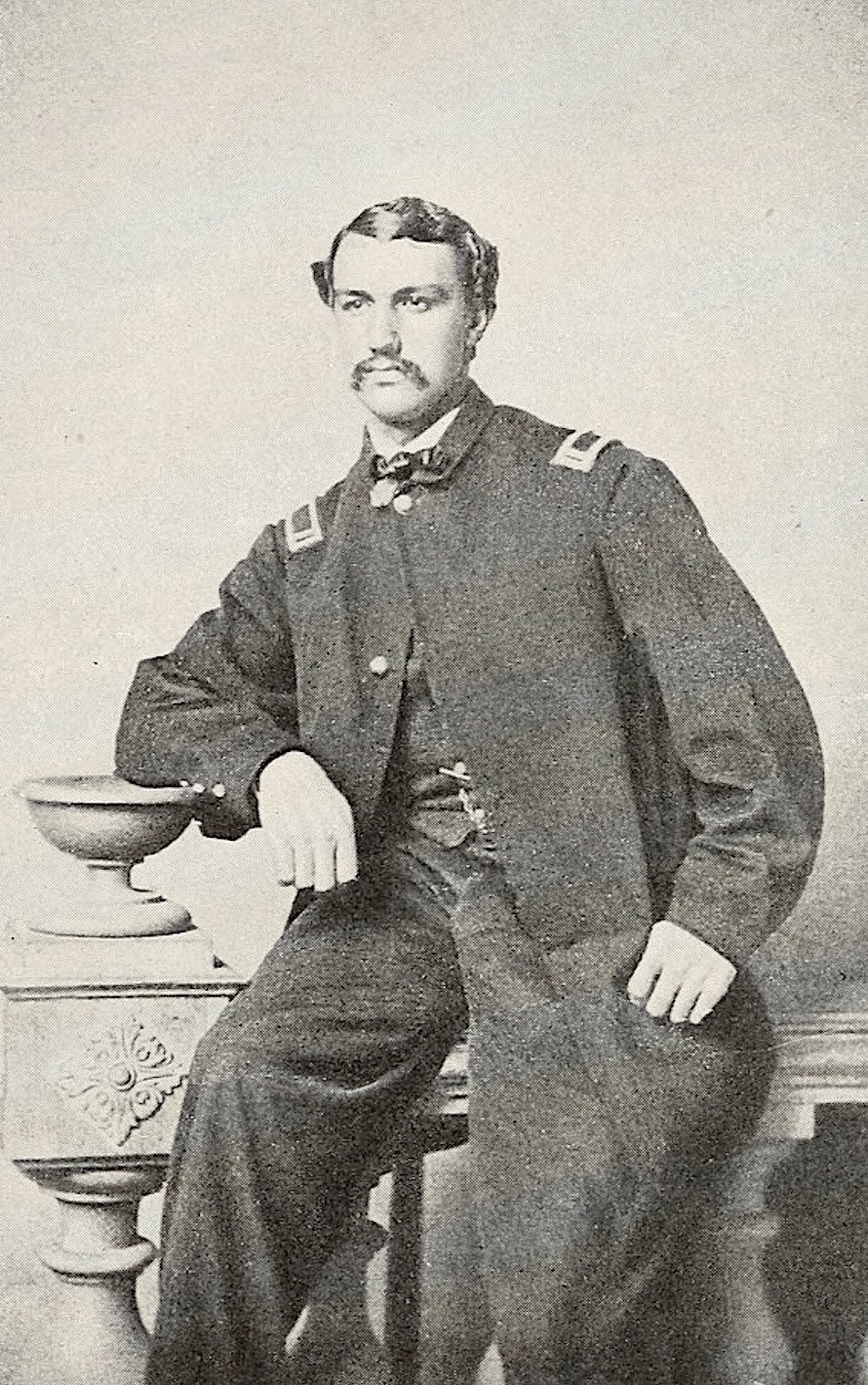 Letters from a Surgeon of the Civil War (1906)
John Gardner Perry
“We marched and countermarched, prepared for battle by day and made forced marches by night. Our corps being the rear-guard, of course we had the hardest work, and for a week slept only one night. While on the march I suffered so much with my leg that it was impossible to keep up with the regiment, although extremely dangerous to fall behind, as guerillas were everywhere…. [W]e are faced with the painful results of danger under every form, the more we recognize its presence the less we fear it, and the greater is our reckless daring. There was no proper food for men or horses; what hardtack we had was so full of maggots that it had to be baked, which hardened it still more. No pork, and no water, except what we got from the puddles by the roadside. Men became so exhausted that they fell asleep while marching, and I slept while sitting in my saddle. The nights were bitterly cold; the roads almost impassable from the furious rains.”
—Union surgeon John Gardner Perry, on the army’s movements during the Bristoe Campaign, in a letter to his wife, October 22, 1863
“I am not very well at this time. We have been on a march for about nine-teen days…. I am so near marched to death that I cannot write with any degree of intelligence, and having lost so much sleep too.”
—David Ballenger, 26th Alabama Infantry, in a letter to his mother, May 8, 1863
“[I] am well as common except for a bad cold and march most to death…. Mi dear wife i want you to pray for me i hop i will se you agin…. I have walked over more ded yankes than i ever want to do agin.”
—Confederate soldier Thomas Clark in a letter to his wife, September 7, 1862. Clark was killed days later at the Battle of Antietam.
“After dark a thunderstorm came up and drenched us completely. We were given nothing to eat, were marched through the mud about five miles that night, and then permitted to sleep until morning on the wet ground—no blankets. It was rough, I tell you. Hungry, tired, and wet through, we started at daybreak, and marched all day long….”
—Union officer J.T. Conolly, recounting the army’s march toward Petersburg, Virginia, in a letter to a friend in November 1864
“I have just returned to camp from a Yankee chase.”
—James A. Adair, 8th Georgia Infantry, relating an incident in which his regiment captured about twenty prisoners after encountering Union troops while on the march in the vicinity of Malvern Hill, in a letter to a Georgia newspaper, August 8, 1862
“After dark we continued our march, and by Monday afternoon nearly half our regiment had given out, exhausted by heat, fatigue, and want of sleep; and myself included among them. I was obliged to go to the baggage train and ride down here, and have not yet returned to duty.”
—Massachusetts officer Richard Derby, on a long march after fighting during the Peninsula Campaign, in a letter home, July 4, 1862
“We experienced that day the hardest marching we have yet seen, in mud knee-deep, fording streams to our middle, raining in torrents, and no place to sit down, unless we could sit in slush a foot deep; and to add to our misfortunes there was a hard slippery bottom under the layer of slush, which made it as difficult to walk as if we were on ice, and we were continually falling down. Everybody and every thing was wet through, and all tired out and half dead with the continual fatigue we had gone through.”
—Alfred Davenport, 5th New York Infantry, in an undated letter home during the Peninsula Campaign of 1862
“Marching and countermarching, fighting, watching, and digging, with hot weather, dry and excessively dusty roads and fields, miserable camping-places on the ground, and great scarcity of water … all have aided in rendering the troops debilitated, and most decidedly uncomfortable.”
—Union surgeon H.H. Penniman, in a letter to his wife during the Vicksburg Campaign, June 6, 1863
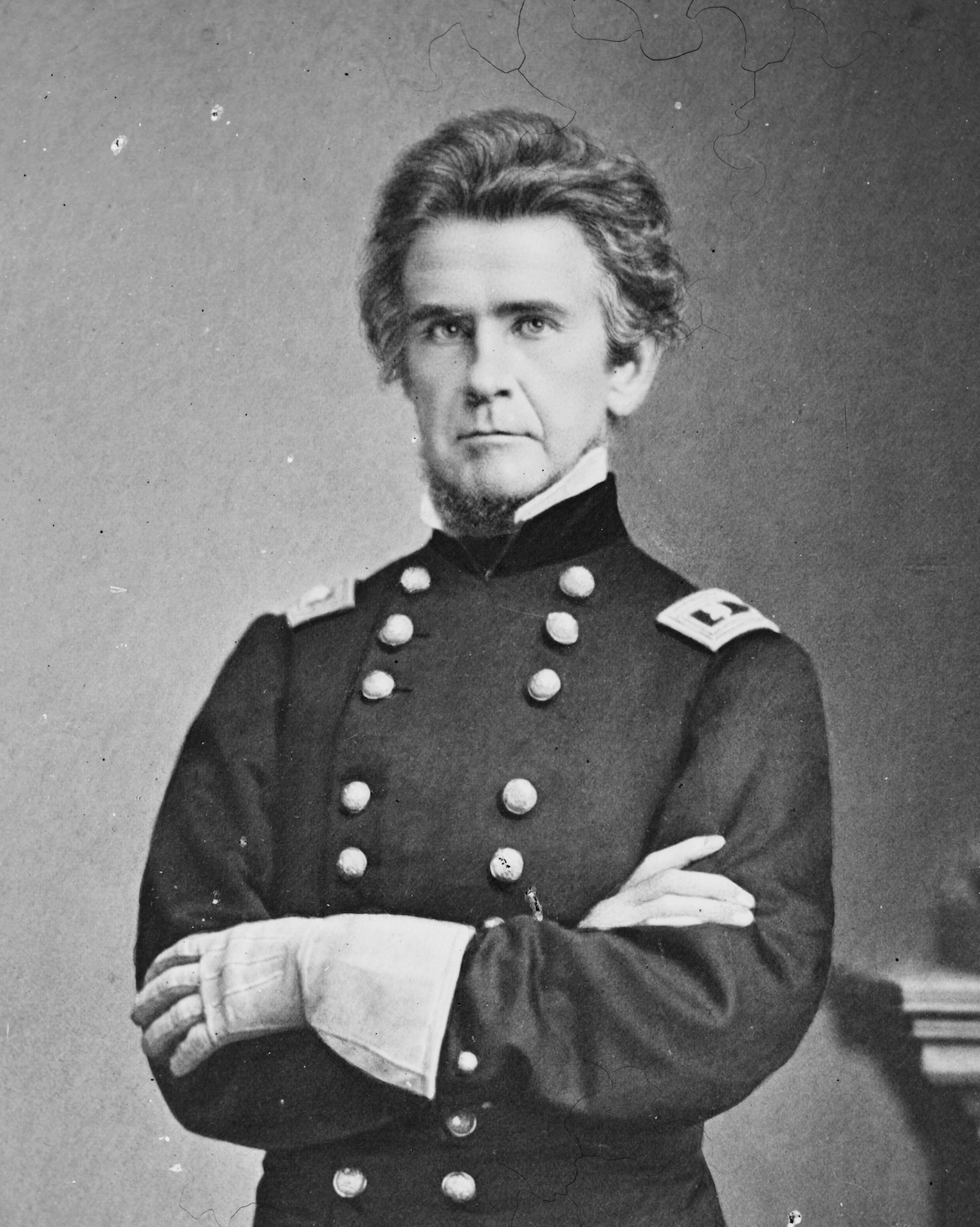 Library of Congress
Union general Ormsby Mitchel
“I am proud of this march, for it was executed beautifully…. No confusion, no stragglers, no evidence of undisciplined troops, but thorough soldiers, with high spirits, and a martial look, passed in review before me, as I stood on horseback on the hill … which commanded the entire camp and the whole situation.”
—Union general Ormsby Mitchel, in a letter detailing the campaign for Bowling Green, Kentucky, February 18, 1862
“We made the necessary preparations, tents were struck, rations cooked, baggage packed, and everything in readiness to move. We left camp about 12 o’clock Wednesday night, and marched until day through the muddiest road I think I ever traveled, and it being very dark, our progress was but slow and marked by many a laughable incident—men floundering and stumbling in the mud, officers giving their orders, men grumbling at their soldier’s luck, having to march over a muddy road, over hill and down dale, on such a dark-gloomy night.”
—John H. Bogart, 61st Virginia Infantry, on his regiment’s advance to the battlefield at Chancellorsville, in a letter home, May 8, 1863
“At two o’clock the column moved…. [A]ll were sleepy and tired, and marched in silence. The train moved with little hindrance, and we halted frequently. If I dropped asleep on my horse once, I did a hundred times. I never was so completely in the power of drowsiness before; and, had my horse been willing to keep his place without my constant attention, I should have slept for hours in the saddle.”
—Stephen A. Rollins, 95th Illinois Infantry, detailing his experiences during the Red River Expedition, in a letter home, April 27, 1864
“I have never conceived of such trials as we have passed through. We were for days together without a morsel of food, excepting occasionally a meal of parched corn…. The army was kept on the march day & night and the roads were in some places waist deep in mud…. Many of the men became exhausted and some were actually stuck in the mud & had to be pulled out…. The men on the march ran through the gardens … devouring every particle of vegetables like the army worm leaving nothing at all standing.”
—Confederate soldier Ruffin Thomson, in a letter to his father, May 24, 1862
“Already the rattle of the army train is heard, and soon we will have to join in their wake. Every thing portable is in readiness to move at the shortest notice. The night is far advanced, yet I cannot retire to rest—the duties so soon to devolve upon me, drive away all thought of sleep.”
—W.S. Hubbell, 32nd Ohio Infantry, on his regiment’s advance into Mississippi, in a letter home, February 2, 1864
“[U]pon arriving… we found the streets crowded with a dense column of soldiery—the entire army of the Shenandoah, numbering many thousand men, were pressing forward with a rapid step. As we passed thro’ the streets, women with tears in their eyes upbraided us for leaving them to the mercy of the foe….”
—Captain W.H. Mitchell, 11th Georgia Infantry, on marching through Winchester, Virginia, en route to Manassas Junction and the Battle of First Bull Run, in a letter to the Atlanta Southern Confederacy newspaper, August 12, 1861
“We had a hard march. Most of the way was by the side of, not in, the road. The baggage train had the road. The ground was very slippery and as the old saying has it we took one step forward and slipped two backward.”
—Lewis Bissell, 19th Connecticut Infantry, in a letter to his father, August 19, 1864
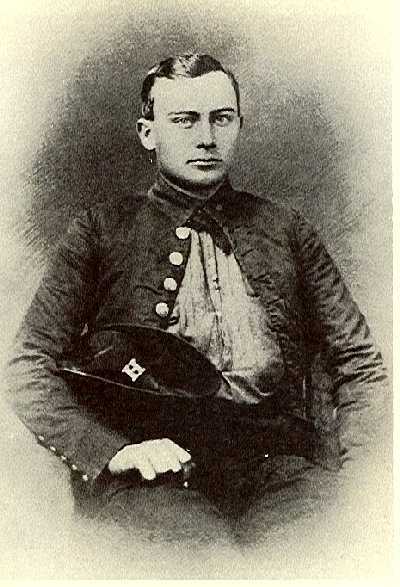 Wikimedia Commons
Sam Watkins
“Along the route it was nothing but tramp, tramp, tramp, and no sound or noise but the same inevitable, monotonous tramp, tramp, tramp, up hill and down hill, through long and lusty lanes, weary, wornout and hungry. No cheerful warble of a merry songster would ever greet our ears. It was always tramp, tramp, tramp. You might, every now and then, hear the occasional words, ‘close up’; but outside of that, it was but the same tramp, tramp, tramp. I have seen soldiers fast asleep, and no doubt dreaming of home and loved ones there, as they staggered along in their places in the ranks. I know that on many a weary night’s march I have slept, and slept soundly, while marching along in my proper place in the ranks. of the company, stepping to the same step as the soldier in front of me did.”
—Sam Watkins, 1st Tennessee Infantry, on the army’s march through the Cumberland Gap to Tennessee in the summer of 1862, in his memoir of the war
“The day was very sultry and the sun poured down with greater fury, than any of we Georgians ever felt in the old ‘empire.’ The march being a forced one, many fell fainting by the way side, and large numbers fell out to hunt a shady spot to cool their parching brain.”
—A soldier in the 19th Georgia Infantry, on his regiment’s advance the day before the Battle of Cedar Mountain, in a letter to the Atlanta Southern Confederacy newspaper, August 15, 1862
“Hurrah for the march. No such place for real fun elsewhere. We have our regular races, and tough ones they are, too, sometimes. Each regiment takes its turn in having the advance, one day at a time. Say, to-day we have the lead, then to-morrow we will march behind all the rest, and the next day the regiment which succeeded us in the lead will fall behind us, etc. It is a great deal easier to march in front than in the rear, because in passing defile, or crossing streams on single logs, all of the time that is lost falls, finally, on the rearmost regiment, and after it crosses it sometimes has to double-quick it a mile or more to catch up again. A common time step or 90 to the minute, in front with a brigade of 1,500 over the average of these roads, makes the rear in order to keep up, take more than quick time, or over 112 steps to the minute, during their marching time. So you can imagine our races, though fun to the advance, make the rear work—no laughing matter. The point of the race is for the advance regiment to move so fast that the others will break up, tired out, and straggle. Yesterday the 97th Indiana coming-in had the lead and undertook to run us. We had the rear, but by not waiting to cross on logs, but wading through creeks up to our knees or middles kept at their heels for 8 miles without a rest. ’Twas raining all the time and the roads were awful slippery. Our brigade tried hard to run us
down at first, but now none of them doubt our ability to march with any regiment.”
—Charles Wright Wills, 8th Illinois Infantry, in a letter home, February 7, 1864
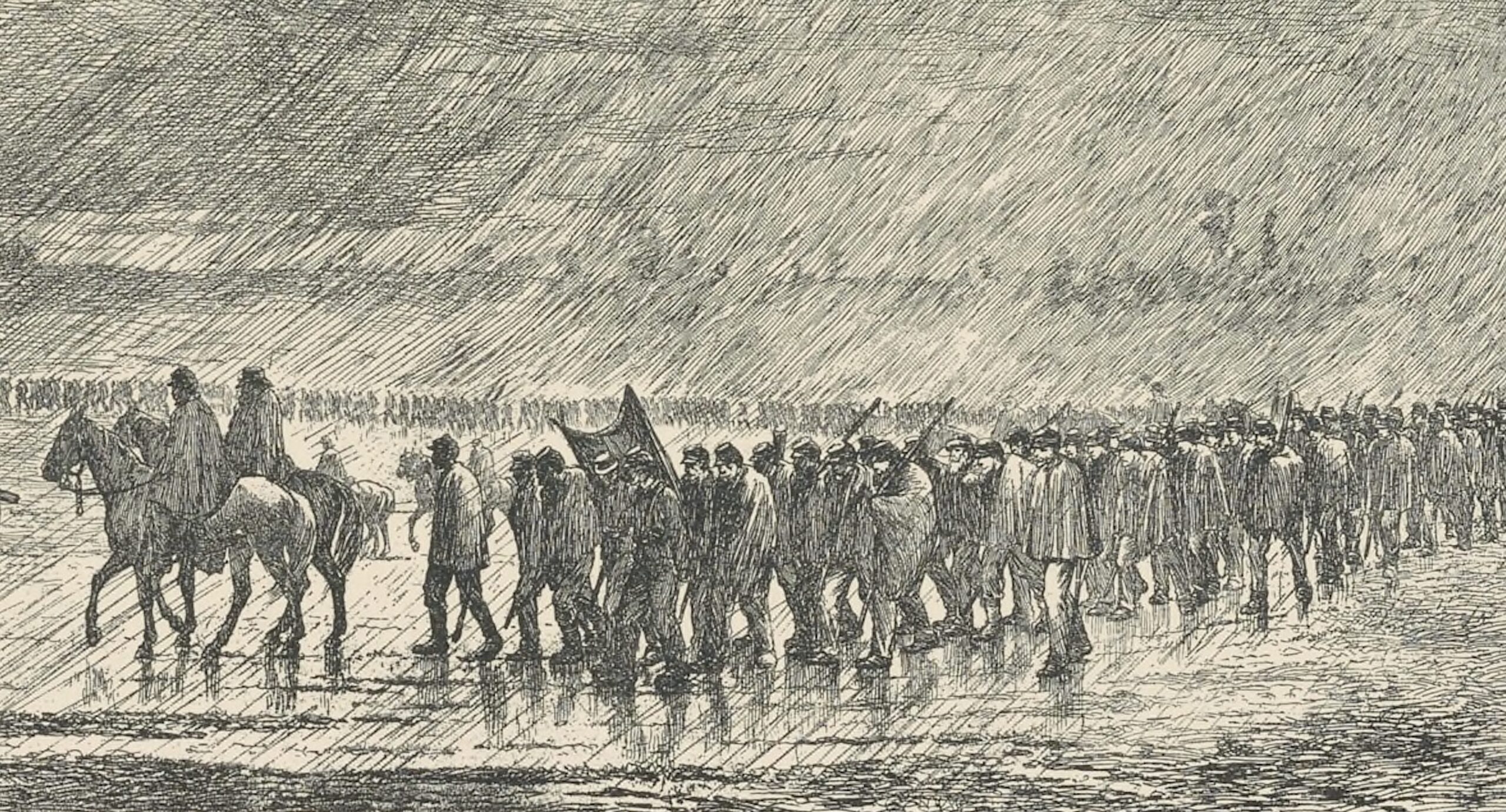 Library of Congress
This Edwin Forbes illustration depicts a line of Union soldiers marching in the rain.
“Since I last wrote you I have waded the Potomac three different times, marched for nearly a week without drawing a thing from the Commissary—in fact I have almost lived on apples, corn and a few Irish potatoes. Besides this, I have taken an active part in one of the bloodiest battles ever known.”
—A soldier in the 11th Georgia Infantry, in a letter written after the Battle of Antietam to the August Weekly Chronicle & Sentinel, September 23. 1862
“The perspiration flowed in streams, the dust almost suffocated, and soon after leaving … one could hardly distinguish an object a dozen yards away. Fine and penetrating, the dust sifted into the eyes, nose and mouth, and soon changed the appearance of the moving column. The expressions of the countenances were certainly very ludicrous and one could scarce refrain from laughing as the dust-and-sweat-streaked face of some individual would look up with rueful glance, with such a pleading, beseeching expression, seemingly asking for sympathies which under the circumstances could not be given, so nearly alike was the condition of all.”
—John L. Parker, 22nd Massachusetts Infantry, recalling a march during the Maryland Campaign, in a postwar history of his regiment
“Our brigade, almost worn out by previous fatigue and exposure, knew what was expected of them and they redoubled their efforts; knapsacks and everything that impeded their progress were thrown away, the road was strewn with soldier chattels, and these brave men with blistered feet, hungry and worn out, but with their trusty musket and forty rounds of cartridges, toiled on for nine long miles, without one moment to rest.”
—John H. Bogart, 61st Virginia Infantry, on being dispatched in haste to Fredericksburg during the Battle of Chancellorsville, in a letter home, May 8, 1863
“We plodded along at various rates of speed; now a walk, now a trot, then a halt, then a slow, hardly perceptible movement, then a rapid motion, as if we were struck with compunction for having tarried at all, and felt bound to make amends.”
—Andrew J. Bennett, 1st Massachusetts Light Battery, on moving his unit’s guns though muddy conditions during the Peninsula Campaign, in his memoir of the war
“We … marched over 50 miles to get here. Some of the largest and stoutest men were the first to give out while the small ones stuck to it but I find that it is not the phisical strength but the determination that carrys one through a long march.”
—Illinois soldier Charles Edwin Cort, in a letter to friends, October 22, 1862
Sources
Letters from the Forty-fourth Regiment M.V.M. (1863); Soldier Boy’s Letters to His Father and Mother, 1861–5 (1915); William B. Styple, ed., Writing & Fighting from the Army of Northern Virginia (2003); Forty-six Months with the Fourth R.I. Volunteers in the War of 1861 to 1865 (1887); Letters from a Surgeon of the Civil War (1906); Eric T. Dean Jr., Shook Over Hell (1997); Soldiers’ Letters, from Camp, Battlefield and Prison (1865); Bell Irvin Wiley, The Life of Johnny Reb (1943); The Civil War Letters of Lewis Bissell: A History and Literature Curriculum (1981); Army Life of an Illinois Soldier (1906); Henry Wilson’s Regiment (1887); The Story of the First Massachusetts Light Battery (1886); Co. Aytch (1882); Helyn W. Tomlinson, ed., “Dear Friends” (1962).