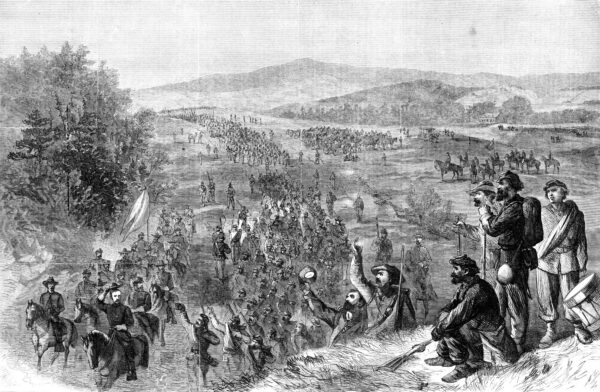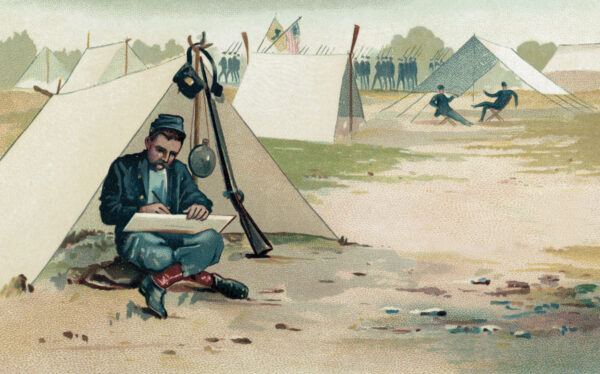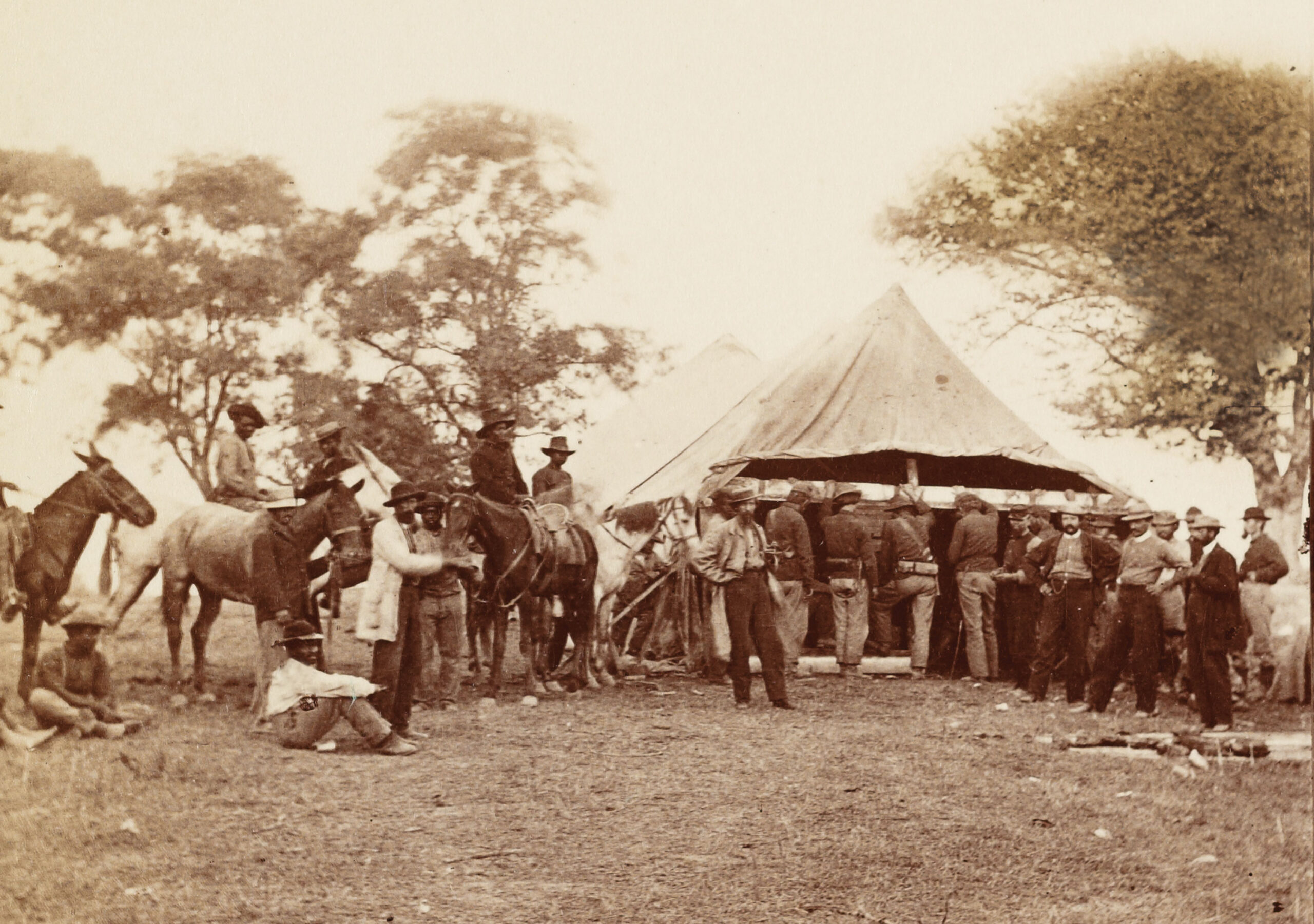
“If you ever go into battle, have your canteen full. I was so dry at one time I could have drank out of a mud puddle—without stopping to ask questions.”
—Union soldier William H. Brearley, describing his involvement in the recent Battle of Antietam, in a letter to his father, September 26, 1862
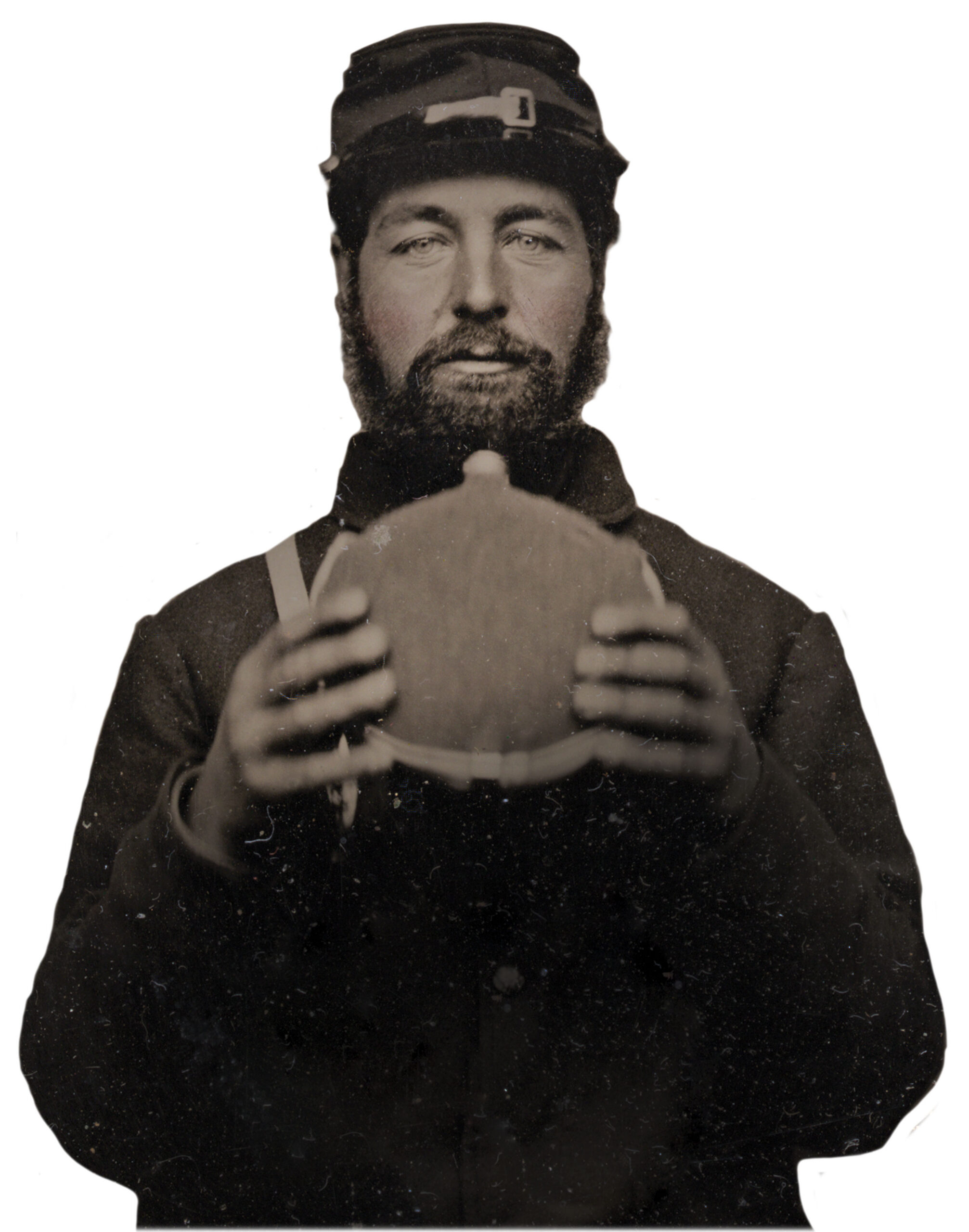
“Orderly, put a guard round this woman’s well, and don’t you allow man, woman or child to come near it till every soldier has had all the water he wants.”
—Elvira J. Powers, a nurse stationed in Nashville, Tennessee, on the reported response of Brigadier General Eleazer A. Paine to a civilian who had insisted he put a guard around her well so that his soldiers wouldn’t “drink it all dry” as they marched past her house, in her diary, October 12, 1864
“A friend … told me that on going to a spring … to get some water for a wounded Federal, he was shocked to see three dead Federals, lying with their heads in the spring. They had doubtless dragged themselves there to slake their thirst, and breathed their last while thinking of their far-off homes. Tales such as these fill me with dismay.”
—Nurse Kate Cumming, on an incident relayed to her from the Battle of Shiloh, in her journal, April 13, 1862
“There is a pretty spring just below where I sit and a sign over it which says, ‘Don’t drink this water, poison.’ … Some of the boys don’t mind the sign. Some that are burning up with fever and thirst manage to stagger down here and fill up with water and go back to their tents and die.”
—Chauncey Cook, 25th Wisconsin Infantry, on a spring close to his camp, near Snyder’s Bluff, Mississippi, in a letter to his mother, July 25, 1863
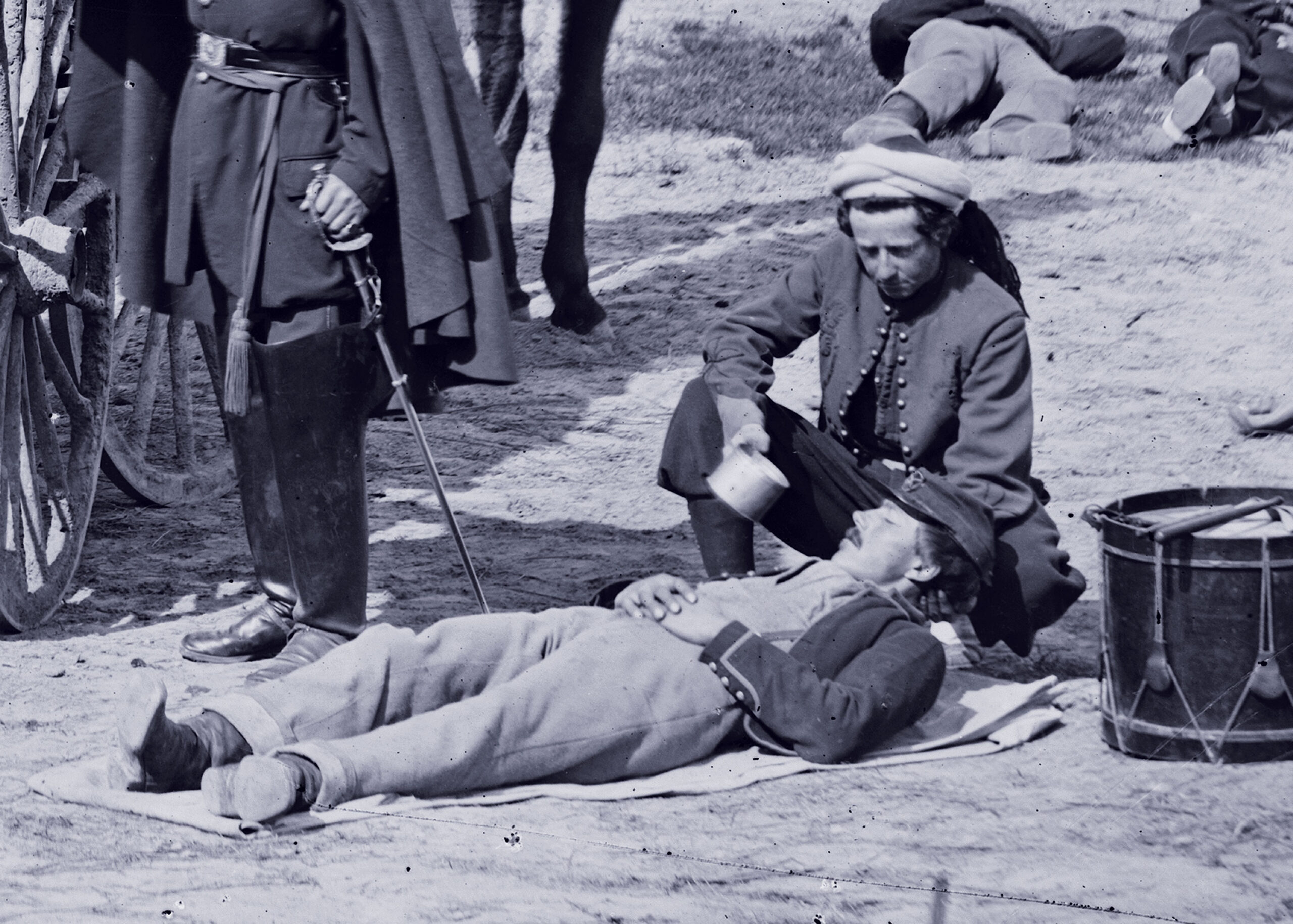
“The dirt roads were very dusty, and sometimes we could not see ten feet ahead. The perspiration caused clots of mud to form in our eyebrows, hair, whiskers, and mustaches. At nightfall when we went into camp, very little water could be found, and frequently we drank out of the ponds in the barn lots. How many wiggletails and tadpoles I have drunk will never be known.”
—Confederate soldier Marcus Toney, on campaigning in Kentucky during the summer of 1862, in his memoirs
Sources
Bell I. Wiley, The Life of Billy Yank (1952); Hospital Pencillings (1866); The Privations of a Private (1905); Soldier Boy’s Letters to His Father and Mother, 1861–65 (1915); Gleanings from Southland (1895).
Related topics: food and drink