It is fair to say that nearly everyone interested in the Civil War is initially drawn to its military dimension: the generals, campaigns, weaponry, and the common soldier. Wartime politics exert little fascination. That is at once understandable—one sees little of the high drama encountered on the battlefield—and unfortunate, because politics both suffused and shaped the struggle. The five books here suggest some of the ways in which this was the case. They are not the “top five” in the sense of being the five best: the literature on Civil War politics is so vast and valuable that to attempt such a list would be foolish. Rather, they provide worthwhile introductions to various aspects of the subject and, I hope, will inspire readers to delve more deeply into the politics of the war.
One important caveat: I have intentionally set aside works centrally concerned with the politics of emancipation, a topic that richly deserves a list of its own.
A Republic in the Ranks: Loyalty and Dissent in the Army of the Potomac
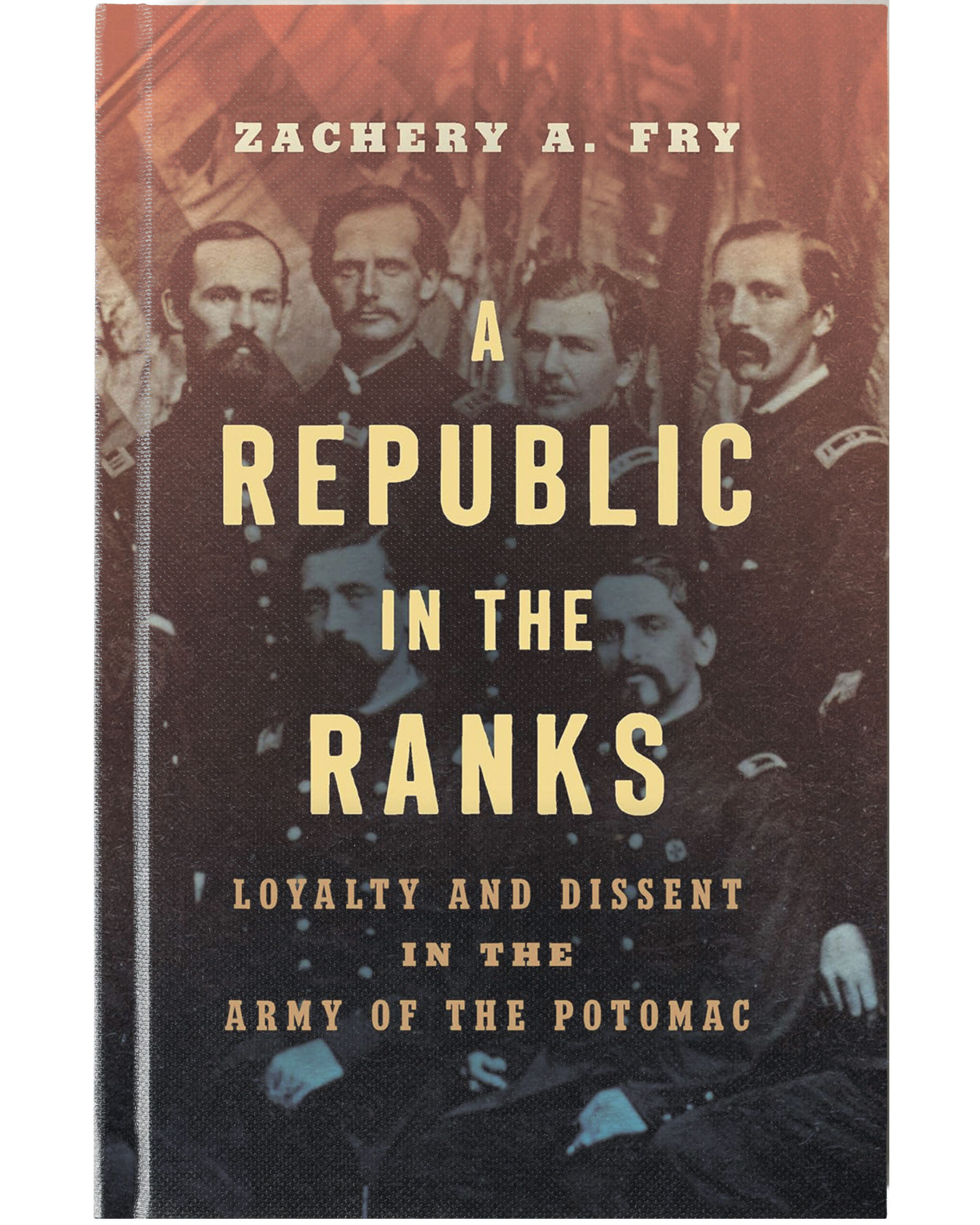
By Zachery A. Fry
(University of North Carolina Press, 2020)
If lay students of the conflict believe that they can ignore its politics, that was scarcely true of the men who fought it. In 1997, James M. McPherson’s For Cause and Comrades made clear that both Union and Confederate soldiers understood the war’s political stakes and were intensely concerned with the major issues it generated. Since then, a number of historians have explored this phenomenon more deeply, among them Zachery A. Fry, the author of the first book on this list.
“The Army of the Potomac,” said one veteran, “was the people in arms. It mirrored the diversified opinions of a free and intelligent democracy.” Given that Major General George B. McClellan created the Army of the Potomac, did more than anyone to shape its organizational culture, and enjoyed the enduring admiration of the common soldier, one might suppose that Little Mac’s increasing embrace of the Democratic Party would have drawn much of the army along with him. That did not happen, despite the fact that McClellan tended to favor senior generals whose political views aligned with his own. Nor were soldiers greatly influenced by the infighting between generals sympathetic to the Democrats and those drawn to the Republican Party. Rather, the soldiers sorted things out for themselves, assisted by junior-level officers who did much to articulate the political views of the men, and who gradually acquired a perspective that aligned with that of the Lincoln administration.
These officers, like many of their soldiers, became disgusted at the sight of slavery. They believed that political disunity harmed the Union cause, laid the blame for that disunity at the feet of the Democratic Party, and drew scant distinction between Democrats who disagreed with some of the Lincoln administration’s specific policies but supported the war, and the faction of antiwar Democrats derided as “Copperheads.” By 1864, these discussions had converted most soldiers into well-informed, committed Republican adherents.
The Cacophony of Politics: Northern Democrats and the American Civil War
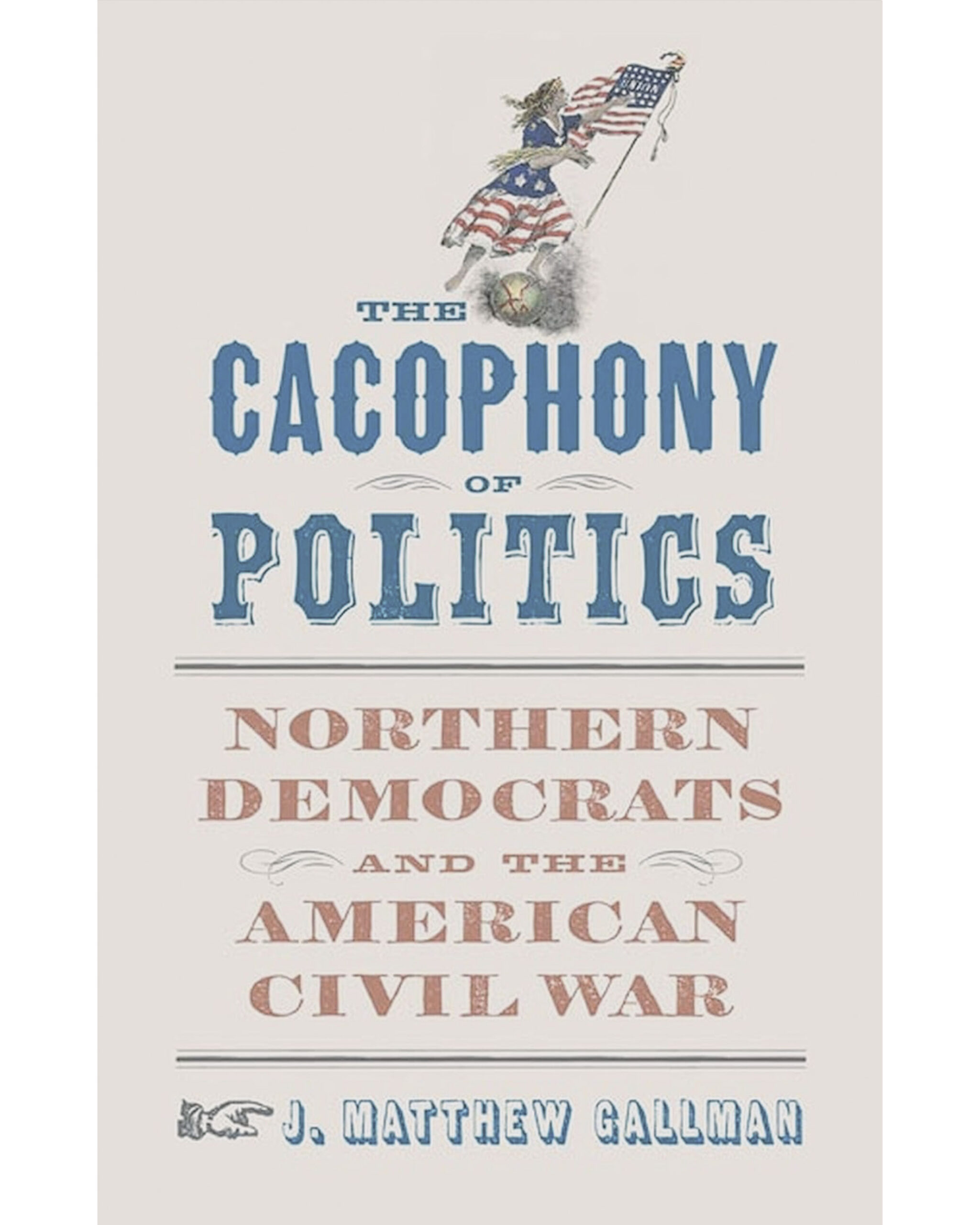
By J. Matthew Gallman
(University of Virginia Press, 2021)
Because the Democratic Party was the dominant party in the South, secession dealt it a severe blow and left northern Democrats scrambling to create a coherent new identity that came to center mainly on opposition to emancipation as a war aim. For analytical convenience, historians have often stove-piped Democrats into three types: “War Democrats,” who believed that for the duration of the war, party rivalries must be set aside; “legitimist” Democrats, who functioned as a kind of loyal opposition; and “Peace Democrats,” who viewed the war as a tragic mistake and favored a negotiated settlement.
The reality, of course, was not so simple, hence Gallman’s use of the term “cacophony” to describe Democratic politics during the war years. True, the party devised a slogan—“the Union as it was, the Constitution as it is”—as a way to delineate its core beliefs while countering Republican charges that the party was disloyal to the Union. But Democrats, whether political leaders or members of the rank-and-file, struggled to agree on the slogan’s exact meaning, yielding a spectrum of beliefs rather than clearly defined camps. Gallman respects this complexity and presents it in clear, lucid prose.
The Greatest Nation of the Earth: Republican Economic Policies During the Civil War
By Heather Cox Richardson
(Harvard University Press, 1997)
Most students of the conflict know that the Republican Party came to embrace the destruction of slavery and the resort to conscription as military necessities. But they are probably much less aware of the party’s expansive economic vision—ideas that Republicans and their Whig antecedents had supported in the 1840s and 1850s but that the prewar Democratic Party had easily blocked. The departure of the southern Democrats at the war’s outset, however, opened the door to the realization of this vision. Republicans made the most of the opportunity, passing some of the most consequential economic legislation in American history. They created a coherent financial system, based on an artful combination of national banks, legal tender, bonds, and income and excise taxes, which not only enabled the federal government to pay for the war without ruinous inflation, but had an impact that endured far beyond the conflict’s end.
The Homestead Act of 1862 hastened the settlement of the West. Sales of federal lands underwrote the founding of the public universities created by the Land Grant College Act of 1862. Other legislation made possible the construction of the first transcontinental railroad and a system of protective tariffs that assisted industrialization during and after the war. The impetus for these measures, Richardson writes, was a desire to create “a new nation based on an economic ideal that promised everyone the opportunity to advance while fueling growth.” Ironically, however, in the decades after the war, these measures instead yielded the Gilded Age, in which this anticipated American paradise “turned into the very world of wealthy monopolists and farmers that the Republicans most abhorred.”
The Confederate Republic: A Revolution Against Politics
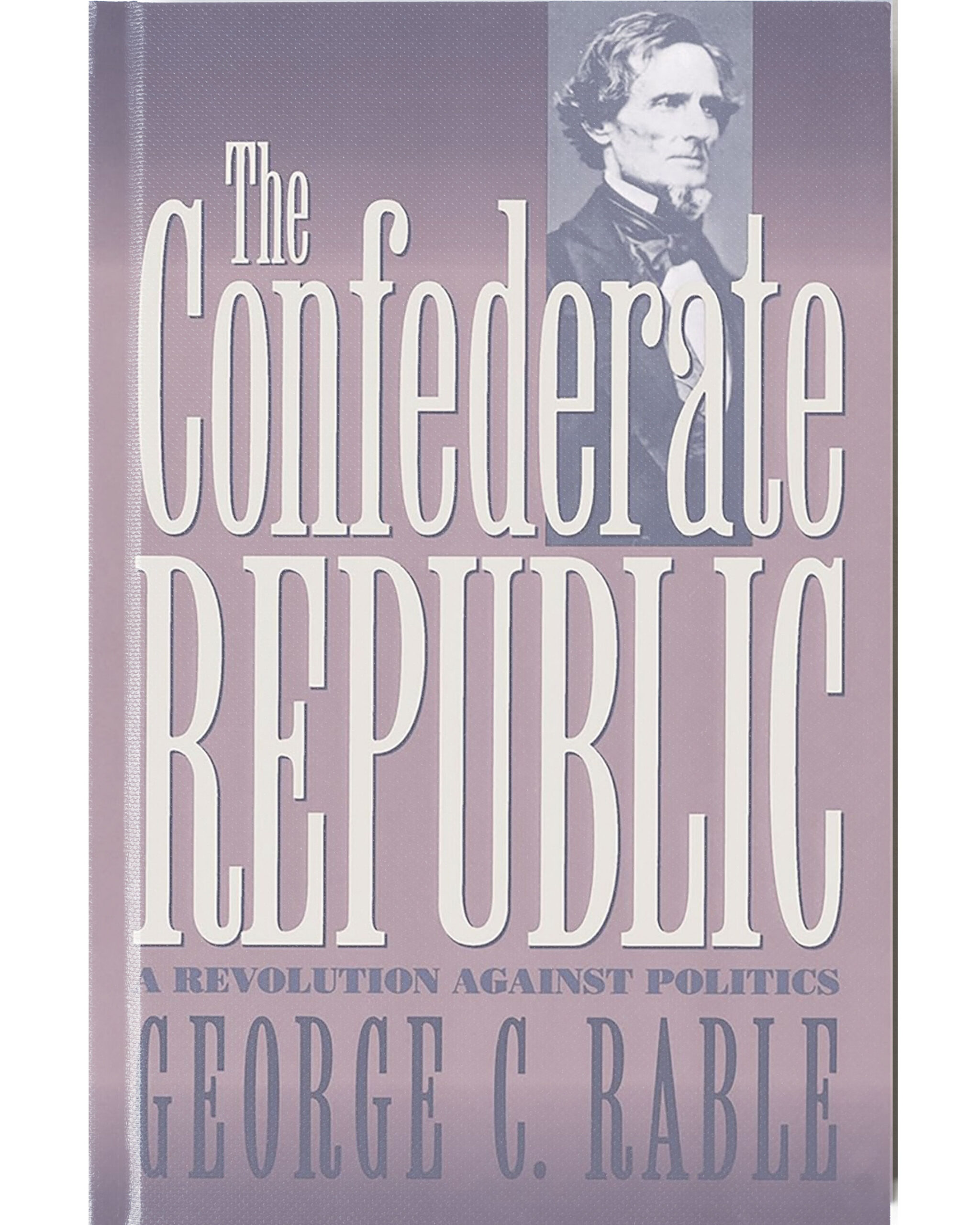
By George C. Rable
(University of North Carolina Press, 1994)
The founders of the Confederacy seceded to protect slavery against the feared designs of Abraham Lincoln and the “Black Republicans.” But in establishing their own government, they wanted to avoid the problems that, from their perspective, had left the U.S. political system gravely flawed. The original Founders had feared the rise of political parties and, to varying degrees, deplored the possibility that the new republic might become a democracy. The creators of the Confederate government shared these reservations. Although they largely adopted the U.S. Constitution as their own, they made key modifications intended to forestall these problems and thereby perfect the work of the Founders.
Under the Confederate constitution, for example, the president could not be reelected but would serve a single six-year term, an alteration intended to place him above partisan politics. To curtail pork barrel, he received expanded budgetary authority, such as the line item veto. And although he could remove Cabinet members at will, he could not fire lower-ranking officials except for dishonesty or incompetence—a move toward civil service reform inspired by revulsion at the Jacksonian spoils system. Fears of corruption led to provisions that rejected protective tariffs and forbade expenditures for most internal improvements.
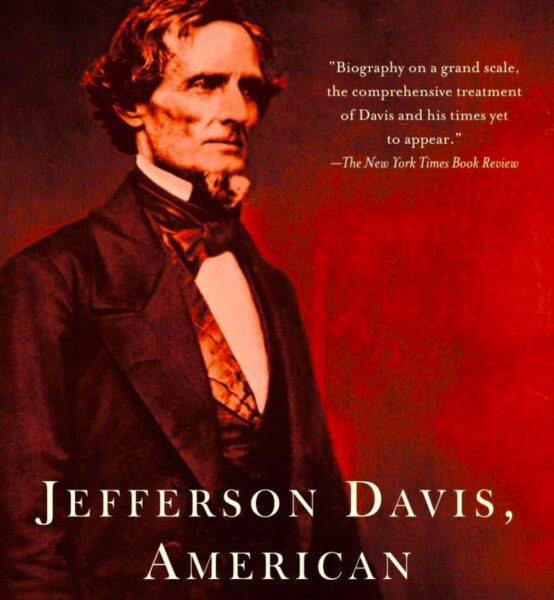
The new republic’s early military successes established its legitimacy, the 1861 elections confirmed its anti-party political culture, and if the Civil War had ended quickly, the vision for a Confederate republic might have worked as its founders intended. But because the war dragged on, requiring ever more economic and military sacrifice, the intentional lack of an opposition party had the unintentional consequence of creating a president whose authority was almost unchecked. It is not too much of a stretch to call Jefferson Davis, as did some of his critics, a military dictator. All important strategic decisions were made by him, either alone or in concert with a few select political allies and generals. This sweeping presidential power was a major factor in the ferocity and persistence of Confederate resistance. But it also guaranteed that the war would last months beyond the point where the Confederacy had any remaining chance of victory.
The Civil War Diary of Gideon Welles, Lincoln’s Secretary of the Navy
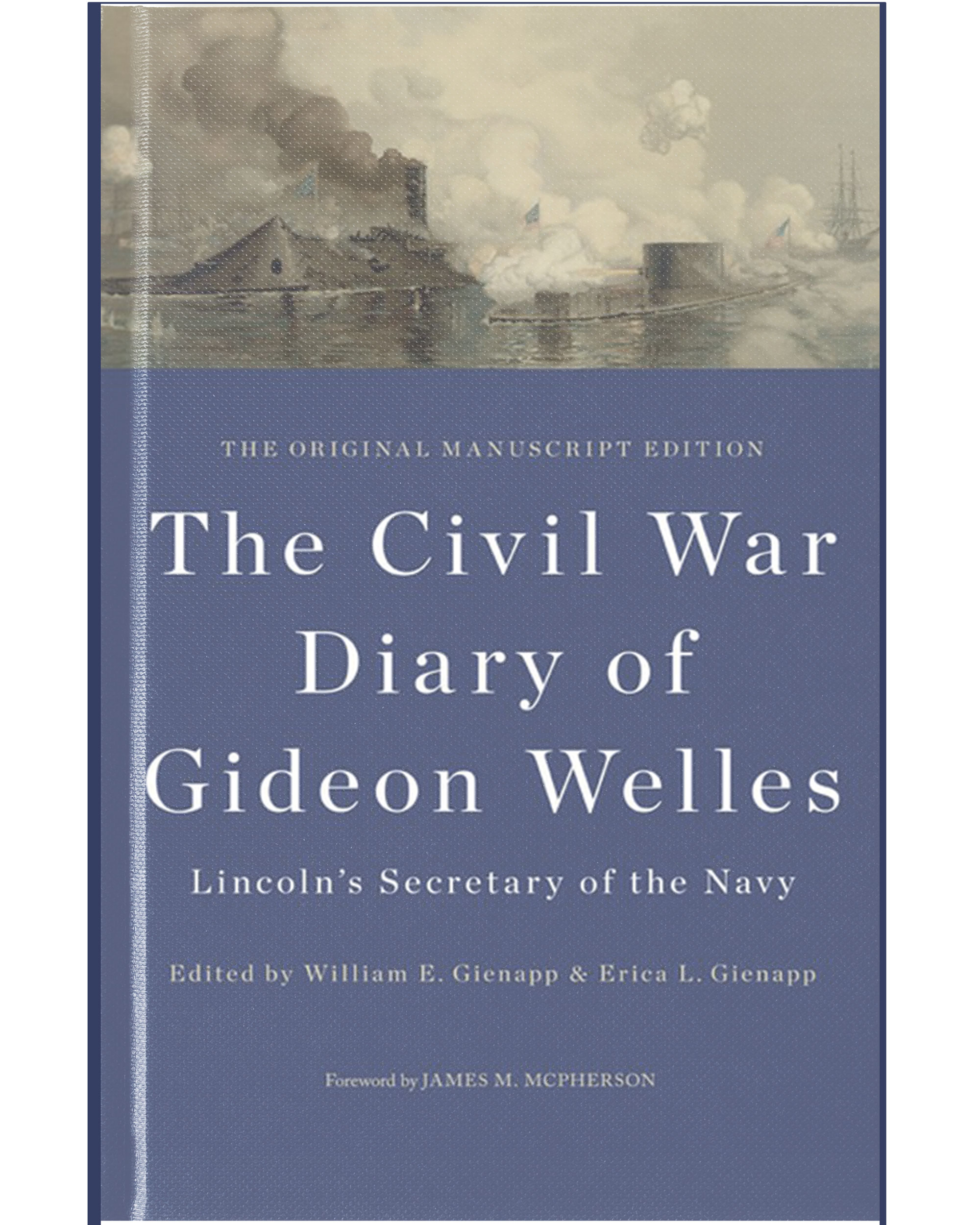
Edited by William E. Gienapp and Erica L. Gienapp
(University of Illinois, 2014)
Anyone interested in Civil War politics should give themselves a firsthand look at its day-to-day workings. For this purpose, one can do no better than to read the prolific diary of Gideon Welles, a Connecticut newspaper editor and prominent Republican whom Lincoln appointed to be his secretary of the navy. Starting in mid-1862, Welles penned almost daily entries in a series of gilt-edged, red-leather volumes that eventually included between 750,000 and 800,000 words. The entries are detailed, astute, and written in an acerbic style that is often entertaining and sometimes laugh-out-loud funny. Welles kept an eye on the political scene in general, but the diary is, of course, most valuable for its insights into Lincoln, his Cabinet, and the conduct of the war.
Mark Grimsley is a military historian and the author of numerous books and articles on the Civil War.