 Naval History and Heritage Command
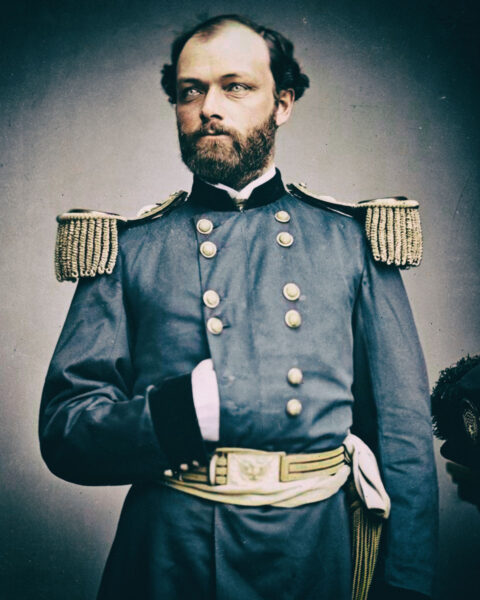
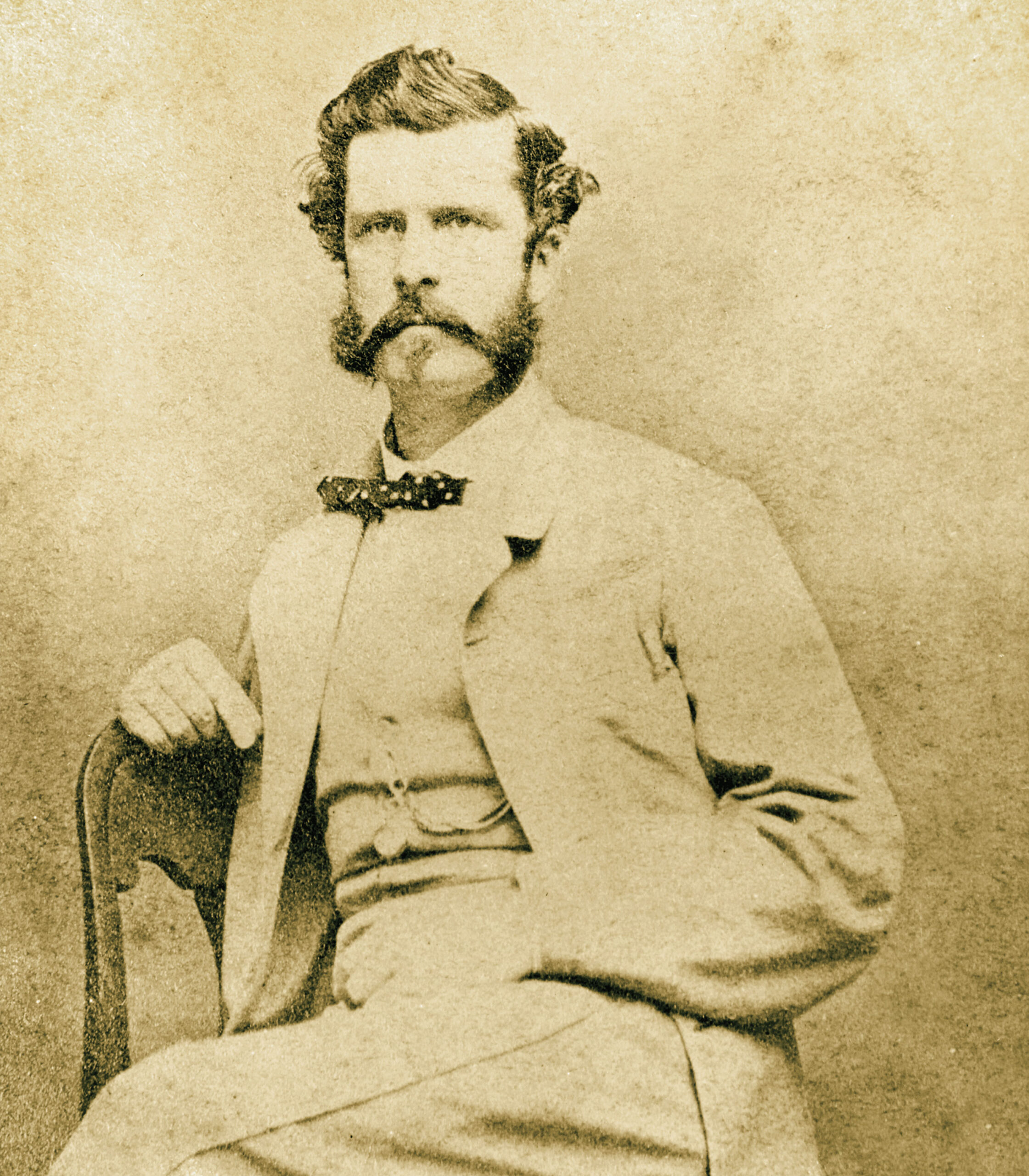
Hunter Davidson, as he appeared during the Civil War
In December 1881 Hunter Davidson, former commander in the Confederate States Navy, penned an indignant letter to Jefferson Davis, asking his former president to “do an act of justice.” In his recently published memoir of the conflict, Rise and Fall of the Confederate Government, Davis had trumpeted the Confederacy’s remarkable innovations in submarine or torpedo (mine) warfare, attributing them to his West Point contemporary and friend Brigadier General Gabriel J. Rains, but failing to mention the work of the Confederate Navy’s Submarine Battery Service, of which Davidson was chief for two years. Davidson laid before Davis the facts about the service’s accomplishments, quoting the testimony of Confederate Navy Secretary Stephen R. Mallory and others.
“If you were surprised at not finding in my book your name mentioned in connection with torpedoes,” Davis replied in January 1882, “I was certainly not less so at your arraignment of me as having done you an injustice by the omission.” Davis tried to conciliate Davidson with admiring words, but he reiterated his belief that Rains’ torpedo work was the more effective. And he did not try to mask his contempt for what he felt was a petty complaint that Davidson’s name had not appeared in Rise and Fall.
If Davis thought his scolding would be the end of the exchange, he did not know Hunter Davidson. Davidson regarded Davis’ reply as “an aggravated repetition of the injustice you have done me in your book,” which was filled with “repeated historical mistakes.” The former naval officer seethed with sarcasm as he observed that the former president’s memory was “remarkably retentive” concerning Confederate torpedo warfare “if not to my credit,” “but where the case concerns me … you persist in being wholly oblivious.” Davidson advised Davis, “I will use whatever means I am possessed to give them all possible publicity.” Indeed, he soon published his exchanges with Davis in his local newspaper, the Buenos Aires Herald.1
 Naval History and Heritage Command
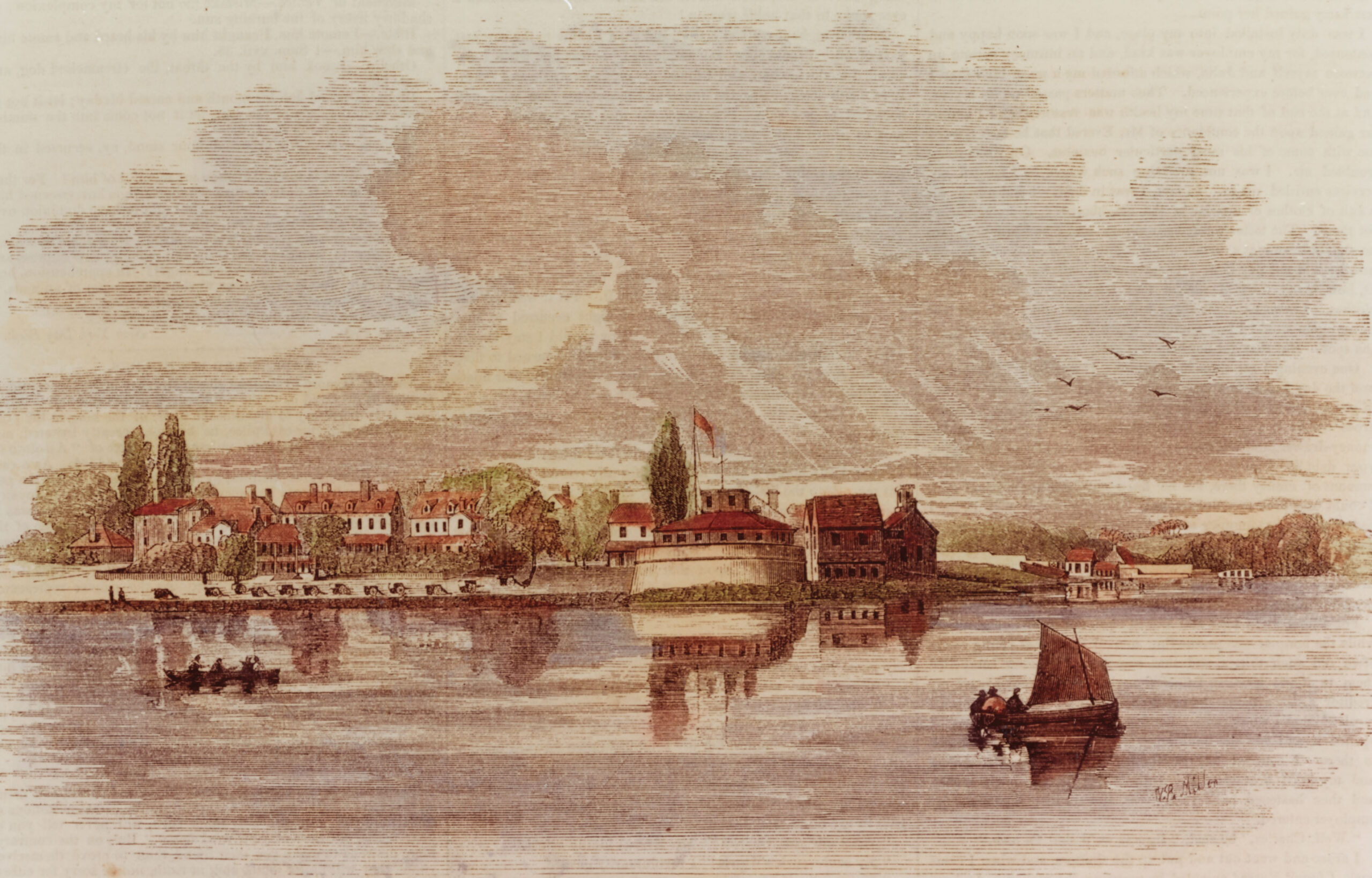
Hunter Davidson’s time at the U.S. Naval Academy (shown here as it appeared in 1855), which he attended in the late 1840s, was not without its blemishes several citations included one case of “Disorderly and violent conduct in mess room during dinner.”
Reprinted in 1894 in the more accessible Southern Historical Society Papers, the “Davis versus Davidson” spat poses a few questions. Who was Hunter Davidson and how was he so bold as to arraign Jefferson Davis like that? Did his arguments have merit? And what was he doing in Argentina? To answer those questions we must know something about the life, career, and character of Davidson—or about a rarely studied aspect of Civil War history: the practical concerns of former Confederate officers trying to make a living after the war.
Hunter Davidson was born in 1826 in Georgetown, D.C., to William Benjamin Davidson, West Point class of 1815, and Elizabeth Chapman Hunter, a relative of many prominent northern Virginia families. William Davidson died of disease in the Seminole War in 1840, and the family moved to an estate in Fairfax County, Virginia. In 1841, Hunter received a warrant as midshipman in the U.S. Navy.
The “Naval School” at Annapolis, Maryland, was still in the planning stages, so Davidson got his seamanship training in the traditional way—on the job. But he was also among the first cohorts of officers to spend time at the U.S. Naval Academy, which opened in 1845. The “Date of 1841” was larger than the academy’s capacity, so its members were assigned there between 1847 and 1850. Davidson was at Annapolis for a year in 1848–1849. Among his classmates were future U.S. Admiral Stephen B. Luce, future executive officer of the commerce raider CSS Alabama John McIntosh Kell, and two men who would be important in Confederate ordnance development, John Mercer Brooke and Robert Dabney Minor.2
Before his Annapolis year, Davidson served a typical tour of duty that included far-flung assignments: to the U.S. Receiving Ship Pennsylvania; to “Old Ironsides” itself, USS Constitution, which sailed to Vera Cruz, Mexico; to the sloop of war USS Preble, on special service in South America; and to the newly commissioned sloop Portsmouth, in service off and on the coast of Mexico during the Mexican War, and then to the Pacific Northwest.3
Like with so many future Civil War military leaders, South and North, Davidson’s time at the academy was not without blemish. He received several citations for bad conduct, including one notable case of “Disorderly and violent conduct in mess room during dinner.” According to the account in his record, Davidson cursed and struck an African-American steward—whom Davidson described as a “rascal” who failed to serve him promptly enough—“afterwards pursuing him into the city with a carving knife in his hand and threatening to kill him.” Despite this troubling incident, he passed his examinations and Midshipman Davidson left Annapolis in 1849.4
 Richardson Maritime Museum, Cambridge, Maryland (Davidson); Library of Congress (Rains)
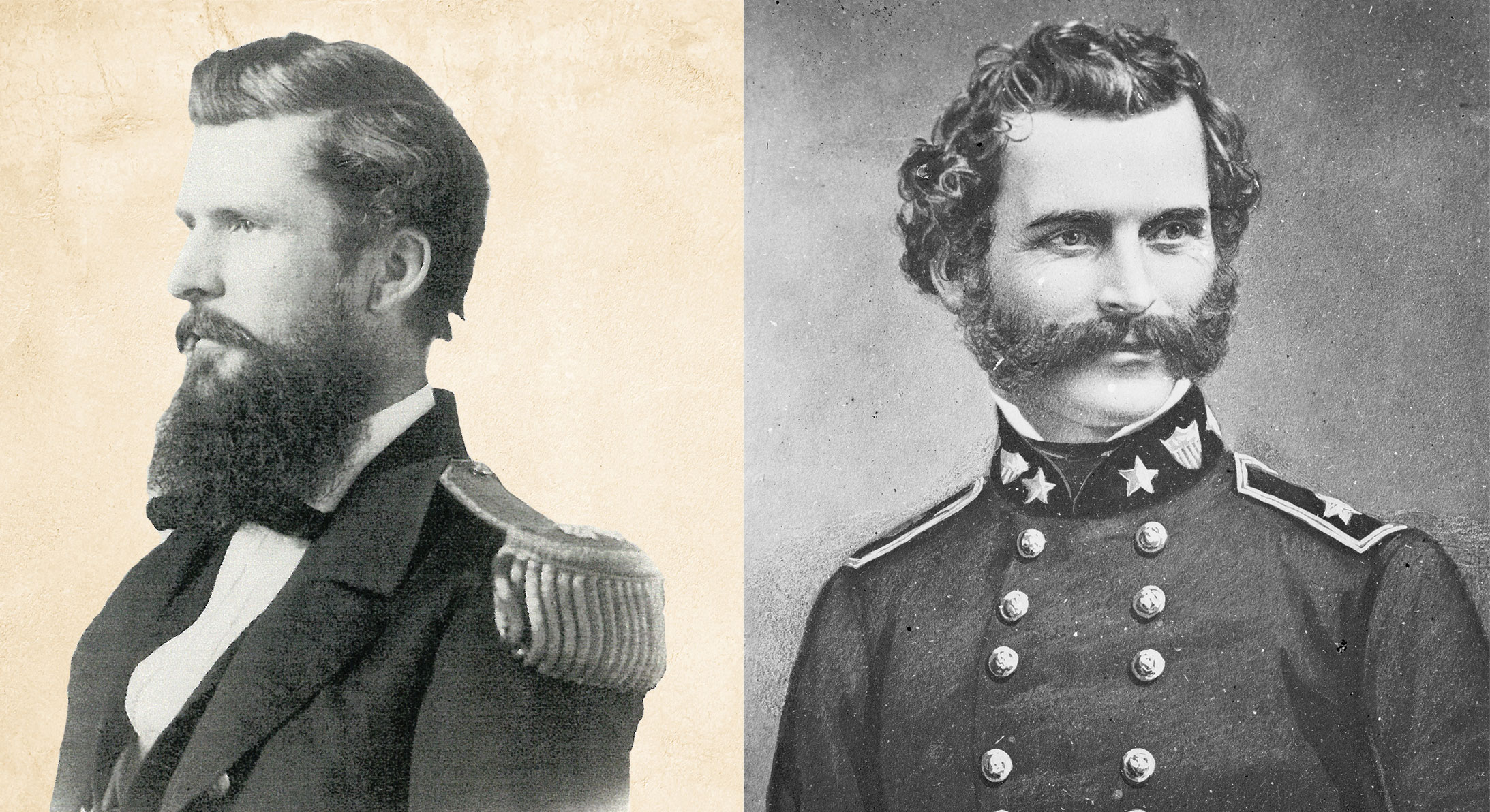
Davidson in 1859 (left), when he served as assistant to the commandant of midshipmen and assistant instructor of seamanship at the U.S. Naval Academy. Confederate officer Gabriel Rains (right).
Davidson then served on several ships in the Pacific Squadron and one off the coast of Africa, enforcing the prohibition of the international slave trade. From 1852–1856, he was assigned to the U.S. Coast Survey, including a year with his friend Stephen Luce under Lieutenant John Newland Maffitt surveying the coast and estuaries of Georgia and the Carolinas.
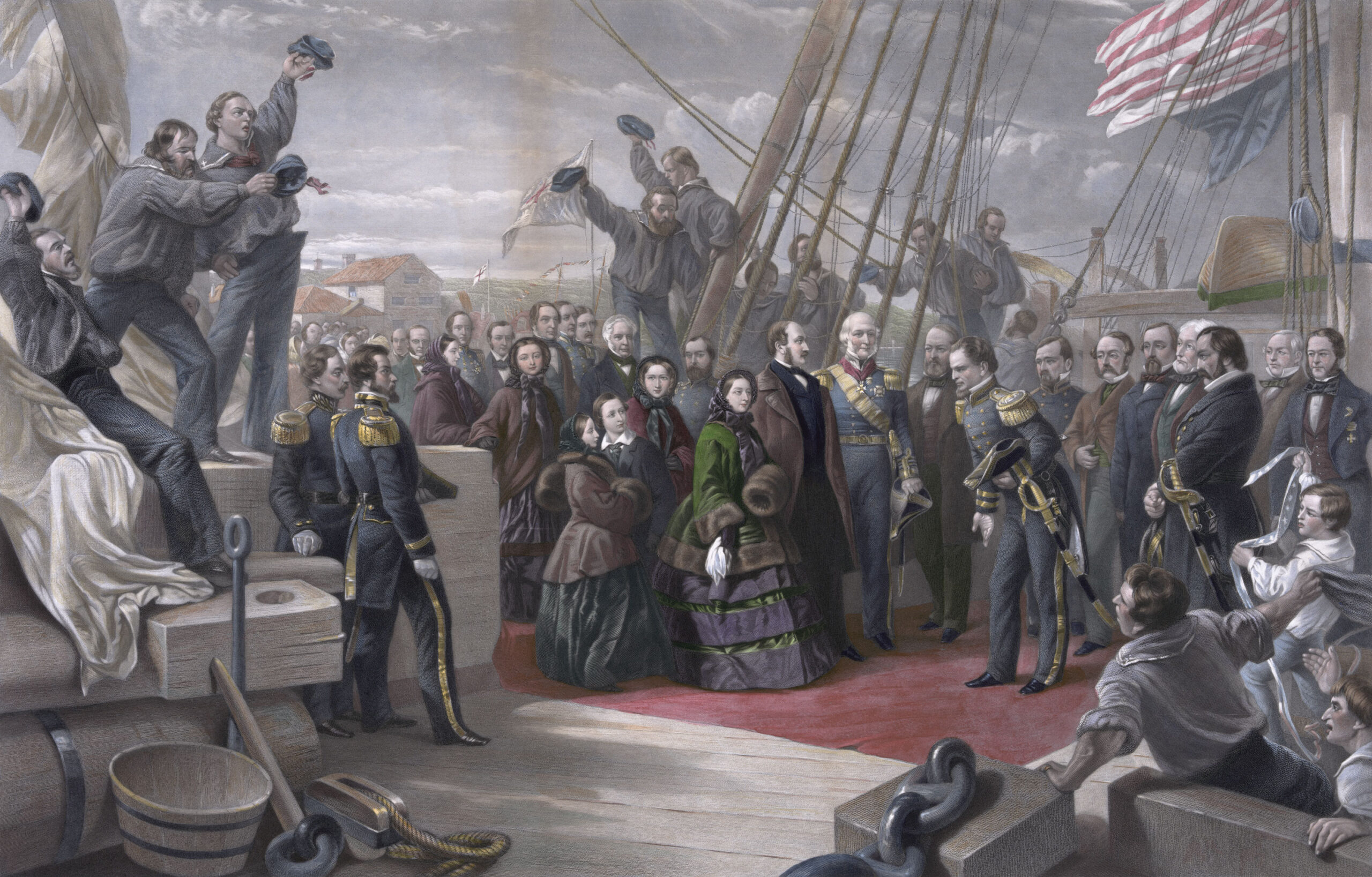
Promoted to lieutenant in 1855, Davidson drew a choice assignment in 1856–1857. He was among the officers who delivered HMS Resolute, a British exploration vessel abandoned in Arctic ice and recovered by an American whaler, back to Queen Victoria as a goodwill gesture.5
Starting in September 1859, Davidson served as assistant to the commandant of midshipmen and assistant instructor of seamanship at the U.S. Naval Academy. That November he received a patent for a device that allowed a single man to lift lifeboats from the sides of ships. In March 1861, the Navy Department purchased Davidson’s invention for $10,000.6
A month later, Davidson resigned his commission and “went South.” Unlike Robert E. Lee and other Virginians, for whom the decision occasioned much personal angst, Davidson showed no indecision or regret. What infuriated him was the U.S. Navy’s decision to dismiss him rather than accept his resignation. In response to his dismissal letter from Navy Secretary Gideon Welles, Davidson wrote a letter to Welles’ boss, President Abraham Lincoln, which he also published in several newspapers. Addressed to “Abraham Lincoln, Esq., President of the late United States,” Davidson demonstrated the same tart attitude toward presidential authority he would show Jefferson Davis 20 years later:
Be pleased to accept my thanks for the courteous manner in which you have acted touching my resignation. I am sure that the tens of millions of freemen, whose principles and cause I have espoused, will appreciate the motives which induced such a mild, just, and dignified exercise of your highest prerogative. In future years, when one shall turn over the pages of impartial history, with what pride they will point their children to the example of a Washington, a Jackson, and last, not least, an Abe Lincoln!! Yours, &c, &c.7
He signed the letter with his new title, “Lieutenant, Va. Navy,” Ordnance Department at the Norfolk Navy Yard. Commissioned a lieutenant in the Virginia State Navy on May 2, Davidson received a similar commission in the Confederate navy on June 10. For the first months of the war, he served on CSS Patrick Henry, a converted and lightly armored passenger vessel that carried the heaviest battery of any ship in the James River Squadron, and then for a few months in North Carolina.
Davidson was among many ambitious officers who coveted assignment to CSS Virginia, the new ironclad ram under construction at the Gosport Navy Yard, and Davidson got it. At the Battle of Hampton Roads on March 8–9, 1862, he commanded a gun section and received special commendation in Admiral Franklin Buchanan’s official report: “Lieutenant Davidson fought his guns with great precision. His buoyant cheerful bearing and voice were contagious and inspiring.” After Buchanan was wounded and command devolved upon Commander Catesby ap Roger Jones during Virginia’s March 9 historic duel with USS Monitor, Davidson was senior lieutenant.8
Service on Virginia at Hampton Roads gave bragging rights to all her officers. But it was his next assignment that earned Hunter Davidson his place in the history books—and led to his postwar quarrel with Jefferson Davis.
The use of “torpedoes” (mines) and “submarine batteries” was not unprecedented, even in America’s wars. Most famously, Horace Bushnell employed powder-filled casks against British ships—without success—during the American Revolution. In the decades before the Civil War, torpedoes, like ironclad vessels, were weapons that many of the world’s navies worked to develop. Samuel Colt experimented with electrically detonated explosive torpedoes in the 1840s, and the Russians employed torpedoes in the Crimean War (1854–1856). Effective deployment of inexpensive torpedo technology could level the playing field for poorer nations fighting the mightier ones.9
 Library of Congress
Davidson’s prewar military career included a number of choice assignments, among them being commissioned one of the American officers to return HMS Resolute back to Queen Victoria, a moment captured in the lithograph above (Davidson is shown at left, standing with a fellow officer).
It was important that the fledgling Confederate States of America embrace the technology. The Confederacy had several high-ranking officials familiar with the potential of submarine warfare: Navy Secretary Stephen R. Mallory of Florida had been chairman of the U.S. Senate’s Naval Affairs Committee and Commander Matthew Fontaine Maury was the world’s most celebrated naval scientist and had been superintendent of the Naval Observatory in Washington, D.C., and head of the Depot of Charts and Instruments. Beginning in July 1861, Maury and an assistant, Davidson’s Annapolis classmate Lieutenant Robert Dabney Minor, attacked Federal ships in Hampton Roads with torpedoes—but torpedoes that failed to explode.
After the Battle of Hampton Roads, Davidson joined Maury as understudy in what became known as the Naval Bureau of Coast, Harbor, and River Defense. By that time, Maury’s efforts had evolved from powder-packed barrels floated toward enemy vessels to a more sophisticated system using electrical detonation. By June 1862, Maury and Davidson had arranged 15 large casks (each with between 70 and 160 pounds of powder) in rows 3½ to 7½ fathoms deep mid-channel in the James River. Thanks to the discovery of 10 miles of insulated wire in Norfolk, they were able to connect the torpedoes to galvanic batteries on shore and explode them remotely. Maury departed then, on special assignment abroad. On June 20, Davidson received orders to take charge of “devising, placing, and supervising submarine batteries in James River.”10
At the same time, General Rains began working on his own submarine defense system for the James River. This redundant effort was owed in part to the public outcry at the defenseless condition of the James early in 1862 and to Rains’ well-publicized (and widely condemned) use of “sub-terra” torpedoes (land mines) in the Confederacy’s defenses at Yorktown and Williamsburg in May 1862. It was natural that the beleaguered Confederate president Davis turn to his West Point and U.S. Army comrade Rains to defend the James. Rains’ system used “submarine mortar batteries” anchored on wooden cribs and detonated using what he styled “sensitive primers.” Davidson considered Rains “daft on sensitive fuses” and later dismissed his torpedoes as worse than useless and more dangerous to Confederate vessels than enemy ships were. Nonetheless, as the man whose land mines first entered the controversial use of torpedo technology into official and public debate, Rains remained the most prominent name associated with torpedoes during and after the war.11
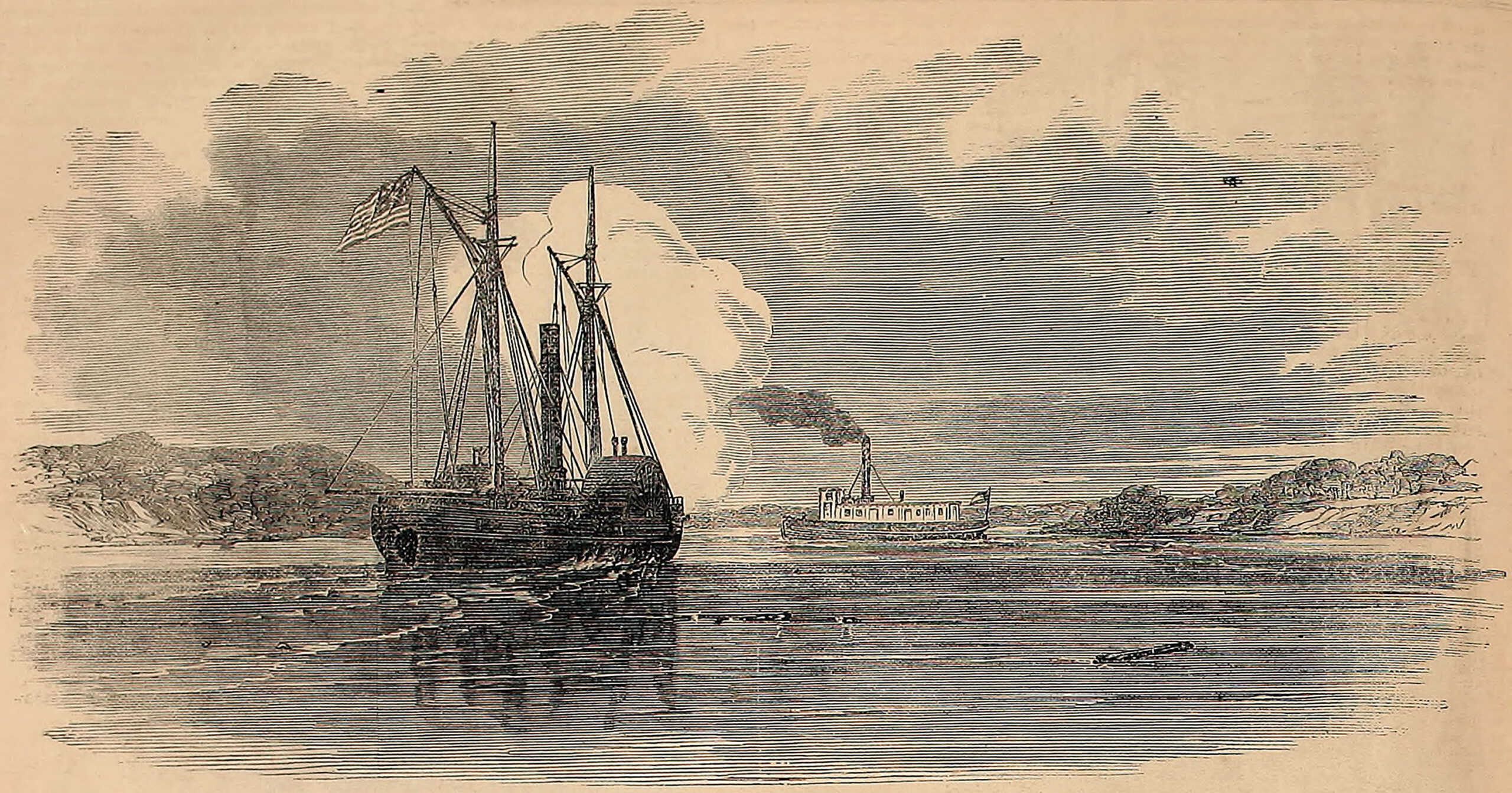
On that Fourth of July, Davidson’s work—and reputation—suffered a setback in the James River. His floating headquarters, the gunboat Teaser, encountered the more powerful U.S. gunboat Maratanza and Teaser was disabled by a shot to its boiler. Davidson and his crew swam to safety, but left behind the Confederate reconnaissance balloon that had been sent aloft from Teaser’s deck, rough plans of the new Confederate ironclad under construction at Richmond, other official and personal papers, and most importantly, a valuable stock of insulated wire and other supplies hard to obtain. Aware that some officers believed he had abandoned Teaser too easily, Davidson asked for a court-martial to clear his name, which the Navy Department did not deem necessary.12
On October 25, 1862, the Confederate Congress created a Torpedo Bureau in the army under Rains and the Submarine Battery Service in the navy under Davidson. Rains had taken his operation south to focus his efforts on the defenses of South Carolina, Georgia, and Alabama rivers and harbors, leaving the James to the navy.13
“I am getting on slowly here with the submarines. I shall soon have about 12,000 pounds powder down at different stations on the river,” Davidson wrote to Catesby Jones on his first day as head of the Submarine Battery Service. “My late experiments prove that powerful galvanic batteries can be relied on to act with unerring certainty at the distance of a half mile under water. This is the way we should obstruct all our rivers if sufficient powder can be got. I don’t believe you can find a Yankee to risk a blowing up.”14
Despite Davidson’s prediction, Yankee vessels did in fact challenge the Confederacy’s torpedo barrier. On August 5, 1863, the gunboat Commodore Barney ventured too close to a torpedo, but survived the encounter with only the loss of two men drowned.
Then, on May 6, 1864, a flotilla of Federal vessels accompanying Major General Benjamin F. Butler’s approach to Richmond’s “back door” gave Davidson an opportunity to prove the efficacy of his weapons. The flotilla was aware of the torpedoes and had a protocol dictating that ships stay well behind small boats scanning the surface for wire and dragging for torpedoes. One commander fatally disobeyed the protocol. “[T]he Commodore Jones looks as though she had been ground through a mill,” wrote the head of the Federal fleet’s Torpedo and Picket Division, “she was literally torn into splinters.” Sixty-nine men perished. Federal landing parties pursued, and killed or captured several members of the Submarine Battery Service and cleared the shore of torpedo stations. But the fate of Commodore Jones succeeded in slowing the Federal advance to a crawl. A Federal officer credited the deed to “the notorious Lieut. Davidson,” who was reported to have been spotted running from the scene.15
A month earlier, Davidson had gone in search of a vessel to blow up using another experimental technology: a torpedo boat bearing a spar torpedo. Following up on the partial success of the semi-submersible David in October 1863 and the success of the submarine H.L. Hunley in February 1864 in Charleston Harbor, Davidson took the torpedo boat Squib to Hampton Roads in early April 1864, piloted her to the U.S. frigate Minnesota, exploded a torpedo against her hull, and escaped to safety. Minnesota did not sink, but suffered enough damage to require repairs. For that act, Davidson received promotion to commander in the Provisional Navy of the Confederate States, effective April 9, 1864.
 Harper's Weekly
In 1862—the year fellow Confederate officer Gabriel Rains began his rise to prominence for his work on torpedo warfare—Davidson suffered a setback when the gunboat Teaser, his floating headquarters, was disabled and captured by the U.S. gunboat Maratanza, an event depicted above in an illustration from Harper’s Weekly.
A month after the sinking of Commodore Jones, Davidson received orders to England, presumably to join Maury in acquiring knowledge and supplies. Turning over the James River torpedo defenses to Rains, Davidson spent the next six months abroad. He was prepared to return when Commander James D. Bulloch waylaid him with a special assignment: deliver the arms and Confederate officers aboard the steamer City of Richmond at a surreptitious rendezvous with a French-built ironclad and transform it into CSS Stonewall. Accomplishing this mission in late January 1865, Davidson took City of Richmond to Nassau, then ran the blockade into Galveston, Texas. He got out of Galveston as the Confederacy was collapsing around him.16
Late 1865 found Hunter Davidson back in England, a naval officer without a country. Not only had he been dismissed from the U.S. Navy instead of being allowed to resign, but his primary contribution to the Confederate war effort had been one that many considered a violation of the rules of war. Could “the notorious Lieut. Davidson” go home safely?
Davidson also was a family man without a job. He had married Mary Ray, daughter of a U.S. Navy surgeon, in 1852. By 1865 they were parents of four children. Mary Davidson had spent the war years as an itinerant in Virginia and North Carolina; she was arrested in December 1863 trying to cross the Potomac River into Maryland and detained briefly at Old Capitol Prison.17
Making a living was Hunter Davidson’s paramount concern after the war. Along with his pride and ego was his obsession with receiving full credit for his wartime torpedo accomplishments. Credit translated into opportunity. For the rest of his working life, Davidson was to peddle his inventions and his reputation to an array of foreign governments.
Davidson’s first venture into international arms dealing began late that year when he accepted what his wife described as “a fine position in the Chilean Navy with a good salary & the prospect of making money.” Davidson himself characterized it as a “Torpedo expedition”; other sources claim the English-built screw steamer he captained carried spar torpedoes intended to sink Spanish ships in Valparaíso Harbor during the short-lived Chincha Islands War, for which Davidson would receive a generous bounty. The expedition was delayed and Davidson’s steamer Henrietta didn’t arrive in Valparaíso until July 1866, after the Spanish ships had departed.18
While Davidson’s Chilean opportunity fizzled, two of his midshipmen comrades, Brooke and Minor, parlayed Brooke’s prewar contacts to make inroads with foreign governments. Back in the United States and living in Annapolis, Davidson wrote to Brooke in April 1867. “I see by the papers that you have been ‘rewarded by the Prussian King for y[ou]r scientific attainments,’” he wrote. “I am desirous of entering the Prussian Navy & hope to work it through the P[russian] Minister at Washington” and he asked Brooke for an introduction. A month later he wrote Brooke about contact with another government, with which Brooke had a strong relationship. “I have just seen in the Herald that the Japs are making inquiries about the use of Torpedoes & harbor defenses. Would not a line/word from you get me a position in those harbor defenses?… You could tell the Japs—in a letter of recommendation that I am the man who brought submarine defenses to practical use and success in this country. Do attend to this matter for me. It may turn out something first rate.”19
Davidson made clear to Brooke why he wanted in on his old friend’s action. “My family are all well just now,” he wrote, “I am out of employment but shall go into the merchant service soon.” He had hoped to find a position with a steamship line, but, he confided to Brooke, the president of one line “is as everyone else nort[h of] M&D’s line, afraid to touch Confeds….” To Minor he confessed plaintively, “I am up for any thing now & if you find any one that wishes to employ a hard up Confed why just say so.” Davidson also queried Minor about a place to live in rural northern Virginia. “I must leave here [Annapolis] soon for it is too expensive & I prefer the comparative seclusion of a country life for the present,” he wrote. “I have four children, the oldest thirteen—the youngest three years, & I hope never to have any more — This I mention because some houses or Hotels do not like to take babies….” He was not able to fulfill that hope: sons Franklin Buchanan Davidson and Maury Davidson were born in 1869 and 1872.20
It was at this time that Davidson also wrote to higher authorities soliciting endorsements about his wartime torpedo work. Robert E. Lee provided a typically carefully worded letter stating that Davidson “had charge of the torpedo defenses of the James River, and was highly esteemed as an officer and a gentleman” and that “his services were considered very important by the Secty of the Navy, Mr. Mallory.”21
 Naval History and Heritage Command
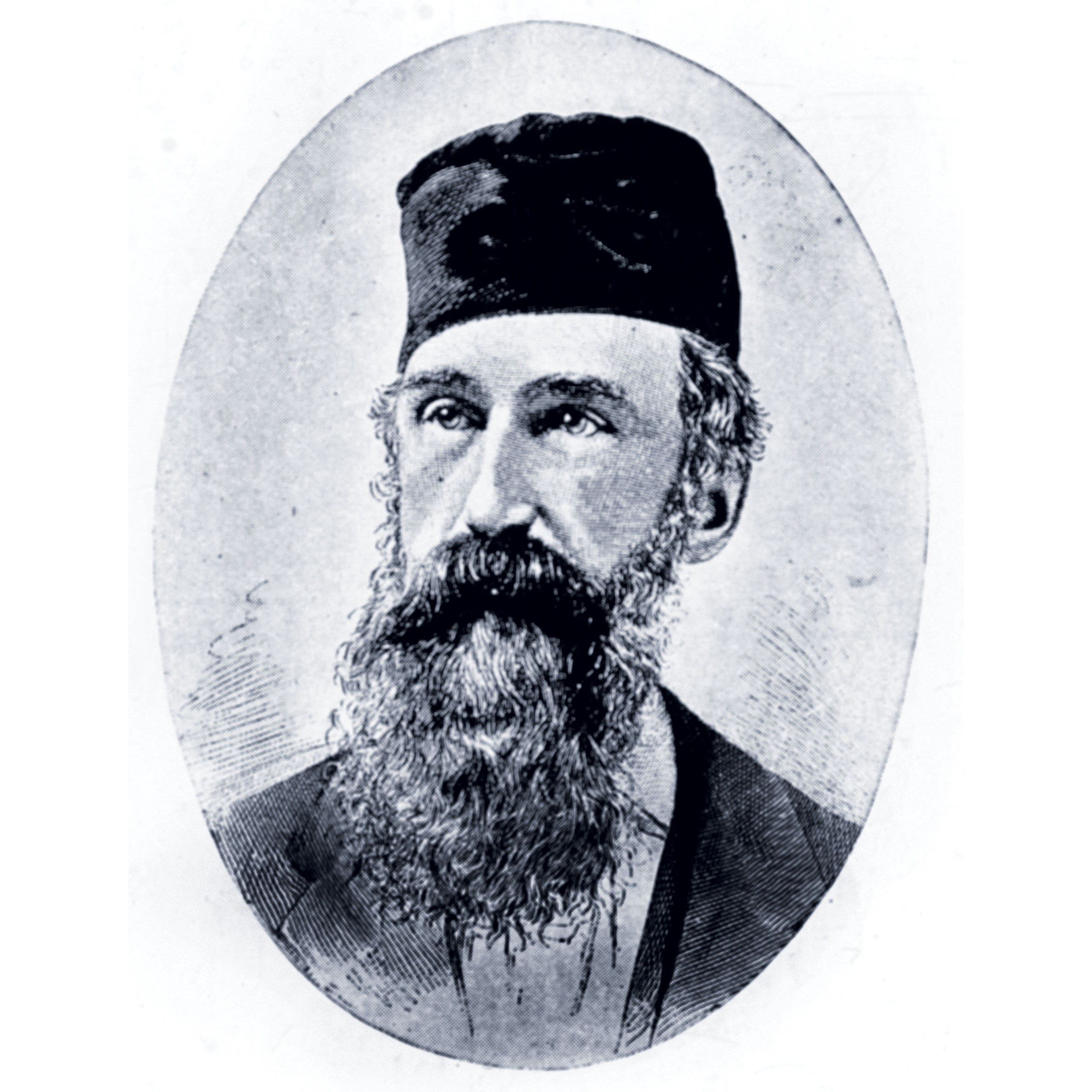
John Brooke
He also wrote to Davis just weeks after Davis’ release from his two-year imprisonment at Fort Monroe in Virginia. Davidson confessed that, “not being able to find prosperous employment in this Country for the support of my family,” he hoped to “enter the Prussian Service for the defence of their Harbors with Torpedoes, Subm. Batteries, &c….” Davidson refreshed his former president’s memory about his accomplishments, emphasizing that the sinking of Commodore Jones had frozen the enemy in place for 10 critical days. Davis replied with a letter recollecting “the favorable estimate placed upon your suggestions and services” by him and the Navy Department, the importance of his work on the James River, and wishing him well in his search for employment abroad. Davis studiously avoided crediting Davidson with being the first or the most in anything associated with torpedoes. No doubt Davidson remembered this 1867 exchange when Davis failed to even mention his name in his 1881 book.22
Davidson finally did land a position, but not with a foreign navy. In May 1868 he was appointed commander of the “Maryland Navy,” which the state created to enforce new laws preventing the overfishing of Chesapeake Bay oyster beds. Despite wide derision of the “Oyster Navy” as a petty fiefdom for a former “rebel” and an intrusion on individual fishing rights, Davidson won grudging respect for his reports about the need to protect the state’s vital marine resources.23
Davidson held the Oyster Police position for two two-year terms, but this did not prevent him from continuing his search for a better job abroad. In late 1870, during the closing days of the Franco-Prussian War, he traveled to Prussia for what turned out to be an unsuccessful job search. “I had a splendid time in Prussia, they treated me like a prince, heaping every kindness and attention upon me that could possibl[y] be expected in time of war,” he wrote Minor upon his return. “The trip was not only pleasant, but very instructive for I had the opportunity of studying all the improvements in Torpedoes and Subm. Defenses generally which may be of service to me later.” To Brooke he complained that the Prussians “have been shamefully humbugged, in Torpedo affairs, by the English in general, and some yankee imposters who have been hanging around—European govts ever since our lost Revolution trying to palm off—and in fact succeeding in palming off the most miserable combinations called inventions—that completely disgusted me when I was there.”24
On the job market again in 1872, Davidson turned his attention back to South America, and, following the example of John Randolph Tucker and other Confederates who worked for Peru, secured a position with the Argentine navy.25 As he was in New York assembling his resources and working to recruit other former Confederates, Davidson renewed his effort to solidify his place in the history of submarine warfare. He wrote and self-published a short pamphlet, which was published two years later in Southern Historical Society Papers. He was obviously concerned that well-publicized English torpedo progress was eclipsing the reputation of Confederate precedents and even more concerned that the world would forget about the contributions of Commander Hunter Davidson.
Davidson credited his wartime boss, Stephen R. Mallory, with initiating the Confederacy’s torpedo work and with directing “the distinguished Captain M.F. Maury, LL.D., to make experiments with a view to their general employment if practicable.” From that point, however, Davidson’s pamphlet was all about Davidson. Maury “had arrived at no definite conclusion from his experiments” before he left for Europe, and Davidson’s subsequent work “differed in every essential particular from those used by Captain Maury in his experiments.” “The results” of Davidson’s system “were that the first vessels ever injured or destroyed in war, by electrical torpedoes, were by the torpedo department operating under my immediate command, and I may add, the only ones that I am aware of.” To reinforce this claim, he cited the endorsements he had solicited and received from Mallory, Brooke, Lee, and others (though not that of Davis). He cited his 1859 boat-lifting patent to solidify his bona fides as a recognized inventor and to underscore the importance of invention to transform commonly known theories into practical reality. He also made a cursory effort at defending the still debated morality of his invention, observing that “every discovery of a new or improved weapon proves to be a step towards greater civilization and peace.”26
Not surprisingly, Davidson’s exercise in self-promotion did not go over well in all circles, especially as it seemed to diminish the work of his “lamented friend Capt. Maury” who had died the year before. “Please read this pamphlet over carefully & write me as soon as you can, if you believe that I have therein done Capt. Maury injustice in any sense, or have ‘stolen any of his thunder,’” Davidson wrote to Brooke in August 1874. “I have been accused by one person of having done both, and it is necessary that I should prove the accusations to be without foundation in fact—if I can.” Brooke obliged with a letter dated August 21: “I regret to learn by your letter of the 2nd ins[tant]., that the pamphlet entitled ‘The first successful application of Electrical Torpedo or Submarine mines in time of war and as a system of defence,’ has been construed as detracting from the well-earned fame of the lamented Maury. So far as I know, the statements made in the publication referred to are true, and I believe you are entitled to the credit of having made the first successful application of Electrical Torpedoes or submarine mines in war.”27
 Confederate Veteran
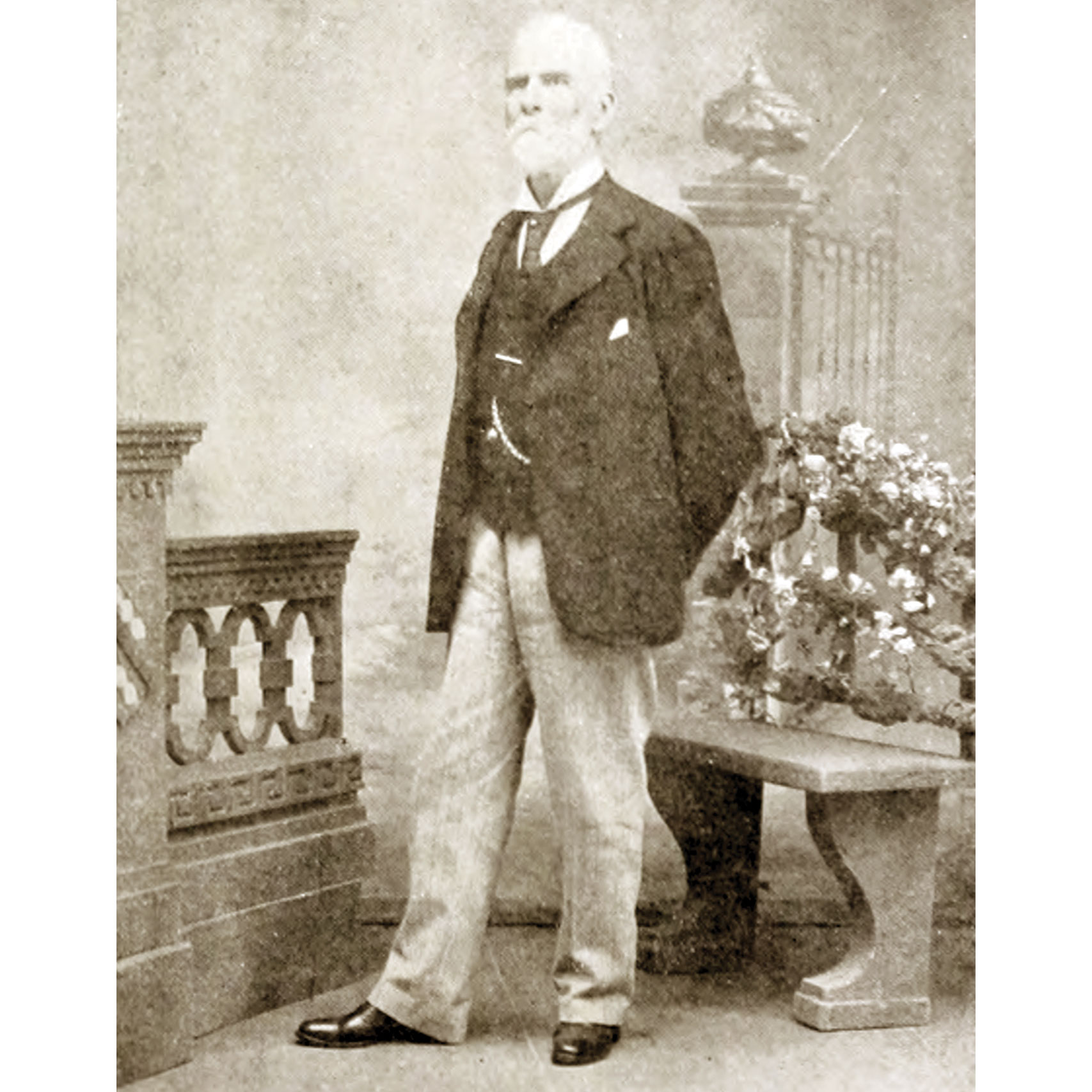
Hunter Davidson in later life
Davidson served 10 years with the Argentine Navy as hydrographer and first chief of the Argentine Torpedo Division. He designed a special torpedo boat, Fulminante, which blew up, allegedly the result of foul play. His work charting the country’s coast and rivers—a skill he had honed with the U.S. Coastal Survey in the 1850s—proved more valuable to Argentina in the long run. He retired, with commendation, in 1885.28
Instead of returning to the United States, Davidson had moved (even before his retirement) to Paraguay, in June 1884. When he embarked on his first adventure to South America, in 1866, his wife, Mary, wrote that she “shall probably join him with my little flock” in Valparaíso. She never did go to Valparaíso, nor apparently to Buenos Aires or in his retirement, to Pirayú, Paraguay. According to a consular application he filled out 23 years later, he moved to Paraguay “to lead a quiet and retired life.” In lengthy letters to his old U.S. Navy friend, Stephen Luce, in 1897 Davidson described himself on his estancia raising cattle, living “the most free and independent life in the world. Such a contrast to Naval harness!” He offered details on his various sons whom Luce had known as young boys in the 1850s.29
What Davidson failed to mention was that for several years he had been living with a Paraguayan woman, Enriqueta Silvia Dávolos, who was 46 years his junior and with whom he had four more children. They married in 1899, after Mary Davidson died in 1896 (her tombstone identifies her as Mary Ray). The reason for the Davidsons’ separation is not clear, but his American sons apparently did not hold it against him.30
Davidson never returned to the United States. He certainly kept up with developments there, doggedly protecting from afar his own reputation and place in history—as Jefferson Davis learned—and even applying for a Mexican War pension from the U.S. government, claiming in the 1896 application that he was living in Paraguay because of severe rheumatism.31
Not unlike many former Confederates, Hunter Davidson felt alienated from postwar, post-Reconstruction America. His pleading letters to Brooke acknowledged that Brooke was probably right in accommodating himself to the new order of things and implied that Davidson found it difficult to follow Brooke’s lead. In 1903, to a distant kinsman who was seeking genealogical information, Davidson wrote a vicious diatribe against African Americans and the effects of emancipation.32
Hunter Davidson was 86 when he died in 1913 and was buried in Paraguarí, Paraguay, with his second wife. He would be gratified to know that modern historians (unlike Jefferson Davis) have acknowledged Davidson’s central role in the development of electrical torpedo technology.33 He would be less than pleased to learn that his work proved not a step toward “greater civilization and peace,” but a leap into the abyss of more savage warfare.
John M. Coski is author of Capital Navy: The Men, Ships, and Operations of the James River Squadron (Savas, 1996, 2005). He is completing a biography of Hunter Davidson begun and entrusted to him by Charles T. Jacobs, a career CIA officer who spent 18 years researching Davidson and who, before his death in 2008, published a short article about Davidson in the Washington Times.
Notes
1. “Davis and Davidson,” Southern Historical Society Papers, vol. 24 (1896): 284–291; Buenos Ayres Herald, July 14, 1882, copy courtesy of George M. Brooke Jr.
2. John McIntosh Kell, Recollections of a Naval Life (Washington, 1900), 122; Charles Todorich, The Spirited Years: A History of the Antebellum Naval Academy (Annapolis, 1984), 52–54.
3. Davidson’s antebellum career drawn from his ZB (Early Records) file, U.S. Naval History and Heritage Command.
4. Records of the U.S. Naval Academy, RG 45, National Archives and Records Administration (hereafter NARA), microfilm series 991, roll 1, vol. 346, page 74; Davidson to Commander George P. Upshur, May 11, 1849, Hannah-Barbour Papers, Virginia Historical Society (hereafter VHS).
5. “Hunter Davidson and the Resolute compiled from various sources of information,” Hanna-Barbour Papers, VHS; Alfred Dunning, “The Return of the Resolute,” American Heritage (August 1959): 14–17.
6. Scientific American, May 19, 1860, 321–322. Davidson received a second patent, dated April 9, 1861, for an improved attaching hook for his first patent. RG 241, NARA, T-129, roll 136.
7. Richmond Enquirer, May 31, 1861.
8. United States Naval War Records Office, Official Records of the Union and Confederate Navies in the War of the Rebellion 30 vols. (Washington, 1894–1922), series I, vol. 9, 11 (hereafter ORN); John V. Quarstein, The CSS Virginia: Sink Before Surrender (Charleston, SC, 2012).
9. See Timothy S. Wolters, “Electrical Torpedoes in the Confederacy: Reconciling Conflicting Histories,” The Journal of Military History, 72 (July 2008): 768–771.
10. John Grady, Matthew Fontaine Maury, Father of Oceanography, A Biography, 1806–1873 (Jefferson, NC, 2015) and Frances Leigh Williams, Matthew Fontaine Maury, Scientist of the Seas (New Brunswick, NJ, 1963); Davidson’s ZB file.
11. Herbert M. Schiller, ed., Confederate Torpedoes (Jefferson, NC, 2011), 3–8; W. Davis Waters and Joseph I. Brown, Gabriel Rains and the Confederate Torpedo Bureau (El Dorado Hills, CA, 2017).
12. ORN, Series I, Vol. 7, 543–546.
13. United States War Department, The War of the Rebellion: A Compilation of the Official Records of the Union and Confederate Armies, 129 vols. (Washington, 1880–1901), Series I, Vol. 18, 743 (hereafter OR).
14. Davidson to Jones, October 25, 1862, in ORN, Series I, Vol. 7, 60-61; unexpurgated version in RG 45, NARA.
15. ORN, Series I, Vol. 10, 9–16; Lamson of the Gettysburg: The Civil War Letters of Lieutenant Roswell H. Lamson, U.S. Navy, ed. by James M. McPherson and Patricia R. McPherson (New York, 1997), 162; John W. Grattan, Under the Blue Pennant or Notes of a Naval Officer, ed. by Robert J. Schneller Jr. (New York, 2000), 98.
16. James D. Bulloch, The Secret Service of the Confederate States in Europe (New York, 1884), Vol. II, 84–96; ORN, Series I, Vol. 3, 732–734.
17. ORN, Series I, Vol. 5, 381–382; [Washington] National Intelligencer, January 6, 1864.
18. Mary Davidson to John Brooke, August 1, 1866, courtesy of George M. Brooke Jr.; New York Herald, April 29, 1866.
19. Davidson to Brooke, April 25, 1867, courtesy of George M. Brooke Jr.; George M. Brooke Jr., John M. Brooke: Naval Scientist and Educator (Charlottesville, 1980).
20. Davidson to Brooke, March 12, 1867, courtesy of George M. Brooke Jr.; Davidson to Minor, July 25, 1867, VHS.
21. Lee to Davidson, June 10, 1867, Robert E. Lee Letterbook, 1866–1870, VHS.
22. Davidson to Davis, May 28, 1867, and Davidson to Davis, July 3, 1867, in Dunbar Rowland, Jefferson Davis Constitutionalist: His Letters, Papers, and Speeches (Jackson, 1923), vol. 7, 107–110.
23. John R. Wennersten, The Oyster Wars of Chesapeake Bay (Centreville, 1981), 37–54; R. Admiral (Ret.) Mark Belton, “Hunter Davidson: Maryland Oyster Police Force,” accessed via southernmarylandchronicle.com/2018/03/30/hunter-davidson-maryland-oyster-police-force/ on March 30, 2018; “The Oyster Police,” The Port Tobacco Times and Charles County Advertiser, February 2, 1872.
24. Davidson to Minor, December 18, 1870, quoted in Hannah-Barbour Papers, VHS; Davidson to Brooke, December 22, 1870, courtesy of George M. Brooke Jr.
25. David P. Werlich, Admiral of the Amazon: John Randolph Tucker, His Confederate Colleagues, and Peru (Charlottesville, 1990).
26. Hunter Davidson, “The First Successful Application of Electrical Torpedoes or Submarine Mines in Time of War, and As a System of Defence” (1874), reprinted in Southern Historical Society Papers, vol. II, no. 1 (July 1876): 1–6.
27. Davidson to Brooke, August 2, 1874, Brooke to Davidson, April 21, 1874, courtesy of George M. Brooke Jr.
28. Eduardo C. Gerding, “The Confederate Navy and the Argentine Hydrographic Survey: Time of the Spar Torpedo,” Buenos Aires Herald, December 14, 2003.
29. “Certificate of Registration of American Citizen” for Hunter Davidson, American Consulate, Asunción, Paraguay, September 17, 1907 (accessed via Ancestry.com); Davidson to Luce, January 13, 1897, and April 19, 1897, Library of Congress Manuscripts Division.
30. “Burns Vestments and Prayer Book in Repudiation,” The [Richmond] Times-Dispatch, July 27, 1913, quotes Rev. Charles Steele Davidson about his father.
31. Pension application noted in Davidson’s ZB file; Davidson to Reginald B. Leach, August 25, 1903, copy in Charles Jacobs files, expresses bitterness at the “ungrateful” government for never giving his mother a pension.
32. Davidson to Brooke, March 12, 1867, and May 9, 1867, courtesy of George M. Brooke Jr.; Davidson to Leach, August 25, 1903, photocopy in Charles T. Jacobs files.
33. Wolters, “Electrical Torpedoes,” especially pages 774–783.
Related topics: naval warfare