 USAHEC; victoriya89/istock
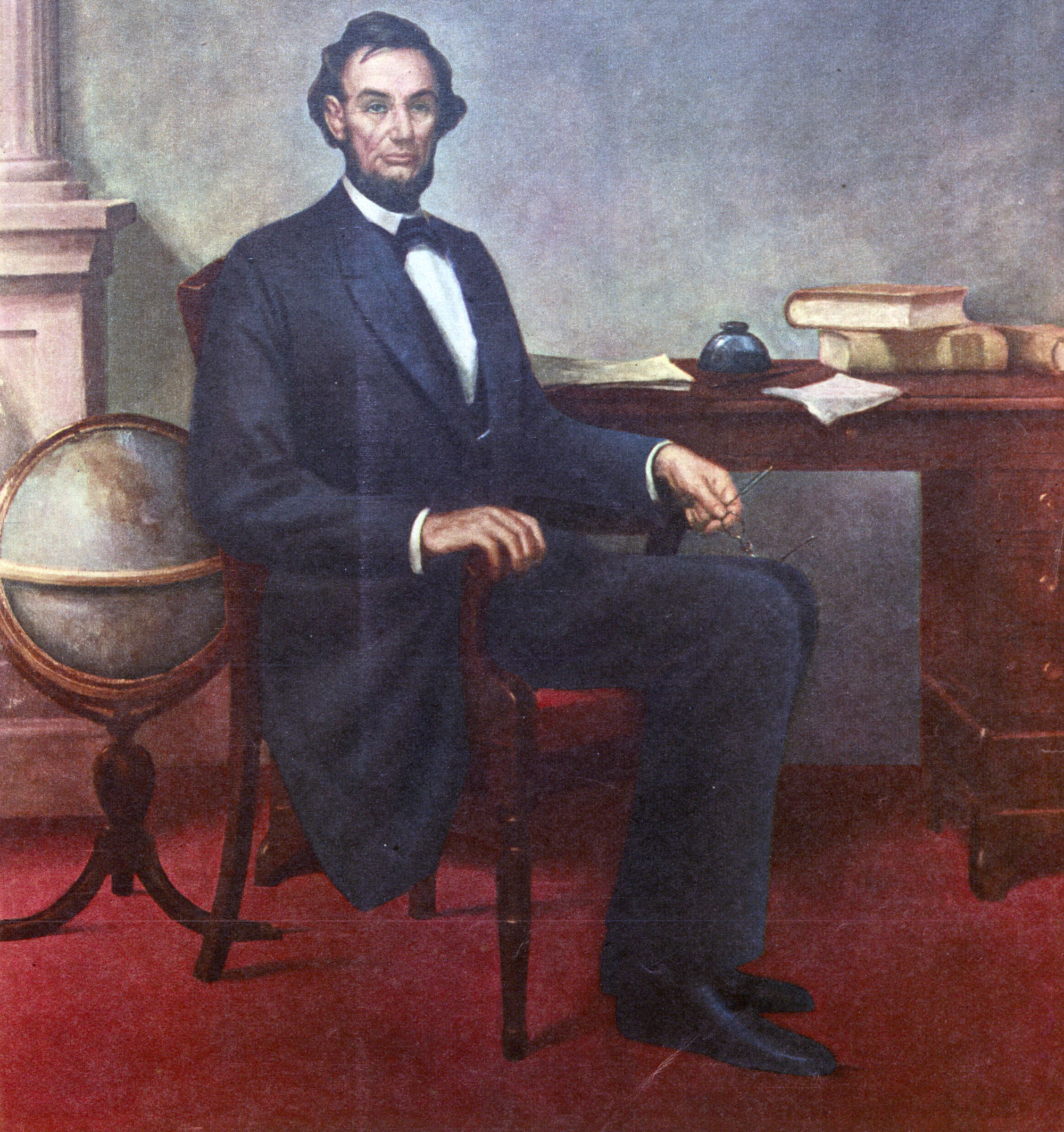
Abraham Lincoln sits at his desk in a portrait by Penrhyn Stanlaws that appeared in the Chicago Sunday Tribune in 1953.
On April 16, 1863, the black community of Washington held a celebration at the Fifteenth Street Presbyterian Church in honor of the first anniversary of emancipation in the District of Columbia. Exactly one year earlier Abraham Lincoln had signed into law a bill that abolished slavery in the U.S. capital. The organizers of the event included Mary Lincoln’s seamstress, Elizabeth Keckly, and President Lincoln’s valet, William Slade. The service opened with a prayer invoking blessings upon the members of Congress who had voted in favor of the bill, as well as for “the President who had done so much for liberating the slaves of the country.”
The first speaker, Thomas H.C. Hinton of New York, condemned the racial bigotry that people of color faced on a daily basis in the United States, but he nevertheless praised Lincoln for striking “the death-blow to slavery.” (Lincoln had issued his Emancipation Proclamation three months earlier, on January 1.) After a loud round of applause, Hinton intoned, “May his path be strewn with peace and prosperity and may the nation look upon him as the repairer of the land and the restorer of the national paths.”
After several others had taken the pulpit, a man from Michigan named J.E. Green told the audience that “the American Revolution was an important epoch in the world’s history; not only having its effect on the whites, but upon the blacks.” Green reminded those gathered in the pews that black men had helped “to fight for our liberties” in the struggle for independence. One of the earliest martyrs had been Crispus Attucks, who “fell at the head of a band of citizens in the Boston massacre.” Green continued: “Colored blood was spilt at Bunker Hill, and the bones of the blacks repose there with the whites. In Rhode Island a regiment of blacks was raised, and in Connecticut a large battalion who fought bravely throughout the war, but owing to the prejudices of the whites, their deeds have been covered up.”
 The George F. Landegger Collection of District of Columbia Photographs in Carol M. Highsmith’s America, Library of Congress, Prints and Photographs Division
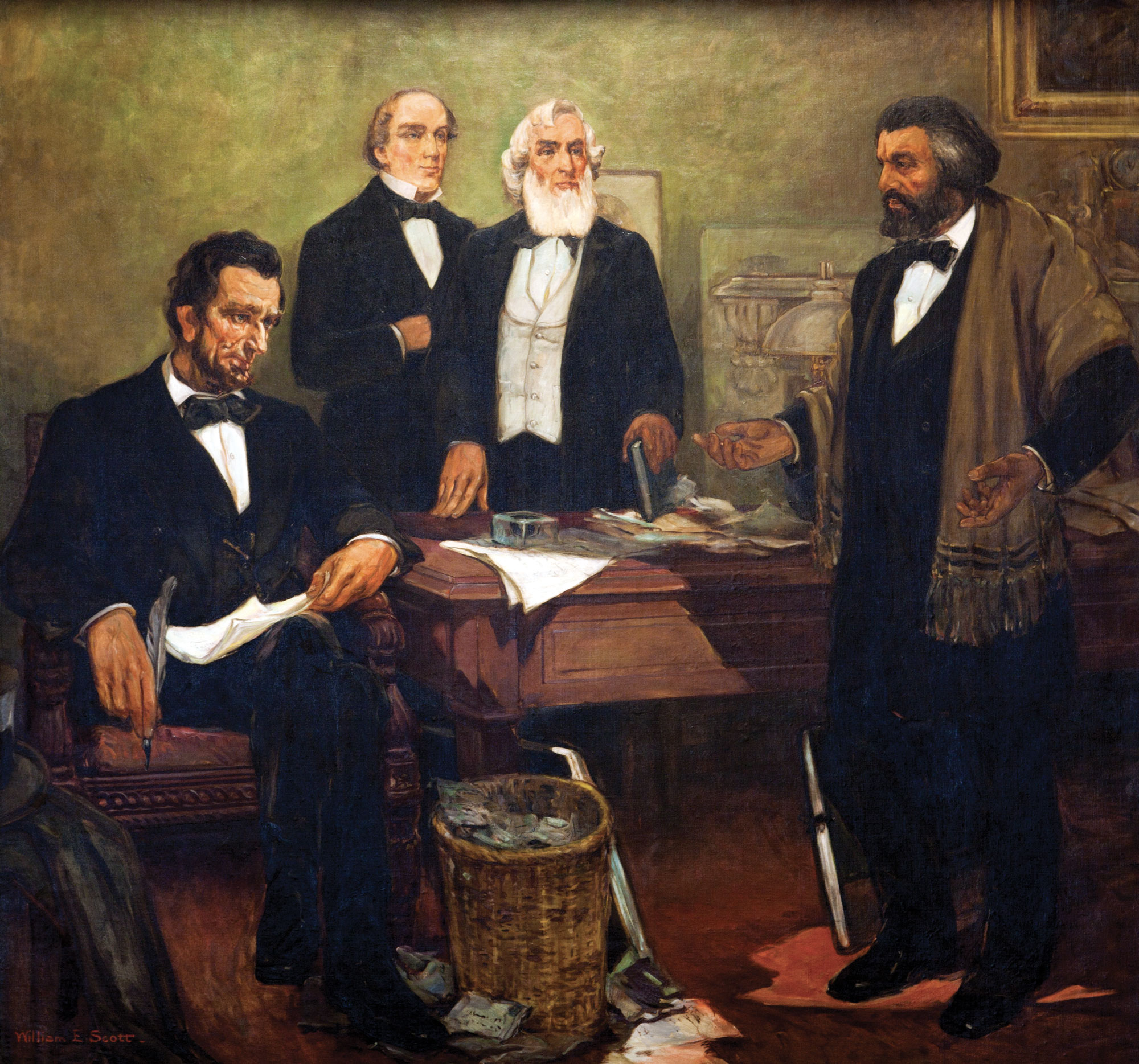
In this mural by William Edouard Scott, located at the Recorder of Deeds Building in Washington, D.C., Frederick Douglass lobbies President Abraham Lincoln and members of his cabinet to authorize the enlistment of African Americans in the Union army. Douglass argued that by being allowed to fight, black men could “rise in one bound from social degradation to the plane of common equality with all other varieties of men.”
Green next recounted the Battle of New Orleans in January 1815, when Andrew Jackson won a magnificent victory with an army of “blacks as well as whites.” While many white northerners now believed that African Americans were cowardly and incapable of exercising the rights of citizenship, Green emphatically stated that “patriotism was more deeply rooted in the blacks than the whites. They pour out their blood for those who do not regard them as fellow men.”1
This last statement by Green was incredibly poignant. Most African Americans never wavered in their loyalty to the United States despite the fact that the nation refused to recognize some 4 million black people as free and independent human beings. Despite the gross injustices they faced on a daily basis, black men nevertheless continued to press for their rights to be recognized and protected by the governing authorities. Indeed, the Civil War opened up new opportunities for ordinary African Americans to participate in the political process and to make claims for equality. Many hoped to accomplish these goals by proving their manhood on the battlefield. In a recruiting speech in March 1863, Frederick Douglass proclaimed that by fighting, black men could “rise in one bound from social degradation to the plane of common equality with all other varieties of men.”2 Two months later, at a recruiting event in Washington, D.C., a black orator thundered, “The black man’s blood reddened the soil of Bunker Hill, and shall it not be shed now?” The crowd replied: “Yes, Yes.” The speaker then pointed to the Declaration of Independence: “Our country now promises us life, liberty, and the pursuit of happiness. We have been negligent. Do we expect to sit down and enjoy these privileges without some sacrifices on our part?” The crowd then replied, “No, No,” and “Let us fight.” Another speaker at the event declared: “When we show that we are men, we can then demand our liberty, as did the Revolutionary fathers—peaceably if we can, forcibly if we must. If we do not fight, we are traitors to our God, traitors to our country, traitors to our race, and traitors to ourselves.”3
 Wikimedia Commons
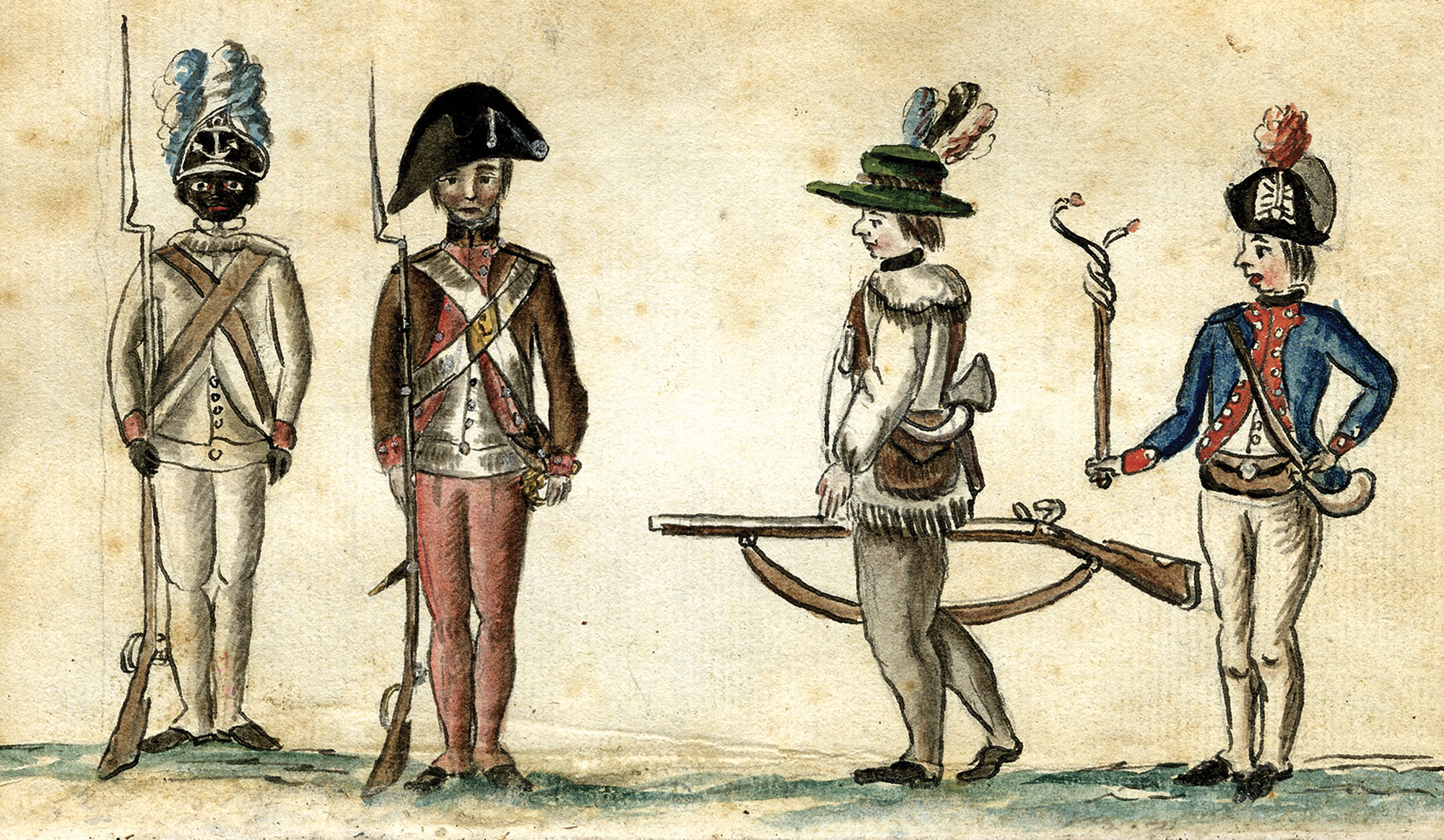
Many of the black men and women who wrote to Abraham Lincoln or met with him at the White House showed a deep understanding of American history, including the role African Americans had played in helping win the Revolutionary War. Above: This 1781 watercolor by Jean-Baptiste-Antoine de Verger depicts American soldiers, one of them black, who served at the Siege of Yorktown, Virginia.
African Americans understood that their sacrifices for the nation entitled them to lay claim to the rights of citizenship. By bearing arms, they sought to prove themselves worthy of the rights of free men. When they faced inequality in the ranks, they often raised their voices in protest. Sometimes their disapproval erupted in violence, and several mutinies took place among regiments of U.S. Colored Troops during the Civil War. In other cases they wrote to their hometown newspapers, congressmen, cabinet officials, governors, military officers, and even the president. On a few notable occasions black men personally delivered their petitions to Lincoln, handing them to him in his White House office. These actions represented a new form of integration for African Americans into the American body politic. By petitioning the president and other national leaders, black men and women were making bold claims to the rights of citizenship—that they, too, deserved the First Amendment right “of the people” to petition their government for a redress of grievances.
During the war, African Americans sent more than 120 letters to Lincoln. Hundreds more met him at the White House, shaking his hand in private meetings or at public receptions. Many of these callers wished simply to express their gratitude to Lincoln for all he had done for their race, but some came with greater purpose—seeking political rights, social equality, and economic opportunity.
Many of the men and women who wrote to Lincoln or who met with him at the White House showed a deep understanding of American history. Like J.E. Green, they wrote about the role that African Americans played in winning the American Revolution, and in fighting to secure American independence during the War of 1812. They appealed to the nation’s founding ideals to claim for themselves the rights that Thomas Jefferson had said belonged to “all men.” In making these appeals, they echoed arguments Lincoln had made as a politician in the 1850s—that the rights embodied in the Declaration of Independence “contemplated the progressive improvement in the condition of all men everywhere” and that it was written to augment “the happiness and value of life to all people of all colors everywhere.”4
Early in the war, many African Americans were angered by Lincoln’s support of voluntary colonization. From their perspective, they were loyal Americans who deserved to stay in the country of their birth. Quoting both the Declaration of Independence and the Sermon on the Mount, a group of Philadelphians reminded Lincoln that their “masters ‘toil not, neither do they spin.’ They destroy, they consume, and give to the world in return but a small equivalent. They deprive us of ‘life, liberty, and the pursuit of happiness.’”5 A New Jerseyan who was furious with Lincoln’s colonization policy published an open letter to the president in September 1862:
Pray tell us, is our right to a home in this country less than your own, Mr. Lincoln? Read history, if you please, and you will learn that more than two centuries ago, Mr. White-man and Mr. Black-man settled in this country together. The negro, sir, was here in the infancy of the nation, he was here during its growth, and we are here to-day. If, through all these years of sorrow and affliction, there is one thing for which we have been noted more than all else, it is our love of country, our patriotism. In peace, the country has been blessed with our humble labor, nor have we ever been found wanting in the times that have tried the souls of men.6 We were with Warren on Bunker Hill, with Washington at Morristown and Valley Forge, with LaFayette at Yorktown, with Perry, Decatur, and McDonough in their cruisings, and with Jackson at New Orleans, battling side by side with the white man for nationality, national rights, and national glory. And when the history of the present atrocious insurrection is written, the historian will record: “Whoever was false, the blacks were true.” Would you, then, in truckling subserviency to the sympathizers with this bloody rebellion, remove the purest patriotism the country affords? If you would, let me tell you, sir, you cannot do it. Neither fraud nor force can succeed, but by the fatal ruin of the country. Are you an American? So are we. Are you a patriot? So are we. Would you spurn all absurd, meddlesome, impudent propositions for your colonization in a foreign country? So do we.7
In a similar vein the next month, the black college professor George Vashon published a letter addressed to Lincoln that decried the president’s support for colonization while pointing to the sacrifices of “patriotic blacks” during the Revolution:
These men too, have another reason for clinging to the land of their nativity; and that is, the gross injustice which inheres even in the slightest intimation of a request, that they should leave it, an injustice which must necessarily be, in the highest degree, revolting to their every sense of right. Who and what are these men? Their family records in this land, in almost every instance, antedate our revolutionary struggle, and you, sir, will read in your country’s history, unlike the ignorant and rapid reporters, who, from time to time, in their marketless and pen free calumny of a race, detail from our camps the lie, that “the negro will not fight,”—you, Sir, know, that black Americans fighting shoulder to shoulder with white Americans, in the contest which confirm[ed] our nationality, merited and received the approbation of Washington; and, that the zealous and fleet-footed slave of that time, did, for the partizan bands of [Thomas] Sumter and [Francis] Marion, the same kind of offices which the travel worn and scarcely tolerated “contraband” of our days has done for the armies of [Union generals Ambrose] Burnside and [George B.] McClellan. And now, what reward is offered by republican gratitude? Now, forsooth, when the banquet of Freedom has been spread, when the descendants of the men who fought under [British generals William] Howe and [Henry] Clinton, under [Charles] Cornwallis and [John] Burgoyne, have with ostentatious liberality, been invited to the repast, the children of the patriotic blacks who periled their lives at Bunker Hill, at Red Bank, and on many another hard fought field, must be requested, not merely to take a lower seat, but to withdraw entirely from the table.8
 Library of Congress
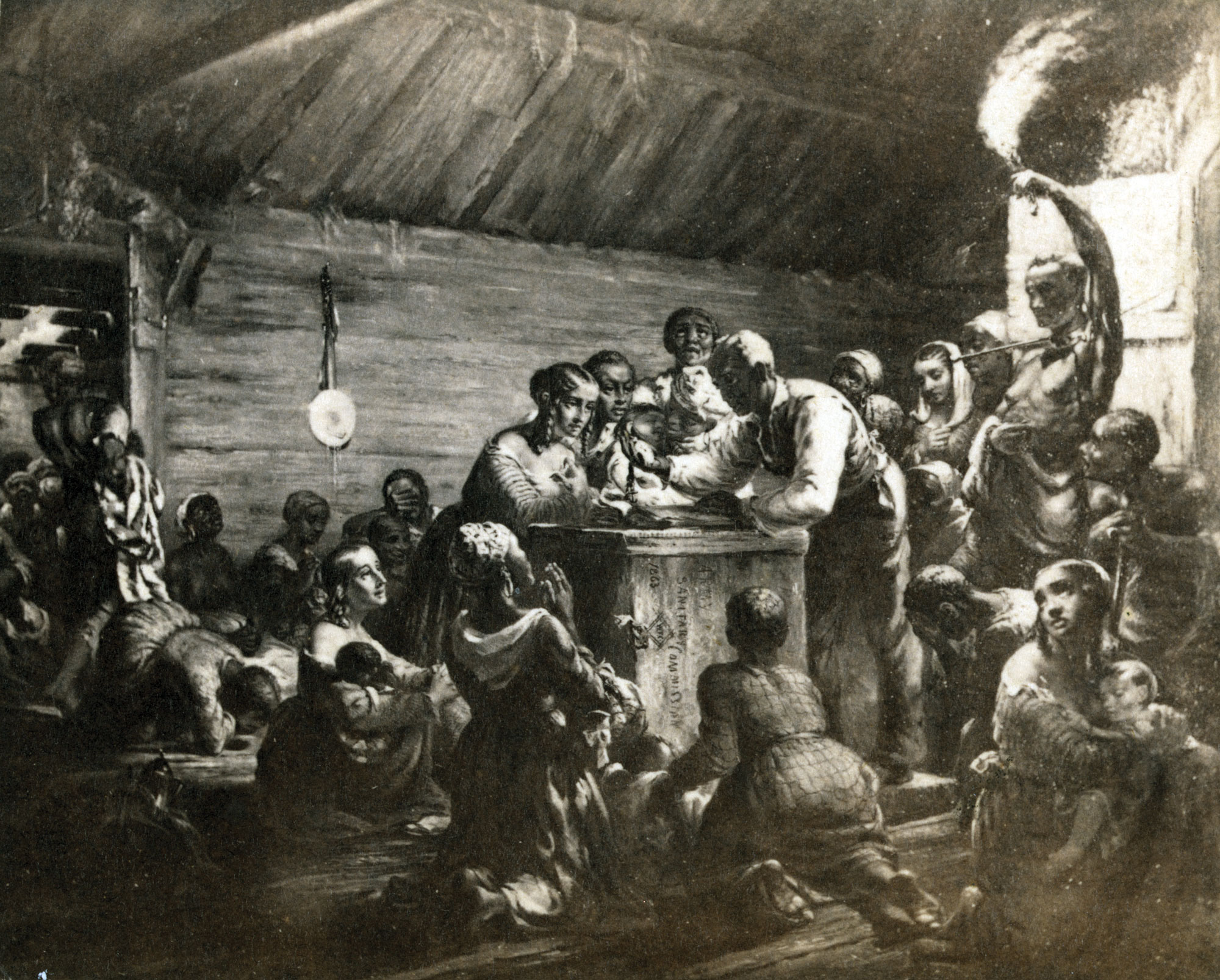
After Lincoln’s issuance of the Emancipation Proclamation, a number of African Americans petitioned him to accept various units of black men into the Union army. One group of prospective soldiers from New York told the president, “We are ready to follow the example of our fathers, and rally to our country’s call. We have been called cowards. We deny the charge. It is false.” Above: African-American men, women, and children gather around a man with a watch, waiting for the Emancipation Proclamation to take effect, in a work from 1863.
The Lincoln administration finally began permitting African-American men to join the Union army in late 1862. Following his issuance of the Emancipation Proclamation on January 1, 1863, African Americans began enlisting in significant numbers. When a group of black New Yorkers called at the White House in March 1863 to urge the acceptance of 10,000 black volunteers to be known as the Fremont Legion, they handed Lincoln a letter quoting “our brother” Patrick Henry and pointing to African-American service in the Revolution and the War of 1812.
We, the sons of Freedom, take the liberty of addressing you, through our loyal, patriotic, and tried friend of the slave and Union—thanking you for proclaiming liberty to the suffering millions of our oppressed fellow countrymen, whose groans have ascended to that God who is our refuge and help in time of trouble. We prayed for a deliverer likened unto Moses; for it is said the stone shall cry out of the wall, and the beams of the timber shall answer it; believing that our prayer has been answered, and that God has raised up your Excellency as a deliverer, and a lamp by which our feet are guided into the paths of liberty. The cause of human liberty, formidable to tyrants, and dear to the oppressed throughout the world; containing the elements of immortality, sublime as heaven, and as far-reaching as eternity; embracing every interest that appertains to the welfare of the bodies and souls of men, and sustained by the omnipotence of the Lord Almighty.
The proclamation issued by your Excellency, January 1st, 1863, making liberty paramount to slavery, the triumphs of truth over error, liberty over oppression, loyalty over treason and rebellion, republicanism over aristocracy; for the triumphs of these principles our fathers fought and died on Lake Erie, Champlain, upon the Mediterranean, Florida, Schuylkill, Hickory-ground, at New Orleans, at Horse Shoe Bend, Pensacola, Red Bank. Liberty was the sound that rallied our fathers; they adopted the sentiment of our brother, Patrick Henry, which was, “forbid it Almighty God: I know not what course others may take, but as for me, give me liberty or give me death.” We are ready to follow the example of our fathers, and rally to our country’s call.
We have been called cowards. We deny the charge. It is false. We, through our delegate, offer the service of ten thousand of the sable sons, called the Fremont Legion, to be led to the field of battle; and our motto is: “The Union—one and inseparable.” We hope, therefore, that your Excellency will accept the services of the Fremont Legion. For which we humbly pray.9
African Americans also brought petitions to the White House asking Lincoln for the right to vote. These remarkable documents pointed to the Declaration and other pivotal moments in American history to make the claim for black citizenship rights. In March 1864, two free men of color from New Orleans—E. Arnold Bertonneau and Jean Baptiste Roudanez—arrived in Washington to petition for the enfranchisement of black Louisianans who had been born free before the war. The petition carried roughly 1,000 signatures, including those of 28 black men who had fought with Jackson in the War of 1812. They presented it to Lincoln at the White House on March 3. In one section of the petition, they alluded to the Declaration, stating that they “are loyal citizens, sincerely attached to the country and the Constitution; and ardently desire the maintenance of the National Unity, for which they are ready to sacrifice their fortunes and their lives.” They continued:
That a large portion of them are owners of real-estate, and all of them are owners of personal property: that many of them are engaged in the pursuits of commerce and industry, while others are employed as artisans in various trades; that they are all fitted to enjoy the privileges and immunities belonging to the condition of citizens of the United States, and among them may be found many of the descendants of those men whom the illustrious Jackson styled “his fellow-citizens” when he called upon them to take up arms to repel the enemies of the country.
Your petitioners further respectfully represent that over and above the right which in the language of the Declaration of Independence they possess to liberty and the pursuit of happiness, they are supported by the opinion of just and loyal men, especially by that of Edward Bates, attorney General, in the claim to the right of enjoying the privileges, and immunities pertaining to the condition of citizens of the United States;10 and to support the legitimacy of this claim, they believe it simply necessary to submit to Your Excellency, and to the Honorable Congress; the following considerations which they beg of you to weigh in the balance of law and justice.
Notwithstanding their forefathers served in the army of the United-States in 1814–1815, and aided in repelling from the soil of Louisiana a haughty enemy, over confident of success, yet they and their descendants have ever since, and until the era of the present rebellion been estranged and even repulsed, excluded from all rights, from all franchises, even the smallest, when their brave fathers offered their bosoms to the enemy to preserve the territorial integrity of the Republic.
During this period of forty-nine years, they have never ceased to be peaceable citizens, paying their taxes on an assessment of more than fifteen millions of dollars.
At the call of Gen’l [Benjamin F.] Butler, they hastened to rally under the banner of Union and Liberty, they have spilled their blood, and are still pouring it out for the maintenance of the Constitution of the United States; in a word they are soldiers of the Union, and they will defend it so long as their hands have strength to hold a musket.
While Gen. [Nathaniel P.] Banks was at the siege of Port Hudson, and the city threatened by the enemy His Excellency, Gov. [George F.] Shepley called for troops for the defense of the city, and they were foremost in responding to the call, having raised the first regiment in the short space of forty eight hours.
In consideration of this fact, as true and as clear as the sun which lights this Great Continent; in consideration of the services already performed and still to be rendered by them to their common country, they humbly beseech Your Excellency and Congress to cast your eyes upon a loyal population awaiting with confidence and dignity the proclamation of those inalienable rights which belong to the condition of Citizens of the Great American Republic.
Theirs is but a feeble voice claiming attention in the midst of the grave questions raised by this terrible conflict, yet confident of the justice which guides the action of the Government, they have no hesitation in speaking what is prompted by their hearts, “We are men, treat us as such.”
Mr. President and Honorable members of Congress: the petitioners refer to your wisdom the task of deciding whether they, loyal and devoted men, who are ready to make every sacrifice for the support of the best Government which man has been permitted to create, are to be deprived of the right to assist in establishing a Civil Government in our beloved State of Louisiana, and also in choosing their representatives, both for the Legislature of the State, and for the Congress of the Nation.11
The press reported that Lincoln received the men “cordially.” He told them that he “must finish the big job on his hands of crushing the rebellion, and in doing that, if it became necessary to prevent rebels from voting, he should do so.” For Lincoln, restoring the Union was “paramount to all other questions” and he “would do nothing that would hinder that consummation or omit anything that would accomplish it.” If giving black men the right to vote became “necessary to close the war, he would not hesitate,” he said, for he saw “no reason why intelligent black men should not vote.” But black suffrage was “not a military question,” and he believed it had to be handled by the constitutional convention in Louisiana. As president, Lincoln said, he “did nothing in matters of this kind upon moral grounds, but solely upon political necessities.” Since the petition based its claim for suffrage “solely on moral grounds” it “did not furnish him with any inducement to accede to their wishes.” In other words, the black Louisianans had not demonstrated that giving black men the right to vote would help to win the war. Still, he assured them that he would support their request “whenever they could show that such accession would be necessary to the readmission of Louisiana as a state in the Union.”12
According to one account, Lincoln told these visitors, “I regret, gentlemen, that you are not able to secure all your rights, and that circumstances will not permit the government to confer them upon you.” He then sat down side-by-side with the men to amend one of the petitions. According to a witness in the room, “The Southern gentlemen who were present at this scene did not hesitate to admit that their prejudices had just received another shock.”13
While they were in Washington, the men wrote a supplementary memorial asking for the right to vote for all black men in Louisiana, which they may have presented to Lincoln at a second White House meeting on March 12. They now broadened their request, not simply asking for the right to vote for “all the citizens of Louisiana of African descent, born free before the rebellion,” but all African Americans in Louisiana, including those who had been born into slavery.
Meeting with these Creole leaders from New Orleans had an important effect on the president. On March 13, he sent a letter to Michael Hahn, recently elected governor of Louisiana, saying that Hahn should consider extending the franchise to “some of the colored people,” including “the very intelligent, and especially those who have fought gallantly in our ranks.” Such voters, Lincoln continued, “would probably help, in some trying time to come, to keep the jewel of liberty within the family of freedom.”14 Never had a sitting president suggested that black men should have the right to vote. Lincoln’s phrase the “jewel of liberty” eventually became public and black leaders would quote it after the war as they fought for the right to vote.
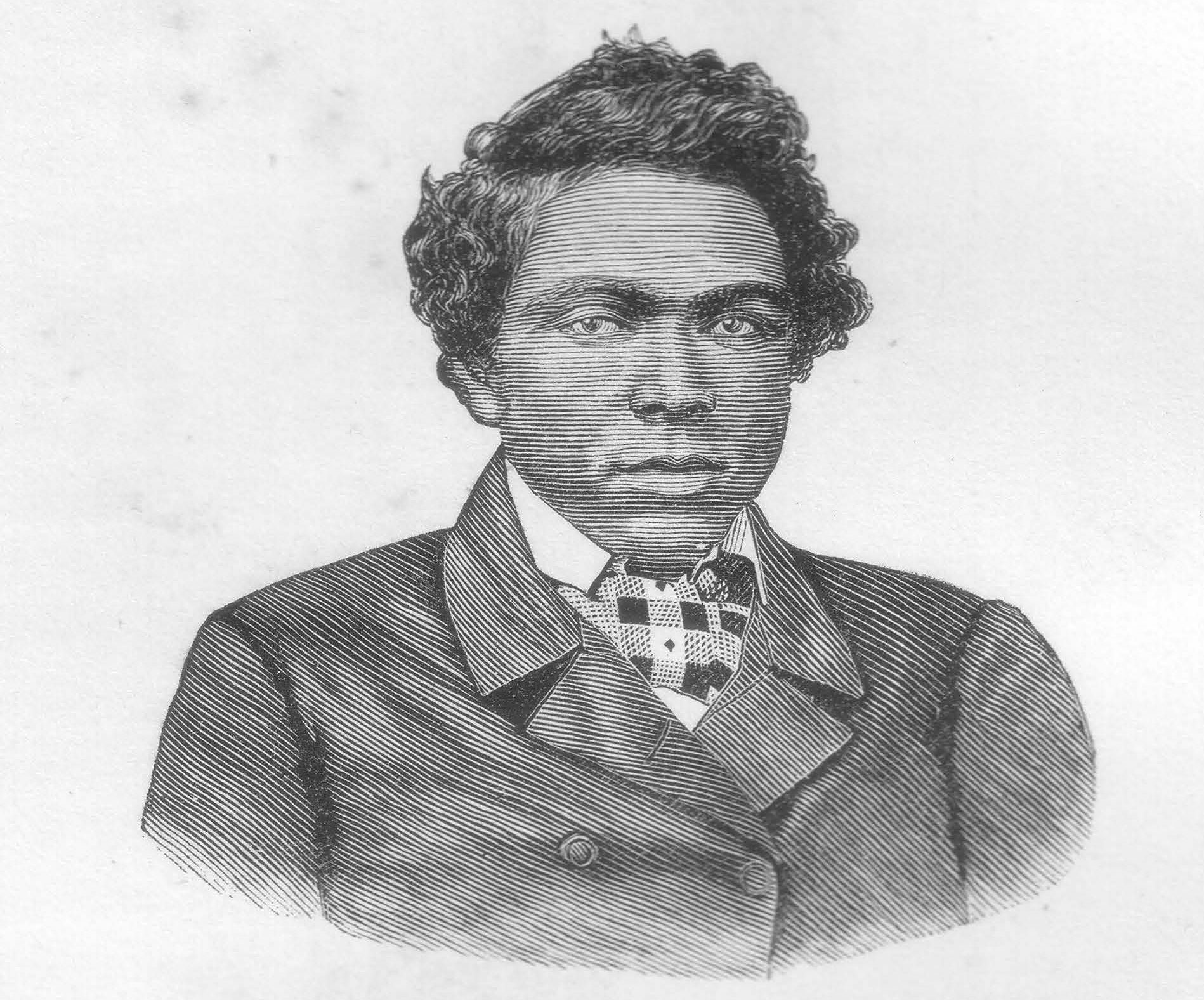
About a month after Lincoln’s meetings with Roudanez and Bertonneau, a delegation of six ex-slaves and free blacks from North Carolina came to Washington to petition Lincoln for the right to vote in their state. Their leader, Abraham H. Galloway, was born into slavery in coastal North Carolina in 1837 and had escaped to Philadelphia when he was about 20. Early in the war, he worked as a spy for Benjamin F. Butler, and by the spring of 1863 he was at the center of Union recruiting efforts in North Carolina. Now, in April 1864, Galloway and the others wished to present a written petition to the president.
The men were astounded when they were welcomed through the front door of the White House. One of them, the Rev. Isaac K. Felton, later remarked that “niggers” would never have been allowed to enter the front door “of the lowest magistrate” in their home state. They were escorted into Lincoln’s office, where the commander in chief shook each man’s hand. The delegation then presented their petition:
WE, the colored citizens of North Carolina, composed alike of those born in freedom and those whose chains of bondage were severed by your gracious proclamation, cherishing in our hearts and memories that ever to be remembered sentence, embodied in the Declaration of Independence, that “all men are created free and equal,” being well aware that the right of suffrage was exercised, without detriment, by the colored freemen of this State previous to 1835, and that some of the Northern States, most advanced in arts, sciences, and civilization, have extended that right to the colored citizens with eminent success and good results, do most earnestly and respec[t]fully petition your Excellency to finish the noble work you have begun, and grant unto your petitioners that greatest of privileges, when the State is reconstructed, to exercise the right of suffrage, which will greatly extend our sphere of usefulness, redound to your honor, and cause posterity, to the latest generation, to acknowledge their deep sense of gratitude. We feel proud in saying that we have contributed moral and physical [words illegible] to our country in her hour of need, and expect so to continue to do until every cloud of war shall disappear, and your administration stand justified by the sure results that will follow.
Lincoln told the petitioners that he “had labored hard and through many difficulties for the good of the colored race, and that he should continue to do so.” He gave them the “full assurance” that he sympathized with them in the struggle they were “now making for their rights.” Moreover, he assured them that he “would do what he could for us.” However, as the elective franchise was controlled at the state level, it would have to be settled during the reconstruction process in North Carolina. Still, Lincoln said he “was glad to see colored men seeking for their rights,” especially since “this was an important right which we, as a people, ought to have.” At the conclusion of the meeting, the president again shook each man’s hand.15
In September 1864, a delegation of ministers from Baltimore presented an expensive pulpit Bible to Lincoln. A gold plate on the front cover depicted patriotic symbols surrounding Lincoln as he freed an enslaved man. A gold plate on the back cover addressed the gift to Lincoln as “The Friend of Universal Freedom / From / the Loyal Coloured People of Baltimore / as a token of respect and Gratitude / Baltimore 4th July 1864.” In dating the Bible as they did, the people of Baltimore wanted to connect black freedom with national independence.
 The Underground Rail Road (1872)
In the spring of 1864, Abraham H. Galloway (above), who had been born into slavery and escaped to freedom when he was about 20, led a delegation of six black men to petition President Lincoln for the right to vote. “We feel proud in saying that we have contributed … to our country in her hour of need, and expect so to continue to do until every cloud of war shall disappear,” they wrote.
On September 7, the ministers met with Lincoln at the White House “in the presence of a large crowd of spectators.” After Lincoln “individually welcomed” each of his guests, the Rev. Samuel W. Chase, a Presbyterian minister, made a short speech. “Mr. President,” he began, “the loyal colored people of Baltimore have entrusted us with authority to present this Bible as a testimonial of their appreciation of your humane conduct towards the people of our race.” But Chase also wanted Lincoln to remember that African Americans had been loyal to the government even though they had not received full equality before the law. “Since our incorporation into the American family we have been true and loyal, and we are now ready to aid in defending the country, to be armed and trained in military matters, in order to assist in protecting and defending the star-spangled banner.”
Chase’s reference to The Star-Spangled Banner recalled the enormous 15-star flag that had flown over Fort McHenry during the Battle of Baltimore in September 1814—exactly 50 years earlier. That flag served as a symbol of victory over tyranny. Now the Union was in need of new defenders from Baltimore. Although there were many disloyal Marylanders, the black people of the state had remained steadfast for the Union. Lincoln could rely on them. After a few more remarks, Chase told the president that the “loyal colored people of this country everywhere” were praying for him.
Lincoln replied with a few remarks, calling the Bible “the best gift God has given to man.” Then, as the men departed, he took “each of them by the hand as they passed out.” The artist Francis Carpenter noted that this gift gave Lincoln “more sincere pleasure” than any other he received “during his entire public life.”16
Lincoln’s cordial treatment of his black guests probably gave them hope that he would help the nation live up to its founding ideals. Before the war, the Declaration of Independence had seemed to black and white abolitionists like little more than an unfulfilled promise—if not a cruel and hypocritical reminder of the evils of slavery and white supremacy. In 1852, Douglass had famously asked, “What to the Slave is the Fourth of July?” His answer: “a day that reveals to him, more than all other days in the year, the gross injustice and cruelty to which he is the constant victim.”17 Now Lincoln’s black visitors and correspondents believed they had an ally in the White House who would sympathize with them as they sacrificed—yet again—for the nation, and in their quest for equality and political rights.
For a brief time the Civil War seemed to offer hope for a better future. July 4, 1865, appeared to be the first Independence Day on which African Americans had much to celebrate. In Washington, a young black orator proclaimed it the “first Fourth of July of the colored people,” as thousands of African Americans gathered on the White House grounds for a day of celebration.18 In San Francisco that day, the “colored people were out in force and were loudly cheered, and seemed to feel a new era had dawned upon their long oppressed race.”19 The era would be short-lived. The failure of Reconstruction and the rise of Jim Crow meant that, 100 years after Lincoln signed the Emancipation Proclamation, Martin Luther King Jr. would have to make appeals similar to those Civil War–era White House petitions. Standing in Lincoln’s “symbolic shadow” in August 1963, he called on the nation to fulfill its obligation to “the magnificent words of the Constitution and the Declaration of Independence,” that “all men, yes, black men as well as white men, would be guaranteed the ‘unalienable Rights’ of ‘Life, Liberty and the pursuit of Happiness.’”
Jonathan W. White is the author or editor of 12 books, including, most recently, To Address You As My Friend: African Americans’ Letters to Abraham Lincoln (University of North Carolina Press, 2021) and My Work Among the Freedmen: The Civil War and Reconstruction Letters of Harriet M. Buss (University of Virginia Press, 2021). In February 2022 he will publish A House Built By Slaves: African American Visitors to the Lincoln White House (Rowman and Littlefield).
Notes
1. Washington, D.C., Evening Star, April 17, 1863; New York Anglo-African, May 2, 1863.
2. John Lobb, ed., The Life and Times of Frederick Douglass (London, 1883), 297.
3. New York Anglo-African, May 23, 1863.
4. “Speech at Springfield, Illinois,” June 26, 1857, in Roy P. Basler et al., eds., The Collected Works of Abraham Lincoln, 9 vols. (New Brunswick, NJ, 1953–55), 2:404–408.
5. Jonathan W. White, To Address You As My Friend: African Americans’ Letters to Abraham Lincoln (Chapel Hill, 2021), 41–42.
6. Thomas Paine famously wrote in 1776, “These are the times that try men’s souls.” The following sentence alludes to famous battles and leaders of the American Revolution and the War of 1812.
7. White, To Address You As My Friend, 44–45.
8. Ibid., 48.
9. Washington, D.C., National Republican, March 18, 1863; White, To Address You As My Friend, 66–67.
10. In 1862, Attorney General Edward Bates issued an opinion stating that the “free man of color … if born in the United States, is a citizen of the United States.”
11. White, To Address You As My Friend, 171–174.
12. Don E. Fehrenbacher and Virginia Fehrenbacher, eds., Recollected Words of Abraham Lincoln (Stanford, 1996), 14.
13. White, To Address You As My Friend, 174–176.
14. Lincoln to Michael Hahn, March 13, 1864, in Basler, Collected Works of Lincoln, 7:243.
15. White, To Address You As My Friend, 177–179.
16. Francis Carpenter, The Inner Life of Abraham Lincoln: Six Months at the White House (New York, 1867), 197–199.
17. Frederick Douglass, Oration, Delivered in Corinthian Hall, Rochester, July 5th, 1852 (Rochester, 1852), 20.
18. Celebration by the Colored People’s Educational Monument Association in Memory of Abraham Lincoln on the Fourth of July, 1865, in the Presidential Grounds, Washington, D.C. (Washington, D.C., 1865).
19. James T. Stratton to Isaac Goodnow, July 4, 1865, The Huntington Library, San Marino, Calif.
Related topics: Abraham Lincoln, African Americans