With the end of 2011 nearly upon us, we thought it a perfect time to take stock of the best Civil War books published in the last 12 months.
To do so, we enlisted the help of five Civil War historians and enthusiasts, avid readers all. We asked them to share their favorites and tell us what’s next on their reading list. The group includes:
Robert K. Krick, chief historian (retired) at the Fredericksburg and Spotsylvania National Military Park and author of 18 books on the Civil War, including Stonewall Jackson at Cedar Mountain (2001) and The Smoothbore Volley That Doomed the Confederacy (2004).
Kevin M. Levin, host of the blog Civil War Memory (cwmemory.com) and author of the forthcoming book Remembering the Battle of the Crater: War as Murder (University Press of Kentucky).
Gerald J. Prokopowicz, professor of history at East Carolina University in Greenville, NC, and host of the long-running podcast Civil War Talk Radio.
George C. Rable, the Charles Summersell Chair in Southern History at the University of Alabama whose most recent book is God’s Almost Chosen Peoples: A Religious History of the American Civil War (2010).
Ethan S. Rafuse, professor of military history at the U.S. Army Command and General Staff College at Fort Leavenworth, Kansas, whose books include McClellan’s War: The Failure of Moderation in the Struggle for the Union (2005) and Robert E. Lee and the Fall of the Confederacy, 1863-65 (2008).
Of the Recently Released Civil War Books You’ve Read This Year, Which Have Been Your Favorites?
Krick: John J. Fox, Confederate Alamo: Bloodbath at Petersburg’s Fort Gregg on April 2, 1865 (Angle Valley Press). Accumulating every available source on a Civil War engagement, and parlaying that evidence into a tactical narrative, always impresses me when it is well done. The dramatic, desperate defense of Fort Gregg makes for a riveting story.
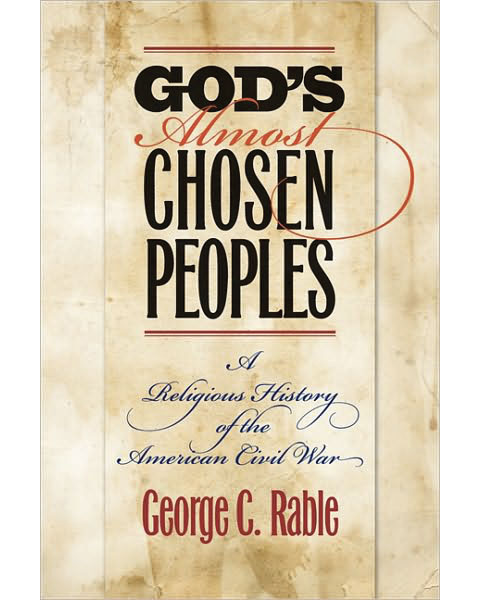
God’s Almost Chosen Peoples: A Religious History of the American Civil War by George C. Rable
George C. Rable, God’s Almost Chosen Peoples: A Religious History of the American Civil War (University of North Carolina Press). Rable somehow mastered the staggering task of examining religion-based attitudes during the war—across both sides—with style and grace. As always in a Rable book, prodigious research buttresses the thoughtful conclusions.
Adrian G. Tighe, The Bristoe Campaign (Xlibris). I do not know Tighe—had never heard of him—and admit to feeling some surprise when I saw the quality of the research that went into this battle study, by an unknown author.
Levin: George C. Rable, God’s Almost Chosen Peoples: A Religious History of the American Civil War. We’ve seen a sharp increase in the number of Civil War studies focused on religion, but this is by far the most comprehensive. Rable makes a convincing case that our understanding is incomplete if we ignore the extent to which Americans viewed the war’s causes, progress, and consequences through religious terms.
Barbara A. Gannon, The Won Cause: Black and White Comradeship in the Grand Army of the Republic (University of North Carolina Press). Gannon argues that, in contrast to previous studies, GAR posts were integrated and involved a great deal of interracial cooperation that reflected the shared experience of war. Not only did these men share continued hardships owing to physical wounds, they also worked to keep the nature of their sacrifice alive even as the nation embraced reconciliation.
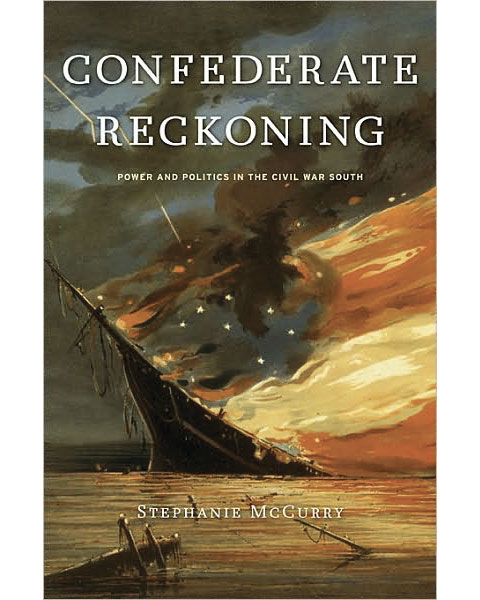
Confederate Reckoning by Stephanie McCurry
Stephanie McCurry, Confederate Reckoning: Power and Politics in the Civil War South (Harvard University Press). McCurry offers a thorough analysis of the steps ordinary white southerners and elite slaveowners took to counter policies of the Confederate government. The author spends considerable time placing the 1863 Richmond Bread Riot within a broader landscape of protests among dispossessed white women as well as resistance among slaveowners to Confederate slave impressment laws.
Prokopowicz: Mark W. Geiger, Financial Fraud and Guerrilla Violence in Missouri’s Civil War, 1861-1865 (Yale University Press). Hidden behind a lackluster title is an original, insightful, well written example of historical detective work that changes our understanding of Missouri during and after the war. I was fascinated to see how financial fraud was connected with guerrilla violence, and how both help to explain why modern Missouri is so much less Confederate than its neighbor border state Kentucky.
Timothy S. Sedore, An Illustrated Guide to Virginia’s Confederate Monuments (Southern Illinois University Press). In second place is another wolf in sheep’s clothing, one that looked like a dry and detailed reference work but turned out to be a lot more. The author, a professor of English, has an eye for the poetry and pathos of the monuments’ inscriptions, which he conceptualizes as a single 10,000-word text spread across the state. In this text, supplemented with quotes from dedicatory speeches, you can see how Virginians recorded in stone the political and social meaning of the war that they hoped to pass on to future generations.
Robert J. Wynstra, The Rashness of That Hour: Politics, Gettysburg, and the Downfall of Confederate Brigadier General Alfred Iverson (Savas Beatie). My third favorite of the past year is a detailed, well written account of how Iverson’s brigade was nearly destroyed at Gettysburg, and it wasn’t because he was drunk. Not just a microscopic tactical history of what happened on July 1, 1863, this is a tale of dysfunctional leadership at the brigade and regimental level that explains why as well as how Iverson’s men were led to their doom.
Rable: Gary W. Gallagher, The Union War (Harvard University Press), helps reminds us that preserving the Union was always the central northern war aim and remained so throughout the conflict. In all the arguments over whether Lincoln or the slaves did more to bring about emancipation, the central role of Union armies has often been lost. Gallagher’s work has considerable interpretative bite and is a wonderful companion volume to his The Confederate War (1997).
William C. Harris, Lincoln and the Border States: Preserving the Union (University Press of Kansas) offers the first comprehensive treatment of this important subject. A traditional political history focusing on the president, state political leaders, and the generals, this volume tells a complicated story in a clear way. Harris presents a cast of interesting characters with a nice narrative tension that should appeal to both Civil War historians and general readers.
Joseph T. Glatthaar, Soldiering in the Army of Northern Virginia: A Statistical Portrait of the Troops Who Served under Robert E. Lee (UNC Press) is not so much a book to be “read” (at least in a conventional sense) as to be consulted, and consulted repeatedly. Glatthaar presents a remarkable array of information about soldiers’ backgrounds and wartime experiences. The graphs and statistics in this volume are indispensable for understanding who served in the Confederacy’s most important army.
Rafuse: Gary W. Gallagher, The Union War. Though I have quibbled with his failure to do more with Stephen Douglas and George McClellan in dealing with the subject, Gallagher does his usual excellent job describing and explaining how important the Union, in and of itself, was to northerners.
Brooks D. Simpson, The Civil War in the East: Struggle, Stalemate, and Victory (Praeger) stands out among military history titles, providing an effectively comprehensive, yet efficient, history of its subject that is distinguished by insightful and provocative (in the best sense of the word) analysis of men and events.
Adam Goodheart, 1861: The Civil War Awakening (Knopf). Though not completely comprehensive in its treatment of the subject, Goodheart produced a wide-ranging and engagingly constructed and executed study of the months prior to July 1861 that was both informative and good reading.
What Recent Book Is Next on Your Reading List?
Krick: The South Carolina Regimental-Roster Set published by Broadfoot Publishing Company delights me because it is committed to including thoroughly annotated rosters, illuminated by local sources—cemeteries, veterans organizations, obituaries, and the like. I cannot say that I’ll ever actually read one; but I relish the opportunity to use the rosters as a reference source for years to come. Ten volumes have reached print, and Broadfoot intends to persevere until all the state’s units have been documented.
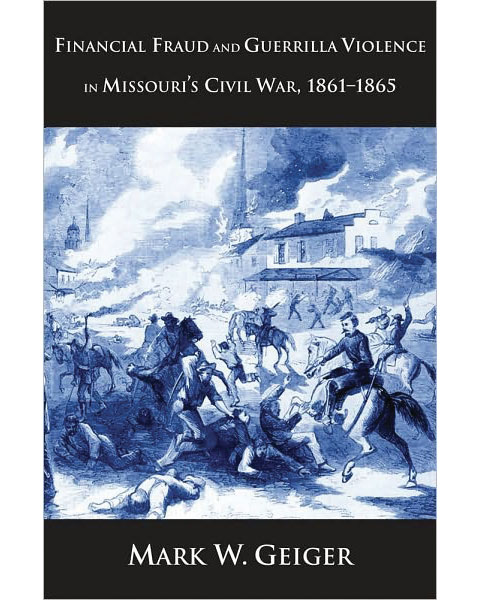
Financial Fraud and Guerrilla Violence in Missouri’s Civil War, 1861–1865 by Mark W. Geiger
Levin: Mark W. Geiger, Financial Fraud and Guerrilla Violence in Missouri’s Civil War, 1861-1865. Geiger’s book was recently awarded the Tom Watson Book Prize, which is given annually by the Society of Civil War Historians. Any book that wins $50,000 is likely to be well worth reading.
Prokopowicz: If I don’t read a book as soon as it comes into the office, the odds are long that I’ll get to it any time soon. Drew Faust’s This Republic of Suffering: Death and the American Civil War (Knopf, 2009), an important book by a fine author, is currently at the top of my must-read pile. To find out what Civil War books from 2011 I’m planning to read, ask again in another two years.
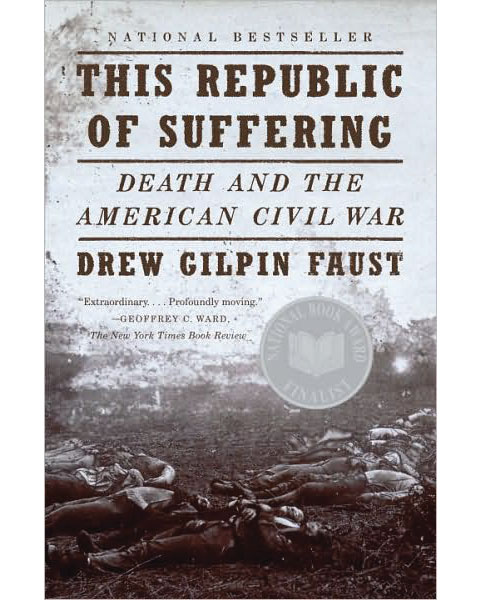
This Republic of Suffering: Death and the American Civil War by Drew Gilpin Faust
Rable: Adam Goodheart, 1861: The Civil War Awakening. This book has gotten enormous attention and has sold very well. I know some Civil War scholars have expressed some reservations, so I want to see for myself and in any case am looking forward to enjoying what promises to be a good read.
Rafuse: Brian Matthew Jordan’s Unholy Sabbath: The Battle of South Mountain in History and Memory (Savas Beatie). My interest in the Maryland Campaign is obviously the main reason I regret not having gotten to this book yet, but I am also interested in comparing it with the very good treatment of the fighting at South Mountain by John Hoptak that was published earlier this year.
Is There an Upcoming Title You’re Especially Looking Forward To?
Krick: Rick Williams of North Carolina for years has been diligently accumulating and editing for publication the war diary of Oscar Hinrichs, an engineer who served on the staffs of Stonewall Jackson, Richard Ewell, Jubal Early, and others. Because he was an immigrant from Europe (born and raised on the Baltic coast), Hinrichs affords an unusual perspective on the Confederate high command in Virginia. He steadily saw the most famous leaders in Lee’s army at close quarters, and described them vividly—sometimes humorously. The University of North Carolina Press has had the Hinrichs manuscript for quite some time, and presumably draws close to publishing it. The result will be a fascinating and valuable book.
Levin: Andre Fleche, The Revolution of 1861: The American Civil War in the Age of Nationalist Conflict (UNC Press). Americans suffer from an overly narrow understanding of the Civil War that gives little attention to broader political, economic, and social developments overseas. I am hoping that this book will further my own understanding of the war and provide me with ideas on how to teach the subject from a different perspective.
Prokopowicz: James Oakes, author of The Radical and the Republican, a study of Frederick Douglass and Abraham Lincoln, is working on a political history of emancipation that promises to challenge the accepted view that ending slavery didn’t become part of the North’s war aims until 1862 at the earliest. Although directly contrary to what Gary Gallagher argued in The Union War, it should share with Gallagher’s book the virtue of stimulating readers to consider why so many northerners fought so passionately for their cause.
Rable: Mark Neely, Lincoln and the Triumph of the Nation: Constitutional Conflict in the American Civil War (UNC Press). There has been little recent work on the constitutional history of the Civil War, a topic that I am sure to many seems hopelessly old school. However, I am looking forward to reading this book because Neely always has interesting and provocative things to say on most any subject.
Rafuse: If it is up to his usual high standards, Earl Hess’ forthcoming book, The Civil War in the West: Victory and Defeat from the Appalachians to the Mississippi (UNC Press), should be outstanding.
Top-Selling Civil War Titles 2011
The following list represents the 10 best-selling Civil War titles of the year, as of October 2011. Sales figures have been rounded to the nearest hundred.
Source: Nielsen BookScan
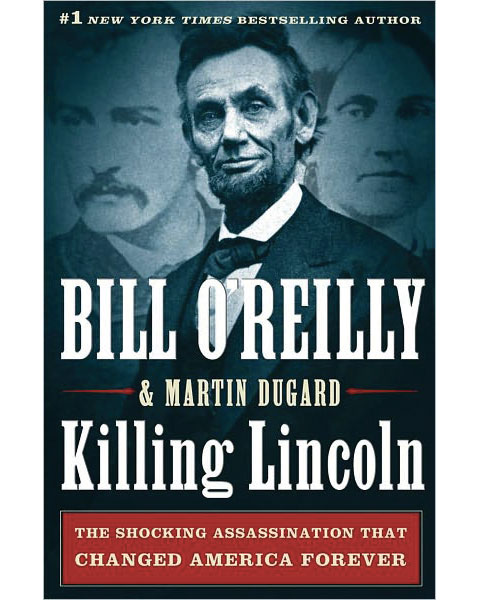
Killing Lincoln by Bill O’Reilly & Martin Dugard
- Killing Lincoln by Bill O’Reilly & Martin Dugard (Macmillan) — 149,600 — Hardcover, $28
- 1861: The Civil War Awakening by Adam Goodheart (Random House) — 23,800 — Hardcover, $28.95
- Don’t Know Much About the Civil War by Kenneth C. Davis (Random House) — 12,800 — Audio, $14.99
- A World on Fire by Amanda Foreman (Random House) — 11,900 — Hardcover, $35
- The Fiery Trial by Eric Foner (Norton) — 11,400 — Hardcover, $29.95
- The Civil War: A Visual History Smithsonian (DK) — 9,900 — Hardcover, $40
- The New York Times Complete Civil War (Workman) — 9,000 — Hardcover, $40
- The American Civil War by John Keegan (Random House) — 8,600 — Paperback, $16.95
- The Assassin’s Accomplice by Kate Clifford Larson (Perseus) — 6,900 — Paperback, $16.99
- Bloody Crimes by James L. Swanson (HarperCollins) — 6,900 — Paperback, $16.99