All too often Civil War military history is written in terms of stories of battles, leaders, and, sometimes, soldiers. A focus on the battlefield proper tends to obscure the indecisive nature of most battles in serving strategic objectives. Yet the literature on Civil War strategy offers a broader understanding of the challenges facing both sides and how they pursued military means to achieve policy ends. The following discussion, while far from comprehensive, offers an introduction to this literature to help students of the conflict achieve a more robust understanding of military operations.
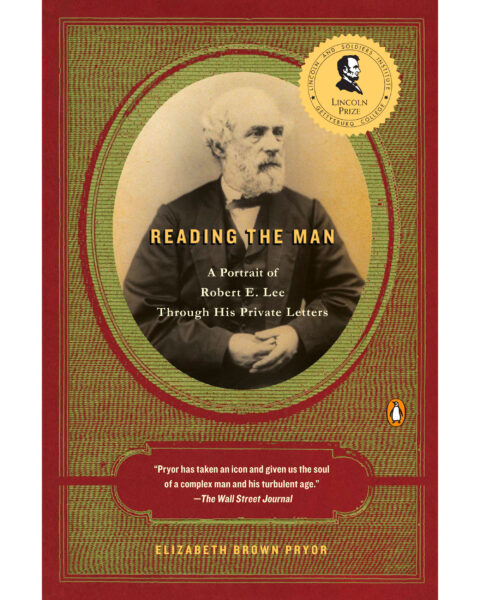
Two British authors, J.F.C. Fuller and B.H. Liddell Hart, set some of the initial boundaries for modern discussion of perspectives on Civil War military strategy. Those perspectives were rooted in postwar arguments conducted by participants and contemporary observers in memoirs and overviews. Comparing the conflict’s two most famous commanders in Grant and Lee: A Study of Personality and Generalship (1933), Fuller argued that Ulysses S. Grant was a modern (meaning 20th-century) general who knew how to mobilize and coordinate resources, while Robert E. Lee was a traditional (meaning Napoleonic) commander who was obsessed by the quest to seek a decisive battlefield victory, which resulted in bleeding the Confederacy dry. Liddell Hart, reeling from the carnage of World War I, celebrated William T. Sherman’s war of maneuver against enemy resources as essential to the war’s outcome in Sherman: Soldier, Realist, American (1929). Neither author, however, undertook a systematic examination of each side’s overall strategy, preferring to embrace the usual approach of ranking generals largely by their battlefield results and tactical and operational skills.
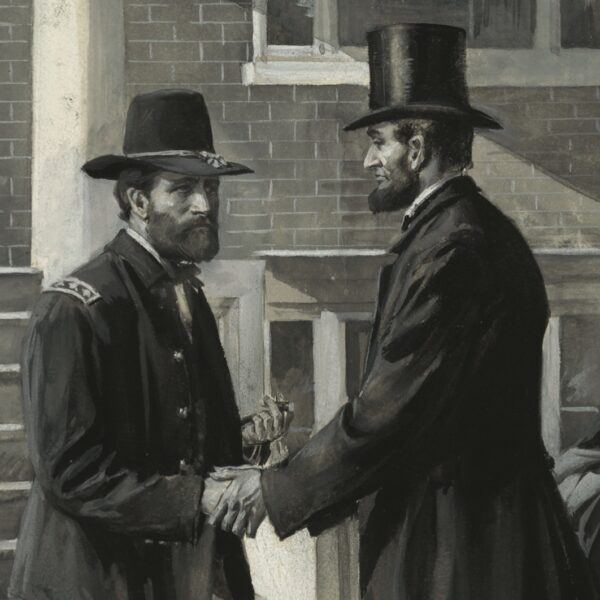
The most comprehensive treatment of Civil War military strategy is found in How the North Won: A Military History of the Civil War, by Herman Hattaway and Archer Jones (1983). This hefty volume links strategy, operational art, command, and logistics as no other single study does. The authors argued that eventually the Federal high command learned how to use its advantages to greatest effect in 1864–1865 under the team of Grant and Sherman; the book also presented a more favorable take on Henry W. Halleck, Grant’s predecessor as general-in-chief, than was usually the case then. Hattaway and Jones linked military strategy to political objectives, offered a full appreciation of Grant’s understanding of the importance of logistics, and countered the usual emphasis on battles by demonstrating their indecisiveness. Other studies, including Donald Stoker’s The Grand Design: Strategy and the U.S. Civil War (2010) and Williamson Murray and Wayne Wei-siang Hsieh’s A Savage War: A Military History of the Civil War (2016), have offered ambitious overviews, while Jones rendered a concise version of How the North Won’s arguments in Civil War Command And Strategy: The Process of Victory and Defeat (1992). But his book with Hattaway remains the best point of departure for someone looking to understand the American Civil War from a strategic perspective. One of its virtues is that it reminds us that the United States won the American Civil War—focusing on how that came about while giving due attention to the Confederate side.
Several other studies examine topics that help to understand the parameters of strategic planning. Edward Hagerman’s The American Civil War and the Origins of Modern Warfare: Ideas, Organization, and Field Command (1988) explores how Civil War armies operated in ways that limited strategic options. Carol Reardon’s With a Sword in One Hand & Jomini in the Other: The Problem of Military Thought in the Civil War North (2012) describes the rather limited nature of the Union’s strategic thinking— given the paucity of intellectual resources from which to draw—although her focus is on the conduct of military operations. Rowena Reed’s Combined Operations in the Civil War (1978) considered how the Union high command used naval as well as army forces to invade the Confederacy, concluding that George B. McClellan and Grant best grasped the possibilities before them. Mark Grimsley’s The Hard Hand of War: Union Military Policy Toward Southern Civilians, 1861–1865 (1995) explored another aspect of Federal war strategy, although his “southern civilians” were white and usually pro-Confederate and his model of escalation, while useful, lost its explanatory force when it came to the interweaving of wartime reconstruction and reconciliation policies with military operations in the period from President Abraham Lincoln’s reelection to the end of the war.
Studies of Civil War strategy often focus on Confederate decisions—sometimes implying that the losing side would have won had they only followed the advice of armchair strategists. Debates over Confederate strategy usually engage the same issues: which theater was the key to Confederate victory (or defeat); whether aggressive offensive operations offered a better chance of victory than did largely passive defensive operations; and whether the Confederacy spread itself too thin by trying to defend all points of its territory instead of conceding areas and contesting control, perhaps in part by resorting to guerrilla operations to strike at overextended Federal advances. What choices gave the Confederates the best chance of victory? Which ones contributed to Confederate collapse?
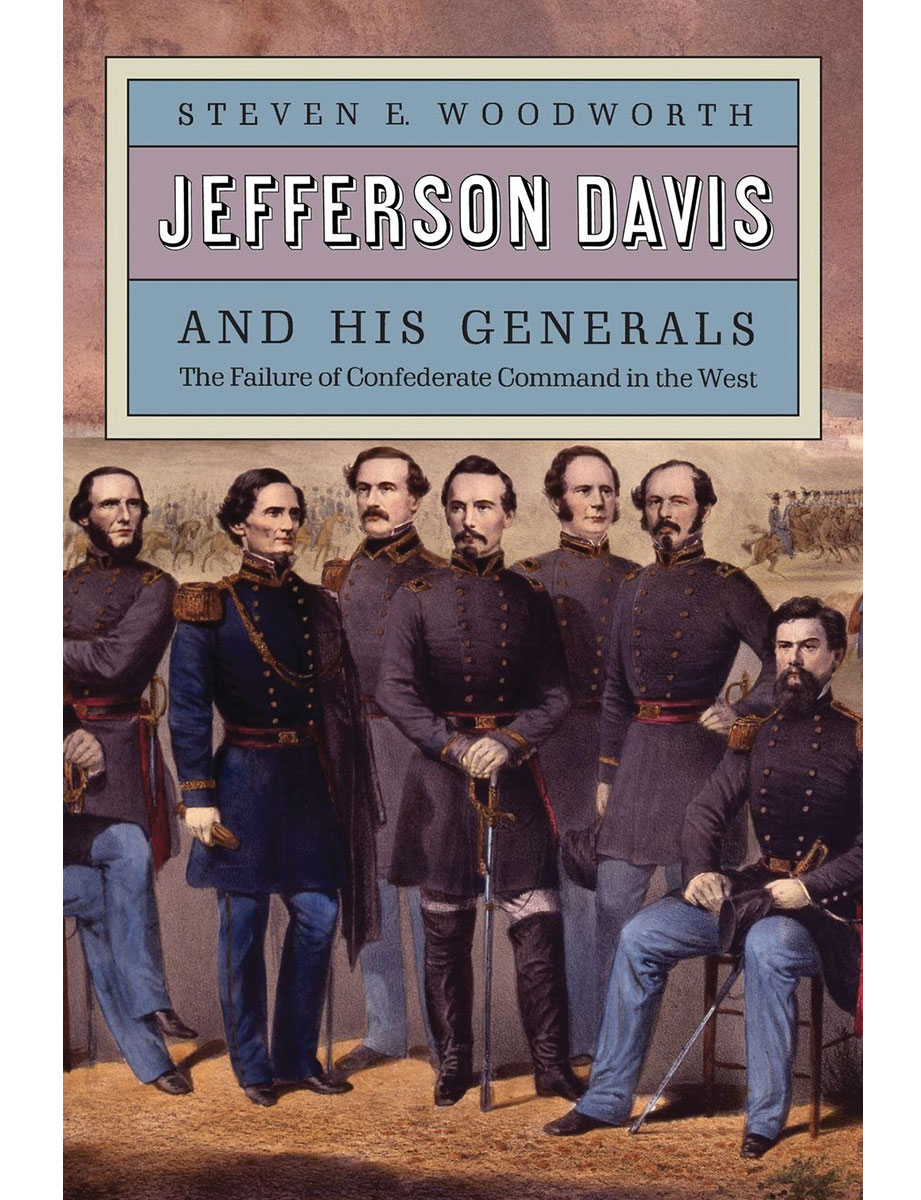
Frank Vandiver’s concise Rebel Brass (1956) offers a useful introduction to how the Confederate high command managed the conflict, especially when it came to logistics, and concludes, unsurprisingly, that the ideology of states rights crippled necessary efforts at centralized planning. In The Politics of Command: Factions and Ideas in Confederate Strategy (1973), Thomas L. Connelly and Archer Jones explore the debate over whether an emphasis on operations in the so-called eastern theater (Virginia and points north, since so little attention is paid to the region south of the Virginia-North Carolina border) was wise, or whether a concentration in the western theater (west of Virginia to the Mississippi River valley) might have been wiser. In their view, Lee’s obsession with Virginia came at the expense of Confederate prospects elsewhere, although they embrace the notion of offensive operations (as opposed to a passive defense or a semi-guerrilla war) as essential to Confederate victory. Taken together, Steven E. Woodworth’s Jefferson Davis and His Generals: The Failure of Confederate Command in the West (1990) and Lee and Davis at War (1995) provide a detailed overview of Confederate military operations and commentary on strategic choices, although Woodworth’s answers suggest a reconsideration of the Davis-Lee team as less than perfect as well as a reassessment of criticisms concerning the Confederate president’s handling of various generals.
As one might assume, Lee has his defenders in the East vs. West argument. Joseph L. Harsh offers a strong defense of Davis and especially Lee in Confederate Tide Rising: Robert E. Lee and the Making of Southern Strategy, 1861–1862 (1998), arguing that the Confederacy’s best chance for victory lay in conducting aggressive military operations that targeted Federal will more than Federal resources. He insists that Lee was the field commander best equipped to achieve those ends. More recently Richard M. McMurry employed counterfactual speculation to make a similar case in The Fourth Battle of Winchester: Toward a New Civil War Paradigm (2002). According to these authors, it was highly unlikely that the Confederacy could prevail in the western theater, while Lee’s generalship at the head of the Army of Northern Virginia offered the Rebels their best chance for victory. Given Harsh’s rather sympathetic portrayal of McClellan in his writings, it remains unclear what role either Federal strategic thinking or its implementation by the generals had to do with this outcome.
The notion that an aggressive strategy directed by Lee offered the best chance for Confederate success is endorsed by Robert G. Tanner in Retreat to Victory? Confederate Strategy Reconsidered (2001). Joined by Thomas J. “Stonewall” Jackson, Lee’s counterpunching followed by offensive operations sought to deliver a decisive blow that would lead to ultimate victory (thus implying that when Jackson went down at Chancellorsville, so did the opportunity offered by this strategy). Yet Ethan Rafuse’s brilliant Robert E. Lee and the Fall of the Confederacy, 1863–1865 (2008) shows that Lee could not convert battlefield success into lasting strategic advantage. Given that Federal armies proved too durable to be destroyed and that the effort to do so badly damaged both armies, Lee’s only viable target was northern public opinion, which, while it was often divided on how to prosecute the conflict, was far more willing to reject any result that included Confederate independence. Lincoln’s reelection in 1864 was not a referendum on the wisdom of the war but on how best to conduct it.
Much work remains to be done. We still lack a focused study of Federal strategy, broadly defined, that would highlight the interplay of means and ends, of political and military concerns, to examine how Lincoln and the high command sought to wage war. That story must include the impact of the dismantling of slavery and the desire for reunion and reconstruction as parts of its narrative. More historians could follow Rafuse’s lead and examine how well (or poorly) strategic goals were manifested in the operational art, as Rafuse shows in McClellan’s War: The Failure of Moderation in the Struggle for the Union (2005). As broad as the approach taken in Why the South Lost the Civil War (1986), by Richard E. Beringer, Herman Hattaway, Archer Jones, and William N. Still Jr., was when it appeared, it is time to weave together strategy, policy, and society—because military strategy does not operate in a vacuum. Both Stephanie McCurry in Confederate Reckoning: Power and Politics in the Civil War South (2010) and Bruce Levine in The Fall of the House of Dixie: The Civil War and the Social Revolution That Transformed the South (2013) remind us of that. Finally, as Lisa Tendrich Frank’s admirable The Civilian War: Confederate Women and Union Soldiers During Sherman’s March (2015) reveals, we might want to see whether strategy concepts realized their intended effects, as efforts to break civilian will increased bitterness, thus complicating a reunion based on some degree of reconciliation.
Brooks Simpson is ASU Foundation Professor of History at Arizona State University. Among his books on this topic is The Civil War in the East: Struggle, Stalemate, and Victory (2011).