 Library of Congress
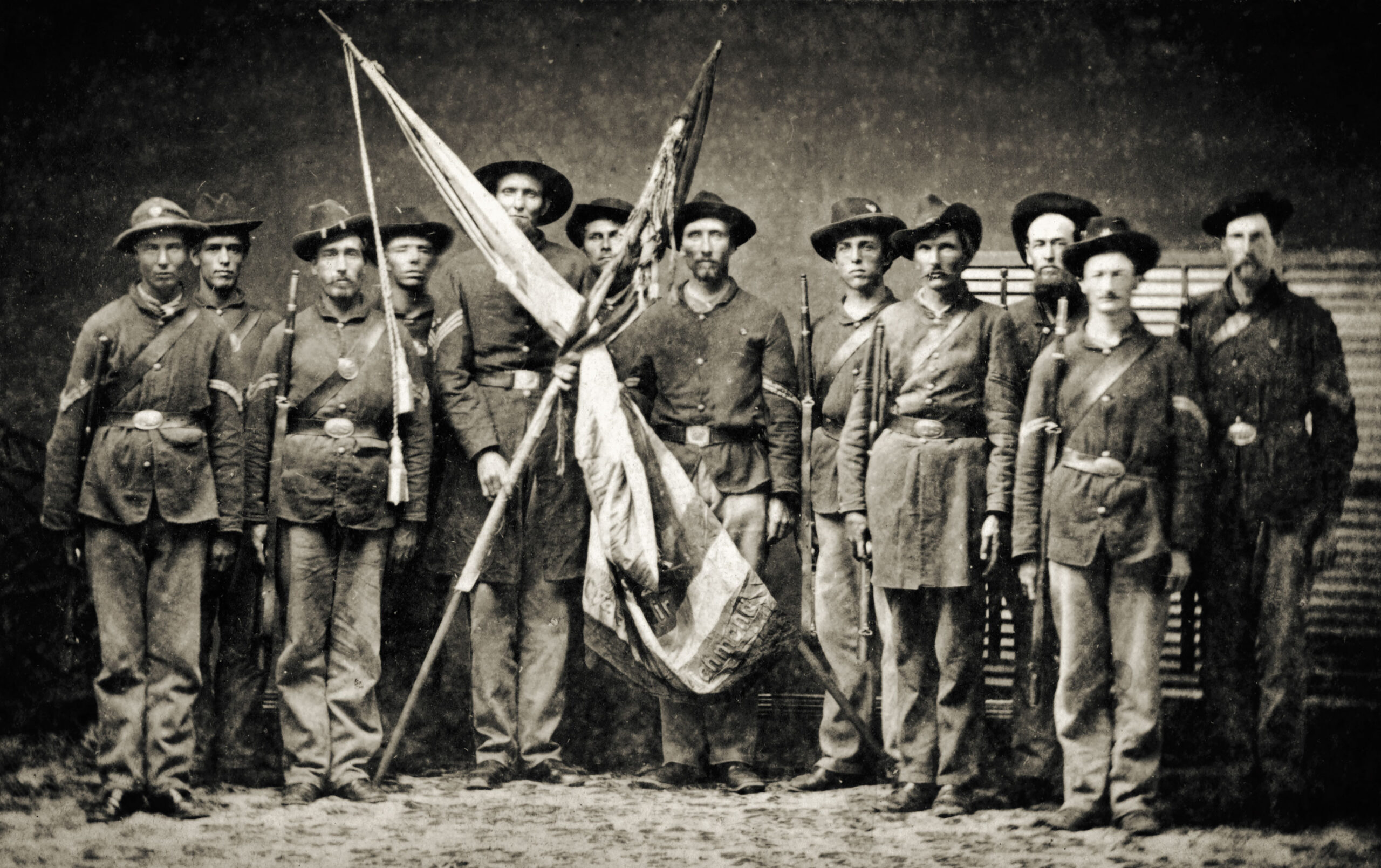
Regiments—the building blocks of Civil War armies—were communities of men who forged a kinship with one another through shared experiences and hardships. Shown here: Soldiers from the 118th New York Infantry pose with the unit’s flags.
Battles organize our histories, measure time, and supply the Civil War with its familiar narrative arc. Often, we treat them like ticks on a timeline: discrete events with a beginning, middle, and end. Yet battles obeyed no rules of chronology; they were neither fixed in time nor confined to a particular space. Instead, they were felt, intuited, and experienced by ordinary soldiers who struggled—both throughout the war and for the rest of their lives—to make sense of them. Their echoes sounded in far-flung homes and communities, amplifying and diminishing over time. Their effects were not always immediate. For regiments that experienced humiliating reverses, suffered horrific losses, or failed to meet expectations in combat, battles cast a long and undulating shadow. If, as many psychologists believe, grief is not “linear”—if pain or a sense of loss can intrude when we least expect it—then our battle histories need to range substantially further, wider, and longer than traditional accounts allow. We need to listen for earsplitting silences—not just the growl of cannon—when we write the war’s history.
No less consequential than a battle’s cultural, political, tactical, and strategic outcomes, its human effects can be coaxed from the archive. By fixing our frame and focusing our vision, the genre of regimental history can help us achieve a much broader and more inclusive account of the Civil War. Regiments supplied the building blocks of the contending armies. But they were much more than units within a military organization. Regiments were communities of men that negotiated the war together and who forged a kinship with one another. Since regiments were quite often mustered from individual towns, neighboring communities, and adjoining counties, it was not uncommon for their personnel to have known one another—sometimes intimately—before the war. While this promoted a sense of esprit de corps vital for unit cohesion, it also meant that when regimental casualties were tallied, their comrades ached more acutely.1
 Library of Congress
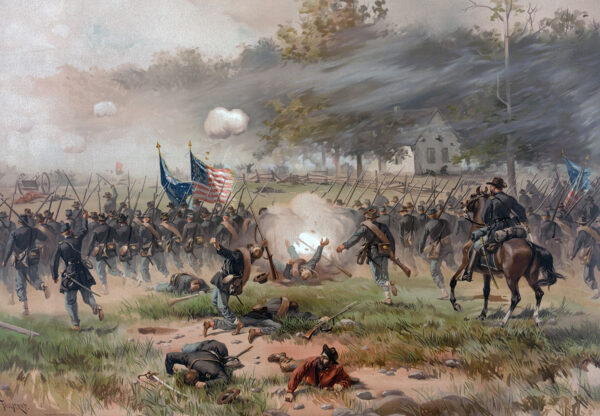
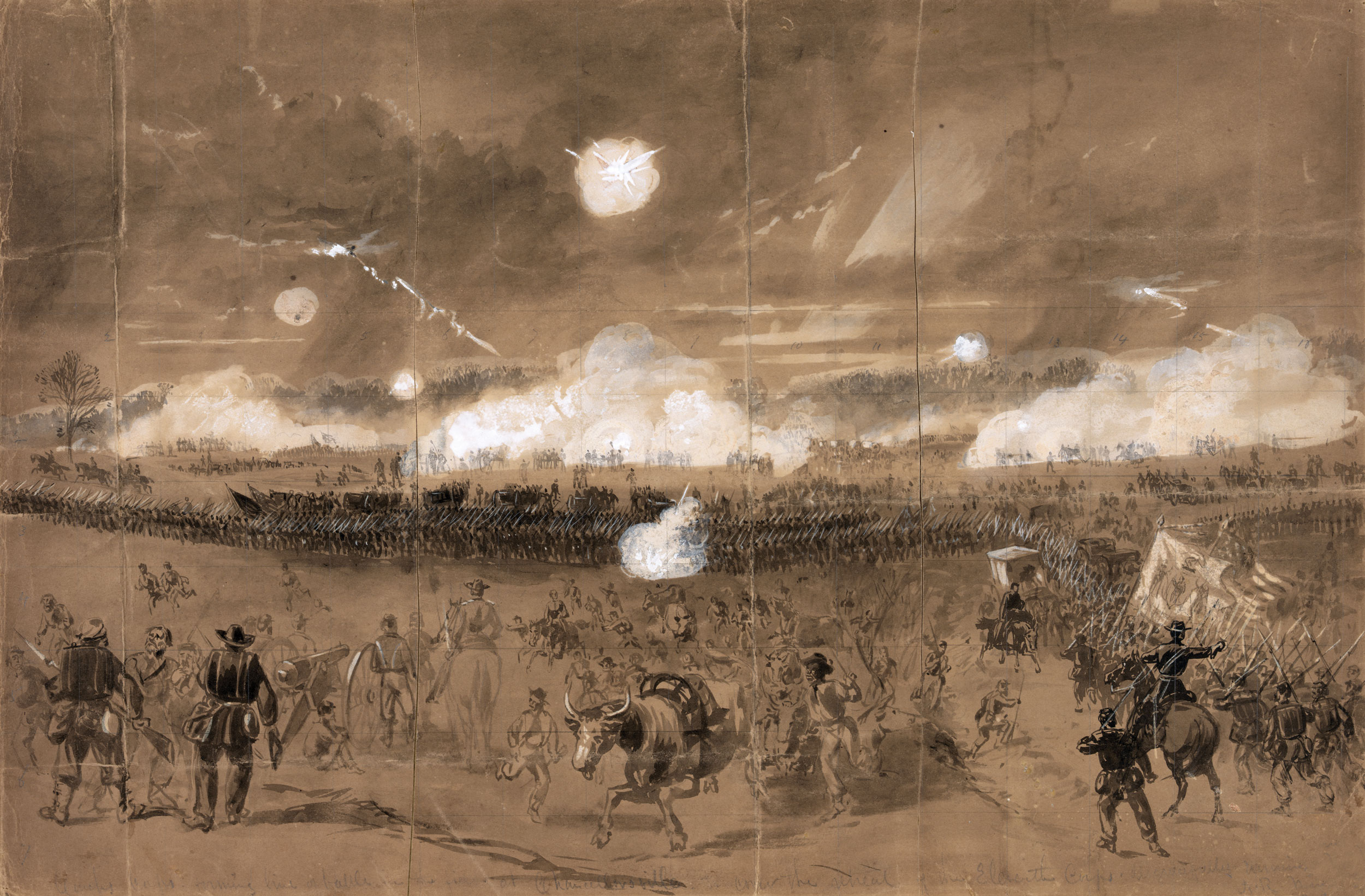
Union soldiers cover the frenzied retreat of the XI Corps during the Battle of Chancellorsville. The men of the 107th Ohio Infantry, one of the Buckeye State’s six ethnically German regiments, were among the Corps’ units caught up in the panic.
The 107th Ohio Volunteer Infantry, the fifth of six ethnically German regiments mustered from the Buckeye State, certainly knew something about grief. Typhoid, dysentery, and diarrhea made several deadly sweeps through its ranks over the bone-chilling winter of 1862–1863, which the new regiment endured in a muddy, wind-whipped camp in Virginia’s Stafford County. When spring finally came, the men were thrown into a baptism of fire at Chancellorsville. Drawn up along the Orange Turnpike in the hasty fieldworks they had burrowed on the Talley Farm—a tiny clearing in the surrounding acres of knotted scrub—the 107th Ohio held the extreme right of the XI Corps line that derelict Federal commanders had left hopelessly exposed. On the evening of May 2, 1863, having made a stealthy flank march of a dozen miles, “Stonewall” Jackson’s 26,000 soldiers swarmed the Buckeyes’ position and ensnared the regiment in a crossfire of lead. It seemed to one first lieutenant as though “the population of the lower regions” had been “turned loose to devour [our men] on the spot.”2
Remarkably, the regiment managed to squeeze off several rounds before breaking pell-mell for the rear. But this daring stand exacted an enormous human toll; in a matter of minutes, some 220 of its men had been added to the war’s ever-lengthening tallies of killed, wounded, missing, and captured. That anyone survived such impossible circumstances, one veteran of the fight mused, was a “miracle” beyond the “limits of human comprehension.”3
In the days and weeks ahead, the newspapers cataloged the human ruin: “flesh wound in right leg,” “wound in the left arm,” “fracture in right side, “wound in head,” “wound in right foot,” “right shoulder, critical,” “wounded in the thigh,” “arm off,” struck “by musket ball in the right hand and also in the upper part of the right arm.” The papers evidenced battle’s bewildering ability to mangle and maim, even as the fate of individual soldiers—especially the not insignificant number hauled off to Richmond’s Libby Prison—remained frustratingly unknowable.
Citing a “want of space,” New Philadelphia, Ohio’s Tuscarawas Advocate did not print the casualty rolls. This was little consolation to the anxious wives, mothers, siblings, and sweethearts who, fearing the worst, longed for information from the front. Indeed, the first week of May 1863 demonstrated few things better than how the war could at any moment intrude on the routines of ordinary people back home. “Since the battle,” one of the regiment’s men reported, “a great many letters have been received by Co. D 107th O.V.I. soliciting information.”
 Library of Congress
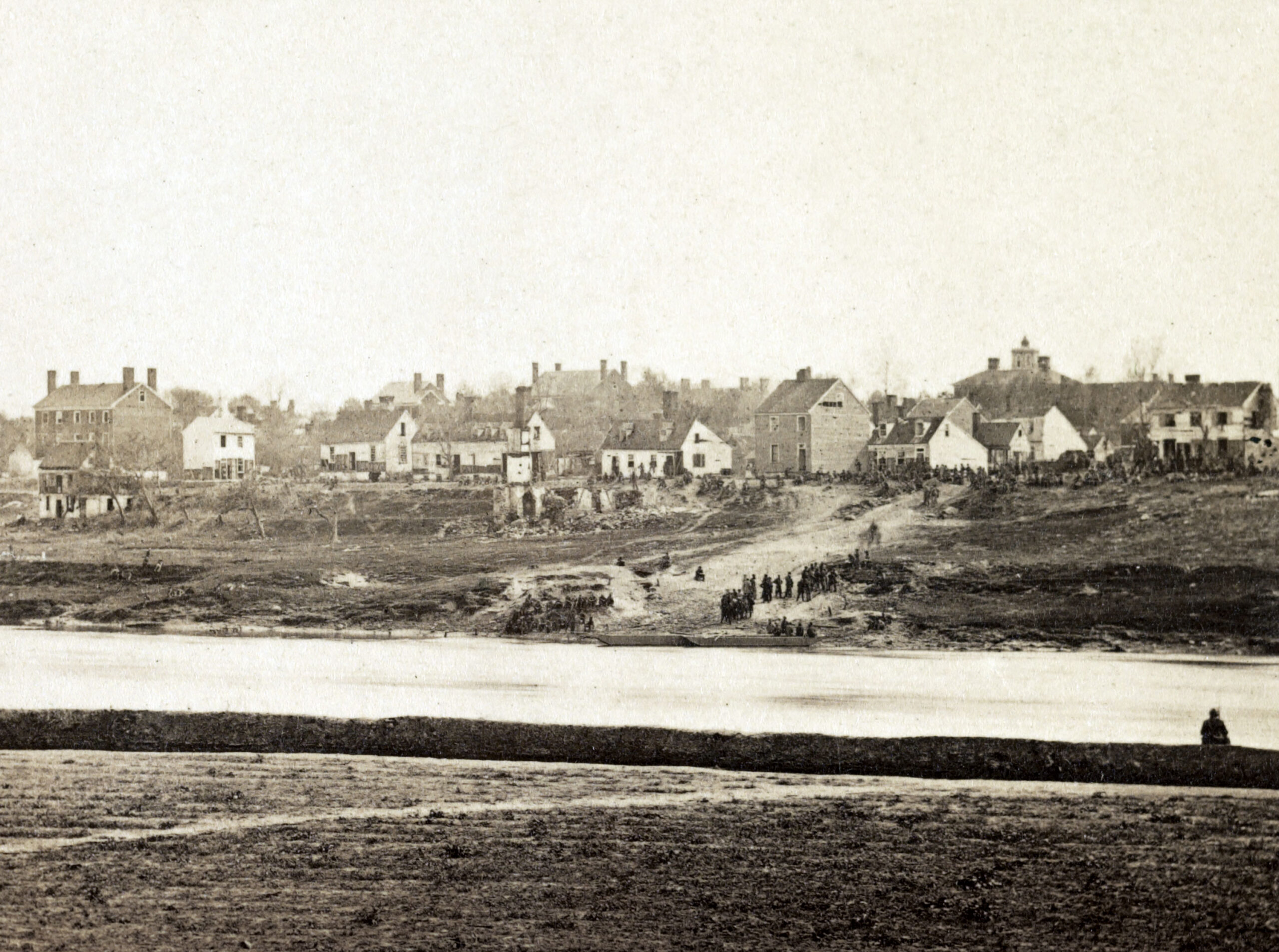
For many soldiers—and their families— battle’s end brought no peace. Reliable news about the status of comrades and loved ones could take weeks, if not longer, to arrive. Shown here: Union soldiers remove the wounded across the Rappahannock River under a flag of truce shortly after the Battle of Chancellorsville.
Reports that a hometown regiment had engaged in a major battle could arrest all thought and action behind the lines. “We have awfull news as far as losing life is concerned,” wrote Martha French from her home in Fairfield, Connecticut. Her husband, Wilson, shouldered a musket in the 17th Connecticut Infantry, a regiment brigaded with the 107th Ohio. “You cannot think with what fear and trembling I read the names of the killed and wounded,” Martha confessed. “I looked for a letter last night and went down to the office,” she wrote, “but came home disappointed.” Annexed by emotion, French was unable to sleep, to eat, or to attend religious services. Private prayer became her only refuge. “It has been a week of much anxiety with me on account of you, my dear husband…. I am in such suspence all the time.”4
There was no less disarray at the front. Owing to the haste of the Union retreat, information about those missing or left behind was not readily available. “About the results of the last battle at Fredericksburg,” protested one enlisted man in a letter home, “you probably will have better information than we.” Further, the battle exacted an especially heavy toll among the 107th Ohio’s commissioned and noncommissioned officers, something that left the Ohioans in a state of confusion and uncertainty, wanting for leadership in a most critical hour. Though declaring he would “soon be ready to give the rebs another turn,” Captain A.J. Dewaldt, the Mexican War veteran who commanded the 107th Ohio’s Company B, was “severely wounded” in the groin. Second Lieutenant John Winkler of Company C was “wounded in the right ankle”; five weeks later, he died in a makeshift hospital near Brooke’s Station. “Shot through the abdomen,” the regiment’s beloved surgeon, Dr. Charles Hartman, an old Forty-Eighter and ardent Republican, was among at least one dozen XI Corps surgeons mortally wounded. Enduring his last earthly moments in enemy captivity, he managed to scratch out a heartbreaking letter to his wife, Anna, in which he explained how to secure his back pay and make an application for pension money.5
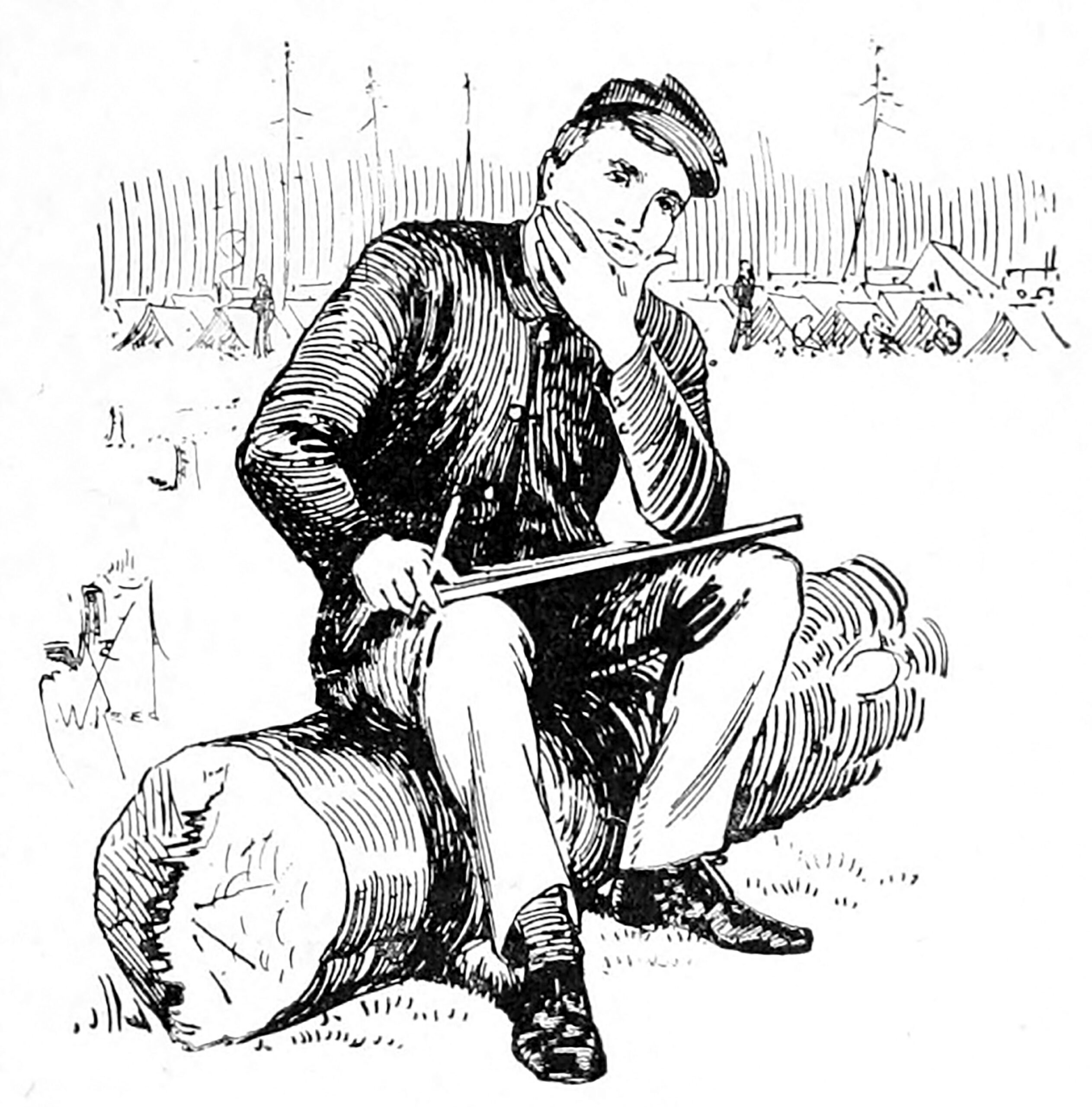
It seemed to many that the world had stopped the moment those long lines of Rebels emerged from the woods at Chancellorsville. Frantic minds lurched between scenes hastily recorded and half remembered, the rush of events mocking any sense of chronology and scale. Men routinely confessed their inability to translate their memories of the battle into lucid or linear prose. “If I were to write it all,” Christian Rieker told his sister, “I would need almost a week in which to write.” One regimental surgeon in the 107th Ohio’s brigade apologized for the scattershot quality of his letters home. “I have had so much on my mind,” he wrote, “that I could hardly direct my thoughts from pressing matters of business long enough to write a connected epistle.” Jesse Spooner of the 55th Ohio Infantry, which together with the 107th felt the first blows of Jackson’s flank attack, began a narrative of Chancellorsville for his cousin before halting abruptly. “I suppose you have heard all about it,” he explained, “so I will not proceed to tell you anymore.” For one volunteer in the 75th Ohio Infantry, the battle endured in memory not as an event with a discrete chronology, but rather as a jarring soundscape: “a fiendish yell,” the “crackling hell of musketry,” the “bellowing of mules,” the “agonized shrieks of wounded horses.” The events of that afternoon had rushed along at a furious, even dizzying pace. “There’s no such thing as time on a battlefield,” the man gasped.6
 Hard Tack and Coffee (1887)
Soldiers who came through battle often had trouble putting their experiences into words when writing home. “If I were to write it all,” one survivor of the Battle of Chancellorsville told his sister, “I would need almost a week in which to write.” Above: A soldier ponders what to put in a letter home in a postwar sketch by Union veteran Charles W. Reed.
As these reports betray, beyond physical injuries, Chancellorsville visited great psychological damage on the men of the 107th. Almost immediately after the battle, Godfrey Kappel of Company I began to manifest symptoms of what some soldiers would call “nervous fever,” a malady that quickly became an “epidemic.” “He is unaware of what is happening,” Rieker reported in late May. “Often he wants to leave, and when one asks him to where, he says to [his Ohio hometown] Zoar.” Only weeks after the battle, Sergeant Charles Wimar was “reduced to the ranks,” being “incapacitated by insanity.” An infirmity called “nervous deafness” placed at least one soldier from Company G on the sick rolls. Citing his “feeble state of health,” the “perilous condition of his company,” as well as the “recent trials and hardships to which the regiment was subjected in the late battles of Chancellorsville,” Hamilton Starkweather resigned his first lieutenant’s commission on the spot. Corporal Franklin Bow returned to his home in Canton, where he joined the swelling ranks of army deserters.
Not unlike Bow, still others in the 107th wondered if their zeal for the war had been naïve or misguided. Those questions would only multiply in the weeks ahead, as a nativist press trained a scornful eye on the men of the XI Corps, amply stocked with ethnic German immigrants. “If we are asked what was gained by our brave loss of men,” regimental musician John Roedel insisted, “the answer is no gain at all.” In the raw immediacy of the battle’s aftermath, even those men able to squint through the haze of grief saw only uncertainty. “I never believed,” a still incredulous Peter F. Young later observed, “that men would fight as well for a miserable cause as the rebels did there for theirs.”7
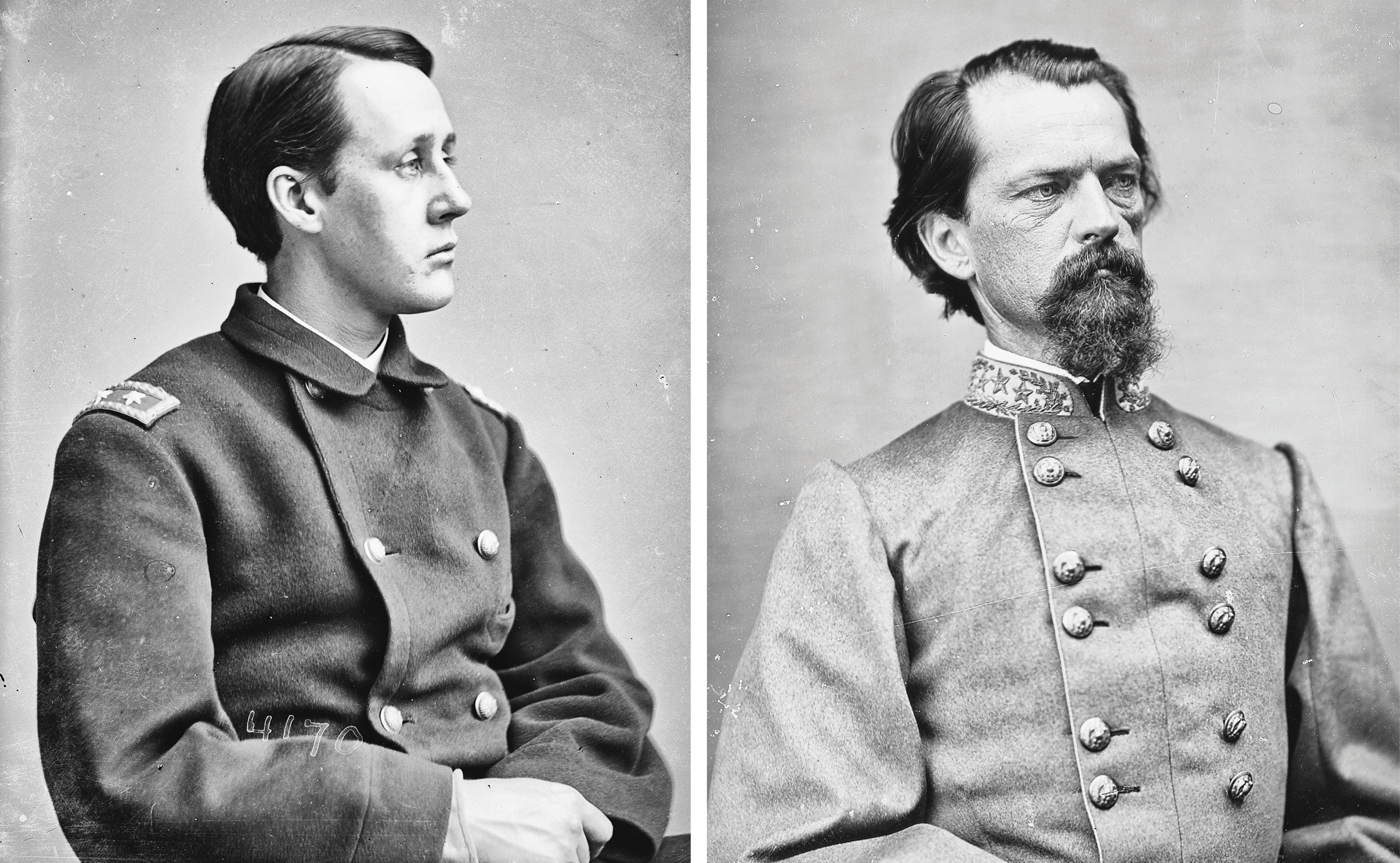 Library of Congress (Barlow); National Archives (Gordon)
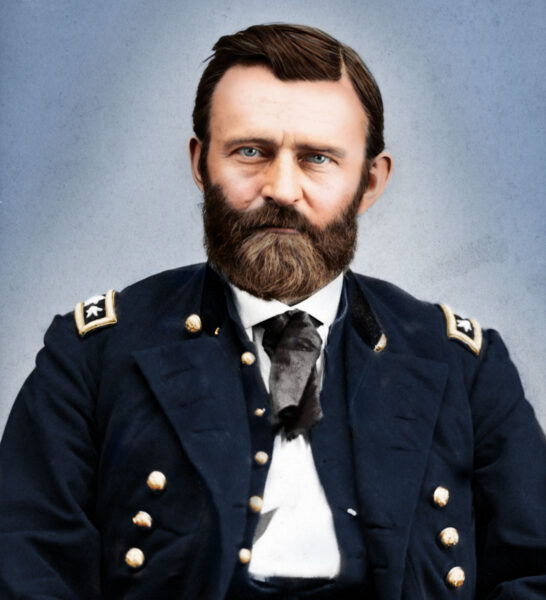
Francis Barlow (left) and John B. Gordon
The 107th Ohio had scarcely taken inventory of the tragedy that befell them along the Orange Turnpike when, two months later, they once more found themselves in the thick of the killing. In the wake of his tactical masterpiece at Chancellorsville, Robert E. Lee grew impatient to resume the offensive; wasting little time, he drew his Army of Northern Virginia north into Pennsylvania. As the Army of the Potomac felt its way north to check the Rebels’ invasion, doubts and anxieties began to crowd out whatever confidence the soldiers had regained since the last battle. “Many of those who had passed through former campaigns and defeats at the hands of the enemy,” one soldier related, “seemed to think that a like fate awaited us in the coming conflict.” The scenes from Talley Farm lingered, a brooding presence never to be banished. In camp near Emmitsburg, Maryland, on the evening of June 30, 1863, one soldier who had resisted Jackson’s flank attack alongside the 107th Ohio slipped into a mournful trance: “I stood leaning against a camp stake, gazing dreamily across the hill,” he reported, “with mind reverting to Chancellorsville and filled with anticipations of a second edition so soon to be issued.” In his “sad reverie,” this veteran was once again “amid the carnage, surrounded by gleaming bayonets and staggering wounded,” tormented by the “piercing cries of the mangled combatants.”8
The soldier was prophetic, for the next morning, a meeting engagement metamorphosed into the war’s bloodiest battle. The XI Corps was summoned to join the fight. At the double quick, the 107th Ohio tore through Gettysburg—now a site of perfect bedlam—to the northern fringes of the borough, where the troops were stacked on the campus of the county almshouse. They had no more caught their collective breath when their young division commander, Francis Barlow, beckoned them to brace the beleaguered Federal brigade planted atop Blocher’s Knoll. There the Ohioans held the tip of a sharp salient against very long odds. “We stood our ground,” recalled Jacob Boroway, “and shot … as fast as we could.” The Stark County volunteer managed to squeeze off three rounds before a shell knocked his musket from his hands “and broke it all to pieces.”9
Before long, the Federal line collapsed under the converging fire of the Georgia troops led by John B. Gordon and George P. Doles. The Ohioans instinctively abandoned their deadly perch, offering what resistance they could as they scrambled to the rear. Back at the almshouse, the 107th Ohio’s adjutant gripped the regimental colors in a bold if luckless attempt to rally the unit’s dazed remnants.
The retreat was harrowing, but it was especially so for the regiment’s ambulance detail, obliged to maneuver its wagons heaped with injured men through the “confused,” gnarled masses congesting the borough’s streets. “We were not long in finding sufficient wounded soldiers to fill our wagons,” Jacob Smith reported. Smith’s cargo testified to the intensity of the fight atop the knoll. One soldier, for instance, “had been shot through the mouth”; the musket ball entered through one of his cheeks and exited “out the other,” ejecting “four or five teeth” and severing his tongue “pretty near off.” His life appeared to have been saved by the “small Bible” that he carried “in a pocket over his left breast,” in which still another piece of enemy lead had lodged.
The Buckeyes advanced to Blocher’s Knoll that afternoon in the shadow of Chancellorsville, in search of a redemption that had so far eluded them. For the second time in as many battles, the 107th Ohio had been thrashed. Of the 458 men who entered the fight that morning, no more than 171 got to the unit’s new position behind a low, stone fence atop East Cemetery Hill. There, another sanguinary fight awaited. In that twilight action, which swirled desperately around well-positioned Federal batteries, the Ohioans and their threadbare brigade repulsed the Louisiana Tigers, secured the anchor of the Union fishhook-shaped defensive line, and set up the cataclysmic battle’s final day.10
 Library of Congress
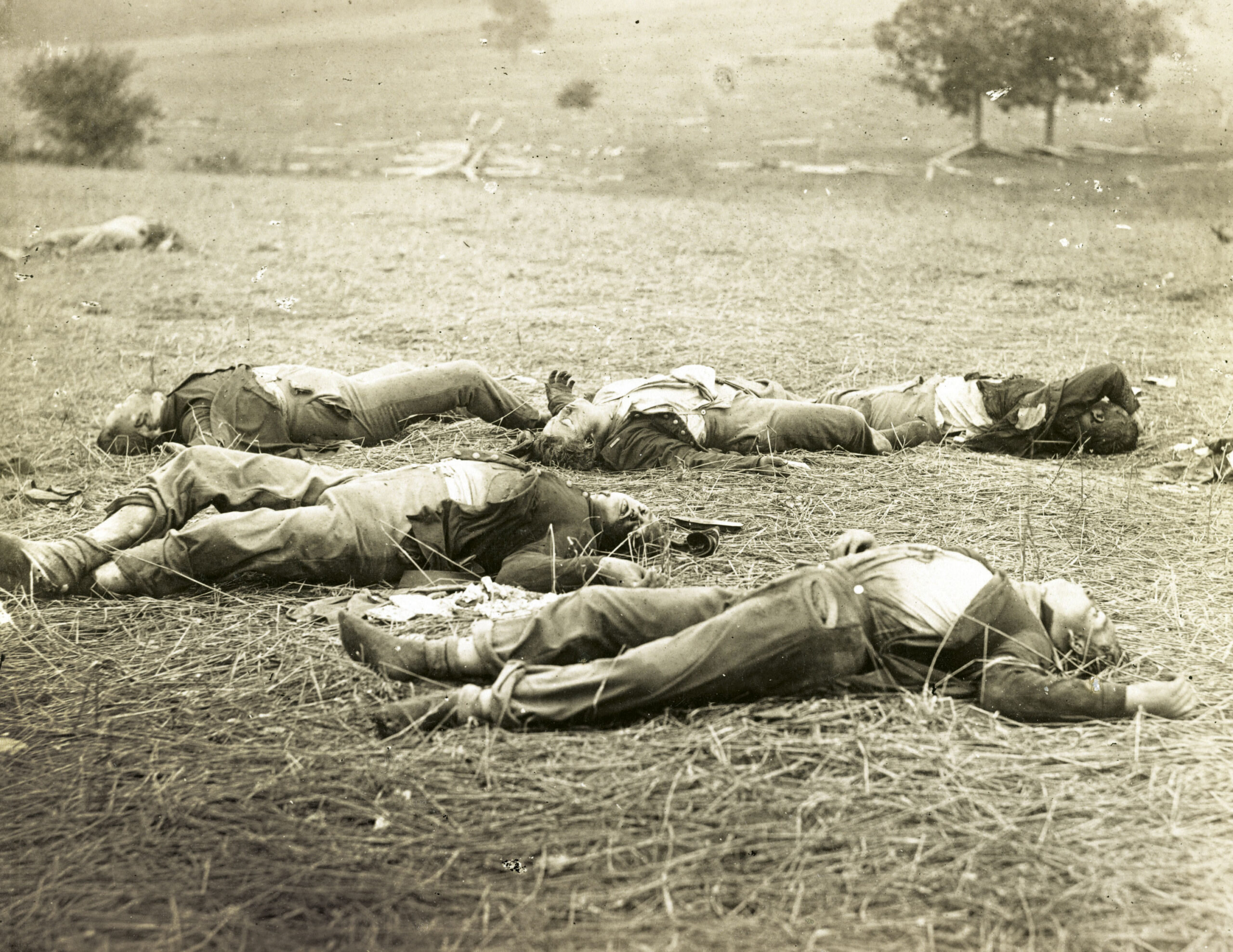
The men of the 107th Ohio suffered significant losses at Gettysburg, where they had been among the Union troops forced to retreat on the battle’s first day. The wounded and dead (like the bodies of the Union soldiers shown here in a post-battle image) littered the fields; the men of the regiment were enlisted to perform the daunting task of identifying and gathering up their comrades, a physically and psychologically draining mission.
Save the occasional crack of a Rebel sharpshooter’s rifle, the 107th Ohio did not come under fire on July 3. Instead, the men listened with “nervous anxiety” as the Rebel cannonade that preceded Pickett’s Charge yielded, first to the distant rattle of musketry, and then to another restless night under arms. At dawn on the Fourth of July, the 107th received orders to advance down Baltimore Street and into the borough. “We could not understand what it meant,” Fritz Nussbaum protested. “We were marched through the alleys expecting every step we made to be shot at by the enemy from the houses.” Upon reaching the town diamond, they learned that Lee’s baggage train—now full of injured soldiers—was trundling back to Virginia. His infantry columns would not be far behind.11
Still, even now, amid these buoyant reports of victory, there was hardly any time for celebration. That morning, Smith and his comrades on ambulance detail combed the battlefield for the 107th’s missing and maimed. Gettysburg’s panorama of death overwhelmed the senses, even of the men well acquainted with the war’s devastation. Bodies “swollen to twice their original size” littered the fields north of the borough; the air had become rank. “The odors were nauseating,” one soldier commented, “and so deadly that in a short time we all sickened and were lying with our mouths close to the ground, most of us vomiting profusely.” A thrashing rain made Smith’s brutal task all the more “disagreeable,” requiring his team to ford swollen creeks and trudge through porridge-like mud. Creaking wagons delivered loads of groaning and gangrenous men—among them a young shoemaker named Caspar Bohrer, whose wounded right knee would necessitate amputation, and Jacob Hof, a Clevelander who would not make it through the night—to the farm of George and Elizabeth Spangler. Fronting the Granite Schoolhouse Road, the 156-acre property became the XI Corps hospital and, before long, a crowded graveyard.12
Once more demonstrating how war thrusts young men into unthinkable roles, Alfred J. Rider—the regimental postmaster and a sturdy son of a Navarre, Ohio, farmer—became a makeshift undertaker. He had been detailed to the hospital by the head surgeon, Dr. James Armstrong. Rider worked without respite, lowering the dead into fresh-made graves, recording their names in an old farm ledger, and collecting what remained of their personal effects for shipment back home. It was physically and psychologically demanding labor. Tracking “back and forth” between the hospital and the regiment to deliver frequent updates to impatient comrades, Rider actually wore through the soles of his brogans. The score of human misery played on into the night, the “shrill cries” and “heart rending groans” of dying soldiers the only serenade on this Fourth of July.13
 Library of Congress
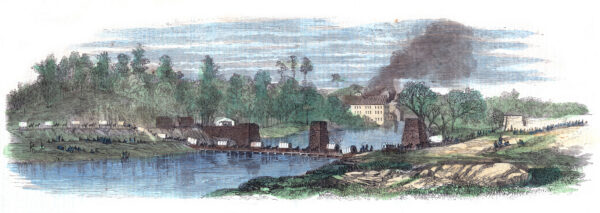
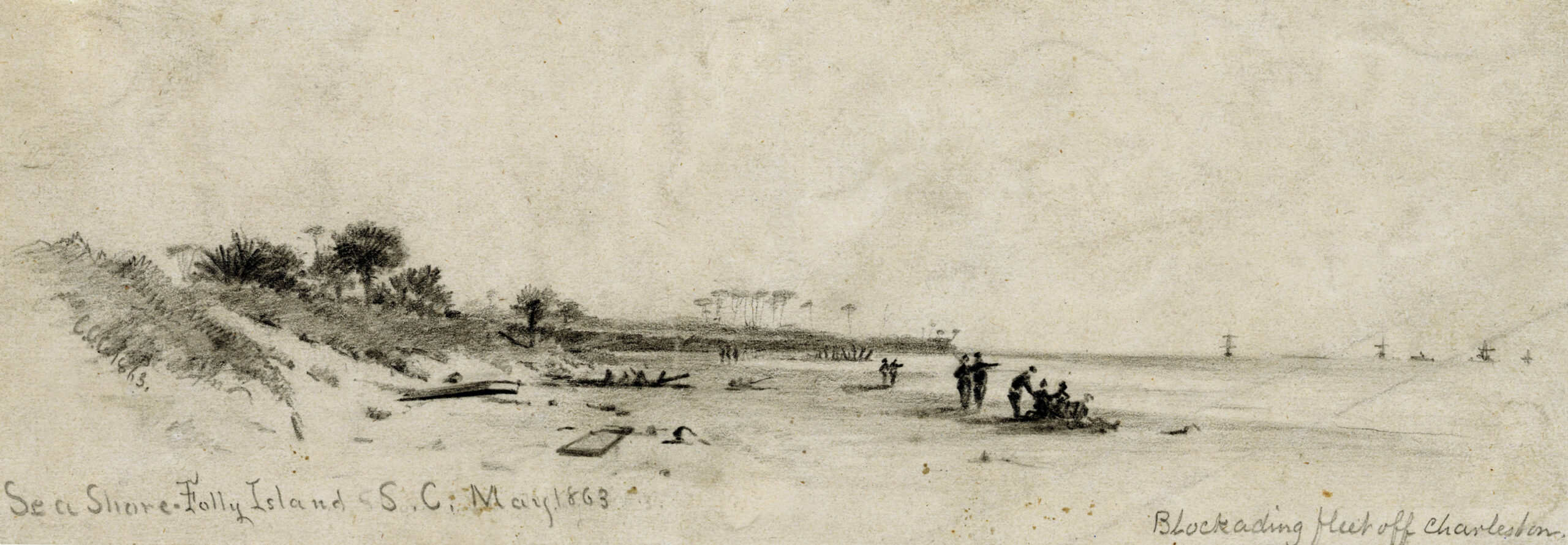
Shortly after the Battle of Gettysburg, the 107th Ohio was sent to Folly Island, South Carolina (shown above in a wartime sketch), where the men tried to come to terms with the regiment’s recent losses—and not fall sick from the island’s unhealthy water.
Back home, celebrations of the nation’s 87th birthday began early. By nine o’clock, Wooster’s public square was “already well lined with happy and patriotic people.” Men, women, and children in Canton capped a festive, flag-festooned morning—“a pageant the like of which was never before witnessed in this section”—with an ox roast. Farther north, a light drizzle could not deter Akronites from celebrating “a good old-fashioned Fourth” with a horse show and fire company parade. In downtown Cleveland, the evening sky was “illuminated with rockets, roman candles, and other pyrotechnical displays.” Along Superior Street, the pop, pop, pop of fireworks kept up for hours.
News of the victory at Gettysburg would not reach Ohio in time for celebration. But telegraphs clacked furiously throughout the weekend, conveying the latest news. From this fitful, sporadic traffic of real-time rumors and reports, editors slowly pieced together a coherent chronicle of events. By July 6 a narrative had still not taken shape; instead, in a way that portrayed the agonizing confusion and uncertainty of the weeks after a battle, telegraphic dispatches from Washington, Baltimore, and Harrisburg, Pennsylvania, rushed frantically across the front page of the Daily Cleveland Herald with little attempt at analysis. “It is really true,” one editor announced, anticipating that the good news would be greeted with skepticism. “Lee has been totally routed, and is seeking to escape.”14
As the public cheered the headlines, families once again grew anxious for news of their soldiers. The impatient citizens of Norwalk, Ohio, dispatched a delegation to Gettysburg “to look after the sick and wounded Ohio boys.” After an exhausting, four-day journey by foot and freight car, the party reached the battlefield on the morning of July 9. Winding through overcrowded field hospitals, they visited with scores of wounded soldiers, including “several” from the 107th Ohio. Yet few communities had the means or momentum to send out search parties. Most towns instead waited for letters from the front—such as the one Captain Barnet Steiner addressed to his brother, William, on July 8—to supply the most accurate and up-to-date information. Steiner’s account of the battle quickly devolved into a catalog of injuries, including his own. “I was shot in the left shoulder blade,” he reported, “the ball lodging in my breast where it still is and will likely remain. H. Flora was shot through the left breast where the ball lodged. We are both in the hospital together.”15
For people like John and Catherine Heiss—eager for a report from their 19-year-old son, William Henry, a private in Company B—it seemed as though a reliable account of the battle would never arrive. Living in a tiny dwelling on Cleveland’s Parkman Street (“it was little better than a shanty”), the couple struggled to support their seven children. Before his enlistment, William Henry had worked in a spice mill to supplement his father’s earnings at a lumberyard. It was autumn when the dreaded news arrived: Rebels had shot their boy atop Blocher’s Knoll, and soon after, he had succumbed to typhoid fever in a hospital in York, Pennsylvania, some 30 miles east of Gettysburg. It was too much for John Heiss. He “[broke] down right after the boy died,” one of his neighbors noted, “and was never afterward the man he had been.” With her grief-stricken husband unable to work, Catherine was “compelled to take in washing” as she waited for the federal government to approve her son’s pension money. But before that happened, and despite “a summer’s worth of medicine,” John Heiss “worried himself to death.” He died exactly 13 months after William’s death, no less a casualty of the Battle of Gettysburg than his beloved son.16
Not unlike John Heiss, the men of the 107th grieved too. Not long after writing his brother that painstaking record of the regiment’s casualties, Captain Steiner unexpectedly succumbed to his wound. The news reached his comrades that fall—the latest in the doleful reports from the hospital wards and hometowns where men were tending their Gettysburg injuries. The dispatch found Steiner’s old comrades adjusting to the muggy, tropical clime of Folly Island, South Carolina, a “dreary and worthless collection of sand hills.” In a humiliating move that would deny them participation in another big battle, the regiment had been exiled to the war’s margins—obliged to mark time and prowl about on picket, made to exchange their gray-clad enemies for mosquitoes, sand fleas, and “loud-mouthed locusts.”
The news of Steiner’s death came as a shock, for “until the last,” he had anticipated a full recovery. “That for which he died,” one of his men noted, “was the very same for which he most longed to live and labor and suffer.” In camp, Steiner’s men penned “resolutions of respect” for their fallen commander. “While … now in humble submission to the will of Divine Providence,” they resolved, “we deeply lament the death of our fellow soldier and deplore that in his death, our country has lost a patriotic, brave, and magnanimous defender, his comrades a warm and noble-hearted companion.” Together with a preamble, the men forwarded their resolves (“but a faint expression of the feelings of the remaining fragment of heroes of the Captain’s company”) to the Stark County Republican. Captain Steiner, they wrote the newspaper’s editor, “cannot be erased from the tablet of our memories.”17
In the days that followed, Steiner’s closest friend, Jacob Lichty, labored under enormous grief. One night, he stared vacantly across the moonlit ocean, “for some time listening” to the waves as they crashed, one after the other, against the bars of sand. “How often I wish for some good old friend, with whom I could sit down on the top of some sand hill & look out upon the mighty waters & talk of many good things,” Lichty confided in a letter to his brother. “In that way Capt. Steiner & I passed many a pleasant hour, but now he is dead, & I cannot get over my loneliness.” Doubting that he would ever find another friend so full of mirth and piety, so able to stimulate his mind, Lichty wondered how he would endure the war without him.18
That question would be repeated many times over that autumn. The regiment’s sick roll only grew, the all-too predictable consequences of the regiment’s recent past and Folly Island’s unhygienic water. Wincing from abdominal pain, 27 of the 50 men in Company C were “sent sick” in August. Exhaustion and chronic fatigue caught up with others. Levied with “excessive and enormous duties” and unable to sleep after Gettysburg, Captain George Billow “was a mere wreck” by the time he arrived in South Carolina. When he fell “violently” ill, comrades carted his nearly “unconscious” body to the camp hospital, where he was diagnosed with a bout of typhoid fever “so malignant that his recovery was very doubtful.”
So it was that William Siffert, together with several of his comrades, was packed off to Ohio, assigned the daunting chore of recruiting new men.19 Siffert’s task was formidable because his regiment had never truly escaped the shadows cast by Chancellorsville and Gettysburg. The agony and infamy of those battles became part of the unit’s identity; not unlike the crescent moons they pinned on their kepis, pain became a badge of pride. Moored now on the war’s margins, feeling a keen sense of futility, the 107th Ohio lived among the dead.
When they finally demobilized after enduring months of tedious garrison duties in the shadow of major campaigns, they tended to the onerous errands of memory: supporting each other’s pension claims and looking after the sick and wounded. As though more evidence of a battle’s longitude was necessary, they endured sleepless nights and spells of numbness, dim eyesight and “shooting pains.” The Rebel slug that ripped through Frank Rothermel’s jaw atop Blocher’s Knoll prevented him from opening his mouth even a half-inch, while Harrison Flora lost the use of his right arm and hand “for days.”20
Beginning in the late 19th century, popular narratives began to obscure the doubt, grief, exhaustion, and guilt that soldiers lugged in their knapsacks, carried through the war, and then evidenced in unsteady pension appeals. The conflict’s early chroniclers described battles in a manner that effaced their disorder, confusion, and protracted violence. To a remarkable extent, these conventions endure. With exacting precision, we have mapped the war’s tactical feats and military maneuvers. But until we chart battle’s complex human topography with the same industry and ardor, the real war will continue to elude us.
Brian Matthew Jordan is associate professor of Civil War History and chair of the History Department at Sam Houston State University. His Marching Home: Union Veterans and Their Unending Civil War (2015) was a finalist for the Pulitzer Prize in History. This article has been adapted from his most recent book, A Thousand May Fall: Life, Death, and Survival in the Union Army (2021).
Notes
1. Gary W. Gallagher and Kathryn Shively Meier, “Coming to Terms with Civil War Military History,” Journal of the Civil War Era 4, no. 4 (December 2014): 488–489. For recent efforts to refresh the regimental history, see Lesley J. Gordon, A Broken Regiment: The 16th Connecticut’s Civil War (Baton Rouge, 2014) and Susannah J. Ural, Hood’s Texas Brigade: The Soldiers and Families of the Confederacy’s Most Celebrated Unit (Baton Rouge, 2017).
2. Daily Cleveland Herald, May 25, 1863.
3. Whitelaw Reid, Ohio in the War: Her Statesmen, Her Generals, and Soldiers, vol. 2 (Cincinnati, 1868), 577; Elyria [Ohio] Independent Democrat, July 29, 1863; Christian Rieker to his sister, May 11, 1863, in Society of Separatists of Zoar Records, Box 96, Folder 1, Ohio Historical Society, Columbus; Stark County Republican [Canton, Ohio], July 1, 1863.
4. Stark County Republican, June 11, 1863; Cleveland Morning Leader, May 15, 1863; Stark County Democrat, May 13, 1863; Norwalk Reflector, May 19, 1863; Cleveland Plain Dealer, May 8, 1863; Tuscarawas Advocate, May 22, 1863; Conrad Messig Pension File, RG 15, Nation Archives (hereafter NA); Stark County Republican, July 2, 1863; M.N. French to my dear husband, May 7, 1863, and May 10, 1863, Bound Volume 391, Fredericksburg and Spotsylvania National Military Park (hereafter FSNMP). My ideas here are indebted to Martha Hodes, Mourning Lincoln (New Haven, 2015).
5. Sandusky Register, June 12, 1863; Norwalk Reflector, June 23, 1863; Morning Reports for Company C, 107th Ohio Regimental Order Books, vol. 7, RG 94, NA; Ernst Damkoehler to dear Mathilde, May 13, 1863, Bound Volume 327, FSNMP; Robert Hubbard to dear Nellie, May 9, 1863, Bound Volume 353, FSNMP; Christian Rieker to his sister, May 11, 1863, Society of Separatists of Zoar Records, Box 96, Folder 1, Ohio History Connection (hereafter OHC); Salem Observer, July 14, 1863; Robert Hubbard to darling Nellie, May 8, 1863, Bound Volume 353, FSNMP; Jacob Smith, Camps and Campaigns of the 107th Ohio Volunteer Infantry (reprint ed.; Navarre, OH, 2000), 75.
6. Stephen Crofutt to dear parents, May 16, 1863, Bound Volume 521, FSNMP; Justus M. Silliman memoir, Bound Volume 353, FSNMP; Christian Rieker to dear sister, May 11, 1863, Society of Separatists of Zoar Records, Box 96, Folder 1, OHC; Robert Hubbard to dear Nellie, May 9, 1863, Bound Volume 353, FSNMP; Thomas Evans Diary, Manuscript Division, Library of Congress; Jesse M. Spooner to cousin William, May 14, 1863, Bound Volume 281, FSNMP; William Southerton Memoir, VFM 3177, OHC.
7. Whitelaw Reid, Ohio in the War, 2:577; Ben Douglass, History of Wayne County, Ohio, 757; Canton Repository, September 22, 1871; Christian Rieker to his sister, May 11, 1863, and May 30, 1863, Society of Separatists of Zoar Records, Box 96, Folder 1, OHC; Special Order No. 22, June 11, 1863, in 107th Ohio Regimental Order Books, vol. 4, RG 94, NA; Stark County Republican, June 11, 1863; Daily Cleveland Herald, May 25, 1863; Stark County Republican, June 4, 1863; on Franklin Bow, see 107th Ohio Regimental Order Books, vol. 1, RG 94, NA; Defiance Democrat, May 23, 1863; Daily Cleveland Herald, May 14, 1863.
8. Smith, Camps and Campaigns, 85–86; Alfred Lee, “Reminiscences of the Gettysburg Battle,” Lippincott’s Magazine 6 (July 1883): 54; Oliver Howard, “Campaign and Battle of Gettysburg, June and July, 1863,” Atlantic Monthly 38 (July 1876): 52; D.G. Brinton Thompson, ed., “From Chancellorsville to Gettysburg: A Doctor’s Diary,” The Pennsylvania Magazine of History and Biography 89, no. 3 (July 1965): 311; Richard Magee Diary, June 29–June 30, 1863, RG 69:163, Connecticut State Library, Hartford; Danbury Times, September 17, 1863; J. Henry Blakeman to his mother, June 27, 1863, Lewis Leigh Collection, Box 21, Folder 33, United States Army Heritage and Education Center, Carlisle, Pennsylvania.
9. Jacob Boroway to his brother, July 10, 1863, in Raynors’ Historical Collectible Auction Catalog, HCA 2014-08, lot no. 362, hcaauctions.com/lot-36565.aspx.
10. Smith, Camps and Campaigns, 88–89; William H. Noble, The Seventeenth Connecticut (Hartford, 1889), 2; Brian Matthew Jordan, A Thousand May Fall: Life, Death, and Survival in the Union Army (New York, 2021), 123-127.
11. Andrew Harris to Friend Lough, July 11, 1863, Andrew L. Harris Papers, Box 1, Folder 1, OHC; Harris to John Bachelder, Bachelder Papers, 2:747; Nussbaum as quoted in Smith, Camps and Campaigns, 227; The Civil War Diary of Private John Flory, Co. C, 107th Ohio, 19.
12. Gregory A. Coco, A Strange and Blighted Land (El Dorado Hills, 2017), 6; Robert Stiles, Four Years Under Marse Robert (1913), 220; F.A. Wildman to dear wife, July 12, 1863, Wildman Family Papers, OHC; Smith, Camps and Campaigns, 120–124; Allan Nevins, ed., A Diary of Battle (1962), 251–252; Carl Schurz, The Reminiscences of Carl Schurz (1909), 3:37; Norwalk Reflector, July 21, 1863; David Busey and John Martin, Regimental Strengths and Losses at Gettysburg (1986), 104–105; Andrew Harris to John Bachelder, March 14, 1881, Bachelder Papers, 2:747; Gregory A. Coco, A Vast Sea of Misery: A History and Guide to the Union and Confederate Field Hospitals at Gettysburg, July 1–November 20, 1863 (Reprint ed., El Dorado Hills, 2017), 105; Caspar Bohrer Pension File, RG 15, NA; The Medical and Surgical History of the Civil War, 12:489; NA; 107th Ohio Regimental Descriptive Books, RG 94, NA.
13. Jordan, A Thousand May Fall, 140–141; Ron Kirkwood, “Too Much for Human Endurance”: The George Spangler Farm Hospitals and the Battle of Gettysburg (El Dorado Hills, 2019), 210–211, 221–222, 313.
14. Wooster Republican, July 16, 1863; Stark County Republican, July 9, 1863; Sandusky Register, July 8, 1863; Daily Cleveland Herald, July 6, 1863.
15. Norwalk Reflector, July 21, 1863; Elyria Independent Democrat, July 22, 1863; Alfred Lee, “Reminiscences of the Gettysburg Battle,” Lippincott’s Magazine 6 (July 1883): 60; Barnet T. Steiner to William Steiner, July 8, 1863, in Smith, Camps and Campaigns, 235–236.
16. William Heiss Pension File, RG 15, NA.
17. Smith, Camps and Campaigns, 160–161; George Henry Gordon, A War Diary of Events in the War of the Great Rebellion 1863-1865 (Boston, 1882), 224; Fritz Nussbaum to Friend Cary, November 14, 1863, in George S. Phillips Papers, Box 2, Folder 1, Huntington Library; Mahlon Slutz Reminiscences, Indiana State Library; Franklin McGrath, The History of the 127th New York, 73–74; Stark County Republican, November 19, 1863; Jacob Lichty to dear brother, September 27, 1863, Thomas J. Edwards Papers, Box 2, Folder 1, Bowling Green State University (hereafter BGSU); Stark County Republican, August 20, 1863; Stark County Republican, October 8, 1863.
18. Jacob Lichty to dear brother, September 27, 1863, Thomas J. Edwards Papers, Box 2, Folder 1, Jerome Library, BGSU.
19. Andrew Harris to “dear Sir,” August 6, 1863, Andrew L. Harris Papers, MSS 322, Box 1, Folder 1, OHC; Oscar D. Ladley to Mother, July 16, 1863, Oscar D. Ladley Papers, Wright State University; Smith, Camps and Campaigns, 153–154; George Billow Pension File, RG 15, NA; 107th Ohio Regimental Descriptive Books, RG 94, NA; Jacob Lichty to dear brother, September 26, 1863, Thomas J. Edwards Papers, Box 2, Folder 1, Jerome Library, BGSU; William Siffert Compiled Service Record, RG 94, NA.
20. Frank Rothermel and Harrison Flora Pension Files, RG 15, NA.