 U.S. Naval History and Heritage Command
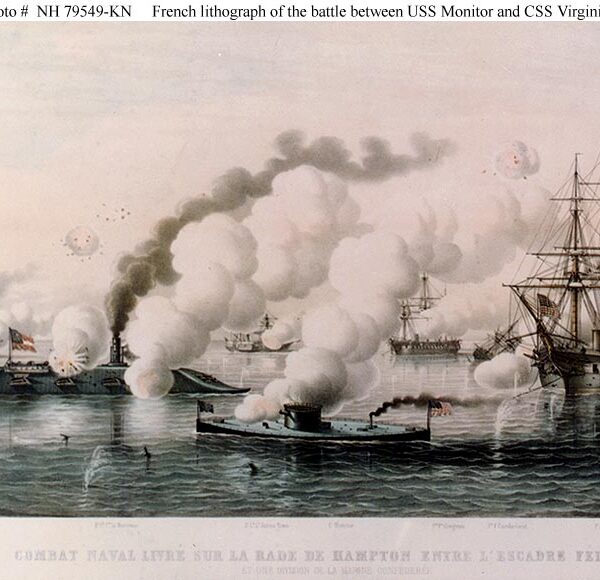
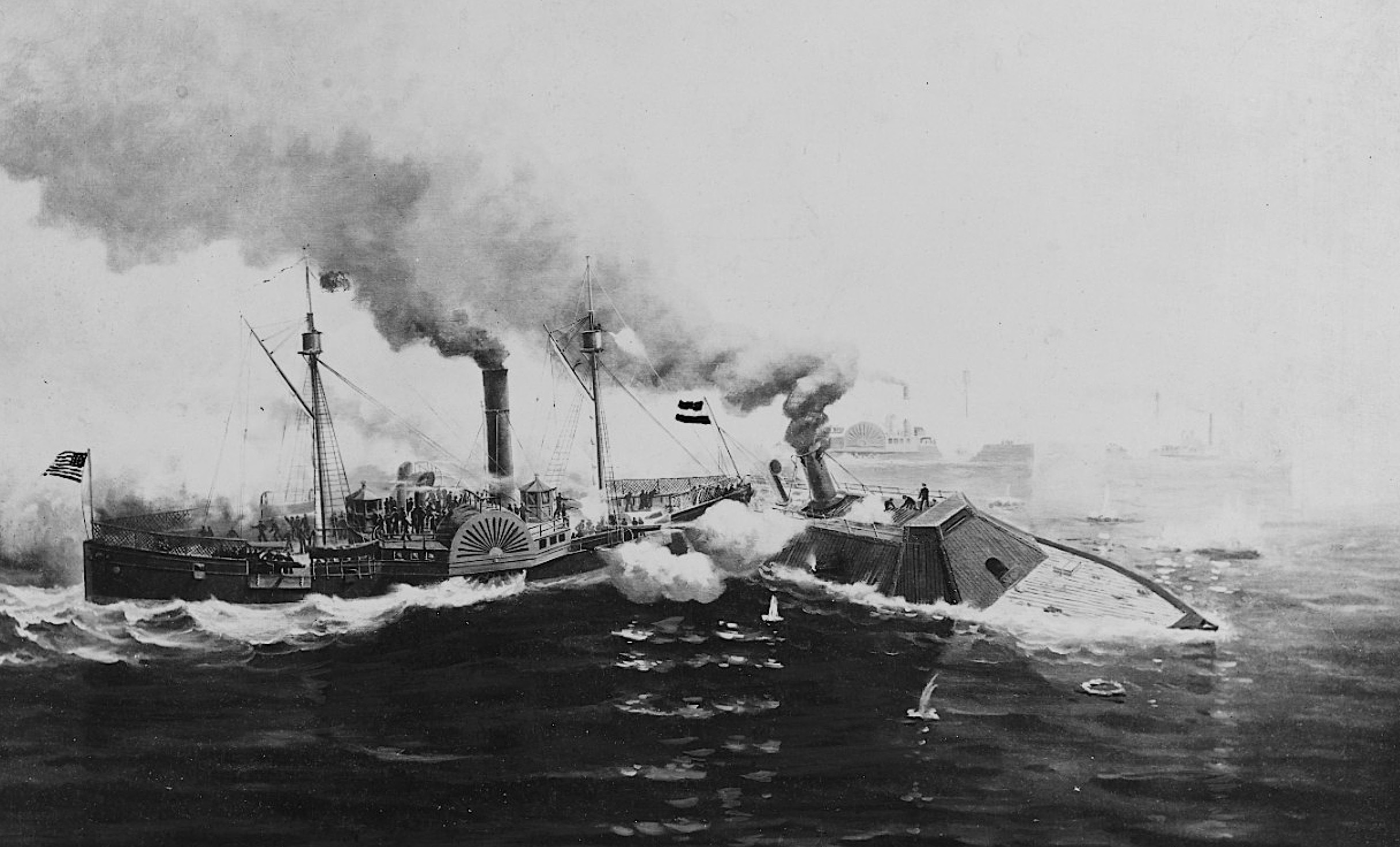
USS Sassacus and CSS Albemarle clash in the waters off North Carolina on May 5, 1864.
On May 5, 1864, the side-wheel steamer USS Sassacus was one of several Union ships to engage the Confederate ironclad ram Albermarle off the coast of North Carolina. Sassacus’ commander ordered the vessel straight at Albermarle, hitting the rebel ship on the starboard broadside. Sassacus was damaged by the collision and by a shot from Albermarle, which hit the vessel’s starboard boiler. The ships, stuck together for at least 10 minutes, finally separated; despite the efforts of nearby Union warships, Albermarle was able to escape.
The following month, The Scientific American published an eyewitness account the dramatic fight, one that highlighted the heroism of Sassacus’ chief engineer—and asked an important question. It follows in full:
During the engagement between rebel ram, Albermarle, and the Sassacus, a wooden gun-boat, the latter received a shot through her boiler, which caused a large quantity of steam to escape directly into the ship. A writer on board the Sassacus thus describes the determination with which the chief engineer of the Sassacus—whose name is omitted in some great oversight—stuck to his post: “The situation was appalling. The shrieks of the scalded and dying, as they frantically rushed up from below, with their shrivelled flesh hanging in shreds upon their tortured limbs, the engine beyond control, surging and revolving without guide or check, abandoned by all save one, who, scalded, blackened, sightless, still stood like a hero to his post. Alone, amidst that mass of unloosened steam and uncontrollable machinery, the chief engineer of the Sassacus remained, calling to his men to return with him into the fire-room to drag the fired from beneath the uninjured boiler, which was now in imminent danger of explosion. Let his name be long remembered by the two hundred beings whose lives were saved in that fearful moment by his more than heroic fortitude and exertion. There were no means of instantly cutting off communication between the two boilers, and all the steam contained in both rushed out like a flash, exposing the ship to more fearful catastrophe, should our brave engineer be too late in drawing the heavy fired which threatened our destruction.” Who is he? What is his name?
Three weeks later, the editors published a short follow-up in which they revealed the heroic engineer’s identity:
James M. Hobby is the name of the engineer of the U.S. steamer Sassacus. This officer stuck to his post amid the most trying circumstances. Even after he had been severely scalded by steam escaping from a shot-hole in the boiler, he stood by and worked the ship out of the reach of the enemy. The Sassacus was in action with an iron-clad rebel ram, and the contest was most severe Such men as Mr. Hobby are an honor to their profession.
Hobby, a 29-year-old native of Boston, received medical attention immediately after the fight. He was promoted for his actions and continued in the navy until his retirement in 1870. He died in 1882. During World War II, the destroyer USS Hobby was named in his honor.
Source
The Scientific American, June 11, July 2, 1864
Related topics: naval warfare