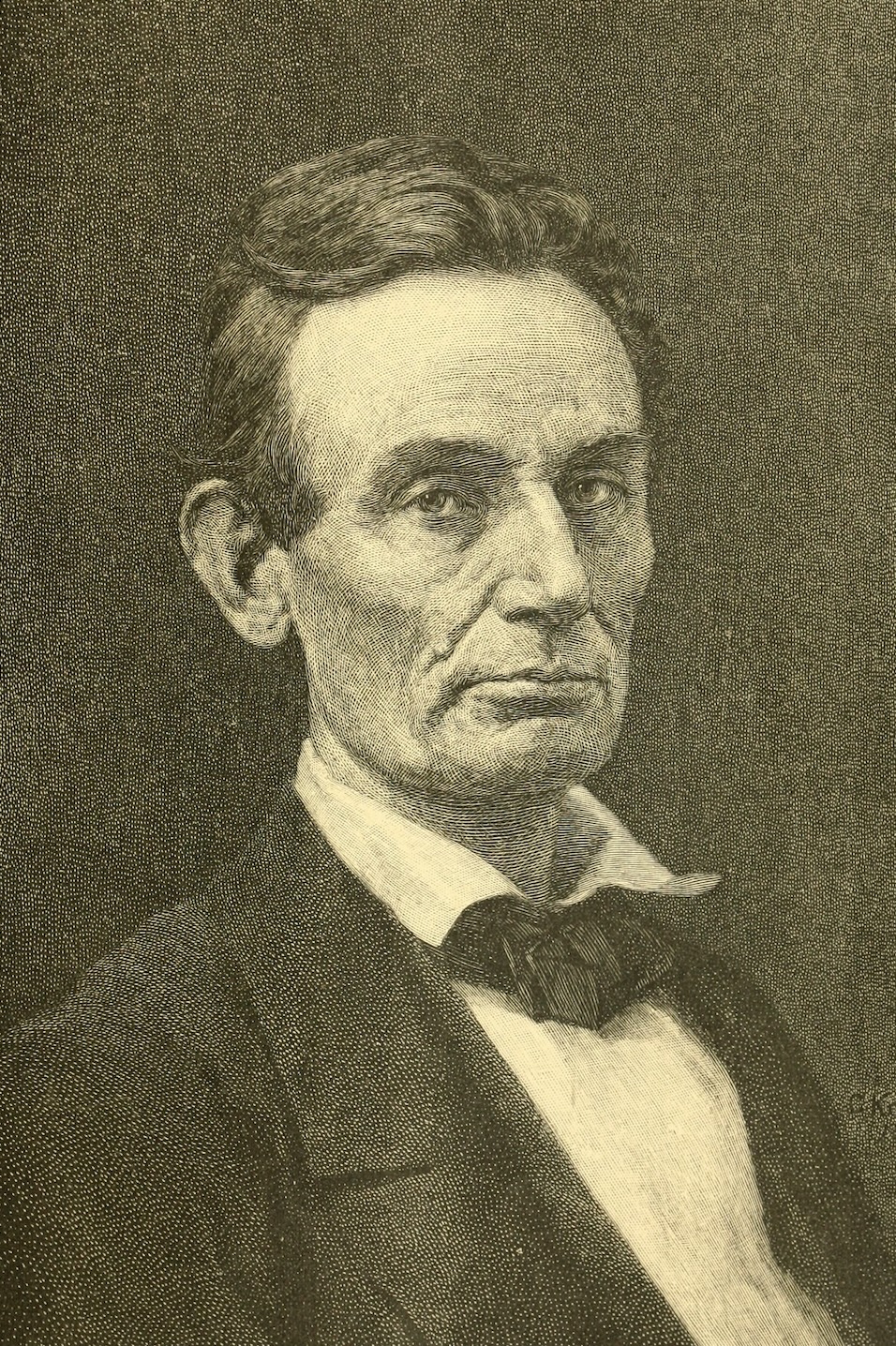
 Library of Congress
Abraham Lincoln
Abraham Lincoln did not run for president of the United States to lead a revolution. Like many antebellum Americans, he believed the Founding Fathers had created something uniquely valuable in 1776, what he called “the last best hope of earth.” Nonetheless, in testing that proposition, the Civil War wrought a revolution in American governance. Using federal military power and extra-constitutional change, Lincoln’s presidency ended slavery in the country and inaugurated what historians now call the Second American Republic. While leading these transformations, Lincoln repeatedly invoked the founding era in his rhetoric. To borrow a concept from historian Gregory Downs, Lincoln “whitewashed” the Civil War, concealing its radicalism by arguing that wartime changes renovated rather than replaced the democratic order created by the founders. Does it matter that Lincoln never intended to lead a second American revolution? I think it does. Lincoln’s reluctance was shared by a majority of white northerners and that helps explain why so many continuities persisted in American life despite the revolutionary changes wrought by the conflict.
Lincoln was not deliberately deceiving the public. He revered the “fathers” (as he called them) and his wartime speeches genuinely and persuasively connected the changes of the 1860s with those of the 1770s and ’80s. Lincoln’s most important effort in this respect came in the speech that many people use to identify the start of the Second Republic—the Gettysburg Address. The “new birth of freedom” that Lincoln promised on that cold November day in 1863 is today mostly interpreted as a deliberate shift in federal practice. No longer would the national government defer to states on the question of slavery (and much else besides) and in ending this most important institution it committed the United States to full civic freedom. Returning to the text, we see that Lincoln explained this new birth not as a radical departure from tradition but as a perfection of the original (First) American Republic. He began that most important speech by identifying the work of the founders to create “a new nation, conceived in liberty, and dedicated to the proposition that all men are created equal.” That is to say, the original nation, which Lincoln dated to 1776 (“four score and seven years ago”), already contained the bedrock upon which the 13th Amendment would rest.
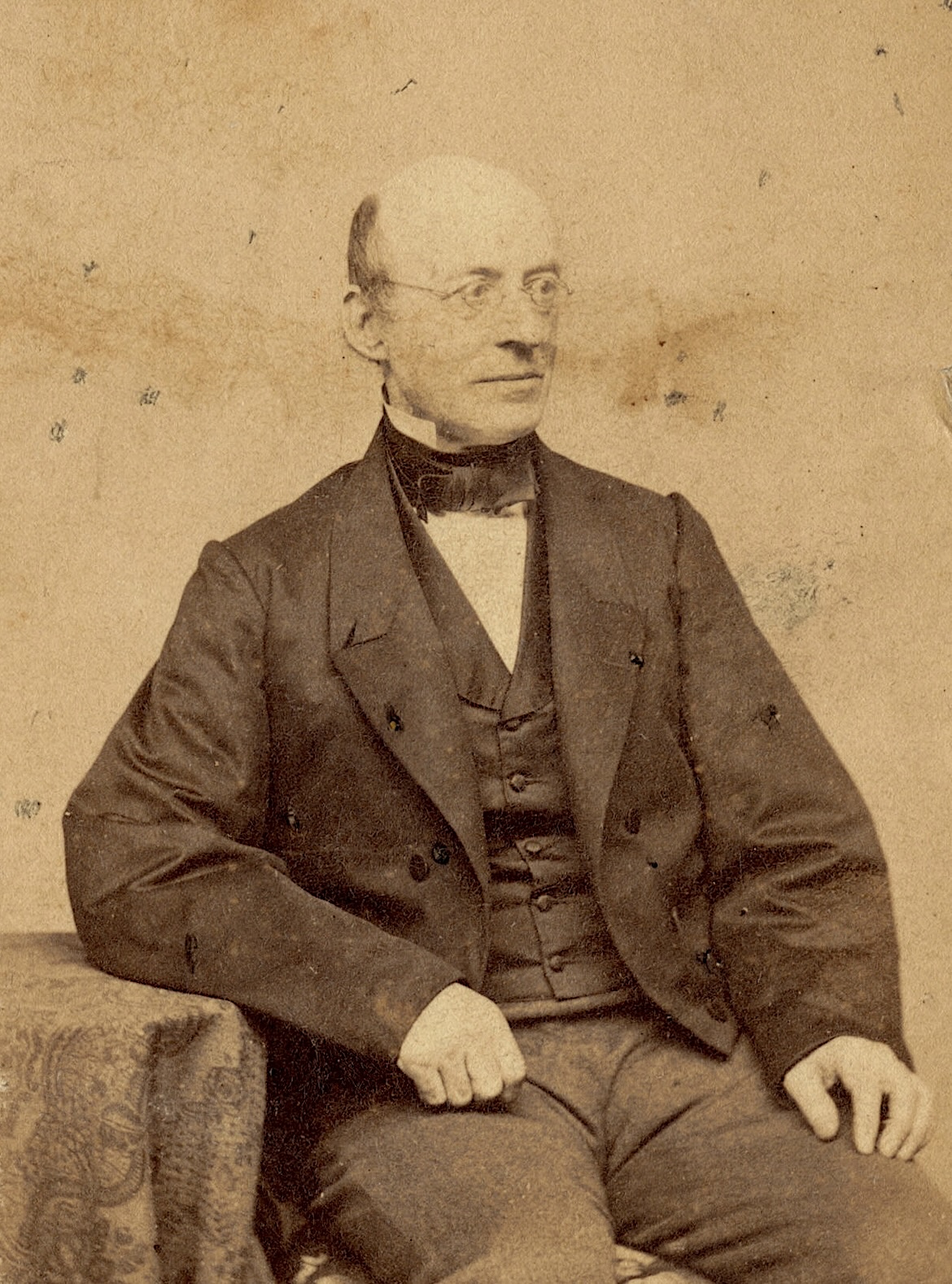 Boston Public Library
William Lloyd Garrison
Many abolitionists had long contended that the First Republic, built on the constitution of 1789, was fatally compromised. William Lloyd Garrison, America’s leading white abolitionist, had publicly burned a copy of the U.S. Constitution in 1853, pronouncing it “a covenant with death, and an agreement with Hell.” Garrison regarded the original Constitution as fundamentally pro-slavery and beyond redemption because of that quality. As the war proceeded, abolitionists led the way in calling for a longer and more destructive war. They recognized the vulnerability of slavery to the expanded power of the federal government in wartime and few worried about legal contradictions or inconsistencies. When Union general Benjamin Butler issued his famous “Contraband Order” in May 1861—in which escaped slaves were classified as “contraband of war,” thereby releasing the army from any requirement to return them to bondage per the terms of the Fugitive Slave Act—abolitionists applauded the move even though it was based on a legal acknowledgement of enslaved people as property. Lincoln allowed the order to stand, but he infuriated radicals in his party by moving slowly against slavery. In doing so, he followed his own definition of conservatism: “adherence to the old and tried, against the new and untried.”
Even before he took office and waded into the perils of commanding troops and negotiating the North’s fractious wartime politics, Lincoln showed his reverence for the Founding Fathers. In 1860, while vying for nomination as the Republican candidate for president, Lincoln delivered an address at New York’s Cooper Union. This was no casual speech. Lincoln spent months researching the founders and the founding and crafted one of his clearest expositions about the relationship between the American past and its perilous present.
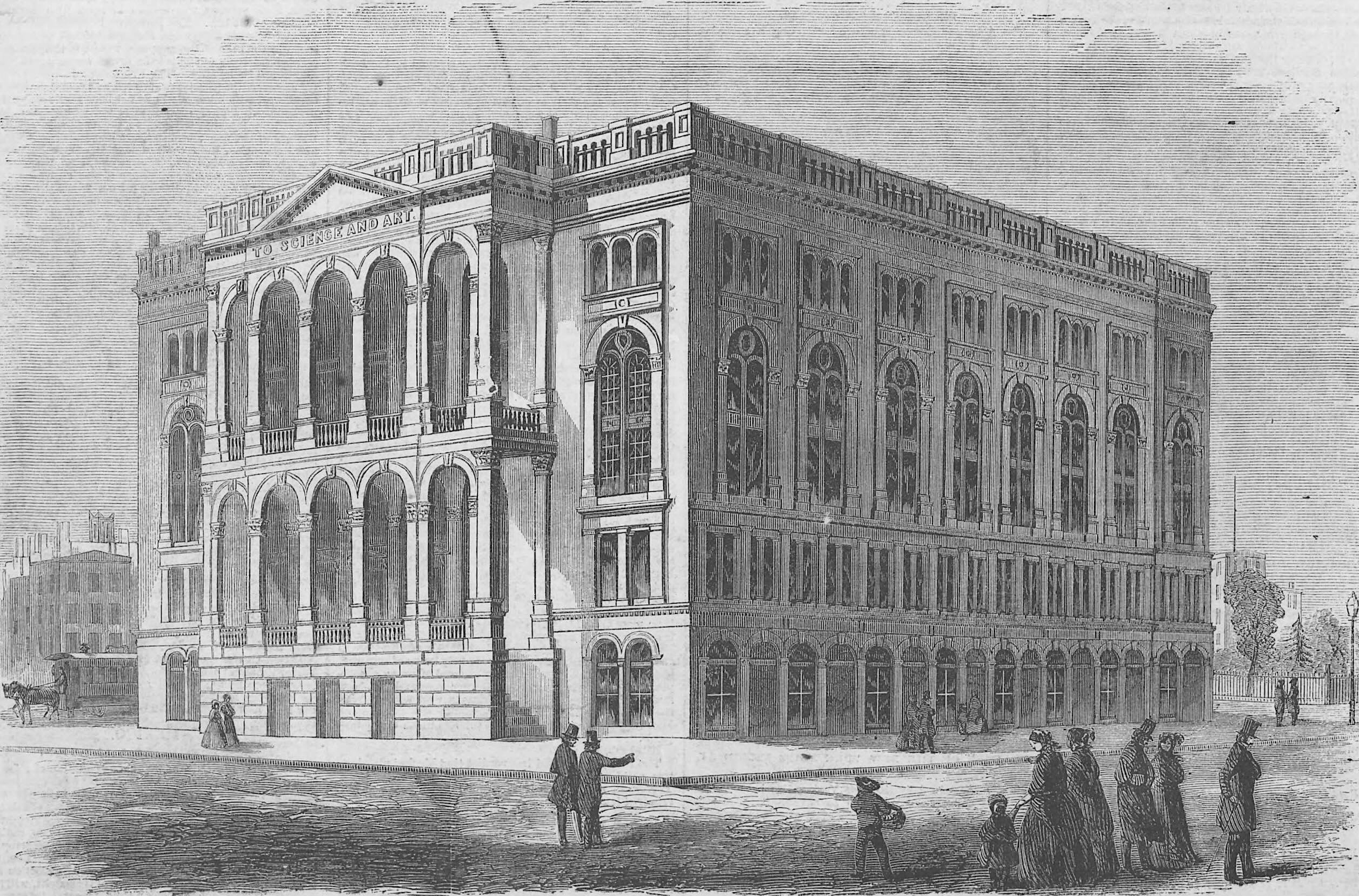 Harper's Weekly
New York’s Cooper Union
Lincoln’s stated goal was to determine the attitudes of the 39 men who signed the Constitution in 1789 on the question of whether the federal government could regulate slavery in federal territories. He did this by identifying votes in support of the Northwest Ordinance cast on different versions of the law by the signers. Of these 39 men, 21 supported federal regulation of slavery in the territories. These 21 constitute what Lincoln called “a clear majority.” The logic in this adjectival clause (repeated twice in his short speech) contains a crucial insight into Lincoln’s understanding of the kind of government the founders had created: a majoritarian democracy. This was the process that Lincoln valued above all, even the specific outcomes created by the founders. Like other northerners, including his Illinois nemesis Stephen Douglas, Lincoln identified the defining nature of American democracy in its majoritarianism. Political minorities merited protection (Lincoln the Whig took this position most of his life), but a simple majority should determine policy and practice.
This faith in majoritarian democracy is what buttressed Lincoln’s calm assessment of America as a “house divided” in his famous 1858 speech to the Illinois Republican Convention after he had been nominated to run for Senate. Lincoln did not expect the nation to remain divided. The free population of the North (22 million people in 1860) outnumbered the free population of the South (5½ million) by a factor of four. Lincoln’s patience to wait out the slow end of slavery reflected both his racial prejudice and his political conservatism. As a white man from a state that prohibited free people of color from settling in it, he could hold the human cost of decades more slavery at arm’s length. Even with this fatal concession, Lincoln, like most Republicans, believed that by geographically curtailing slavery the whole system would eventually expire, in one famous abolitionist metaphor, like the trapped scorpion that would sting itself to death.
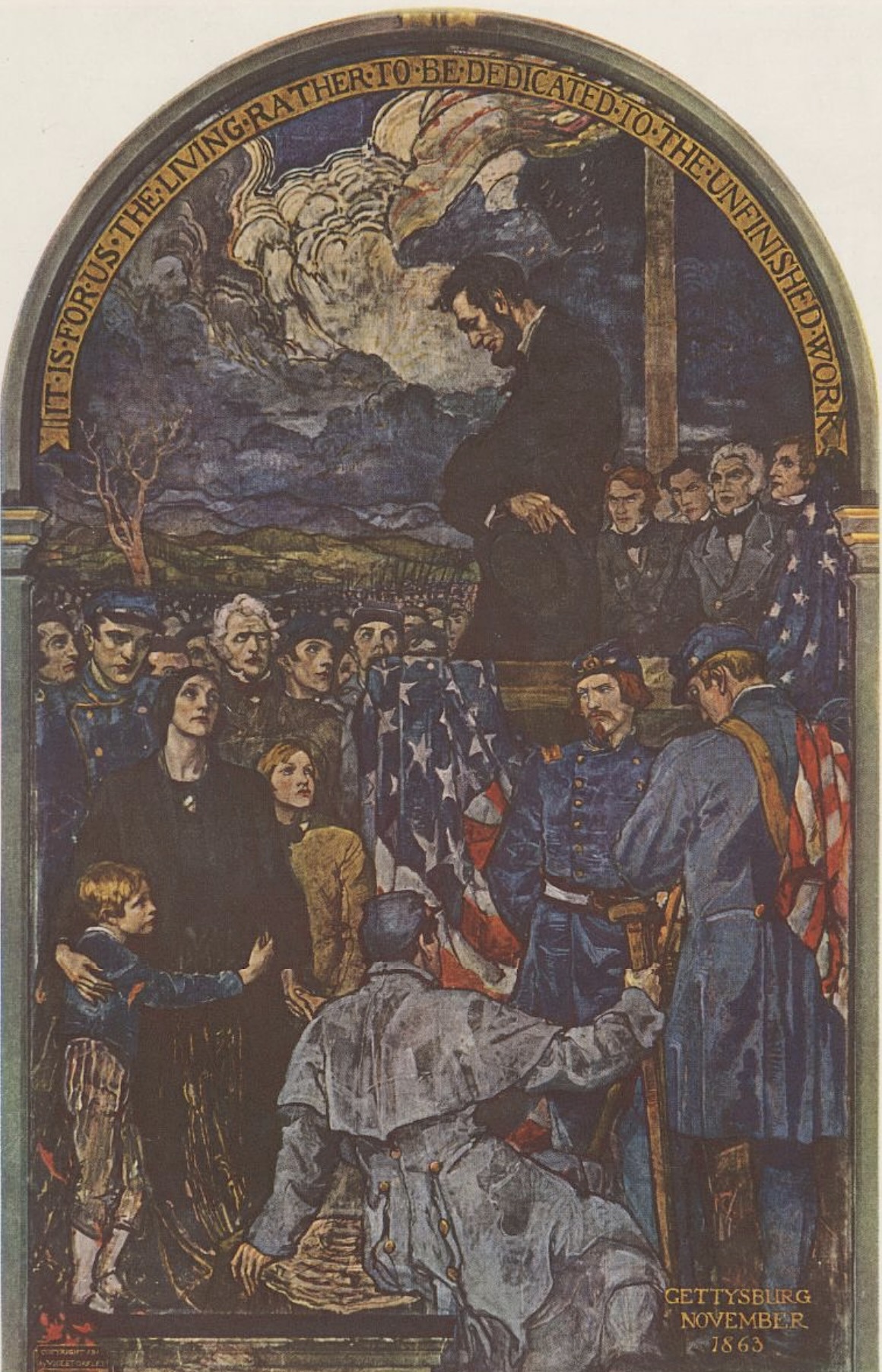 Anne S.K. Brown Military Collection
A postwar depiction of Abraham Lincoln delivering the Gettysburg Address
Lincoln’s faith in majoritarian democracy reemerged in the closing lines of the Gettysburg Address. He hoped that the Civil War would renew and revitalize a “government of the people, by the people, for the people.” That government—the gift of the founders—already existed and proved strong enough to preserve the Union and end slavery. In Lincoln’s optimistic gloss, the Civil War, by building on the work of the founders rather than replacing it, imperfectly expanded an already imperfect democracy.
But Lincoln’s prewar faith that slavery would end through established constitutional channels was misplaced. Instead, he oversaw wartime emancipation and pressured a U.S. Congress with only northern representatives to pass the 13th Amendment. After his death, his successor, President Andrew Johnson, used military occupation to compel southern states to ratify the amendment, an outcome Lincoln could have foreseen, The final stages of this revolution came with the passage of the 14th and 15th Amendments to the Constitution and the reconstruction of southern state governments into biracial democracies. The extra-constitutional nature of this process was, as even Republicans acknowledged, a signal change in American practice. How did Lincoln square the reality of revolutionary change with his professed loyalty to the Founding Fathers’ vision?
For one thing, Lincoln did not regard the founders as infallible. In his Cooper Union speech, Lincoln clarified that his commitment to the ideas of the founders did not obligate him to all their conclusions. “I do not mean to say we are bound to follow implicitly in whatever our fathers did. To do so, would be to discard all the lights of current experience—to reject all progress—all improvement. What I do say is, that if we would supplant the opinions and policy of our fathers in any case, we should do so upon evidence so conclusive, and argument so clear, that even their great authority, fairly considered and weighed, cannot stand.” The vigor with which Confederates fought to establish an independent slave republic provided the evidence and the argument for why Lincoln accepted the revolutionary changes of the conflict. In doing so, Lincoln violated his own preference to navigate by the wisdom of the founders, but by positioning himself in light of current experience and embracing progress and improvement he ensured a transition from the first to the Second American Republic. Today, in 2026, with 250 years of national life behind us, we can see both the continuities that Lincoln evoked and the discontinuities that the war created.
Aaron Sheehan-Dean is the Fred C. Frey Professor of Southern Studies at Louisiana State University. He teaches courses on 19th-century U.S. history, the Civil War and Reconstruction, and Southern History. He is the author of Calculus of Violence: How Americans Fought the Civil War, and most recently, Fighting With the Past: How Seventeenth-Century History Shaped the American Civil War.