 Library of Congress
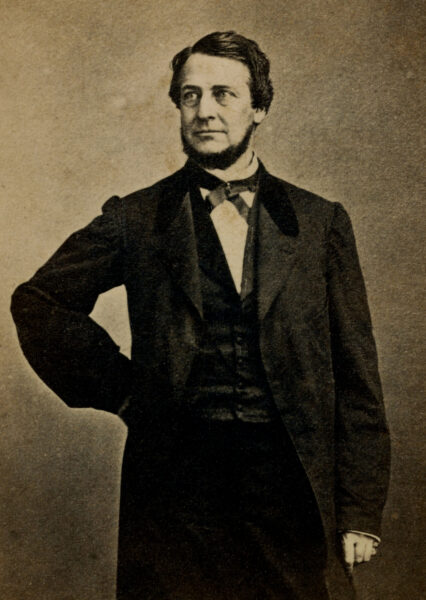
Confederate general Jubal A. Early
It was not a merry Christmas for Jubal Anderson Early in 1865. He passed it aboard the British mail steamer Eider, churning through the Gulf of Mexico en route from Havana, Cuba, to Veracruz, Mexico. Awash in nausea, he confessed to his diary that he missed his friend and recent traveling companion: “Last night is the first night since the first of October that I have not slept in the same bedroom with Major Thomas P. Turner and I miss him very much.”1
Turner was the former commandant of Libby Prison, the officers-only POW facility in Richmond, Virginia, famous for scandalous conditions and a dramatic tunnel escape by over 100 inmates in 1864. Early was a former lieutenant general and prominent subordinate of Robert E. Lee. They had fled the collapsing Confederacy together, bonded by grief, loss, and adventure. Now Early faced his uncertain future alone. One thing seemed clear: He could not go home.
In his choice to escape the defeated South, Early joined hundreds—eventually thousands—of Confederate expatriates, who fanned out across the globe. He traveled to the Caribbean, Mexico, and Canada, while others settled in South America (many in Brazil), Europe, Australia, Japan, and Egypt. Some of Early’s prominent former comrades found exciting employment, such as Major General William W. Loring, who advised and fought for the army of the Khedivate of Egypt; naval captain John Randolph Tucker, who commanded a Peruvian fleet and explored the Amazon River; and former Secretary of War Judah P. Benjamin, who attained the heights of the barrister profession as Queen’s Counsel in London.
In contrast, Early remained insular in self-exile, singularly fixated on the Civil War and unable to accept defeat. He reinvented himself as a historical writer and returned to Virginia after four years, determined to shape how the world would view his beloved Confederacy. The veneer of seemingly fact-based, apolitical history would obscure his crusade to reshape and perpetuate his own version of the defunct southern nation.
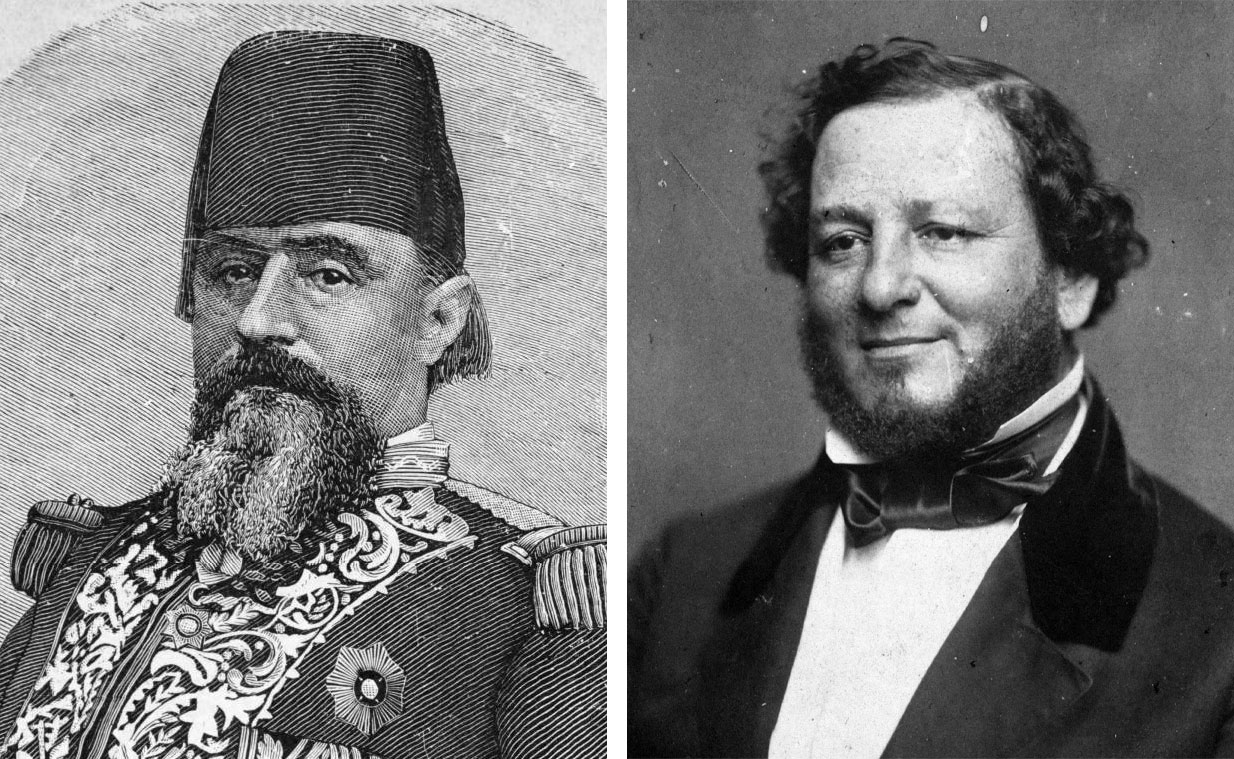 A Confederate Soldier in Egypt (1884) [Loring]; National Portrait Gallery
William W. Loring (left) and Judah P. Benjamin
As the Confederacy collapsed in spring 1865, Early appeared at least as notorious as Thomas Turner in the eyes of northerners. Early had inspired ample media coverage, especially for ransoming and razing northern towns in Pennsylvania and Maryland and advancing his command to within sight of the U.S. capital the previous summer.
But it was not only Unionists who denounced Early at this time. In the eyes of many in the Confederate public, Early’s once brilliant star had fallen catastrophically during the last year of the war. Not only had he lost the strategically important Shenandoah Valley in a series of spectacular defeats that contributed to overall Confederate failure, but also he had struggled perpetually against a complicated public reputation.
In more playful media portrayals, Early appeared a caricature: “a man of considerable corporosity” with a voice like a “cracked Chinese fiddle,” expelling an “interpolation of oaths.” While amusing, such sketches humiliated a man once described by a subordinate as “morbidly sensitive” beyond any other “man in the army.” In the more negative newspaper coverage and public rumors, Early appeared a godless drunk who openly fathered four illegitimate children with a woman of an inferior class. He was also depicted as cantankerous and obstinate, known for publicly berating his subordinates. Most damning, the characterizations were largely true, save the fact that there is no credible evidence that Early drank to excess during the Civil War.2
Though Early had been present at nearly every one of the Army of Northern Virginia’s campaigns, beginning with the Battle of First Manassas, he was not with Lee’s army when it surrendered at Appomattox on April 9, 1865. Just 10 days earlier, Lee had relieved Early of duty. Lee grimly explained the dismissal in a telegram, following the almost complete dissolution of Early’s Army of the Valley at the March 2 Battle of Waynesboro: “You cannot command the united and willing co-operation” of the soldiers and the public, Lee wrote, “which is so essential to success.”3
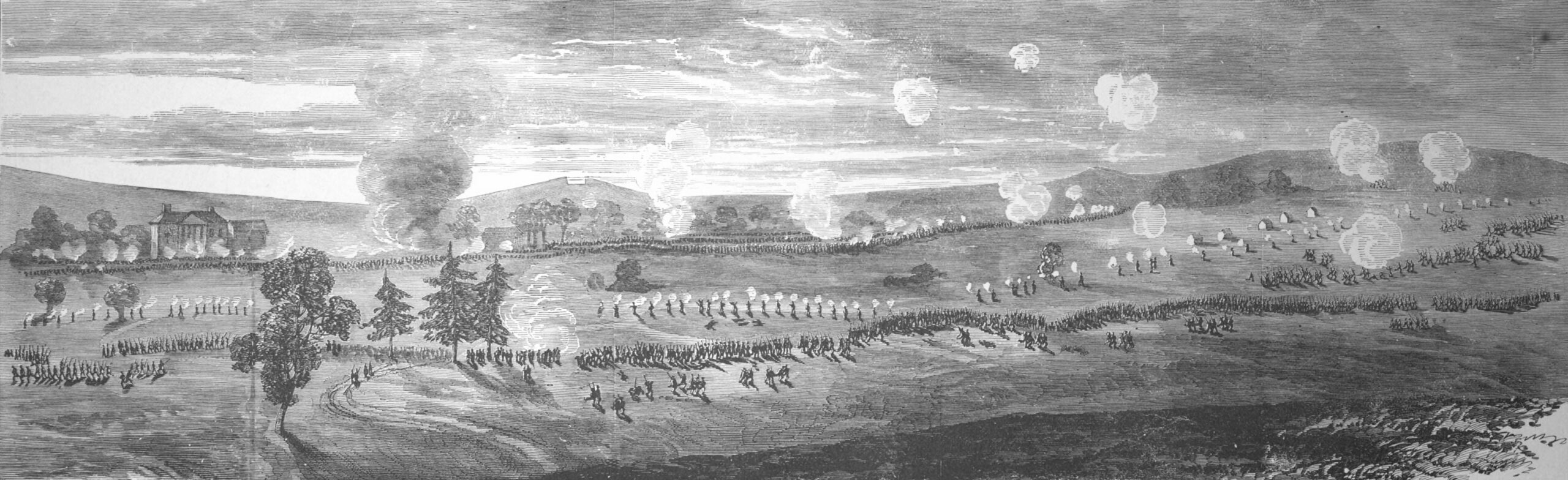 Frank Leslie’s Illustrated History of the Civil War (1895)
Jubal Early’s public chastisement of his men after the Confederate defeat at the Battle of Cedar Creek (depicted above in a wartime illustration) sullied his reputation in the eyes of the southern public and, more importantly, with Robert E. Lee.
Implicit in Lee’s words was a censure of Early’s public chastisement of his men after the ignominious Confederate collapse at the Battle of Cedar Creek on October 19, 1864. In the span of approximately 12 hours, the tactical masterpiece of Early’s career had turned from morning glory to abject defeat. Early excoriated his troops in a widely reprinted speech, “I have the mortification of announcing to you that, by your subsequent mistake, a serious disaster occurred.” Had they maintained proper discipline, remaining in the ranks rather than plundering enemy camps, “the victory would have been one of the most brilliant and decisive of the war.” Their “disgraceful” behavior, in Early’s assessment, had permitted the enemy time to regroup and launch a decisive counterattack.4
Upon his removal from command, Early plunged into despair and a violent respiratory illness that nearly took his life. He then went home to Franklin County, Virginia, to stew and anxiously await a promised letter from Lee that Early hoped would restore their friendship and clear his name. But before that letter arrived, Federal cavalry learned of his whereabouts and began scouring the area to apprehend him—dead or alive—for reward money. Early fled, possibly for his life or at least to avoid incarceration.
Over the course of the next month Early assumed multiple identities while disguised in the plain clothes of a farmer. He first passed as Franklin County local Tom Joplin before assuming the names Captain Wilson and John H. Anderson (this last was a real man who mistakenly began receiving Early’s mail, prompting the general to dispense altogether with aliases). After a U.S. cavalry unit spotted him just beyond his hometown of Rocky Mount on the farm of Skelton Helm, Early allegedly wheeled his horse and fired his pistol until the pursuing Federals scattered. Sam Helm, Skelton’s son, claimed, “This was the last hostile shot fired by the General in the Civil War,” committing Early to local lore. Soon a cadre of approximately 10 former Confederate soldiers gathered to conduct him beyond county lines. Early’s reputation appeared back on the ascent, as the local Lynchburg Virginian celebrated his escape: “After sojourning for a few days at his home in Franklin County … [Early] has set out on his journey. He carries with him the best wishes of a host of warm personal friends and admiring countrymen.”5
With his escort party whittled to four, Early made his way to Texas in hopes of joining Edmund Kirby Smith’s holdout Confederate army there. When on May 26 Smith finally acquiesced to Union forces, Early, who reached the state weeks later and was in Waco by August, shifted his plan from fighting it out with Smith to heading for French-controlled Mexico, where Confederates were gathering. In Waco, Early joined forces with Turner, who had arrived in Texas earlier that summer after his own harrowing flight from Richmond, and the two began to envision their planned journey in mythical proportions. Turner described the pair as “determined to continue our wanderings together, and ‘to share weal or woe’ in our attempt to free ourselves from Yankee thralldom.” Behind the bravado was a troubling reality for Turner: his counterpart commandant of Andersonville prison camp (and formerly Belle Isle), Captain Henry Wirz, had been arrested in May and was to be hanged on November 10. Early’s own treason indictment was handed down on June 7.6
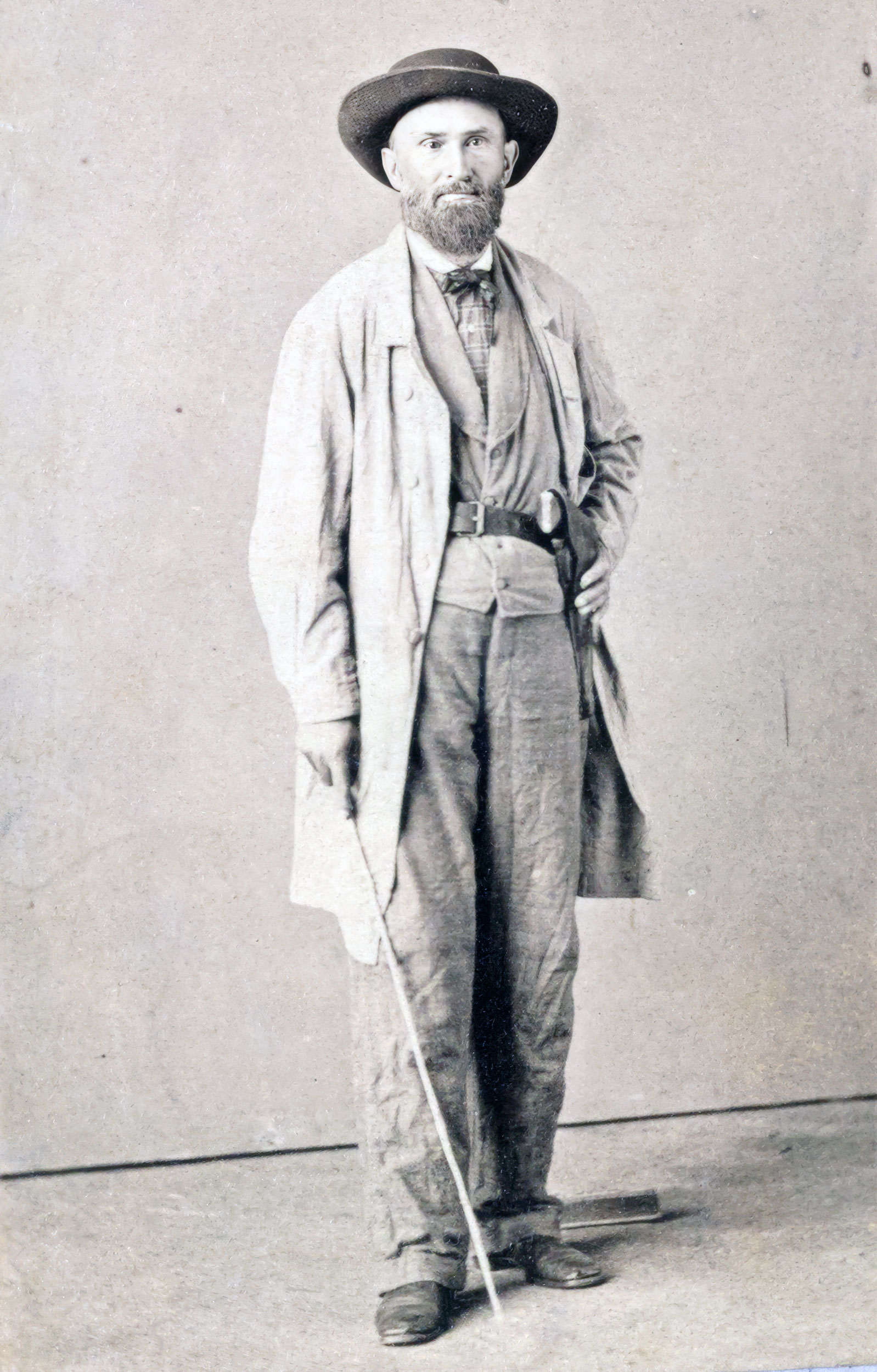 USAHEC
A note accompanying this image of Early, made in 1865, claims to show the former general in the “garb in which … [he] made his escape” from the United States using the name “Major Woods.”
The main constraint to escaping Texas proved to be Early’s lack of money, but as he soon learned, the fame of high command attracted support from unlikely places. On November 5, a Massachusetts cotton shipper provided Early’s sea fare, first to the Bimini Islands in the British Bahamas, where Early and Turner remained for nine days. Next a black ship captain offered them passage to Nassau, the capital of the Bahamas and once a magnet for Confederate blockade-running.
Arriving December 1 in Nassau, Early and Turner checked into a recently built luxury resort, the Nassau Royal Victoria Hotel. Turner later claimed he felt relief “after our long and arduous struggle, to free ourselves from atrocious persecution,” finding himself and Early “at last secure, under the protection of the ‘Red Cross of St. George.’” Early, meanwhile, amused himself by drinking with a “black fellow” he callously assessed as a man “who would have brought at least $2,000 in gold in the New Orleans Market before the war.”7
While his travel plans evolved, Early immersed himself in correspondence that would critically shape his work in exile. On October 30 he had reached out to Lee to smooth over their rift and request a letter of recommendation to possibly secure a military job abroad. Early signaled in this letter that he had read in the newspaper the commander’s farewell speech to the Army of Northern Virginia, in which Lee presented a compelling argument for Confederate defeat: “After four years of arduous service, marked by unsurpassed courage and fortitude, the Army of Northern Virginia has been compelled to yield to overwhelming numbers,” Lee had asserted. Early echoed obligingly in his missive: “Overwhelming numbers and resources … thwart[ed] all your efforts.”8
When Lee responded a month later, the commander praised his wayward subordinate’s “high intelligence,” “sagacity and bravery,” “theoretical and practical knowledge as a soldier,” and “untiring devotion to the cause in which he had enlisted.” Lee also provided the coveted recommendation and explained his aspiration to write a history of the Army of Northern Virginia, requesting of Early any military documents that might help furnish the details. This history Lee never completed, because, as he later told compatriots, he could not acquire the requisite primary source material. Lee did, however, disagree with Early on one stinging point: “I think the South requires the presence of all her sons.” In justifying his decision to remain in Virginia, Lee wrote, “I am determined … to share the fate of my people.”9
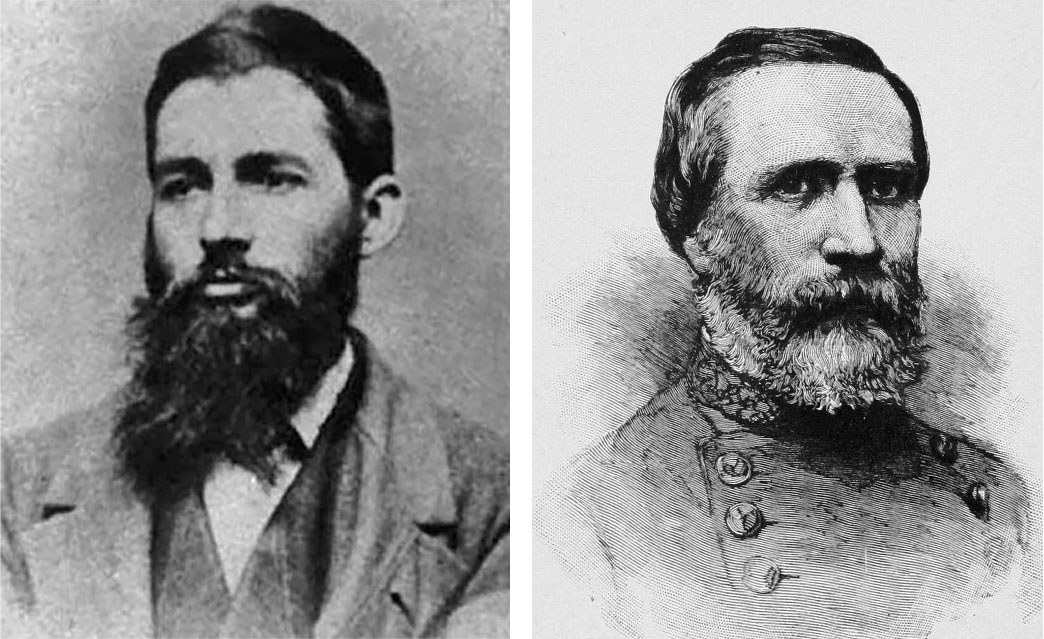 wikimedia (Hotchkiss); The Life of Lieutenant General Richard Heron Anderson (1917).
Jedediah Hotchkiss (left) and Richard H. Anderson
As Early soon learned, Lee was not the only Confederate planning to write a history of the war. Several key figures involved in Early’s infamous Shenandoah Valley Campaign, topographical engineer Jedediah Hotchkiss and Lieutenant General Richard H. Anderson, also had designs on shaping Civil War history. Early had not produced full, official military reports during the last year of the war, which would have influenced the official narrative of his service in his favor. What is more, these particular men knew or believed things about Early that he longed to preempt. To Hotchkiss, Early had confessed, right after the Battle of Cedar Creek, that he had erred in failing immediately to advance after his morning victory, a damning self-assessment that Hotchkiss had recorded in his diary: “General Early told me not to tell General Lee that we ought to have advanced in the morning at Middletown, for, said he, we ought to have done so.” Anderson had clashed with Early in the lead-up to the Third Battle of Winchester—another defeat for Early’s army—building on a previous relationship of intense acrimony. With rival histories in the making and Lee’s jab at his decision to leave the South, Early sensed a pressing need to seize control of his narrative.10
Just before Christmas, Early set sail for Mexico, having parted ways with Turner, who decided to remain in Havana—“a gay city” full of “fair senoritas,” as he put it in a letter to a friend in Virginia.11 Before leaving, Early dashed off an article to the New York News. To explain his exile to such skeptics as Lee, Early insisted that he was an unreconstructed, faithful Confederate nationalist: “I have nothing to regret [and] my faith in the justice of [the Confederate] cause is not at all shaken by the result.” He then argued, taking from Lee’s farewell speech, that his army had been defeated solely because of its small size. This new explanation for Early’s defeat in the Shenandoah Valley had the power to supersede his previous, unpopular explanation that had incriminated his troops.12
Early’s article sparked a newspaper duel with his former opponent in the Shenandoah, Union general Philip H. Sheridan, who offered searing rebuttals in the New Orleans Crescent. Back and forth wrote the two men to the respective newspapers, with Sheridan taking the bait to argue over the general size of Union and Confederate forces—a battle Early would always win, considering the Confederate forces had measured roughly a third the size of what the Union was able to field. Given his success in using Lee’s argument—that the Confederacy’s loss had centered on it being ultimately overwhelmed by superior enemy numbers—against Sheridan, Early would return to it as the core interpretative basis of all his subsequent published Confederate writings.
 Harper’s Weekly
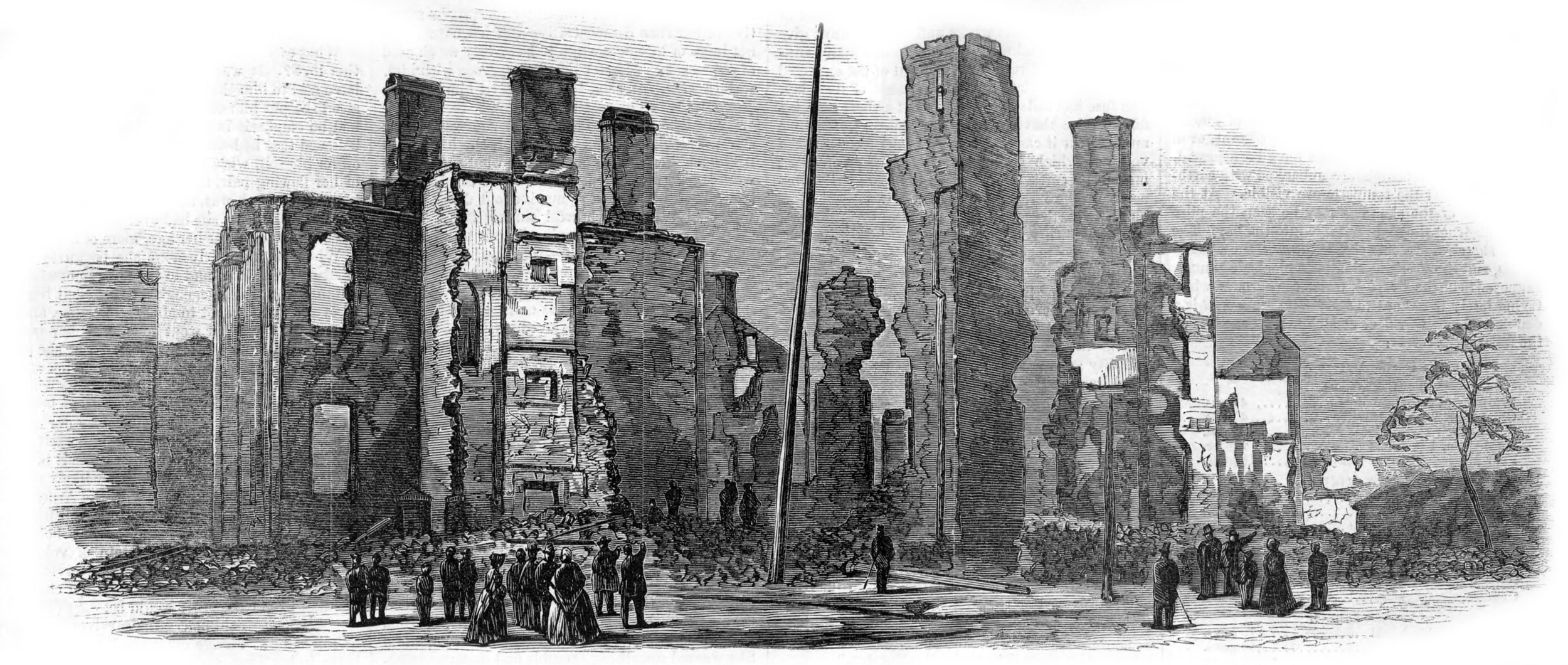
In his memoir of the war, Early presented several opinions that would become tenets of Lost Cause histories of the conflict, including that threats to southern homes had warranted retribution, such as Early’s order to burn Chambersburg, Pennsylvania, in July 1864 (the effects of which are depicted above in a wartime illustration).
Meanwhile, Early had reached Mexico, where hundreds of Confederates would be drawn over the next few months. Emperor Maximilian I, Napoleon III’s puppet ruler, encouraged Confederates to colonize Mexico in exchange for cheap land, tax breaks, and military protection, as well as the tantalizing possibility of fighting the United States, which had teamed up with the Mexican resistance movement under Benito Juárez to expel French imperialism. Confederate naval officer Commander Matthew F. Maury had been named commissioner of colonization, Major General John B. Magruder would serve as chief of the Land Office, and Early was offered the position of inspector of surveys, which he declined. He longed instead to resume his fight against the Yankees, or as he put it to a friend that spring of 1866, “I have got to that condition, that I think I could scalp a Yankee woman and child without winking my eyes.”13
Within the span of three months, however, Early tired of Mexico. The country presented a language barrier and failed to produce a war against the United States. Early wrote to the American newspapers to discourage other Confederates from immigrating, complaining that the Mexican government was unstable, the emperor was an “infernal humbug,” and land titles were “in a very unsettled condition.” Additionally, he noted, it was difficult to get work there outside of farming.14
During Early’s brief stay in the country, he had labored continuously to complete the first memoir produced by a general on either side of the war. With it he hoped to reclaim narrative control of his military defeats. The memoir was a blended-genre piece, a work of recent memory and of history, supported by primary documents from both sides of the conflict. These included published federal government reports he had gathered from newspapers and military papers he had obtained by mail from his former staff and friends. In tone Early largely presented his story as an impartial military report with only occasional discursive footnotes that justified his actions or that ridiculed his opponents. Additionally, he offered several interpretations that would crystalize into enduring tenets of postwar Confederate nationalism. Most importantly, he claimed that the Shenandoah Valley—and the war—were lost not because of Union military prowess but solely because the United States possessed more manpower and materiel. A few other central interpretations emerged: Early depicted Lee as a faultless general, the central hero of the conflict; Confederate soldiers appeared vastly superior in skill to their Union opponents; Confederate ladies were perfectly devoted to cause and country; and threats to southern homes warranted retribution, such as Early’s order to burn Chambersburg, Pennsylvania, in July 1864.
Eager to leave Mexico—and to solicit comment or endorsement from Lee and Shenandoah Valley campaign subordinates—Early held off on publishing what would become A Memoir of the Last Year of the War for Independence, in the Confederate States of America. He instead turned his sights on Canada, which was also in a bellicose mood against the United States. A part of the British Empire, Canada’s population had been divided over which side to support during the Civil War, with easterners tending to favor the Confederacy. British and Canadian authorities feared that the United States in an expansionist phase—demonstrated by the purchase of Alaska (completed in 1867) and multiple Irish nationalist (Fenian) incursions—might attempt to take Rupert’s Land, the vast tract that would become the Western Provinces. Canada took several actions between 1865 and 1867 to protect itself from American imperialism: beefing up border defenses, engaging in rapid railroad construction, and confederating its territories. If a war materialized, Early was determined to join Canada’s ranks. In addition, pockets of Confederates were collecting in Canada, such as a portion of Jefferson Davis’ family in Montreal, offering the promise of community. In particular, former high-ranking officials and a personal friend of Early’s, John C. Breckinridge, who had served under him in the Shenandoah Valley, awaited in Niagara. Niagara was also near St. Catharines, a Canadian town famous for its healing baths. This beckoned to Early, who had long suffered crippling arthritis.
In the spring of 1866, Early sailed first to Havana, where he had to wait several months to solicit money from his Virginia-based brother (and wartime aide-de-camp), Sam, who would eventually finance the majority of Early’s exile. As with Mexico, Early termed Cuba “the dullest place I ever saw.” After a particularly protracted journey through the Danish Virgin Islands, Nova Scotia, and along the St. Lawrence River, Early finally arrived in Niagara by July 25. For the summer he enjoyed a much-needed sojourn among “an unusually agreeable Southern party,” including former Confederate diplomat James Mason, Breckinridge, and their families. These like-minded compatriots temporarily buoyed Early’s spirits, even as Reconstruction capsized the South they had known. Early huffed that he hoped “the Southern people will refuse to comply with [the] conditions” of these new Republican-driven policies.15
 Library of Congress (Breckinridge); Harper’s Weekly
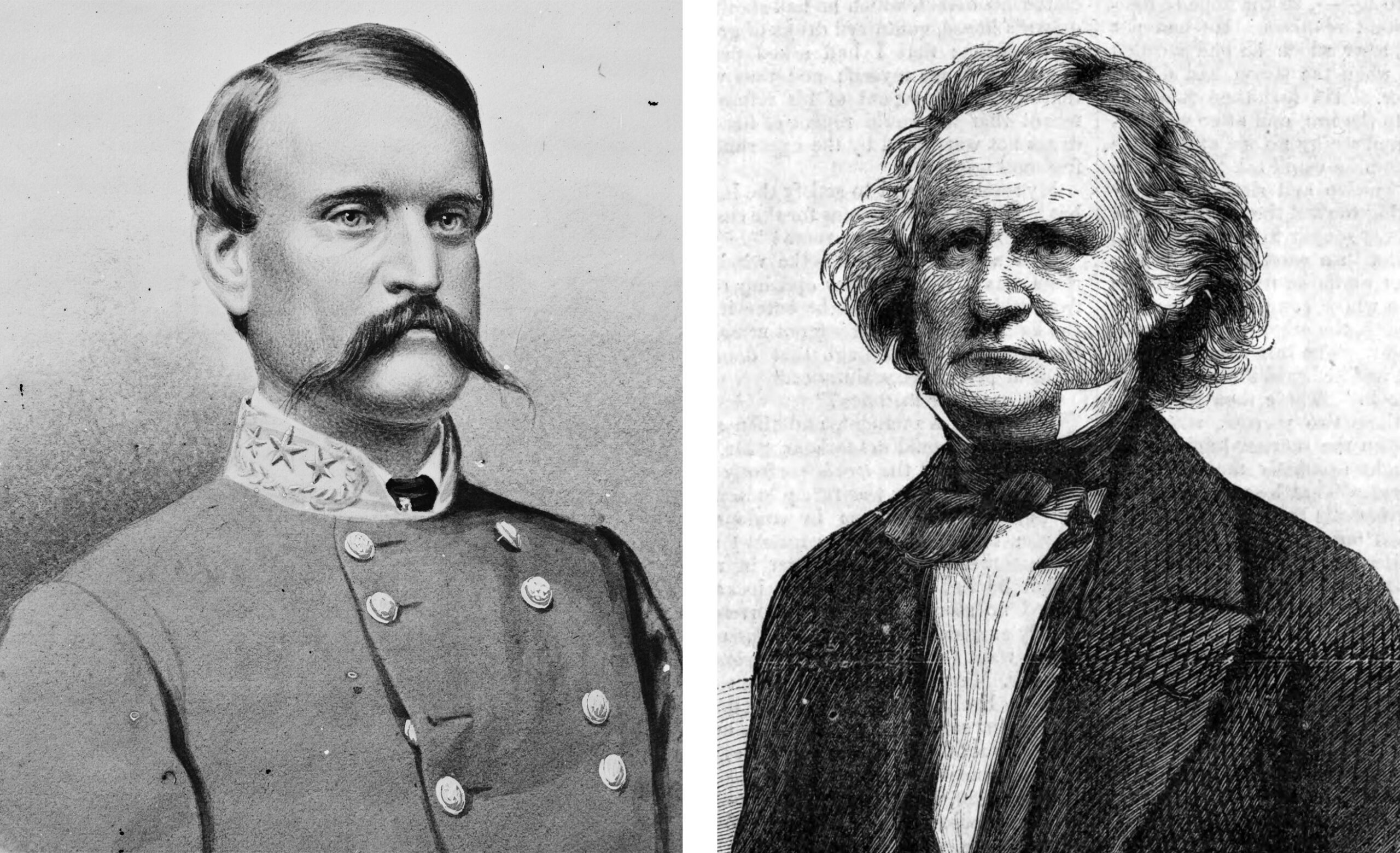
John C. Breckinridge (left) and James Mason
Though Early would soon move to less costly locations in Canada, he would return to Niagara once more in May 1867. That month former Confederate president Davis would be released from prison at Fort Monroe (without having been brought to trial for treason) and stop in Niagara en route to his family in Montreal. Early and a group of sympathizers would welcome Davis’ steamer with cheers and fanfare and a lavish lunch. Early would then present the former president with a copy of his memoir.
For now, however, Early chose Toronto, a Canadian publishing hub, as the launch point for his memoir. By that fall Early had received feedback from a number of former comrades: Breckinridge, Early’s former chief of artillery Thomas Carter, and, most importantly, Lee. In fact, Early’s was the only memoir manuscript Lee ever read in full and commented on. He urged his former subordinate, “I would recommend … that while giving facts which you think necessary for your own vindication … you omit all epithets or remarks calculated to excite bitterness or animosity between different sections of the Country.” Such was Lee’s advice, to strictly adhere to the neutral tone of a military report, advice ignored in many compatriots’ later memoirs and Early’s own vitriolic screeds that followed Lee’s death in 1870.16
Early’s health, mood, and financial situation deteriorated in Toronto, but he compensated with productivity. He wrote a spate of newspaper articles to rehabilitate his reputation back home in the South, particularly by praising the Ladies’ Memorial Associations, which were attempting to reinter Confederates buried in battlefield graves. Publicly he highlighted his own martyrdom, proclaiming, “It is sad, sad indeed to be an exile from my country, and still sadder to mourn the loss of the most just and most sacred cause for which man ever fought.”17
Privately, Early raged against histories of the Civil War that were appearing in print, such as that of southern newspaper editor Edward Pollard, famous for coining the phrase “Lost Cause” in relation to the Confederacy, whose creation he depicted as noble and unrelated to slavery. Writing to Pollard, who had written critically of Early’s wartime performance, Early declared, “I would not select you to write an account of my military career.” Early also continued to fume about developments in Reconstruction, insisting to a friend, “I am as far from that happy state of mind which the Scriptures require” in which we should “forgive our enemies as it is possible to conceive.” He was “far from being reconstructed … and there is scarce a night of my life that I do not dream of being engaged in battle with the Yankees.”18
 USAHEC
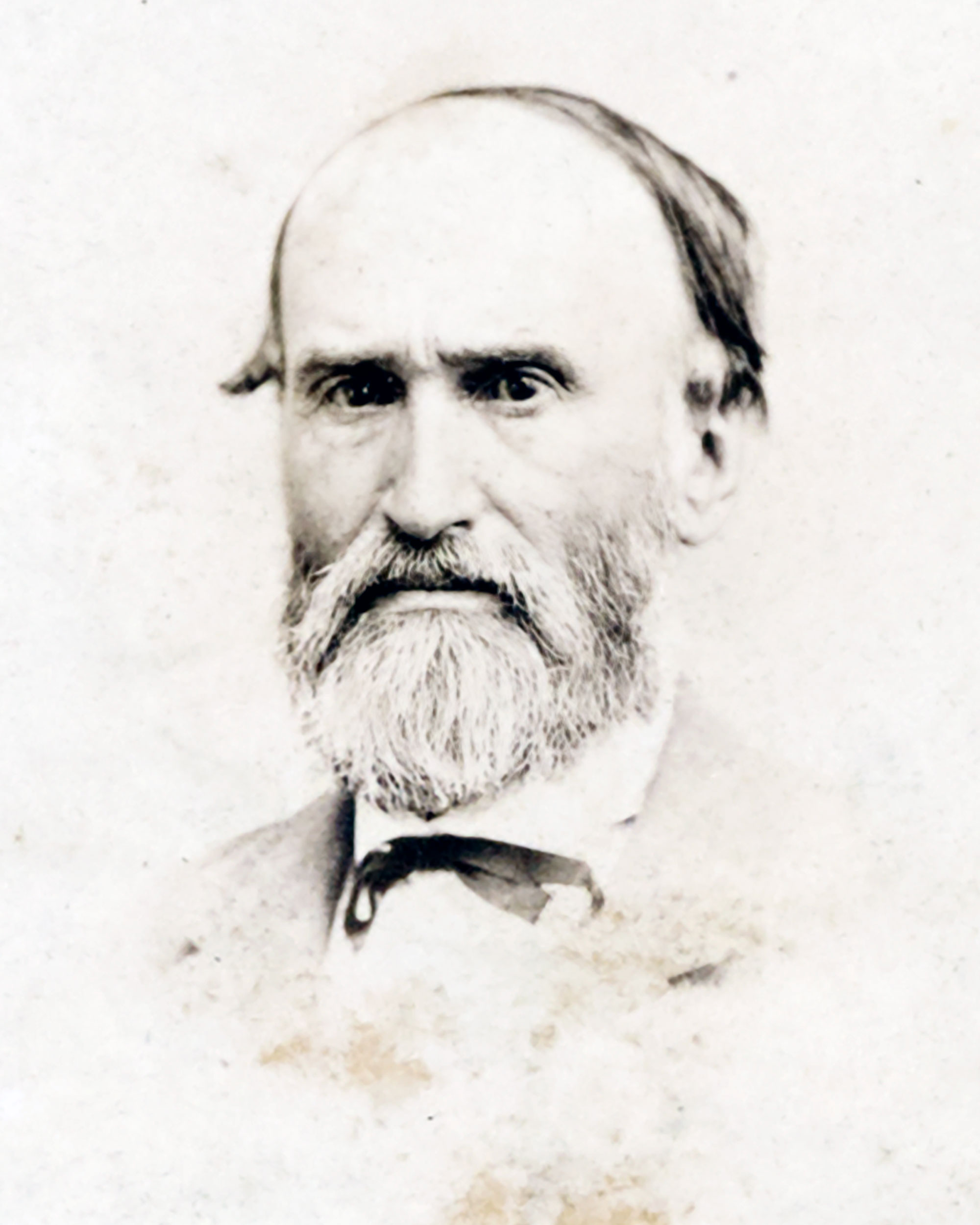
Early’s memoir of the Civil War, published in late 1866, received a strikingly positive reception, even in the North. Above: Early as he appeared during his time in Canada in the late 1860s.
At last, in December 1866, Early published his memoir, at his own—or rather at his brother Sam’s—expense. In a master stroke designed to convince the public that his memoir was true history rather than self-serving, he dedicated all its proceeds to the Shenandoah and Richmond Ladies’ Memorial Associations. In the mid-19th century, forgoing financial profit was a signal of altruism. Early would also retain a vice grip on its distribution, with plans to print 1,000 copies in Toronto for dispersal to those especially selected to rehabilitate his reputation, such as former subordinates, widows of the men killed in the 1864 Shenandoah Campaign, and former high-ranking Confederates. Seeking to spread his message to western Europe, he sent 74 of his first imprints to Mason in England and Breckinridge in France, asking them to distribute the copies on his behalf. Early also allowed several trusted friends to print editions in Lynchburg, Virginia; Augusta, Georgia; and New Orleans.
Additionally, Early’s distribution of copies became a way to reward those he considered loyal to the Confederate cause—or the cause by his own narrow definition. Indeed, Early pondered withdrawing copies from former Confederates whom he believed had “apostatized” by working with northerners or freedpeople in any capacity. Early’s ire—at Reconstruction, his isolation, and his financial pain—was blooming to now encompass these so-called apostates. Punishing “disloyal” southerners would in the future become a primary function of Early’s historical writings, writings that would have the effect of drawing new boundaries for Confederate nationalism in a nation constructed solely of Early’s interpretations.19
In the winter of 1866–1867, critical reception of Early’s memoir proved strikingly positive, even in the North. The Old Guard magazine in New York City wrote feelingly of Early’s journey from humiliation to redemption. For “reverses” in the valley “Old Jubal had to suffer,” it lamented. “The press and the people … condemned him … unmercifully.” But now that “General Early has prepared a history of his last campaign, with great care and minuteness,” it would “dispel the clouds which now hang over his military reputation.” A New York Times special correspondent explained that reading the account had changed his negative perception of Early: “I had always thought of the doughty rebel—as I suppose most persons at the North have—in a rather ludicrous and contemptuous light”; however, “the memoir is excellently written.”20
 Lieutenant General Jubal Anderson Early, C.S.A. (1912)
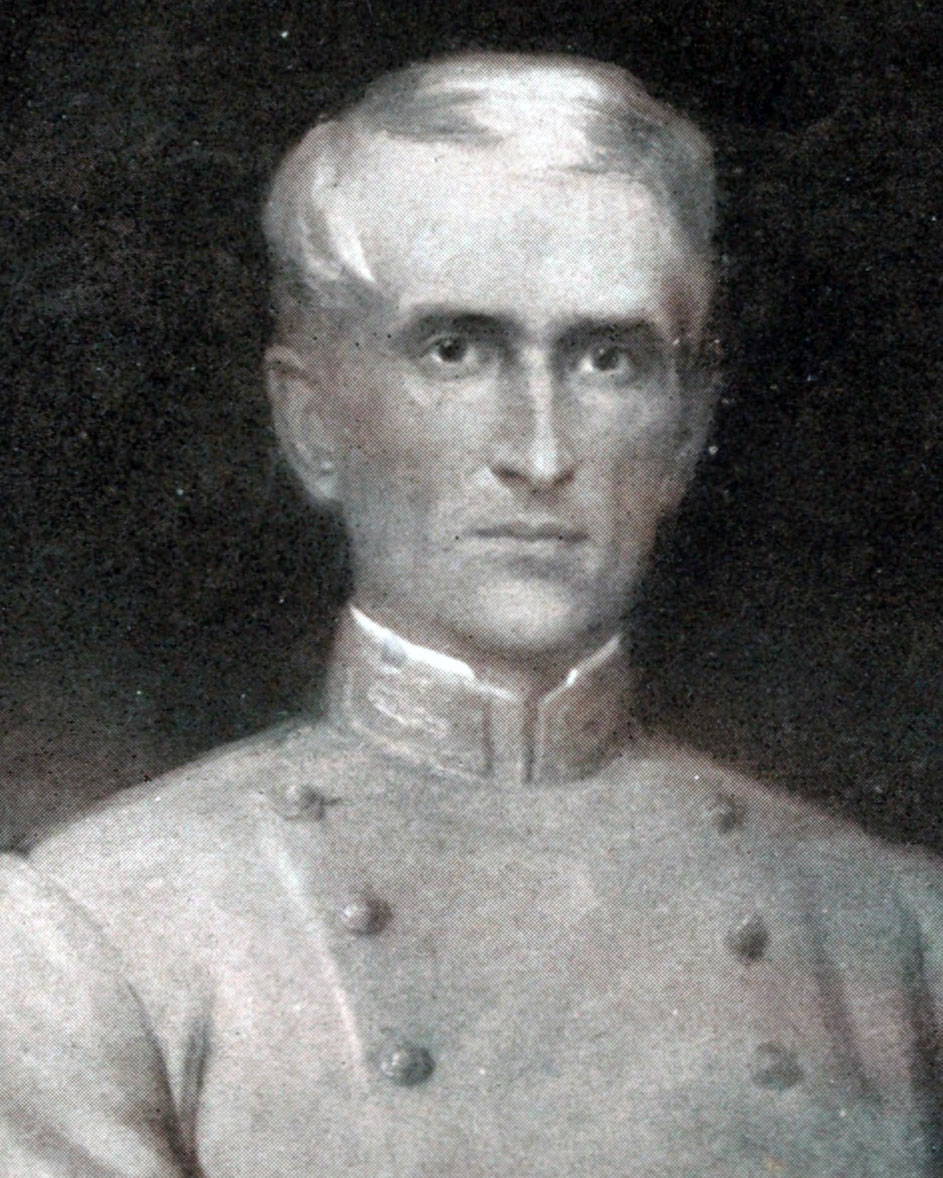
Sam Early
With Early’s prestige as a chronicler of the conflict growing and his personal reputation seemingly on the mend, he set to writing two additional historical manuscripts in this period, which would remain unpublished until his niece, Sam’s daughter Ruth, edited them after Early’s death, in 1894 at 77. One was a complete memoir of his Civil War experience, which included his first memoir verbatim and also incorporated more primary documents from both sides. The other was a history of American slavery, which Ruth Early would title The Heritage of the South. Using primary sources and published histories, Early hoped to prove the complicity of the North in developing and sustaining American slavery and fomenting the rise of the northern “fanatical” faction (the abolitionists), which he believed had resulted in the war and slavery’s supposedly illegal destruction. Along the way, Early expounded on his increasingly vocal belief in the racial inferiority of black individuals and the dangers of “amalgamation” of the two races, which was, in his view, in “contravention of [God’s] designs.”21
In the midst of these projects, Early had moved to the more affordable Canadian city of Drummondville, which was the loneliest place outside of the United States he had ever lived. Agonizing over his lack of funds and poor health, he wrote to Sam, “I cannot stand this life that I am leading.” And so, Sam sent more money, which Early feared was “taking from you the means of educating your children.”22
Moreover, Early, who never wed, grieved the end of his decades-long relationship with mistress Julia McNealy, who had moved on to a new partner—one willing to marry her. With a remarkable lack of self-reflection, Early demanded on December 9, 1868, that his estate lawyer and friend Edmund Devine remove Julia and their four children from his will. “As to the person you allude to, I wish never to hear of her again,” he snapped. “I have felt deeply concerned about the children, but the conduct of their mother has been such as to leave me in doubt which might and which might not be mine.”23
With his personal life crumbling, Early longed to return home but still feared prosecution by the U.S. government. On Christmas Day 1868, this fear finally dissipated when President Andrew Johnson issued a blanket pardon “unconditionally and without reservation, to all” those who had “participated in the late insurrection … with restoration of all rights, privileges, and immunities under the Constitution.” The pardon required no oath of allegiance to the United States, which Early had flatly refused to give. The promise of resumed financial independence from Sam and a restored social network were too tempting to resist. On February 1, 1869, Early departed Canada for Virginia, detouring to visit his ailing father in Missouri.24
At long last, on April 2, 1869, Early settled in Lynchburg, Virginia. Former Confederate commander and now a friend D.H. Hill greeted Early warmly, writing, “Honestly I believe you are nearer to the hearts of the Southern people than any other man.” This was a remarkable statement about a man who just a few years earlier had fled his country with a nearly ruined reputation. Even allowing for some friendly exaggeration, there was truth to Hill’s sentiment. This was evident in a letter, signed by 90 local residents, welcoming Early home, and individual letters, such as one by Confederate veteran George T. Erwin, who lauded, “Your contributions to the history of the war will carry conviction with them … for every word and line bear the impress of truth.”25
Through a body of writings produced and distributed in voluntary exile, a curmudgeonly, failed general had managed to gain widespread recognition as a respected historian and a devout Confederate nationalist despite his time away. Early’s personal reconstruction was only just beginning. He would go on to serve as president of the Southern Historical Society, which published the most diverse and prominent Confederate chronicles of the era; he would shape a new sense of Confederate nationalism through numerous published commemorative speeches and statue dedications; and he would produce reams of interpretive historical articles and essays, which continue to shape how the Confederacy is understood today. While his peers in exile sought new horizons of adventure, Early worked to perpetuate his lost country and cause using the tools of history. He became the preeminent Confederate bard.
Kathryn “KT” Shively is an associate professor of history at Virginia Commonwealth University and the author of Nature’s Civil War: Common Soldiers and the Environment in 1862 Virginia. Their newest book, Immortal Confederacy: Jubal A. Early and the War for History, will be released in April 2027 (University of Georgia Press).
Notes
1. Jubal A. Early [hereafter JAE], “Diary Aboard Eider,” December 25 entry, Box 16, Part I, JAE Scrapbooks, Library of Congress, Washington, D.C. [hereafter LC].
2. “Portrait of General Early,” Alexandria Gazette, October 4, 1864; Thomas Henry Carter to wife, October 31, 1864, in Graham T. Dozier, Gunner in Lee’s Army: The Civil War Letters of Thomas Henry Carter (Chapel Hill, 2014), 264.
3. Lee to JAE, March 30, 1865, in JAE, A Memoir of the Last Year of the War for Independence (Toronto, 1866), 139.
4. “Early’s Address to his Army,” October 22, 1864, The New York Times, October 30, 1864.
5. Samuel W. Helm account (Rocky Mount, Franklin, VA) and Joplin Clipping and Account, June 15, 1887, in “Appraisals of Gen. Early,” Accession 158, Box 25, Albert and Shirley Small Special Collections Library, University of Virginia, Charlottesville, VA.
6. “Major Turner’s Escape: How the Ex-Commandant of Famous Libby Prison Fled to Cuba,” The New York Times, July 7, 1895.
7. Ibid; JAE to Thomas L. Rosser (Havana), May 10, 1866, in Journal of Southern History 9, No. 1 (February 1943): 115–116.
8. R.E. Lee, General Order No. 93, April 10, 1865, handwritten, Gilder Lehrman Collection, gilderlehrman.org/sites/default/files/content-images/00035.web_.jpg, accessed on July 7, 2026; JAE to Lee (Coast of Texas), October 30, 1865, Mss3 L515a, Jubal Anderson Early Papers, 1837-1892, Virginia Museum of History and Culture, Richmond, VA (hereafter VMHC).
9. Lee to JAE, November 22, 1865, Mss1 L51c 737, Lee Family Papers, VMHC.
10. Jedediah Hotchkiss, Make Me a Map of the Valley: The Civil War Journal of Stonewall Jackson’s Topographer (Dallas, 1973), 240–241.
11. “Major Turner’s Escape.”
12. JAE to editor of New York News (Havana, December 18, 1865) in J. William Jones and R.A. Brock, eds., Southern Historical Society Papers, 52 vols. (1876-1959; reprint, Wilmington, NC, 1990–1992), 24:176-177.
13. JAE to John Goode (Havana), June 8 1866, Box 4, Chronological File [hereafter CF], JAE Papers, LC.
14. “Important Letter from Gen Early About Mexico,” Abingdon Virginian, May 4, 1866.
15. JAE to Samuel Early (Havana) May 15, 1866; JAE to Sam (Niagara) August 8 and May 30, 1866, Box 4, CF, JAE Papers, LC.
16. Lee to JAE, October 15, 1866, Box 4, Folder 22, George H. and Katherine M. Davis Collection, Howard-Tilton Memorial Library, Tulane University, New Orleans, LA.
17. Spirit of Jefferson (Charles Town, WV), December 25, 1866.
18. JAE to Pollard (Toronto), December 28, 1866, Box 4, CF, JAE Papers, LC; JAE to D.H. Hill (Toronto), December 4, 1866, Box 3, D.H. Hill Papers, Library of Virginia, Richmond, VA.
19. JAE to Sam (Toronto), April 15, 1868, January 22, 1867, Box 4, CF, JAE Papers, LC.
20. “Lieutenant-General Early,” Old Guard, December 1866, 4, 12; The New York Times, August 26, 1867.
21. JAE, Autobiographical Sketch and Narrative of the War Between the States (Philadelphia, 1912), x; The Heritage of the South (Lynchburg, 1915), x.
22. JAE to Sam (Drummondville), July 27, September 6, 1868, Box 5; JAE to Sam (Toronto), October 28, 1867, Box 4, CF, JAE Papers, LC.
23. JAE to Edmund Devine (Drummondville), December 9, 1868, Section A, Box 39, Jubal Anderson Early Papers, 1846–1889, David M. Rubenstein Rare Book and Manuscript Library, Duke University, Durham, NC. Early later reversed his decision to entirely exclude his children from his will.
24. President of the United States of America, “Granting full pardon and amnesty to all persons engaged in the late rebellion,” December 25, 1868, Broadside portfolio 236 no. 26, loc.gov/resource/rbpe.23602600/, accessed on July 7, 2026.
25. D.H. Hill to JAE (Charlotte), May 12, 1869, Box 5, CF, JAE Papers, LC; George T. Erwin to JAE (Danville, KY), December 10, 1870, Section 4, Folder 3, JAE Papers, VMHC.