 National Archives
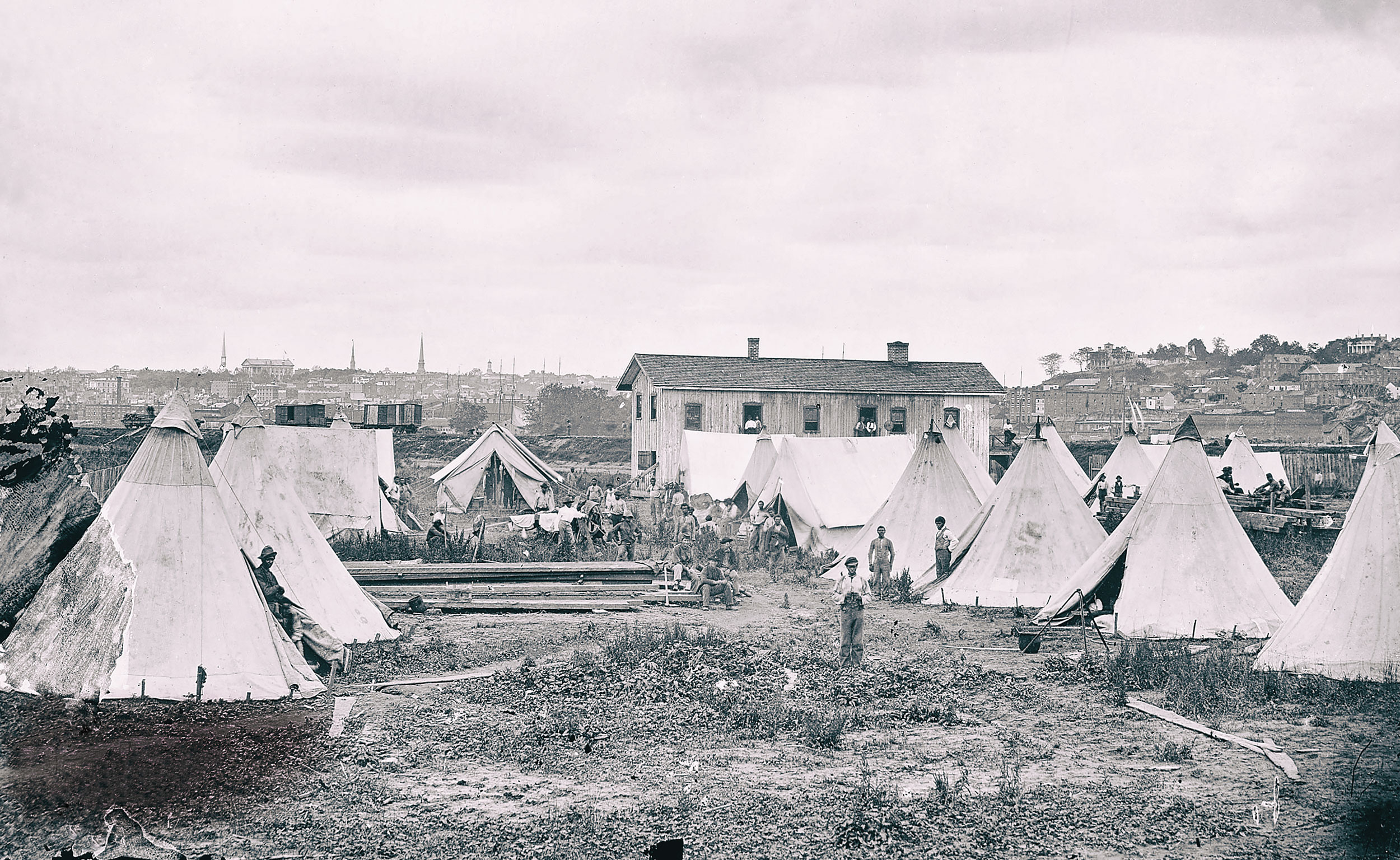
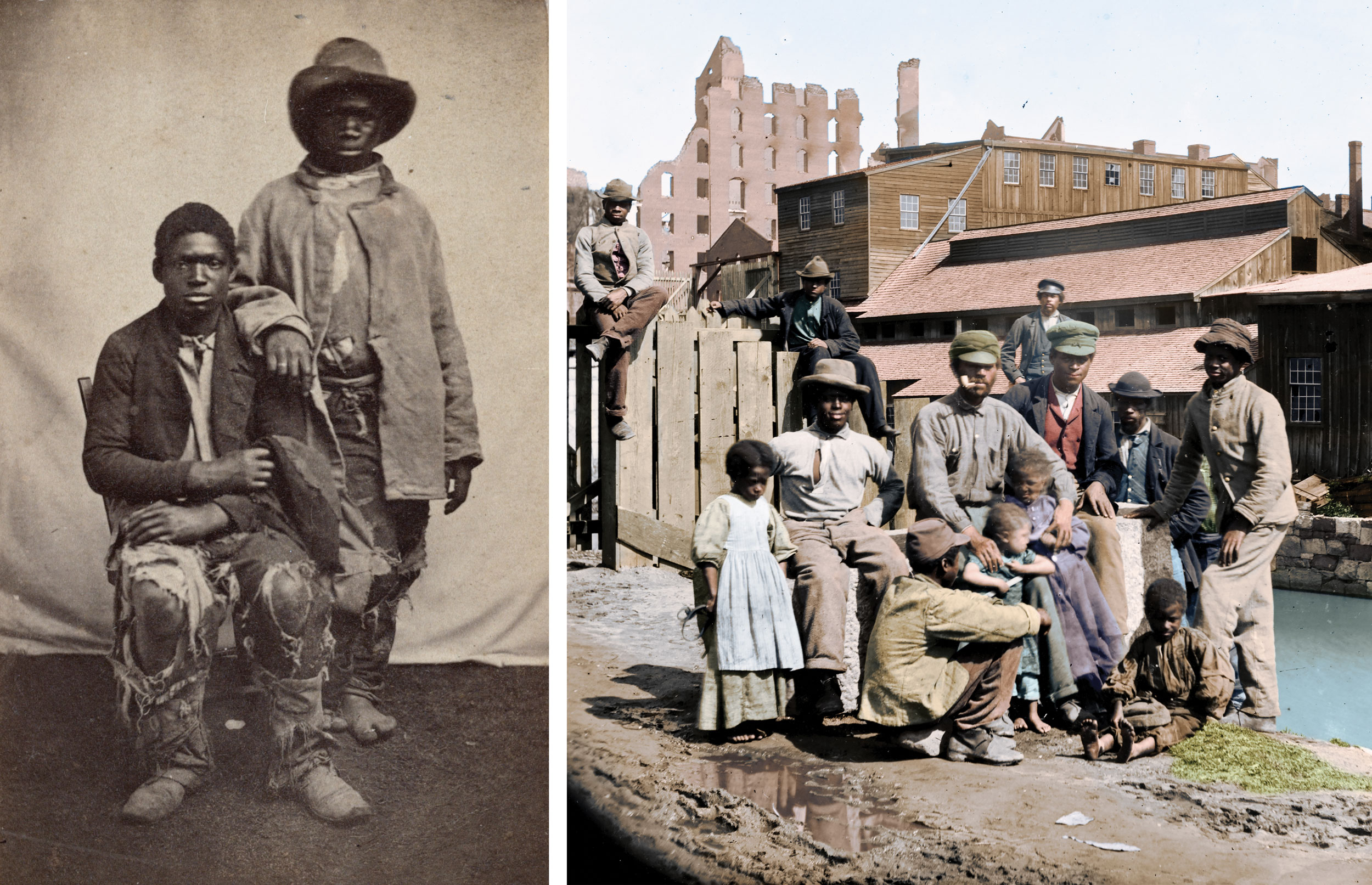
Former slaves mill about the grounds of a “contra-band camp”—one of over 300 such settlements established in Union-occupied regions during the conflict—in Richmond, Virginia, in 1865.
Enslaved people in the Civil War South knew that freedom was not going to come directly or easily to them. It had to be searched for and claimed, no matter the promises of federal policy. The Emancipation Proclamation, so monumental in turning the Union’s war effort toward a decisive battle against slavery, did not free anyone instantly. For any one person to realize the promise of freedom, it would still take a daring escape from slavery and an equally courageous journey along the roads and waterways of the South.
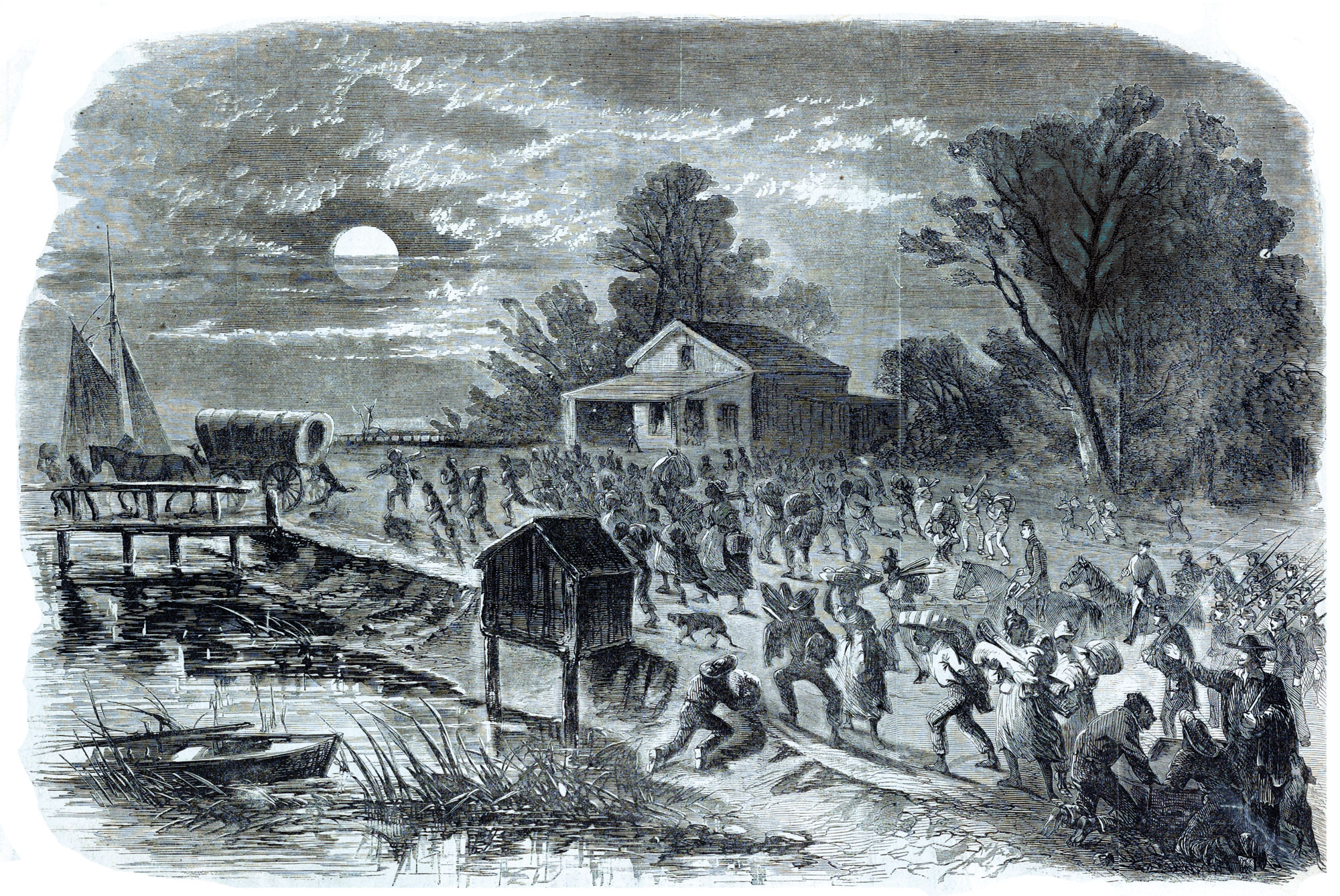
This fact set thousands upon thousands of people in motion during the Civil War—500,000, or one-eighth of the enslaved population, by some estimates. Men, women, and children all set out amid the nation’s most destructive war to find a protected space where they could establish a household and begin living as free people. They set their sights on the lines of the Union army, knowing that protection was waiting if they could just get behind those lines and into a military encampment.1
So they ran and they walked and they boated toward Union army installations in cities like St. Louis and Vicksburg, as well as new encampments that emerged along the coast of Virginia and the Carolinas and down the Mississippi Valley. Under the supervision of the military, escaped slaves set up over 300 new settlements in these Union-occupied regions.2
Some army officials called these “contraband camps,” reflecting the earliest Union policy of May 1861 that admitted enslaved people into Union lines as “contraband” of war. Others called them “refugee camps,” a designation that better captured their inhabitants’ personhood as well as the uncertain status with which they lived.3 Indeed, these freedom-seeking people shared many of the qualities of today’s refugees, as defined by the United Nations: They fled persecution and sought protection in another country, in this case the United States.4 It was not clear until the end of the war whether that protection would result in their long-term freedom; the Union had to win the war to make that happen.
 Harper's Weekly
Fugitives from slavery race toward the safety of Union-controlled Fort Monroe on the southern tip of the Virginia Peninsula in this August 1861 sketch from Harper’s Weekly. In all, some 500,000 African Americans, or one-eighth of the country’s enslaved population, sought protection in Union-occupied regions during the Civil War.
One of the places where these refugees from slavery settled was on a plantation located about 70 miles south of Nashville, in Giles County, Tennessee. Over 1,000 people from across Middle Tennessee, as well as Alabama, Georgia, and Kentucky, descended on this property. By the summer of 1864, they had established a village of 240 newly built houses, and references to what was once “Brown’s plantation” increasingly gave way in Union records to a new moniker, “Tunnel Hill,” which referred to a nearby railroad tunnel.5 The Tunnel Hill camp would be the foundation on which these freedom-seeking people would begin turning their long-anticipated hopes of freedom into a concrete reality.
In 1865 a federal government clerk conducted a census of the residents of Tunnel Hill. In neatly drawn columns indicating their names, ages, former owners’ names, and states of origin, the census listed children ranging in age from one-year-old Ann Owens, who arrived at Tunnel Hill from Alabama, to 17-year-old William Drake from Tennessee. Children were just over half—52 percent—of the population, a proportion consistent with many of the slave refugee camps in the South. Among the adults were their parents as well as the elderly; the oldest was 85-year-old Bethany Jackson, from Alabama. That we know names like hers is striking: This was the first time in their lives that the federal government had acknowledged them by name in a census—a sure sign of their changing status.6
But that recognition did not translate into a smooth path to freedom. The refugees’ hold on land in Tunnel Hill and similar settlements—their claim to a spot of land that would anchor them in freedom—would be essential. It distanced them from their owners and from the Confederacy, and thus from slavery, and it enabled them to build homes and communities that conformed to their visions of freedom. But their claim to the land was never secure in a time of war. The story of Tunnel Hill would instead come to more closely resemble a modern-day refugee crisis than a sudden, triumphant achievement of freedom.
 Library of Congress
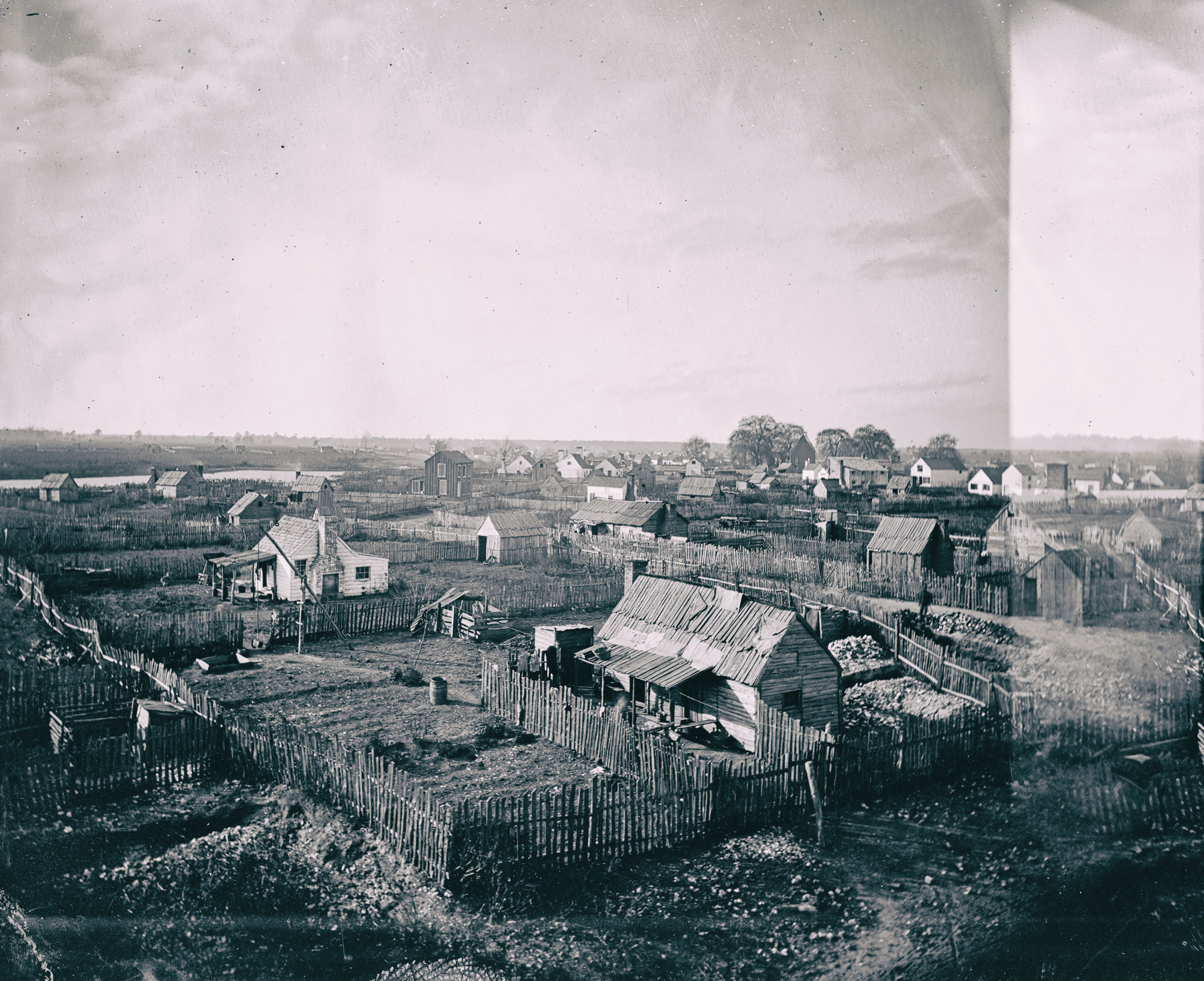
At refugee camps across the South (like the one shown here in Hampton, Virginia), former slaves built homes and established communities, part of their search for new lives in freedom.
Tunnel Hill took root on exactly the sort of plantation that the Confederacy had gone to war to protect. It was a thriving cotton operation before the war, with a real estate value of $115,000 in 1860 dollars. The owner of the land, Thomas J. Brown, had another $152,000 tied up in his personal estate, which included 63 enslaved people. In the years leading up to the war, many of the property’s enslaved laborers planted and picked cotton in the fields, while others worked to remove the fiber’s seeds in the plantation’s gin house.7 The cotton they baled likely made its way to Memphis, and then New Orleans, and then to markets far beyond the South. Each enslaved person on the Brown property was thus a key link in the slave-based cotton economy that appeared threatened by the election of Abraham Lincoln to the presidency.
Their owner felt that threat intimately in late 1860 and early 1861. So did his family. Thomas J. Brown was closely tied to a number of leading proslavery figures in Tennessee. His father-in-law, Gideon J. Pillow, had served as major general of volunteers during the Mexican War and later campaigned actively for proslavery Democratic candidates in Tennessee; by July 1861 Pillow was commissioned a brigadier general in the Confederate army. Brown’s uncle, Aaron V. Brown, had been a Democratic representative in Congress and then governor of Tennessee during the Mexican War, as well as the former law partner of President James K. Polk, who led the nation’s proslavery imperial expansion during the Mexican War.8
It was almost predetermined, then, that Brown’s ties to the proslavery political class, and especially his own personal investment in slavery, would swing his loyalty to the Confederacy. When war came Brown did not enlist in a combat role, but he did sign up as a conscription officer for the Confederacy; he also supported the southern army in other ways, including providing corn and fodder to feed army horses and hiring out at least three of his slaves to work as laborers for the army.9 But that support was not enough to help the Confederates hold off the arrival of the Union army. By late 1862, Union forces had moved in and occupied the southern portion of Middle Tennessee, a moment that forced Brown and his wife, Mary, to flee south. They resettled in Macon, Georgia.10
It is not known if the Browns took any enslaved people with them. But some of them did remain behind on the plantation, according to the 1865 census, including a five-year-old girl named Elvira, a 32-year-old man named Horace, and a 50-year-old woman named Litha.11 These individuals would witness a dramatic sequence of events over the course of 1863 that would transform the former slave plantation into an encampment of freedom. They would witness an alteration of the landscape that to some people was an act of poetic justice—but to others a “spice of spitefulness,” as a Confederate surgeon residing on a nearby property put it.12
It did not matter that the Emancipation Proclamation officially exempted Tennessee when it was issued in January 1863. Thanks to other federal policies, in particular an article of war passed by Congress in March 1862 that prohibited Union soldiers from returning fugitive slaves to their owners under penalty of court-martial, Union lines were open to any man, woman, or child who could get themselves safely there.13 And enough arrived over the course of 1863 that by January 1864 the Union appointed a “Superintendent of Contrabands” to oversee the affairs at Tunnel Hill as well as three nearby refugee settlements, in Pulaski and Hendersonville, Tennessee, and Decatur Junction, Alabama. Lieutenant J.W. Harris of the 57th Illinois Infantry assumed the position after having previously worked in a slave refugee camp at Corinth, Mississippi.14
Harris’ job was vast—to oversee both the hiring of refugees to work for the army, as well as the provision of food rations, shelter, and medical care to all who came inside Union lines. (Other forms of relief, such as clothing, would be the purview of civilian relief organizations.) It was not the sort of task for which the army was prepared at the outset of the war, and officials like Harris often had to improvise means of acquiring and paying for the relief that the refugees so desperately needed. Harris managed to hit on an idea for making it work: He ordered the collection of all the harvested cotton abandoned by the Confederates on the plantations where refugees were settling. The cotton was then sold, raising $9,000 to pay for all the food and supplies.15
The people, meanwhile, got to work. Men deemed physically “able” enlisted in the Union army, even if they did not want to—impressment, as one Union report conceded, was frequently relied upon in this region and “very little respect was paid to the negro’s preference, for, or against, the service.”16 Those who did not enlist found employment as regimental cooks and as personal servants for army officers; others remained at Tunnel Hill to work the 1,000 acres of cotton, 200 acres of corn, and the three vegetable gardens planted in 1864.17 It is not clear if consistent wages were paid; throughout the South the Union army became notorious for promising, but not paying, wages to refugee laborers.18
There were other signs that local Union officials viewed their freedom in more narrow terms than the refugees did. Lieutenant Harris, hearing from nearby planters who professed to be loyal that they needed labor for the coming season, tried to push the refugees out of Tunnel Hill and onto local plantations, with the promise that he would negotiate contracts to pay them wages or a share of the crop. “But few complied,” one report noted, and “moral suasion failed to drive many out of camp.”19 The prospect of returning to a plantation was too risky and too disheartening for a refugee from slavery to consider.
There was good reason for them to stay at Tunnel Hill too. The residents of this and of the other camps across the South wanted nothing more than to begin building new, free lives. Besides constructing houses, they set about creating independent black churches; teaching themselves to read and write, with the assistance of newly arrived northern teachers from Indiana and Illinois; and enjoying the freedom to marry and have children without the threat of the slave trade pulling them apart.20 In places far removed from active combat, these settlements grew so large that they effectively became towns, laid out with streets and parks. Others, like Tunnel Hill, remained closer to the hostilities, which meant that their stability remained an open question.
This was war, after all. And as the Tunnel Hill residents would soon learn, the rhythms of war can change quickly—and with it, one’s prospects for the future.
 Library Of Congress (Colorized by Mads Madsen/Colorized History)
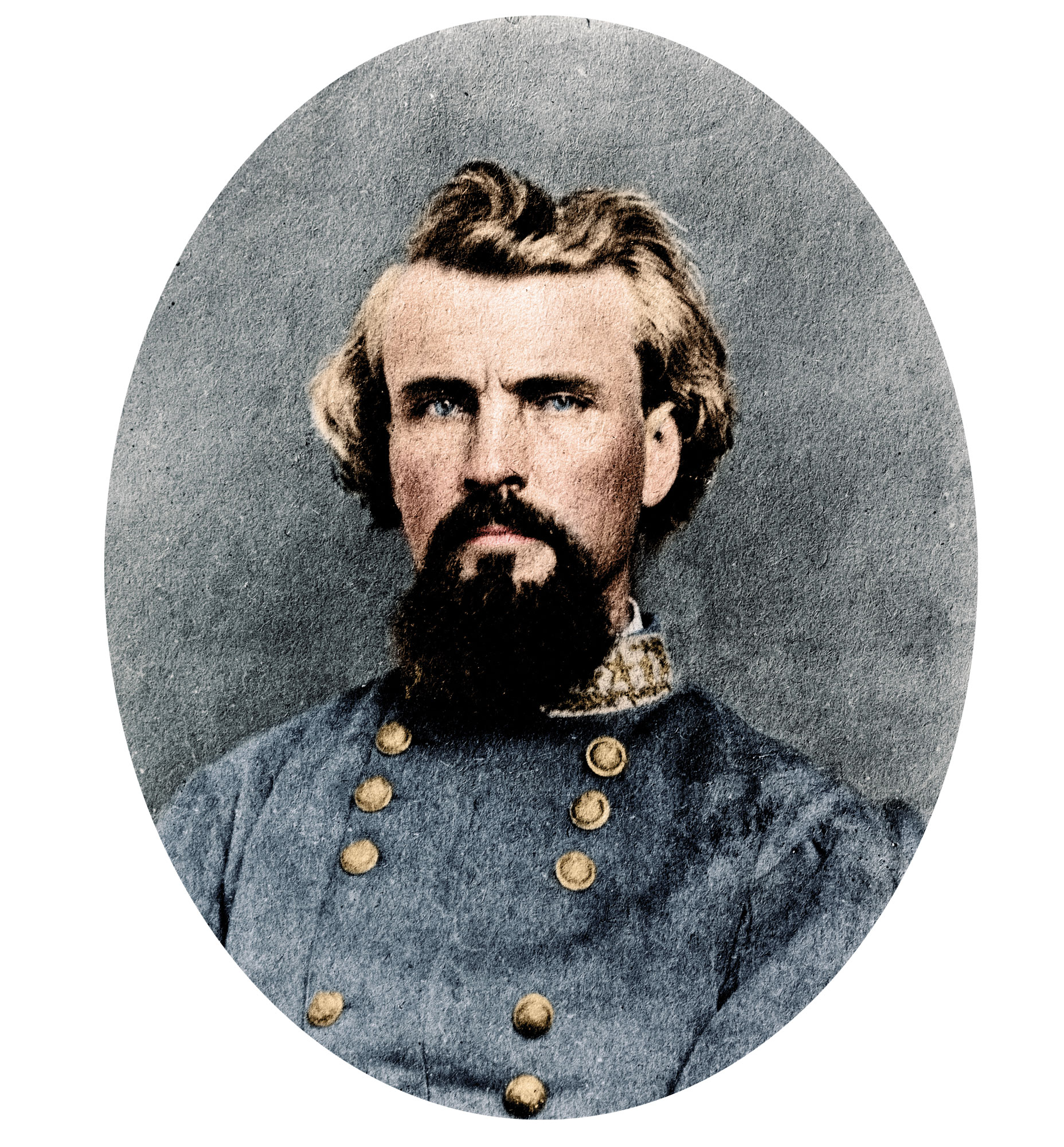
General Nathan Bedford Forrest
In late September 1864 word came that Confederates were approaching, though the news arrived so quickly that there was little time to get out of the way. Then came Confederate general Nathan Bedford Forrest and the roar of his cavalry of 6,000 to 7,000 men.21 The Rebels had been tearing through northern Alabama and into Middle Tennessee that month, successfully targeting the Union railroads and supply depots that supported Union general William T. Sherman’s progress toward Atlanta. After forcing the surrender of a Union fort near Elkton, Tennessee, Forrest and his men continued north toward Pulaski—and along their path sat the Tunnel Hill camp.22
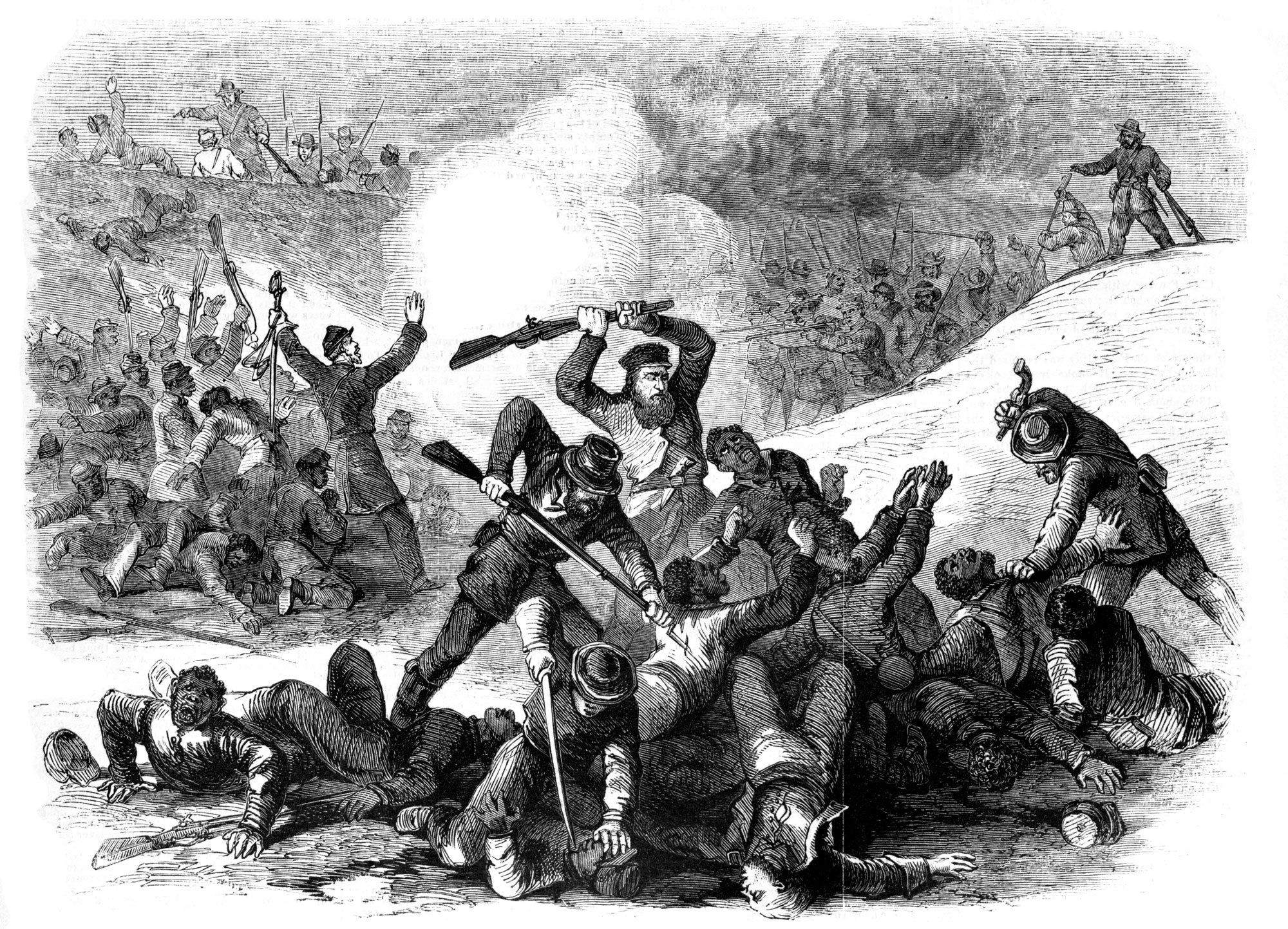
The refugees had every reason to be fearful. Just five months before, at Fort Pillow in western Tennessee, Forrest and his men had turned a battle into a racial massacre, opening fire on the black Union soldiers who had already surrendered and killing nearly 200 of them.23 Maybe the residents of Tunnel Hill had not yet heard about Fort Pillow—but they did know they were largely on their own to meet Forrest’s men. Military records suggest that the Union troops guarding their camp were outnumbered and retreated quickly, leaving the nearly 1,300 black men, women, and children who remained to confront the Confederates with basically no protection.24
Forrest and his men captured Tunnel Hill quickly. According to a Union report, the general then “ordered them [the refugees] to take their things out of the houses”—which likely referred to the few clothes they had stockpiled, along with personal possessions such as cooking implements, children’s toys, Bibles, and bedding. The Confederate troops “did nothing to injure” the people themselves, the report conceded, though they seized the possessions and “set fire to, and burned up the negroes clothing and stuff.” Even more devastatingly, Forrest’s men torched every last one of the 240 houses recently built by the refugees.25
 Frank Leslie's Illustrated Newspaper
Five months after his men massacred African-American troops who had surrendered at Fort Pillow (depicted above in a sketch from Frank Leslie’s Illustrated Newspaper), Confederate general Nathan Bedford Forrest (opposite page) captured the refugee camp at Tunnel Hill. His men set fire to the residents’ possessions and houses, dealing a serious blow to their recent progress toward freedom.
The Tunnel Hill camp was left in ruins. It marked a shattering turn for those who saw their freedom taking shape in those houses. No firsthand accounts of their reactions have survived, but it takes little imagination to understand what they must have been thinking. How would they shelter and feed themselves? Where should they go? Could they still secure any freedom in Tennessee? Their shelter had become their anchor in Union lines—but that anchor had been lifted and all of their progress toward freedom set adrift in a matter of minutes.
Which must have been Forrest’s goal. There was no military advantage to burning down the houses: Although the Confederates had seized a commissary warehouse at the site, one that allowed Forrest to provide sugar, coffee, and “several days’ rations” to his men, no such provisions were taken from the refugees’ houses. It did not give his troops any material or strategic advantage, and it did not hurt the Union militarily (except to demoralize black troops, if they got word of their families’ plight). General Forrest himself described his actions as having “burnt up this den of wretchedness”—as if he had cleaned up something unsightly on the Tennessee landscape. But what he called “miserable hovels” were to the refugees newly built homes, betraying his skewed and racist beliefs that associated blackness with dirt (or as he put it, “the negroes were all ragged and dirty”).26
The burning of Tunnel Hill was not an exceptional moment in the life of a refugee settlement. Across the occupied South, refugee camps became frequent targets of racial violence, ranging from attacks on emerging leaders, to the sexual assault of women, to the destruction of an entire camp. Some of the worst, most pervasive violence came at the hands of Confederate guerrillas in the Mississippi Valley in the last year of the war, as Union forces shifted east and left the valley and its camps without adequate protection. “There is scarcely one of them all which has escaped guerrilla atrocities,” railed the superintendent overseeing all refugee affairs in the region, in his yearly report to the adjutant general.27 To Confederates, the camps embodied the social revolution that they had gone to war to prevent. To destroy a camp was to stop emancipation in its tracks.28
But the reality was far more complex, for although a camp’s destruction set back the journey to freedom in a significant way, it could never extinguish the underlying desire to be free. As long as refugees avoided being kidnapped back into slavery and kept themselves alive in the weeks and months afterward, there was a chance that a camp could be rebuilt. And at Tunnel Hill, since most of the people remained behind after Forrest’s men moved on, by November 1864 the prospect of rebuilding seemed promising.29
The future of Tunnel Hill would have remained hopeful had Confederate general John Bell Hood not entered the scene. That same month, Hood led a campaign north through Tennessee in an attempt to distract Sherman’s troops and pull them out of the Deep South. As Hood’s army of 20,000 men thundered into the southern part of the state and began moving north, the outnumbered Union troops fled from Giles County and other parts of Middle Tennessee and moved to maintain the Union’s hold on Nashville.30 This left the refugee camps at Tunnel Hill and other spots in Middle Tennessee unprotected once again.
This time the refugees took flight. Some scattered into the nearby countryside, while “1500 fell in with the army on its retreat to Nashville,” according to one Union report. A large caravan of refugees began winding its way toward the city. Some loaded themselves into available space in supply train wagons, “many children and sick persons” were placed on board 200 animals made available by the army quartermaster, and most others walked the entire way.31 Soldiers in the 73rd Illinois Infantry who witnessed the scene described how “old and crippled men and women hobbled along with their loads,” while “small children followed along, many of them bare-footed.”32 The caravan gained numbers as it moved, attracting enslaved people who found an opportunity to escape for the first time. But it also lost some refugees, as one report noted that “many died of exposures and fatigue on the road.” A total of 2,000 men, women, and children eventually made their way into Nashville in mid-December.33
Harrowing conditions awaited them. A two-day battle that erupted in the city just after their arrival ended in a Union rout that sent the Confederates retreating into Mississippi.34 The city was also crowded: At least 15,000 other refugees had already taken up residence in burned-out buildings and makeshift shanties. Little space remained for the Tunnel Hill arrivals, who were ushered into an army barracks. The situation there quickly became intolerable—and even life-threatening.35
“The barracks they occupy are lined with vermin,” a Union commander wrote in complaint to the military governor of Tennessee, Andrew Johnson, on December 20. “I found six dead bodies…. Some having been dead two days and no effort made to bury them.”36 Another officer observed that “The stench arising from the excrement & urine in and around their quarters was intolerable even in the coldest weather.” Worse, women had been singled out for sexual assault. “The officers and other white men in charge of them selected mulatto women with whom they were in the habit of sleeping,” he continued, “thus demoralizing instead of bettering the condition of these truly unfortunate people.”37 It was an unsustainable situation. The governor ordered an internal investigation—but it led to denials from the officers in charge, and little came of it.38
Still, there was reason for the refugees to have some hope. In early January came a state convention that approved a constitutional amendment abolishing slavery in Tennessee—offering reassurance that the Union would protect their legal freedom.39 Then came the Nashville officials’ decision to relocate the refugees, moving them out of the insufferable barracks and onto a farm located northeast of the city. The new settlement near the town of Hendersonville was known as “Donelson farm” and housed 900 people by early February.40
Some, but not all, of the Giles County refugees went to Donelson farm. The rest exercised a power that they never had while in slavery and either resisted the move or chose to go elsewhere. Some likely remained in Nashville, since cities were among the most desired destinations for refugees across the South. Urban spaces including Memphis, New Orleans, and Vicksburg may have been crowded, but that had its advantages—there was safety in numbers, as well as the likelihood of finding someone who might have information to help them locate long-separated family members. A greater concentration of churches, schools, and jobs were a draw as well.41
But Tunnel Hill also exerted its own pull—once again. By early 1865 dozens had returned and the settlement began to rise one more time, with 465 people living there by August 1865. Among them were 16 people once owned by Thomas J. Brown.42 They had already witnessed two rounds of Confederate attacks on the property, and still they returned—but why?
Maybe it was because the military situation in the region had cooled again, especially with the surrender of Confederate forces at Appomattox, Virginia, in April 1865. They may also have been aware that the new Freedmen’s Bureau, established by Congress in March 1865, was setting up a field office in nearby Pulaski and was committed to extending the army’s wartime protection of formerly enslaved people. The bureau would provide food rations and physical protection, along with assistance in gaining wage-paying employment and setting up schools.
They may also have maintained, like so many other freedom-seeking people, an attachment to the land—not based on any sort of nostalgia for their slave past, but for the people and the families who had lived and supported them there. They may have hoped to turn what was once a village of 240 houses into a permanent town or even a city for freed people. As residents of another refugee settlement in Virginia explained, “We are anxious and willing to build up a city upon our lands,” one that would be “as orderly, as prosperous, as religious, as patriotic, and as intelligent as could be done by any other people.”43
Their connection to the land also may have been based on a sense of right. They had been loyal to the Union during the war. Shouldn’t this land, abandoned by the Confederate Thomas J. Brown and now in Union hands, be available to them to rent or purchase? Shouldn’t all the abandoned and confiscated land now in Union possession—a total of over 800,000 acres across the South by war’s end—be kept out of the hands of disloyal Confederates and made available to freedpeople? Residents of other refugee camps thought so.44 “Are not our rights as A free people and good citizens of these United States To be considered,” declared those living on Edisto Island, South Carolina, “before the rights of those who were Found in rebellion against this good and just Goverment [sic].”45
 Both Library Of Congress (Colorized by Mads Madsen/Colorized History)
The status and security of refugees from slavery (some of them pictured above) remained precarious even after war’s end, when ex-Confederates were able to repossess their lands from a forgiving President Andrew Johnson and organizations like the Ku Klux Klan emerged to suppress African-American progress.
There was plenty of support in Congress for this argument, especially among Radical Republicans, and even among some military commanders like General Sherman, who ordered the land the Union army had confiscated along the South Carolina, Georgia, and Florida coasts subdivided and distributed among freedpeople (the so-called “40 acres and a mule” plan).46 But, crucially, that support was not shared by the new president, Andrew Johnson, who fatefully issued an Amnesty Proclamation in May 1865 that promised former Confederates “restoration of all rights of property, except as to slaves” after they took an oath of loyalty to the Union.47
It should not have been surprising that the antebellum owner of the Tunnel Hill land, Thomas J. Brown, would take advantage of Johnson’s generosity. After taking the oath, he wrote directly to the president, requesting “your Exalancy [sic] to grant him Pardon & Amnesty.”48 (This direct appeal was a step Johnson required of the largest landowners and highest-ranking Confederate officials.) Johnson, a fellow Tennessean who may have known Brown and his Pillow in-laws before the war, quickly granted the pardon. “Thomas J. Brown,” reported one newspaper, “has been pardoned by the President. A fine farm in Giles County, Tennessee, which had been seized for confiscation, has been returned to him.”49
That account made the transaction sound like a clean legal transfer, but to the residents of Tunnel Hill it was a devastating betrayal. It fell to Freedmen’s Bureau official Clinton B. Fisk, headquartered in Nashville, to close the Tunnel Hill settlement, which he was ordered to do in August 1865.50 It took him four months to get the job done, though the record is silent on why. Maybe the residents’ resistance played a role: In other refugee settlements across the South, freed people held public meetings, pooled savings to hire lawyers, and appealed to members of Congress in desperate attempts to forestall a camp’s closure. Rarely was this successful—only settlements on lands previously owned by the most conspicuously treasonous Confederates, Robert E. Lee and Jefferson Davis, remained intact. The rest were forcefully shut down within two years of the war’s end.51
Three times a camp for freed people arose at Tunnel Hill—and yet the settlement disappeared once and for all by December 1865. Donelson farm, where some of the Tunnel Hill refugees had gone months before, was also returned to its antebellum white owner by that same month.52 The freed people then set out on the road again, some to Nashville and others to surrounding lands owned by former Confederates, where they would struggle to earn a livelihood alongside white people hostile to their freedom.
They dispersed across the Tennessee countryside just as another group was coming together—one that would ensure that nothing like the Tunnel Hill settlement ever rose again. It was in mid-1866 that a group of Confederate veterans founded the Ku Klux Klan in Pulaski, Tennessee. The most powerful terrorist organization devoted to protecting white supremacy and suppressing black progress emerged only eight miles down the road from the Tunnel Hill site.53
The Klan’s origins in Giles County, and its subsequent reign of terror, are well known today. That history has left an imprint on Americans’ historical memory that dwarfs any recollection of what happened in the slave refugee camps like Tunnel Hill. The refugees’ housing disappeared, the people dispersed, and few to no traces remain on the landscape to remind us of those first steps to freedom. But these Civil War settlements deserve remembrance today, if only to remind us that the Klan’s reign was not inevitable. Something else was possible in the 1860s—and it was glimpsed by each resident of Tunnel Hill.
An African-American man sits outside a Civil War-era military tent with equipment around him.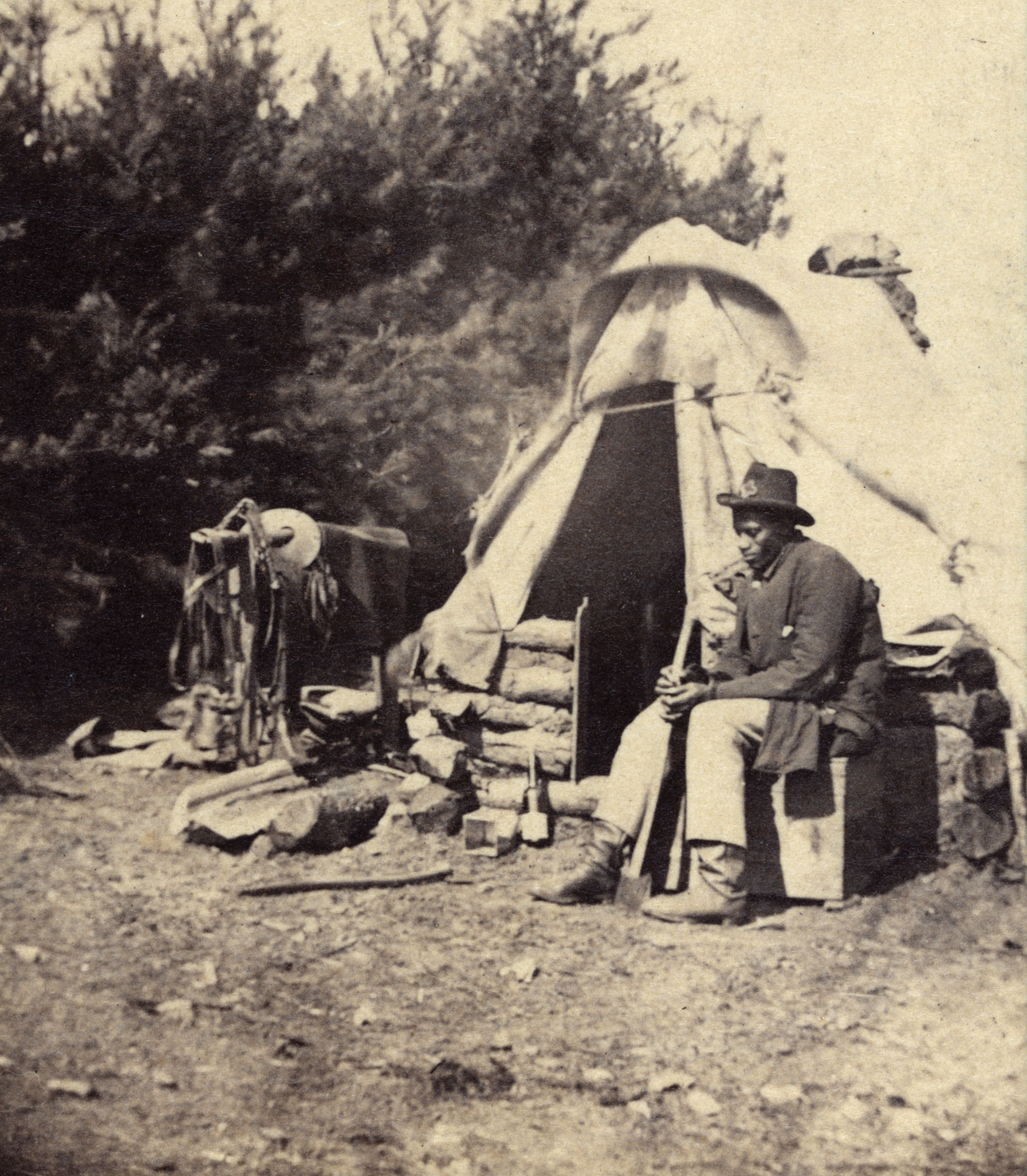 Library of Congress
You’re in the Army Now
The Union’s impressment of black men around Tunnel Hill was not an isolated incident. At various times throughout the war, the northern army exerted force to compel black men to fill the ranks of its laborers—and sometimes, its soldiers. In some cases local officers were acting without the consent of their superiors. But impressment orders also came directly from Secretary of War Edwin Stanton, whose staff once wrote to Quartermaster General Montgomery Meigs that “[i]f it be necessary or expedient to impress the contrabands the necessary authority will be given.” Stanton followed up that statement with an order authorizing the impressment of 1,000 black men in Virginia in the summer of 1863.1
The Union did have legitimate needs for manpower. But its resort to impressment was also driven by racist assumptions that black men could—and should—be made to labor under the compulsion of white men. Yet the men, newly freed from slavery, frequently resisted: They were determined to push back against a practice that bore resemblance to the coercion of bondage. They also feared being separated from their family members, since in many cases impressment meant being sent long distances to work on the Union’s defenses or to join a regiment. The men remained loyal to the Union—but, as freed people, they wanted to exert the power to decide when and how to serve its army. Some fled in order to elude the authorities trying to impress them, while others appealed their case up the army’s chain of command.
The forced enlistment of men from Norfolk and Portsmouth, Virginia, to serve in the 10th USCT drew some of the most severe resistance. In late 1863, the men targeted for impressment took their case to local missionaries and to the superintendent of negro affairs, who launched an investigation. The men then told investigators about being confined in the guard house, and about being forced to “tote the ball from one oclock P.M. till nine or ten” (referring to a cannonball that weighed over 30 pounds) until they agreed to enlist. Some reported being driven “to the point of the Bayonet,” while another was told by a local recruiting officer that “you shall go now, or I will blow your brains out.”2 The investigation led the commanding general in the region, General Benjamin Butler, to put a stop to impressment, noting that it was “hindering recruiting and spreading distrust and alarm among the negroes.” He also ordered that the officer directing the impressments be “dismissed [from] the service.”3 Incidents like this were just one of the ways in which the Union army, though committed to fighting for freedom in the abstract, struggled to incorporate that principle into its everyday operations.
Amy Murrell Taylor is Associate Professor of History at the University of Kentucky and the author of Embattled Freedom: Journeys Through the Civil War’s Slave Refugee Camps (University of North Carolina Press, 2018) and The Divided Family in Civil War America (University of North Carolina Press, 2005).
Notes
1. I explore the general history of Civil War refugees from slavery more fully in Amy Murrell Taylor, Embattled Freedom: Journeys through the Civil War’s Slave Refugee Camps (Chapel Hill, 2018).
2. Ibid., 5–6.
3. Benjamin F. Butler to Winfield Scott, May 24, 1861, Benjamin F. Butler Papers, Library of Congress; Taylor, Embattled Freedom, 3–4, 9–10.
4. “What is a Refugee?” USA for UNHCR, unrefugees.org/refugee-facts/what-is-a-refugee/ (accessed October 21, 2016).
5. Lieutenant James Nesbitt to Brevet Major General Fisk, December 16, 1865 (hereafter Nesbitt to Fisk), in Ira Berlin, et.al., Freedom: A Documentary History of Emancipation, Series I, Volume II: The Wartime Genesis of Free Labor: The Upper South (Cambridge, 1993), 474–477. Thank you to Kelly Hamlin, executive director of Wolf Gap Education Outreach, Pulaski, Tennessee, for insights on the “Tunnel Hill” name.
6. “Report of the Number of Freedmen In Camp of Tunnel Hill, Tenn, Aug. 30th, 1865,” Record Group 105: Records of the Bureau of Refugees, Freedmen, and Abandoned Lands, 1861–1879, M999: Records of the Assistant Commissioner for the State of Tennessee, Reel 7, National Archives and Records Administration (NARA).
7. 1860 United States Federal Census, Population and Slave Schedules, Giles County, Tennessee, Provo, Utah: Ancestry.com Operations Inc., 2009, 2010; Nesbitt to Fisk, in Berlin, et.al., Freedom, 476.
8. Thomas J. Brown married Mary Amanda Pillow, a daughter of Gideon J. Pillow. “The Lewis Brown Family,” Giles County Historical Society Bulletin, October 9, 1977, 3–5, 18.
9. His position is described as “conscription officer” in Sydney Morning Herald, December 20, 1865; Confederate Citizens File: Thomas J. Brown, M346, Record Group 109, War Department Collection of Confederate Records, NARA.
10. Nathaniel Cheairs Hughes Jr. and Roy P. Stonesifer Jr., The Life and Wars of Gideon J. Pillow (Chapel Hill, 1993), 295–296.
11. “Report of the Number of Freedmen In Camp of Funnel Hill, Tenn, Aug. 30th, 1865.”
12. Dr. Samuel H. Stout, M.D., “Some Facts of the History of the Organization of the Medical Service of the Confederate Armies and Hospitals, Part XIII,” Southern Practitioner 24 (1902): 622–623. Thank you to Kelly Hamlin for sharing this source with me.
13. Taylor, Embattled Freedom, 58–60.
14. Nesbitt to Fisk, in Berlin, et.al., Freedom, 475–477; Lieutenant J.W. Harris to General Lorenzo Thomas, June 15, 1864, ser. 363, Letters Received by General Lorenzo Thomas, Record Group 94, Records of the Adjutant General’s Office (AGO), NARA.
15. Nesbitt to Fisk, in Berlin, et.al., Freedom, 474–475.
16. Ibid., 474.
17. Lieutenant J.W. Harris to Colonel J.B. Weaver, May 10, 1864, ser. 363, Letters Received by General Lorenzo Thomas, Record Group 94, Records of the AGO, NARA.
18. Taylor, Embattled Freedom, 37–46.
19. Nesbitt to Fisk, in Berlin, et.al., Freedom, 474–475.
20. The arrival of northern teachers and missionaries in the region is discussed in John Cimprich, Slavery’s End in Tennessee, 1861–1865 (Tuscaloosa, 1985), 54–55.
21. Report of Major General L.H. Rousseau to Major General George H. Thomas, September 29, 1864, United States War Department, The War of the Rebellion: A Compilation of the Official Records 129 vols. (Washington, 1880–1901), Vol. 39, Ch. LI, Part I, 506 (hereafter OR).
22. Report of N.B. Forrest, October 17, 1864, OR, Ch. LI, Part I, 542–545.
23. Cimprich, 92–96; Earl J. Hess, The Civil War in the West: Victory and Defeat from the Appalachians to the Mississippi (Chapel Hill, 2012), 234–235.
24. Population figure from Lieutenant J.W. Harris to Colonel J.B. Weaver, May 10, 1864, ser. 363, Letters Received by General Lorenzo Thomas, Record Group 94, Records of the AGO, NARA.
25. Nesbitt to Fisk, in Berlin, et.al., Freedom, 476.
26. Report of N.B. Forrest, October 17, 1864, OR, Ch. LI, Part I, 545.
27. Report of the General Superintendent of Freedmen, Department of the Tennessee and State of Arkansas, for 1864 (Memphis, 1865), 53.
28. Taylor, Embattled Freedom, 129–133.
29. Nesbitt to Fisk, in Berlin, et.al., Freedom, 476.
30. Hess, Civil War in the West, 252–254.
31. Nesbitt to Fisk, in Berlin, et.al., Freedom, 476.
32. A History of the Seventy-Third Regiment of Illinois Infantry Volunteers (1890), 395. Thank you to Kelly Hamlin for sharing a transcription of this source with me.
33. Nesbitt to Fisk, in Berlin, et.al., Freedom, 476.
34. Hess, Civil War in the West, 256–257.
35. Cimprich, Slavery’s End in Tennessee, 46–47, 52; Captain R.H. Clinton to Brigadier General Andrew Johnson, December 20, 1864, in Berlin, et.al., Freedom, 458–459; “Report of a Committee on Freedmen to Friends’ Board of Control, Representing the Associated Yearly Meetings of the West, for the Relief of Freedmen,” January 10, 1865, in Friends Review, April 29, 1865.
36. Captain R.H. Clinton to Brigadier General Andrew Johnson, December 20, 1864, in Berlin, et.al., Freedom, 458.
37. Lieutenant S.V. Clevenger to Brigadier General Andrew Johnson, December 28, 1864, in Berlin, et.al., Freedom, 459–460.
38. See annotation, Berlin, et. al., Freedom, 459.
39. Cimprich, Slavery’s End in Tennessee, 114–116.
40. Nesbitt to Fisk, Berlin, et.al., Freedom, 476–477.
41. Taylor, Embattled Freedom, 80–82.
42. “Report of the Number of Freedmen In Camp of Funnel Hill, Tenn, Aug. 30th, 1865.”
43. “Can the Freedmen Take Care of Themselves?” True Southerner, November 24, 1865.
44. Claude F. Oubre, Forty Acres and a Mule: The Freedmen’s Bureau and Land Ownership (Baton Rouge, 1978), 37.
45. Henry Bram, et.al., to the President of the United States, October 28, 1865, in Steven Hahn, et.al., Freedom: A Documentary History of Emancipation, Series 3, Volume 1: Land and Labor, 1865 (Chapel Hill, 2008), 442–444.
46. Oubre, Forty Acres, 46–71; LaWanda Cox, “The Promise of Land for Freedmen,” Mississippi Valley Historical Review 45 (December 1958): 413–440.
47. Hahn, et.al., Freedom, 399–400.
48. Thomas J. Brown to Andrew Johnson, [undated], M1003, Confederate Amnesty Papers, NARA, fold3.com (accessed January 22, 2019).
49. Sydney Morning Herald, December 20, 1865.
50. Samuel Taggard to Clinton B. Fisk, August 19, 1865, M999, Reel 7, Frame 0025, NARA.
51. Taylor, Embattled Freedom, 209–238.
52. See annotation, Berlin, et.al., Freedom, 477.
53. Elaine Frantz Parsons, Ku-Klux: The Birth of the Klan During Reconstruction (Chapel Hill, 2015), 27–41.
Sidebar: You’re in the Army Now
1. Brigadier General D.H. Rucker to M.C. Meigs, Washington, D.C., June 8, 1863, ser. 225, Consolidated Correspondence File: “Contrabands,” Record Group 92, Records of the Office of the Quartermaster General, NARA; C.P. Day to Rev. Jocelyn, July 8, 1863, reel 206, American Missionary Association Archives.
2. Testimony of Joseph Webb, Frank Shepard, and Moses Reddick, undated, reel 114, M1913, Virginia Pre-Bureau Records, Record Group 105, Records of the Bureau of Refugees, Freedmen, and Abandoned Lands, NARA.
3. General Order No. 4, by command of Major General Benjamin Butler, January 9, 1864, ser. 5078, General Orders Issued, Department of Virginia and North Carolina, Record Group 393, Pt. 1: Records of the United States Army Continental Commands, NARA.
Related topics: African Americans, emancipation, slavery