 Harper's Weekly
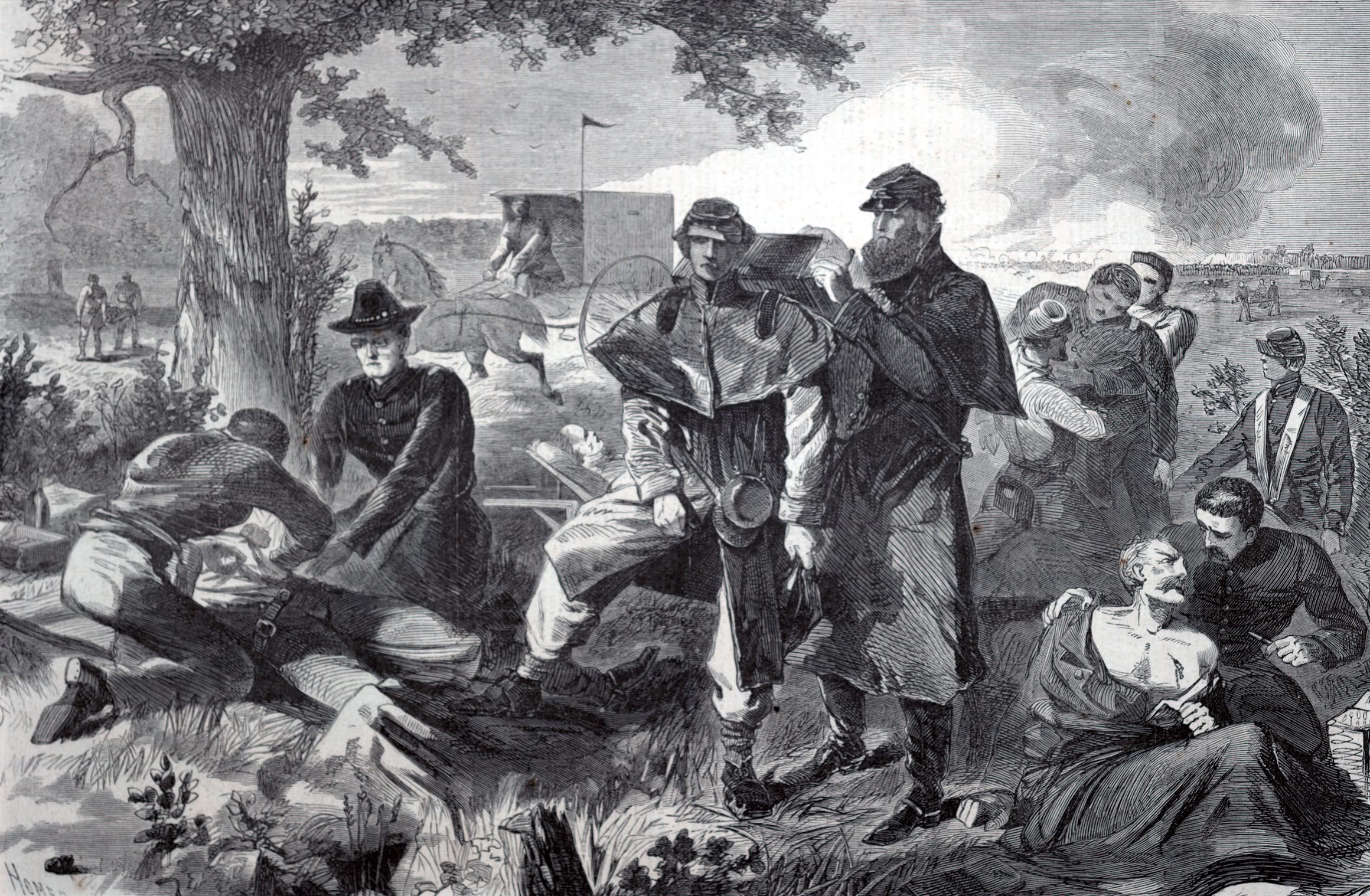
This Winslow Homer illustration, titled “The Surgeon at Work at the Rear During an Engagement,” appeared in the July 12, 1862, issue of Harper’s Weekly.
At the beginning of the Civil War, Charles H. Stubbs of Fulton, Pennsylvania, began the study of medicine that would see him graduate from Jefferson Medical College in 1863. While still a student, Stubbs secured an appointment as a “medical cadet” from Surgeon General William A. Hammond and joined the staff of the hospital ship Louisiana. After his graduation, he served as assistant surgeon of the 40th Pennsylvania Infantry as well as on the staff of the Mower U.S. Army General Hospital in Philadelphia.
In 1862, Stubbs penned the following letter to the editors of the Philadelphia-based journal The Medical and Surgical Reporter in which he offered suggestions for military surgeons—both established and, like himself, future—on how to deal with the challenges associated with Civil War wounds. It’s published in full below.
Fulton, Lancaster County, Pa.
April 25, 1862.
In these days of human age, when the telegraph brings to us, daily, the news of numerous battles fought in various sections of our country, it becomes a matter of special interest to the medical profession at large, to learn in what manner our brave troops suffer the most in those bloody engagements. Have all our dead perished in an instant? Are they all blown to atoms by the huge cannon-ball or the bursting shell? Are they all killed outright by the swift-flying rifle-bullet entering some vital part of the body; or do many of them die on the battle-field, long before assistance can be rendered them by the surgeon, from hemorrhage incident to wounds inflicted by these missiles of modern warfare?
These are questions worthy of thought, and deserving the attention of every one having the least interest in the lives of the thousands now battling for the precious rights of freemen, and the re-establishment of our once glorious Union.
 Frank Leslie's Illustrated History of the Civil War (1895)
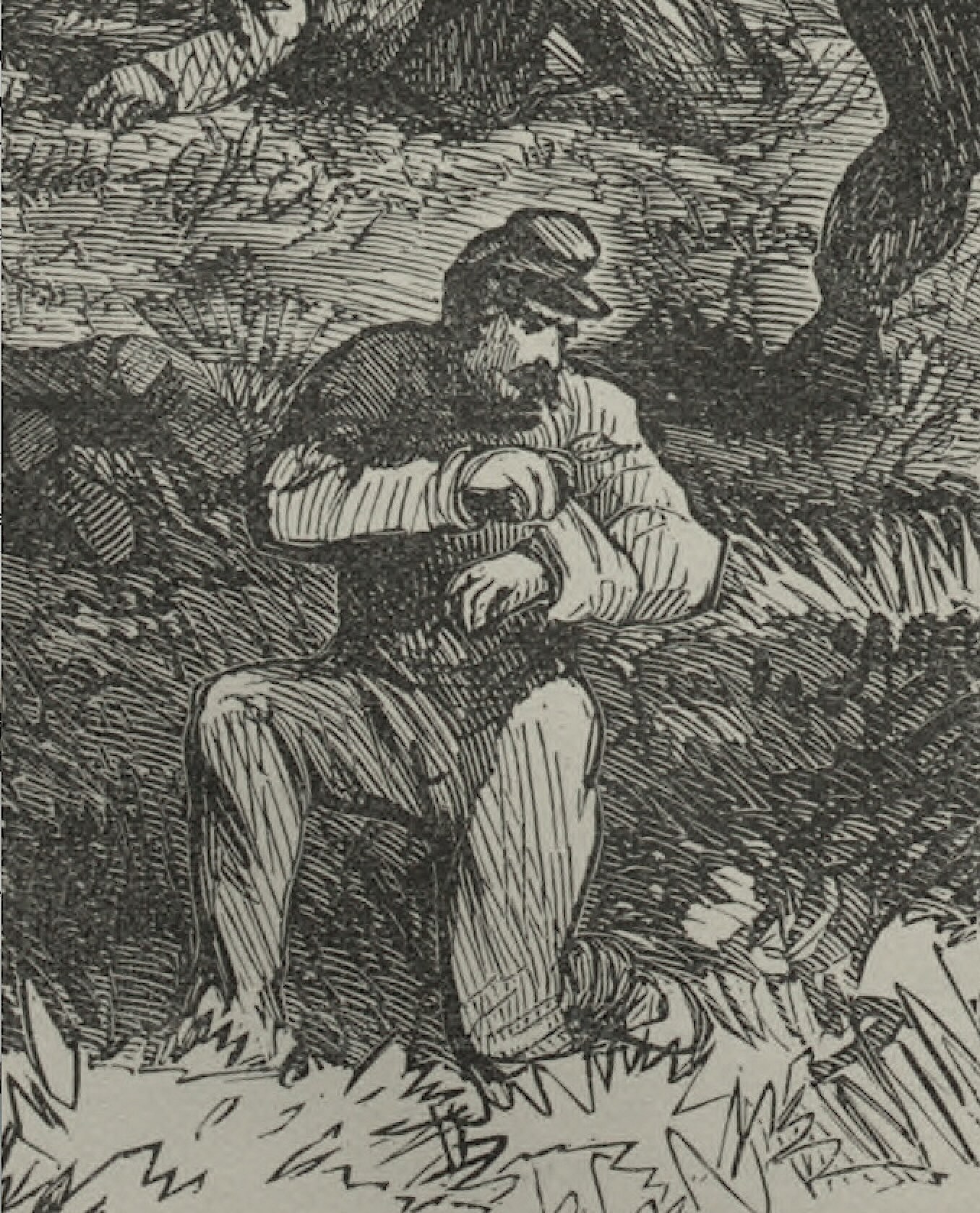
A Union soldier is depicted binding his own wound during the Battle of Fort Donelson in a wartime illustration.
That many of our brave soldiers have been killed instantly, or wounded mortally, in our engagements with the rebels, no one will deny. It is also equally true that hundreds have died on the battle-field (they having no medical assistance), from simple hemorrhage from wounds which, in themselves, were not mortal. Who can doubt the truth of this, after reading the official and unofficial reports of the battles of Pea Ridge, Winchester, and the more recent conflict at Shiloh or Pittsburg Landing? It is said “that the moans of the wounded left on the field were truly awful.” At the latter-named battle “every bush and tree in the forest had its wounded.” The next morning many of these, our brave fellows, had sunk to rest, dying from exhaustion and loss of blood. How terrible must have been this spectacle to those who witnessed it, and how sad the story to those who are now forced to read it! Could not many of these deaths have been obviated by the surgeons? Most certainly, if these soldiers could have been reached by members of the medical corps of the army. But, in many instances, this was an impossibility. Thus it was in the battles named, and so it will be in every battle yet to be fought. Darkness coming on, and the enemy in close proximity, and, in some instances, in possession of the contested ground, prevented many from being relieved, and the consequence has been that hundreds of men, with torn veins and severed arteries, have been left bleeding until life was extinct.
Granting the fact that there are cases in which the surgeon is unable to pay to the wounded that attention which is demanded of him, and making due allowance for all impossibilities, we think that there are many lives sacrificed, and limbs amputated, which, with proper foresight on the part of brigade and regimental surgeons, might be saved.
There are many things that the army surgeon could and should acquaint his soldiers with, before they are ever brought into battle; and it is concerning these that it is our purpose now to speak. Many of our suggestions may seem small in the eyes of the knowing ones, but they will be none the less important.
 National Museum of Civil War Medicine
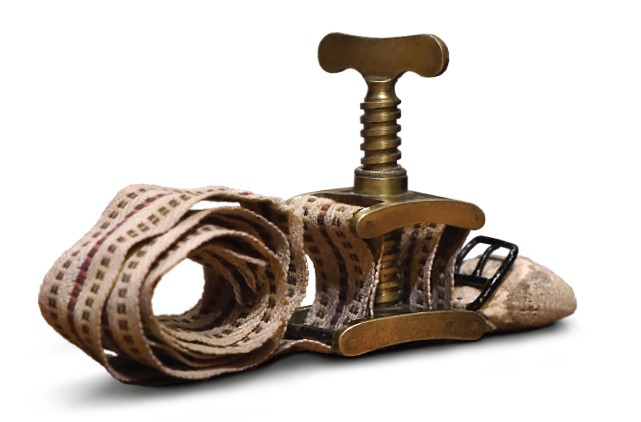
A Civil War-era tourniquet
In the first place, it should be the imperative duty of the army surgeon to present every soldier, whose life he has the care of, with a simple tourniquet, at the same time instructing him how to apply it around the limb of a comrade which has been pierced by a bullet, cutting off an artery, or to the stump of a limb which has been carried away by a cannon-ball.
These tourniquets could be made of leather, thick muslin, or some elastic substance, and consist of a strap attached to a buckle. Could anything be more simple as to construction and application, and more effective for the purpose intended? Surgeons are not omnipresent. They cannot be at every point of the field at once, and before hundreds of the wounded reach them by means of the ambulances, they have bled to death; whereas, if their comrades had been instructed how to prevent hemorrhage, and had each their tourniquets at hand, and possessed the meagre knowledge necessary to know how to use them, many valuable lives might be saved.
Secondly, every surgeon should teach those whose duty it is to carry the disabled from the scene of action, to see that the wounded soldier is placed in a recumbent position, with the head lower than the body. This injunction impressed upon our men and enforced by the proper officers, and there would not be so many-brought into army hospitals in a state of syncope, produced by the cessation of the heart’s action through loss of blood. Syncope in itself, we know, is not dangerous; but its concomitants are always to be dreaded. Who knows but in a fit of syncope that a heart-clot may not be formed, costing a soldier his life, although he may apparently recover from his paroxysm of unconsciousness?
As we have previously stated, every man in the service should be furnished with the simple appliance we have suggested, or something answering the same purpose. A regiment, a brigade, thus provided would be better prepared to meet danger and come out of many a severe struggle with a much less number on the list of the dead. To furnish soldiers with such a tourniquet would require little effort on the part of the surgeon, and the expense would be but trifling. To instruct them in its use, as well as to impress upon their minds the importance of placing the faint from exhaustion in a recumbent position while removing them from the battle-field, would not be “love’s labor lost.”
We have never for a moment entertained the idea, that our intelligent surgeons in the field are not cognizant of the utility of what we have written; but the question is, have they thought of all this, and have they acted in accordance with our suggestions?
In conclusion, to quote the language of the philosopher Franklin, “These rules, well observed, will do the business”; and we venture to assert that hundreds of our brave and patriotic soldiers “who now sleep their last sleep,” would, in all probability, now be alive and yet able to fight for their country and their country’s honor.
C.H. Stubbs
Source
The Medical and Surgical Reporter, May 3, 1862
Related topics: medical care