 John Banks
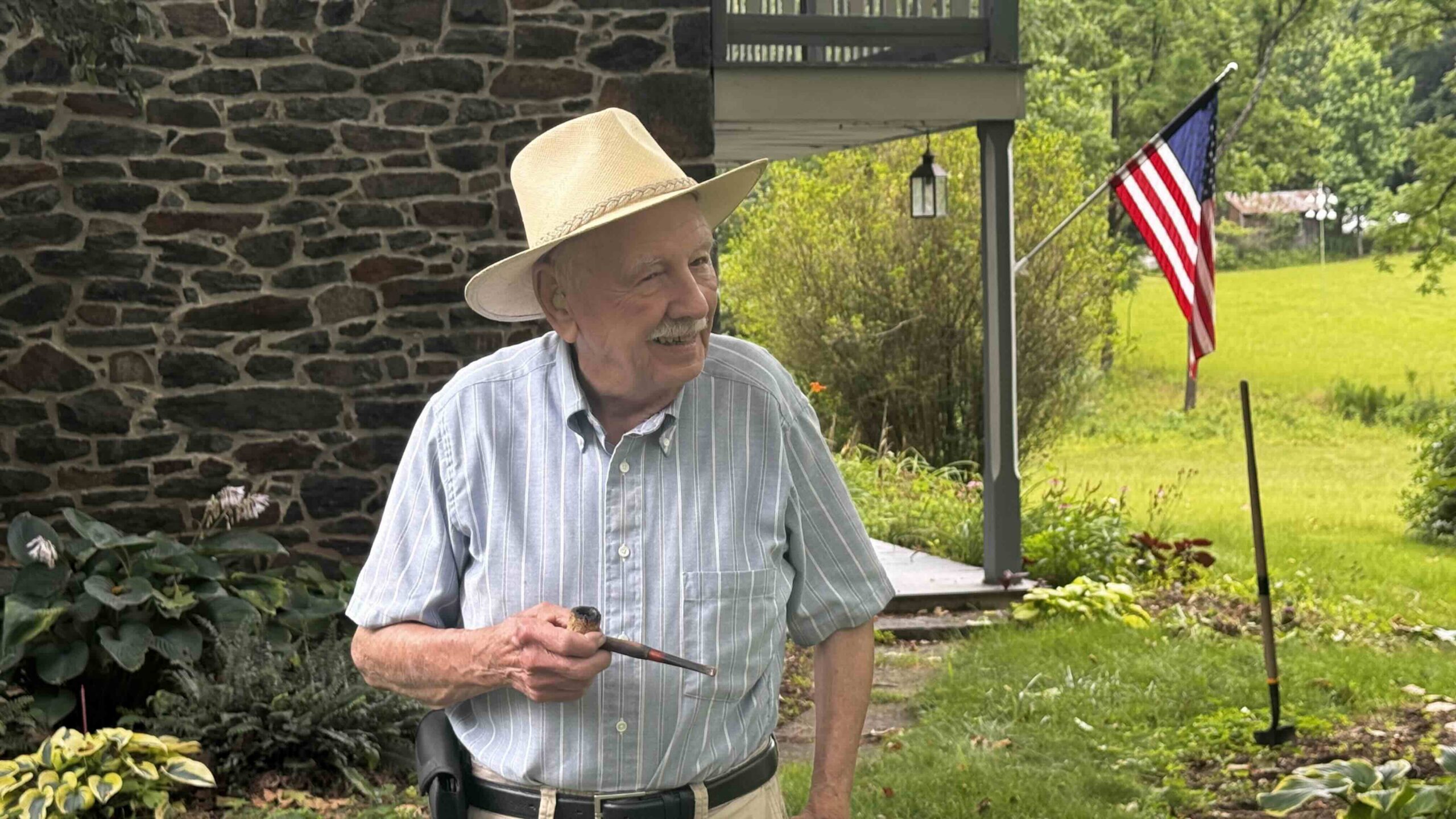
Dean Shultz
Before our advance on Wolf Hill and Lost Avenue—perhaps the least-visited corners of the Gettysburg Battlefield—Dean Shultz gathers us for a briefing and offers a warning.
“I have a .38 in here,” he says, nodding toward a slim bag on the tailgate of his pickup. Not since a snake-wary Mississippi guide brandished a Ruger during a visit to the Champion Hill battlefield have I felt so uneasy.
Then Shultz adds the kicker. “Bears up here recently.” So we consider ourselves warned.
Besides packing heat, Shultz stores a remarkable amount of Civil War knowledge in his 87-year-old brain. His stories do not just flow, they burst, like rounds from a Spencer repeating rifle. Expect him to keep telling those stories as long as he can; he plans to retire at the end of the year from a career as a civil engineer.
Shultz reminds me of the legendary Ed Bearss, the former National Park Service chief historian who died in 2020. The two traveled together to battlefields and historic sites across the country, and Bearss dubbed Shultz “the Dean of Gettysburg”—or simply “Mr. Gettysburg.”
With his voice, Shultz echoes his late friend—the same cadence, if at a lower volume, and the same infectious enthusiasm. He even walks a little like Bearss, climbing a mowed uphill path on our visit like a younger man.
“To say Dean is a gem and a national treasure is an understatement,” says George Franks, who owns core battlefield land at Falling Waters, in Washington County, Maryland, site of the final battle of the Gettysburg Campaign. “He is as much a part of the Gettysburg Campaign as any of the boulders, stone walls, monuments, flank markers or field pieces in the national battlefield park.”
That’s sentiment shared by many about Shultz, who attributes his Bearss-like energy to staying busy and smoking his pipe.
“And a little Jack Daniel’s,” he says.
Gateway to Lost Avenue
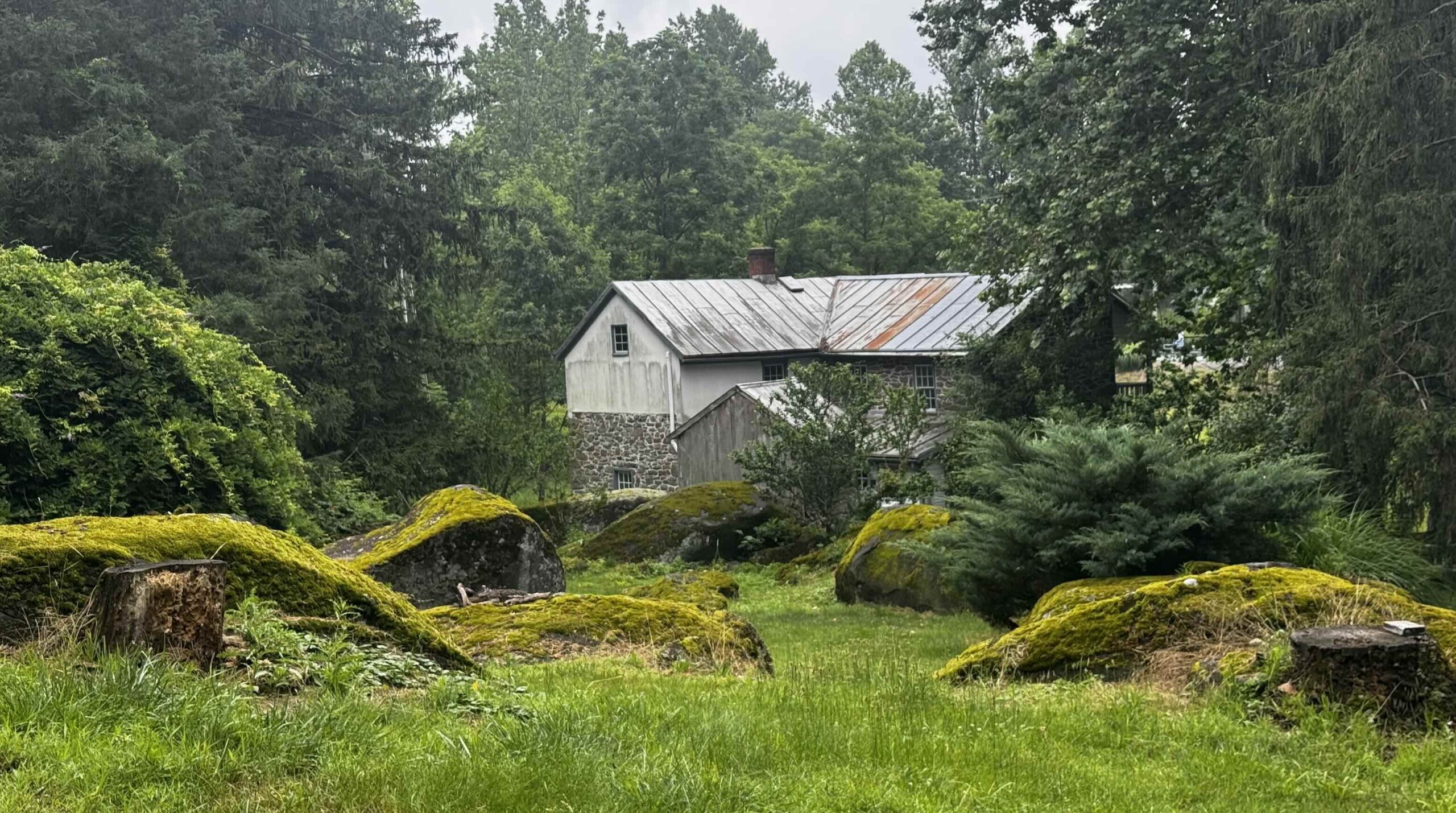
On this muggy, overcast afternoon, our expedition begins at the Peter Baker farmhouse, nestled along Rock Creek just off Baltimore Pike. Dean and Judy Shultz have lived here since the 1990s. Sam Getty, father of Gettysburg founder James Getty, once called their place his home. The log portion of the house dates to the 1760s, with additions made over generations.
 John Banks
The Peter Baker farmhouse, nestled just off Baltimore Pike in Gettysburg, where Dean and Judy Shultz have lived since the 1990s.
Today, the Shultzes’ roughly 100-acre property virtually surrounds National Park Service land that includes Lost Avenue, the gateway to one of Gettysburg’s least-explored stretches of battlefield. Recognizing its historic importance, the Shultzes have placed their property under a preservation easement, ensuring it cannot be developed after they are gone.
Waiting to guide us is Shultz himself, wearing a wide-brim Panama-style hat, khaki pants, and a short-sleeve shirt. He carries a walking stick cut from a sapling a year ago, one of many he has kept for visitors’ use. Many others, he says, have “walked off.”
A pipe smoker for more than half a century, Shultz occasionally puffs on a bowl of Captain Black Gold. He speaks with a distinctive central Pennsylvania accent, with just a hint of Appalachia.
Shultz’s connection to the Baker house stretches back to his childhood. The Baker family, which owned the property for generations, took in his father, and as a boy Dean became a frequent visitor, growing close to the Bakers and their two sons, Harry and Arthur, both lifelong bachelors.
“The Bakers were like grandparents to me,” Shultz says.
Even now, he can picture the Baker boys beneath a sprawling sycamore steps from the farmhouse, smoking cigars and sipping bourbon. Shultz fondly remembers the bayonet one of the Bakers used on a walking stick for strolls on the property.
Shultz’s storytelling gift jump-starts the imagination, carrying us back to early July 1863: one of the Baker women baking bread for soldiers beside massive boulders near the house; cries of anguish rising from the barn where the wounded were treated; newly dug graves in the field out front, only yards from the Baltimore Pike tollhouse that still stands.
We pass the ancient barn, my walking shoes and socks already waterlogged from the morning rain. The structure, Shultz insists, is no replica—its foundation is original.
 John Banks
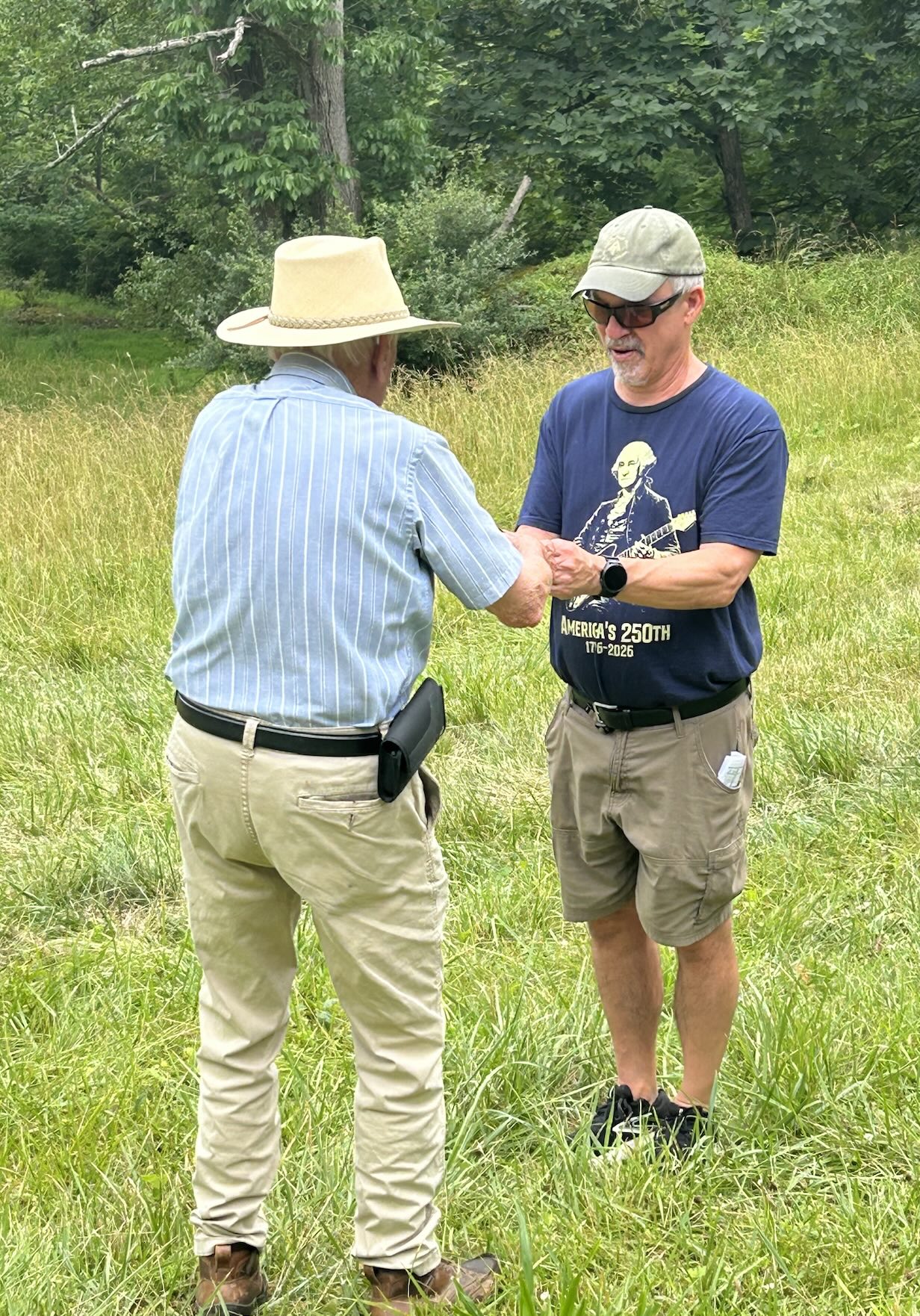
Dean Schultz (left) instructs the author on how to dowse.
Fifteen minutes into our walk, he reaches into his bag and produces a pair of L-shaped dowsing rods.
“Would you like to dowse?” Shultz asks.
Years ago, a retired FBI agent from Mississippi dowsed this section of the battlefield. He reported what he believed were graves. Perhaps they still remain.
Shultz demonstrates, walking across ground that served as an orchard before the battle. The rods begin to move, indicating—as the Mississippi dowser believed—the presence of a grave.
With Shultz’s help, I try it myself. The rods do not convince me, but I keep that to myself.
We slog across ground defended by the Union VI Corps on July 2 and 3, 1863. Had Confederates broken through here and severed Baltimore Pike—the Army of the Potomac’s lifeline—the outcome of Gettysburg might have been different.
In a mostly open field of perhaps five acres, we stop to absorb an astonishing view. Decades ago, Shultz turned cattle loose here to reclaim the landscape from brush. The cows—the John Deeres of nature—did the rest.
Over the years, historians, generous Civil War preservationists, and even documentarian Ken Burns have stood where we stand, admiring the pastoral scene. It is a haunting contradiction: a landscape worthy of Monet, purchased with the blood of soldiers.
“This is the way a battlefield is supposed to look,” Shultz says, drawing on his pipe. “No cars. No buses. No people.”
And fortunately this afternoon no bears.
The clouds spit a few drops but never commit to rain. Cattle have not grazed here in years, so there is no danger of stepping into what Shultz calls “Confederate landmines.”
In the distance stand two original stone walls. Beyond the farther one—marked by a small Confederate battle flag attached to a metal fence post—the 2nd Virginia, perhaps no more than 100 men strong, advanced during the fighting before Brigadier General Thomas H. Neill’s men turned them back.
Meet Jacob Sheads
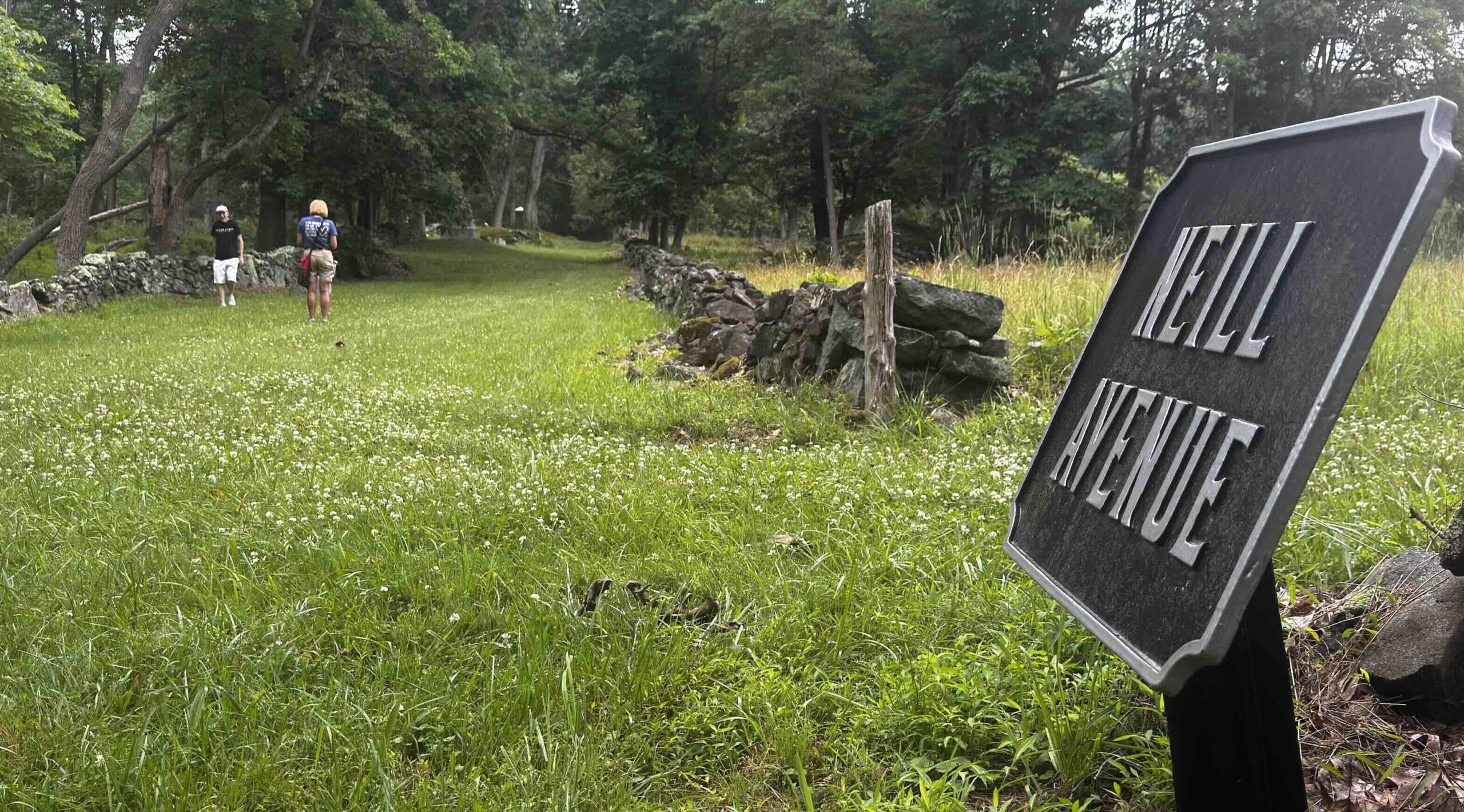
Finally, we reach Lost Avenue—officially Neill Avenue—one of only a few unpaved avenues in Gettysburg National Military Park. Standing here, the 21st century seems far away.
 John Banks
Gettysburg’s Neill Avenue, otherwise known as Lost Avenue
Shultz tells another story, this one about Jacob Sheads, a beloved Gettysburg High School history and English teacher known to generations simply as “Colonel.”
“Best high school teacher in Gettysburg history,” says Shultz, who has lived in the area his entire life.
Sheads, who had served in the U.S. Army, was also a licensed battlefield guide, escorting President John F. Kennedy around Gettysburg in March 1963. For generations of students and visitors, he became one of the town’s most admired interpreters of its Civil War past.
To encourage students with little interest in history, Sheads occasionally sent them on unsupervised visits to Neill Avenue, which he dubbed Lost Avenue. Instead of inspiring scholarship, the outings sometimes inspired other research.
“I swear there were more people conceived there than killed,” Shultz says with a grin, repeating a line attributed to Sheads, who died in 2002.
One of the Baker boys got in on the fun some decades ago. After spying a car drive up to Lost Avenue, he put a chain across the farm road, blocking the explorers’ lone exit.
“Left them there for some time,” says Shultz.
To our left rises the monument to the 49th New York, its missing musket hammer restored several decades ago. Ahead stretches Lost Avenue, perhaps 120 yards to the wood line, hemmed in by original stone walls. Near the midpoint stands the 7th Maine monument, its bas-relief shield of stars, stripes, and corps insignia among Gettysburg’s finest pieces of battlefield sculpture.
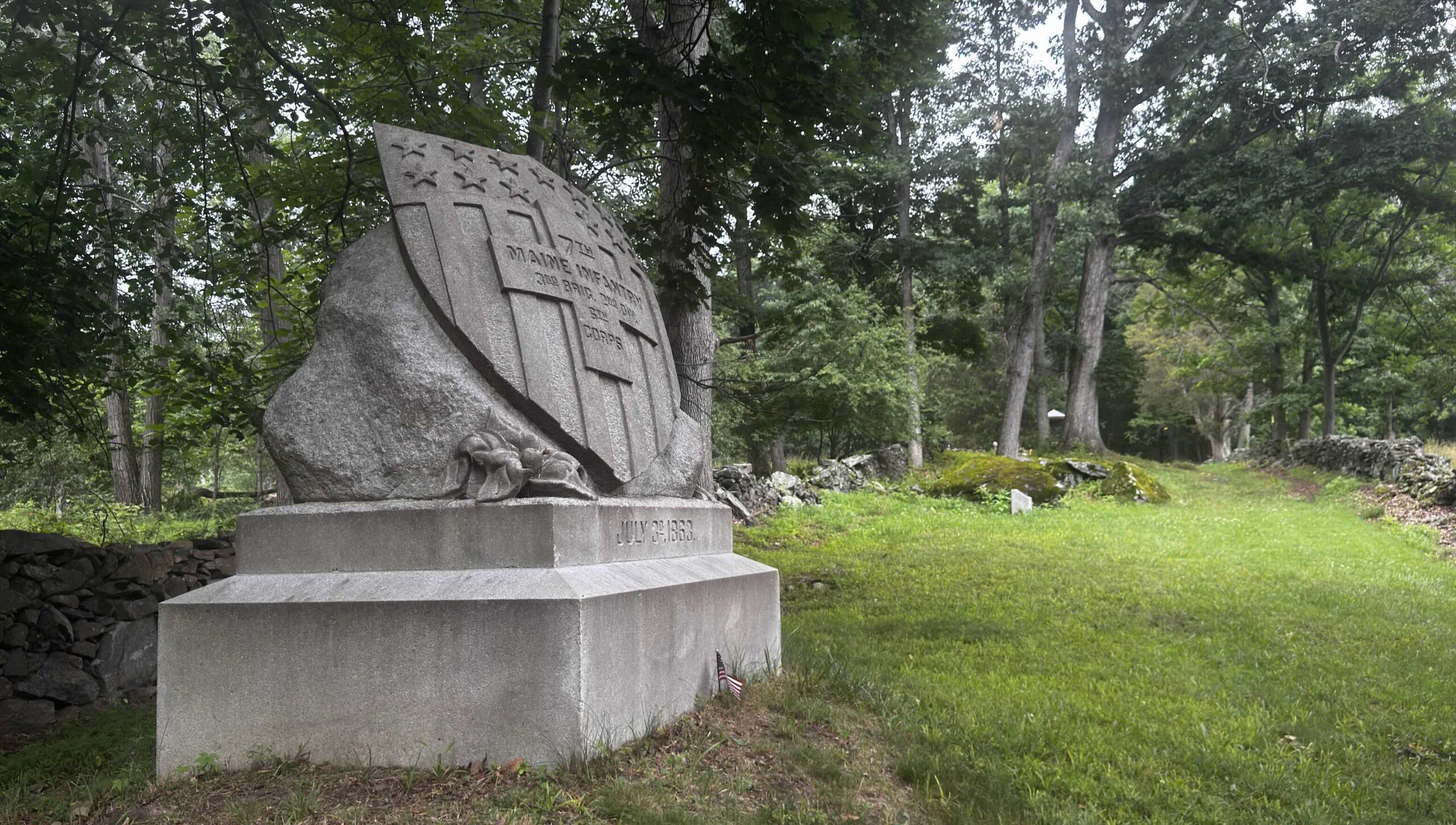 John Banks
The Monument to the 7th Maine Infantry on the Gettysburg Battlefield
Shultz recalls a winter day decades ago when an older man arrived carrying a photograph of his grandfather, a 7th Maine soldier. Together they walked to the regiment’s monument. The man looked at the photograph, then at the monument, and back at the image again. Soon the tears came, and Shultz slipped away.
“I left him with his grandfather,” our long-seasoned guide says.
A few minutes later, the man found Shultz waiting by the 49th New York monument on Lost Avenue.
“Thank you,” he said and then departed.
That moment captures what draws Shultz to forgotten corners of Gettysburg. He is not just interested in troop movements or battle lines. He searches for the lives behind them.
Benjamin Franklin Mower, a 32-year-old private in the 7th Maine, walked this ground too. In October 1863, his worried wife, Louisa, contacted a relief agency asking for his whereabouts; she had not heard from him for weeks. She noted he wore a plain silver ring with his name engraved and carried a reminder of home.
“A small miniature of myself with our boy then a babe of 3 months, he used to carry in his shirt pocket,” Louisa wrote.1
“Lies at Gettysburg” reads an inscription on Mower’s Maine gravestone, although his final resting place remains unknown.
The End of the Fishhook
Shultz treasures such stories of common soldiers—especially that of 20-year-old Captain Billy Gilfillan of the 43rd New York. He suffered a mortal stomach wound while leading his men in a skirmish in Shultz’s woods. Gilfillan became one of 15 Union soldiers killed, wounded, or missing in the fighting here. Confederate losses remain unknown.
“He did not suffer much pain,” a comrade later insisted.
Decades after the war, the Baker boys accompanied veterans of the 43rd New York as they revisited the battlefield. While touring the property with Bearss and others, a visitor unknowingly solved a mystery that had nagged Shultz for years. The man was wearing a T-shirt listing Gettysburg soldiers buried at Brooklyn’s Green-Wood Cemetery.
After hearing Shultz tell the story of Gilfillan, the visitor introduced himself as Jeff Richmond, the Green-Wood historian, and pointed to Gilfillan’s name on the shirt. He later sent Shultz a photograph of the captain’s gravestone, finally answering the question of where the young officer had been laid to rest. (“The people on the tour thought we set the whole thing up,” Richmond told me later.)
Although it is their fourth visit here, public historian Tom McMillan and his wife, Colleen, our fellow trampers, marvel over this scene and Shultz’s stories. I, too, find myself captivated.
Gripping his walking stick, Shultz tramps ahead.
On this afternoon, we will not climb to the summit of seldom-visited Wolf Hill, still private property. The ruins of the nearby Zephaniah Tawney farm will also have to wait. But Lost Avenue and what we saw of Wolf Hill are much more than a consolation prize.
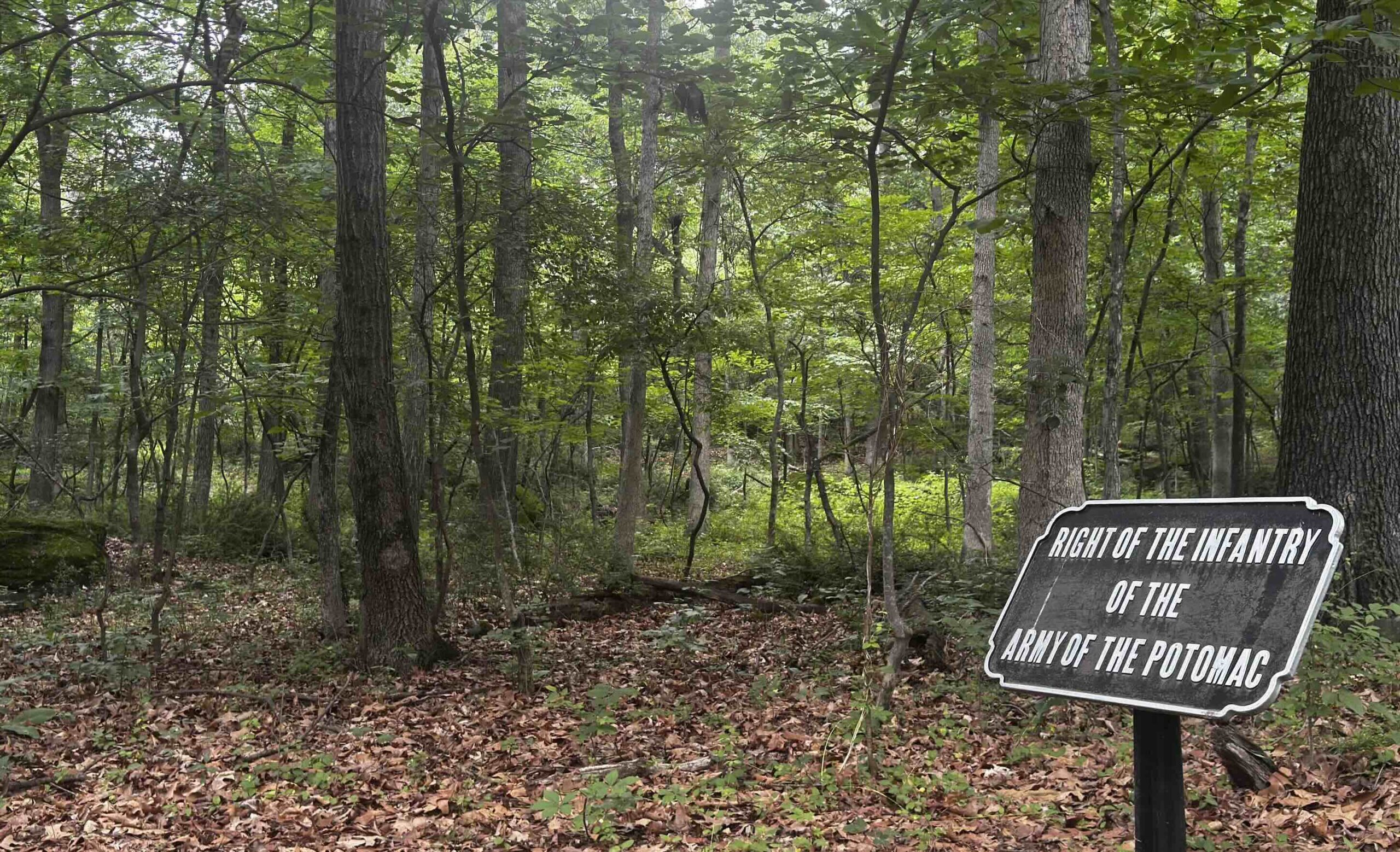 John Banks
The seldom-seen marker that denotes the extreme right of the Union line at Gettysburg
At the monument to the 61st Pennsylvania, we reach the end of the line—literally. A few steps away stands a battlefield tablet that reads: “Right of the infantry of the Army of the Potomac.”
“Many historians have never seen this,” says Shultz, who encourages me to take a photo at the site.
This marks the extreme right of Major General George Meade’s famous fishhook, a thin, seldom discussed extension of the Union line.
“This,” Shultz says, “is the end of the worm, dangling at the end of the fishhook.”
It is not, however, the end of the storytelling for Shultz. His motor keeps running all the way back to the gravel drive at the Baker farmhouse.
Dean Shultz never set out to become another Jacob Sheads. Yet somewhere along the way, the keeper of Lost Avenue became one of Gettysburg’s own keepers of memory.
Colonel Sheads has a worthy successor.
John Banks is author of A Civil War Road Trip of a Lifetime and two other Civil War books. A longtime journalist (The Dallas Morning News, ESPN, The History Channel), he is secretary-treasurer of The Center for Civil War Photography. He lives in Nashville with his wife, Carol.
Notes
1. Louisa S. Mower, Letter seeking information on husband, Temple, 1863, October 12, 1863, Maine Agency Sanitary Commission records, Coll. 1533, Box 1/2, Maine Historical Society, Maine Memory Network, MMN #60178.