It’s time again for our annual roundup of the year’s best Civil War titles. As usual, we’ve enlisted a handful of Civil War historians, avid readers all, and asked them to pick their two favorite books published in 2021. We also gave them a chance to name an additional title or two that they’re looking forward to, books either released in 2021 or soon to be released. Below are their selections.
Brian Matthew Jordan
Top Pick
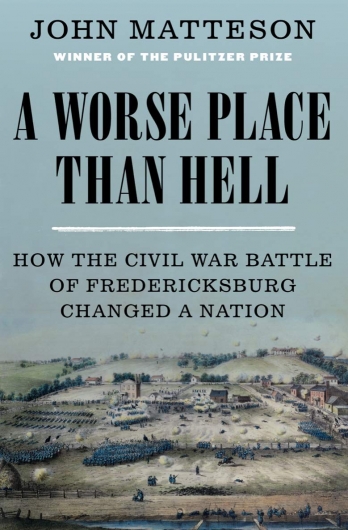
Elegantly crafted, John Matteson’s A Worse Place Than Hell: How the Civil War Battle of Fredericksburg Changed a Nation (W.W. Norton & Company) offers an urgently human portrait of the nation at war. A keen sense of contingency and well-chosen protagonists, together with careful attention to the mechanics of plot, propel Matteson’s utterly absorbing history.
Despite the suggestion of its title, A Worse Place Than Hell is no mere retelling of the fiasco of Fredericksburg; nor does it attempt to supplant the fine battle histories authored by Frank O’Reilly and George Rable. What Matteson delivers instead is a literate, richly textured narrative revealing the war’s uncanny capacity to yoke people together—and then annex their intertwined lives forever. Showcasing his mastery of both the historian’s craft and the biographer’s art, Matteson has written a book that is at once wide-ranging and intimate. A Worse Place Than Hell will linger with readers—and will endure as a profound meditation on all that the Civil War visited upon body, mind, and soul.
Honorable Mention
Kate Masur’s Until Justice Be Done: America’s First Civil Rights Movement, From the Revolution to Reconstruction (W.W. Norton & Company) is a smart, timely, and capacious history that lends deep context to the Civil War era’s fight for racial equality. Reaching back to the Revolution—and spending significant time in my native Ohio—Masur traces both the human and intellectual origins of the Civil War era’s civil rights legislation. Building meaningful connections between people and events from different eras, Until Justice Be Done is a vital reminder that historians are too often prisoners of periodization.
Looking Forward To
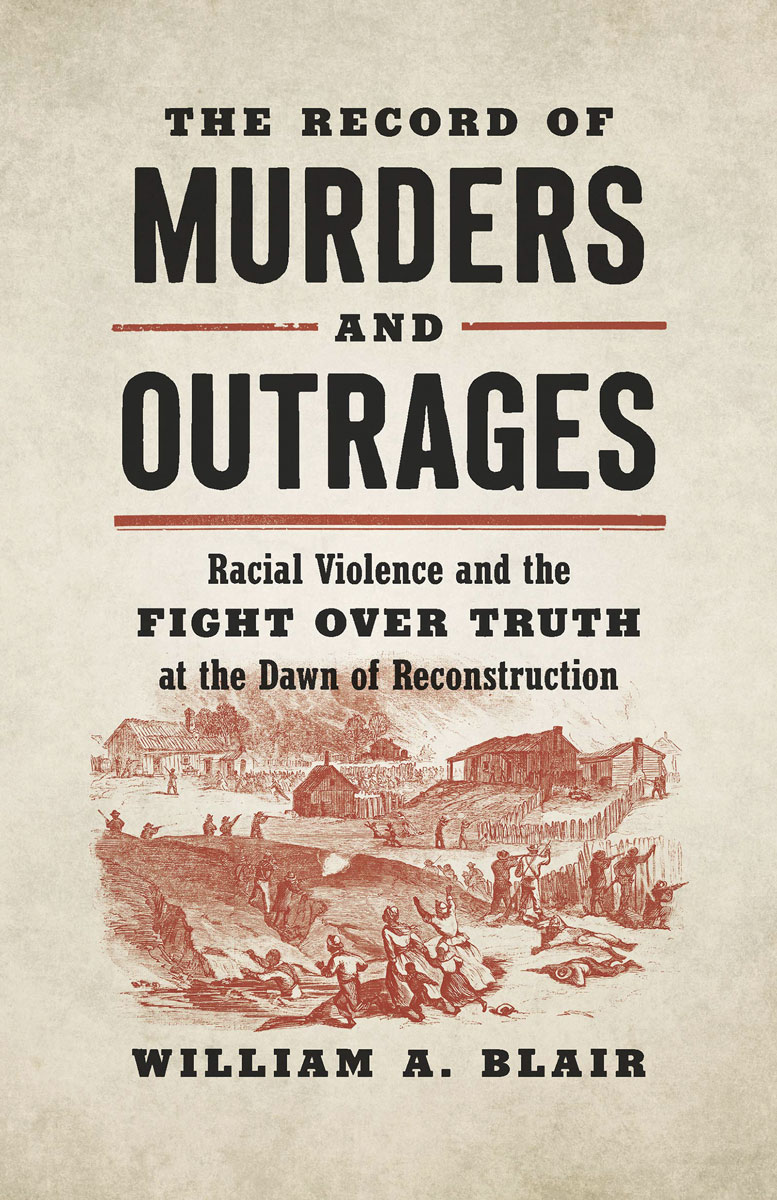
Lorien Foote is a talented and clever historian, so her Rites of Retaliation: Civilization, Soldiers, and Campaigns in the American Civil War (University of North Carolina Press) promises to tackle important questions about the character of the conflict. I’m also looking forward to William A. Blair’s especially timely The Record of Murders and Outrages: Racial Violence and the Fight over Truth at the Dawn of Reconstruction (University of North Carolina Press). I’m perhaps most eager for Allen Guelzo’s new biography, Robert E. Lee: A Life (Knopf), which I know will be eloquently written, deeply researched, and persuasively argued.
Brian Matthew Jordan is associate professor of Civil War History and chair of the History Department at Sam Houston State University. He is the author of Marching Home: Union Veterans and Their Unending Civil War, a finalist for the 2016 Pulitzer Prize in History, and A Thousand May Fall: Life, Death, and Survival in the Union Army (2021).
Jennifer M. Murray
Top Pick
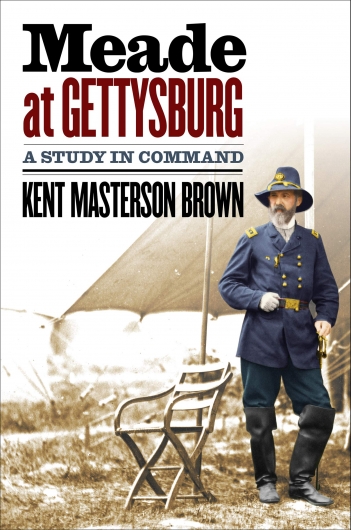
Scholars have written approximately 18,000 books on the Gettysburg Campaign and while it would be tempting to argue that we don’t “need” one more, Kent Masterson Brown has proven otherwise. Meade at Gettysburg: A Study in Command (University of North Carolina Press) is a meticulously researched and masterfully written analysis of General George Meade’s leadership between June 28 and July 14, 1863, that shows him as rightfully instrumental and indispensable to Union victory. Brown elevates Meade from an individual over-shadowed in the Gettysburg narrative—by both his contemporaries and generations of historians—to a general who successfully led the Army of the Potomac at the tactical, operational, logistical, and strategic levels of command. Gettysburg enthusiasts will find much of value here, including Brown’s assessments of the infamous Pipe Creek Circular, the purpose of Major General John F. Reynolds’ reconnaissance-in-force on July 1, Meade’s role in the unauthorized forward movement of Major General Daniel Sickles on July 2, and allegations that Meade did not intend to fight at Gettysburg. Brown disputes the popular canard that “Meade did not pursue after Gettysburg” and offers a granular discussion of the many logistical challenges Meade’s army faced in pursuit of Robert E. Lee to the Potomac, demonstrating that Meade never had a “golden opportunity” to annihilate the enemy at Williamsport. In December 1863, as Meade’s detractors worked to erode his contributions to the Army of the Potomac’s victory at Gettysburg, Meade lamented to his wife, “I suppose after awhile it will be discovered I was not at Gettysburg at all.” Brown has redeemed Meade’s reputation and his book showcases a general who was decisive and exerted his authority to shape the outcome of the battle. In doing so, Meade achieved what no previous commander of the Army of the Potomac had been able to do: defeat Robert E. Lee.
Honorable Mention
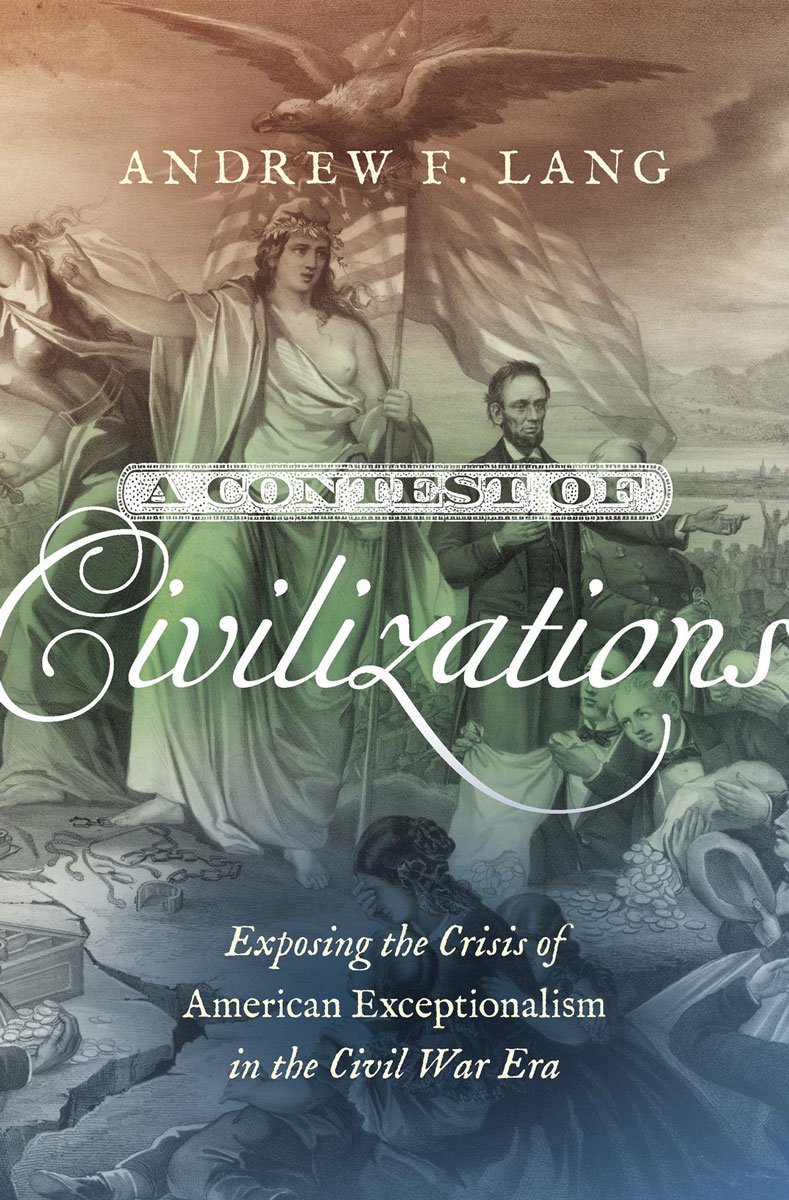
Andrew Lang’s A Contest of Civilizations: Exploring the Crisis of American Exceptionalism in the Civil War Era (University of North Carolina Press) offers a comprehensive study of the ways in which the Civil War generation viewed the sectional crisis through the multiple lenses of American exceptionalism. Lang probes the conflicting understandings of exceptionalism, liberty, and democracy among the nation’s diverse populations—slave owners, white northerners, women, free blacks, and slaves—from the antebellum era through Reconstruction. Placing what was the largest slaveholding republic in the world by 1860 in a global context, Lang masterfully demonstrates the ways in which external philosophies and events influenced America’s sectional crisis. Readers interested in the interplay between philosophy, politics, intellectualism, culture, and warfare will find this an engaging and provoking read.
Looking Forward To
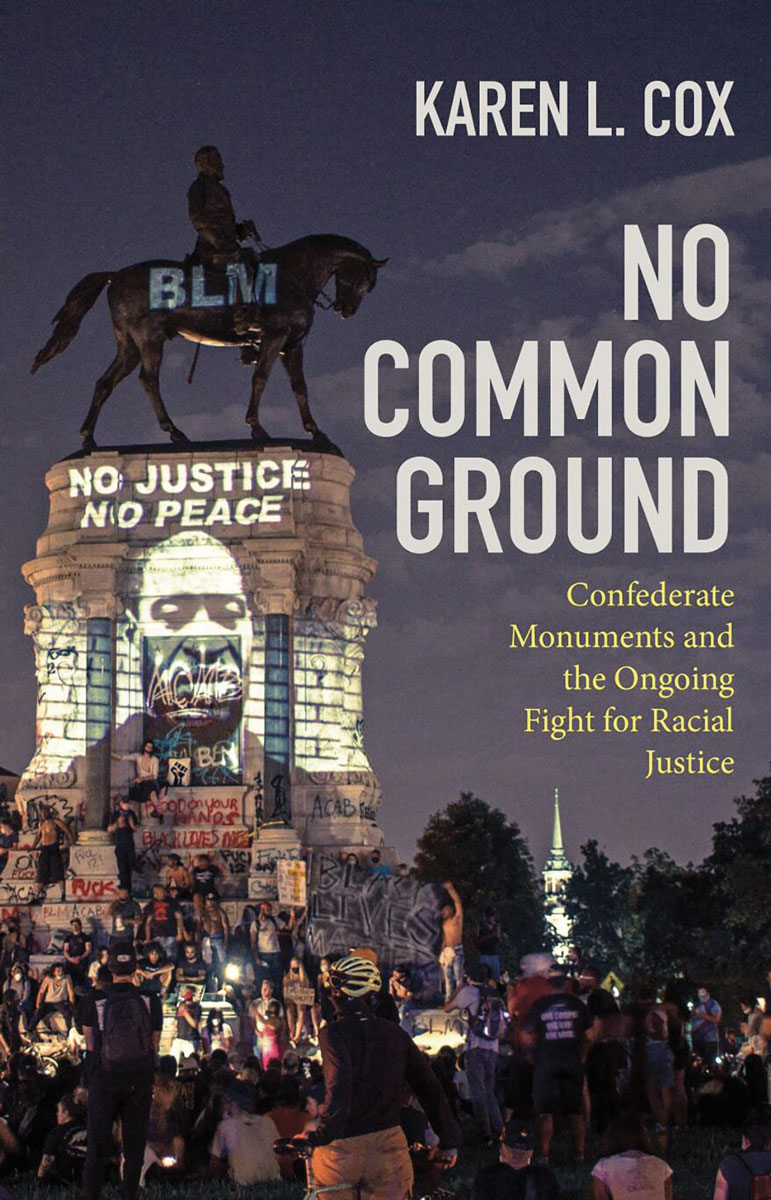
Karen Cox’s No Common Ground: Confederate Monuments and the Ongoing Fight for Racial Justice (University of North Carolina Press) is a timely exploration of the debates over the erection and removal of Confederate monuments and the consequences today of the enduring legacy of the Lost Cause. Never one to miss an opportunity to read another book on Gettysburg, I am particularly excited to see Jill Ogline Titus’ Gettysburg 1963: Civil Rights, Cold War Politics, and Historical Memory in America’s Most Famous Small Town (University of North Carolina Press). An exploration of the simultaneous collision of the Civil War Centennial, the Civil Rights Movement, and the Cold War, Gettysburg 1963 is destined to add another layer to our understanding of the memory of America’s most “hallowed ground” and this famous Pennsylvania community.
Jennifer M. Murray is a military historian with a specialization in the Civil War in the History Department at Oklahoma State University. She is the author of On A Great Battlefield: The Making, Management, and Memory of Gettysburg National Military Park, 1933–2013 (2014) and is working on a biography of George Meade, tentatively titled Meade at War.
Kathryn J. Shively
Top Pick
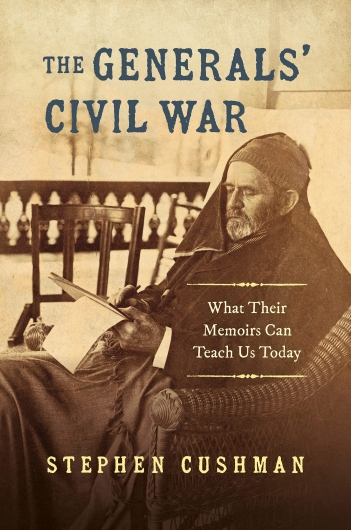
It grieves me when Civil War scholars use memoirs—or any 19th-century account—as unmediated fact about what happened in 1861–1865. We could all stand to become better readers for picking up Stephen Cushman’s quirky but marvelous The Generals’ Civil War: What Their Memoirs Can Teach Us Today (University of North Carolina Press). It explores memoirs both familiar and less so: those of Ulysses S. Grant, William T. Sherman, Philip Sheridan, and Richard Taylor, but also the mixed-genre work of McClellan’s Own Story, 166 manuscript pages of George B. McClellan’s reminiscences along with his literary executor’s additions of reports, dispatches, and letters. Each of Cushman’s intricate and clever chapters offers its own insights—to the inter-working of “memory, imagination, history, and literature”; the co-creation of writer and audience; and the dynamism between memoirists and the publishing industry, with Mark Twain ever lurking behind the curtain. As Sherman and Joseph E. Johnston’s postwar friendship unfolds in Chapter 1, the 21st-century reader experiences the binding of emotional war wounds along with the 19th-century audience. When Grant combines simplicity and wit, thanks to teachers such as Abraham Lincoln and Twain—here in his recollection of writing the surrender terms at Appomattox: the particulars “did not occur to me until the moment I wrote it down”—one cannot help but question everything we thought we knew about the past, not to mention memory. Similar to the reading experience of last year’s excellent Belles and Poets: Intertextuality in the Civil War Diaries of White Southern Women(Louisiana State University Press) by Julia Nitz, the reader may leave The Generals’ Civil War feeling uncomfortable about the hazy boundary between fiction and history. Embrace it.
Honorable Mention
I’ve always been fascinated by the thrilling rise of “science” in the 19th century—an era of hubris, discoveries, and new disciplines, from chemistry to zoology. Eric Herschthal’s The Science of Abolition: How Slaveholders Became the Enemies of Progress(Yale University Press) examines how white and black abolitionists popularized the (mythical) ideas that enslavers were the “enemies of progress,” that science would render slave labor defunct, and that black people of the Atlantic world who engaged in scientific work could elevate their status among whites. That enslavers were every bit as modern as antislavery advocates, deeply invested in new technologies and soil science, was significantly obscured by this abolitionist rhetoric. But it is fascinating to explore how science came to be regarded as liberating and progressive, even while its circles remained beyond the reach of the marginalized. It goes without saying that to understand the Civil War is to understand the great slavery debate, and Herschthal provides a fresh line of intellectual advance, away from the well-trod (though still important) themes of scientific racism and capitalism.
Looking Forward To
Caroline Janney’s Ends of War: The Unfinished Fight of Lee’s Army After Appomattox (University of North Carolina Press) is sitting atop my nightstand, and I’ve already flipped through the introduction in eager anticipation. Janney, in her characteristically vigorous and evocative prose, explores the question: What did the surrender at Appomattox actually mean for the soldiers of Robert E. Lee’s army, the hundreds of African Americans who accompanied it, and the communities to which they went home? Knowing Janney’s superb work in Civil War memory, I predict the “ends” are really beginnings: of the unrest to come in Reconstruction and beyond. Having already disclosed my interest in science, I will also own my interest in one of its practical applications: medicine. Editors Sean Morey Smith and Christopher D.E. Willoughby have piqued my interest with their coming volume, Medicine and Healing in the Age of Slavery (Louisiana State University Press). Essays range on topics from enslaved healing practices to feigned illness in the slave trade to slave hospitals in the Deep South to poisonings of enslavers to ideas of racial disease immunity. This book is much broader and bigger than Civil War America, but its ideas promise to enlighten us about the racialization of health and healing fundamental to a war with catastrophic consequences for black bodies.
Kathryn J. Shively, author of Nature’s Civil War: Common Soldiers and the Environment in 1862 Virginia (2013), is an associate professor of history at Virginia Commonwealth University and is writing a book on Confederate general Jubal A. Early’s influence on “scientific” history.
Gerald J. Prokopowicz
Top Pick
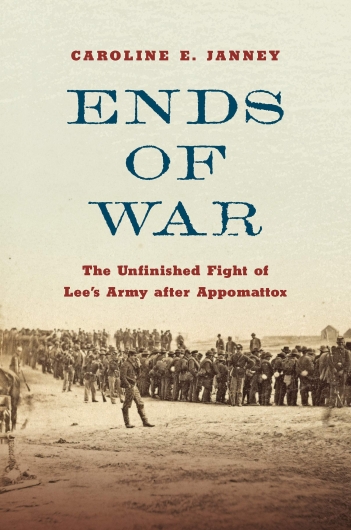
James McPherson brilliantly chose to conclude Battle Cry of Freeedom on April 11, 1865, declining to repeat the oft-told tale of the Lincoln assassination on the 14th, and offering only a brief epilogue on the “dizzying sequence of events” in the weeks that followed. In Ends of War: The Unfinished Fight of Lee’s Army After Appomattox (University of North Carolina Press), Caroline Janney brings her laser focus to one of the most critical of those events, the disintigration of the Army of Northern Virginia, and how much more there is to the story. Her work complicates the traditional image of soldiers of the two armies shaking hands with mutual respect, like football players after the final whistle. The book shows how the fears, hatreds, and hopes inspired by the war lived on after the surrender, and how decisions made on the spur of the moment, by Ulysses S. Grant, Robert E. Lee, politicians in Washington, and thousands of individual soldiers, in some cases had repercussions felt today in the survival of the Lost Cause mythology. If you’re tired of reading about familiar Civil War events and eager to learn something new, every chapter of Ends of War will satisfy.
Honorable Mention
Meade at Gettysburg: A Study in Command by Kent Masterson Brown is a passionate, lawyerly (in the sense of attention to evidence and using words precisely), and convincing defense of the battlefield generalship of George Meade. Brown shows the reader just how remarkable it was for Meade to take command of the Army of the Potomac on June 28, 1863, and then lead it to victory over Lee only a few days later. The sophistication of Brown’s analysis and depth of his research elevate the book above Monday-morning quarterbacking and contribute to a better understanding of the battle, a remarkable feat considering how much has been written about it.
Looking Forward To
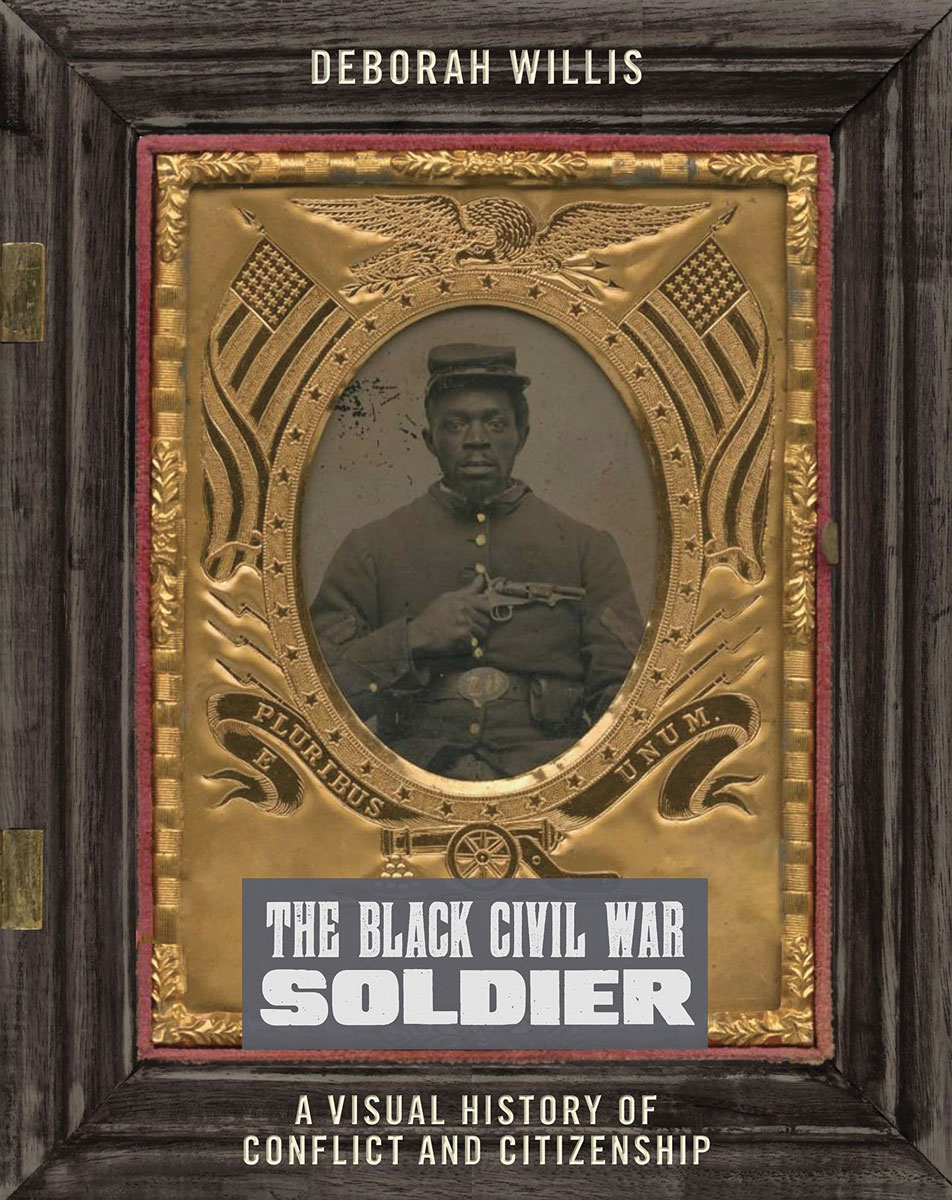
The Black Civil War Soldier: A Visual History of Conflict and Citizenship (NYU Press) by Deborah Willis was a National Book Award nominee, and at a glance it’s easy to see why: Its pages are filled with dozens of beautifully reproduced photographs of African-American soldiers, many of them not previously published. If the text is even half as revelatory as the images, it will be an important book.
Gerald J. Prokopowicz is a professor of history at East Carolina University and host of the podcast Civil War Talk Radio.
Kevin M. Levin
Top Pick
Most military histories of the Army of Northern Virginia end with the furling of flags and stacking of arms at Appomattox Court House, but this is precisely the entry point for Caroline Janney’s Ends of War: The Unfinished Fight of Lee’s Army After Appomattox. In this netherworld between soldier and veteran, Janey narrates the defeated Confederates’ difficult journeys home as well as describes the small number who remained committed to furthering the fight for independence. Paroles that were issued to encourage peace led to questions about whether they applied to high-ranking officers and surrendered Confederates from loyal states such as Maryland. Surrender was anything but peaceful. Violence and uncertainty hung over the nation in the wake of Abraham Lincoln’s assassination. In the months following Appomattox the first glimmers of the Lost Cause narrative emerged, as did a vibrant celebration of freedom among newly emancipated slaves, and finally a firm belief among victorious Union soldiers that they had saved the nation from rebellious traitors. In focusing on the first few months after Appomattox, Janney argues convincingly that the road to reunion and reconciliation was anything but certain.
Honorable Mention
Robert E. Lee looms large over the Battle of Gettysburg. Not so much George Meade, who orchestrated the Army of the Potomac’s first decisive victory on northern soil. Kent Masterson Brown’s Meade at Gettysburg will force readers to rethink key aspects of the campaign, from Meade’s plan to defend the Pipe Creek line in Maryland to his decision not to attack Lee at Falling Waters in the Confederate retreat to Virginia. Meade at Gettysburg succeeds brilliantly in analyzing Meade’s command decisions and his contributions in shaping the outcome of the battle.
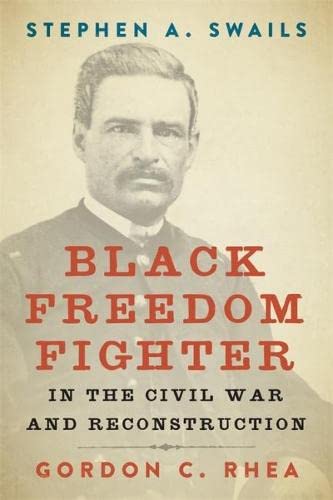
Stephen Swails served in the 54th Massachusetts Infantry and became the first African American commissioned as a combat officer in the United States military. After the war, he served in the Freedmen’s Bureau, helped to draft South Carolina’s state constitution, and served in the state senate until violence drove him from office. In Stephen A. Swails: Black Freedom Fighter in the Civil War and Reconstruction (Louisiana State University Press), Gordon Rhea does a fabulous job of using Swails’ remarkable life to illuminate the revolutionary achievements of African Americans during the Civil War era in the face of unspeakable political violence.
Looking Forward To
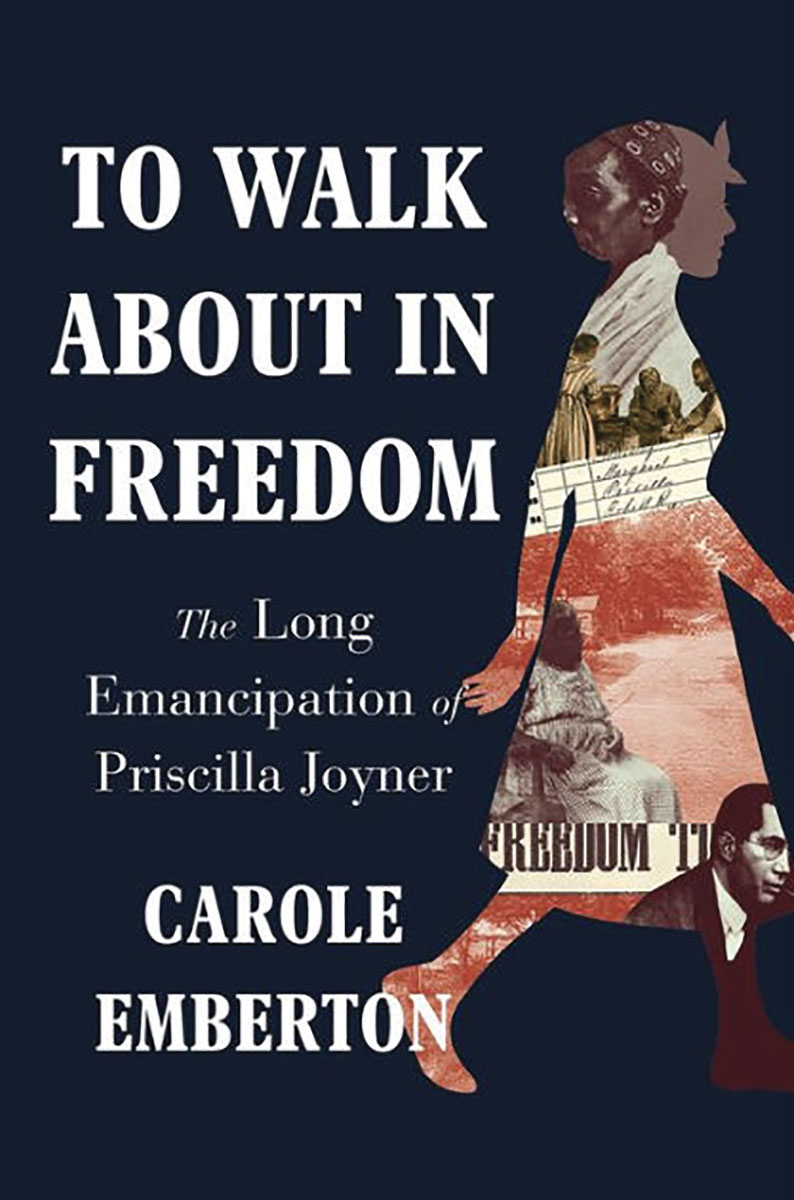
What do you get when you combine a Methodist preacher, schoolteacher, and Union cavalry officer with a guerrilla fighter who pledged to kill 25 Confederates before the war was over? I look forward to finding out in Christopher Grasso’s Teacher, Preacher, Soldier, Spy: The Civil Wars of John R. Kelso (Oxford University Press). Often the deepest insights into the complex world of Reconstruction and the challenges faced by the formerly enslaved come through the examination of a single person’s life. Carole Emberton’s To Walk About in Freedom: The Long Emancipation of Priscilla Joyner (W.W. Norton & Company) promises to be a fascinating book.
Kevin M. Levin is a historian and educator based in Boston. He is the author of Searching for Black Confederates: The Civil War’s Most Persistent Myth (2019) and is working on a biography of Robert Gould Shaw for the University of North Carolina Press. You can find him online at cwmemory.com.
The Top-Selling Civil War Titles of 2021
The books pictured here are the 10 bestselling Civil War titles published in 2021. They are ranked in order of copies sold through mid-October.
Based on sales data provided by NPD BookScan for titles published in the category “Civil War Period (1850–1877).”
- Robert E. Lee and Me: A Southerner’s Reckoning With the Myth of the Lost Cause, by Ty Seidule (St. Martin’s Press) $27.99
- Lincoln in Private: What His Most Personal Reflections Tell Us About Our Greatest President, by Ronald C. White (Random House) $28
- A Worse Place Than Hell: How the Civil War Battle of Fredericksburg Changed a Nation, by John Matteson (W.W. Norton & Company) $35
- The Crooked Path to Abolition: Abraham Lincoln and the Antislavery Constitution, by James Oakes (W.W. Norton & Company) $26.95
- Meade at Gettysburg: A Study in Command, by Kent Masterson Brown (University of North Carolina Press) $35
- The Failed Promise: Reconstruction, Frederick Douglass, and the Impeachment of Andrew Johnson, by Robert S. Levine (W.W. Norton & Company) $26.95
- A Thousand May Fall: Life, Death, and Survival in the Union Army, by Brian Matthew Jordan (Liveright) $28.95
- A Fire in the Wilderness: The First Battle Between Ulysses S. Grant and Robert E. Lee, by John Reeves (Pegasus Books) $28.95
- A Holy Baptism of Fire & Blood: The Bible & The American Civil War, by James P. Byrd (Oxford University Press) $34.95
- The Greatest Escape: A True American Civil War Adventure, by Douglas Miller (Lyons Press) $26.95