 Library of Congress
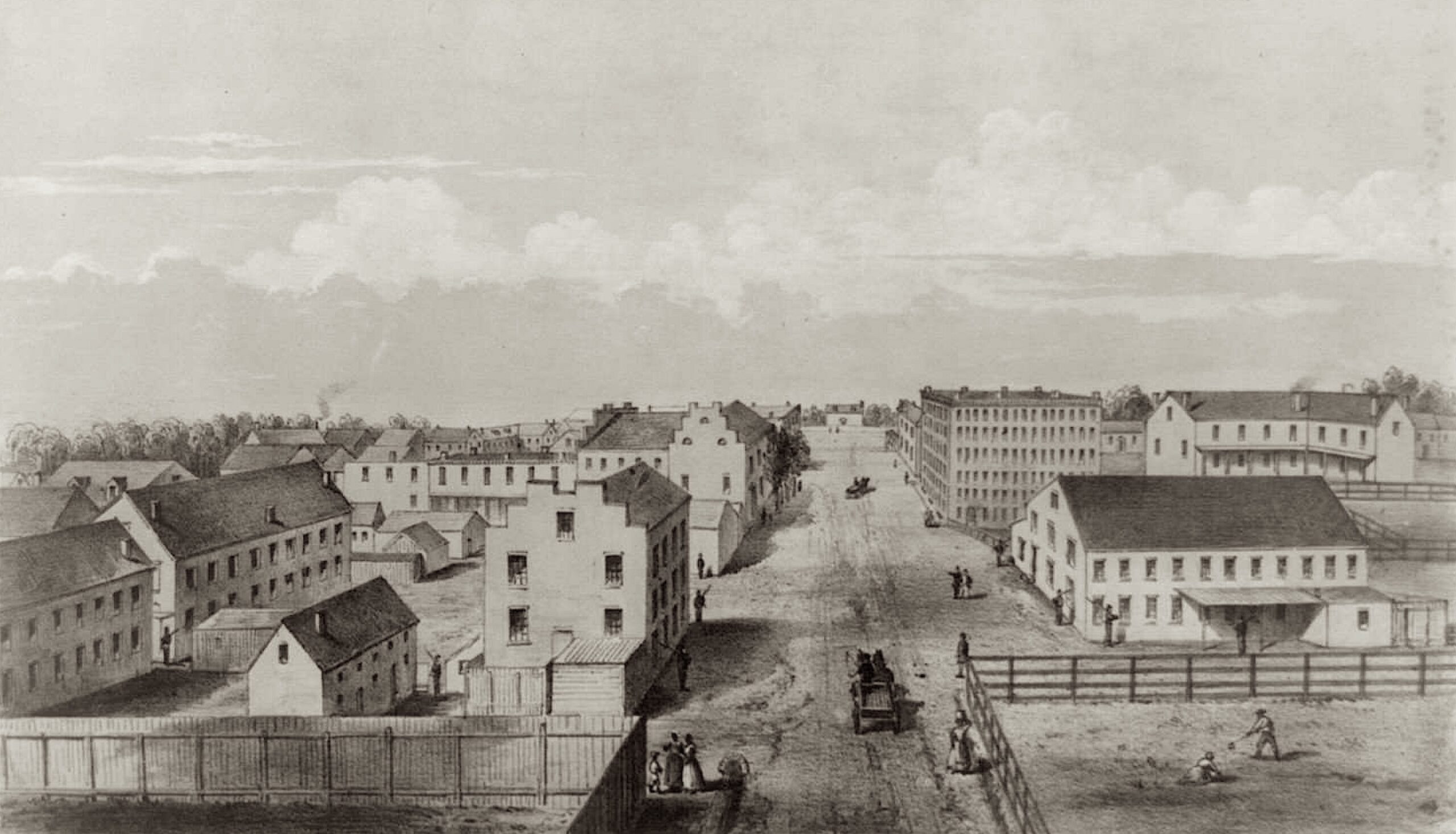
A wartime sketch—made by a Union POW—of the Danville Prisons in southwest Virginia
On a brisk January 19, 1864, First Sergeant Abram J. Price of the 6th Ohio Infantry escaped from the Danville Prisons in southern Virginia. He had been captured at the Battle of Chickamauga in September. He was alive, but with the disease-ridden state of Confederate prisons at this stage of the war, there was no guarantee he would stay alive. In the midst of a desperate winter, Price, 22, decided he had paid the Rebs enough and the time for escape was now or never.1
After being entrusted to help the guards distribute supplies to prisoners, Price found himself in prime position for escape. The camp’s Confederate officers, having indulged in contraband alcohol, went out that night, leaving Price and his fellow prisoner, W.F. Atkinson, alone with the prison quartermaster, who soon drunkenly declared Price to be “the best Yankee [he] ever saw” before loaning him $100 of Confederate scrip and bidding the two men goodnight.2 They were alone, unguarded, and outside prison walls. Could the moment be any more choice?3
To say the threat of Confederate recapture lit a fire under the fugitives would be an understatement. Price and Atkinson quickly raided the unguarded prison offices for supplies and were on their way. Fellow prisoners John Neiderman and William Hutchinson, nurses at the camp’s smallpox hospital, joined them at the edge of town and the group set out with haste. Despite being weak from want of rations, Price figured the group walked nearly 20 miles that first night of freedom.4
Even with their raided supplies, the group’s chances for freedom depended upon more than stamina. Like so many other fugitive Federals, Price and his comrades found help and safety in the heart of Confederate territory thanks to local blacks. The escapees never feared revealing their identity to these men and women and were sure of both their welcome and their assistance, often receiving provisions and guidance to steer them on their way. With such help, the Federals had a relatively smooth first 10 days of traveling. Then arose before them a formidable challenge: the Blue Ridge Mountains.5
Traversing this range in the dead of winter required both heart and skill. Price later recalled how, when faced with unscalable descents, the men would take long poles and lay them from one side of a ravine into the treetops on the other side. They would then crawl across the poles and slide down the trees back onto the ground. Nothing but desperation and tenacity could have fueled the men to forge such a path. Imagine the men picking out tree branches with their frozen hands and hoisting them across a ravine into darkened treetops, trusting with their lives that the branches would hold them. Thankfully, their faith was founded and their luck held.6
Fresh off the Blue Ridge, the Yankees ran into an equally fearsome obstacle levied against fugitives in the South: Confederate patrols. The escapees crossed the Roanoke River and tried to climb the mountain on the other side, but the steep and icy terrain proved impossible. Thus thwarted, the men recrossed the river, and in the crossing, Hutchinson slipped from a stone and sprained his ankle. The party was forced to leave him behind, the first casualty of their escape.7
 The Soldier's Story of His Captivity (1867)
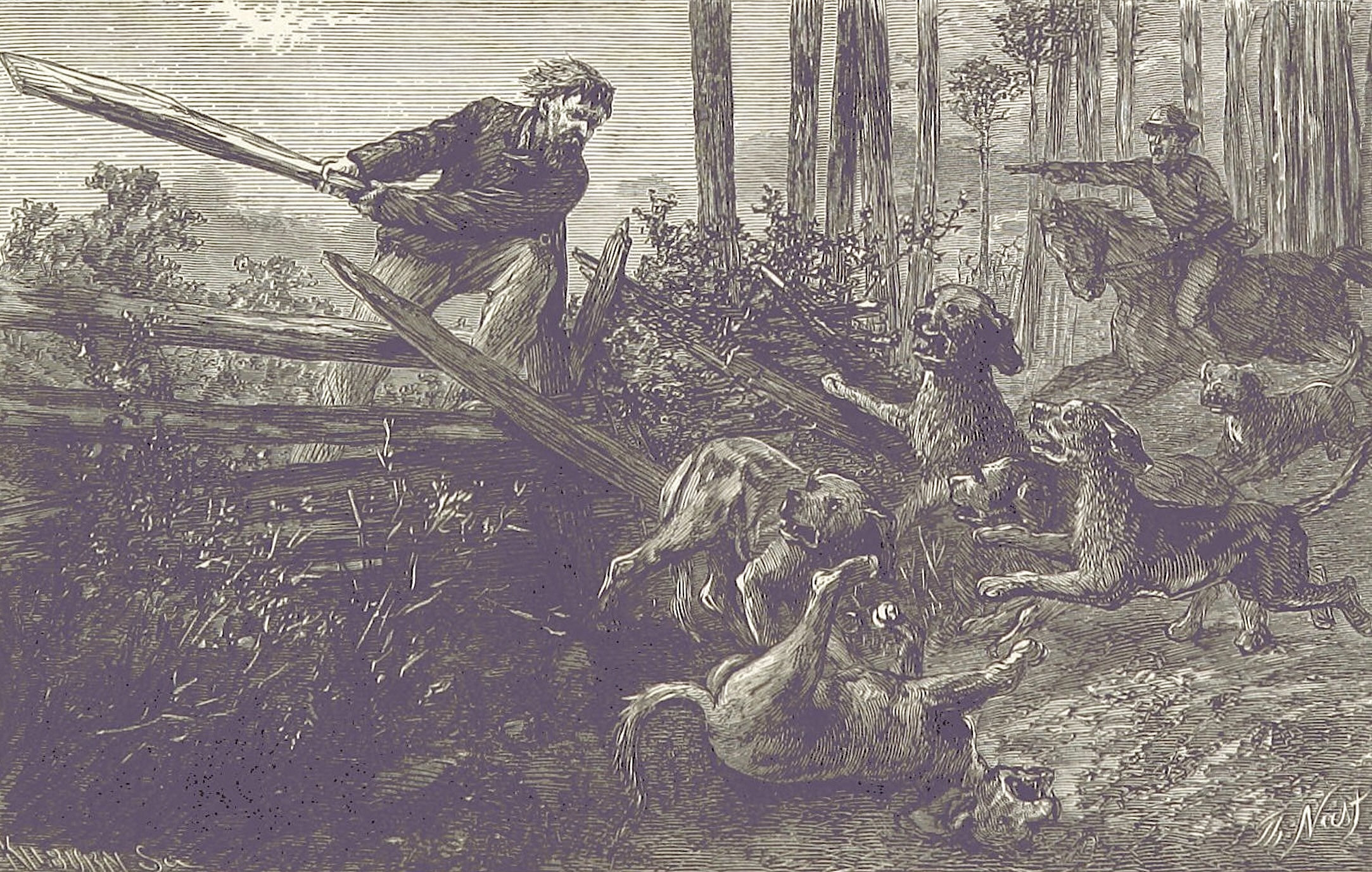
This Thomas Nast illustration depicts an escaped Union prisoner attempting to elude an approaching Confederate patrol—a hazard faced by Abram J. Price and his comrades on their trek to freedom from the Danville Prisons.
While resting on the riverbank, the Yankees were horrified to find Rebels riding within feet of their position. One rider fired his gun into the air, sounding the alarm, but this in the sleet and the darkness only caused confusion, especially for the Rebels who had already entered the river to look for the Yankees on the other side. Out of the chaos and into the night, Price and his companions narrowly evaded capture, leaving the Rebels and Hutchinson behind them.8
As the party approached Union lines they experienced firsthand the loosened Confederate control over the region. By word of mouth, luck, and disguise, the Yankees were aided by Unionists and unwitting Confederates alike on the second half of their journey. Food, music, and even cobbling services were provided to the POWs by Union men like John and Louis Ballard in rural West Virginia. Confederate activity was present but sporadic; it forced the Yankees to stay in the Ballards’ barn, but did not keep them in total hiding.9
Striking west, the group found both hard times and an abandoned canoe on the banks of the New River. Unbeknownst to the Yankees, this part of the river held white-water rapids, which they soon experienced in their humble vessel. It was not long before the canoe capsized, and the men were forced to swim the icy river to shore. The mountains, by this stroke of bad luck, became their only option.10
A nearby trail led the band to a log cabin, where, continuing a charade they had used on other pro-Confederate civilians along their route, they told the cabin’s inhabitants, an elderly couple, that they were soldiers in search of deserters. The couple received them with reluctance, and as the party continued with their façade, Price wrote that he and his comrades “talked rebel talk” so well that the couple “were soon convinced that [we] were better rebels” than they were.11 In a gamble, Atkinson doffed his overcoat, showing his Union blues and revealing the group’s true identity. This risk paid off, and the couple, fellow Unionists, provided supplies to the men—the last help they would receive before reaching Union lines.12
Price and his group continued on, following the river along mountain paths to Fayetteville, North Carolina. At last, on February 11, 1864, the men were delivered back into the welcoming hands of the Union. Twenty-two days, over 200 miles, and no small amount of peril and determination later, Price and his comrades had made it. They embraced their beloved Union with open arms, and the Union embraced them back.13
Hope Ash is an incoming law student at Texas A&M School of Law, having previously completed her BA in English and history and her MA in English, also at Texas A&M University. Her areas of interest are 19th century American literature and history.
Notes
1. A.J. Price, “A Narrative of Prison Life and Escape,” Ohio History Connection (Columbus, OH), 5, 15; “Houses of Horror: Danville’s Civil War Prisons,” The Virginia Magazine of History and Biography 69 (July 1961): 340; Roger Pickenpaugh, Captives in Blue: The Civil War Prisons of the Confederacy (Tuscaloosa, 2013), 15-34; Abram J. Price, located in Find a Grave Database, findagrave.com (Accessed April 9, 2023).
2. Price, “Narrative of Prison Life and Escape,” 15.
3. James K. Richards, “A Southern Odyssey: The Narrative of Abram Price,” Timeline 6 No. 4 (August-September 1989): 27; Price, “Narrative of Prison Life and Escape,” 14-16.
4. Ibid, 15-17.
5. Lorien Foote, The Yankee Plague: Escaped Union Prisoners and the Collapse of the Confederacy (Chapel Hill, 2016), 27-31; Price, “Narrative of Prison Life and Escape,” 18.
6. Ibid, 18.
7. Foote, Yankee Plague, 49-54, 58; Price, “Narrative of Prison Life and Escape,” 19.
8. Ibid, 19.
9. Foote, Yankee Plague, 81-105; Price, “Narrative of Prison Life and Escape,” 20-22.
10. Ibid, 22.
11. Ibid, 23.
12. Ibid.
13. Ibid, 24.
Related topics: prisons and prisoners