 U.S. Naval History and Heritage Command
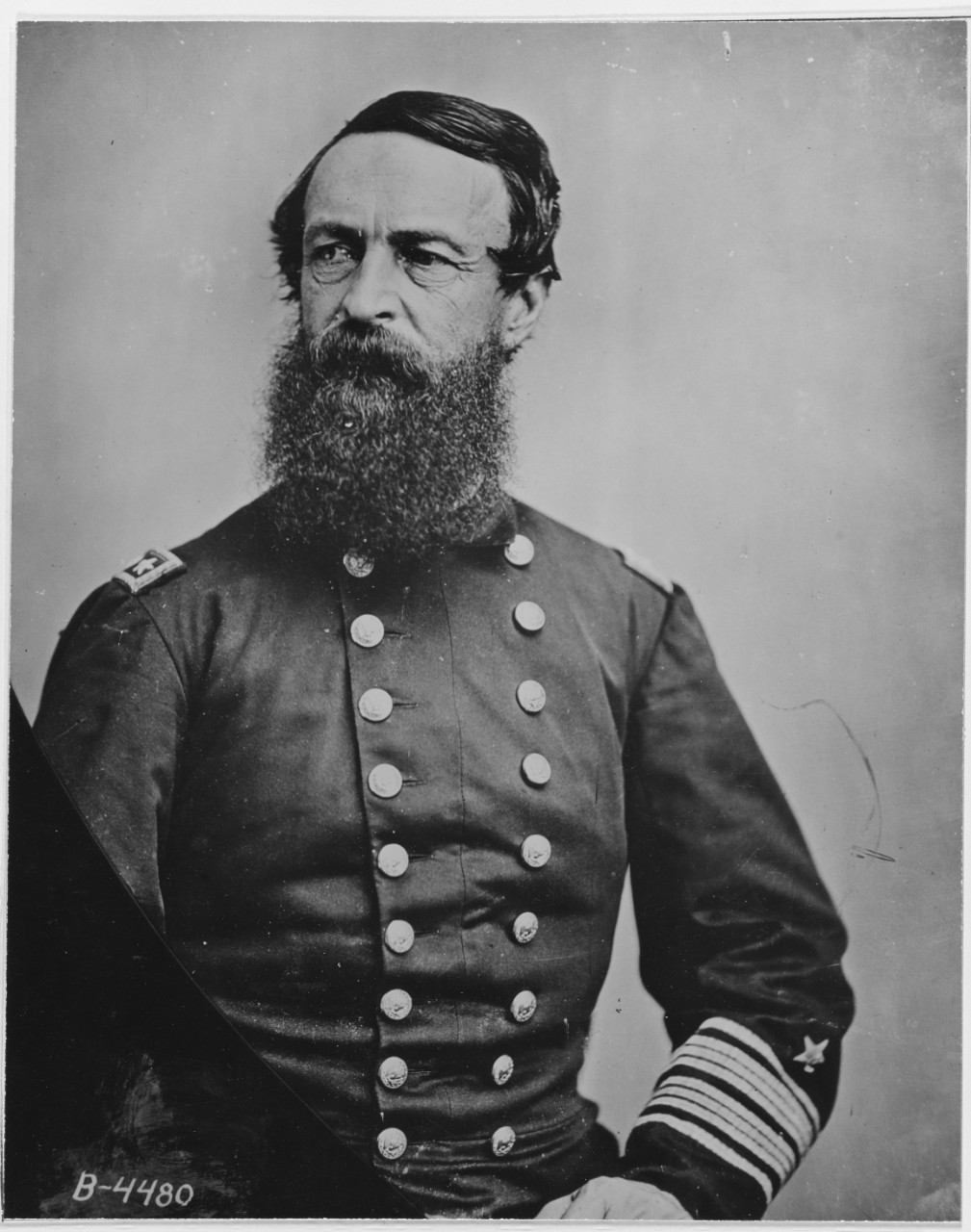
David Dixon Porter
When Confederate forces captured the United States ironclad Indianola 10 days after capturing the sidewheeler Queen of the West, the Union commander of the Mississippi, Acting Rear Admiral David Dixon Porter, had had enough. He feared the southerners would enlist the Indianola as they had the Queen of the West and use it against him.
On February 14, 1863, USS Queen of the West had been taken 15 miles above the mouth of Black River, a tributary of the Mississippi River south of Vicksburg. The vessel had fallen under heavy fire from Confederate shore batteries, then ran aground as it tried to back down the river—and was captured. The Confederate navy was able to repair the ship and put her into Confederate service under her old name.
Ten days later, the Queen, manned now by Confederates, overtook USS Indianola, rammed it seven times, and forced it to run its bow onto the riverbank, where the ironclad partially sank—and had to surrender. Porter would describe the incident as “the most humiliating affair that has occurred during this rebellion.”1
Porter knew he needed to act—and quickly. Union and Confederate forces were fighting for control of the Mississippi, and the Union had already made two attempts to capture the strategically important Confederate stronghold at Vicksburg. Porter was facing the same situation he had faced with Queen of the West and the same humiliation. If Indianola could be repaired and put into service, Confederate forces on the river would be that much stronger. Porter also feared the loss of Indianola’s guns, including two valuable Dahlgren cannons.2
Porter decided that if the Confederacy could be made to destroy Indianola’s wreckage, the ship could not be used against him, and its guns would be lost to both sides.
“I was not ready to go down the river myself as it would interfere with an important military movement,” Porter wrote in his 1885 memoir, Incidents and Anecdotes of the Civil War. But, “I hit on a cheap expedient.”3
Porter would bluff and send a fake ironclad down the river in hopes of scaring the Confederate crews working to salvage Indianola and, if he were lucky, get them to destroy what was left of the ship so that it couldn’t be repossessed by their enemy.
 Naval History and Heritage Command
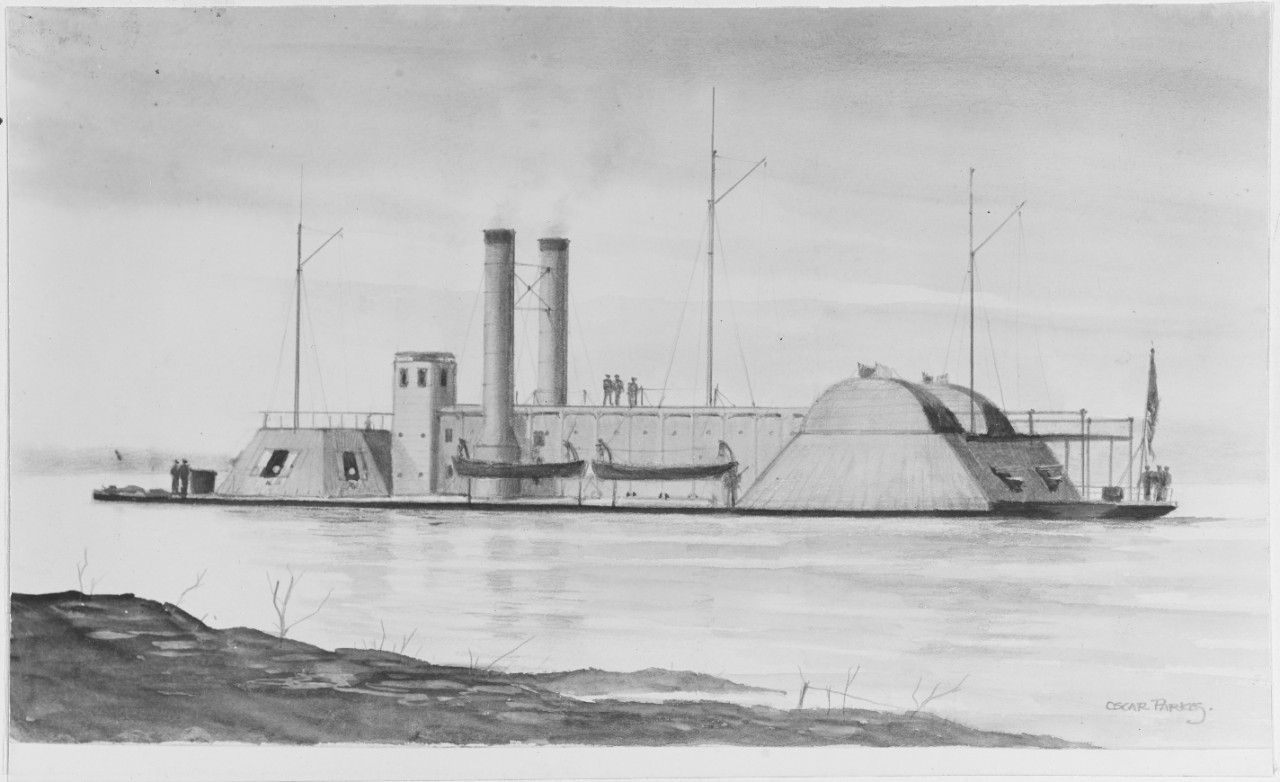
USS Indianola
Porter hurriedly sketched the plans for a fake, wooden “ironclad.” It was constructed with less than $9 worth of lumber on a raft of logs complete with two fake wheelhouses and fake casements with portholes sporting wooden “guns.” Two old boats were hung from davits (to masquerade as standard lifeboats) and two smokestacks made from hogsheads and equipped with a large iron pot in each where tar and oakum could be burned to give off heavy black smoke. The slogan “Deluded Rebels, Cave In!” was painted on the side of the 170-foot-long makeshift; a United States flag was mounted on its stern and a skull-and-crossbones banner on the bow.
In his book, Porter later wrote that the finished product “resembled at a little distance the ram Layfette, which had just arrived from St. Louis.”4
The dummy ironclad was towed up the Black River and set loose at 10 p.m. on February 25 off De Soto Point near Vicksburg’s batteries. It floated past Confederate guns that fired on it with little success. Once past the batteries, the decoy ship got caught in an eddy near Warrenton and grounded on the riverbank. Union soldiers who had moved upriver on their own to see what would happen were able to push the decoy back into the current but not until daylight.
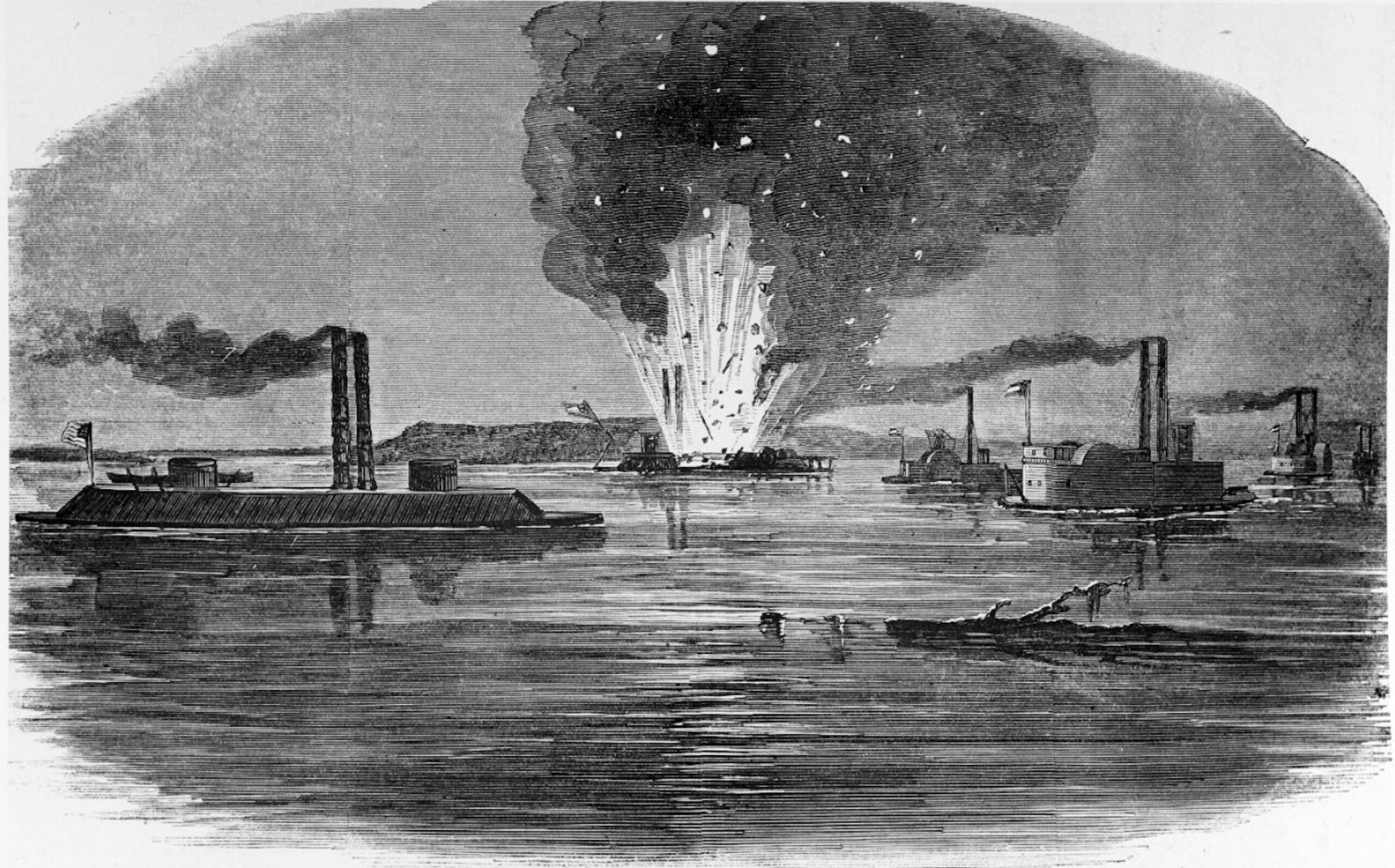
At about the same time, the “enemy” Queen of the West arrived at Warrenton above the Indianola wreckage with pumps and other equipment to use in salvaging the half-sunken Union ironclad.5 The Confederate CSS Webb, a river steamer and cotton-clad ram, was already on the scene and had men working to remove Indianola’s guns. (Cotton clads were steam-powered warships that were protected from enemy fire by bales of cotton lining their sides and were used almost exclusively by the Confederacy.) While the salvage work was going on, however, a message was sent upriver from Vicksburg “that a monster ironclad had passed the batteries and would soon be upon them.”6 Fearing the “monster ironclad” heading their way and reluctant to let what was left of Indianola and her guns be returned to Union hands, Webb, Queen of the West, and whatever other Confederate craft were in the area blew up Indianola and fled the scene before the arrival of Porter’s “monster ironclad.”
 Naval History and Heritage Command
This illustration by Theodore Davis depicts Confederates blowing up the captured USS Indianola in the face of the approach of a suspected Union ironclad.
Porter, whom historian Craig L. Symonds called “something of a free spirit in the navy,” had achieved his aim.7 Neither Indianola nor its guns made it into captive Confederate service.
Porter went on to be involved in the capture of North Carolina’s Fort Fisher in 1864 and was appointed superintendent of the United States Naval Academy in 1865. He was 77 when he died in 1891 and was interred at Arlington National Cemetery. He had served in the United States Navy for 62 years.
Chuck Lyons is a retired newspaper editor and a freelance writer who has written extensively on historical subjects. His work has appeared in national and international periodicals, and he was the 2008 winner of the Harryman Dorsey Award for “an outstanding article on Colonial American History.” Lyons resides in Rochester, New York, with his wife Brenda and a golden retriever named “Jack.”
Notes
1. Walter Coffey, “The Most Humiliating Affair of the Rebellion,” The Civil War Months (civilwarmonths.com/2023/02/15/the-most-humiliating-affair-of-the-rebellion/).
2. “Rear Admiral Dahlgren,” Dahlgren History Museum (www.dahlgrenmuseum.org/post/rear-admiral-dahlgren).
3. David Dixon Porter, Incidents and Anecdotes of the Civil War (1885), 134.
4. Ibid.
5. Ibid., 135–136.
6. Ibid., 134.
7. “The Generals and Admirals: David Dixon Porter (1813-1891),” Mr. Lincoln’s White House (mrlincolnswhitehouse.org/residents-visitors/the-generals-and-admirals/generals-admirals-david-dixon-porter-1813-1891/index.html).
Related topics: naval warfare