 Scott Hippensteel
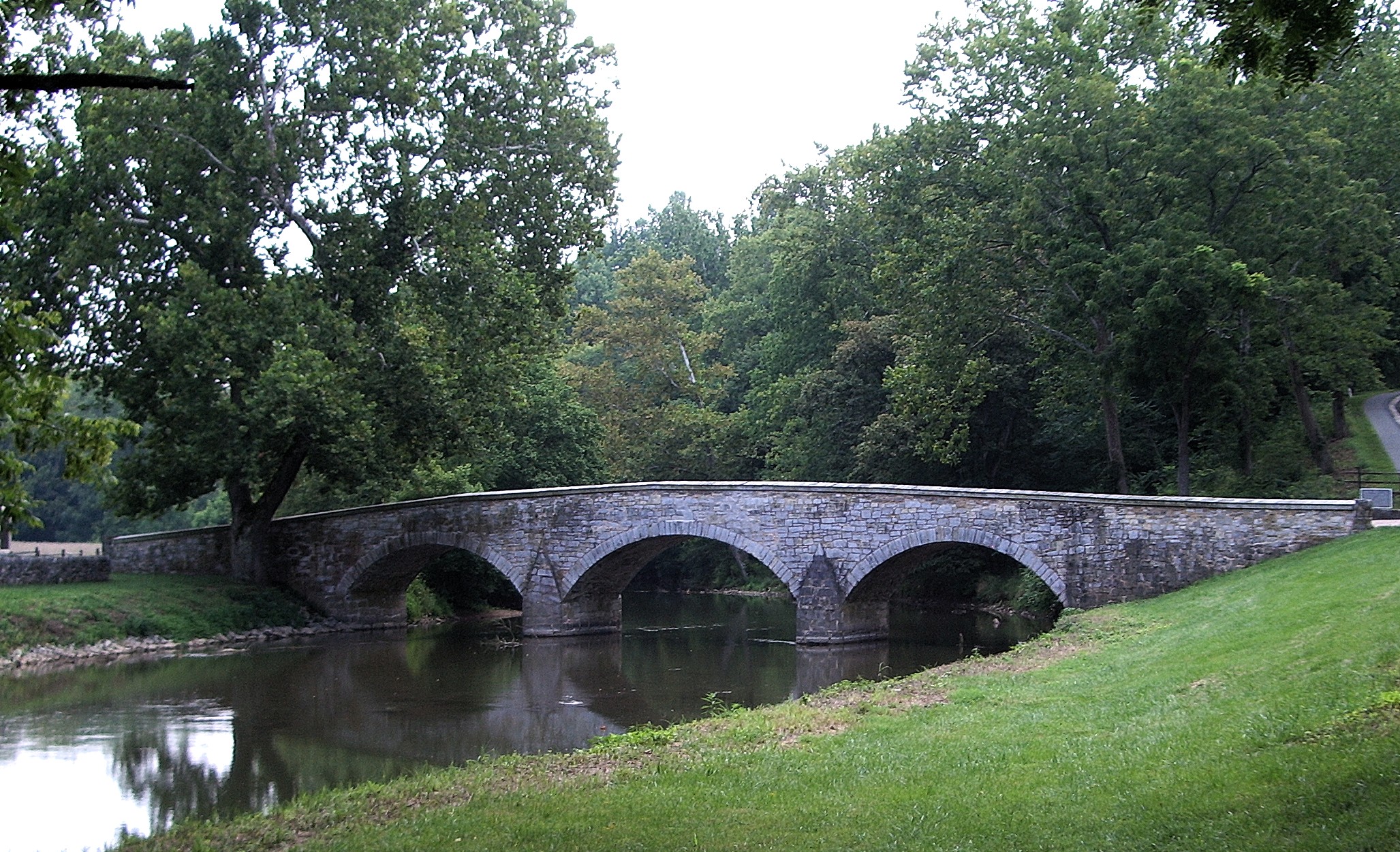
This modern-day view of Burnside’s Bridge on the Antietam Battlefield shows a sycamore tree (where the bridge and stone wall meet) that was present during the battle fought there in September 1862.
What images are conjured at the moment by the names Sickles, Gibbons, Reynolds, and Burnside? A group of blue-clad officers with contrasting military reputations perhaps? Or four extraordinary varieties of facial hair? But to some readers, these names would immediately be associated with massive trees, hardwoods present when these generals earned fame—or notoriety—on Civil War battlefields.
The first three of these “witness” trees are associated with the Battle of Gettysburg, and the Burnside tree stands beside the bridge named after him at Antietam. The Reynolds and Sickles trees are 200-year-old white oaks, while the John Gibbon and Ambrose Burnside trees are a black walnut and a sycamore.
Witness trees survive on many battlefields across the country, but more attention has been paid recently to those found in what was the eastern theater of the war. There have been a series of books published in the last several years on the trees that survive on the Gettysburg Battlefield, and the National Park Service has a scavenger hunt at Manassas dedicated to finding the old trees.
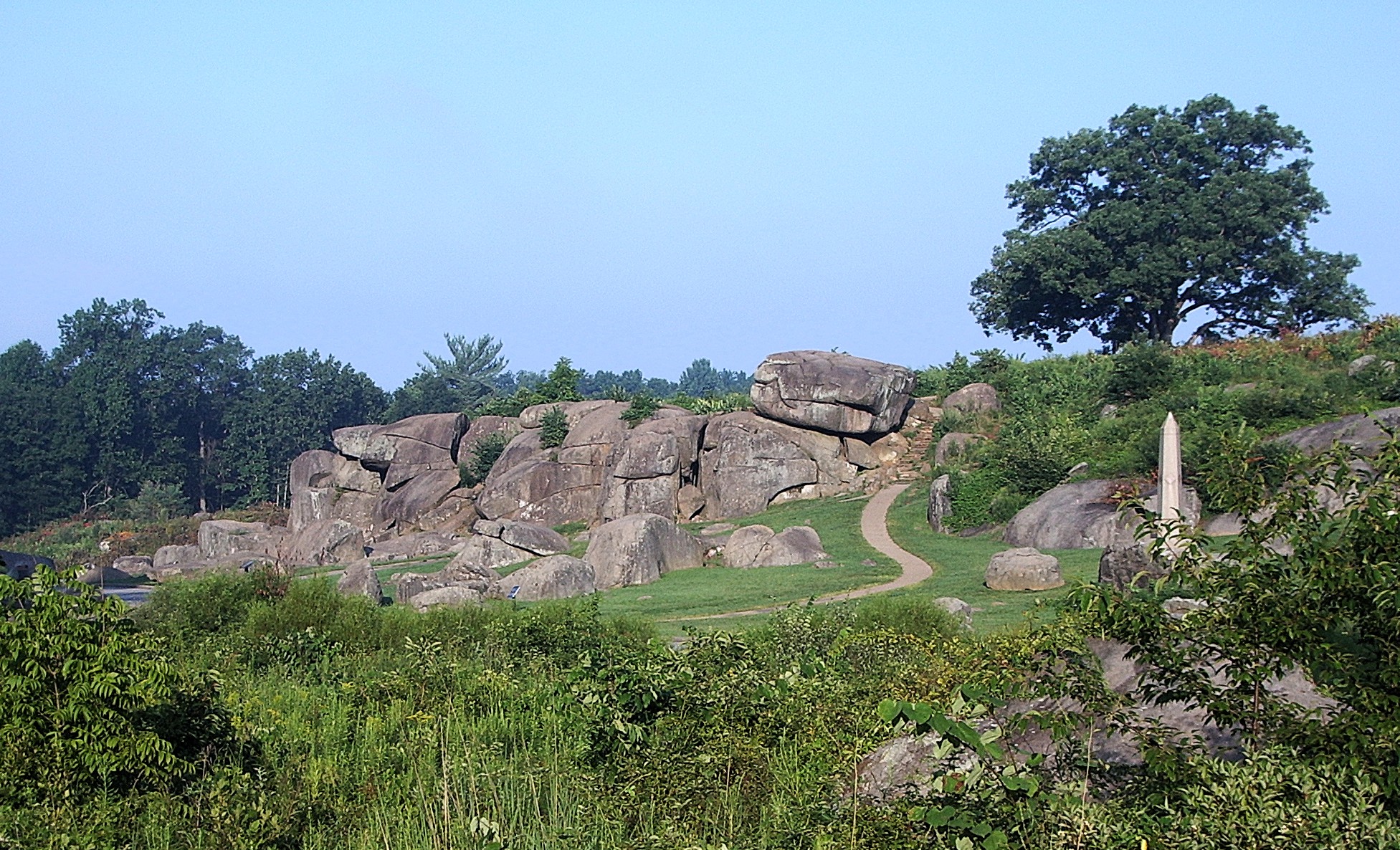
These sentinels weren’t the only “witnesses” to the war, of course, as other natural tracers through time include the unusual rocks that crop out on several battlegrounds. These geological markers were made even more famous when military historian William Frassanito used them in the 1970s to aid his photographic journey in time at Gettysburg. Without these unusually weathered and distinctive boulders, more of Alexander Gardner’s photographs might have remained as enigmatic as his gruesome Harvest of Death study.
 dailylocal.com
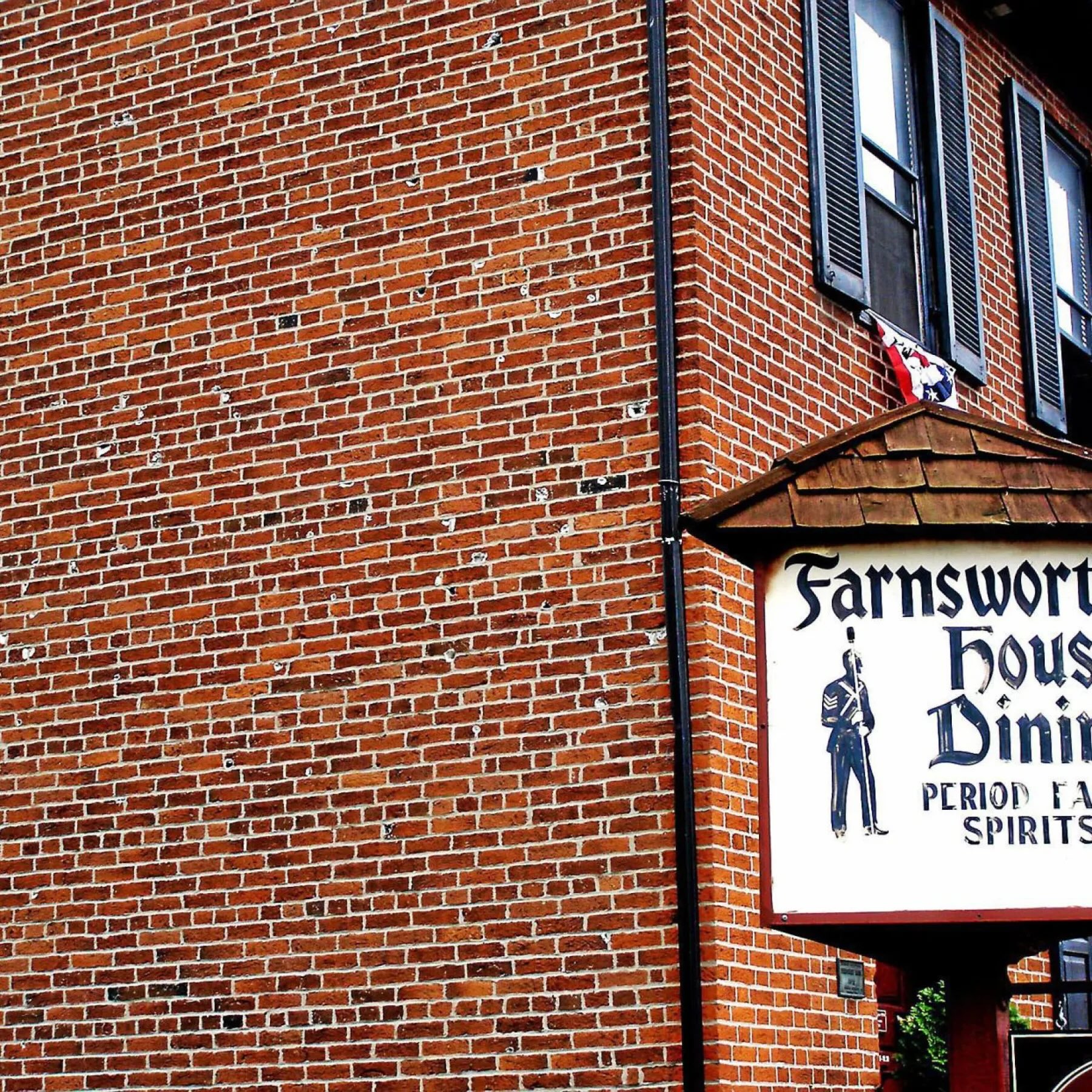
The Farnsworth House in Gettysburg is one of several local buildings that still bears scars from the battle fought there in July 1863.
Other, more violent and unnatural tracers bring history alive in the form of bullet holes in fences and siding and artillery shells embedded in masonry, all of which provide a personal connection with events from the past. Famous buildings can help modern-day visitors form a similar relationship with occurrences that took place more than a century and a half ago.
The igneous rocks at Gettysburg are such good tracers through time because they are so durable: their physical appearance changes over geological, not historical, time spans. As a result, the outcropping hard diabase boulders at Devil’s Den and those capping and surrounding the Round Tops are extremely similar in appearance in photographs from either 1863 or 2026. The same can’t be said for the trees, because they often doubled or tripled in trunk diameter and overall mass in the last 170 years.
White oaks are the most common witness trees at Gettysburg, and this is true at other battlefields with expansive woodlots such as Manassas and Chickamauga. Old white oaks are such common survivors because they are so hardy, able to endure cold winters and hot, humid summers, and their dense, tough wood and stout dendritic structure allow them to survive harsh winds and severe ice storms better than some other similarly sized hardwoods. As a result, a healthy oak can last for two or three centuries—if it’s not blown apart by artillery. In ideal conditions, some white oaks in the United States have survived for more than 500 years.
The great strength of these oaks can also diminish their survival rate, as the wood is prized for furniture making and shipbuilding. More than a few potential witness trees have disappeared from the battlefields of Tennessee and Kentucky, only to be reincarnated in the form of whiskey barrels.1
Other witness trees at Gettysburg include pignut, bitternut, and shagbark hickories (~10%), and walnut and tupelo trees (~5% combined).2 The ancient trees found in the town proper, including the famous Lincoln Tree, are American sycamores. That tree may have been older even than President Abraham Lincoln in November 1863, when he rode on horseback down Baltimore Street on the way to his famous 272-word speech at the dedication of the Soldiers’ National Cemetery.
The sycamores at Gettysburg and Antietam are known to have been witnesses of their respective battles because they appear in period photographs, albeit in smaller sizes. Of course, not every tree on a Civil War battlefield was captured on a glass negative, and many of the trees that survive today were saplings then. To identify the trees that weren’t previously documented in sepia, there are several other techniques available to historians and scientists.
The incremental borer, a term my students might use to describe my lecture style, is the most accurate tool available. These footlong drilling devices remove a pencil-sized core from the tree that allows for the counting of its rings. Geochronologists have used incremental borers to study the age of trees and the changes in climate over the last several thousand years, and the technique is both accurate and reliable. Nevertheless, the National Park Service isn’t fond of this invasive dating method so that a less precise but still useful noninvasive technique is usually used to estimate the age of the older hardwoods.
For most types of trees there is a direct correlation between the circumference of the trunk and its age, although this ratio varies by species and growth rate. When measuring distance around the trunk at 48 inches off the ground, the diameter of a white oak tree (in inches) will be one-fifth of its age (age = diameter X 5). There is a single prominent witness tree at the center of Devil’s Den that has a chest-high trunk perimeter of just over 160 inches (diameter = circumference/π); that tree has a diameter of 50 inches, a growth factor of 5.0, and is around 250 years old.
 Scott Hippensteel
A massive, 250-year-old white oak witness tree towers over Devil’s Den at Gettysburg.
Slower-growing trees like sugar maples (growth factor = 5.5) and shagbark hickory (7.5) will not be as big as, say, a similarly-aged faster-growing black walnut (4.5). There are other factors that influence the growth rate of trees, regardless of species. For example, trees
emerging from elevated ridges, or ground underlain by hard rock, do not grow as quickly or become as large over time. The Devil’s Den witness tree is probably even older than the circumference of its trunk would suggest because of the geology under its roots. The den is not the best place for a tree to thrive, let alone survive.
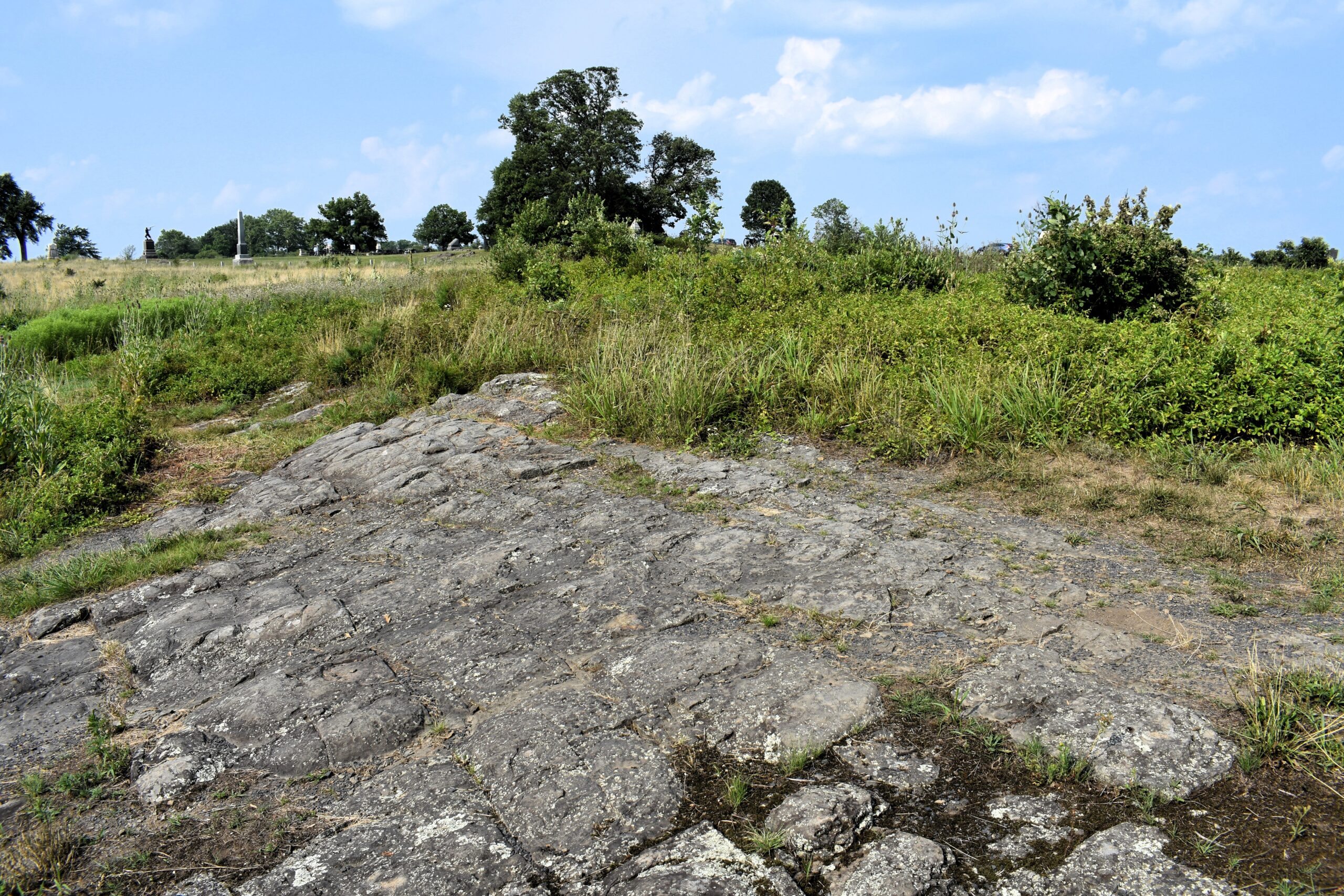
This is where our two natural tracers-through-time converge, where rocks and trees intersect with respect to growth rate and survivability—and even recognition as witnesses. Two-hundred-year-old eastern red cedars can be found on far-removed battlefields like Stones River in Tennessee and Manassas in Virginia, regions with very different geology. Stones River is similar to other carbonate battlefields like Antietam and Monocacy, while Manassas is geologically identical to Gettysburg. The cedars prefer rocky soils and limestone slopes with plenty of light and a well-drained substrate. This type of terrain is most likely to be found where the basement rock is fairly hard and durable and close to the surface, regardless of rock type—Henry Hill at Manassas, for example, or the cedar brakes at Stones River. At these disparate locations the shallow regolith did more than promote the growth of oaks and cedars to produce young witness trees, because the geology that was cropping out, or nearly cropping out, also assured that there wouldn’t be any agricultural crop growth.3 Farmers don’t usually clear a young forest for planting if the soil is too rock-strewn for tilling.
As a result, most witness trees are found on ridges and other areas with hard rock geology, where fields were never cleared for farming. Also, the larger the boulders in an area, the more likely the rocks are to survive being collected and concentrated into stone walls along the field breaks by the landowner; as a result, many witness trees can be found spread among outcrops or along fence rows. This is why witness rocks and trees are often found together. On battlefields where the fields continued to be farmed after the war, it made more sense to place monuments along these field breaks as well. As the battlefield evolved over time, the collection of monuments, hard rocks, and old trees all survived in the same areas, and all three can often be identified in original photographs of the dedication of various monuments from the 1880s and ’90s.
 Scott Hippensteel
The Gettysburg Battlefield’s famous Copse of Trees (background) stands above a diabase intrusion, which probably slowed the growth rates of the witness trees. At the same time, the outcropping rock prohibited tilling, increasing the chances the trees would survive, because rocks made it less likely the trees would be cleared to create farm fields.
Perhaps the highest density of witness trees from the Civil War can be found above the thin, hard rock igneous intrusions at Gettysburg. Pickett’s Charge was launched from one hard rock ridge, continued across the softer sedimentary rock and fertile soil underlying a half-mile of farm fields, before culminating on a second rise of igneous rock. The witnesses for this great event were mostly on the sidelines, where the diabase near the surface assured that the landscape would survive the plows of the next century. As a result, the 30 or more colossal trees that survive on Seminary and Cemetery ridges are probably significantly older than a circumference-based estimate would indicate, and their size and impressiveness somehow slightly suppressed, all because of the underlying geology they emerged from more than 200 years ago.
Scott Hippensteel is professor of Earth sciences at the University of North Carolina at Charlotte, where he focuses on coastal geology, geoarchaeology, and environmental micropaleontology. He has written four books about using science to illuminate military history: Sand, Science, and the Civil War: Sedimentary Geology and Combat (University of Georgia Press, 2023), Myths of the Civil War: The Fact, Fiction, and Science behind the Civil War’s Most-Told Stories (Rowman & Littlefield, 2021), and Rocks and Rifles: The Influence of Geology on Combat and Tactics during the American Civil War (Springer Nature, 2018). His latest book, Civil War Photo Forensics: Investigating Battlefield Photographs through a Critical Lens, was just released by the University of Tennessee Press.
Notes
1. White oakwood is particularly impermeable because it contains tyloses, which are natural barriers in the fiber that block the larger pores in the wood. Many American winemakers use white oak for barrels and casks.
2. The statue of Gouverneur Warren on Little Round Top sits among at least three tupelo witness trees.
3. Regolith is all the material from the hard bedrock to the surface of the earth. Soil represents the top of the regolith that supports the growth of plants.