 Library of Congress
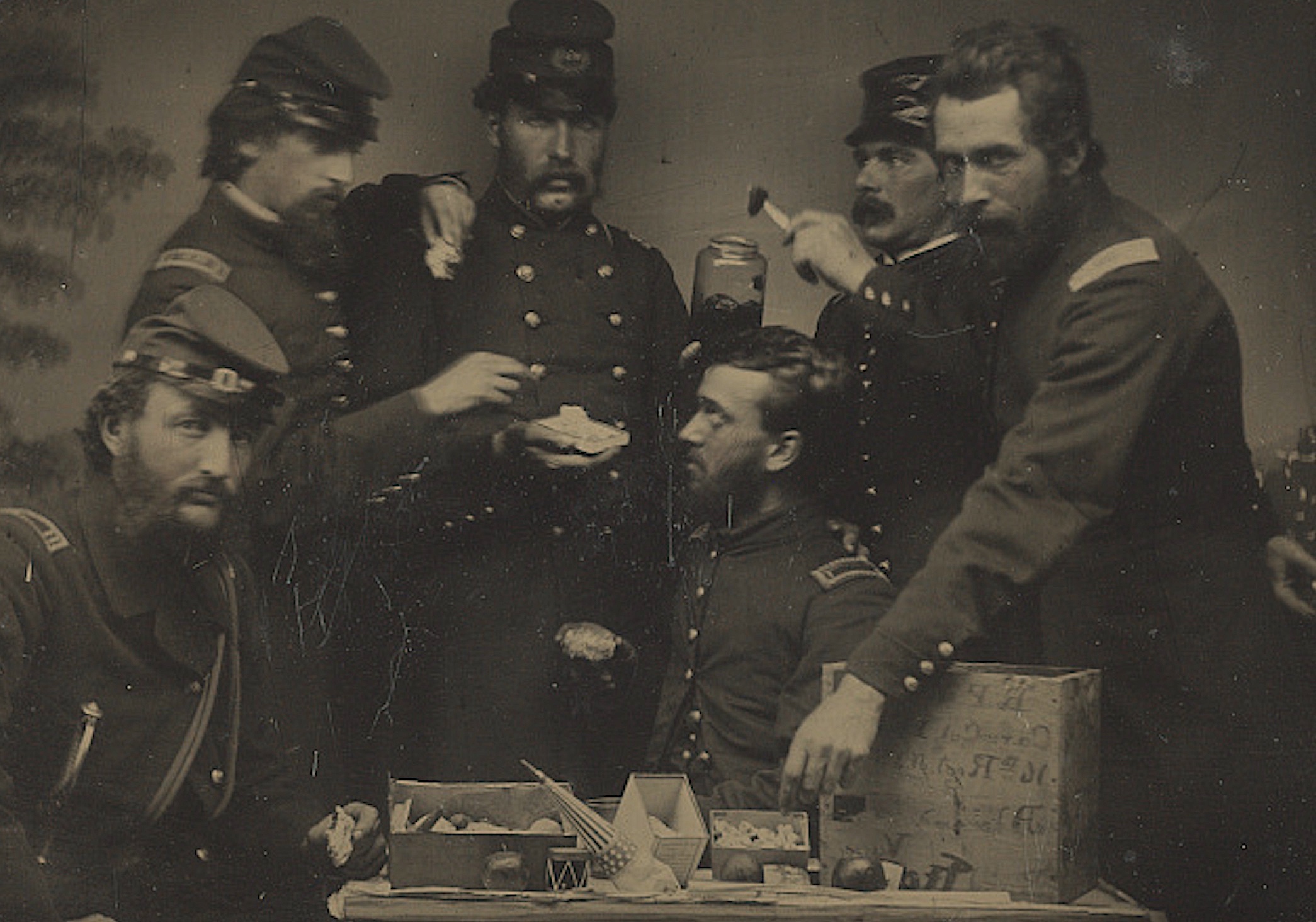
Union officers open a box of goodies from home in a photograph made early in the Civil War.
Sometime in 1862, a newspaper published in La Crosse County, Wisconsin, ran an article titled “What to Send to Soldiers.” The aim of its author was not, as the title implied, to provide useful tips to those interested in sending packages to family or loved ones who had recently enlisted in the Union army. Instead, he used the article as an opportunity to poke fun at people—namely women—who were reportedly shipping impractical items to the front.
What follows is a reproduction of the article, accompanied by an explanation of the author’s motivation, that appeared in a postwar history of La Crosse County:
Little as that phase of the war appeals to the student of a later generation who studies the conflict only as a part of the development of a great nation, it had its humorous phases. Perhaps its very contrast with the horrors that the lists of dead and wounded brought home to nearly every family, made its exploiting an occasional necessity, to relieve the tension of the time. One of the things that attracted the attention of a member of the La Crosse press was that the feminine zeal to be doing something for the country in its hour of need found little outlet except in furnishing supplies for the soldiers in the field. The evident inability to distinguish between the necessaries to which a soldier on the march must limit himself, and the dainty little conveniences which are so dear to the feminine heart, led to the shipment of vast quantities of useless, not to say absurd, articles to the front.
The editorial comment on the situation is headed, “What to Send the Soldiers,” and proceeds to say that the foot soldier has only fifty or sixty pounds to carry in his knapsack, besides his gun, which was nothing to carry all day in the hot sun, or through marshes, through a battle, advancing or retreating, and suggests the following list of things which it would be handy for him to have: “Ambrotypes in five-pound cases; life of Josephus in ten volumes; patent Dutch ovens, full size; feather beds and pillows; ripe watermelons; firkins of fresh butter; sample from the last litter of pups; baby wagons for the use of the infantry; castor oil in bladders; frosted cakes in bandboxes; catnip tea, well stirred; fluid lamps, without wicks; hair brushes; fiddle strings in the original package; vases for flowers; ice cream freezers; flesh brushes, with directions for use; fresh eggs; sand to scour knives with; pickles in glass jars; honey in little baskets; tea in caddies; hot water for soaking feet; nutmeg graters with handles; maps of the country on rollers; fanning mills for fevers; parlor skates; Suffolk pigs for pets; empty dry goods boxes; lead pipe for bullets; prepared kindling wood in bundles; flower seeds, labeled; old horse collars; mush and milk in pans; mouse traps; cinnamon essence for the hair; clothes lines and pins; chicken gravy in bowls.
All such articles the soldiers can carry as well as not, and if captured the enemy will wonder at the inexhaustible resources of the north.
Source
Memoirs of La Crosse County (1907)