 Library of Congress
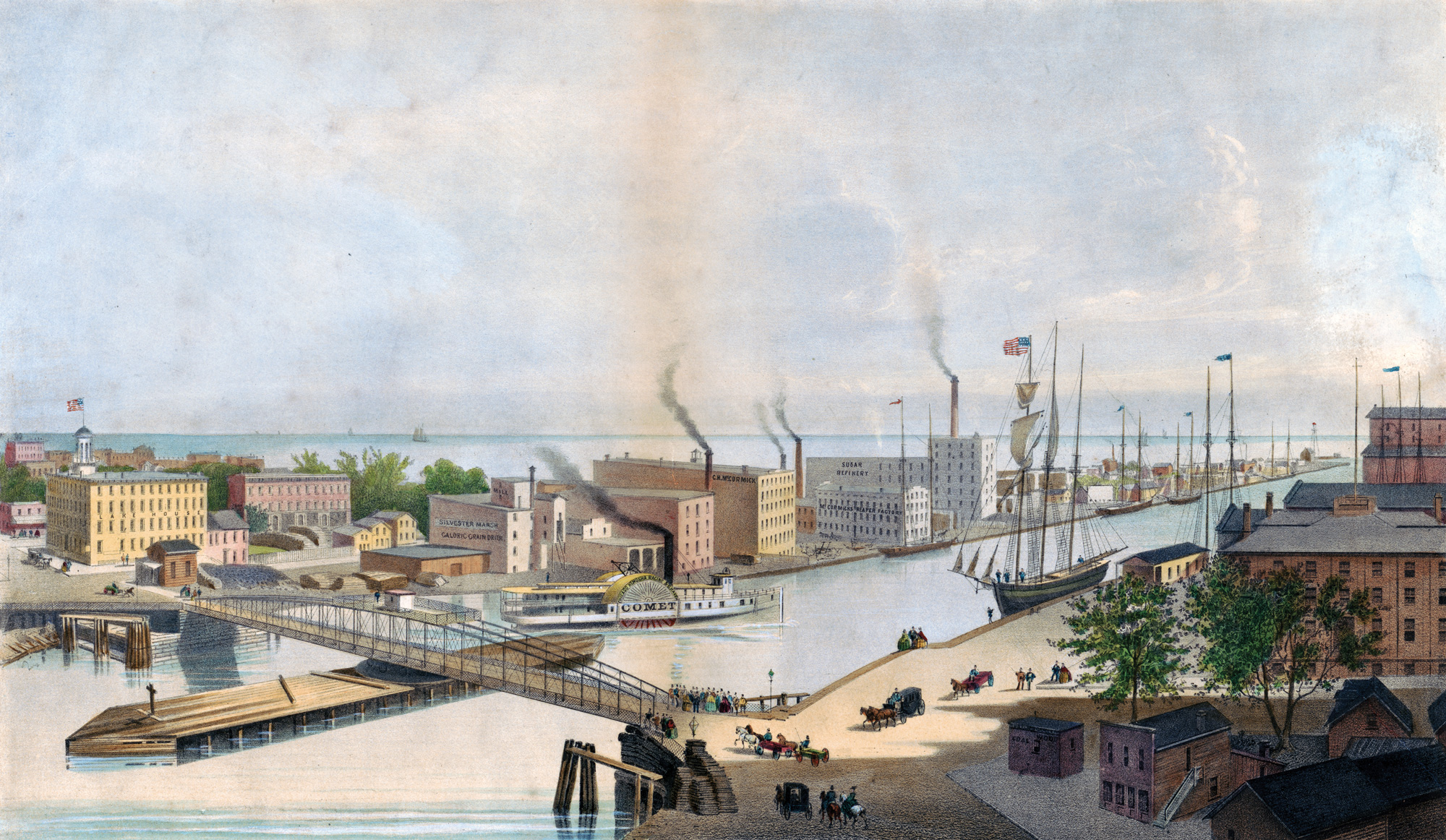
In this lithograph by Charles Shober, the city of Chicago is shown as it appeared around the beginning of the Civil War. For the next four years, the city would experience rapid growth and become an important source of troops and supplies for the Union armies.
Though located far from the front lines, Chicago—the country’s ninth most populous city in 1860—nevertheless felt the Civil War’s impact. War-related demand for goods boosted the city’s already burgeoning commercial economy; by conflict’s end, Chicago industries had sold millions of dollars’ worth of supplies to the U.S. armed forces. And the wartime establishment of a stable system of banks (Chicago would boast more national banks than any city in the country by 1865) further fueled its industrial expansion. Politically, while the traditionally Democratic stronghold was home to a vocal band of antiwar Copperheads, pro-Union sentiment remained strong, as evidenced by the tens of thousands of men from Chicago and its surrounding counties who served in the Union army (nearly 4,000 of whom died) and the unmitigated success of the two massive Sanitary Fairs held in the city in 1863 and 1865 that raised hundreds of thousands of dollars for the war effort. Chicago is probably best known, however, for the POW camp that operated on the south side of the city beginning in January 1863. An estimated 4,500 Confederate captives died in the facility, known as Camp Douglas. At war’s end, the prison was dismantled.
Interested in visiting Chicago? To help make the most of your trip, we’ve enlisted two experts on the area—Michael Weeks and Patrick Brennan—to offer suggestions for what to see and do in and around the historic city.
CAN’T MISS
The Chicago History Museum (1601 N. Clark St.; 312-642-4600) is fantastic. If you want an overview of the city’s story—the first settlers, the Great Chicago Fire, industry and the stockyards, the growth of the labor movement, the city’s musical legacy—it’s all here, accessibly presented. (They also have the bed that Abraham Lincoln died in; how it got here, I don’t know, but that’s Chicago.) MW
 Michael Weeks
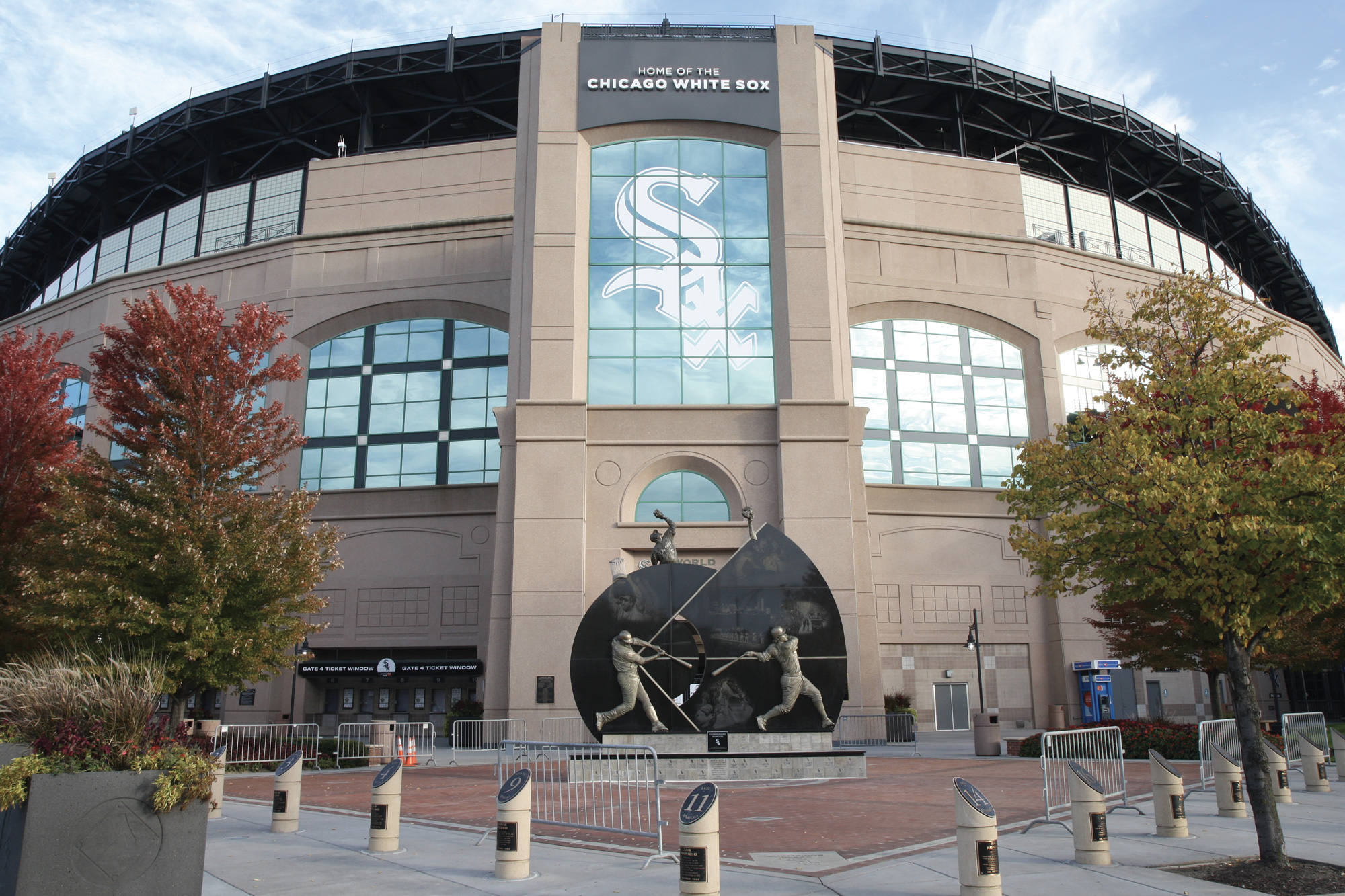
Guaranteed Rate Field
We’ve got sports fans covered: Soldier Field (1410 Museum Campus Dr.; 312-235-7000) for the Bears, the United Center (1901 W. Madison St.; 312-455-4500) for the Bulls and the Blackhawks, Guaranteed Rate Field (333 W. 35th St.; 312-674-1000) for the White Sox, and Wrigley Field (1060 W. Addison St.; 773-404-2827) for the Cubs. PB
BEST KEPT SECRET
 Michael Weeks
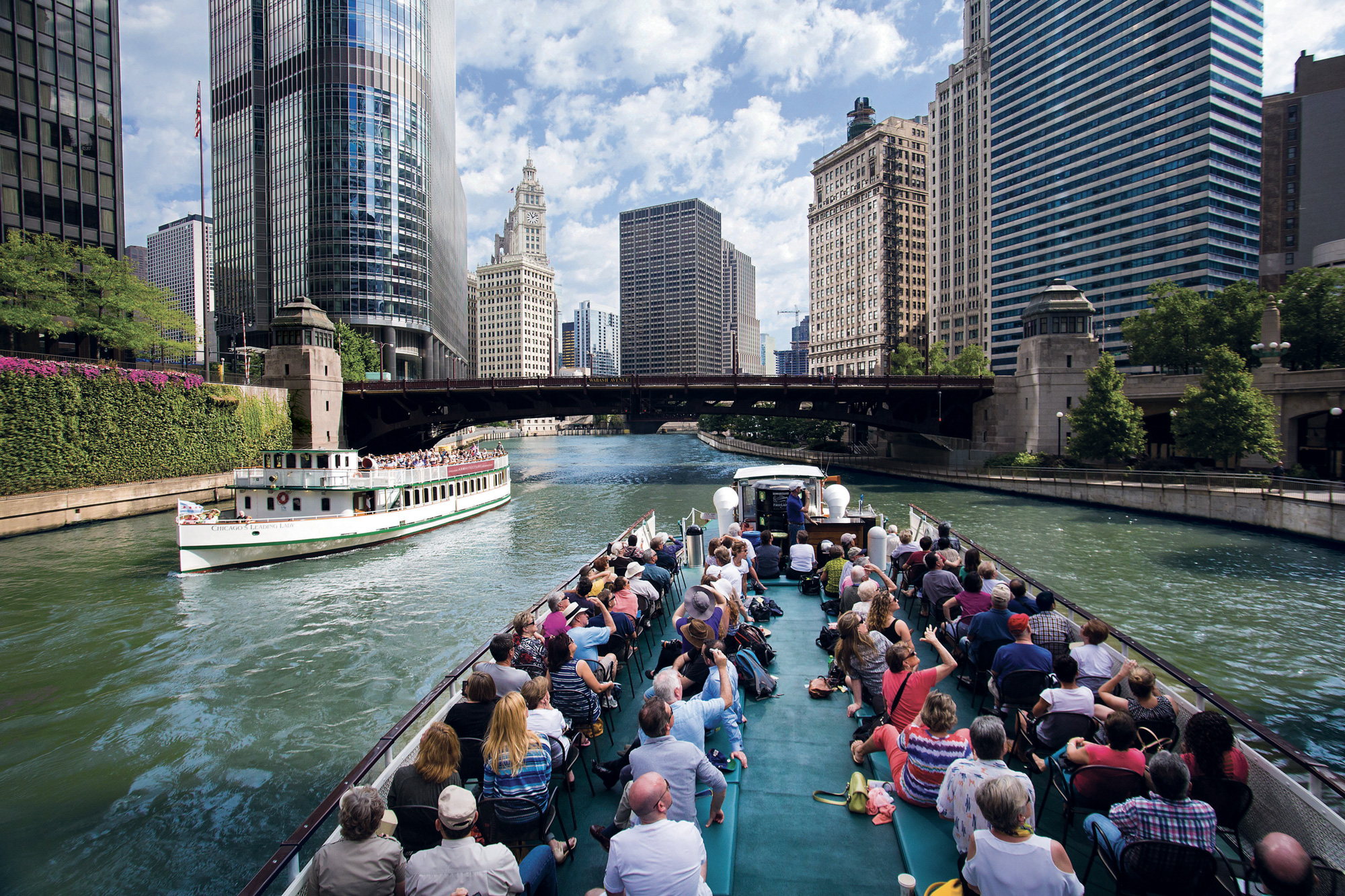
Chicago Architecture Center River Cruise
Every time we have visitors, we take them on the Chicago Architecture Center River Cruise, and it’s never gotten old. Whether your interest is history, architecture, sightseeing, tall tales set straight, or just an easy cruise through the city, this tour has something for everyone. Get tickets online at architecture.org or visit the brand-new Chicago Architecture Center (111 E. Wacker Dr.; 312-922-8687) for a great preview of the city’s architectural heritage. MW
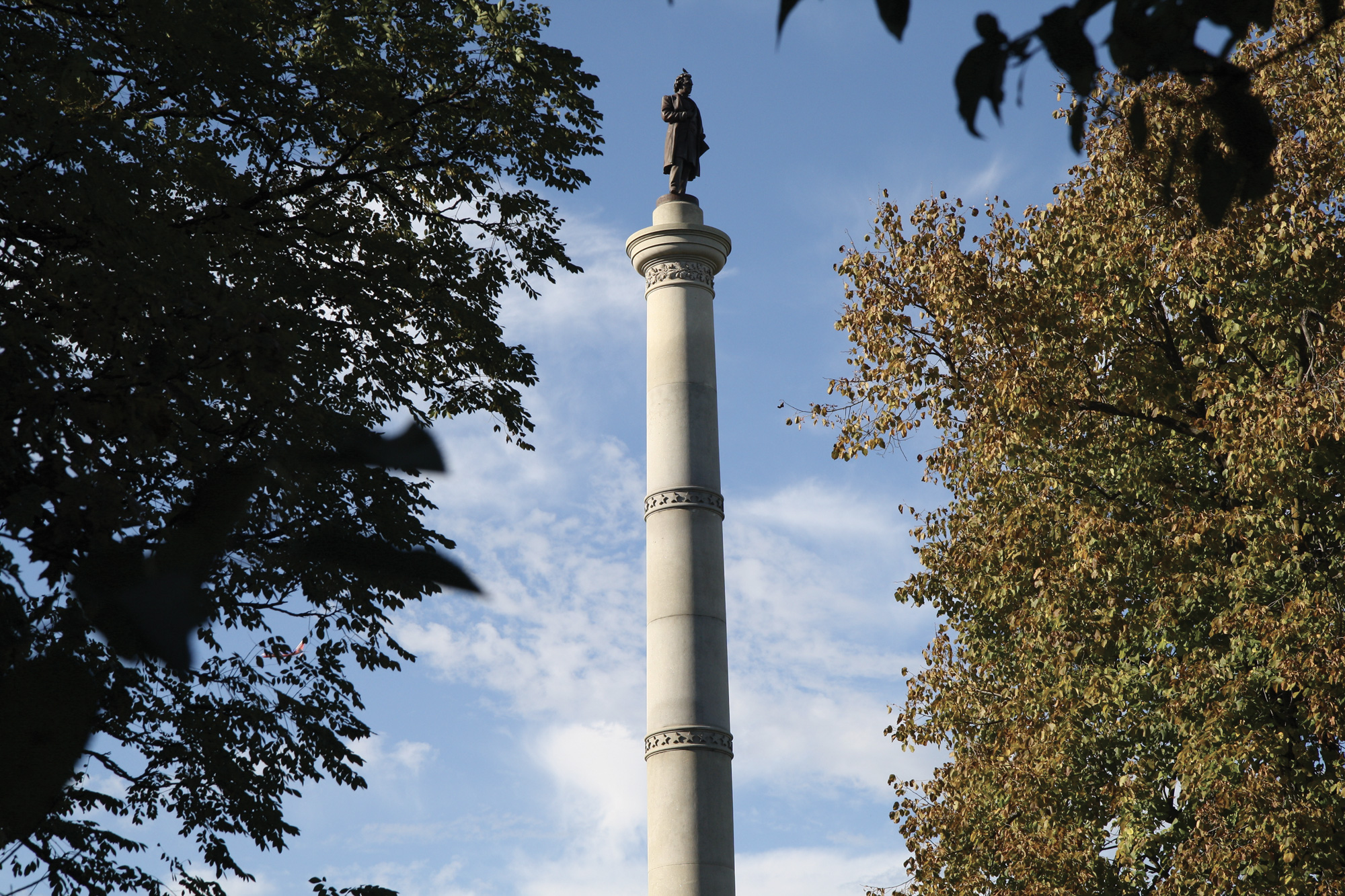
Stephen A. Douglas Tomb (636 E. 35th St.; 312-225-2620)—the final resting place of the man known as the “Little Giant,” who is best known for his prewar debates with Abraham Lincoln—remains an impressive site, tucked away in a residential neighborhood near where the Confederate POW prison, the aptly named Camp Douglas, once stood. PB
 Michael Weeks
Stephen A. Douglas Tomb
BEST FAMILY ACTIVITY
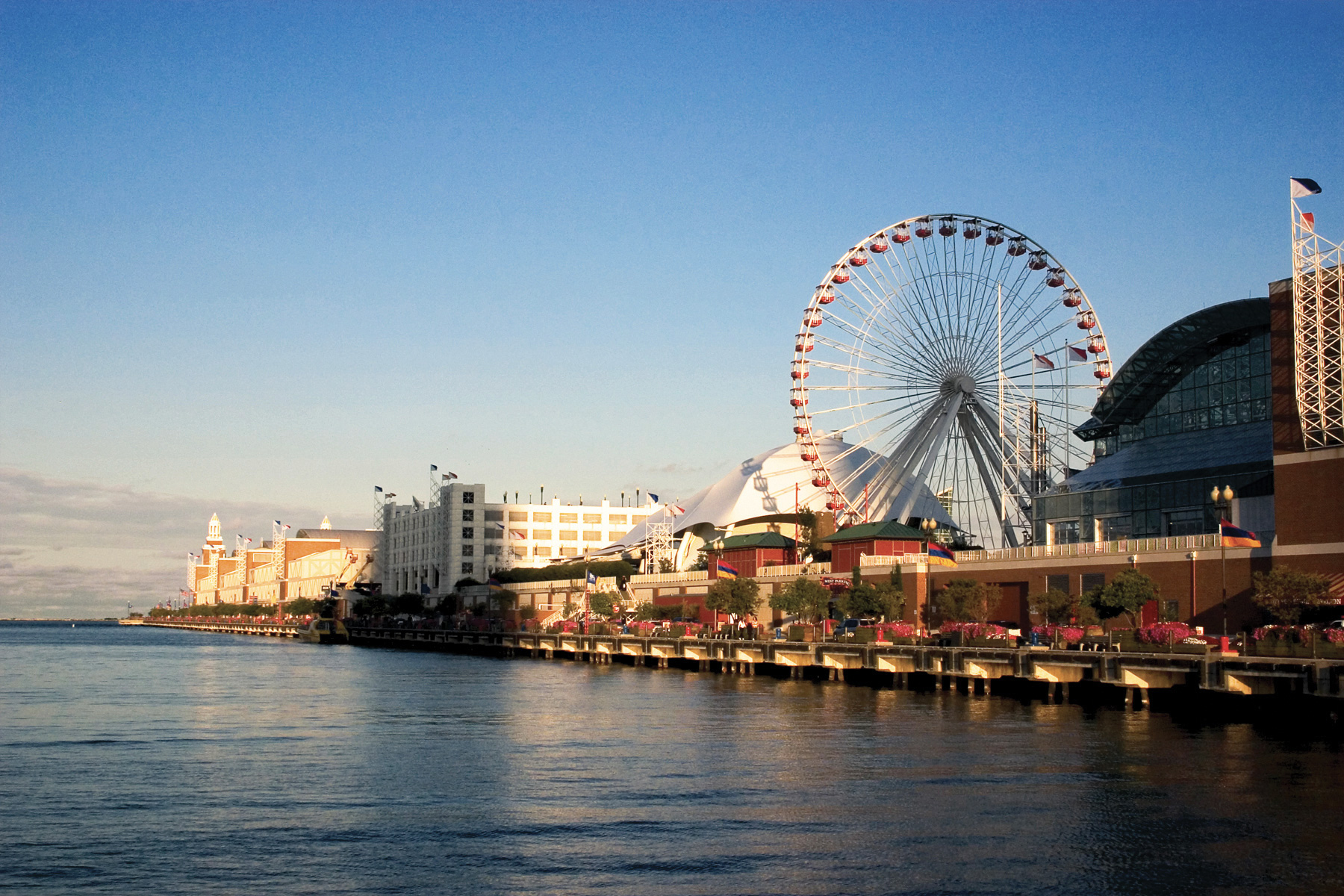
Navy Pier (600 E. Grand Ave.; 312-595-7437) is always a good bet for lots of food, kid-oriented performances, an oversized Ferris wheel, and the Chicago Children’s Museum, an interactive playground where they’ll also learn a thing or two. MW
 Michael Weeks
Navy Pier
You can’t go wrong with a visit to Grant Park (337 E. Randolph St.; 312-742-3918), which includes wading pools, skate parks, spectacular views, formal gardens, the famous Buckingham Fountain, and an 11,000-person-capacity bandshell called Pritzker Pavilion—all of which combine to make Chicago’s lakefront a breathtaking experience. And it’s free. PB
BEST CIVIL WAR SPOT
 Michael Weeks
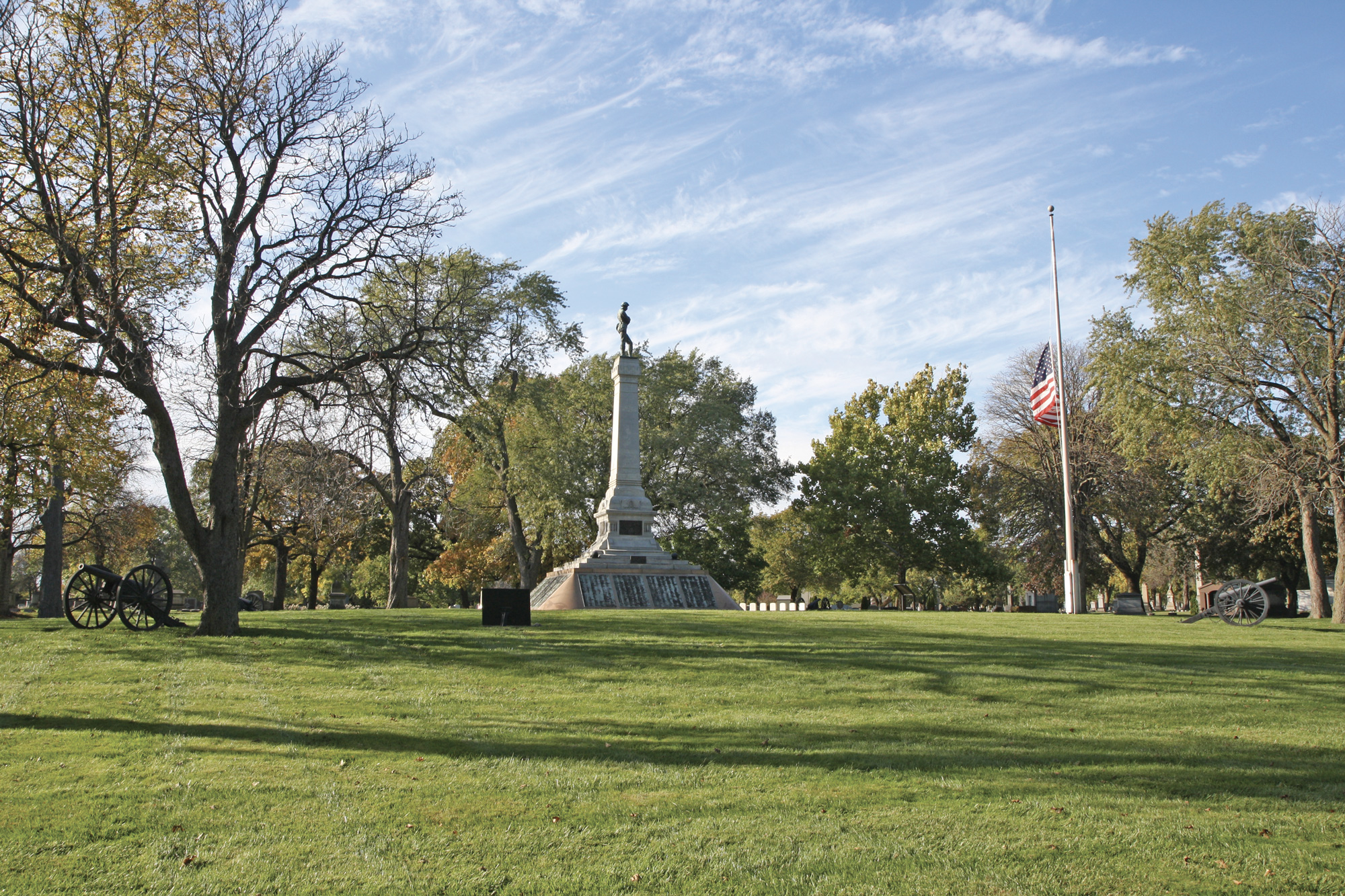
Oak Woods Cemetery
Though virtually nothing remains above ground, you can still find whispers of the prison at Camp Douglas. There’s a historic marker at 3232 South Martin Luther King Drive, but check the Camp Douglas Restoration Foundation website to see if one of their frequent archaeological digs will be coming up. (They love visitors!) At Oak Woods Cemetery (1035 E. 67th St.; 773-288-3800) is the largest mass burial site of Confederates north of the Mason-Dixon line, a massive monument to the estimated 6,000 men who died at Camp Douglas. If it’s Union monuments you seek, you’ll find plenty on the north side at Rosehill Cemetery (5800 N. Ravens-wood Ave.; 773-561-5940), which is host to generals, unknown soldiers, and impressive memorials to Illinois units. If a guided Civil War tour of Rosehill is not on the schedule, there’s also a self-guided Civil War brochure as well as a small Civil War museum. MW
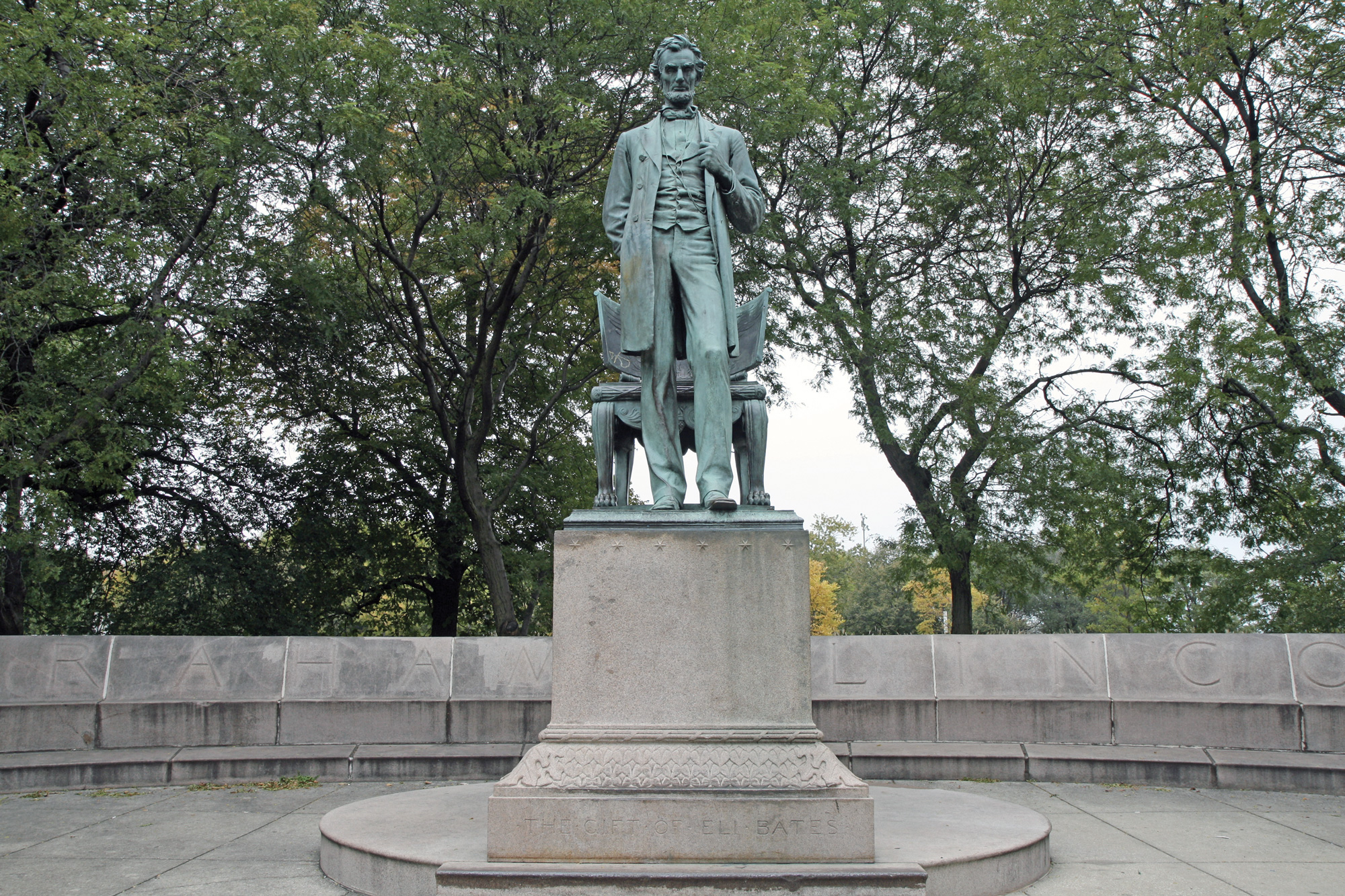
Many spectacular Civil War-themed statues dot Chicago’s landscape: Phil Sheridan at Belmont Avenue and Sheridan Road, Johnny Reb atop the Confederate Memorial in Oak Woods Cemetery, John Logan in Grant Park, and Ulysses Grant in Lincoln Park. But my favorite of them all is Augustus Saint-Gaudens’ 1887 bronze statue of Abraham Lincoln located just east of the Chicago History Museum in Lincoln Park (2045 N. Lincoln Park West; chicagoparkdistrict.com). Lincoln perfectly embodies noble tragedy, a tribute to both the artist and the subject. As an aside, Edwin Booth—Lincoln assassin John Wilkes Booth’s brother—once visited the mostly deserted park at an early hour and lay a rose at Lincoln’s feet. PB
 Michael Weeks
Augustus Saint-Gaudens’ Abraham Lincoln statue
BEST EATS
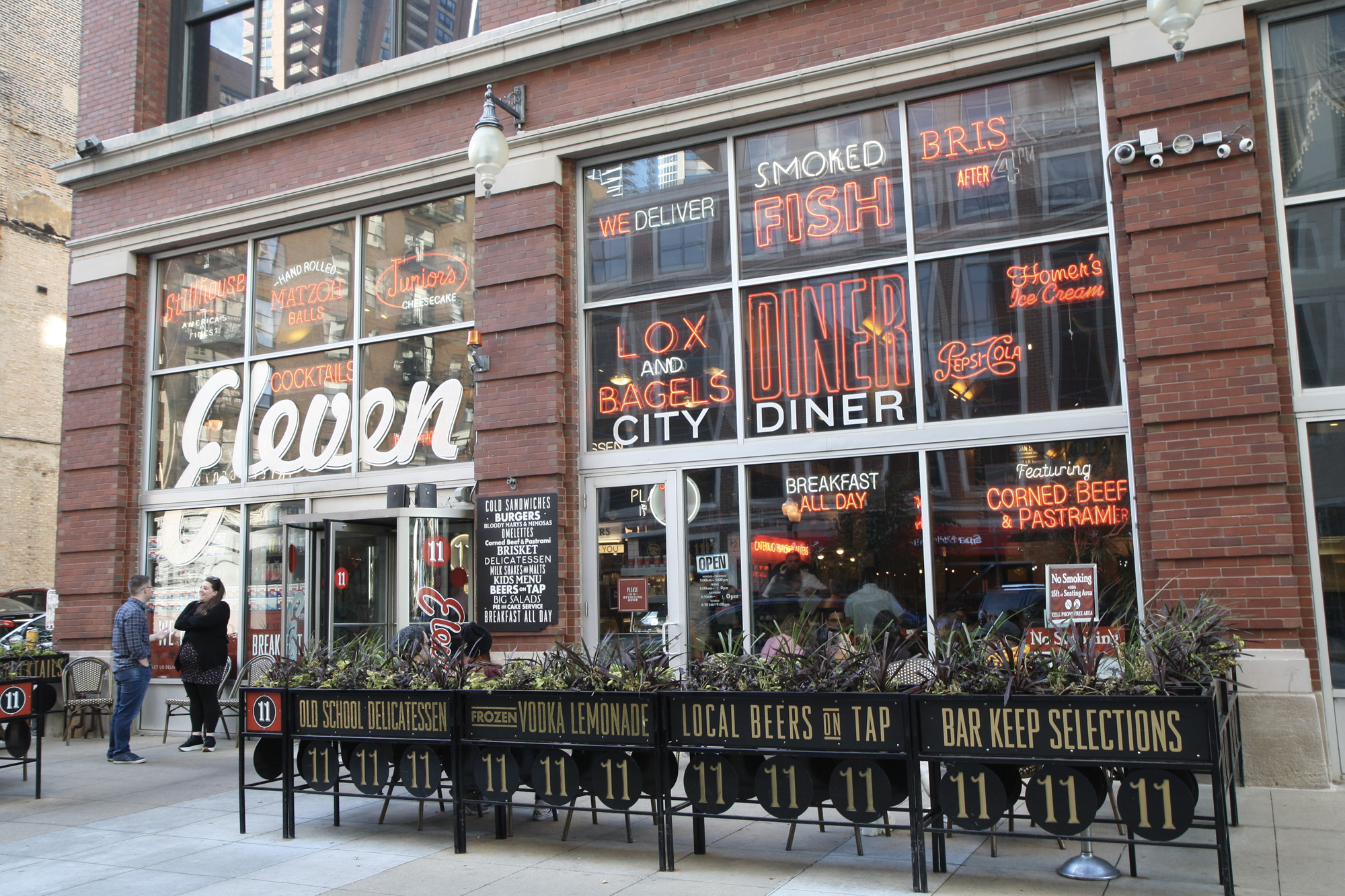
Breakfast at White Palace Grill (1159 S. Canal St.; 312-939-7167)—served 24 hours—is a real treat. Just a five-minute cab ride from the Loop, you’ll find large, cheap, tasty diner eats and a clientele ranging from the average Joe to heavy-hitting politicians, just like when it opened in 1939. A good lunch option is Eleven City Diner (1112 S. Wabash Ave.; 312-212-1112), which provides Jewish deli fare with a twist, a soda fountain, and a lively crowd. The food is fantastic and plentiful; load up your mac and cheese with everything you can imagine, or challenge yourself with a thick-cut salami sandwich (grilled or cold) and a fresh milkshake, still in the tin. For dinner there’s The Berghoff (17 W. Adams St.; 312-427-3170), a Chicago staple since 1898 that serves German-inspired dishes. Try the classic wiener schnitzel with a stein of beer from the in-house brewery, then finish it off with some authentic black forest cake. MW
 Michael Weeks
Eleven City Diner
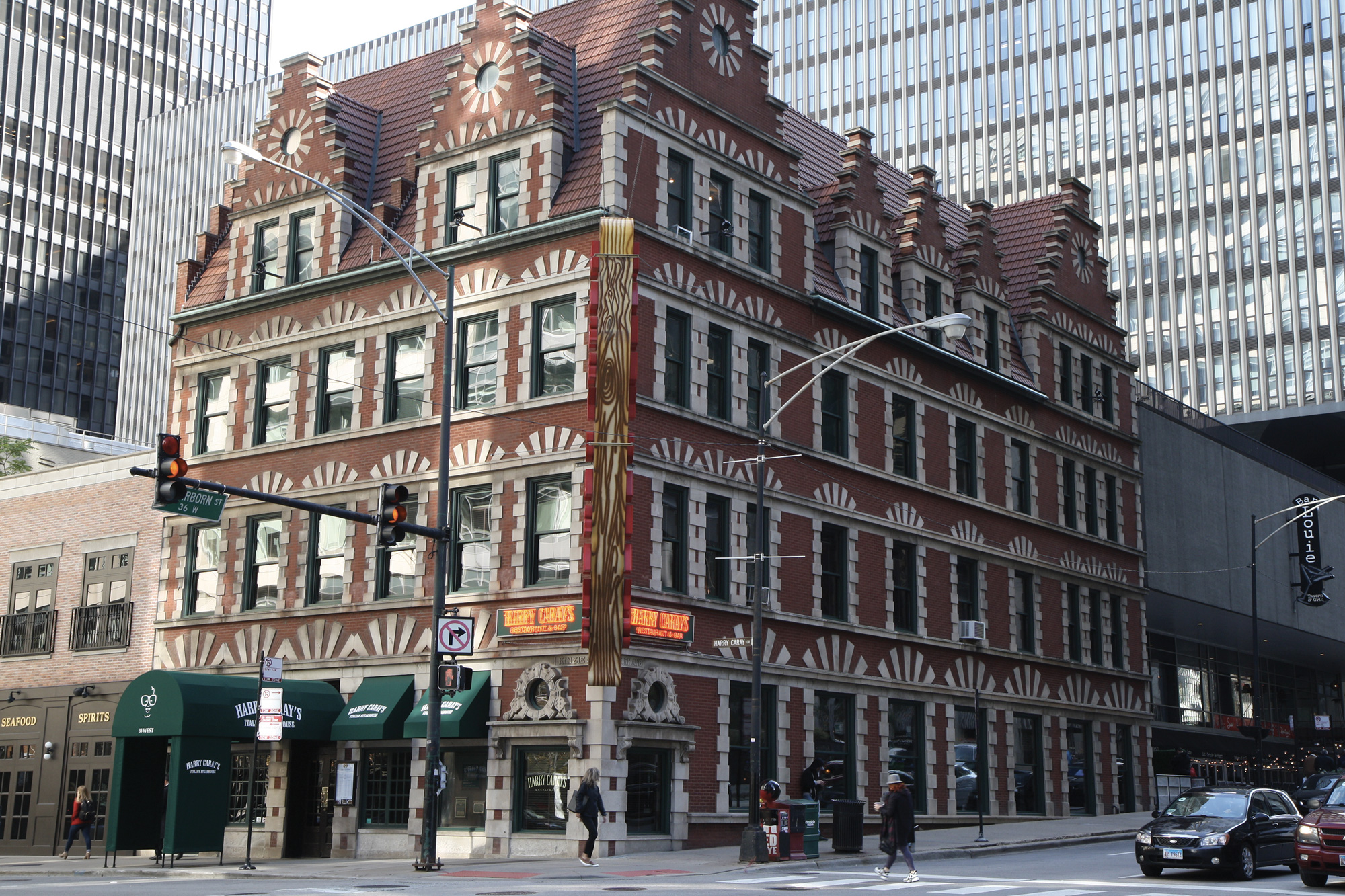
Harry Caray’s (33 W. Kinzie; 312-828-0966) has great Italian-American fare. In a city where sports celebrity restaurants come and go, this one has thrived for over 30 years. As a bonus, its stunning building is on the National Register of Historic Places. If you’re looking for something kid-friendly, lunch or dinner at the Rainforest Cafe (605 N. Clark St.; 312-787-1501) is a good option. Gibson’s Bar & Steakhouse (1028 N. Rush St.; 312-266-8999) might have the best steaks in the city with an ambience to match. If you’re not in the mood for red meat, try Shaw’s Crab House (21 E. Hubbard St.; 312-527-2722), which is actually two restaurants in one: a 1940s white-tablecloth dining room and an adjoining, somewhat raucous, oyster bar. Seafood extraordinaire. PB
 Michael Weeks
Harry Caray’s
BEST SLEEP
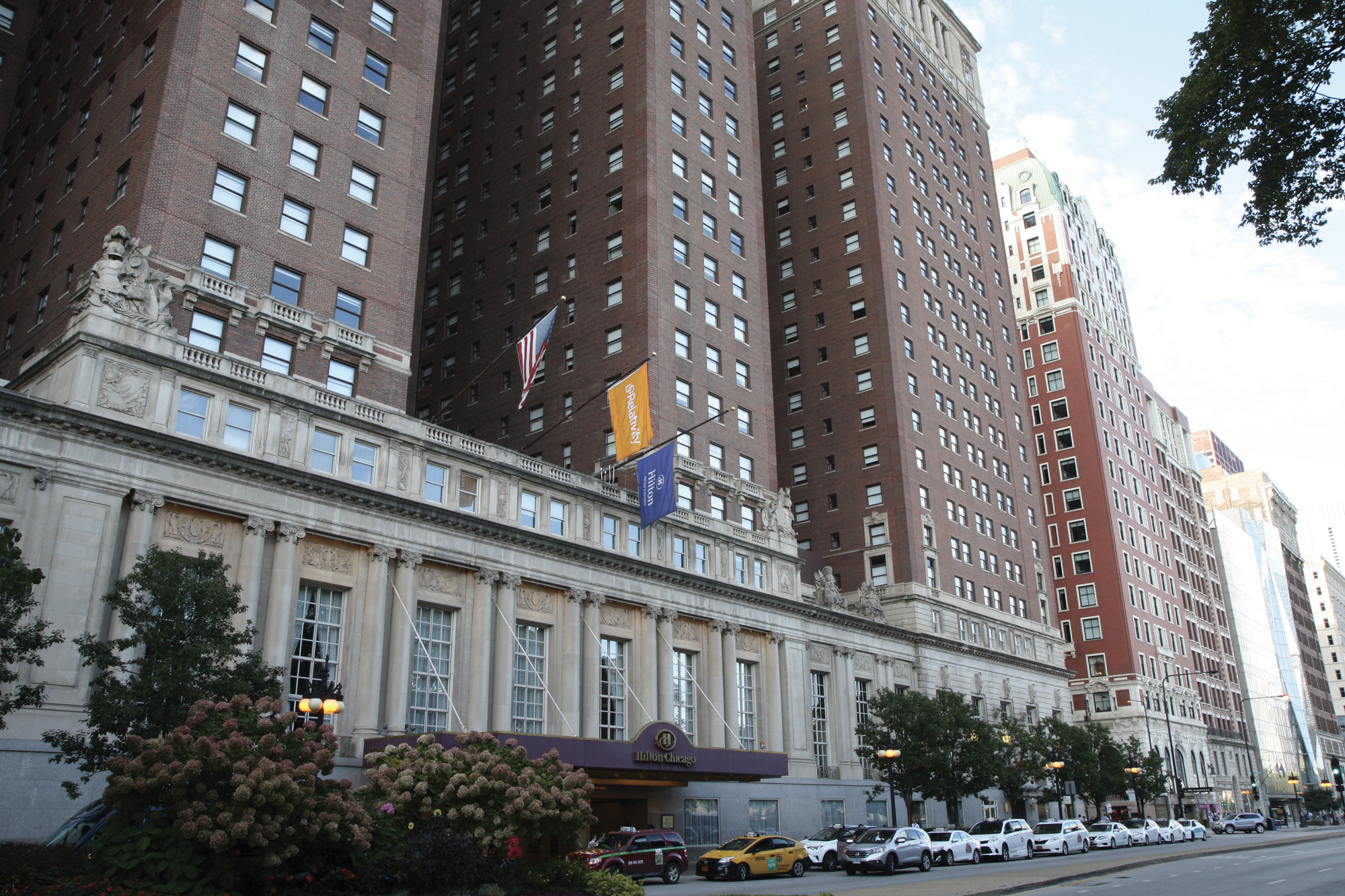
Chicago has hotels for every taste, but if you want a great location and a bit of history, stay south of the Chicago River and look to the Loop. The Hilton Chicago (720 S. Michigan Ave.; 312-922-4400), once the world’s largest hotel, was ground zero for the 1968 Democratic Convention and the accompanying riots. Across the street is The Blackstone (636 S. Michigan Ave.; 312-447-0955), where you can still stay in the original “smoke-filled room” where politicos broke a stalemate and nominated Warren G. Harding as the Republican candidate for president in 1920. MW
 Michael Weeks
The Hilton Chicago
Besides being Chicago’s finest example of late 19th-century opulence and having an address in the heart of the city’s downtown, The Palmer House (17 E. Monroe St.; 312-726-7500) hosted the Reno Court of Inquiry into the Battle of Little Bighorn two and a half years after the massacre. Practically every major Civil War figure stayed there at some point after the war, including Grant and Sherman. PB
BEST BOOK
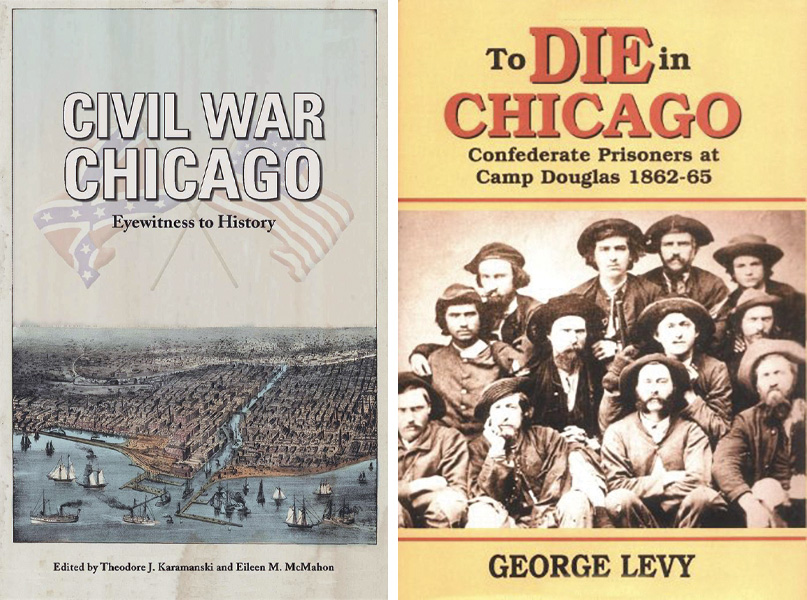
Theodore J. Karamanski and Eileen M. McMahon’s Civil War Chicago: Eyewitness to History (2014) is a great overview of the leadup to the war, Lincoln’s nomination, and the politics that divided the city. It includes a section about Chicago’s Civil War sites. MW
George Levy’s To Die in Chicago (1999) is a well-written, well-organized, and thoroughly researched work on the Camp Douglas prison and its effect on the city during wartime. PB
About Our Experts
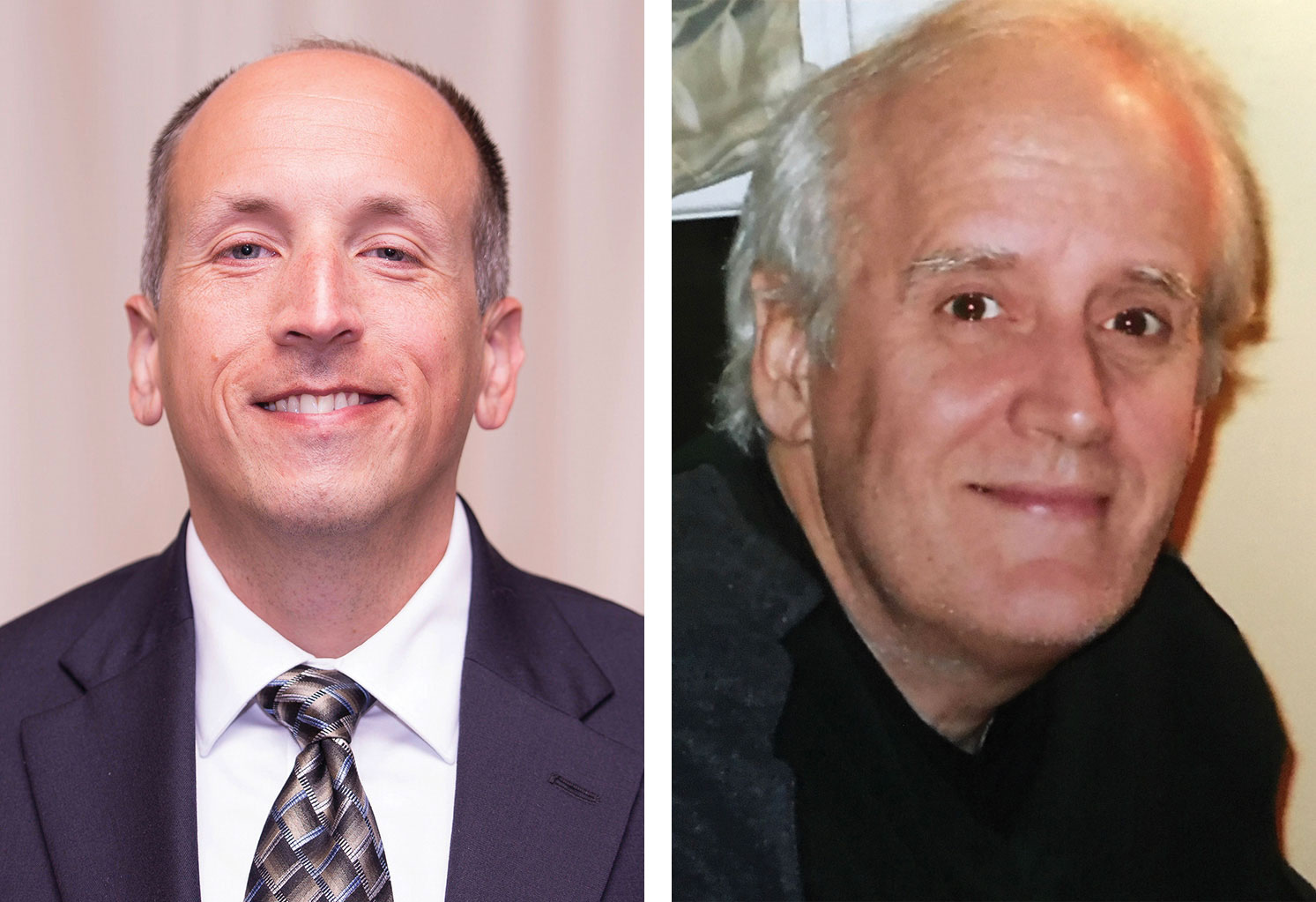
Michael Weeks (left) is a lifetime Chicagoland resident who lives in the South Loop neighborhood. He is the author of The Complete Civil War Road Trip Guide (2016). Patrick Brennan (right) is a music producer who was born and raised in Chicago. The author of Secessionville: Assault on Charleston (1996), he is a member of the Monitor’s editorial advisory board.