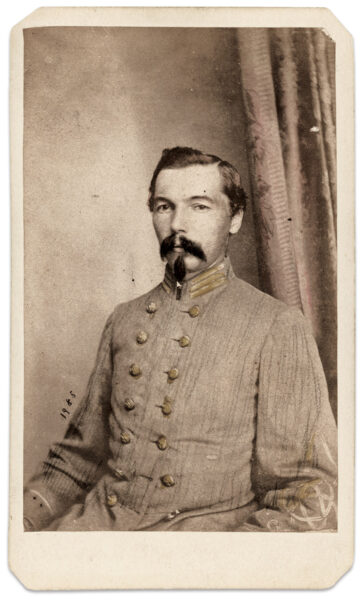
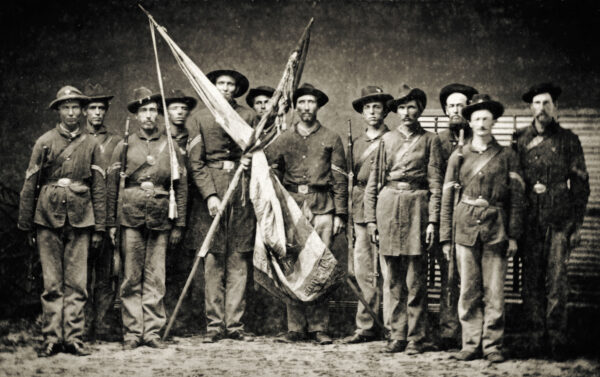
“Thousands of men … [were] cramped up in a narrow trench, unable to go out, or to get up, or to stretch or to stand without danger to life and limb; unable to lie down, or to sleep, for lack of room and pressure of peril; night alarms, day attacks, hunger, thirst, supreme weariness, squalor, vermin, filth, disgusting odors everywhere; the weary night succeeded by the yet more weary day.…”
Confederate artillerist Robert Stiles, on the fighting during the Battle of Cold Harbor, in his memoir of the war
Battlefield trenches from the Civil War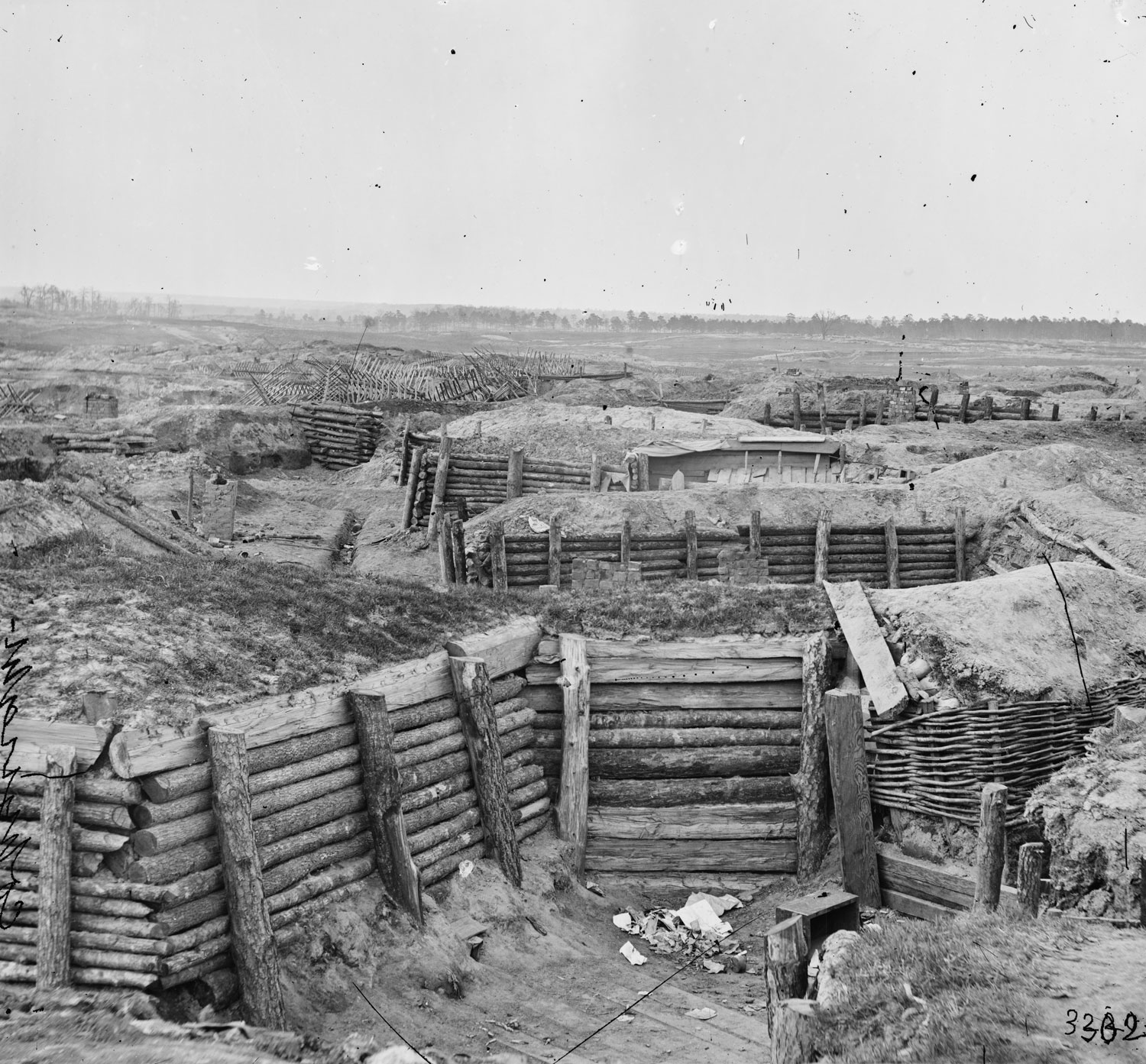 Library of Congress
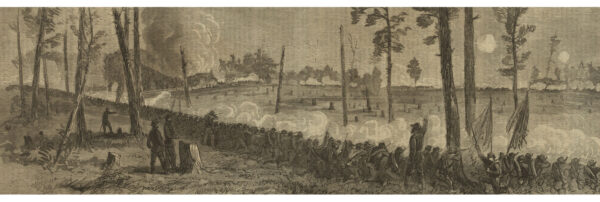
“These mortar shells … would go rolling about and prying into the most private places in a sneaking sort of way. They would be tossed over from the trenches of the other side just as if they were balls thrown by hand, not a bit faster did they come, and then they would roll down the parapet into the trench and if the trench was on a slope, down the trench they would roll, the men standing up flat against the sides or flattening themselves on the ground to one side of the shell’s path….”
Confederate cavalry officer William W. Blackford, on life in the trenches during the Siege of Petersburg, in his memoirs
Illustration of Civil War soldiers firing muskets from battlefield trenches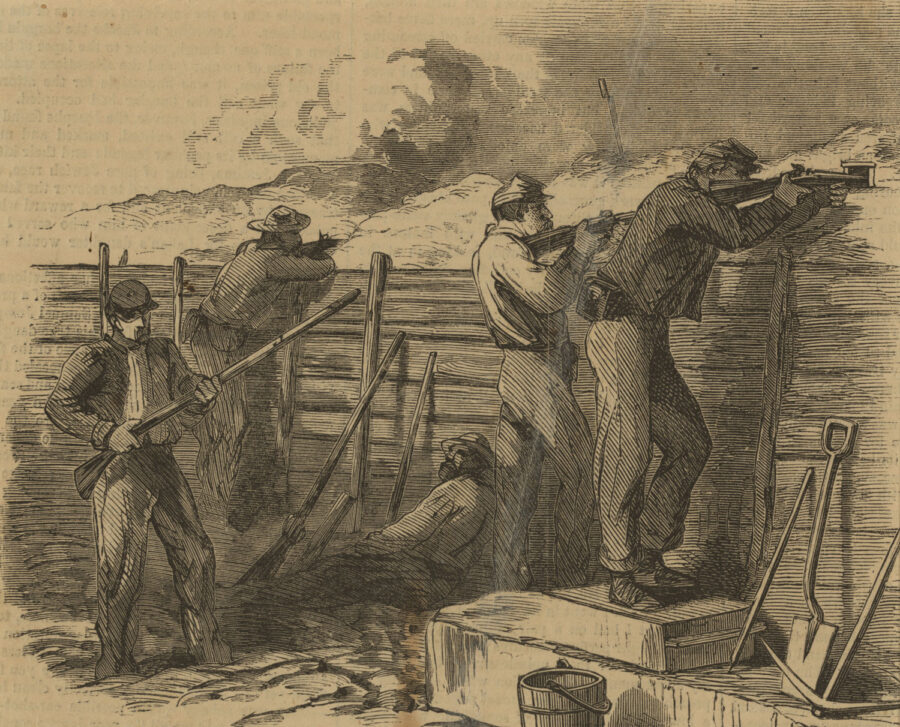 Library of Congress
“The front lines were within thirty yards of the Confederate works—indeed, so near that a biscuit could easily be tossed into them. On neither side do the men dare show their heads above the entrenchments, for it is almost sure death to do so. The sharpshooters on both sides … can pick off anything which appears in sight.”
Union surgeon John G. Perry, in a letter written at the beginning of the Siege of Petersburg, June 10, 1864
“Thousands of men … [were] cramped up in a narrow trench, unable to go out, or to get up, or to stretch or to stand without danger to life and limb; unable to lie down, or to sleep, for lack of room and pressure of peril; night alarms, day attacks, hunger, thirst, supreme weariness, squalor, vermin, filth, disgusting odors everywhere; the weary night succeeded by the yet more weary day.…”
Confederate artillerist Robert Stiles, on the fighting during the Battle of Cold Harbor, in his memoir of the war
“It is like living in a hog pen.”
William C. Leak, 17th South Carolina Infantry, on life in the trenches during the Petersburg Campaign, January 1865
Sources
Paul A. Cimbala, ed., Soldiers North and South (2010); Four Brothers in Blue (1913); Four Years Under Marse Robert (1903); Letters from a Surgeon of the Civil War (1906); War Years with Jeb Stuart (1945).