 Buddy Secor
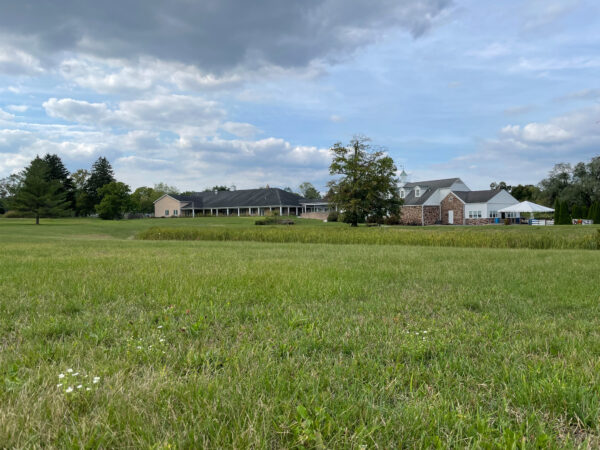
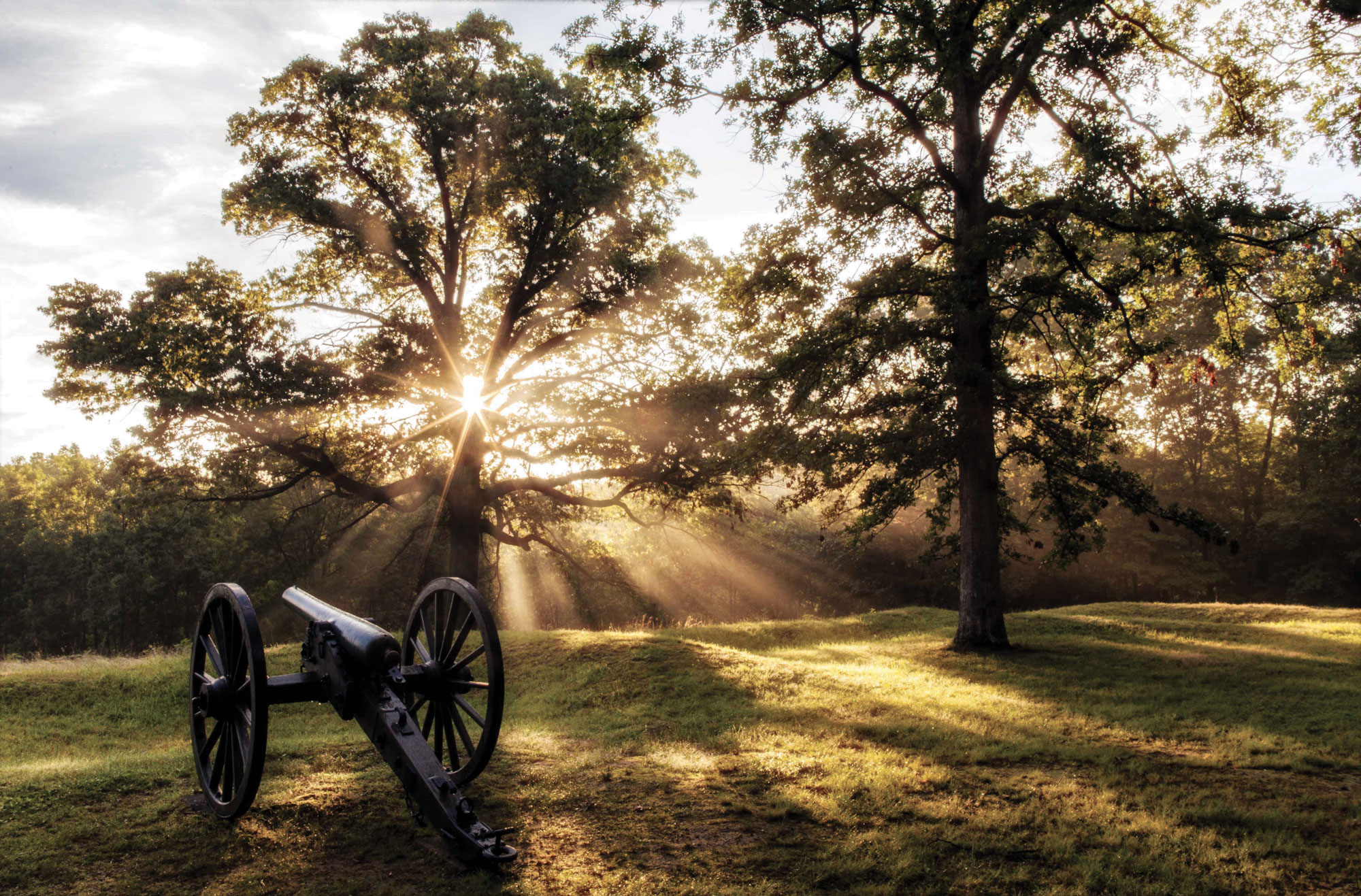
The Trust is seeking to preserve the ground where Lieutenant Alanson M. Latimer’s battery was positioned during the Battle of Fredericksburg, not far from the already protected ground at Prospect Hill, shown here.
Three artillery batteries, on three battlefields, in three states. All of them positioned on land that would be hallowed by combat in 1862.
Today, each of the three sites where the batteries were located is near property that the American Battlefield Trust (through its Civil War Trust division) is striving to preserve.
These three preservation opportunities are linked with Union captain Andrew Hickenlooper’s battery at Shiloh, Union lieutenant Alanson M. Randol’s battery at Glendale, and Confederate lieutenant Alanson M. Latimer’s battery at Fredericksburg. Together, the parcels total 28 acres worth $1.17 million. Thanks to grants and a generous landowner, the Trust can acquire them with $243,000 in contributions—representing a match of $4.85 for every dollar.
The deals at Shiloh and Glendale will bring those battlefields closer to being entirely preserved. At Fredericksburg, saving the 11 acres next to Latimer’s Knoll will further preserve the southern end of the battlefield where the struggle was decided.
Of the June 30, 1862, action at Glendale, where the Trust aims to save nine acres, Confederate major E. Porter Alexander wrote, “No more desperate encounter took place in the war; and nowhere else, to my knowledge, so much actual personal fighting with bayonet and butt of gun. Randol’s battery, over which it began, was taken and retaken several times.” The brutal fight erupted as soldiers battled for Glendale’s critical crossroads. General Robert E. Lee was trying to cut off Major General George B. McClellan’s army before it could reach the refuge of the James River.
Near the eight-acre Shiloh site, Captain Hickenlooper—an ancestor of Colorado Governor John Hickenlooper, a Trust member—worked his guns to try and halt the gray tide on April 6, 1862. The Confederates’ Rebel yell caused “an involuntary thrill of terror to pass like an electric shock through even the bravest of hearts,” he recalled. Overwhelming the Union line, southern soldiers thought they’d won, but the two-day battle was just beginning.
At Fredericksburg on December 13, 1862, Captain Latimer feared he’d lose his guns to the 15th New Jersey Infantry’s attack. He galloped over to urge on Evander Law’s Alabama brigade, which pushed near the Bowling Green Road until encountering a Union column led by Daniel E. Sickles. This site is near the 208-acre Slaughter Pen Farm, which the Trust has worked so hard to preserve. The landowner intends to donate a conservation easement worth $900,000, leaving closing costs of just $15,000.
Preserving this sacred ground will stitch vital pieces into the storytelling quilts that the Trust is making at these iconic battlefields. Learn how you can help at battlefields.org/1862campaign.
O. James Lighthizer is president emeritus of the nonprofit, nonpartisan American Battlefield Trust, which is dedicated to preserving America’s hallowed battlegrounds—Revolutionary War, War of 1812, and Civil War—and educating the public about their significance.