The Sultana Disaster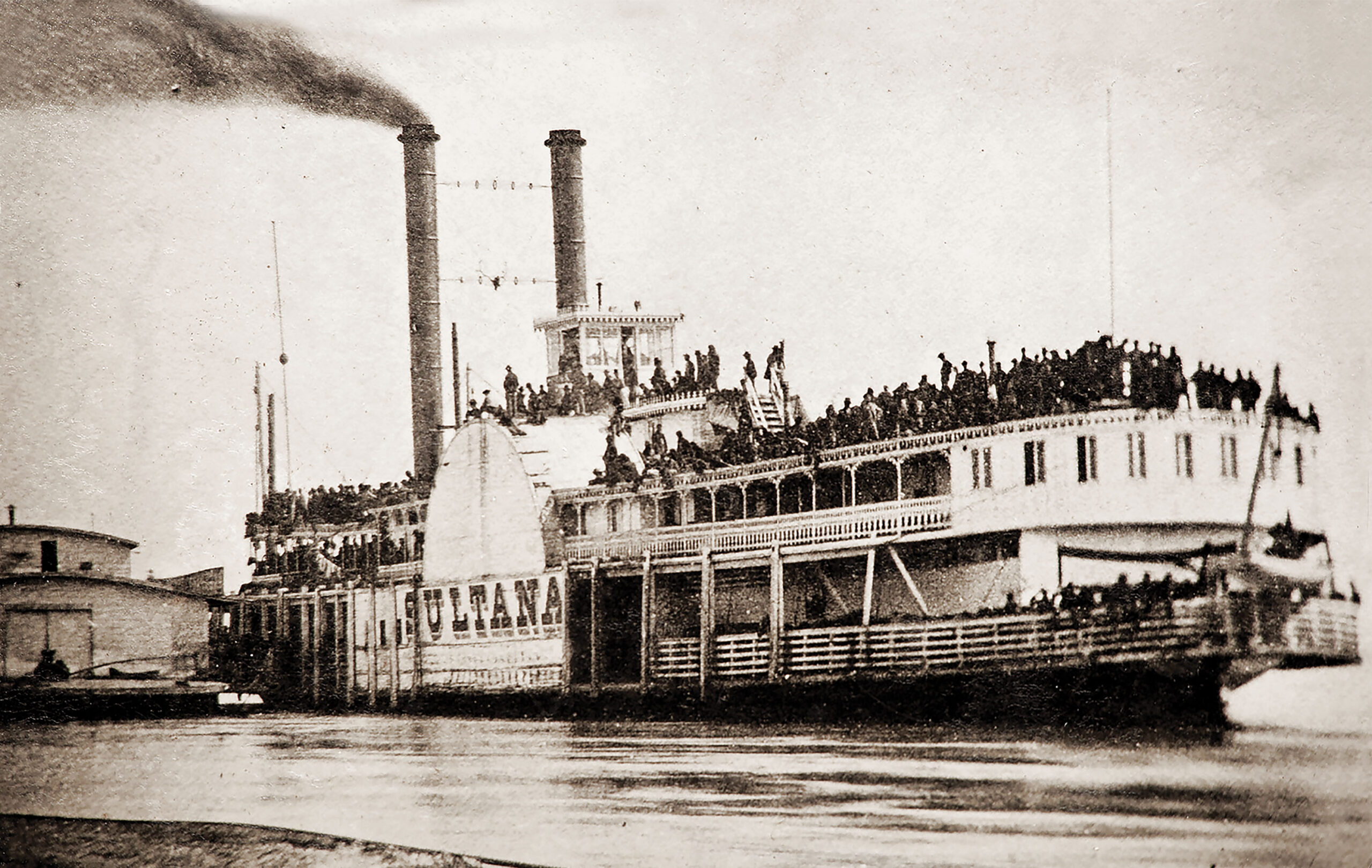 Cowan’s Auctions (cowanauctions.com)
At about 2 a.m. on April 27, 1865—just weeks after Robert E. Lee’s surrender to Ulysses S. Grant at Appomattox Court House—a massive explosion reverberated through the steamboat Sultana several miles north of Memphis, Tennessee. The side-wheeler was ferrying an oversized crowd of passengers—most of them recently paroled Union prisoners—up the Mississippi River from Vicksburg, Mississippi, to Cairo, Illinois. One of the vessel’s four boilers had burst, soon followed by two others. The blast, which sent a deadly shot of steam through the crowded decks, toppling the vessel’s twin smokestacks and killing hundreds of passengers instantly, “came with a report exceeding any artillery that I had ever heard,” reported a surviving soldier, “and I had heard some that was very heavy, especially at Gettysburg.”
Sultana caught fire, forcing panicked passengers into the strong current of the chilly river. While a number of ships soon arrived to help pluck survivors from the water, many would drown or succumb to hypothermia before they could be rescued. To this day, the calamity on the Sultana (shown here in a photo taken a day before its destruction) remains the worst U.S. maritime disaster and exceeds the Titanic sinking in both total and percentage of lives lost. The figures that follow add details to the tragedy.
Sultana Disaster by the Numbers
Age of Sultana’s captain, J. Cass Mason: 34
Cost to build Sultana in Cincinnati in 1863: $60,000
High-pressure iron boilers powered Sultana: 4
Thickness of boilers’ iron: 0.35″
Boilers’ diameters: 46″
Boilers’ lengths: 18′
Diameter of waterwheels: 34′
Length of waterwheels’ bucket planks: 11′
Minimum depth in which Sultana could maneuver: 34″
Length of firehose on board: 300′
Fire buckets on board: 30
Firefighting axes on board: 5
Sultana’s legal passenger capacity: 376
300 on deck and 76 in cabins
Staterooms on Sultana: 31
Berths per stateroom: 2
Minimum amount held in Sultana’s safe, which was never recovered: $32,000
Approximate number of people on board that morning: 2,250–2,300
Number of known paroled prisoners on board: 2,015
Largest number of parolees from a single state (Ohio): 652
Approximate number of civilian passengers (men, women, and children) on board: 100
Approximate number of crew on board: 85
Hull’s length: 260′
Hull’s depth: 7′
Hull’s width at base: 39′
Hull’s width at beam (widest point): 42′
Number of people rescued: 783–786
Minimum number of people who died after being rescued: 200
Survivors who refused or did not require care: 24
Number of men, women, and children killed: 1,700–1,750
Sources
Allan Huffman, Sultana: Surviving the Civil War, Prison, and the Worst Maritime Disaster in American History (2009); Gene Eric Salecker, Disaster on the Mississippi: The Sultana Explosion, April 27, 1865 (1996).