Harry Burgwyn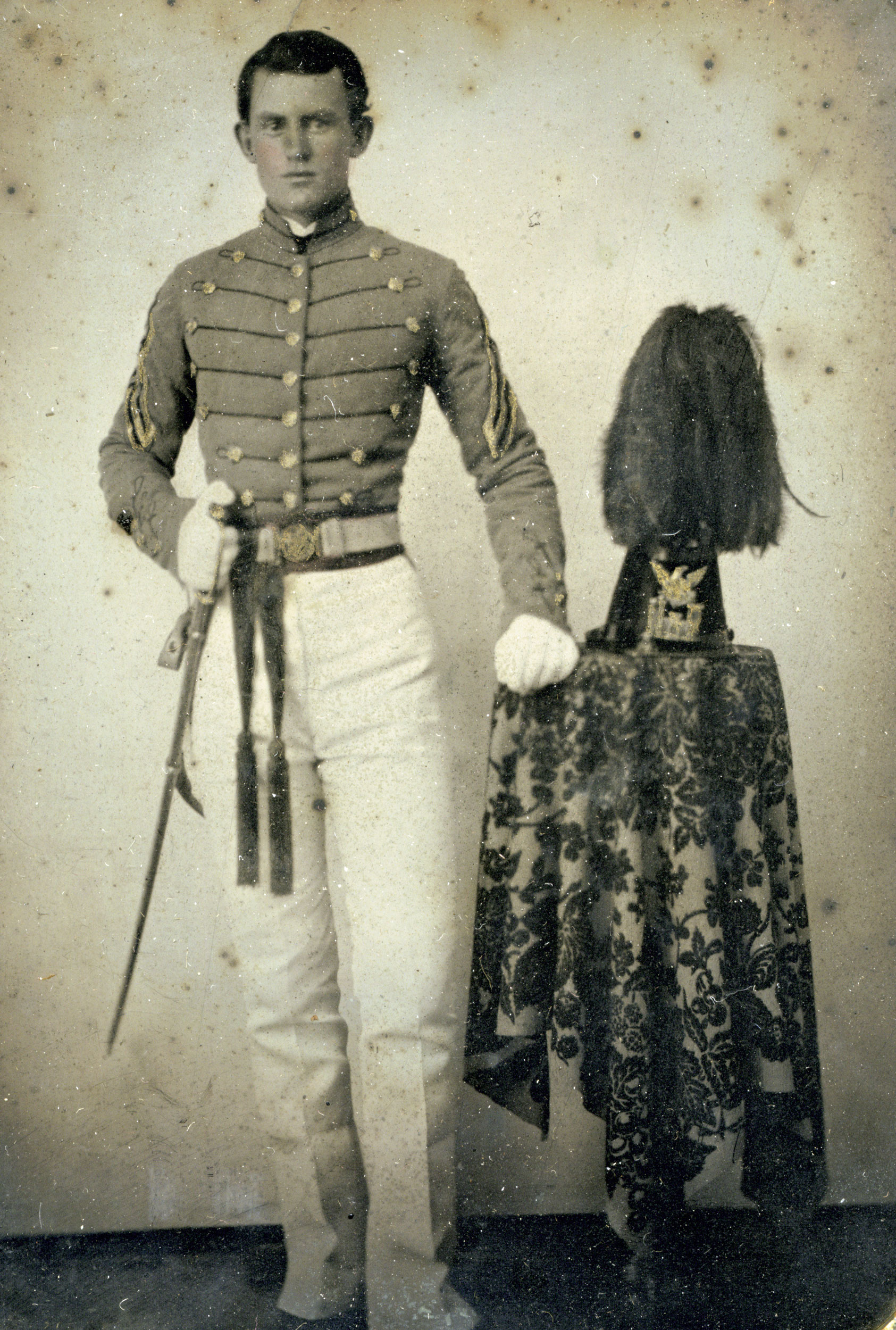 Dave Batalo Collection
Harry Burgwyn, the young colonel of the 26th North Carolina Infantry, needs no introduction to students of the Battle of Gettysburg. The son of a North Carolina-born planter father and a Massachusetts-born mother, Burgwyn was educated at Virginia Military Institute. He is pictured here in his cadet uniform.
A few months after Harry arrived on the VMI campus in late 1859, he joined an 85-cadet guard on special duty. The boys were dispatched to Charles Town (now in West Virginia) to maintain order at the hanging of abolitionist John Brown for his role in a failed slave insurrection at Harpers Ferry.
After the Civil War began in 1861, Burgwyn received a glowing reference from one of his VMI professors, Thomas J. Jackson: “The object of this letter is to recommend Cadet H.K. Burgwyn, of North Carolina, for a commission in the artillery of the Southern Confederacy. Mr. B. is not only a high-toned Southern gentleman, but, in consequence of the highly practical as well as scientific character of his mind, he possesses qualities well calculated to make him an ornament, not only to the artillery, but to any branch of the military service.”
Burgwyn proved an able soldier. In August 1862 he was promoted to colonel at the tender age of 20. His tenure as commander of the 26th would end less than a year later. On July 1, 1863, during the first day of the Battle of Gettysburg, he and his hard-fighting Tar Heels went up against another tough regiment, the Iron Brigade’s 24th Michigan Infantry. In a charge by the North Carolinians, Burgwyn received a mortal wound. After the attack, words he uttered before his death reflect the Confederates’ confidence of success: “The Lord’s will be done. We have gained the greatest victory in the war. I have no regret at my approaching death. I fell in the defense of my country.”
Ronald S. Coddington is publisher of Military Images, a magazine dedicated to showcasing and preserving photos of Civil War soldiers and sailors.