“If you ever go into battle, have your canteen full,” a young Union soldier wrote to his father shortly after his first combat. “I was so dry at one time I could have drank out of a mud puddle.” Sweltering marches, furious battles, stifling wool uniforms: Soldiers on both sides had many reasons to seek the momentary relief of a quick drink of water (or occasionally other beverages). Here is a sampling of the many types of vessels in which they carried their refreshment.
Smooth-sided U.S. Model 1858 tin canteen covered in cloth with a strap fashioned from trousers.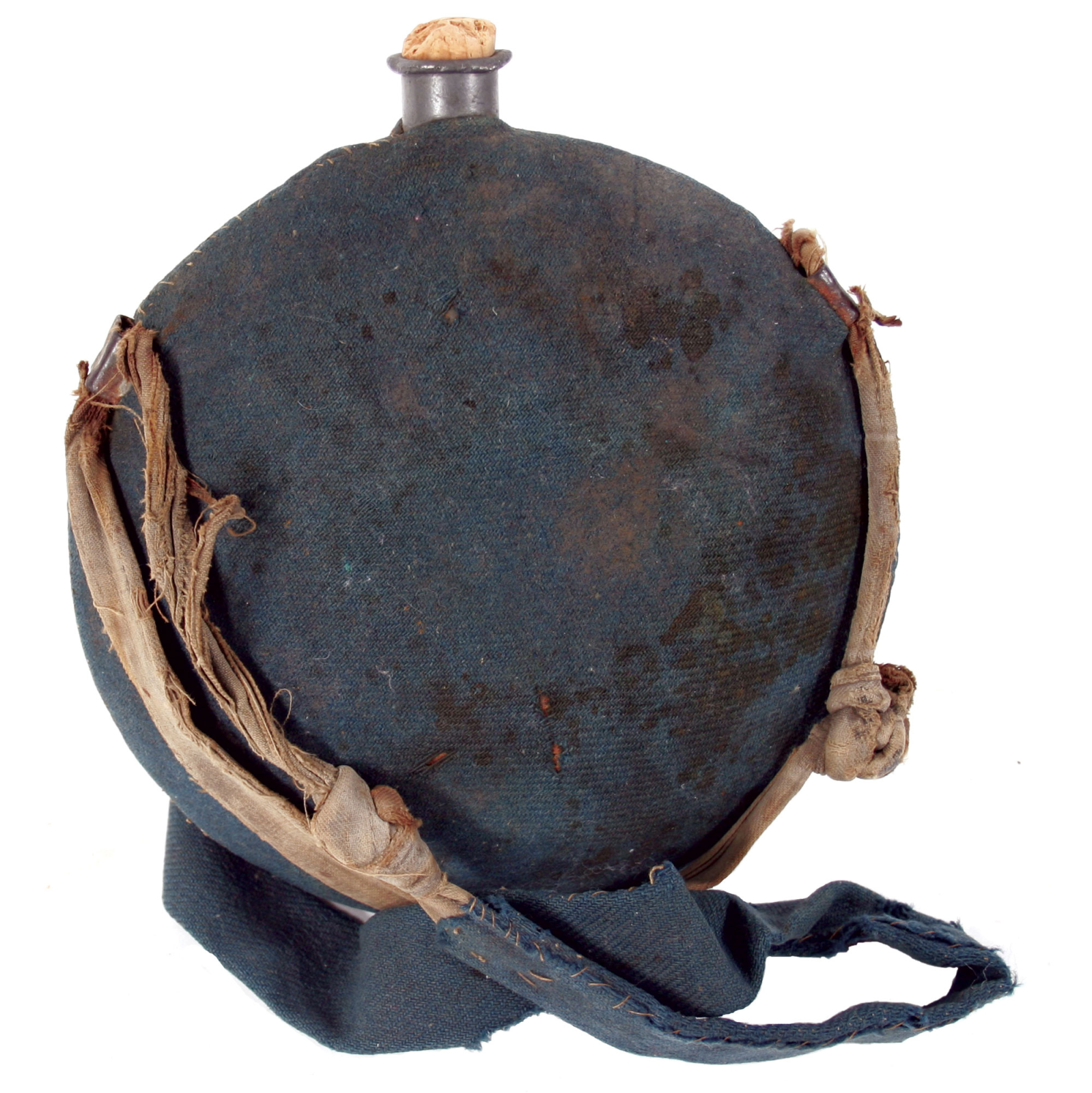 Military & Historical Image Bank
One of the more common canteens carried by Union soldiers was the Smooth-Sided U.S. Model 1858 (above). The tin vessel, which to some resembled two small dinner plates stuck together, was often covered in cloth in an effort to keep its contents cool. The resourceful New Hampshire soldier who carried this canteen fashioned its cloth strap from a pair of trousers.
Large blue tin Combination Mess Kit Canteen with painted inscription reading First Connecticut Volunteers.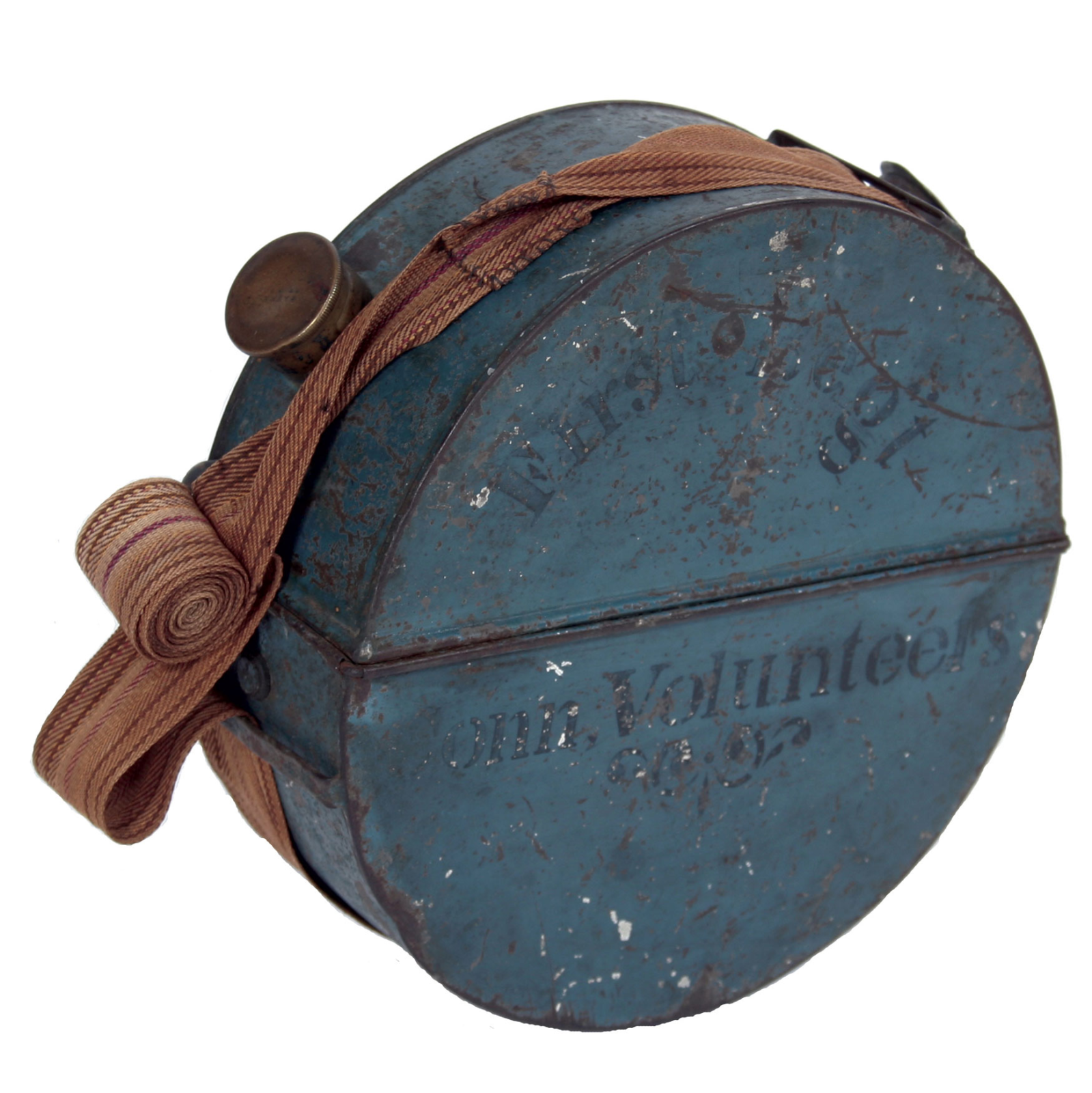 Military & Historical Image Book
Members of the 1st Connecticut Infantry carried these Combination Mess Kit Canteens (above), which split in the center and were held closed by hooks, during the Bull Run campaign in 1861.
Cloth-covered French Army Pattern 1858 tin canteen with two spouts.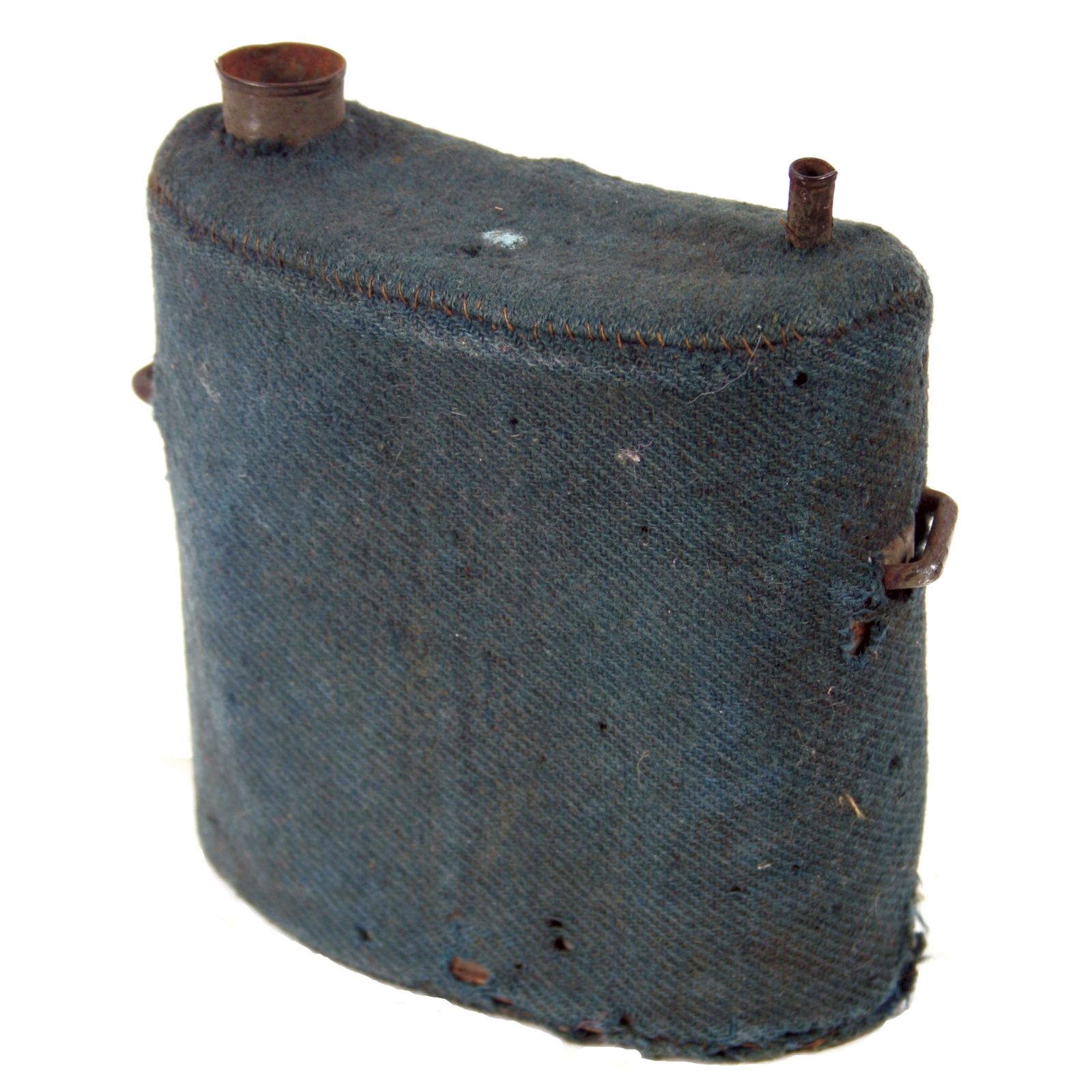 Military & Historical Image Book
A number of Union regiments imported this Cloth-Covered, French Army Pattern 1858 Tin Canteen (above) for use by their men. Note the two spouts: The larger permitted its user to take a full drink; the smaller allowed for quick sips while on the march.
Montgomery Patent Canteen open showing the tin overlay that serves as a funnel or drinking cup.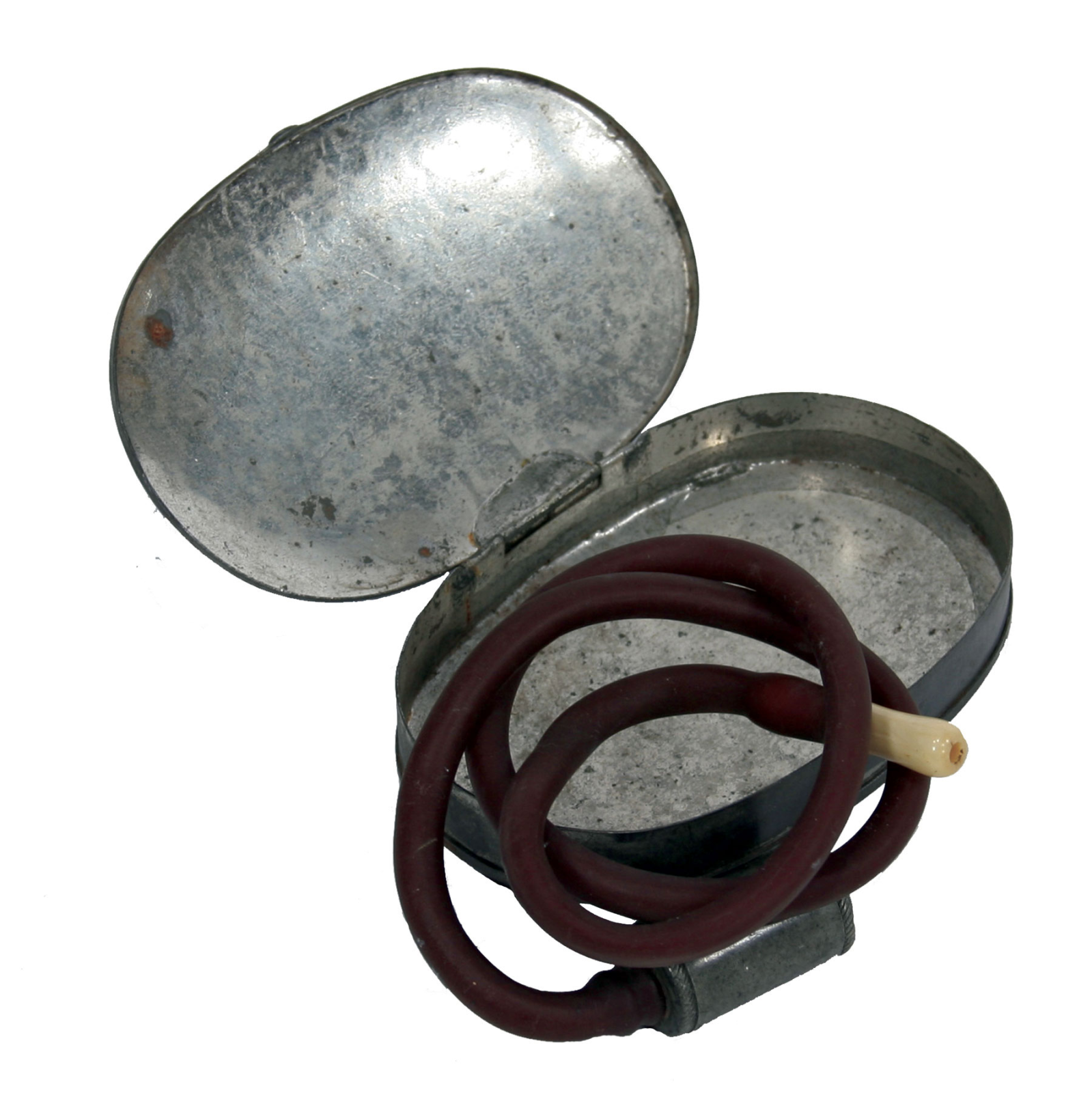 Military & Historical Image Book
Soldiers had access to a number of devices that purported to prepare dirty water for drinking. This particular gadget—Russell’s Patent Dirty Water Filter (above)—consisted of a mouthpiece, a length of rubber tubing, and a conical piece of pumice stone, through which the water was filtered. At least one Union soldier who tried it was underwhelmed, claiming it lacked “any practical value.”
Captured wooden Confederate canteen painted by a member of the 28th Wisconsin Infantry with patriotic American imagery.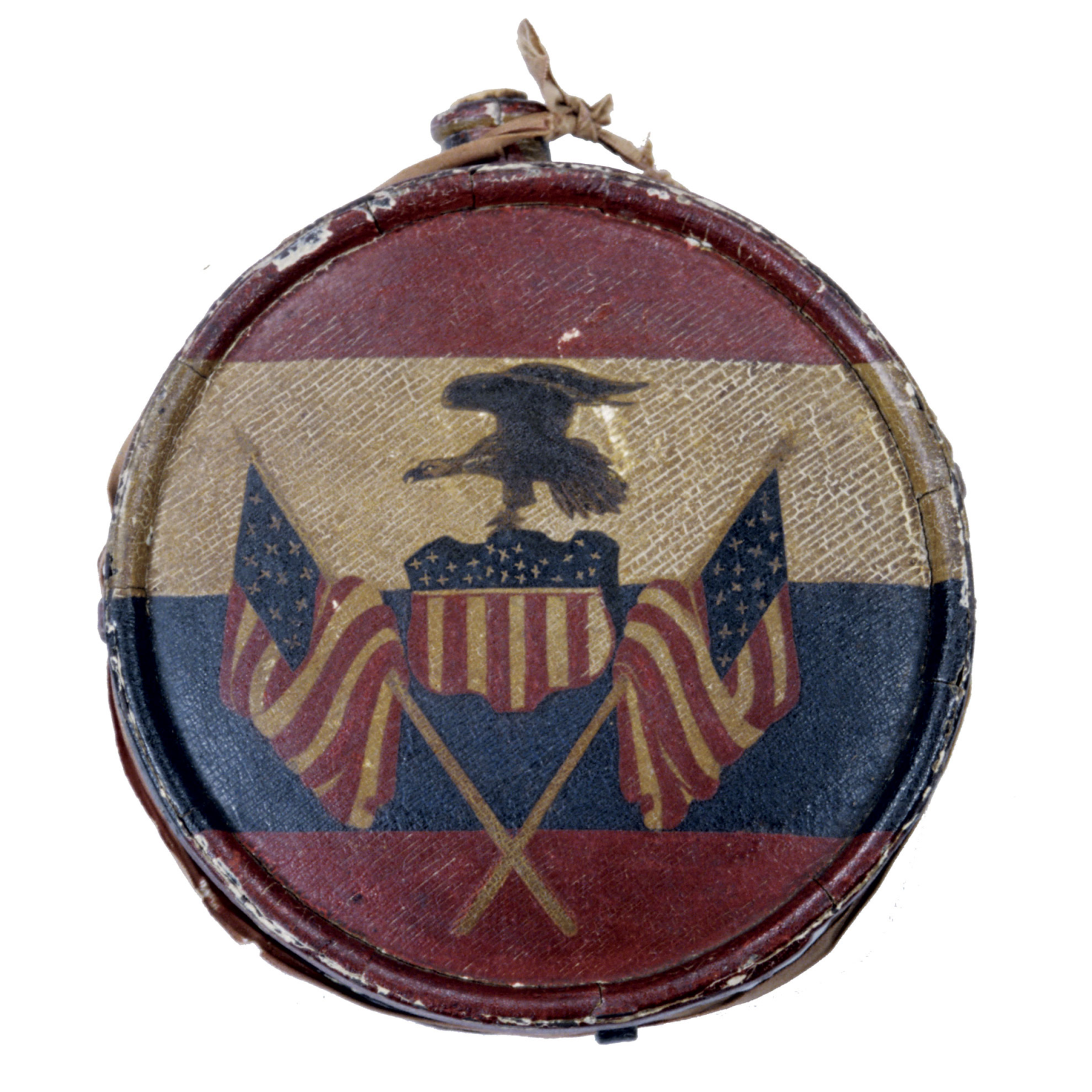 Military & Historical Image Book
Some soldiers put a great deal of effort into personalizing their canteens. A member of the 28th Wisconsin Infantry painted this Captured Wooden Confederate Canteen (above), making clear where its new carrier’s allegiances lay.
Montgomery Patent Canteen with tin overlay serving as a drinking cup.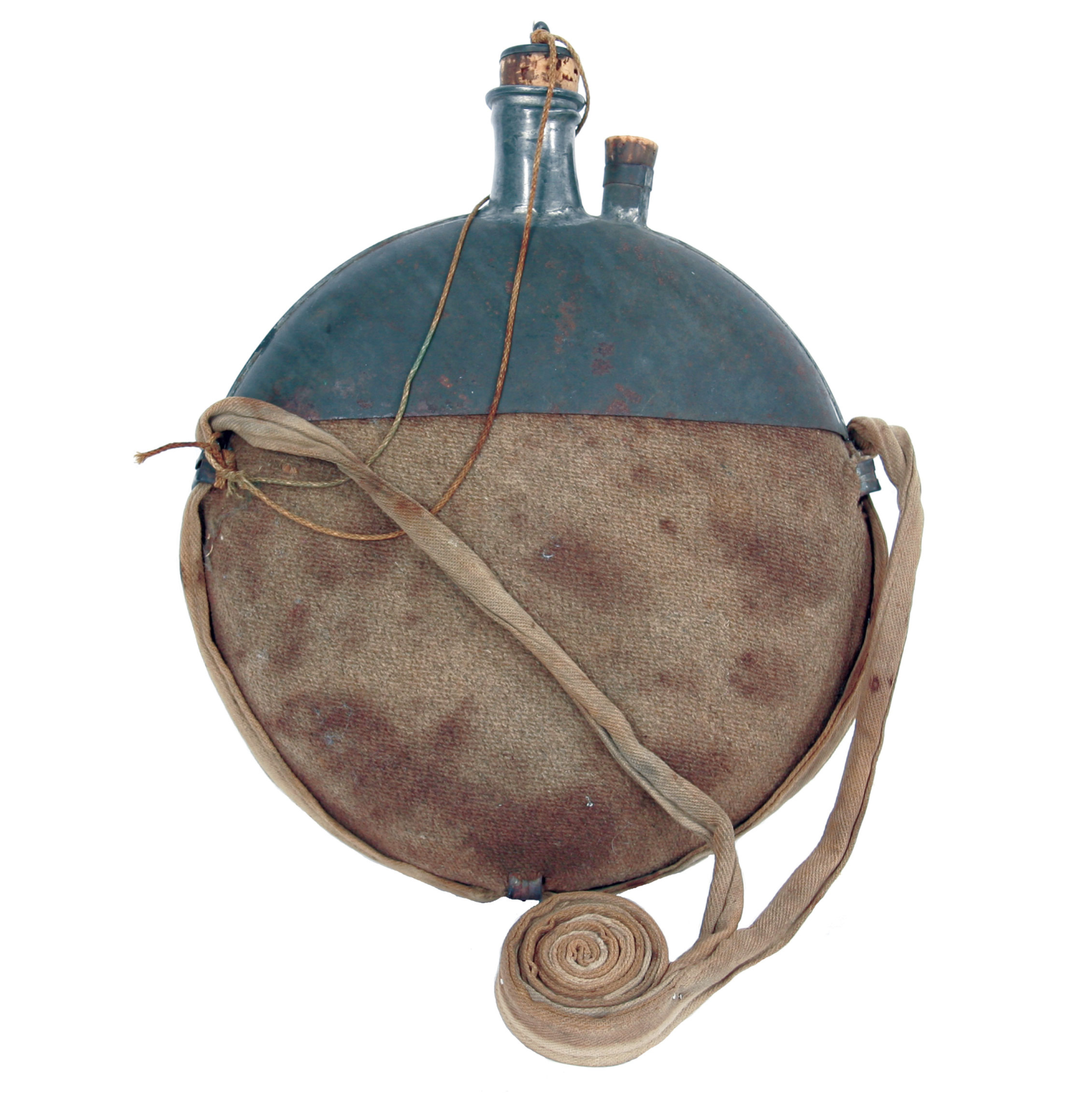 Military & Historical Image Book
The cleverly conceived Montgomery Patent Canteen (above) came equipped with a tin overlay, which, when reversed, served either as a funnel to assist in filling or, with the stopper in place, as a drinking cup.
Wooden Confederate canteen with initials D J Foster scratched into the surface.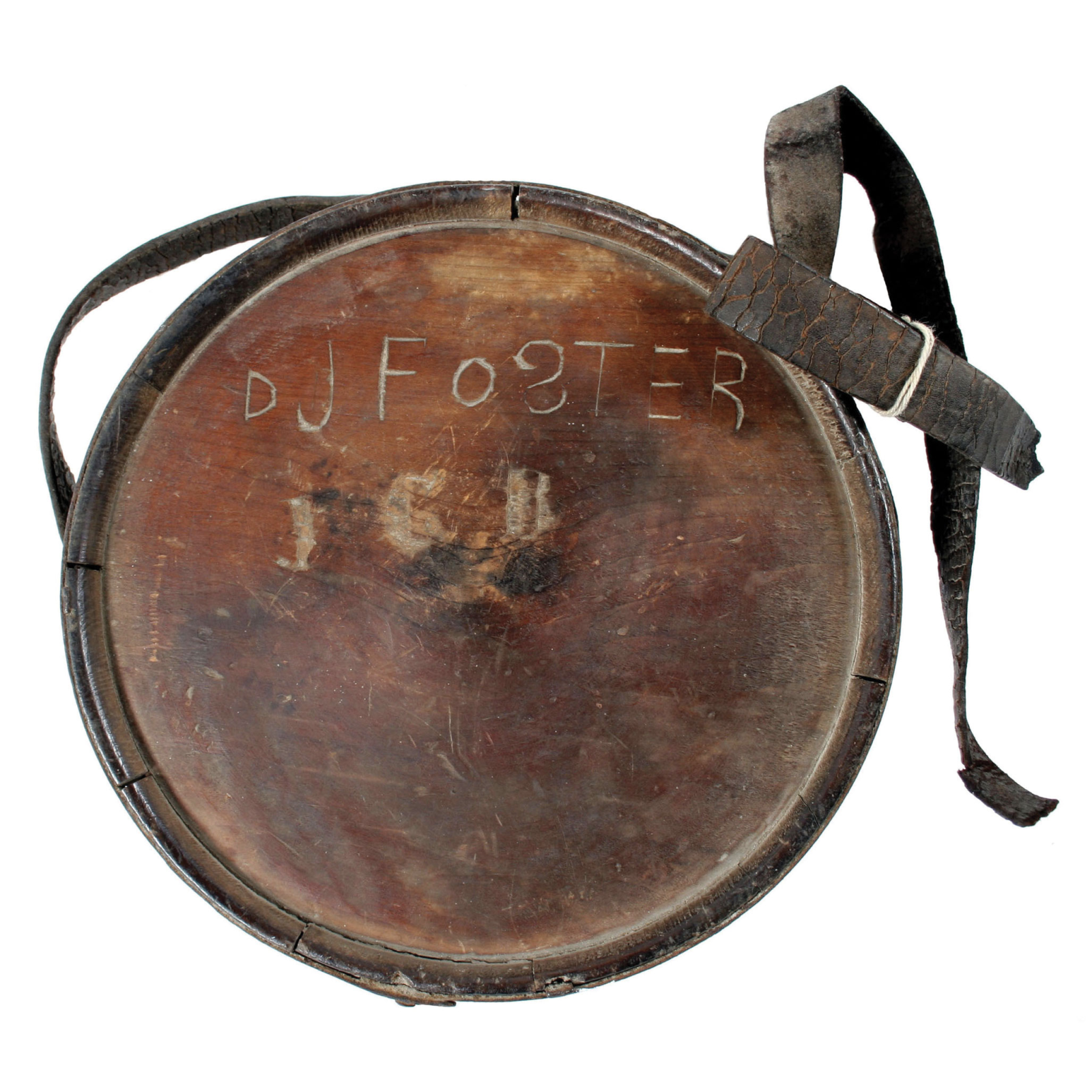 Military & Historical Image Bank
A shortage of metals contributed to the production of Wooden Canteens (above) throughout much of the South. This Confederate-issue wooden canteen bears the name of its owner, Daniel J. Foster, a soldier in the 35th Arkansas Infantry who died of disease in prison in January 1865.
Bull’s-Eye Canteen with stamped concentric rings belonging to George Lincoln Dow of the 19th Maine Infantry.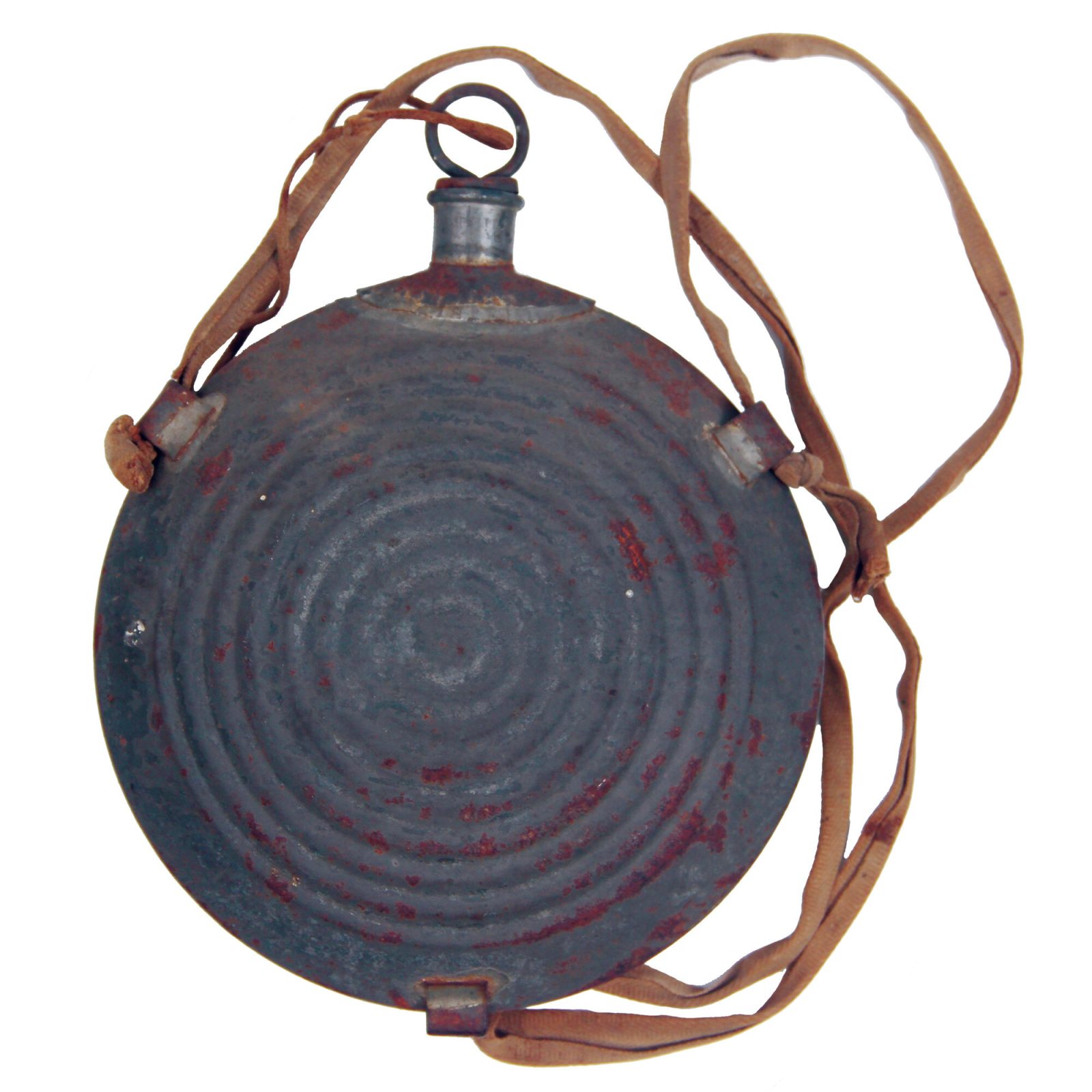 Military & Historical Image Book
At the outbreak of the war, the U.S. government looked to improve upon the model 1858 canteen. The result was the so-called Bull’s-Eye Canteen (above), whose stamped concentric rings lent strength to its sides. This bull’s-eye belonged to George Lincoln Dow, a soldier in the 19th Maine Infantry.
Sources
John D. Billings, Hardtack and Coffee, or The Unwritten Story of Army Life (Boston, 1888); Earl J. Coates, Michael J. McAfee, and Don Troiani, Don Troiani’s Regiments & Uniforms of the Civil War (Mechanicsburg, PA, 2002); Robert Jones, The Civil War Canteen (n.p., 2007); Bell I. Wiley, The Life of Johnny Reb (Baton Rouge, 1943) and The Life of Billy Yank (Baton Rouge, 1952). Images courtesy of the Military & Historical Image Bank (www.historicalimagebank.com).