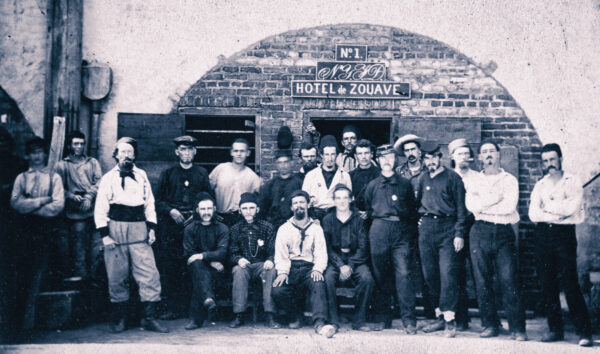
Trapier Mortar Battery on Morris Island Robin Stanford Collection, Library of Congress
While they were less numerous and faced greater wartime disruptions than their northern counterparts, photographers working in the Confederacy could boast at least one distinction: The conflict began in the South, so they were in a position to be the first to make images of the war.
The one shown here, made by Charleston-based photographers James M. Osborn and Frederick E. Durbec in April 1861, shows the Trapier Mortar Battery on Morris Island just days after it launched shells that inflicted heavy damage on Fort Sumter. The photo also gives us a rare glimpse of a Confederate darkroom in the field, where Osborn and Durbec sensitized and developed the wet plate negative of this image. The pair would make at least 43 images of Sumter and the Rebel positions that surrounded it, which together compose the largest known group of Confederate images of the conflict.
While Osborn and Durbec were among the first photographers of the war, it would put them out of business by 1863.
Bob Zeller is president of the nonprofit Center for Civil War Photography, which is devoted to collecting, preserving, and digitizing Civil War images.