 Library of Congress
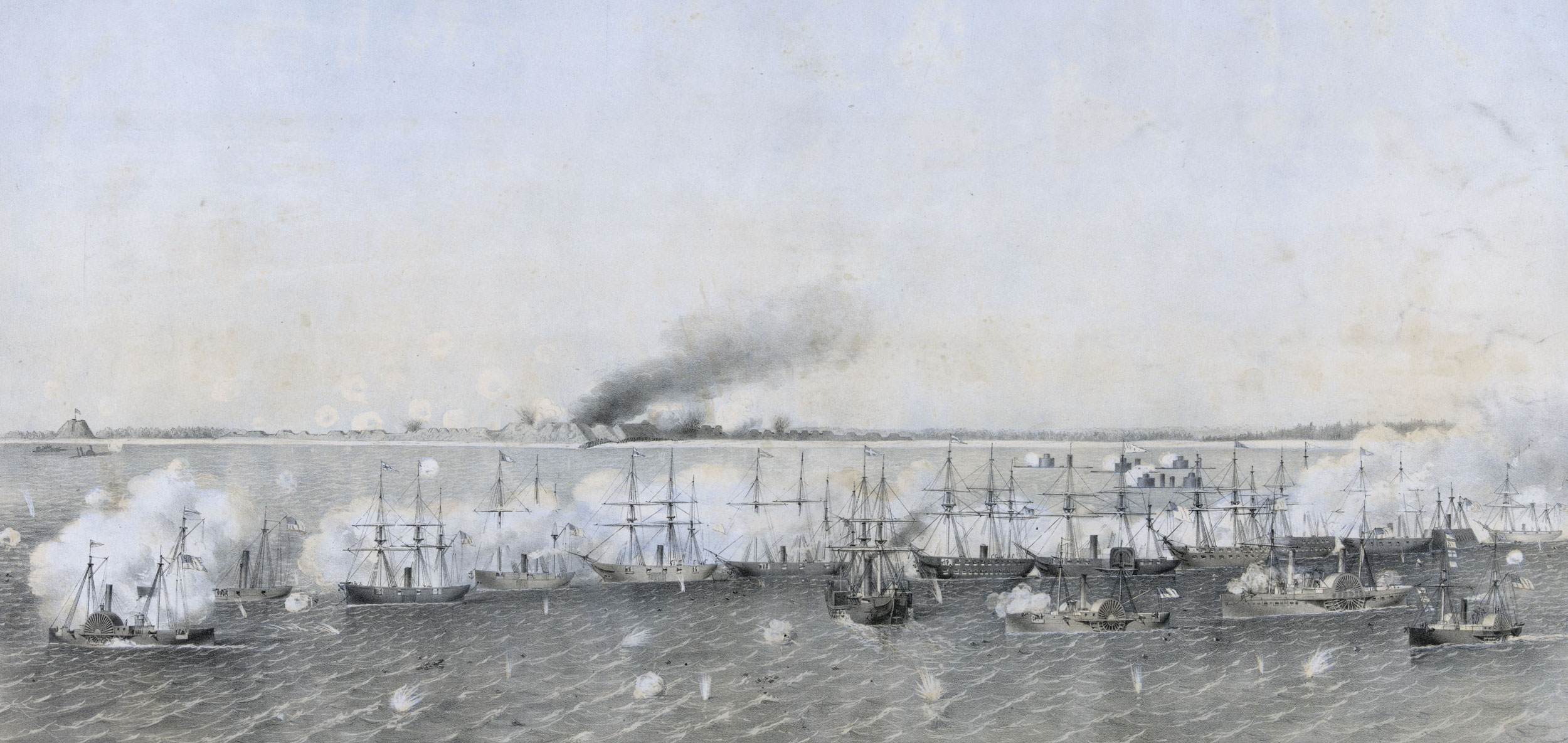
In this lithograph by T.F. Laycock, a fleet of U.S. vessels under the command of Rear Admiral David D. Porter bombards Fort Fisher on the North Carolina shore in mid-January 1865. A subsequent land attack by Union troops forced the fort’s surrender, opening the way for the capture of the port city of Wilmington.
Wilmington, North Carolina
Among the Confederacy’s most important cities was Wilmington, North Carolina, a key port located 30 miles upstream from the mouth of the Cape Fear River, its connection to the Atlantic Ocean. For most of the war, the city—protected from Union assault by nearby Fort Fisher—operated a brisk trade with foreign countries. Running the Union blockade of the coast, it shipped cotton and tobacco overseas in exchange for vital supplies, such as munitions and foodstuffs, which were sent inland via rail throughout the Confederacy.
After the fall of Norfolk, Virginia, in 1862, Wilmington became the main Confederate port on the Atlantic. In December 1864, Union forces set their sights on Fort Fisher and attacked but failed to capture the formidable bastion. The following month, a second assault proved successful. With Fort Fisher in Union hands, Wilmington fell soon thereafter, robbing Robert E. Lee’s Army of Northern Virginia of a key supply source. The war would end just two months later.
Interested in visiting Wilmington? To help make the most of your trip, we’ve enlisted two experts on the area—Christine Divoky and Bill Jayne—to offer suggestions for what to see and do in and around the historic city.
 Ned Leary
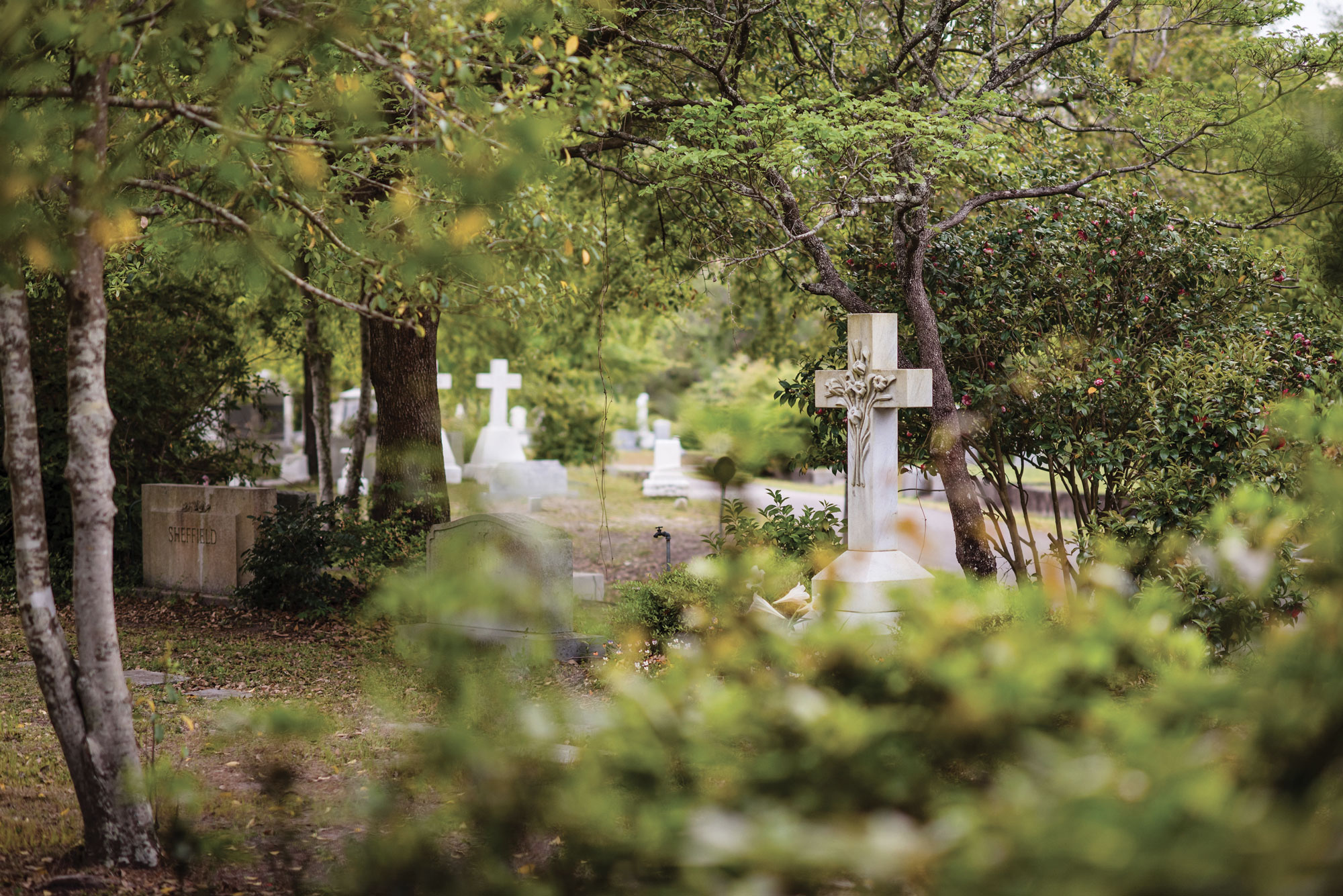
Oakdale Cemetery
Can’t Miss
An out-of-the-way gem is Oakdale Cemetery (520 N. 15th St.; 910-762-5682), the “rural” cemetery established in 1856. With its Spanish moss bearded oaks, flowering shrubbery, and ornate sculpture, it’s easy to picture this cemetery as it appeared in the mid-19th century. You’ll find headstones engraved with the names of the families who made Wilmington. There’s a Hebrew section, a Masonic section, a section for those who died of yellow fever, and over 350 Confederate soldiers buried under what’s known as Confederate Mound. Among the graves are those of Confederate spy Rose O’Neal Greenhow and Fort Fisher commander Major General W.H.C. Whiting. CD
 Ned Leary
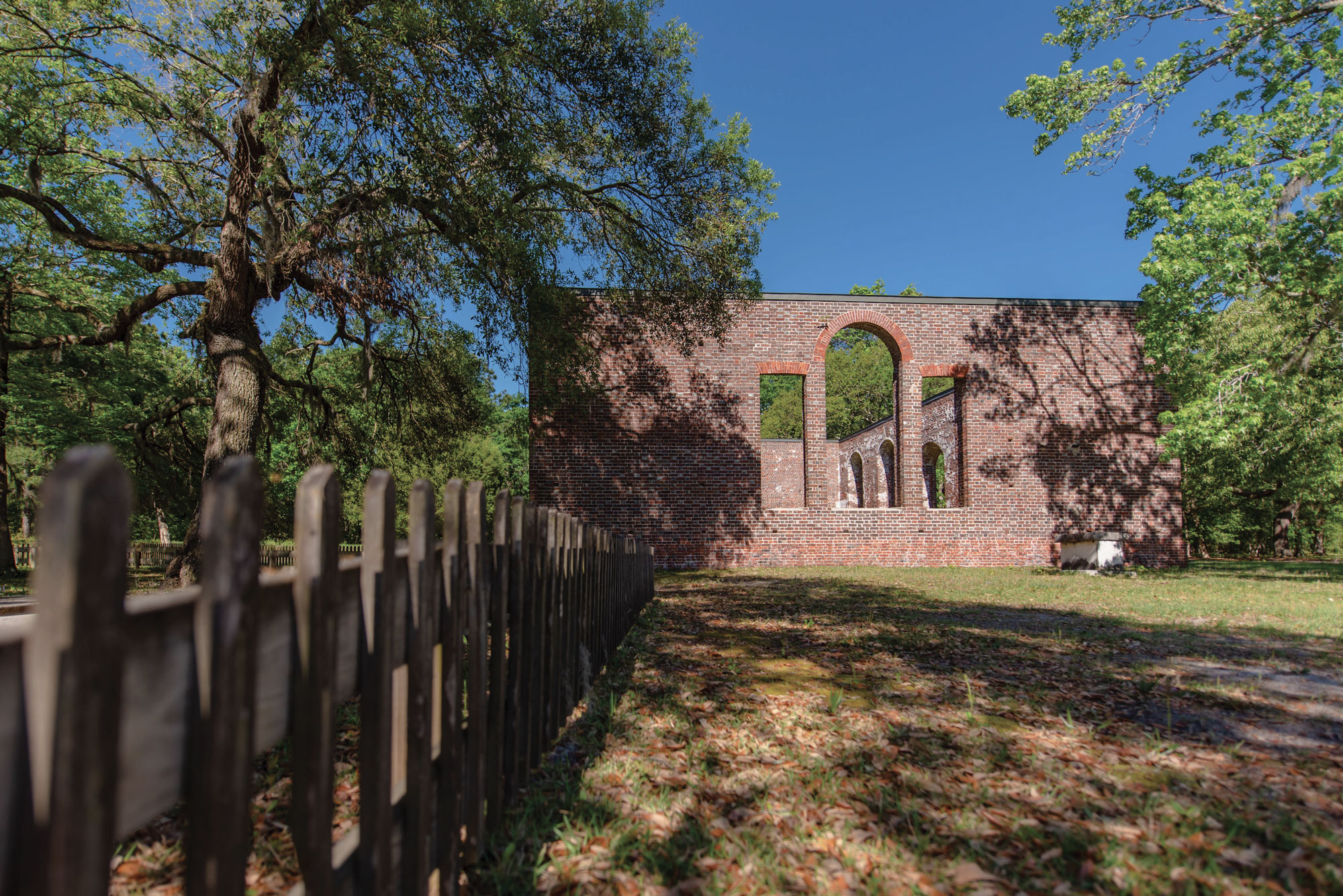
Brunswick Town
Just south of Wilmington is Fort Anderson State Historic Site (884 St. Philip’s Rd. SE, Winnabow, NC; 910-371-6613), which showcases the “best-preserved Civil War earthworks in the country,” in the estimation of renowned historian Ed Bearss. During the Civil War, Fort Anderson guarded the approach to the city of Wilmington. The site also preserves the ruins of colonial Brunswick Town, burned by the British in 1776. BJ
 Ned Leary
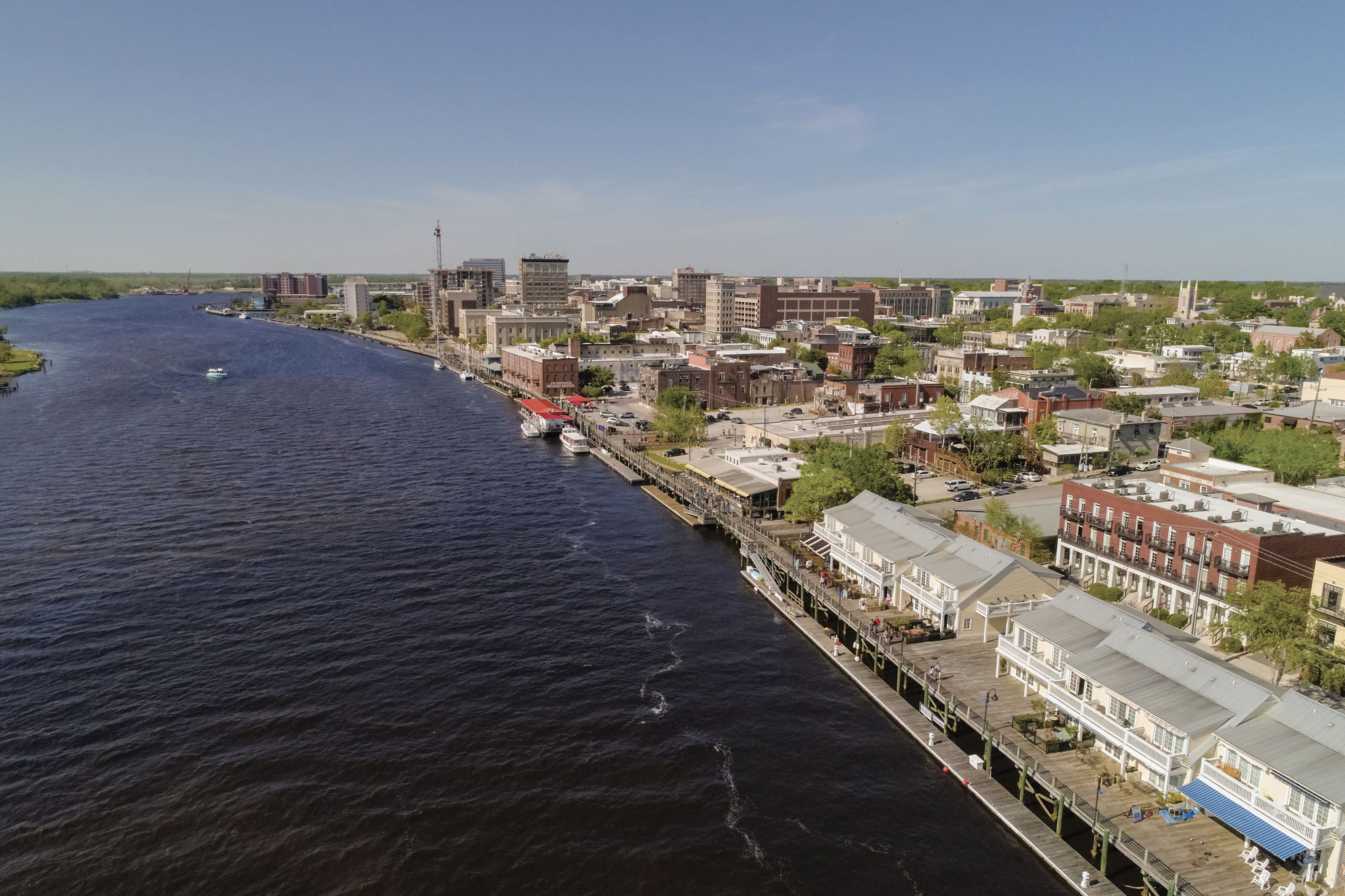
Wilmington Riverwalk
Best Kept Secret
Wilmington has a great downtown for those on foot. Walk the residential historic district with tree-lined streets and 875 historic buildings, or stroll the 1.75-mile Wilmington Riverwalk along the Cape Fear River. With its restaurants, shops, historic buildings, and stunning view, Wilmington’s riverfront was named the top riverfront in the country by USA Today in 2015. CD
Airlie Gardens (300 Airlie Rd.; 910-798-7700) on tidal Bradley Creek offers 67 acres of walking paths, formal gardens, centuries-old live oaks, and more. The history of the site goes back to the 1700s, but in the late 19th century Pembroke and Sarah Jones made Airlie their principal residence. They converted the existing inn into a 39-room mansion. The Joneses continued to expand the mansion and entertained well-heeled visitors from all over—giving rise, many say, to the phrase “keeping up with the Joneses.” BJ
 Ned Leary
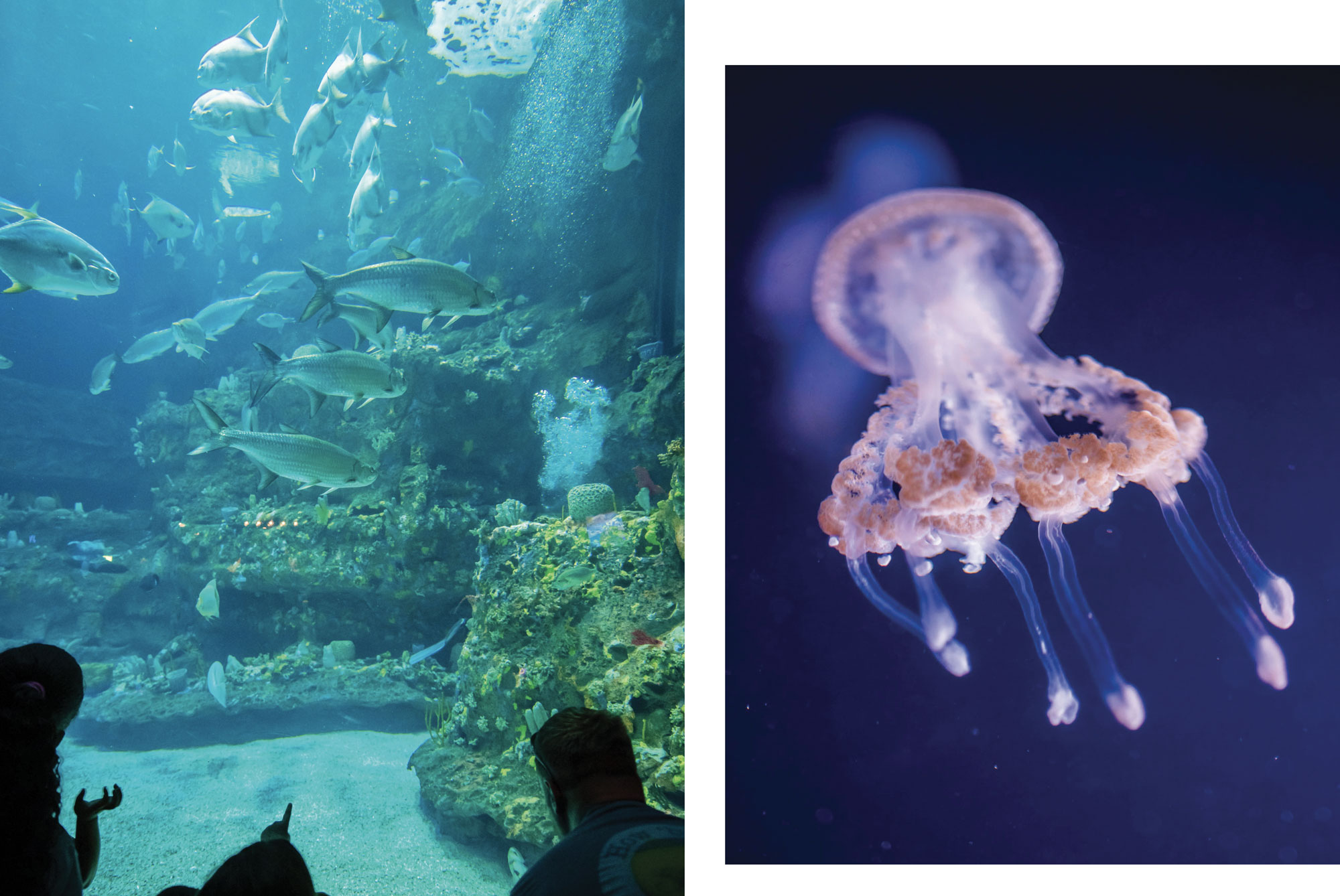
The North Carolina Aquarium at Fort Fisher.
Best Family Activity
The North Carolina Aquarium at Fort Fisher (900 Loggerhead Rd., Kure Beach, NC; 910-772-0500) is a great spot for the entire family. There’s an albino alligator named Luna, a rescued bald eagle, jellies, eels, sharks, sea turtles, rays, a touch tank, and of course all kinds of fish. Plus, the kids can watch the scuba-diving volunteers feed the shark! CD
 Ned Leary
Fort Fisher State Recreation Area
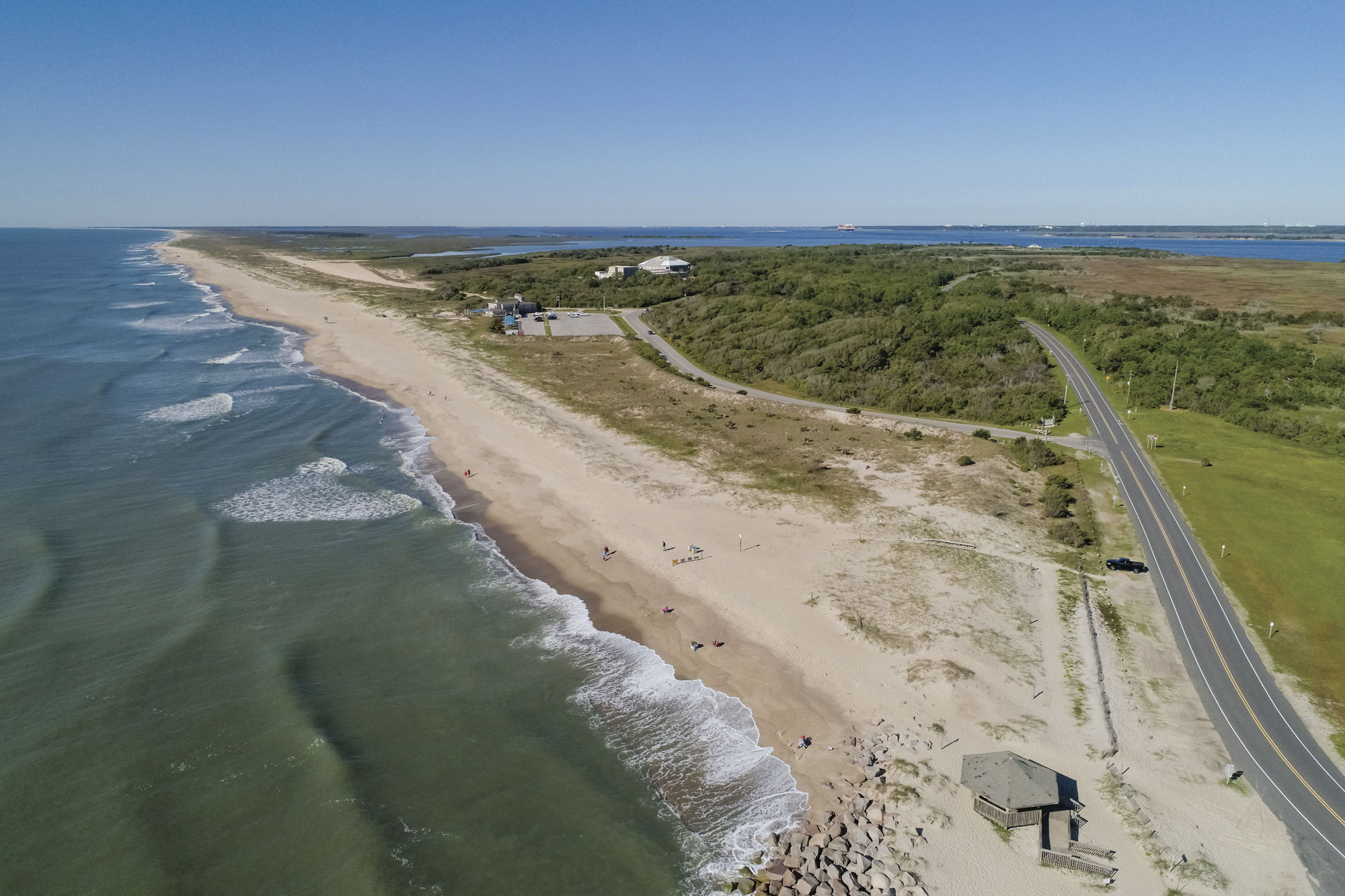
At the Fort Fisher State Recreation Area (1000 Loggerhead Rd., Kure Beach, NC; 910-458-5798) you’ll find not only a great beach, but also a short walking trail through the marsh and maritime forest that brings you by the WWII bunker where Robert E. Harrill, “the Fort Fisher Hermit,” lived for almost 18 years. The trail continues on to “The Rocks,” where the Corps of Engineers closed up New Inlet after the Civil War. In town, Jungle Rapids Family Fun Park (5320 Oleander Dr.; 910-791-0666) features a water slide, miniature golf, a go-kart track, and all the other usual suspects when it comes to keeping kids entertained. BJ
 Ned Leary
Fort Fisher State Historic Site
Best Civil War Spot
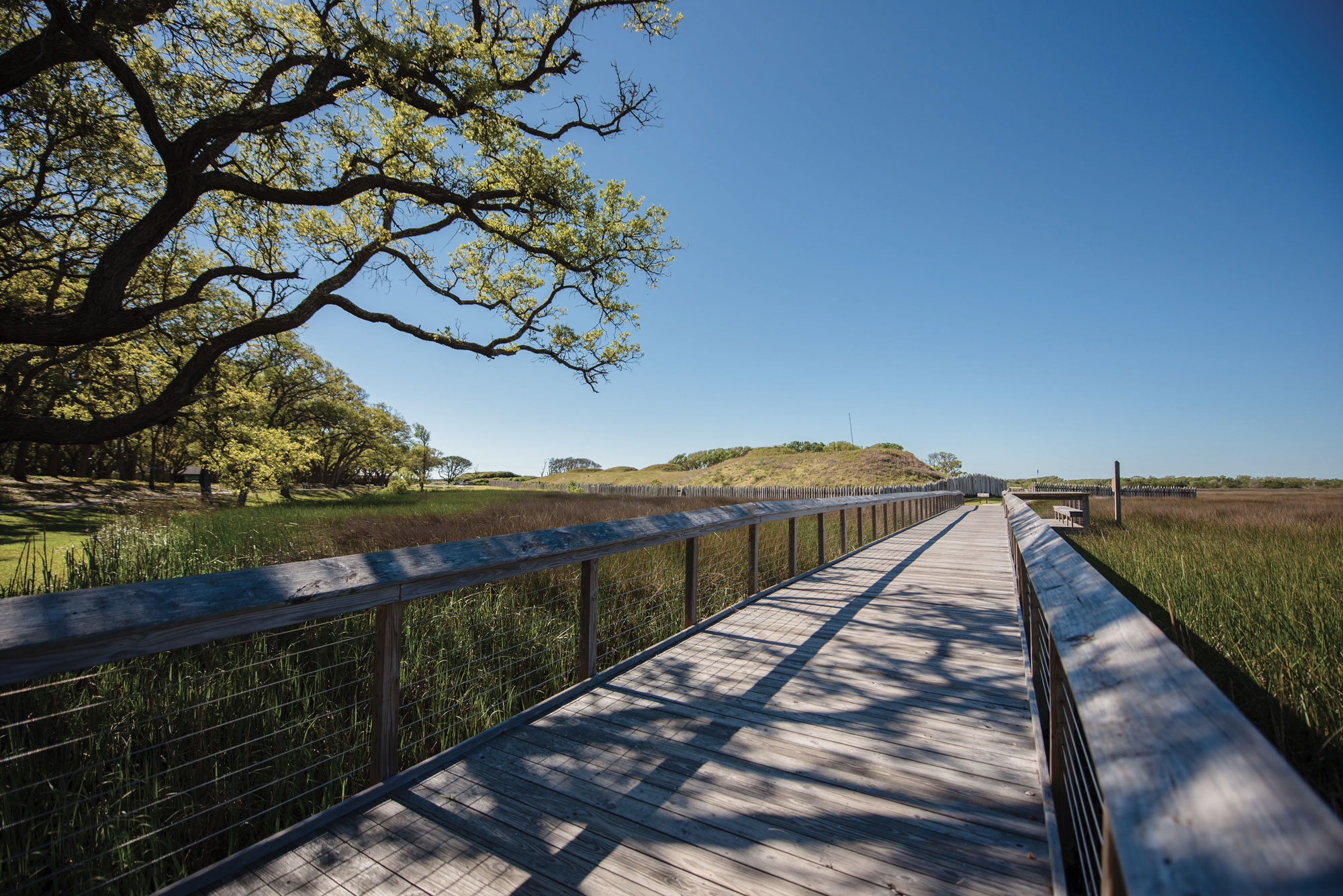
Fort Fisher State Historic Site (1610 Fort Fisher Blvd. S., Kure Beach, NC; 910-251-7340) is a must-see. By late 1864, Wilmington was the last major Confederate port on the eastern seaboard, and it was guarded, at the Cape Fear River’s New Inlet, by Fort Fisher, an earthwork bastion known as the Gibraltar of the South. Much of the fort has been lost to erosion or the landing strip installed during WWII, but the remaining portion of the fort nearest the Cape Fear River was the scene of the most decisive fighting in 1865. The site has an artifact-filled museum and an enthusiastic and informative staff. There are daily tours, rifle demonstrations, and, depending on when you come, all kinds of programming, including speakers, kids’ programs, and an anniversary reenactment in January. Sitting between the ocean, the marsh, and the Cape Fear River, and surrounded by twisted and gnarled live oaks, this is a truly beautiful spot to enjoy Civil War history. CD
Beside Fort Fisher, the fortifications near the Cameron Art Museum (3201 S. 17th St.; 910-395-5999), where the Battle of Forks Road was fought as Union troops closed in on the city of Wilmington in January 1865, are worth a visit. Five regiments of U.S. Colored Troops led the charge against Major General Robert Hoke’s division of seasoned Confederate veterans. Ultimately, Hoke retreated under orders and moved north toward a rendezvous with remaining Confederate forces and their last-ditch effort to halt William T. Sherman’s march through the Carolinas. BJ
 Ned Leary
Britt’s Donuts
Best Eats
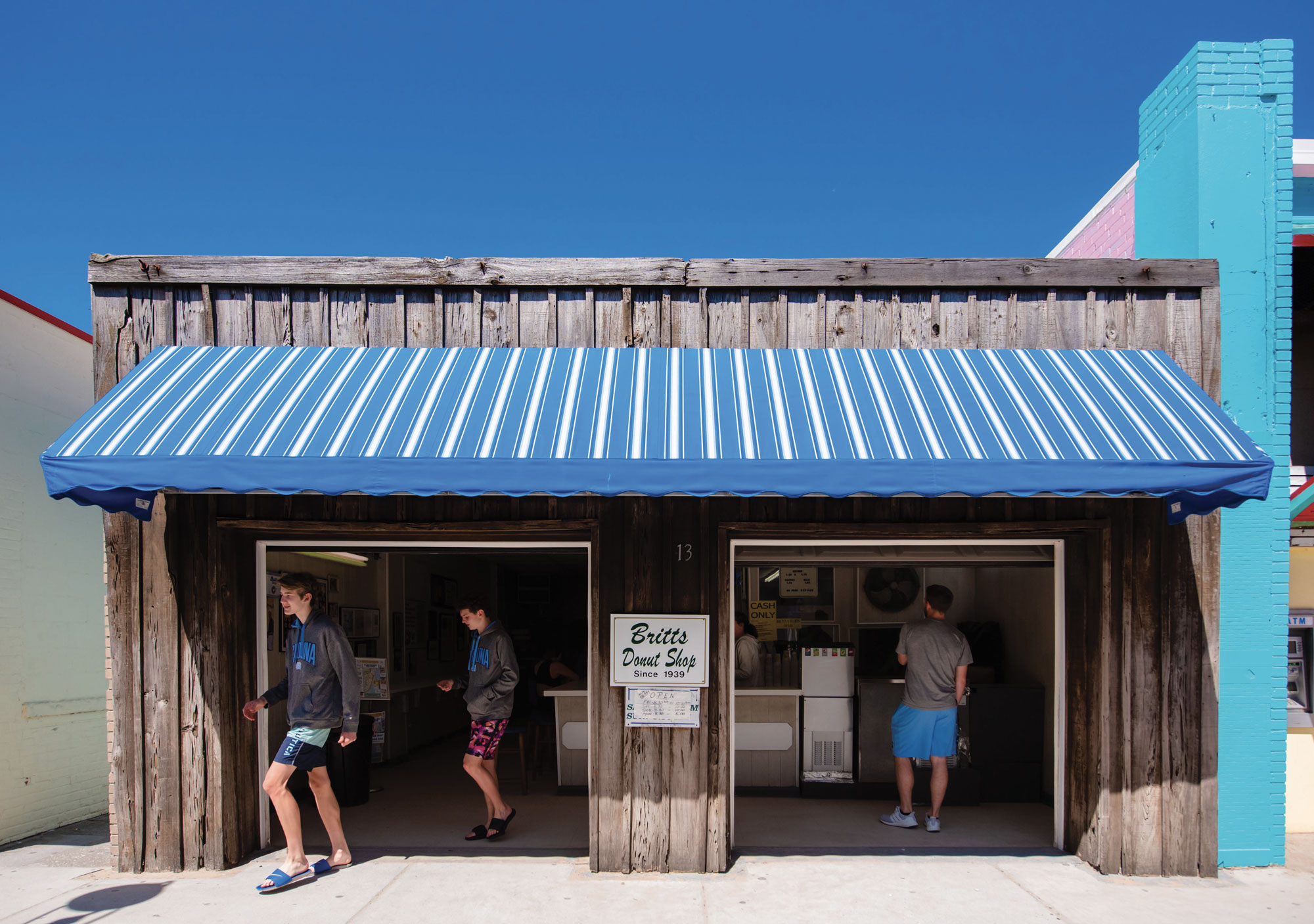
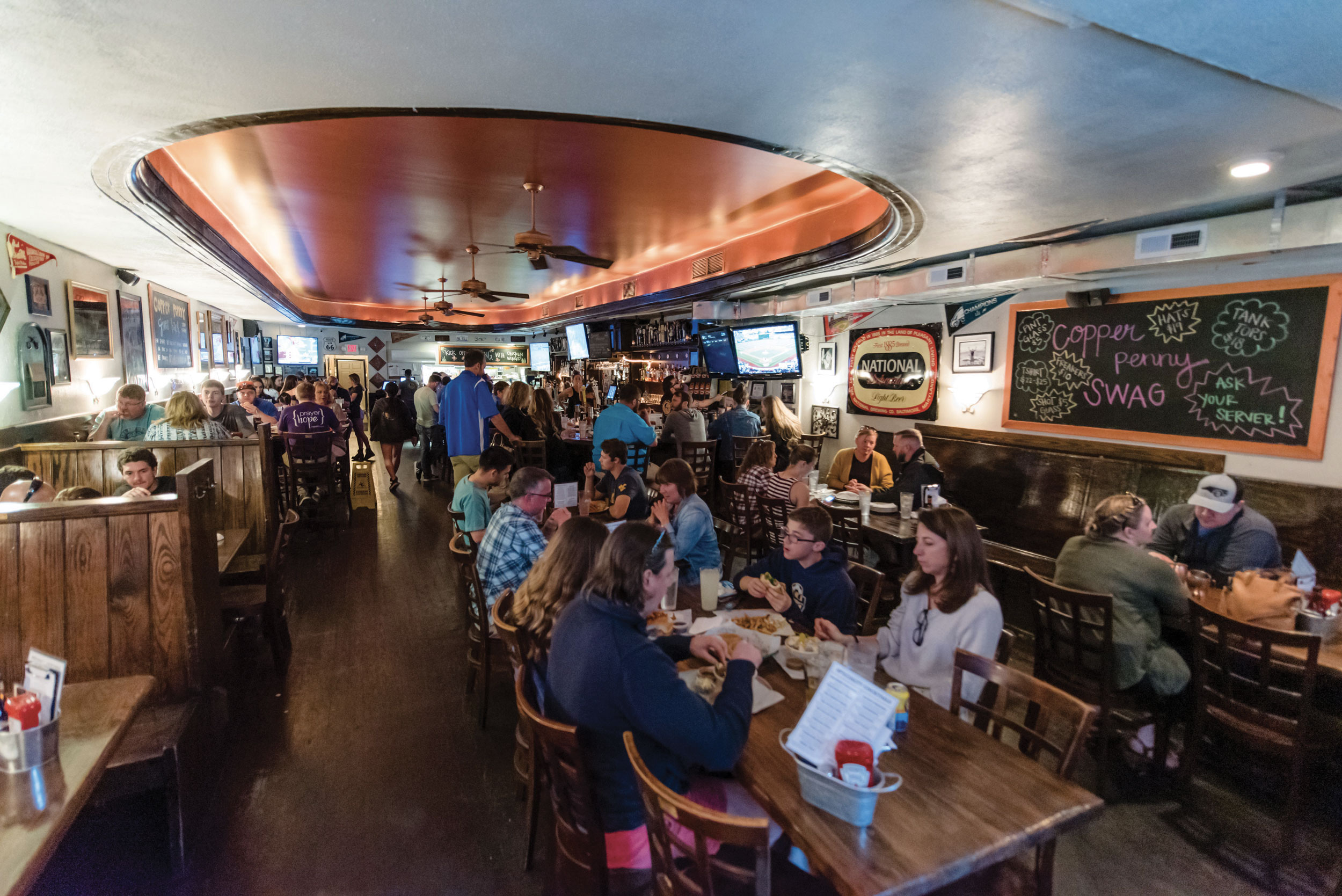
Locals mark their calendars for the opening day of Britt’s Donuts (11 Carolina Beach Ave. N., Carolina Beach, NC; 910-707-0755)—it’s open only in the spring and summer. Plan to wait in line and don’t look for sprinkles, chocolate, or other shenanigans. Britt’s only serves glazed doughnuts, coffee, and milk. Order more than you think you’ll want, and eat them hot from the bag as you walk along the beach. For lunch, I recommend The Copper Penny (109 Chestnut St.; 910-762-1373). It’s always busy and always good. Try the Ft. Fisher Fish-n-Chips, the Penny Slaw, and the burgers. Elijah’s (2 Ann St.; 910-343-1448) is classic Wilmington dining—a gorgeous river view with solid food. If you’re not concerned about the view, Cape Fear Seafood (5226 S. College Rd., Suite 5; 910-799-7077) offers great, fresh seafood, served elegantly but with ingredients you can recognize. CD
 Ned Leary
Copper Penny
A favorite breakfast place of mine is The Basics (319 N. Front St.; 910-343-1050) in The Cotton Exchange building in downtown Wilmington. Their creative meals are based on southern favorites—for instance, the Southern Benedict, with buttermilk biscuit, over-easy eggs, smoked ham, and sausage gravy. For lunch, try Detour Deli & Café (510 ½ Red Cross St.; 910-538-4093), a tiny place located across the street from St. Stephen AME Church, considered the “mother church” of North Carolina with roots that predate the Civil War. A great dinner choice is Benny’s Big Time Pizzeria (206 Greenfield St.; 910-550-2525), which offers riffs on the old standards, like “Porchetta-Bout It,” a pizza with provolone, crispy potato, onion, chili, and herbed honey. Benny’s is named for Ben Knight, the husband of Vivian Howard of PBS’ A Chef’s Life fame. BJ
 Ned Leary
Courtyard by Marriott
Best Sleep
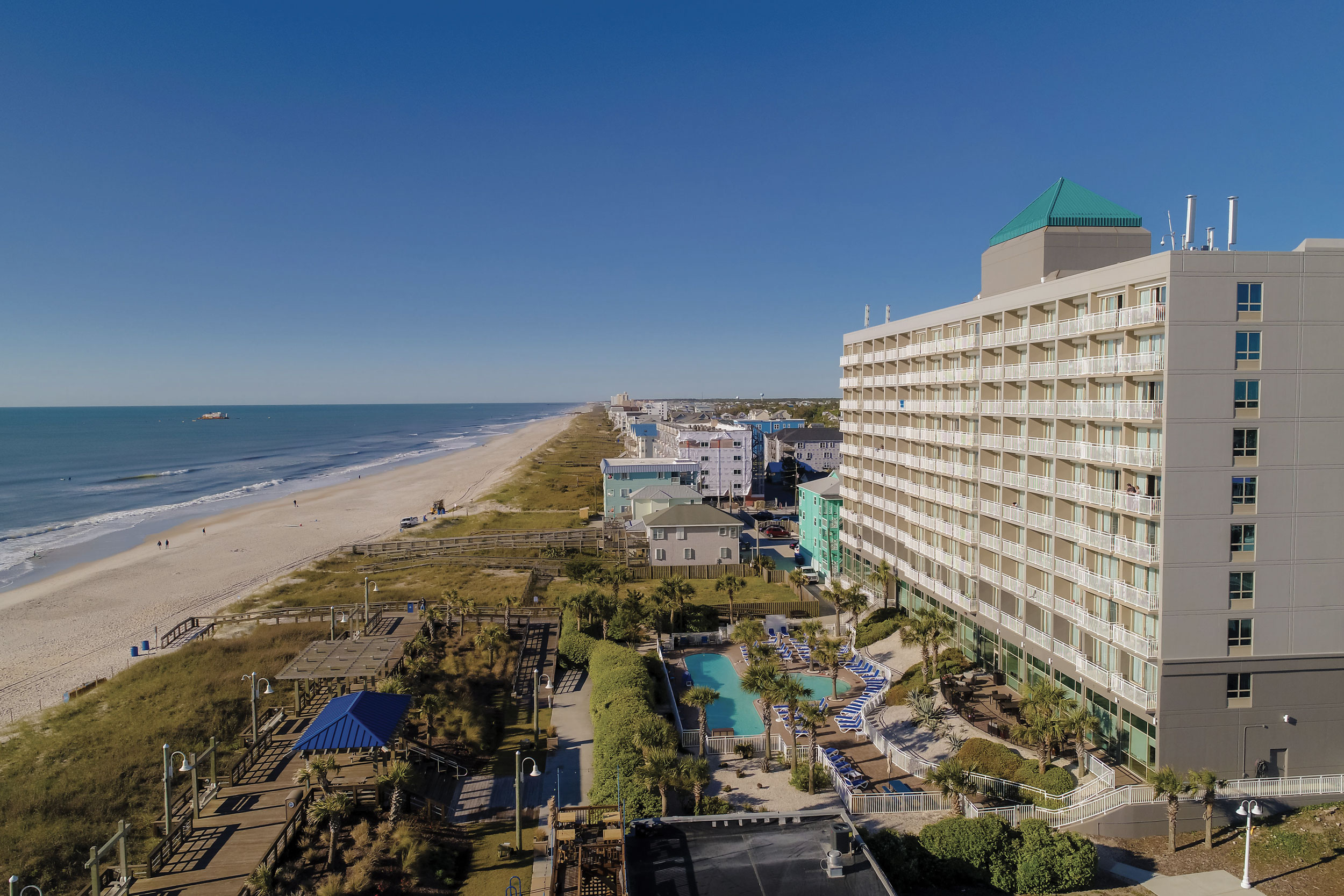
For family stays I’d look to the beaches. On Wrightsville Beach, check out the Blockade Runner Beach Resort (275 Waynick Blvd., Wrightsville Beach, NC; 877-684-8024). In Carolina Beach, I’d stay at the Courtyard by Marriott (100 Charlotte Ave., Carolina Beach, NC; 910-458-2030). Both are right on the sand, have pools, in-house restaurants, great drinks, and seasonal kids’ programs. The Blockade Runner is a bit more upscale and has beautiful grounds; the Courtyard by Marriott has both indoor and outdoor pools for off-season fun. CD
 Ned Leary
C.W. Worth House
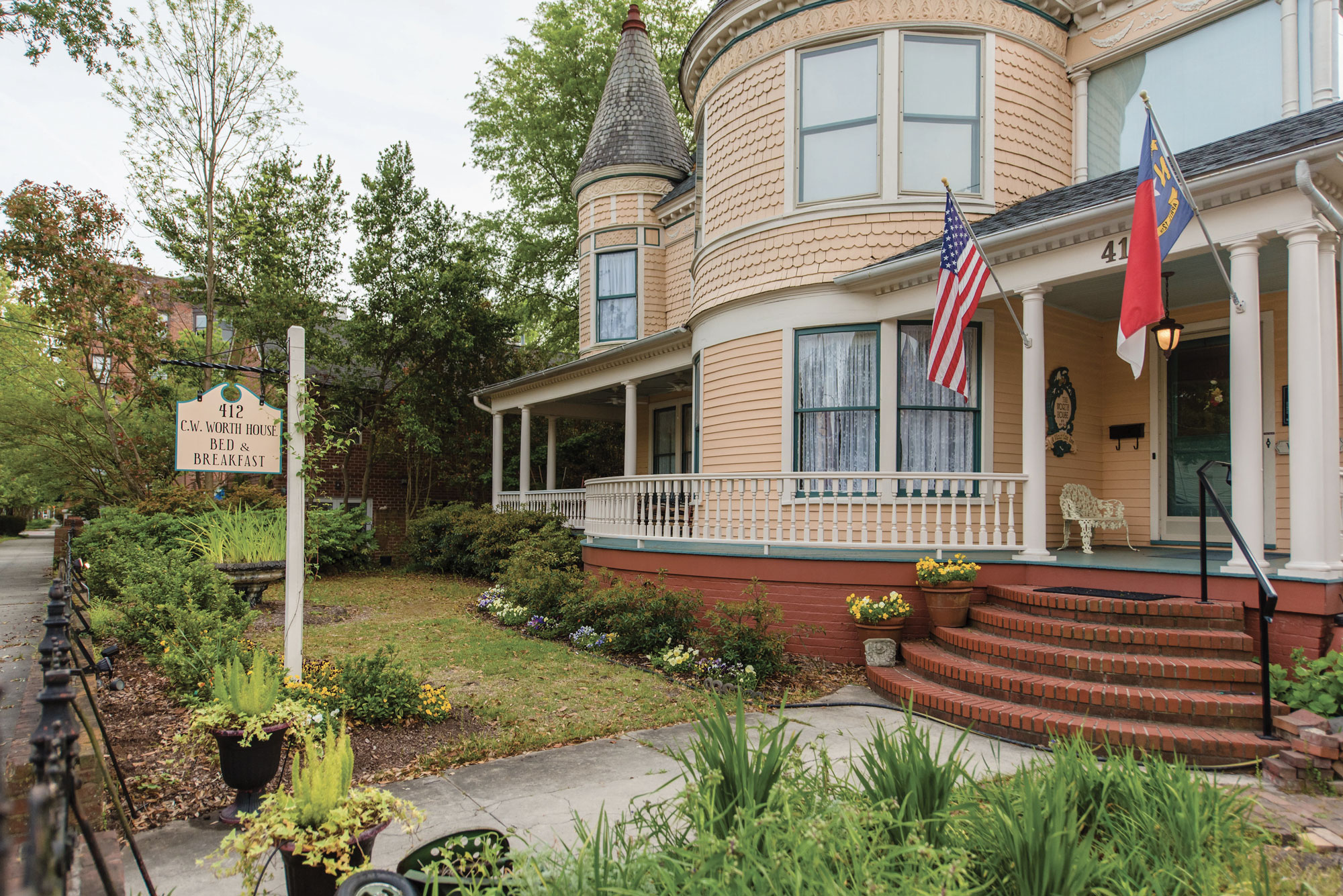
In the historic district, a favorite B&B is the delightful Victorian architectural confection, the C.W. Worth House (412 S. 3rd St.; 910-762-8562). The nearby Carolina Beach Inn (205 Harper Ave., Carolina Beach, NC; 910-622-8393) is pet friendly, spacious, and modern. It has the feel of a house rental at the beach and it’s close to the boardwalk attractions. BJ
Best Book
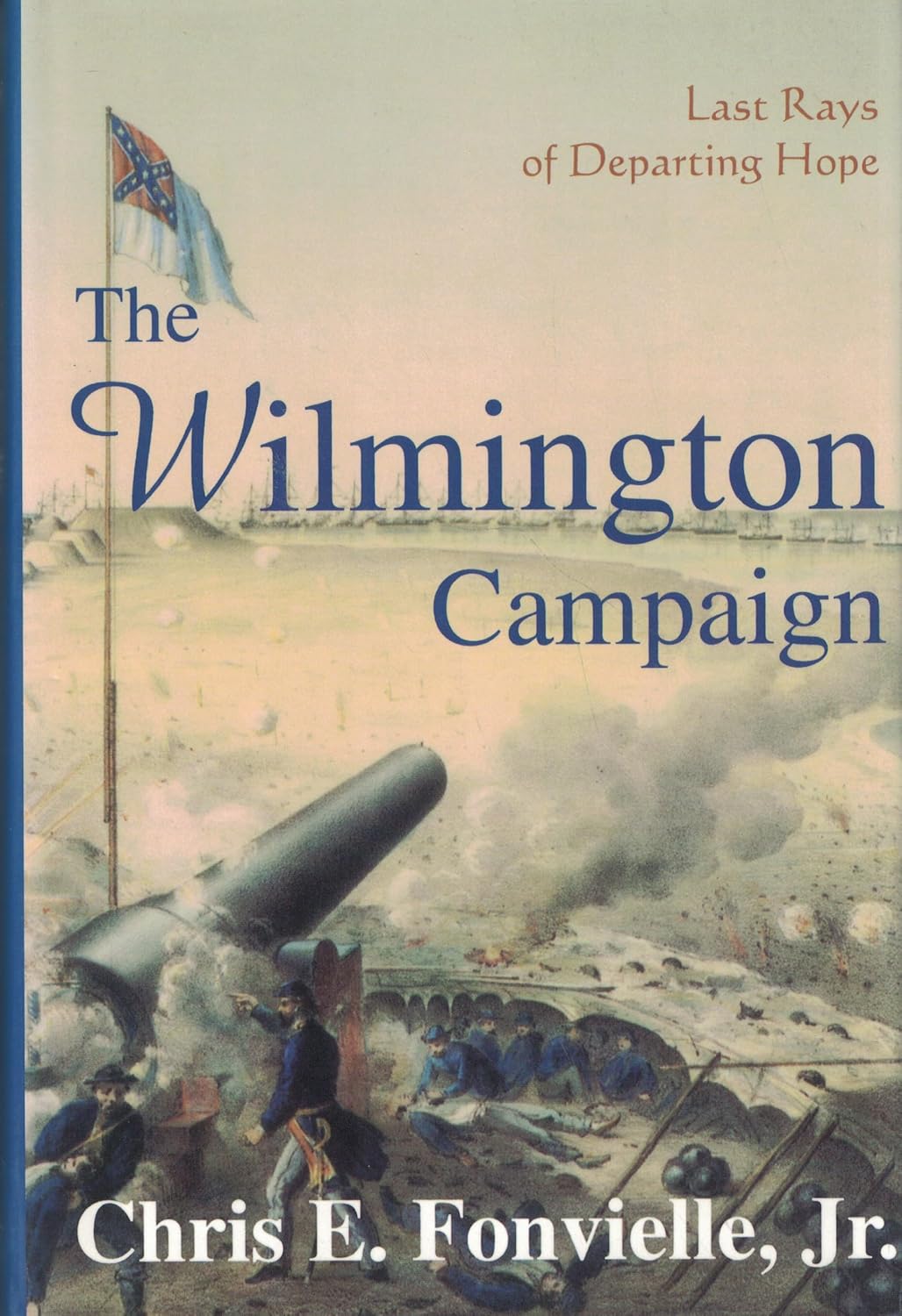
It’s hard to top Chris E. Fonvielle Jr.’s The Wilmington Campaign: Last Rays of Departing Hope (1997). But if I had to pick another book, I’d go with Rod Gragg’s Confederate Goliath: The Battle of Fort Fisher (1991). It’s a very readable, entertaining look at Fort Fisher and all that took place during the two battles fought there. CD
The Wilmington Campaign by Chris E. Fonvielle Jr. is the indispensable guide to Wilmington during the Civil War. In fast-paced and clear prose, the book conveys the importance of Wilmington as a blockade-running port—by 1864 the only port able to supply Robert E. Lee’s Army of Northern Virginia. Fonvielle tells the story of Wilmington as only a native expert can. BJ
 Ned Leary
Christine Divoky and Bill Jayne
About Our Experts
Christine Divoky (above, left), executive director of Friends of Fort Fisher, has called the Wilmington area home for 23 years. Bill Jayne is the president of the Cape Fear Civil War Round Table. A devoted student of the Civil War since the 1970s, he has lived in the Wilmington area for a dozen years.