 Freeman's Auctions
Thomas A. Rowley
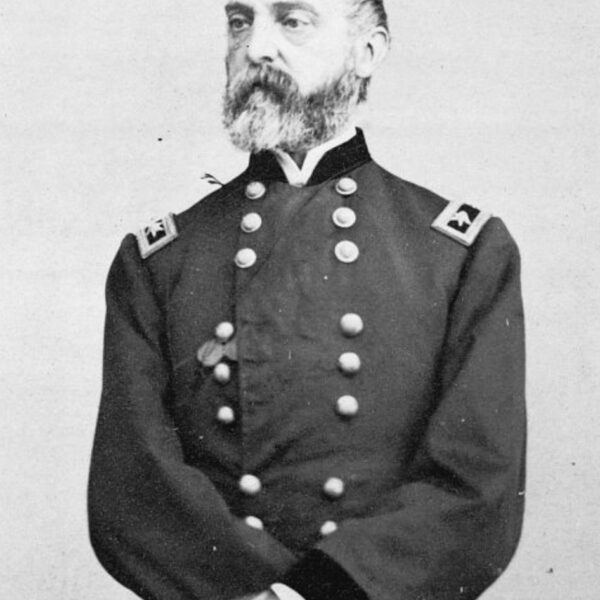
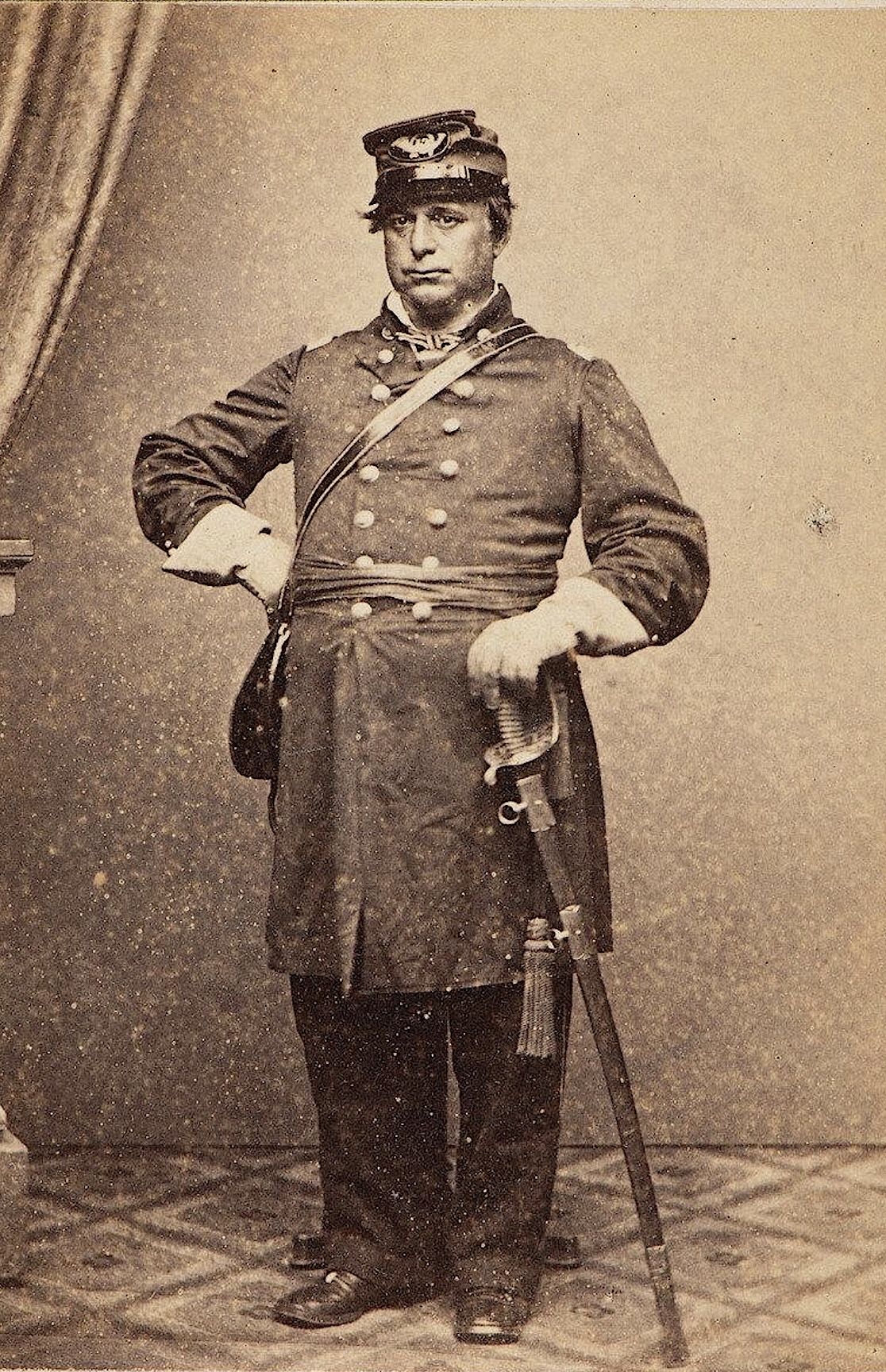
Thomas A. Rowley, born in Pittsburgh, Pennsylvania, in October 1808, was the son of George Rowley, a veteran of the War of 1812, and the grandson of William Rowley, who fought in both the Revolutionary War and the War of 1812. Thomas was educated in the common schools and was working as a store clerk and cabinet maker before the Mexican War, where he served as a captain of volunteers. When the Civil War began, he was appointed colonel of the 13th Pennsylvania Infantry, a three-month regiment, and then of the 102nd Pennsylvania Infantry, which he led during the Peninsular Campaign. He was promoted to brigadier general and, at the Battle of Chancellorsville, led a brigade made up of the 121st, 142nd, and 151st Pennsylvania, and the 80th New York. Rowley commanded the Third Division of the I Corps, of which his former brigade was part, at Gettysburg, where his performance was said to be erratic, fluctuating between professional and confrontational, brave and bizarre. Eventually, Rowley was placed under arrest for alleged drunkenness, conduct to the prejudice of good order and military discipline, conduct unbecoming an officer and a gentleman, and disobedience of orders.
So, let us examine the behavior, conduct, and circumstances surrounding General Rowley’s actions at Gettysburg. First, we need note that Rowley was experiencing a painful affliction as he assumed command: He had boils the size of eggs on his inner thighs. The surgeon of the 149th Pennsylvania, who had examined him, concluded “it would be difficult for him to ride a horse” and that he was “not competent to go into any engagement on horseback.” It’s unknown if any medications (including alcohol) were administered for pain relief, but Rowley decided not to sit astride the horse and instead tried every position except the natural one. This may well have contributed to his extremely cantankerous mood in battle.
Next, Rowley’s old brigade, now under the command of Colonel Chapman Biddle, would assume four different positions on the afternoon of July 1, 1863, to avoid heavy Confederate artillery fire from Herr’s Ridge and Oak Hill. One historian wrote that the brigade’s “incessant movements and gyrations” can be attributed, at least in part, to Rowley’s alleged inebriated condition. Author David Martin, in his book Gettysburg July 1, noted that Colonel Theodore Gates of the 80th New York stated that “during the fighting on the first day the General [Rowley] commanding the division was hardly competent to judge correctly the condition of things, or to know what transpired on the field.”
Yet as the Confederate forces of General J.J. Pettigrew’s North Carolina Brigade attacked on the east side of Willoughby’s Run, Rowley demonstrated bravery and leadership in leading his division. He rode down the line of the 142nd Pennsylvania yelling, “Here’s for the Old Keystone! There the Rebels are coming! Give it to them!”
And when the two brigades of the Third Division, along with the Iron Brigade of the First Division, were driven from McPherson’s Ridge to Seminary Ridge, Rowley shouted to Captain Warren of the 142nd, “We must hold this hill! You must hold this ridge!” At one point, he helped rally the men behind a stone wall and shouted, “Rally the men and hold that place, if possible” and “For the sake of Allegheny County do not fall back….”
 National Archives
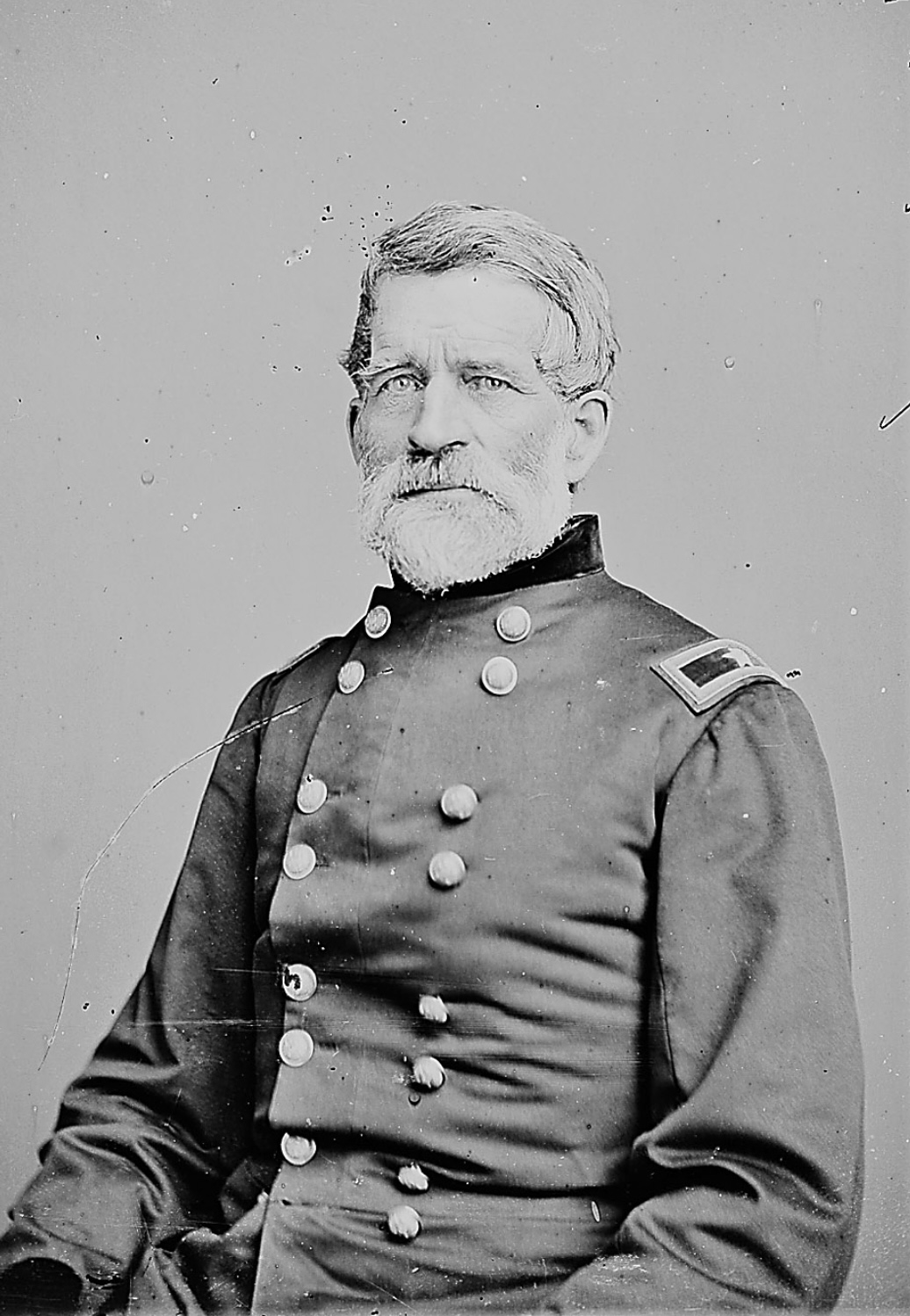
Lysander Cutler
Soon afterward, however, the remnants of the I Corps were swept from Seminary Ridge by the two brigades of General William Dorsey Pender’s division. A Union corporal informed Rowley that he needed to leave Seminary Ridge or risk capture. Rowley then “mounted a horse and galloped off the field.” As the general rode into town, he was thrown from his horse at the ditch for Steven’s Run—witnessed by many soldiers and fueling the belief that Rowley was drunk at the time. He remounted and rode down High Street, where he encountered Brigadier General Lysander Cutler, of the I Corps’ First Division. Here is where things turned bizarre, confrontational, and ugly. Rowley asked Cutler, “What is your name, sir?” Hearing “General Cutler,” Rowley responded by saying Cutler was of no account and vowed to attend to him another day. One of Cutler’s aides, Lieutenant Thomas Miller, was close enough to hear Rowley’s “oath” and “threat” to Cutler. Rowley then rode down Baltimore Street to Cemetery Hill.
On reaching the north face of Cemetery Hill, Colonel Charles Wainwright, I Corps artillery commander, met Rowley, who claimed that he now commanded the I Corps after the death of Major General John Reynolds. Failing to persuade Rowley that others ranked him, Wainwright rode up Cemetery Hill convinced that Rowley was drunk. Rowley then rode over to the remnants of the 7th Wisconsin Infantry and said to its colonel, William Robinson, “your men are damned good and brave fighting men, but the officers are a worthless lot … a damn pack of cowards.” He then ordered the 7th into position before one of the regiment’s officers replied that Major General Abner Doubleday had assigned them elsewhere. Rowley shouted, “I gave you the first order, and I will hold you responsible for the execution of it. By God I command the corps.” He next moved the 147th New York from a position assigned to them by Doubleday. When Cutler objected, Rowley replied, “I don’t care a damn about General Doubleday! I command the corps and will place the troops where I please.” Cutler left to find Doubleday, who had in fact assumed command of the corps.
 Jim Rivest Collection
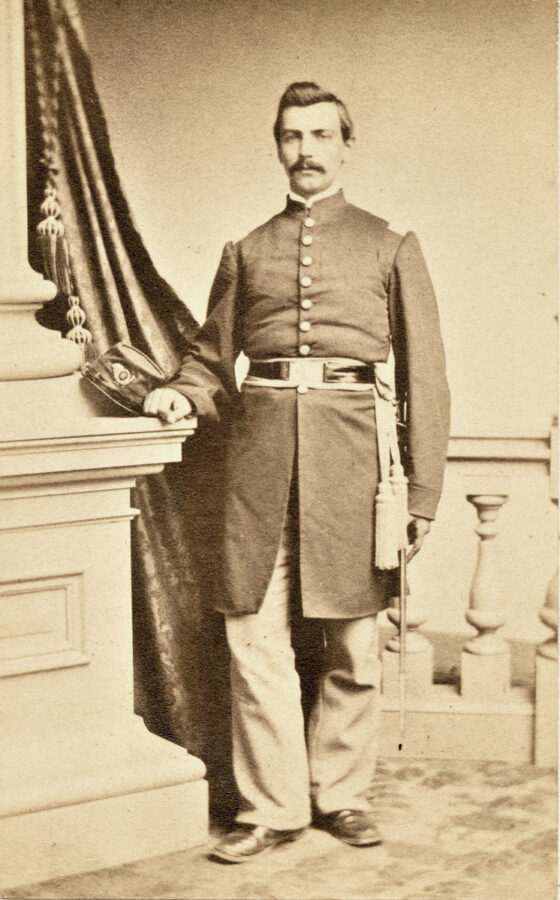
Rufus Dawes
Lieutenant Colonel Rufus Dawes of the 6th Wisconsin Infantry had witnessed the exchange between Rowley and Cutler. Dawes noted, “Rowley had become positively insane. He was raving and storming and giving wild and crazy orders.” To Lieutenant Clayton Rogers, provost marshal, it seemed that “Rowley [was] in great excitement, had lost his own division, and was giving General Wadsworth’s troops contradictory orders, calling them cowards.” Concluding that Rowley’s conduct “was unbecoming a division commander and unfortunately stimulated with poor commissary [liquor]” Rogers, on his own responsibility, did not hesitate to arrest Rowley and called on Dawes to execute the order with the bayonets of the 6th Wisconsin. Dawes wrote, “Cool … and courageous, at that supreme crisis…, Clayton rode up and boldly placed General Rowley under arrest and called on me for bayonets to enforce the order.”
Regulations stipulated that an arresting officer must provide “the prisoner a copy of the charges they faced within eight days. No record exists that Rogers ever filed or served the charges to Rowley. Regulations also stated “any person in the military service of the United States arrested for a capital crime must be kept in close confinement.” Rowley was never confined to quarters. Charges filed just before Rowley’s April 1864 court-martial placed him under arrest for a capital crime, disobedience of orders. However, records do not document Rowley’s arrest. Nor is there evidence that Doubleday took any action against Rowley at the time, either on the evening of July 1 or during the following day. When the Gettysburg Campaign was over, Rowley began medical leave and made plans to return to Pittsburgh.
Rowley reported to the Army of the Potomac on April 18, 1864, for a command assignment and instead was placed under arrest after generals Ulysses S. Grant and George Meade had decided to proceed with a court-martial trial. Lieutenant Colonel Dewitt McCoy of the 83rd Pennsylvania would serve as the judge advocate (prosecutor) and Colonel Edmund Dana of the 143rd Pennsylvania as defense counsel.
On the trial’s first day, Rowley asked that the proceedings be postponed “to enable him to procure the attendance of absent witnesses,” and that these witnesses were “indispensably necessary for my defense in this proceeding.” The court, chaired by General John Cleveland Robinson, denied the request.
Rowley was formally arraigned on four charges: drunkenness on duty on the battlefield; conduct to the prejudice of good order and military discipline; conduct unbecoming an officer and a gentleman; and disobedience of orders.
 USAHEC
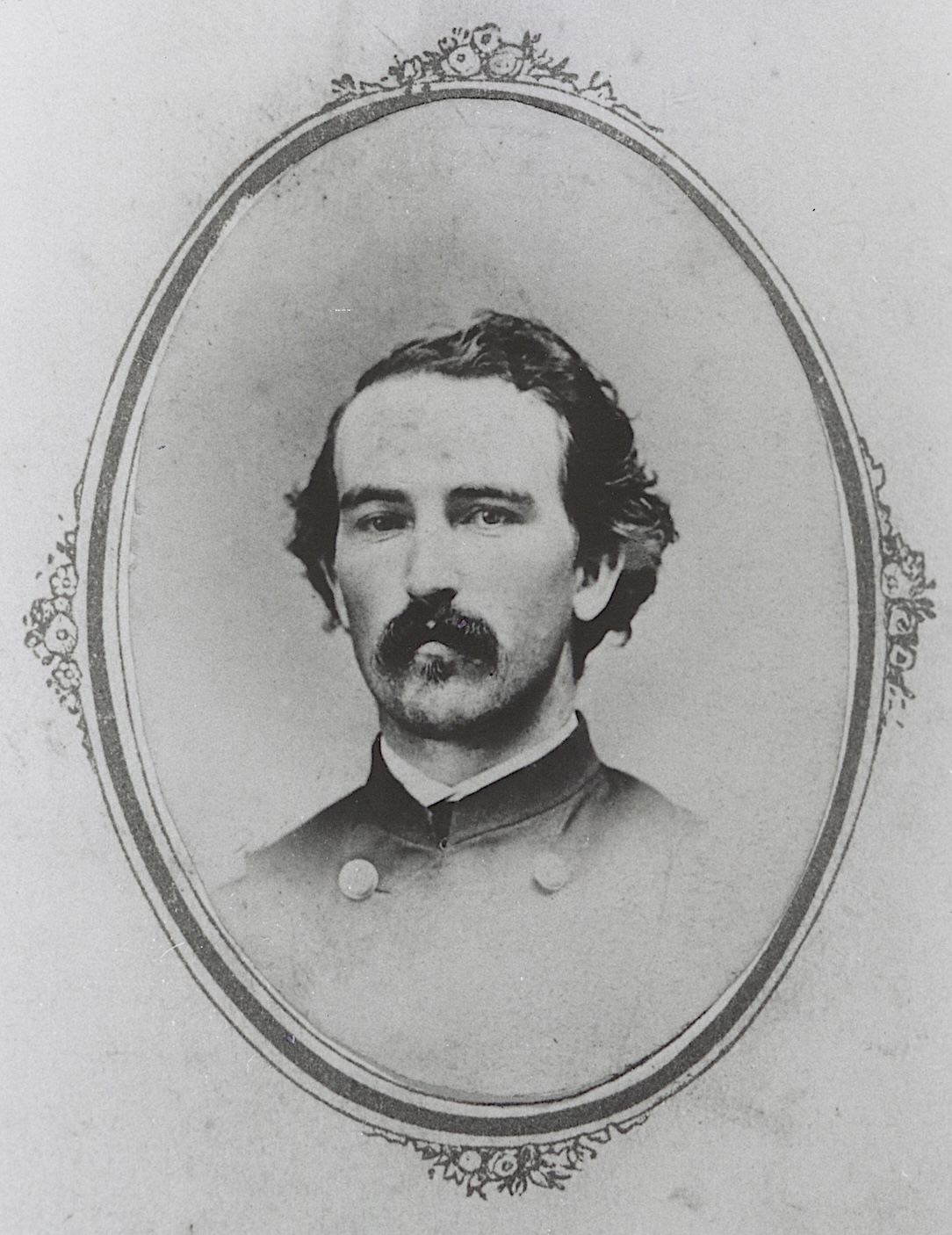
Horatio Warren
Each witness for the prosecution, including generals Doubleday and Cutler, Colonel Robinson, Lieutenant Miller, and Colonel Wainwright, were sworn and examined first by the judge advocate, then by the accused, and finally by the court members. Each witness testified to the incidents already detailed. Next, witnesses for the defense were summoned to testify. Lieutenant Colonel Horatio Warren of the 142nd Pennsylvania testified to the defendant’s effectiveness in rallying men at the seminary on July 1 and considered him “perfectly sober … and fit to command.” Next, Captain Frank Powell stated that Rowley always appeared cool and determined. “If I can judge a sober man is, I would suppose him sober. I saw nothing to the contrary.” Major James Glenn of the 149th Pennsylvania stated, “He appeared to be perfectly sober as near as I could judge and appeared to be perfectly cool and seemed to know what he was doing.” Finally, Surgeon Humphrey described the defendant’s health status and when questioned whether he was drunk and unfit to discharge his duties, he answered, “I discovered nothing.”
Judge Advocate McCoy submitted the case without remark. He then polled the court and recorded the votes on each charge. If the vote was not unanimous, the majority ruled. If found guilty, the defendant faced either preemptory or discretionary punishment. With two minor exceptions, Rowley was found guilty of all charges and specifications except the fourth—disobedience of orders—and sentenced to be cashiered at once. Robinson adjourned the court and sent the verdict to Meade, who approved it.
Rowley did not accept the verdict without further action. He sought affidavits from two key witnesses who did not have the opportunity to testify on his behalf and had Congressman James K. Moorhead of Pennsylvania, a political ally, submit the affidavits to the War Department. Judge Advocate General Joseph Holt, ruled that these affidavits must be admitted, and that a conflict in the testimony relating to the gravest of the charges is presented and would justify President Lincoln in withholding his approval of Rowley’s dismissal from the army. Secretary of War Edwin Stanton, upon the advice of Holt, disapproved of the court’s findings; Lincoln, an old trial lawyer, having also found several irregularities in the court’s proceedings, concurred with Stanton to set aside the sentence.
Rowley was at once released from arrest and returned to duty. He did not, however, receive another battlefield command and resigned his commission on December 29, 1864. He later served as a U.S. marshal and practiced law. He died in Pittsburgh in 1892 at 83.
Larry Korczyk has been a licensed battlefield guide at Gettysburg National Military Park for 13 years. He has conducted hundreds of tours on the battlefield (with a specific focus on the leadership of army commanders George Meade and Robert E. Lee), is a regular speaker at Civil War roundtables, and coauthor of the book Top Ten at Gettysburg (2017).