 Richard P. Condon
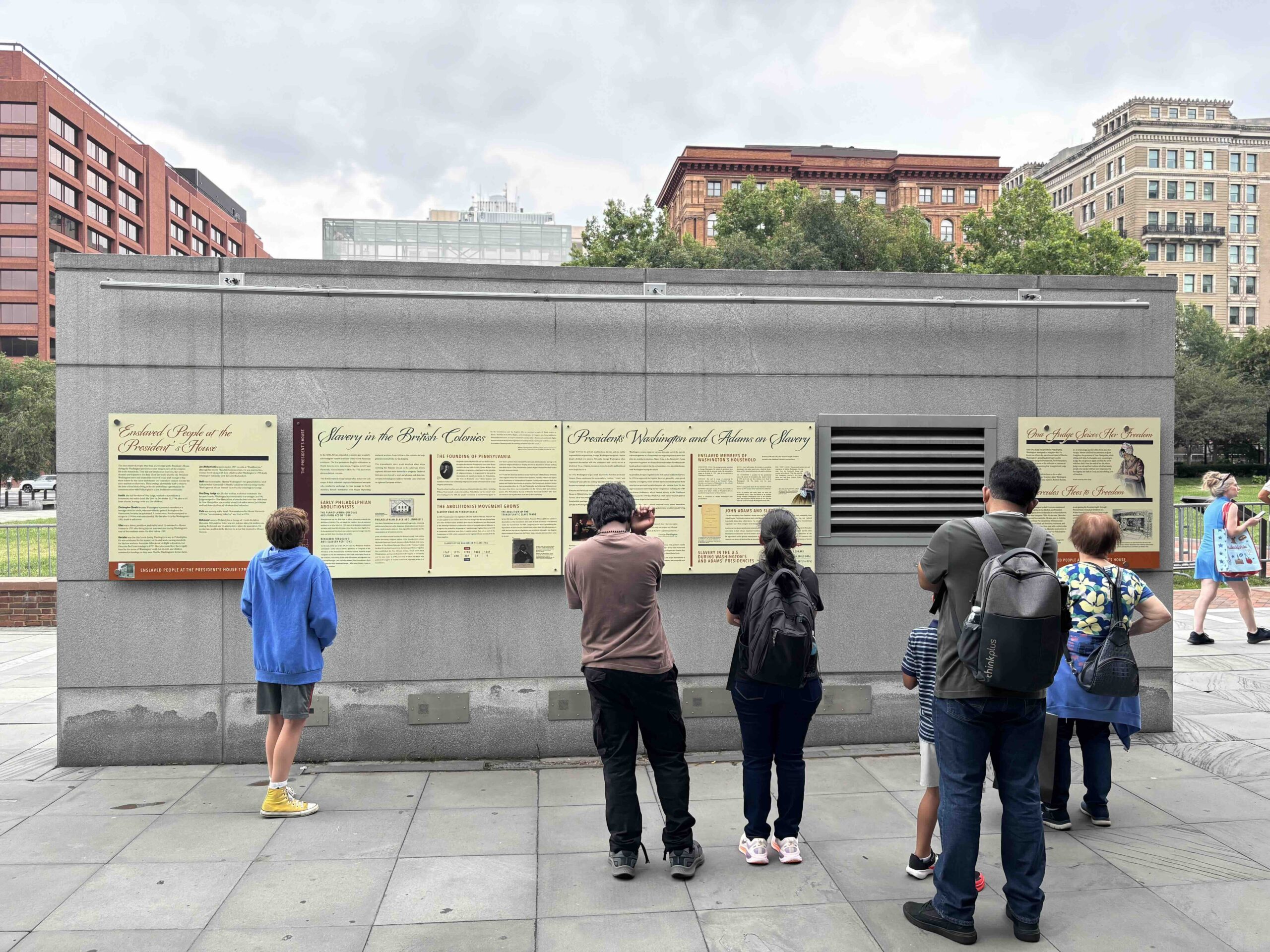
Visitors read interpretive panels at the President’s House Site at Independence Hall National Historical Park in Philadelphia
As the nation moves together through the first year of America’s 250th anniversary commemorations, historians, educators, students, and the public at large have asked many questions. What role did the founders have in the creation of our country? How have we celebrated that since 1776? How should we observe the anniversaries in a meaningful and respectful way for all Americans? And perhaps more importantly, who lays claim to the American story?
While we attempt to answer these questions, we are met with such additional challenges as the meaning of American identity, the definition of liberty and citizenship, the progression of our national story, and the uncomfortable truths of the past; the contradictions, failures, injustices, and conflicts that exist alongside the ideals that have shaped what we now call the United States. Understanding these truths is not an exercise in diminishing identity or culture, but rather an essential part of understanding the nation’s complicated past and, ultimately, what it means to be American. History after all is rarely comfortable—and no country, let alone ours, is spared.
Discomfort with history should be productive. It encourages us to ask hard questions, to hear the replies of those who answer, and to recognize that the American experience does not belong to any one group, political ideology, religion, or generation. This discomfort also contributes to the adversity and opposition to sharing a truly complete national history. On this 250th anniversary of our nation’s founding, I for one am continuously encouraged by voices of the past and those in the present.
In a recent interview with The Bulwark, for example, historian Kevin Levin acknowledged the continued divide among Americans during the nation’s 250th anniversary, but reflected on the interactions with history it provoked, history that is often consumed on a local level. “It might be enough on July Fourth just to be able to connect with people in your own neighborhood beyond the whole issue of politics,” Levin suggested, “to remind ourselves that perhaps we do have something more in common with one another.” This does not mean conceding to historical untruths, or compromising one’s moral compass, but rather allowing space for conversation and understanding in our increasingly polarized society.
 National Archives
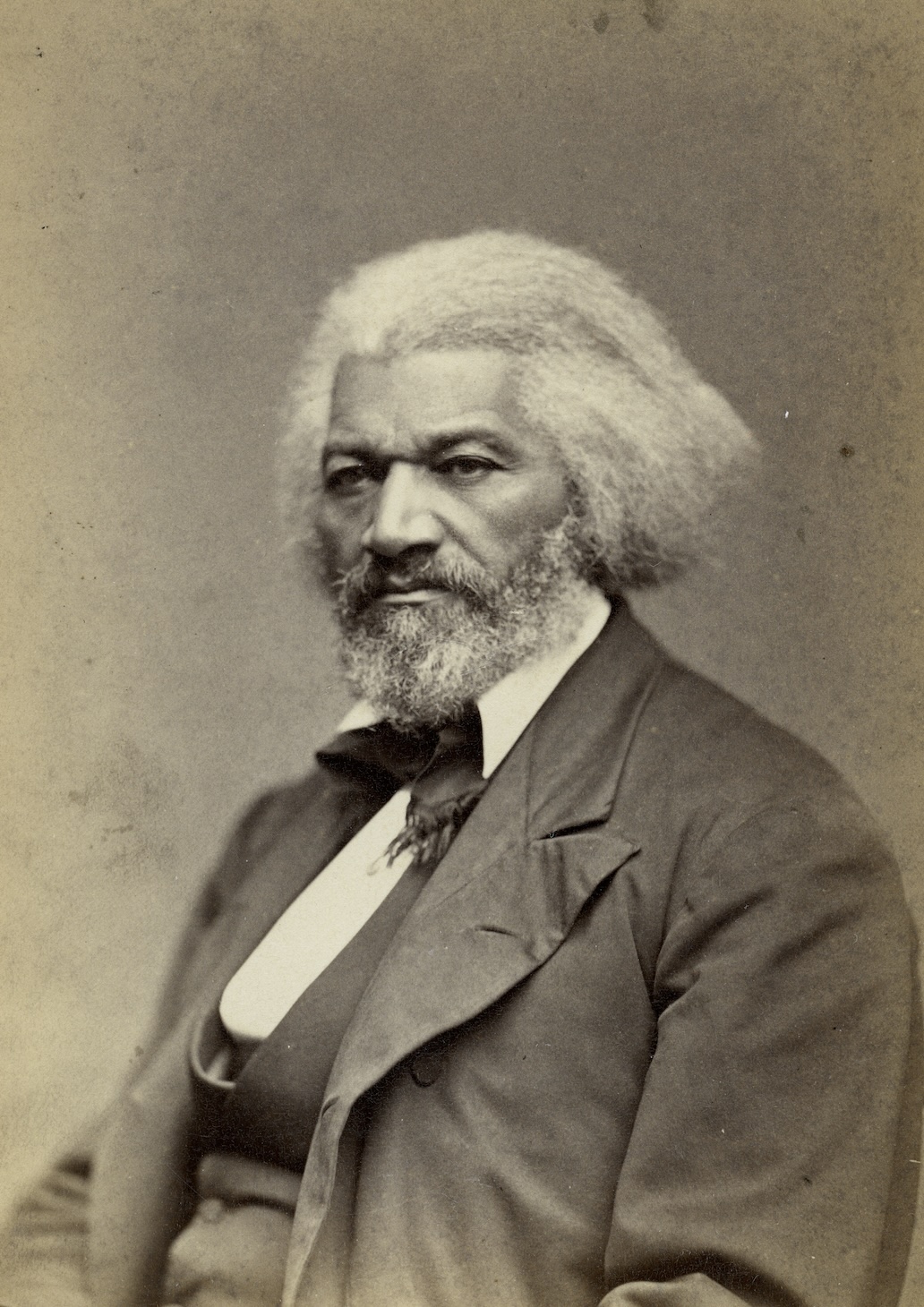
Frederick Douglass in 1879
In New York City on Decoration Day, 1878, Frederick Douglass expressed such sentiments to a crowd of U.S. Army veterans and members of the Abraham Lincoln Grand Army of the Republic Post No. 13. “I am not here to fan the flame of sectional animosity, to revive old issues, or to stir up strife between the races; but no candid man, looking at the political situation of the hour, can fail to see that we are still afflicted by the painful sequences both of slavery and the late rebellion,” he said. Evoking the campaign slogan of former President Ulysses S. Grant, Douglass agreed, “‘Let us have peace,’ but let us have liberty, law, and justice first.” Douglass also wanted the Constitution, “with it the 13th, 14th, and 15th amendments, fairly interpreted, faithfully executed, and cheerfully obeyed in the fullness of their spirit and the completeness of their letter.”
Amid the national conversation surrounding the country’s 250th anniversary, historians have been busy doing what they do best: creating opportunities for people to engage with the past. A whirlwind of special events and public programming, from frontline interpretation at historic sites and national parks to summer conferences—like those held by Gettysburg College’s Civil War Institute or, in Richmond, the Society of Civil War Historians—displayed the opportunities to do just that in 2026. Organizers of the latter conference went so far as to waive registration fees for public historians, museum professionals, and National Park Service personnel who otherwise might not have had institutional funding for travel to the gathering. The outpouring of support for public historians has been encouraging; I have personally been invigorated by those who continue to do good history while strengthening the bonds between public education and academia during one of the most important commemorations in American history.
 Richard P. Condon
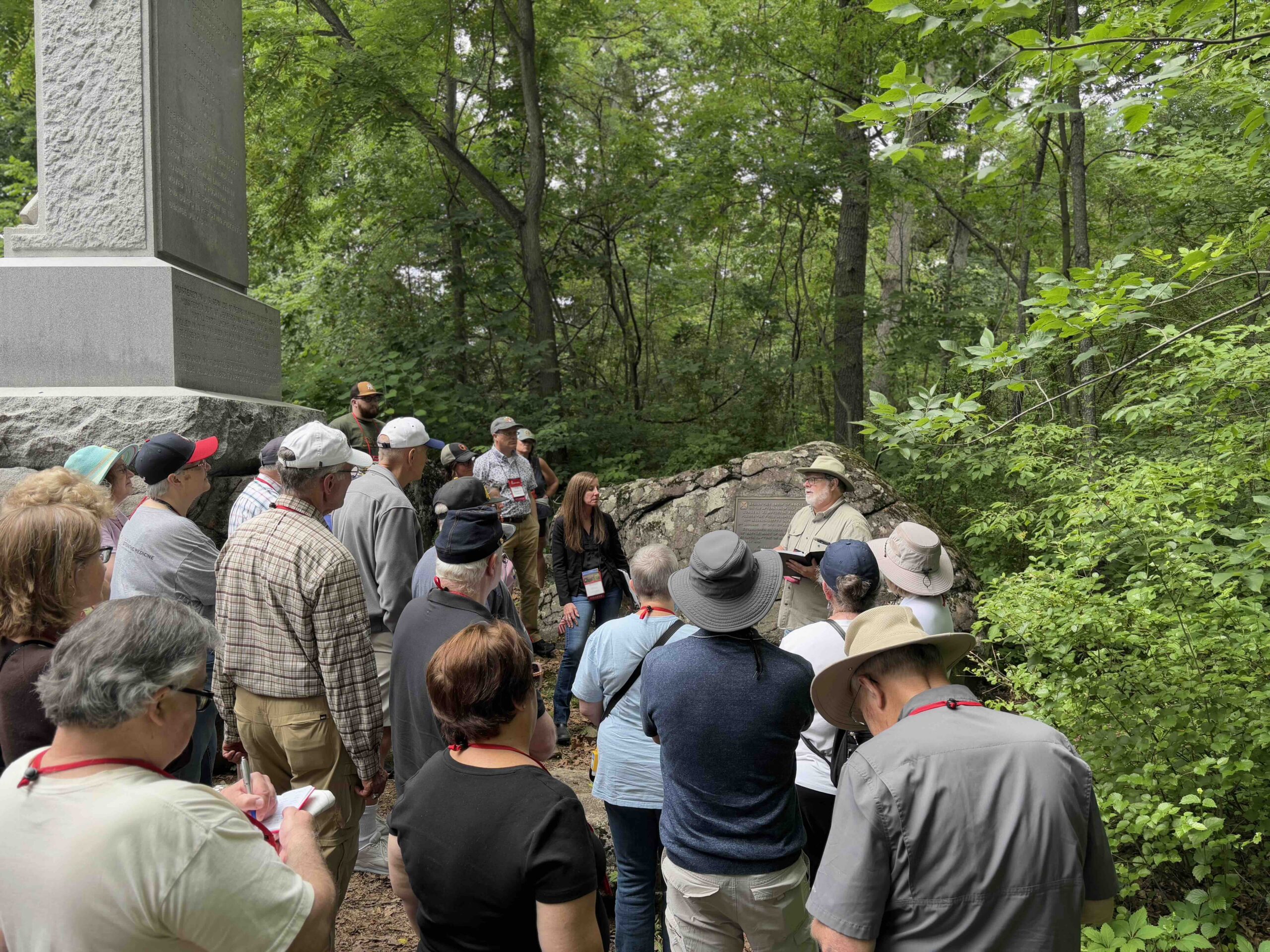
Attendees at a recent Civil War Institute conference at Gettysburg College experience an interpretative program on the Gettysburg battlefield
Gettysburg College’s Civil War Institute, in particular, has long welcomed individuals from a multitude of disciplines and backgrounds to participate in its annual conference alongside a curious public, all of whom share an understanding that the Civil War was a national crisis with causes and consequences spanning well before and beyond the years 1861 and 1865. As historians, students, descendants, educators, preservationists, and members of the public ask new questions of the past, the significance of the war, and the events that succeeded it take on continued meaning.
This all comes at a time when the field of history seemingly stands exposed, contending with those who doubt the training and professionalism of historians, both public and academic. Multidisciplinary conferences, such as those mentioned above, encourage and foster critical thinking about history through a variety of lenses, meanwhile demonstrating the potential for broad understanding. It is the public—not just historians—who gather for a better grasp on our nation’s story and its widening interpretation.
Keeping this in mind, the answer to contested history should not be to erase difficult stories, but rather to elevate them. When visitors to Gettysburg learn of the trials and tribulations faced by Union and Confederate soldiers on the field of Pickett’s Charge, they should have an understanding as to why armies were gathered on those fields in the first place. Similarly, when visitors explore the President’s House Site adjacent to Independence Hall in Philadelphia, they should leave with an appreciation for the great paradox of America’s inception—a body of men fighting for liberty and the creation of a free nation in which slavery was protected.
A mature historical culture can hold competing experiences in conversation. It can celebrate the ideals of the American founding while acknowledging the distance between those ideals and the lived experience of millions—before then, and today. It can highlight individual achievements while recognizing their faults and contradictions. It can commemorate sacrifice without romanticizing war. Most importantly, it can allow for a deeper comprehension of the nation’s complicated past. Doing so does not make the American story smaller, but augments our understanding of a fuller narrative. Concurring with this belief as a guest contributor to Netflix’s 2026 documentary series The American Experiment, former Secretary of the Smithsonian Lonnie Bunch III pondered, “How do you understand the nation if you don’t look at all the challenges the nation has faced?” He further advocated, “a great nation doesn’t run from its past, but looks at it, learns from it, and has been made better by that past.” As such, the national 250th anniversary offers us an extraordinary opportunity for reflection while considering what the future holds.
America’s 250th is a call for further active exploration of the national narrative, not a cessation of it. We as Americans did not inherit a finished story, but rather a living one, and we have a duty to continue the honest effort of comprehension. The work of historians matters now more than ever, as does the sincere buy-in from the public at large. This can be made all the more possible by visiting our local and national historic sites. French historian Marc Bloch noted in his final and unfinished work, The Historian’s Craft (1949), “The question of the use of history … must always come second in the order of things, for, to act reasonably, it is first necessary to understand. Common sense dictates that we no longer avoid this problem.” Our responsibility is not to control the past, but to demonstrate our appreciation of it. In doing so, we can also—it is hoped—understand one another a little better.
Richard P. Condon is a public historian whose research is focused on the military and cultural history of the Civil War and Reconstruction eras. For over a decade he has held positions with a multitude of sites and organizations including The Battle of Franklin Trust, Flight 93 National Memorial, Catoctin Mountain Park, and the newly established Reconstruction Era National Historical Park. He graduated from Shepherd University with a B.A. in Public History and is currently pursuing an M.A. in American History at Gettysburg College.