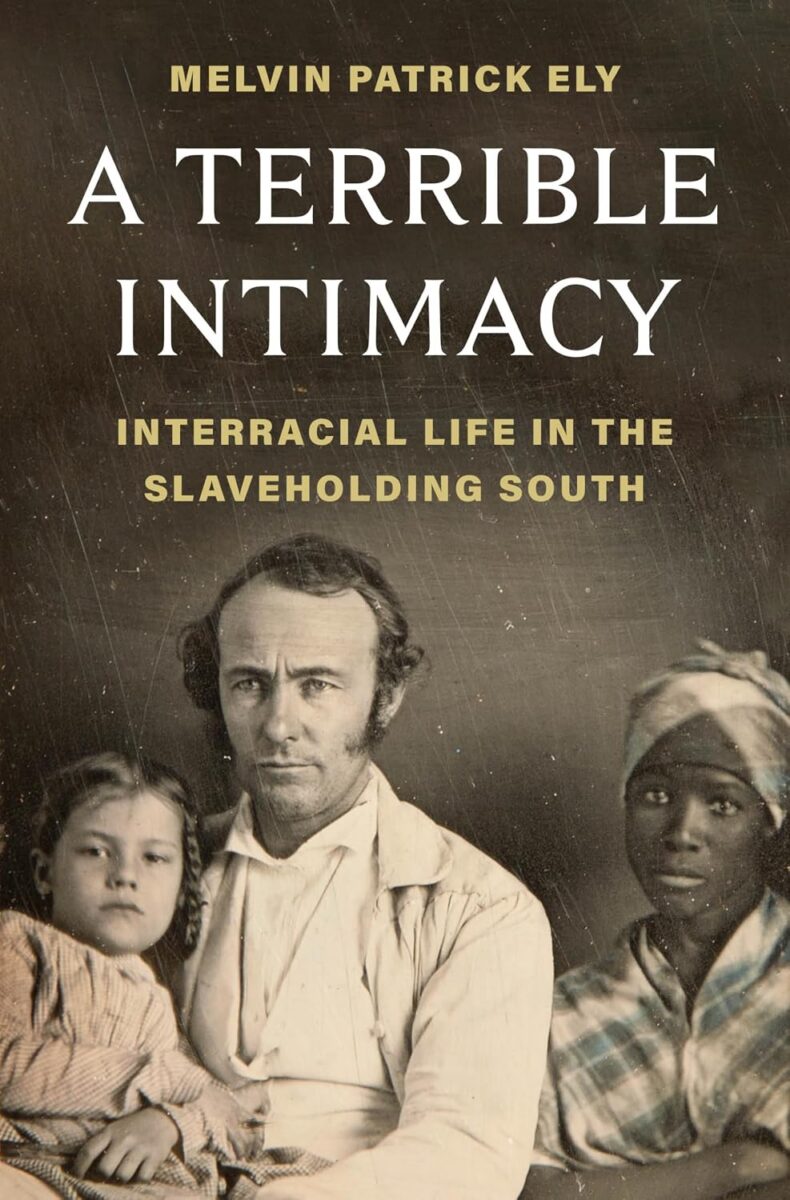
In 2004, Melvin Patrick Ely published a remarkable book that focused on a small free Black community in antebellum Virginia (Israel on the Appomattox: A Southern Experiment in Black Freedom) which won multiple prizes, including the Bancroft. It established that rarely used caches of county court records could provide a gold mine of information about social life in the Old South.
The county court was the mainspring of local government in antebellum Virginia. Its members were selected by the other magistrates until 1852, when the positions became subject to popular election. Despite its title, the functions of the county court were not narrowly judicial. The magistrates on the county court assessed property values and levied taxes, maintained roads, registered wills and evaluated estates, licensed commercial establishments, and administered elections. One Monday each month, the court assembled at the county seat. Court Day attracted many other adult white males, who used the occasion to socialize or collect debts. Pious Virginians disdained the prevalence of fighting and drinking on Court Days. The Library of Virginia in Richmond is the great treasure trove of county court records, including an abundance for Prince Edward County, in the center of the rural southside, the locale both for Ely’s 2004volume—and the current one.
Here, Ely mines various judicial proceedings to bring to life a tangle of relationships that linked slaveholders, ordinary whites, free Blacks, and enslaved Blacks—men and women. Because most of the evidence unearthed by Ely consists of testimony at trials, which often involved instances of violence, this volume persuasively demonstrates the unfair andcruel aspects of a social order in which over half the people were defined as property and denied any citizen rights (7). Many readers will be surprised to find in Prince Edward elements of co-existence across racial lines—whites and Blacks who fraternized together, drank together, engaged together in criminality, went to camp meetings together, and had sex together in relationships that may have been in some respects consensual. In various ways, people who lived inclose proximity accommodated each other. None of this meant that racial barriers were anything other than formidable. Ely insists that Black-white ties inevitably were snarled and perverted, evidence of a “deformed intimacy” (23). In no sense is this volume a whitewash. Ely insists on “the horrors of slavery as a system” (3). It “poisoned and depraved everything it touched” (301). He brings to light its dismal realities. One slaveholder he studies in grim detail, Hillery Richardson, was a repellent sadist who never should have wielded power over other humans. His maltreatment of the enslaved William struck other Prince Edward slaveholders as “barbarous” (254). But the court nevertheless convicted William for fatally injuring Richardson.
We encounter here the tale of a white man, William Colley, who injured an enslaved man, Dick, who apparently triedto woo Selina, the perpetrator’s enslaved Black “sweet heart” (219). After emancipation, Selina’s biracial son, who bore the same name as the father, became a notable African American missionary to Nigeria. We find here too that awhite woman, Mary Tatum, failed to secure a conviction against an enslaved man, George, whom she accused of rape. Tatum’s humble circumstances—she strolled around “unattended” seeking charitable handouts and spoke in broken English—prevented the upper-crust magistrates from believing her accusations, which could have led to the execution or exile of a valuable asset owned by a fellow slaveholder (128). The proceedings, Ely comments sardonically, followed the tradition of “putting an alleged rape victim on trial” (109). Several other whites provided a convincing alibi for George, who had been railroaded by flimsy evidence. Ely also unearthed the sad story of a free Black woman, Betsy Lyle, who lived in poverty and bore multiple children fathered by a slaveholder, Frayser Scott, who also ownedGeorge. We find here, too, the twisted tale of two men, one white and one enslaved, who together murdered a white woman, Nancy Morgan, who had gossiped that the white man’s daughter was having sex with the enslaved man and had gotten pregnant. Morgan lived in a household where relations between whites and Blacks were considered too “free and easy” (73).
Ely contends that the microcosm of Prince Edward County had qualities characteristic of the rural South outside the plantation belts. Its pattern of modest landholdings and relatively small slaveholdings typified Virginia and most of the Upper South; “physical closeness between white and Black” was routine (2). So, we are entitled to extrapolate andassume that Black-white interactions elsewhere were comparable. Ely shows that racial lines were not so strictly drawn in prewar Prince Edward as in the postwar segregation era because the prewar imperative for whites was to preserve slavery; after emancipation the imperative was transformed into preventing any Black advancement. When slavery ended, “racial oppression continued and assumed new forms” (3).
For those who have a particular interest in the fighting of the war, this book is a sharp reminder of the squalid “cornerstone” for which the Southern states risked disunion. Military buffs also will note that this part of the Appomattox valley is the locale through which Robert E. Lee’s Army of Northern Virginia stumbled en route to its moment of truth in Appomattox County, just to the west. A pedestrian bridge runs north from Farmville, the current county seat for Prince Edward, so visiting tourists can view the valley and its terrain.
Daniel W. Crofts is Professor Emeritus of History at The College of New Jersey. His 2016 book, Lincoln and the Politics of Slavery: The Other Thirteenth Amendment and the Struggle to Save the Union (University of North Carolina Press), was awarded the University of Virginia’s Bobbie and John Nau Book Prize in American Civil War Era History.