 Zethyn McKinley
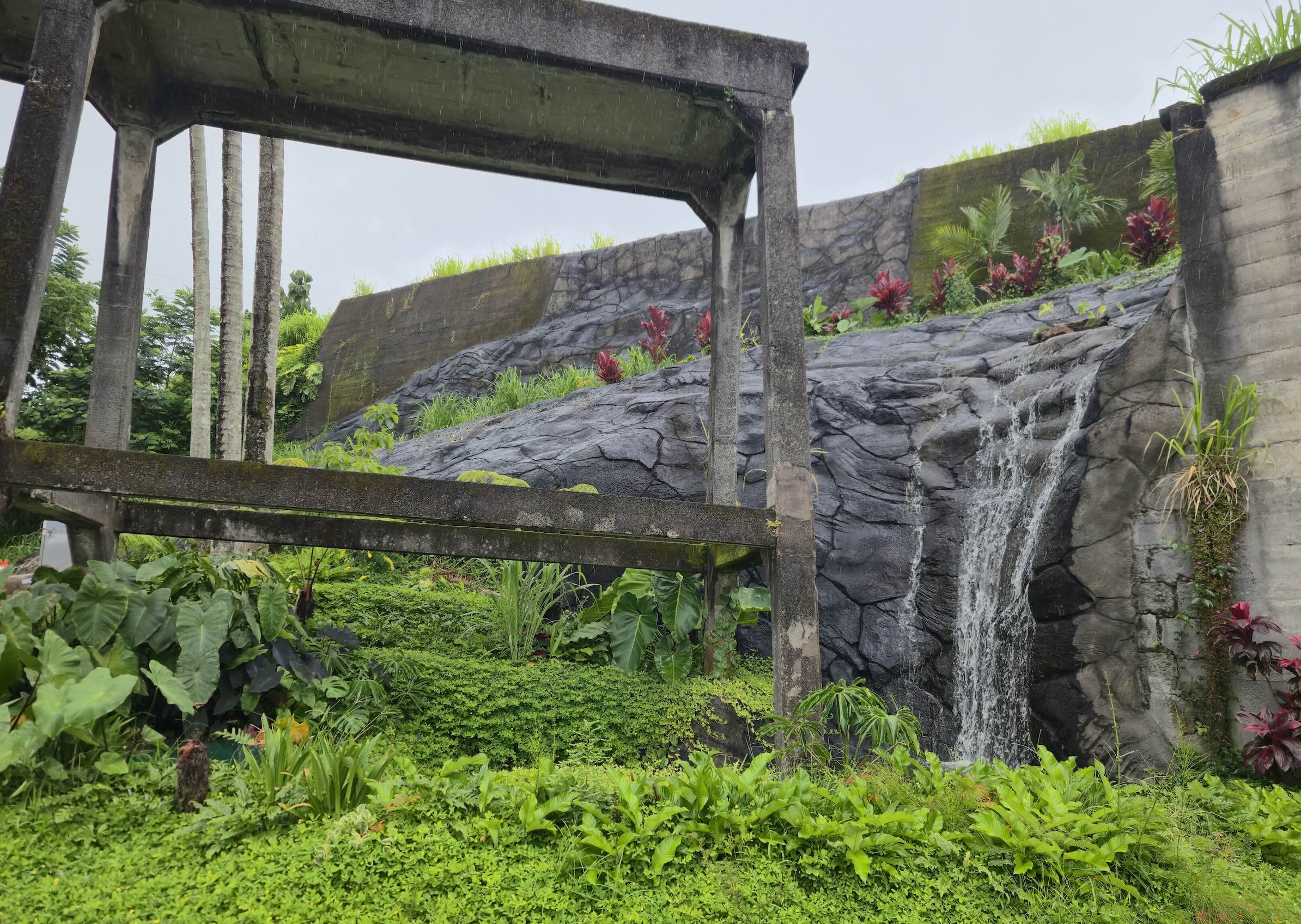
An eroding water flume on the grounds where the Hilo Sugar Company once operated.
Standing before the high, looming remains of an eroding water flume along the Hāmākua Coast on the Big Island of Hawai’i, it’s hard not to feel the pull of history. Hilo’s rain is relentless, but here, it feels less like weather and more like a ghost of the 19th-century sugar industry—a force once channeled to power the mills that reshaped these islands.
While wandering the grounds of what was once the Hilo Sugar Company—now beautifully repurposed as a distillery—I was struck by the irony of it all. The tasting room’s signature Ōkolehao (a traditional Hawaiian spirit) is cheekily branded as “The Spirit of Hawai’i,” yet it sits in sharp contrast to the rigid, prohibitionist moral codes of the missionary era that once dictated life on this very soil. But beneath the surface of this artisan site lies a complex story of how a conflict 5,000 miles away fundamentally rewrote the future of the Hawaiian Kingdom.
We often think of the American Civil War as a purely continental affair, but for Hawai’i, it provoked a massive economic upheaval. As the war choked off southern sugar production, the North scrambled for a new supply, developing a dependency on Hawaiian cane. The numbers tell the story: in 1857, Hawai’i exported roughly 1.2 million pounds of sugar; by 1874, that figure surged to over 24 million. This new demand pulled the islands into America’s economic orbit, accelerating a shift to plantation life and instituting an industrial labor system that fundamentally altered the local social fabric.
 Harper's New Monthly Magazine
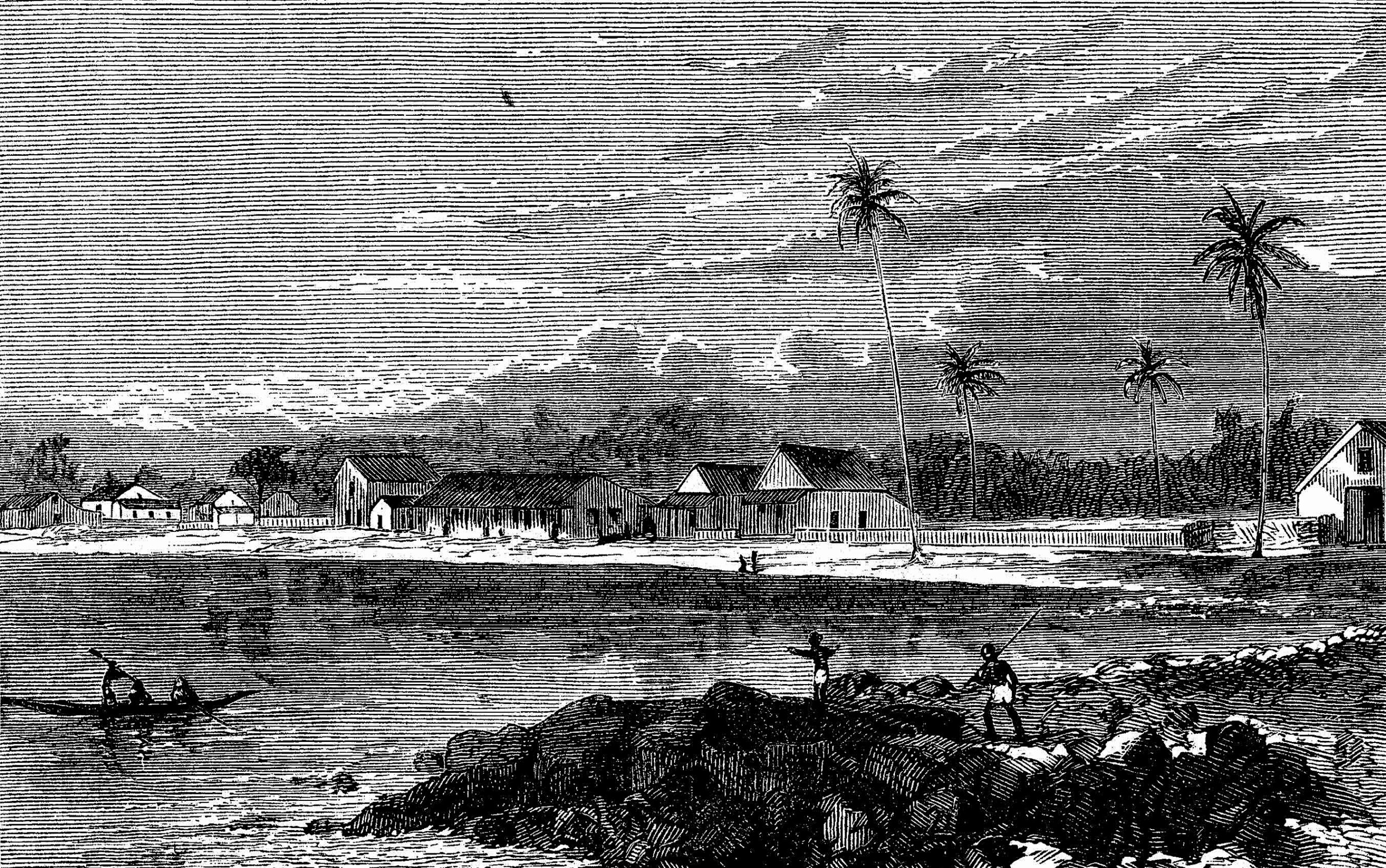
A depiction of Hilo as it appeared in the early 1870s.
During the Civil War, the kingdom attempted to maintain a precarious balance: supplying the Union population’s sweet tooth while maintaining its neutrality in the conflict. For instance, in the summer of 1861, sea captain Thomas Spencer, a Hilo-based businessman, raised a company of volunteers to fight for the Union, recruiting many from the island’s Northeast American missionary families. Though the U.S. War Department accepted the unit, the Hawaiian government ordered it to disband. The kingdom’s sovereignty needed to be preserved.
However, the kingdom’s strategy for survival ultimately failed. The very economic integration that propelled rampant growth during the Civil War laid the foundation for the political instability that followed, eventually culminating in American annexation. As The New York Times “Disunion” blog notes:
The sugar industry in Hawaii gradually gained political and economic power in the kingdom, eventually instituting a form of contract labor that verged on slavery.
The consolidation of wealth and power generated on these plantations proved fertile ground for white businessmen and their ilk, some of whom were Civil War veterans, who favored American annexation of the islands and ultimately overthrew the kingdom of Hawaii in a coup d’état on Jan. 17, 1893.
When Hawaiian statehood was put to a vote in 1953, the move officially received 94% support, though the process was characterized by powerful special interests and money as well as miseducation efforts. By 1893, the Lyman Museum notes that native Hawaiians owned just 10% of their land.
Hawaiian sovereignty was long fought for but not sustained. Even the U.S. government, through the 1993 Apology Resolution, formally admitted its suppression of Native Hawaiian authority.
During my recent visit, I met with a local named Jackie near the water flume and chatted about the reality of Hawaii’s transformation. It is a haunting juxtaposition: the same water that creates Hilo’s breathtaking, cascading waterfalls was diverted and forced to work to satisfy a rising global sugar demand that ultimately helped undermine the autonomy of the Hawaiian people. Like the water, Hawaiians got washed up in mission and industrial engines that put them to work and became hard to escape. This was not a move toward a more perfect union for the islanders; as historian Nanette Napoleon puts it, “Hawaiians became disenfranchised and had to leave their subsistence lifestyle to make a living which caused tremendous hardships for many many Hawaiians.”
 Library of Congress
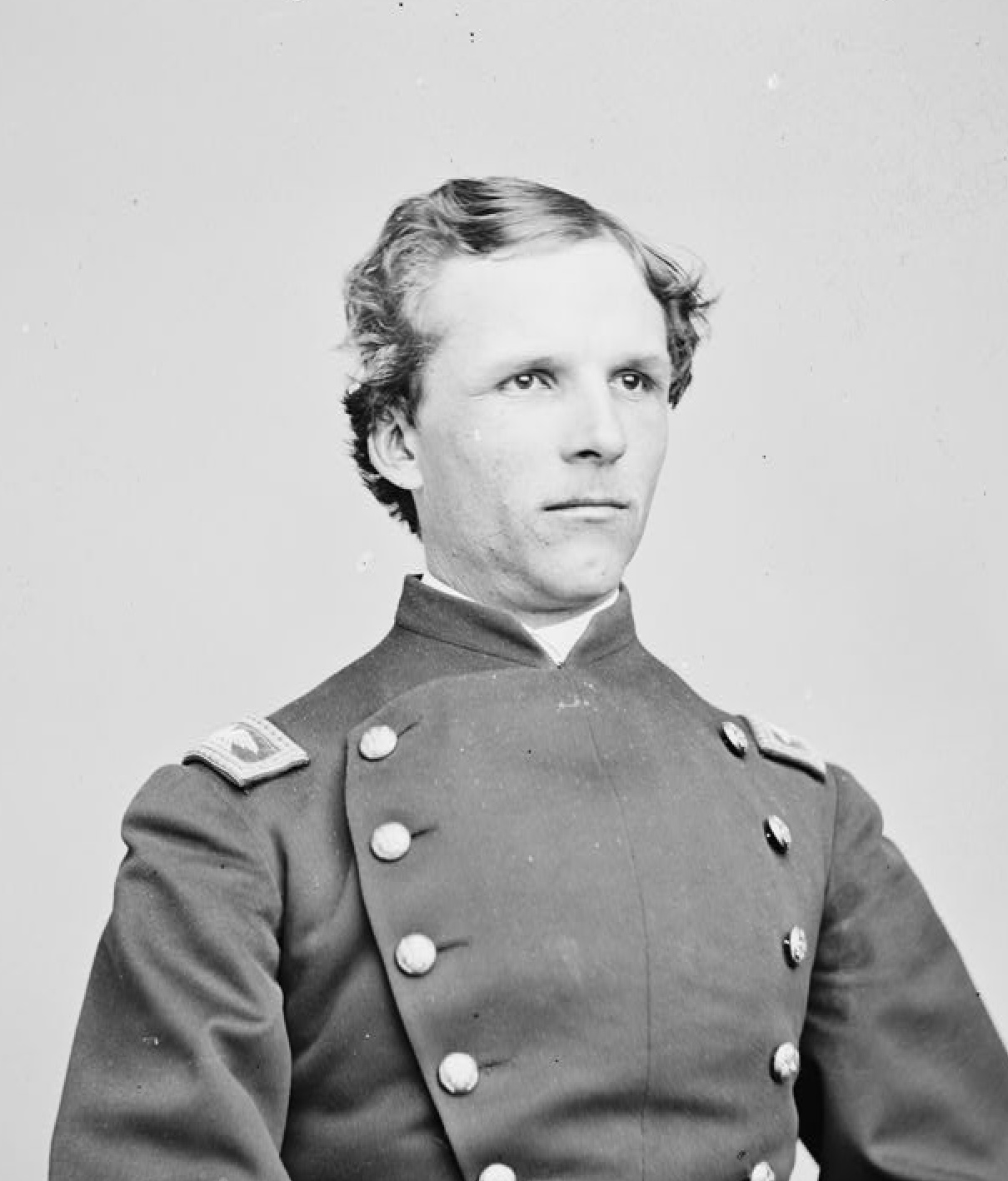
Samuel C. Armstrong
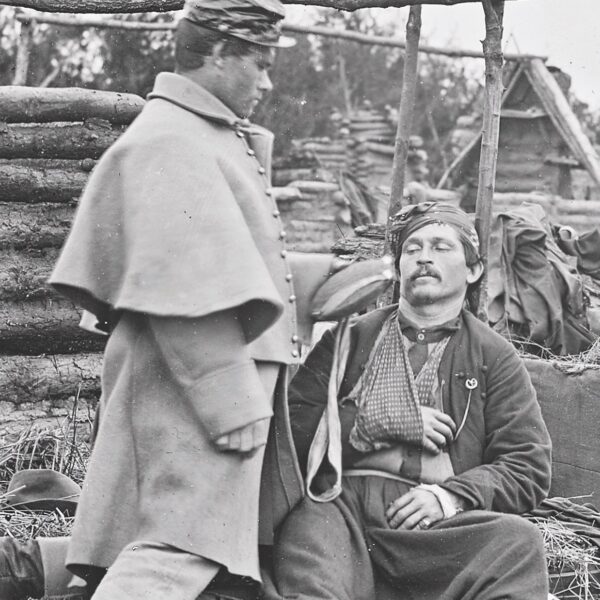
The Civil War’s effects in Hawai’i weren’t just economic, they were also personal: more than 100 people from Hawai’i fought in the conflict. Union general Samuel C. Armstrong was born on Maui to missionary parents. Even native Hawaiians fought. Henry Ho’olulu Pitman, the son of a prominent Hilo-area family, served in the 22nd Massachusetts Infantry; he was captured and sent to Richmond’s Libby Prison, exchanged, and died in a parole camp in Annapolis, Maryland. Many Hawaiian volunteers for the Union risked segregation into all-black regiments because of the color of their skin, like Prince Romerson, who served in the 5th Massachusetts (Colored) Cavalry. In short, the Civil War not only impacted the Hawaiian economy; it was a conflict that pulled in many Hawaiians, men who tied their lives to a struggle they had no formal hand in shaping.
In Hilo, I found a line between the Hawaiian experience and the power struggles of the 19th-century American mainland, where a group of states tried to fight for their independence. The kingdom’s ultimately failed struggle to maintain its sovereignty is perhaps more comparable than I first realized.
Though it is distilled from the same ground that once anchored the plantation era, the “Spirit of Hawai’i” served today tells a different story—one that attempts to reconcile the islands’ industrial relics with its modern identity. It’s a potent reminder that we are always drinking in the past, and that in Hilo, the history of trade, power, and independence is as fluid and persistent as the water itself.
Zethyn McKinley is a freelance writer and editor with an interest in history, technology, and politics. Beyond her research and writing, she is a certified yoga teacher and blogger at 360 Yoga, where she shares insights on finding physical and mental balance. She resides in California’s Central Valley.