Pay Day Harper’s Weekly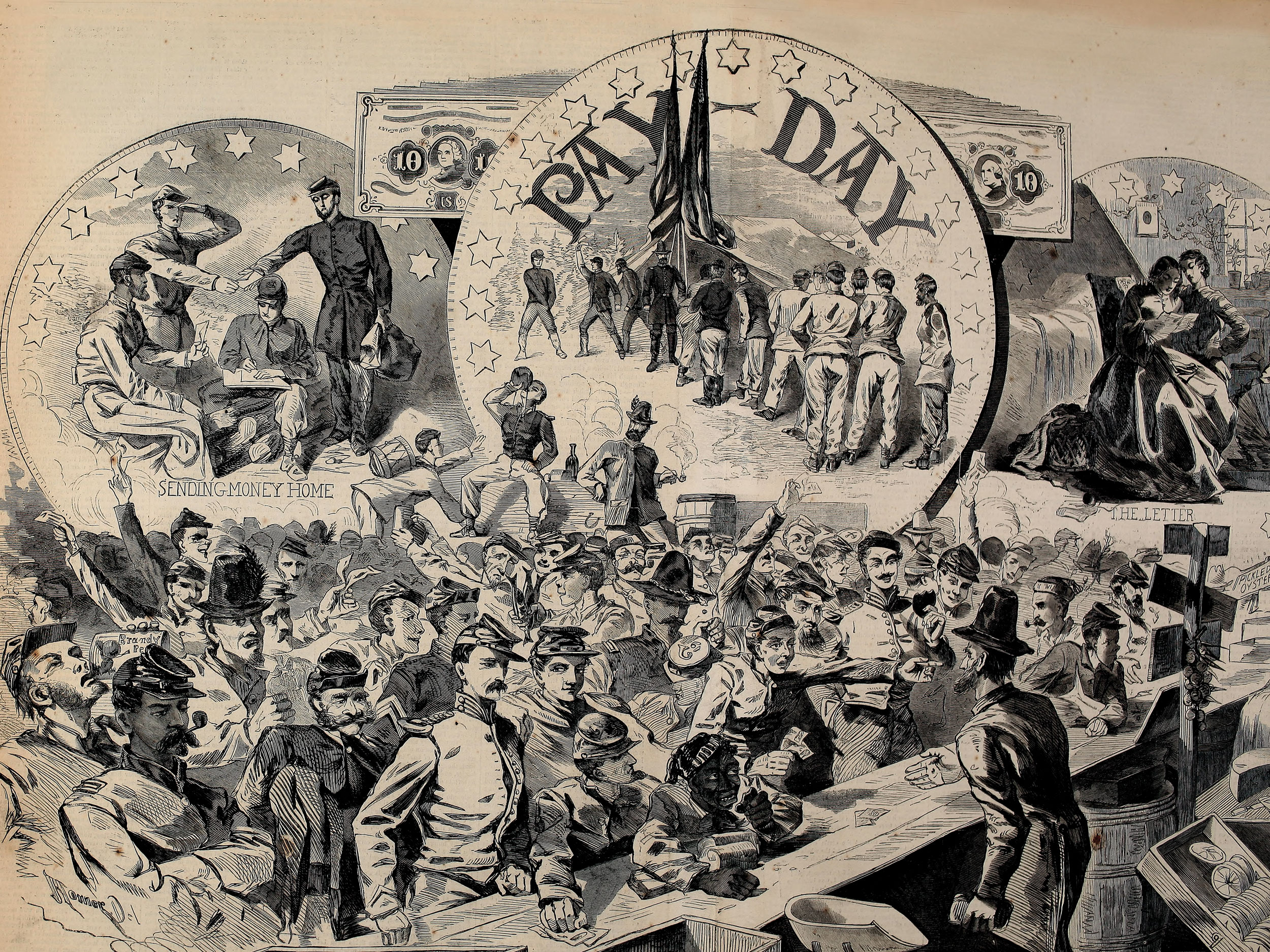 Harper's Weekly
“Last Thursday was pay-day, and we had a terrible time with the men for two days after. I won’t dilate upon the disagreeable subject, but only say that I almost lost my faith in human nature, so many of the best and most reliable men proved wholly bad and unreliable under the influence of drink.”
—Lieutenant William Wheeler, 13th New York Light Artillery, in a letter to his mother, February 1, 1862
Osborn H. Oldroyd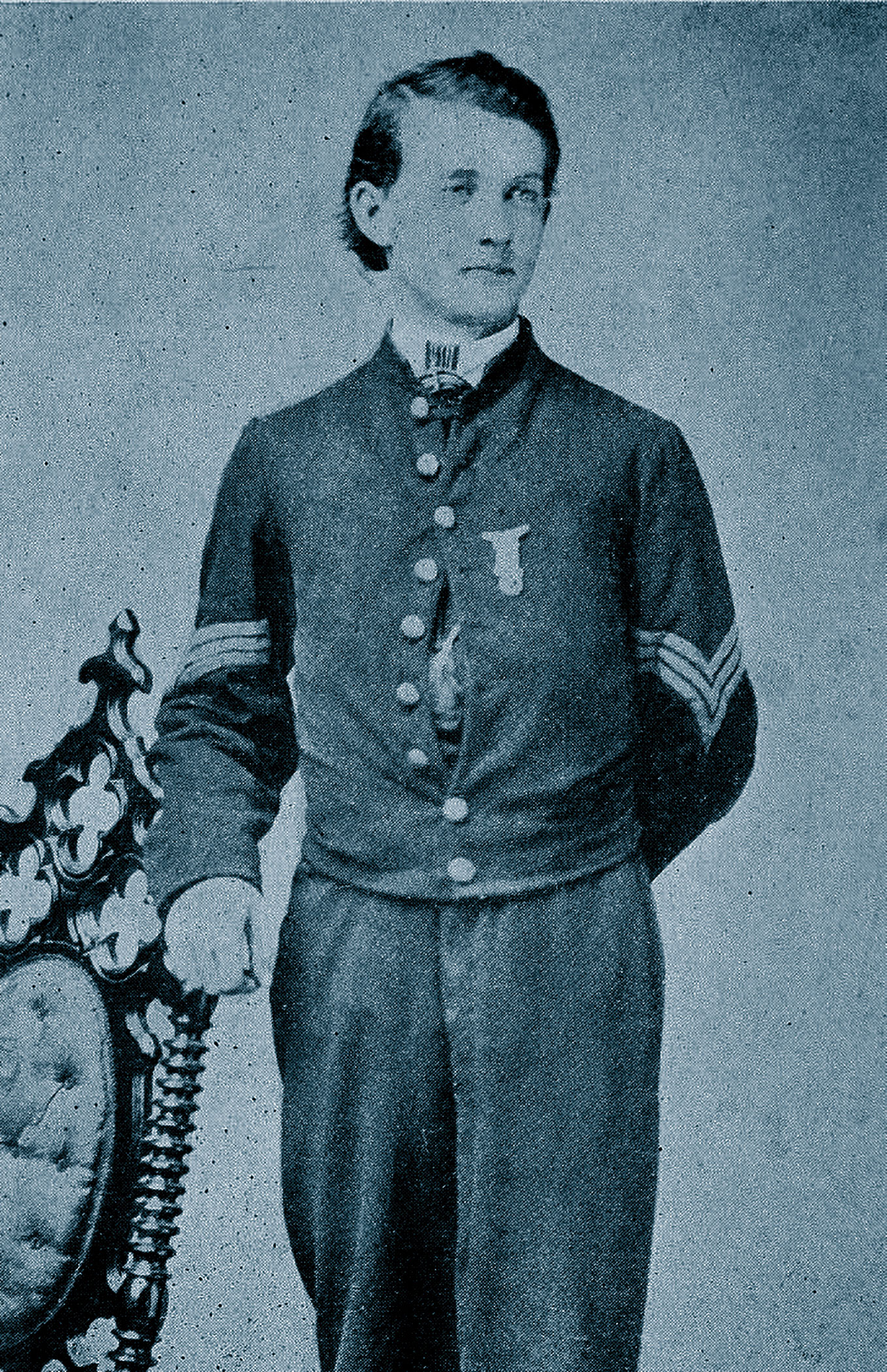 Life of Osborn H. Oldroyd (1927)
“Uncle Sam’s cashier has arrived at last, and we have been paid for two months’ service. The married men are quite anxious to send their money home to their wives and little ones. It is risky sending money North from here, yet, to some, more dangerous to keep it. I saw two boys sitting on a log, today, playing poker at five cents a game. Five cent currency is paid in a sheet, and, as either lost the game, a five cent piece was torn off.”
—Osborn H. Oldroyd (above), 20th Ohio Infantry, in his diary while stationed in Mississippi, July 3, 1863
“The men of our regiment are now contented and efficient…. The paymaster came like a sunbeam.”
—Major Wilder Dwight, 2nd Massachusetts Infantry, on the “abrupt and sudden” impact the recent arrival of the paymaster had on the men in the regiment, in a letter home, September 2, 1862
“It is wonderful how having money in the pocket improves the appearance of a soldier. He stands straighter, walks prouder, looks happier, acts more independent and enjoys better health.”
—John Day Smith, 19th Maine Infantry, in a postwar account of the regiment receiving two months’ pay on the eve of the Gettysburg Campaign
Civil War currency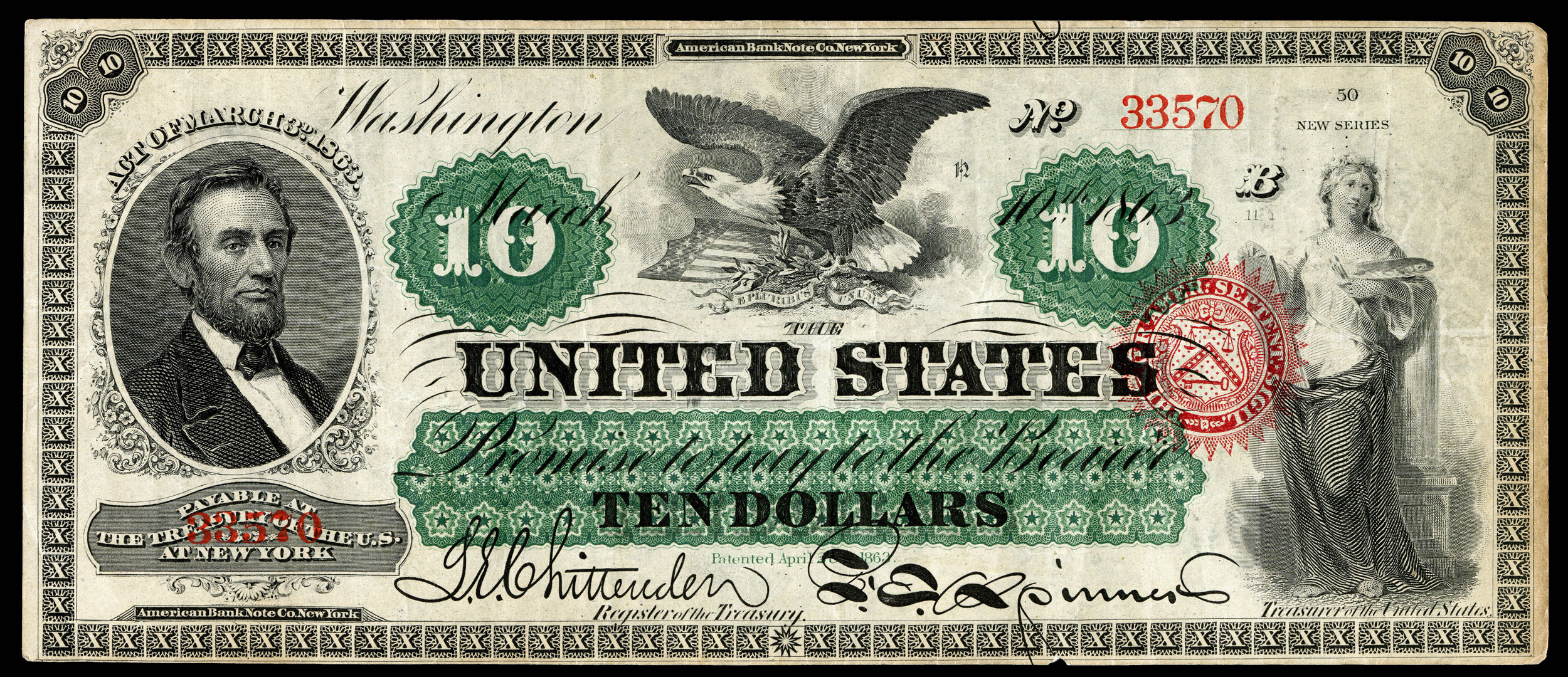 National Numismatic Collection, National Museum of American History.
“Pay-day has come and gone, making life here, to me, but so much harder. While I had no money I was contented; now I begin to have longings.”
—Union soldier Spencer Kellogg Brown, in a letter to his sister, March 25, 1861
Sources
Life and Letters of Wilder Dwight (1868); Letters of William Wheeler (1875); The History of the Nineteenth Regiment of Maine Volunteer Infantry (1909); A Soldier’s Story of the Siege of Vicksburg (1885); Spencer Kellogg Brown, His Life in Kansas and His Death as a Spy, 1842–1863 (1903).