Judith Giesberg discusses the impact the United States Sanitary Commission had in its efforts to support healthy practices in the Union army.
Transcript
John Heckman: Judy, thank you so much for coming on the podcast. I’m so happy to have you here.
Judy Giesberg: Thank you, John. I’m pleased to be here.
John Heckman: So when you look at the U.S. Sanitary Commission as a volunteer-driven institution, what stands out to you about how ordinary citizens stepped into the work of soldier welfare and medical reform?
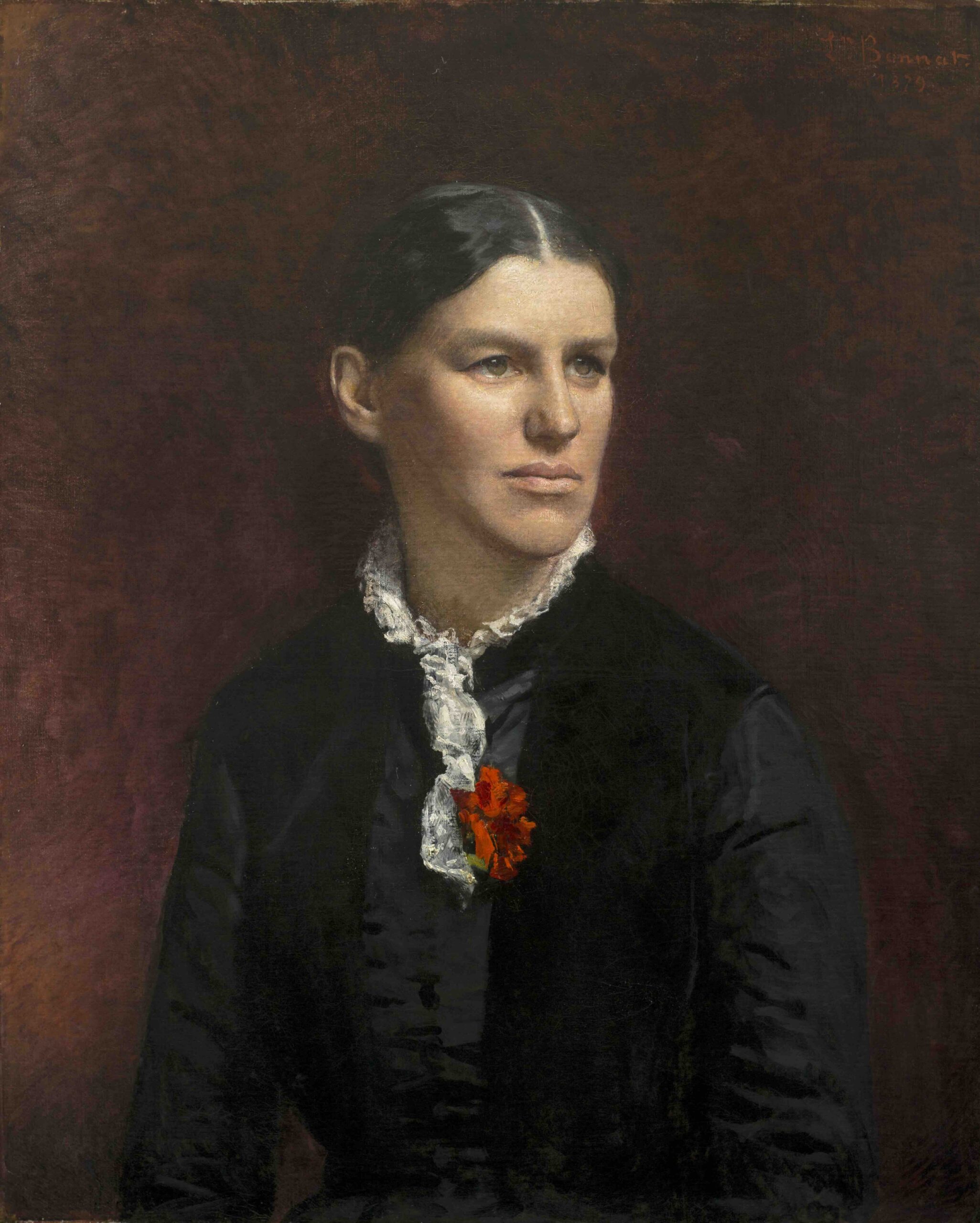 Wikimedia Commons
Louisa Lee Schuyler
Judy Giesberg: The United States Sanitary Commission is a really great way to measure how important that civilian support for soldiers really was during the Civil War. We estimate that the organization solicited donations of cash and supplies that were worth maybe $25 million, and that money was all collected from local women’s aid societies that popped up around the country at the beginning of the war. And so the commission was, from the start, an effort to organize the relief organization, the relief work of these many societies that appeared throughout the country at the start of hostilities in 1861. The commission also, and we’re going to get to this in a little bit, challenged and helped to reform the army’s medical practices broadly. So it began as this effort to streamline the relief impulses of local communities, towns, and whatnot, who sought to supply soldiers when they mustered in. And then as news filtered back from wherever they were serving that they needed food or they needed medical supplies, those local organizations continued to try to supply the men even as they began active campaigning. But this ad hoc provision of supplies, the commission identified this as potentially disruptive or undermining of military discipline. And so there really are several ways people think about the origins of the Sanitary Commission, or there’s what I would think of as different origin stories. In the work that I’ve done on the Sanitary Commission, I focus on the efforts of a group of women who both in New York and Massachusetts, Louisa Lee Schuyler, Abigail Williams May, I talk about them and other women, who saw this as a moment where, to best serve the men in uniform, there needed to be some sort of system and regular way of supplying the troops.
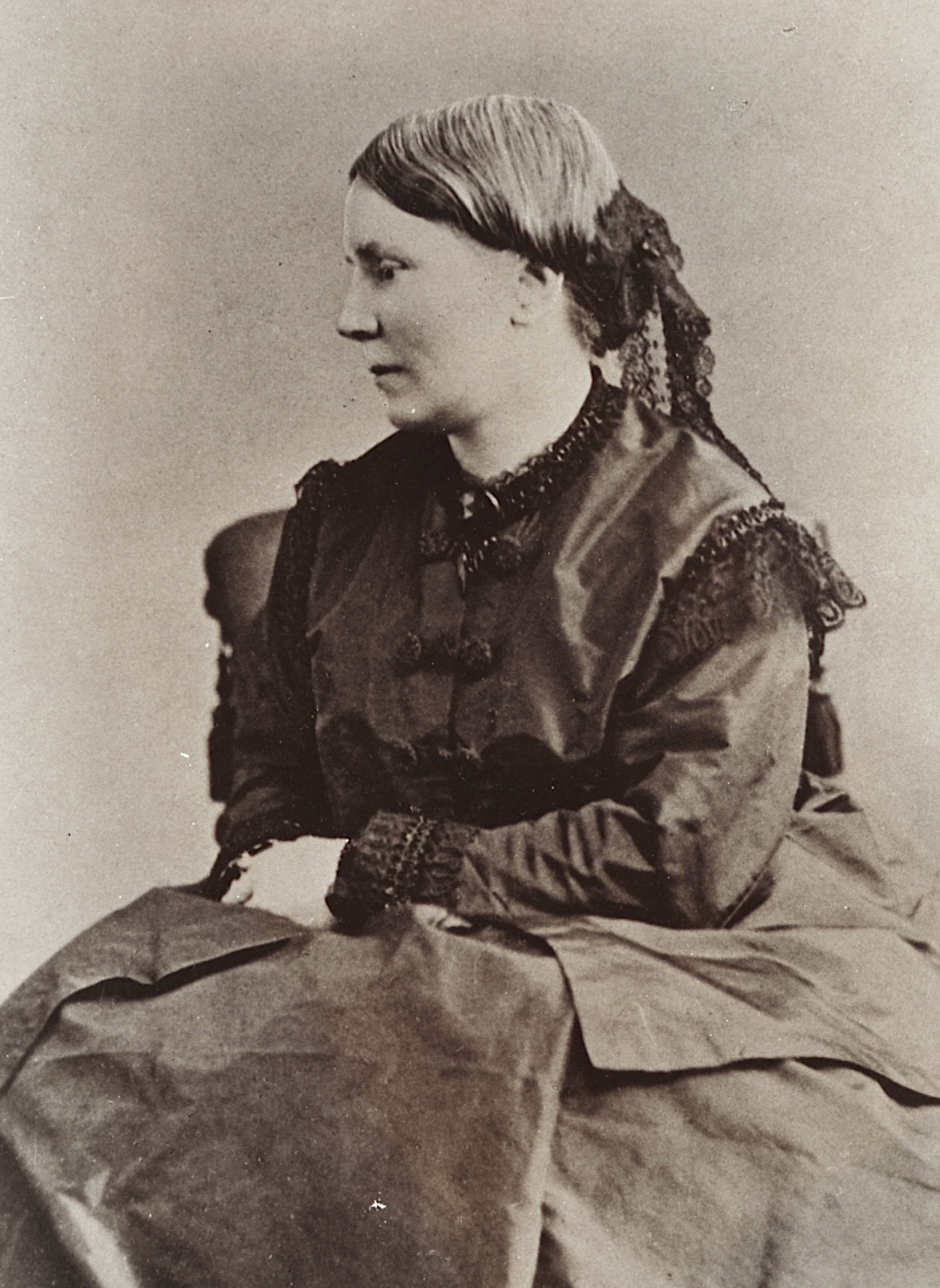 Wikimedia Commons
Elizabeth Blackwell
Similarly, the commission also responded to the outpouring of interest in nursing. So when the war began, women who had been reading Florence Nightingale’s Notes on Nursing and had been transfixed by what had transpired in the Crimean War also responded to the emergency by volunteering to become nurses and working under the auspices of what would become the Sanitary Commission. Medical doctors like Elizabeth Blackwell, but also reformers like Dorothea Dix, saw this, again, as a moment in time when this kind of localized, personalized desire to do something for the Union war effort ought to be streamlined, organized. And so, under the commission, the two worked together to come up with a plan to train and to place trained women as nurses during the war, as opposed to having women show up with no medical training or even the sort of rudimentary medical training that they would provide.
Overall, what the commission does before the military or the government was prepared to support the troops through these various means, through finding out a way to regularize civilian relief, but also to figure out how to deploy women as nurses, the commission stepped in to do that and sought to, through their efforts, to have these impulses work in the best interest of the Union war effort.
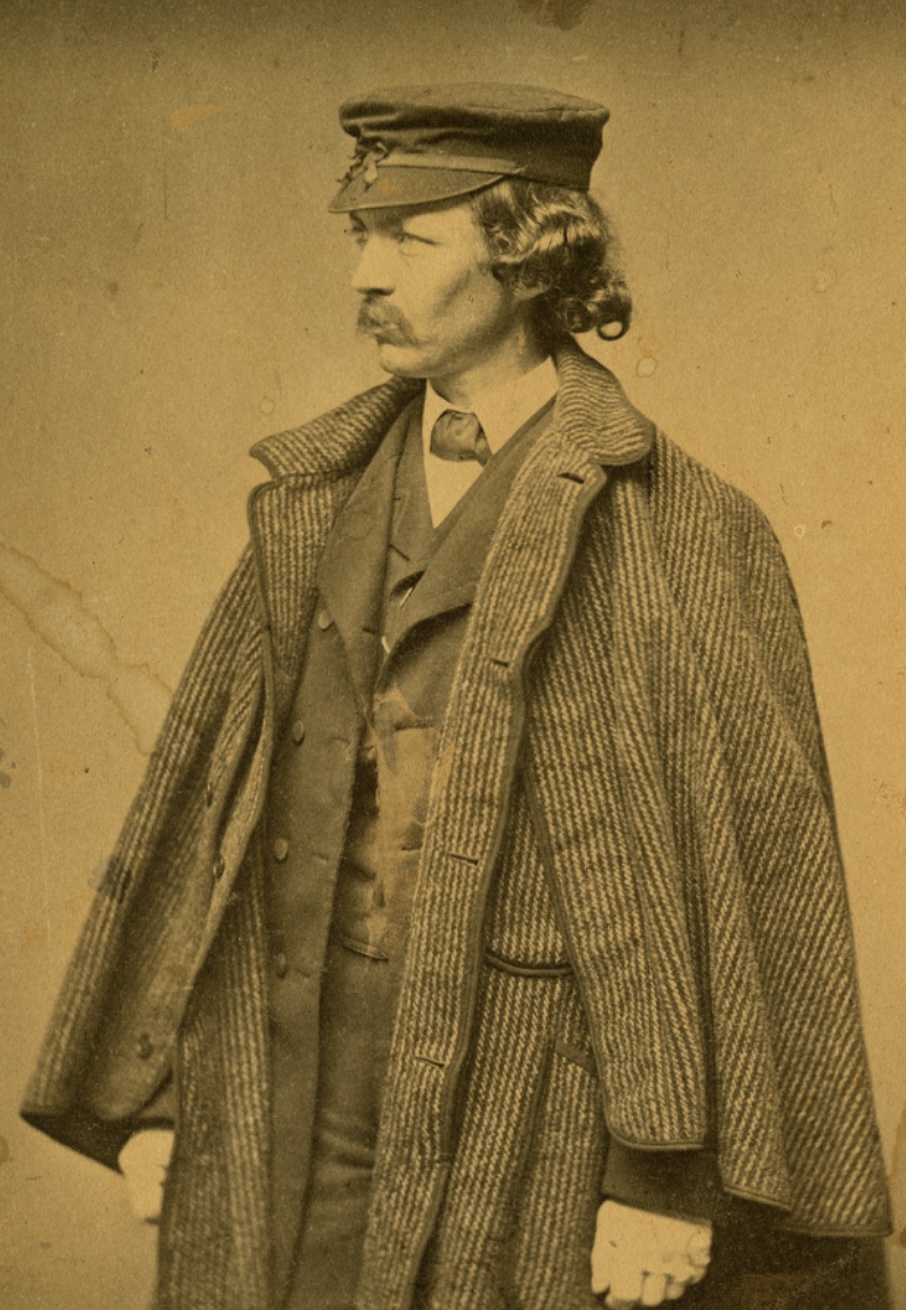 National Park Service
Frederick Law Olmsted
There are limitations to the vision of some of the founders of this organization. I mentioned a couple, a few women. All of them are white middle-class women who would ascend to leadership positions within the commission. And then the men—Charles Stillé, Henry Bellows, Frederick Olmsted—all of them were limited by their own positions, race, and class. More recently, there has been a lot of conversation about the limitations of the kinds of reforms that they sought and the kind of data that they produced. But I also just think it’s important for us not to lose sight of the work the commission did during the war in those ways I just described and how that work helped to save lives.
John Heckman: One of those things that people often think about when it comes to the Sanitary Commission and the work that they do are the inspections that they carried out. How did those inspections on the ground actually function, and what kinds of conditions did these inspectors routinely find in camps and beyond?
Judy Giesberg: Yeah, sure. It took a while for the commission to be able to do things like to begin these inspections, camp inspections. The Army Medical Department was hostile to early reform efforts by these people who worked for the commission. By 1862, though, the commission had won a pretty major victory in convincing the Army Medical Department to appoint their handpicked surgeon general, William Hammond. And then with that, they were able to institute some of their reforms like these sanitary inspections. They sent these inspectors out to army camps with forms in which they were supposed to collect data about the physical layout of camps, the kind of hygienic practices that were instituted in camps, how close were latrines from water sources, and what kind of drainage there was on the camp, what kinds of sanitation, where was the camp located, all of those things. And these inspectors filled out these forms, and then they were supposed to also make commanding officers aware of any defects that they noticed in these inspections. Yeah, and so this was a really important innovation that the commission helped to produce, and it could have really positive effects.
It also created tension within camps because these army and medical outsiders were coming in and giving advice to commanding officers. But it also reflected, which was at the time, the best sort of knowledge about the transmission of disease and about urban sanitation and hygiene and stuff like that. The commission also published these short medical pamphlets that they distributed to surgeons that were important because a lot of surgeons would come straight from civilian practice, and they didn’t get a whole lot of guidance from the medical department. The commission, with consultation with doctors, produced informative pamphlets that could help with the administration of medical care in the camps.
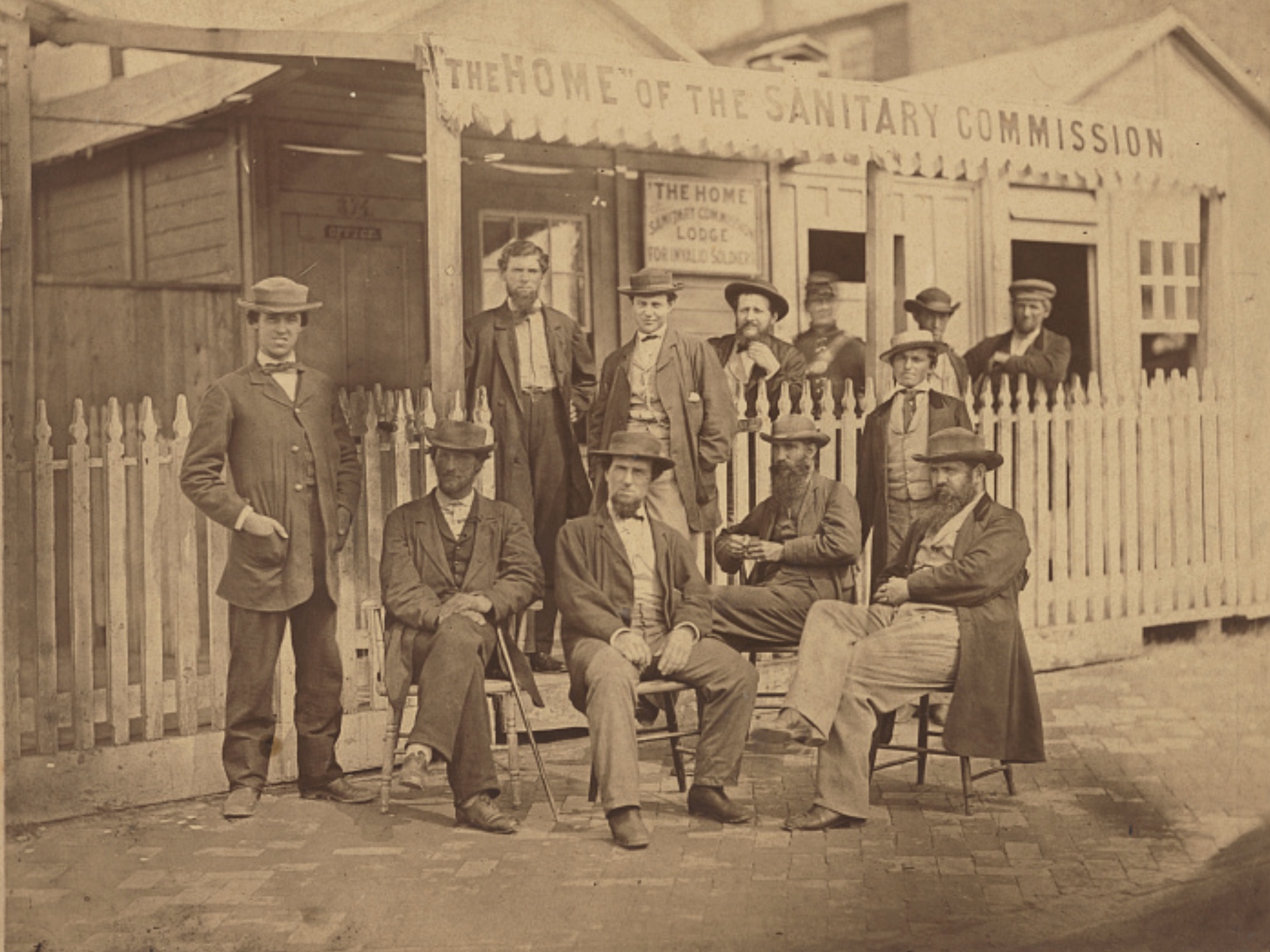 Library of Congress
A group of Sanitary Commission workers and an unidentified union soldier at the entrance of one of the organization’s lodges.
John Heckman: How was that effort as far as being useful or successful with pamphlets and lectures and circulars? Was it successful, or were they also receiving a lot of resistance from those who just didn’t care or didn’t think it was a big deal?
Judy Giesberg: I think probably both things. Depending on where you were, you could find resistance. You could also find military personnel who were receptive to this information. But there could also be consequences for commanding officers who didn’t follow these guidelines and then had to deal with soldiers who were unhealthy, not ready to fight when they needed to be. It behooved officers to follow some of the advice, which to us sounds pretty logical, right? Let’s make sure they have clean water. Let’s make sure that their living quarters are far from sewage or anything else that could make them sick. Let’s make sure their food is in good shape. So what we would consider to be common-sense health precautions is what the commission was promoting. But again, their position as these kind of nominal outsiders meant that they sometimes met with more resistance than they did with reception.
John Heckman: So we know that volunteerism is never neutral. What political, social, or moral assumptions shaped the commission’s approach to improving, if you will, the health of soldiers?
Judy Giesberg: Yeah, sure. Like I was intimating at the beginning, the people who ran the commission and then the chapters, the major chapters of the commission that operated in some of the major cities, they were all upper-middle-class women and men with all of the class and race prejudices that came with that status. And in the lead up—and I talk about this a little bit in the book that I wrote about the commission—in the years before the war, the middle and upper classes had really pulled back from a sort of urban politics because they associated it with the sort of growing immigrant population and with corruption, and they tended to view these sort of new residents in urban areas—immigrants and working class people—negatively, as ignorant, as unclean, as immoral. And cities themselves, they saw them to be a reflection of the people who they were pulling back from because of these immigrants and working-class people in their cities they thought were unsanitary.
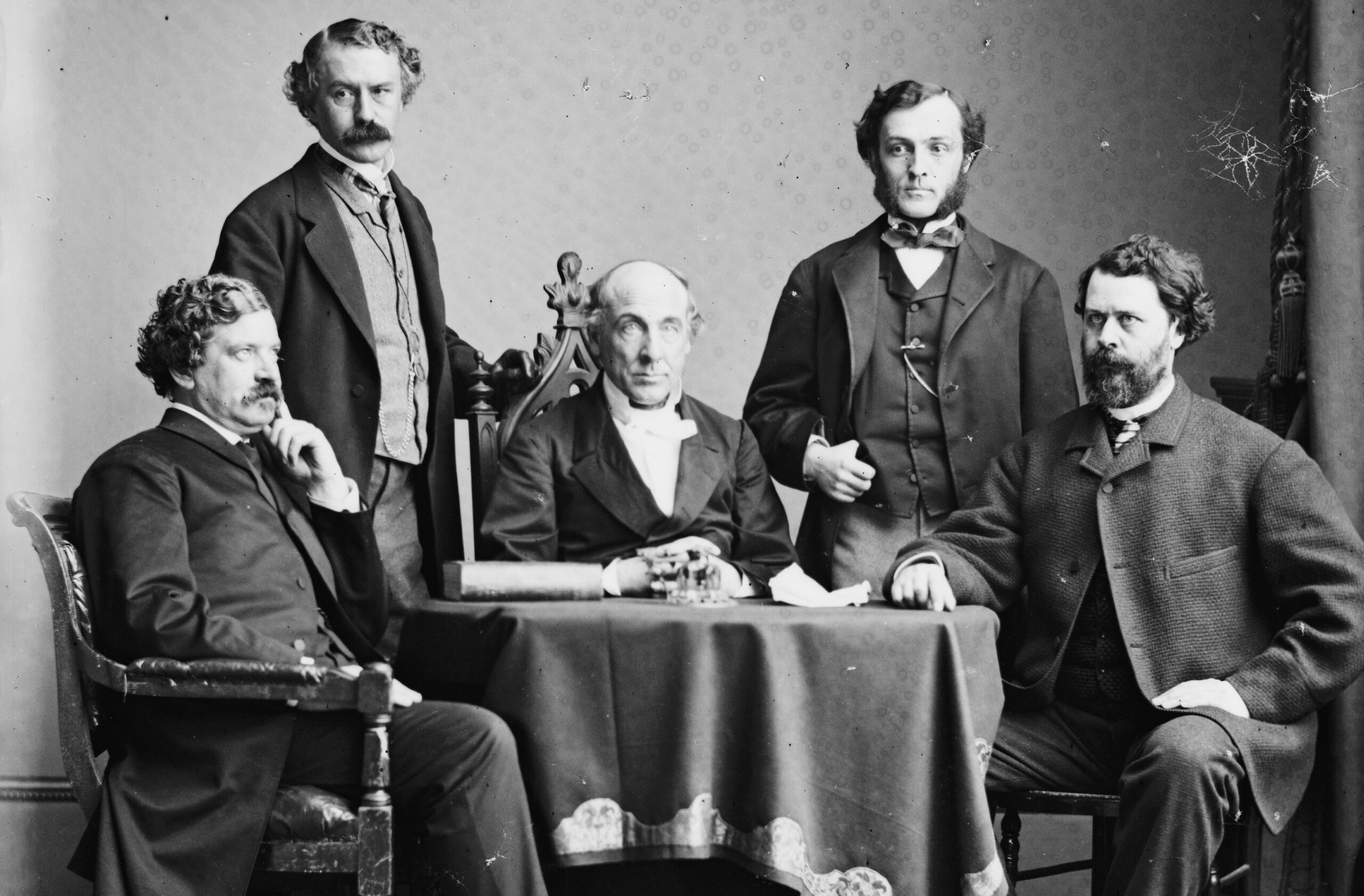 Library of Congress
This photograph of the Sanitary Commission’s executive committee includes Henry Bellows (seated center).
Henry Whitney Bellows and some of the other men who sought to start the commission thought that work like that might help them to resurrect their proper position in the hierarchy of class that they thought was slipping away. And theirs was a top-down kind of technocratic effort to bring the working classes, and other people who they no longer felt they had influence over, back under their sort of management, in the same way that they thought about the poor back at home. And we can see where some of their resistance to the commission efforts would come from because it was laced with some of those class prejudices that some of these commission, at least the men in positions of authority, brought to their work.
John Heckman: How did the Sanitary Commission reshape women’s public roles? You’ve brought up some of the women that were involved, but how did it reshape how they interacted with the public in general, or maybe how they interacted with policy or politics?
Judy Giesberg: So, the commission itself was run by these men. But the work of the commission began in New York with the Women’s Central Association of Relief, and then there was another organization similar to that that was begun in Boston. And these sort of bigger chapters of women’s organizations eventually became part of the larger umbrella of the Sanitary Commission. And so I spent some time thinking about what this meant for the generation of women who would run these large chapters, people like Louisa Lee Schuyler, who I mentioned, who runs the New York chapter, and Abby May, who runs the one in Boston. And these women are young when the war begins, and they will learn a lot of things in their organizing this relief effort. For one, they’ll learn about communicating with women more broadly in rural areas, and even sometimes across classes, because it behooves them to continue to support local organizations, to provide them information, to help them organize their own relief effort. So they learn the sort of grassroots organizing that would be useful later in temperance and maybe even suffrage.
And they also learned how to leverage their associations with politically powerful men who could take some of what they were trying to achieve at the local level and find ways to leverage that in Washington. And so this new generation of women, they work together with the older generation of women like Dix and Blackwell during the commission, but this new generation cut their teeth in this work for the commission, and that would become handy to them in a lot of different postwar campaigns. The organizing efforts, the fundraising efforts, the fairs, their publications, those kinds of things would be very useful, and they would take it in many different directions in the postwar era.
John Heckman: And with this, we’re seeing an alteration of how civilians interact with the military. I’m really interested to find out when that could become confrontational, when you’re having army officers and surgeons who are now listening to someone pontificate about what is wrong with their camp or how they are doing things in camp. How did military personnel respond to some of these civilians coming into hospitals and camps and second-guessing their practices? Were there any instances where they just got defensive and pushed back against that, even if they realized they would probably get in trouble for doing so?
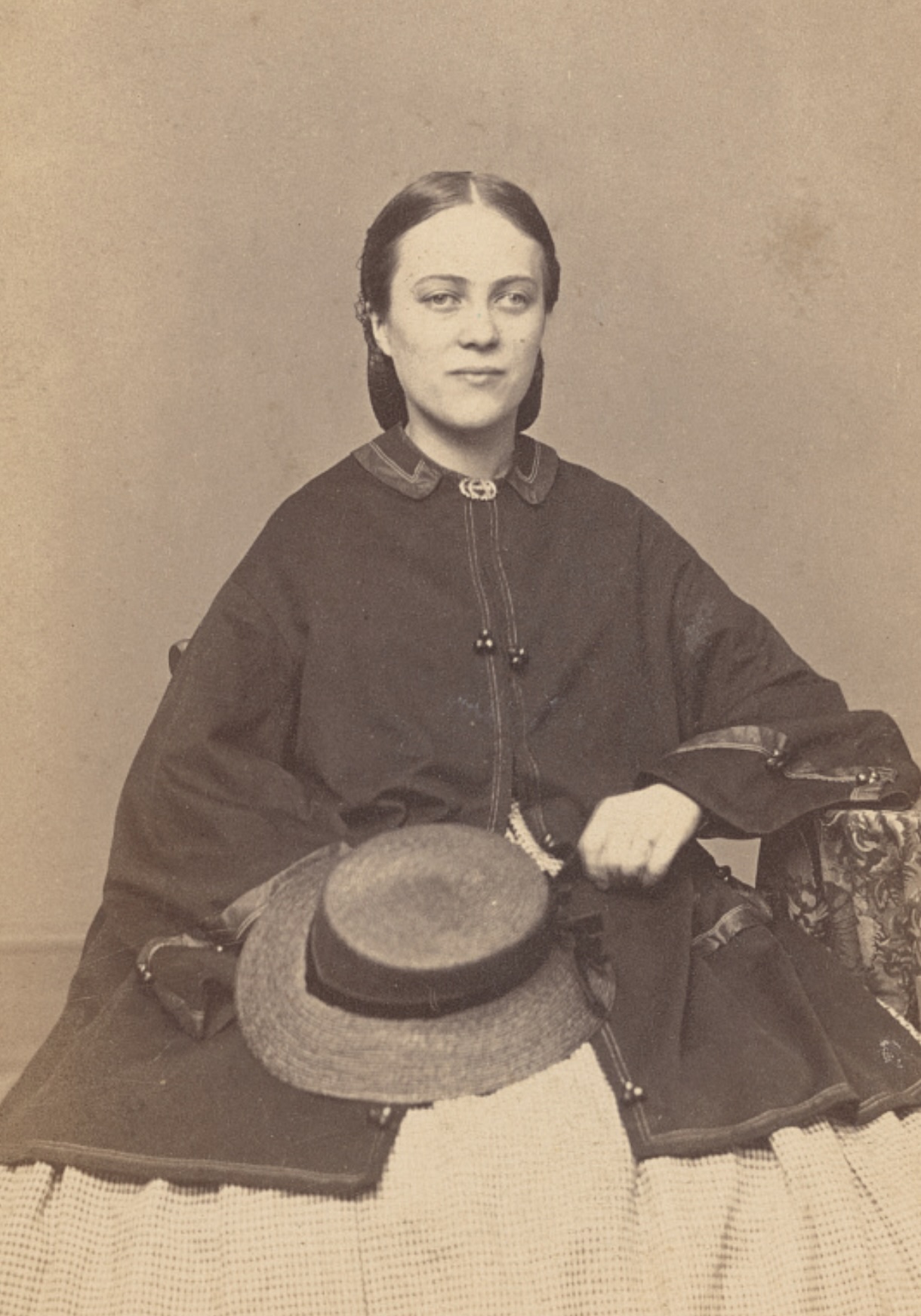 Library of Congress
A Sanitary Commission nurse
Judy Giesberg: Absolutely. Yeah. I think you’re going to talk to Jane Schultz as well, and she has a lot of incidences of conflict between nurses and medical people in the Army Medical Corps. It seems to me that what I get from reading her book and what certainly I saw with the commissioners is that it could become quite contentious when you had these outside do-gooders coming in to people who’d been practicing medicine for the army or elsewhere for years, and then having somebody come in and tell them that they were doing it wrong or that you needed to follow Florence Nightingale’s methods of protecting the health of soldiers. It really was, in some ways, a clash of cultures. At other times there were ways in which the commission anticipated a need and provided for it that smoothed the way a little bit more. I’m thinking during the Peninsula Campaign when the commission began these hospital transport ships on these steamers and staffed it with nurses who had gone through their very abbreviated training. Aboard these ships, these women, throughout the spring and summer of 1862, these women really provided crucial triage care on board ships. And there was tension there, but I think it was overridden by the real need that the commission had anticipated and filled in these hospital transports.
So sometimes even the sort of most stubborn of army medical staff could see that what the commission was doing was anticipating a need and filling the need, and also bringing much needed supplies when they did. So yeah, so it could be both of those things.
John Heckman: We often see even in the modern medical field in the United States that we concentrate more on reactive policies instead of prevention. In many ways, we see a problem, we go to fix it. We may not think about what that could look like in 10 years of having a problem arise, but the Sanitary Commission is trying to do preventative measures with military surgeons and personnel. How did that prevention become a central part of medical thinking during this war? It had to have been a transitional period for that kind of thought.
Judy Giesberg: Yeah. Absolutely. At the core of the commission’s work, really, in trying to reform the Army Medical Department was how to prevent disease, how to shorten recovery period, how to return men back to the fight again as quickly as possible, or prevent as many of them as possible from languishing in medical hospitals. Commission reformers often found that these ideas were at odds with old medical practices, which you and I both know were referred to as this heroic medicine, actions that were supposed to produce dramatic results—amputation, for instance. And core to the commission’s efforts was prevention, right? So again, how to start at when men congregated in camps and making sure that the camps were constructed in a way with an eye toward prevention, and then the same with hospitals and other places where these men congregated. How could we anticipate or how could we prevent them from getting sick before they did? And they also innovated in recommending a particular kind of diet for men who were ill, but also for men who were not ill to prevent illness. I guess we might think about a lot of this as homeopathic. And some of the stuff even that Nightingale was writing about in her Notes on Nursing, which they excerpted and published in their bulletins and their pamphlets, one of my favorite lines from Nightingale, I use it in my house, is, “Doors were meant for closing and windows were meant for opening.” How could you keep the circulation of air in places that could lead to better health, versus her sort of fear of or worry about drafts.
So yeah, their focus was what’s the sort of best medical advice that’s available to people in the mid-19th century, and how could they disseminate that as best they could in the variety of different places that they could access.
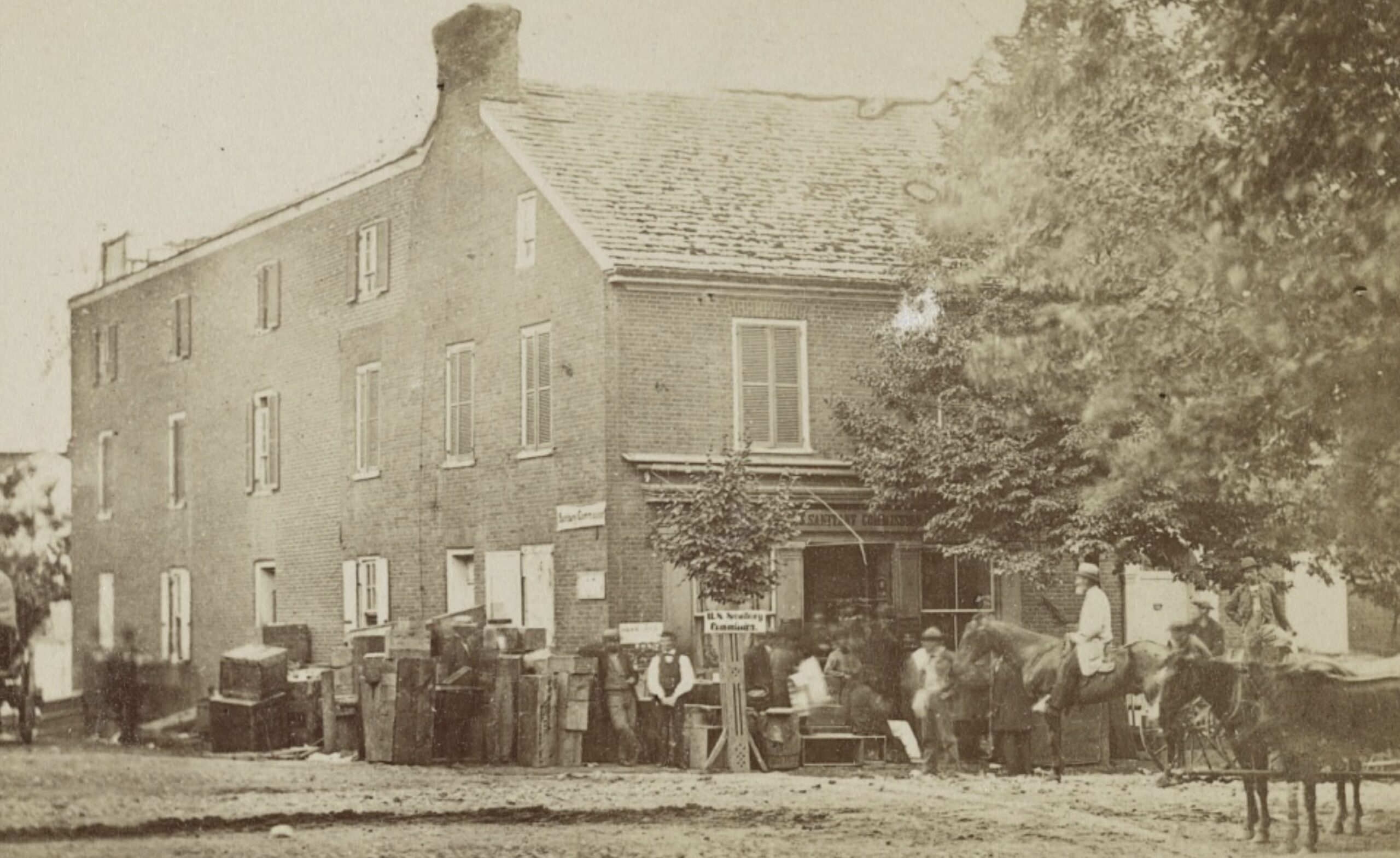 Library of Congress
Headquarters of the Sanitary Commission established in Gettysburg after the battle fought there in July 1863.
John Heckman: The Sanitary Commission is often operating in a theater alongside other volunteer groups like the Christian Commission and others. How are they cooperating or are they competing with each other? Are they sending mixed messages on certain things? Is this causing confusion or is this something where it’s for the betterment of everyone that there are more people and entities involved?
Judy Giesberg: You know, I think in the end, there’s more cooperation between these organizations than the sort of separate histories might let on. And there’s so much conflict between them, and they had nothing but venom in many cases—they had venomous things to say about each other and what they were doing. The Sanitary Commission was all about this sort of bureaucratic order, and it prohibited their volunteers from delivering supplies directly to soldiers. They had paid agents who distributed the supplies, and they dealt directly with doctors, not with sick or wounded soldiers. And the Christian Commission was just the opposite. These were all volunteers. They worked directly with soldiers, whenever possible, and they really thrived in the sort of personal relationships that they developed with soldiers. And so the Christian Commission was much more aligned with traditional kinds of relief and care, and the Sanitary Commission really represented something new. Their aspirations were to nationalize relief, really produce a relief organization that got supplies from anywhere they could get them, and then drove them to the place where they most needed them at a particular time. Kind of what we might think of as the Red Cross today or FEMA or something where keeping their finger on the pulse of where the supplies were going to be needed the most and try to get those supplies there versus sending them directly to the men who were mustered in from your own communities or having that sort of personal connection to the person who was delivering that aid. In the end, as I said, the organizations exchanged a lot of tense words, but they often, in effect, wound up cooperating on the ground when push came to shove.
John Heckman: So if we’re talking about the American Civil War, we have to discuss race, and race shaped so many aspects of the conflict. How did the commission engage with black soldiers or black laborers or black communities in general, and do you see any limits in its reformist impulses in the mid-19th century?
Judy Giesberg: Yeah, sure. Black women were excluded from the leadership positions in the commission, and they also couldn’t join any of these white societies. Sometimes these soldier relief organizations on the ground might be more open, but further up the hierarchy, black women were prohibited from being part of the leadership of these organizations, or even from affiliating their own colored soldiers’ relief organizations with the Sanitary Commission.
So this was a really segregated affair. And white women didn’t allow black women in the sanitary fairs. If you were a black relief worker, similar to some of these women I just mentioned who worked for the commission, you couldn’t even stay in Sanitary Commission lodging that was provided. And the best source for this is Leslie Schwalm’s work, who’s written quite extensively about some of what I just mentioned. And even though there were people in the commission who might have dabbled some in abolitionism before the war, they, the white women commission workers, were careful to distance themselves from any sort of civil rights work that would link them to the black women who supported the army.
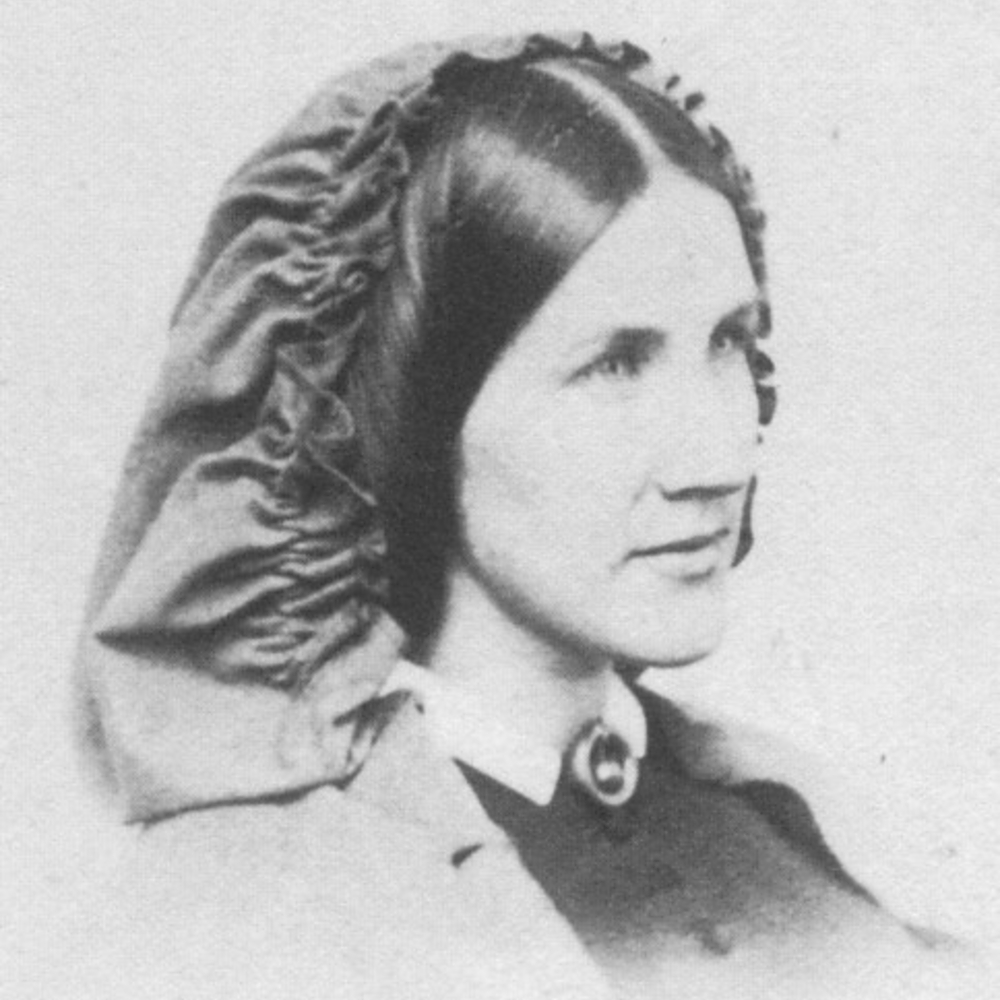 USAHEC
Georgeanna Woolsey
But I think even more damning than that is what Leslie Schwalm shows in the sort of data collection that the commission was really invested in. Commission clerks collected data on black troops and filled them in these forms where they were measuring their feet and their heads and their chest capacity. And then they were also supposed to weigh in on the connections between that and their sort of native intelligence. And they were really invested in this gathering of data, and then of course, that data would be used in the late 19th century by all sorts of groups who were interested in advocating for black disenfranchisement, for forced migration of African Americans. And so it’s difficult really to separate the commission from that other darker history that we know of, which is where that race data that they collected goes afterward. And historian Thavolia Glymph has also uncovered some of the Sanitary Commission luminaries, Georgeanna and Jane Woolsey, for instance, who nursed for the commission. They were famous abolitionists, feminists, and also their families were heavily invested in sugar plantations in Cuba. So there’s a lot more that we don’t know about some of these women whose class position was made possible by their investments in slavery. But also, we might begin to ask the questions about how those investments also shape the attitudes that they have toward black women who are doing some of the same relief work and are really trying to reach U.S. Colored Troops with the same sort of support that the Sanitary Commission is trying to reach to white soldiers.
John Heckman: You bring up the postwar legacy of the data, and I’m really interested also in how did the people of this organization influence postwar debates about veterans’ health, disability, and long-term care? Because the wounds don’t heal as quickly sometimes as people would wish they would, or they’re dying of their wounds in the 1880s from a battle they had in 1864. How does the commission help, at least politically or socially, to ensure that these people who fought for their country aren’t forgotten?
Judy Giesberg: Yeah. The commission itself will stop operating in the postwar era, but a lot of the local affiliates or people who worked for the commission will continue to do the kind of work they did with the commission in helping to support returning soldiers. Also lobbying for the need to construct soldiers’ homes where veterans can be cared for in the transition back to civilian life and in particular because of the long-term illnesses that veterans will suffer from. And also supplying them with what they needed really just in coming home. So the commission is involved in at least the sort of immediate postwar era in trying to smooth that transition, and some people who work for the commission actually become very invested in operating these soldiers’ homes and in finding long-term care for soldiers whose injuries can linger for some years.
Yeah, and the sort of other side of commitment to collecting data, is that some of that data, I imagine, could be quite useful years later when we start to really understand trauma, which is something that Civil War Americans didn’t quite understand and would refer to it as “nostalgia” or some other sort of generic terms. But I imagine some of the data that the commission helped to gather is telling a different story. It’s just waiting for the right time where medical professionals are asking the right questions.
John Heckman: Do you believe there’s anything that we still misunderstand about its legacy? Is there something we should be paying more attention to when we’re studying these kinds of volunteer movements during the American Civil War?
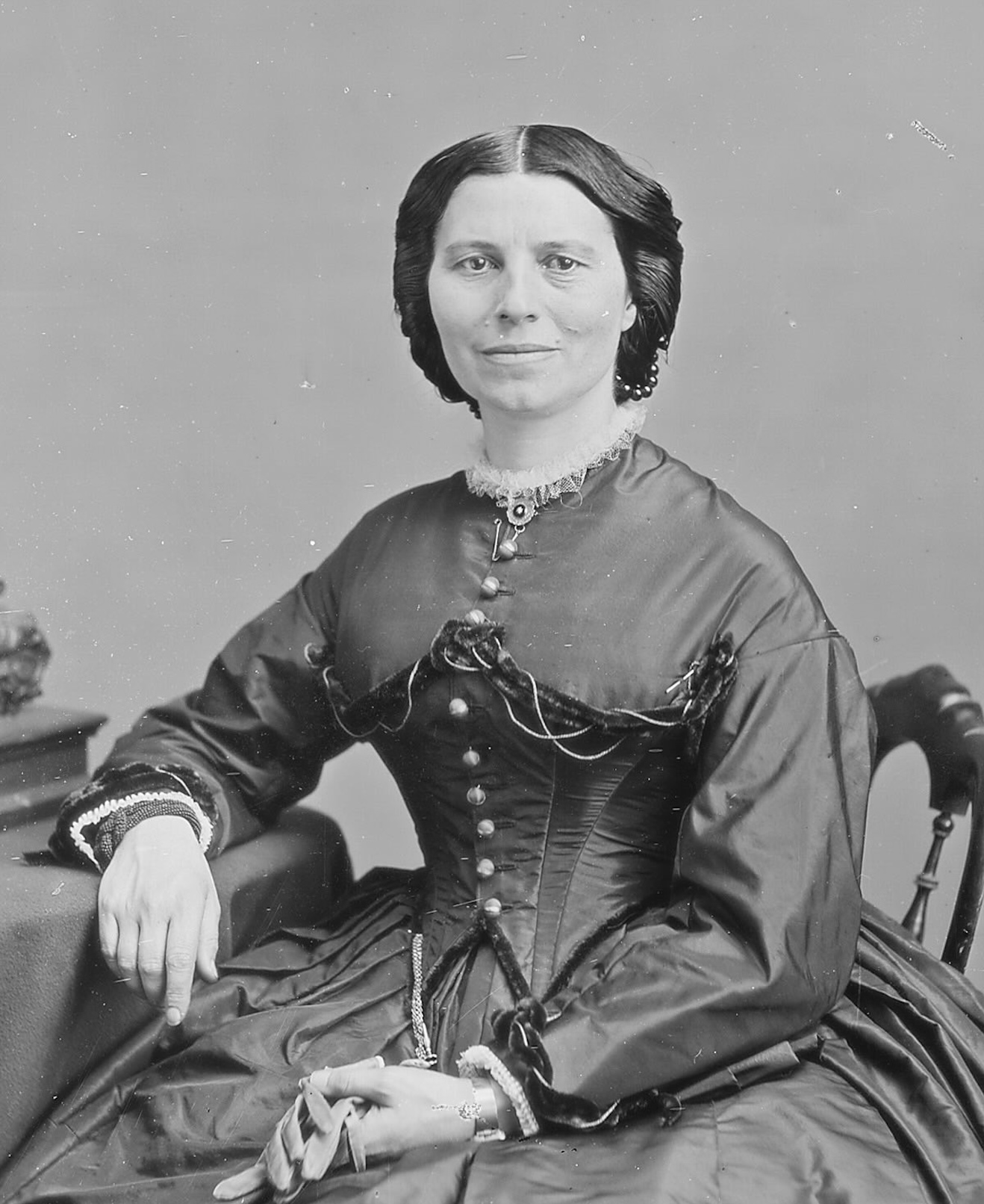 National Archives
Clara Barton
Judy Giesberg: I was trying to scope out and think of this question broadly. I think Americans know, or at least people who are somewhat versed in this time period, the history of this time period, know that there is a connection between the Sanitary Commission and the Red Cross, that some of the people who were involved in the Sanitary Commission become advocates for the American Red Cross. And then some other people who were working parallel to the commission would become important to the Red Cross, people like Clara Barton, for instance. And I think about the resistance to the Sanitary Commission, where that came from, this sort of attempt to regularize relief and how, in the end, they were only partly successful in convincing Americans that relief should be anonymous, that relief should be professionalized and bureaucratized.
And the same kind of resistance came with the beginnings of the Red Cross, which ironically was founded in part by Clara Barton, who wanted nothing to do with the commission, right? She was very averse to this idea that the work that she did was going to become anonymized, and she didn’t want to work for Dorothea Dix or Elizabeth Blackwell. So her sort of instincts were opposed to the centralizing efforts of the commission. And I think in that irony, there’s something that kind of lingers in the way we think today about medical knowledge in this country. We have access to some of the best medical knowledge in the world, yet we’re not always receptive to it, and we might sometimes trust sources that are closer to us. So I think that maybe digging back into some of the tensions that surrounded the commission, some of the people who worked for it at this particular moment in our nation’s history might help us, I don’t know, understand where we are today and how we receive medical knowledge, how receptive we are to it, and when we resist it, why it is that we do.
About the Guest
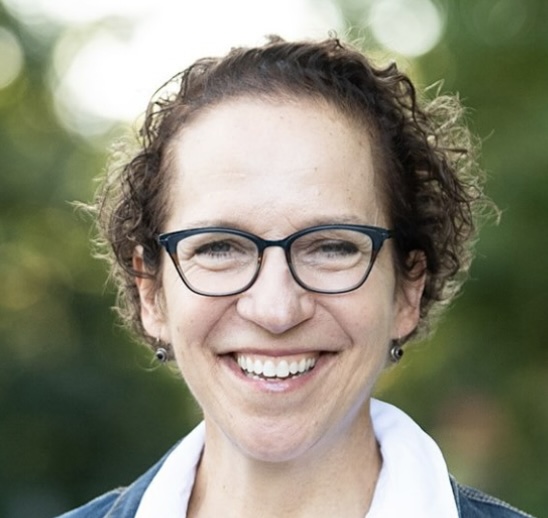 Judith Giesberg is the Robert M. Birmingham Chair in the Humanities in the College of Liberal Arts and Sciences at Villanova University and the author of a number of books, including Civil War Sisterhood: The U.S. Sanitary Commission and Women’s Politics in Transition (2006).
Additional Resources
-
- Florence Nightingale, Notes on Nursing
- Leslie Schwalm, Medicine, Science, and Making Race in Civil War America (2023)
- Thavolia Glymph, The Women’s Fight: The Civil War’s Battles for Home, Freedom, and Nation (2022)
Sponsored By