Historian D. Scott Hartwig discusses Union general George McClellan’s slow pursuit of Robert E. Lee’s army after the Battle of Antietam.
Transcript
Terry Johnston: Welcome back, Scott. Last time, we talked about George McClellan’s response to receiving a copy of Special Orders No. 191, Robert E. Lee’s operational plans for his 1862 Maryland Campaign. Our next question for you pertains to the aftermath of the Battle of Antietam. Thomas in West Virginia asks, “Was McClellan wrong not to pursue Lee energetically after Antietam?” What do you say to that?
 Library of Congress
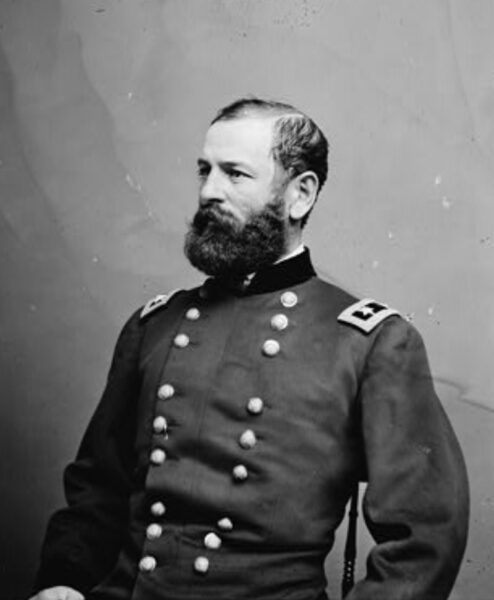
Fitz John Porter
Scott Hartwig: That I would agree with. I’m pretty critical of McClellan after the Battle of Antietam. He claims after the battle is over on September 18, he writes to the president and to Halleck that “We’ve won a complete victory. We’ve driven them out of the state of Maryland.” If you’re reading this, if you’re Lincoln or Halleck, you’re like, “Wow.” And he even writes, “We’re in pursuit.” “We’re pursuing them.” Now, he did not pursue the Confederates. Some people would argue with me about that, but what I would say is he probed the Confederates. What he did is on September 18, when he learns that the Confederates have evacuated their positions at Sharpsburg and they’re making off for the Potomac River, he orders the V Army Corps, which was the most lightly engaged of any of the corps of the army in the Battle of Antietam, he orders the V Army Corps under his favorite corps commander, Fitz John Porter, to follow up the Confederates. So, I liken this to somebody with a broom, sweeping up the refuse. This is not a pursuit to bring them to battle. This is a probe to see what they did.
So Fitz John Porter marches his force on the 19th up to the Potomac River and during the late afternoon he conducts literally a textbook river crossing. And he defeats the Confederate force that Lee had left there as a rear guard. It’s very ineptly commanded by William Nelson Pendleton, who was commander of Lee’s reserve artillery. He was completely out of his league in managing an operation like this. He loses some of his artillery. Pendleton panics, and Porter captures these positions. But then he withdraws back across the Potomac River and decides that the next day, September 20, he’ll go back again. So he crosses on the 20th with two brigades of infantry. For some strange reason he picks two brigades from two different divisions, and he doesn’t place one of those brigade commanders in overall command. So we have two separate commands, two separate divisions, two separate brigades, one that is going south, the other is kind of going southwest towards Shepherdstown.
And meanwhile, Robert E. Lee realizes he’s got to do something about this bridgehead that the Federals have made across the Potomac River at Butler’s Ford, near Shepherdstown. And he has a real problem. His army is in just dire condition. They’re exhausted. They’re disorganized. The leadership is exhausted. And he literally can only find one division that was combat fit to execute this movement. And they do it. A.P. Hill’s division returns, counterattacks, drives the bridgehead back across the river. Now, the Federals would’ve lost very few men in this operation, and it would’ve been completely not notable, except for one of the regiments, the 118th Pennsylvania, when their regimental commander received his orders to withdraw, he did not receive them through official channels and he refused to recognize them. So he kept his regiment in position, and then by the time they did start to retreat, it was too late. He lost over 200 casualties. It was a disaster for the regiment. It was a brand-new regiment. It was this guy’s first battle that he was in. It was a disaster. It became, for the Confederates, a big propaganda win.
The other thing that was really significant about the Battle of Shepherdstown is that Shepherdstown reinforced in the mind of George McClellan that the Confederate army was very powerful and very dangerous. So even though he’d written, “I won this complete victory,” he believed he was outnumbered in the Battle of Antietam. He believed he had been outnumbered in that battle and the bloody nose that he takes at Shepherdstown convinces him, “I need to leave these guys alone. Because they’re strong, they’re powerful, and I’m not going to pursue them. What I’m going to do is I’m going to rest, reorganize my army because they need rest and reorganization. They need supplies. And I’m going to arrange them so that we guard all the fords of the Potomac River so that Rebels can’t come back into the state. I will reoccupy Harpers Ferry.” All of the moves that McClellan is thinking of immediately after the battle are all defensive.
Now, one of my big criticisms of McClellan is that he never developed any sort of a competent intelligence network or intelligence service. And Joe Hooker had this great quote, I don’t know if I can remember it correctly. He said that when he took command of the army in 1863, that they had no idea whatsoever of the organization or the strength of the Confederate army. And he said it was as if the Confederate army was in China. So, this also is kind of a slam on [Ambrose] Burnside, who takes command after McClellan. But McClellan doesn’t really have a good intelligence system that provides him with accurate intelligence. And part of the problem there is McClellan owns this. I mean, McClellan has a bias. His bias—and the bias is shared by people like Fitz John Porter and officers like him—is that the Confederate army outnumbers the Union army. They believe it. Now, I’ve read everything you can possibly imagine by everybody who argues, “No, no, no, no. They didn’t do that. They were just saying that because they wanted to get reinforcements.”
Well, I beg to differ. Because when you are writing in private correspondence that you are outnumbered, and it’s not just McClellan and it’s not just Porter, it’s staff officers. They believe this. This is a bias at headquarters. The bias at headquarters is, “We are outnumbered.” So, if you come in and bring the intelligence report that says the Rebel army was less than 40,000 men at Sharpsburg, they’re not going to believe it. They’re not going to believe it. So if you want to think about in the modern terms of a situation that has similarities to this, I remember watching—it was 2003, early 2003—Vice President Dick Cheney on a news program, and he was talking about the plan of invading Iraq. And he says, “We will be welcomed as liberators and they will pay for the work.” And that was a bias. So what Dick Cheney was expressing was a bias. This is what they wanted to have happen. And there were plenty of intelligence experts that would’ve said, “Hmm, you might want to rethink that.” So, in the case of McClellan, there’s a bias at headquarters: We’re outnumbered. We embrace the reports that come in that show the enemy is strong, and we question the reports that come in that show the enemy is weaker than we think.
 Cowan's Auctions
George B. McClellan
Now, McClellan in the Battle of Antietam captured POWs, either able-bodied or wounded, from every division in Lee’s army. All he needed to do—this is not criticizing McClellan for something that he shouldn’t have known how to do. This is not rocket science. This is something that other commanders throughout history had done before McClellan and would do after him. You simply have a system in which you question the POWs. “What division do you belong to?” “What brigade do you belong to?” What you’re going to get from that is you have the order of battle of the Confederate army. Now you know what the order of battle is. The second question that you ask is, “What is the strength of your unit?” “What is the strength of your division or your brigade” or whatever. Now, some of these guys aren’t going to know, and they’re going to be all over the map. But remember, nobody gets any training in this era about what to do when you’re captured. They’ll tell you all sorts of stuff. They’ll tell you anything. There’s no training like giving my serial number because they don’t have a serial number, right? So you ask them, “What’s the strength of your unit?” You’re going to get some ballpark idea of the strength of the Confederate army.
And the third question you ask them, because as you look at these men and there’s just overwhelming anecdotal evidence that the Confederates were really badly supplied, “What’s your supply situation?” You’re going to learn from that that their supply situation is dire. That is gold. You’re McClellan, that’s gold. Because, what does that mean you should do? Does it mean you should sit back and defend the fords of the Potomac River and reorganize? No. You’ve got to crowd him. You’ve got to push him. You may not want to fight another major battle. Okay, I’ll give McClellan that. Okay, maybe you don’t want to fight another major battle. But their supply situation is way worse than yours. It’s dire. And it also means they’re 95 miles away from a railhead. They are supplying themselves by foraging, so you don’t want them to be able to forage. You want to crowd them. You need to cross the Potomac River and push up against them.
The other thing you’re going to do—this is something Lee was really worried about. Lee has thousands of stragglers and wounded broadcast across the lower end of the Shenandoah Valley. One of the reasons that Lee keeps his army in lower end of the Shenandoah Valley and doesn’t withdraw closer to rail communications is because he can’t afford to lose all of these troops. Because what would happen is, if McClellan had crossed over the Potomac River and pushed really hard and he captures these men, he would parole them. And when a Confederate soldier gets paroled, that means that however long he is paroled for until he is exchanged, he can’t serve. So if you’re paroled, you could actually go home depending on the type of parole you had. And that’s a legal document—you don’t need to serve. And then it becomes the problem of the Confederacy to round up these guys who are paroled and get them back into the ranks and back into the army. And it’s a huge headache. And Lee could lose a huge amount of manpower through this. So he doesn’t want to lose that.
 National Archives
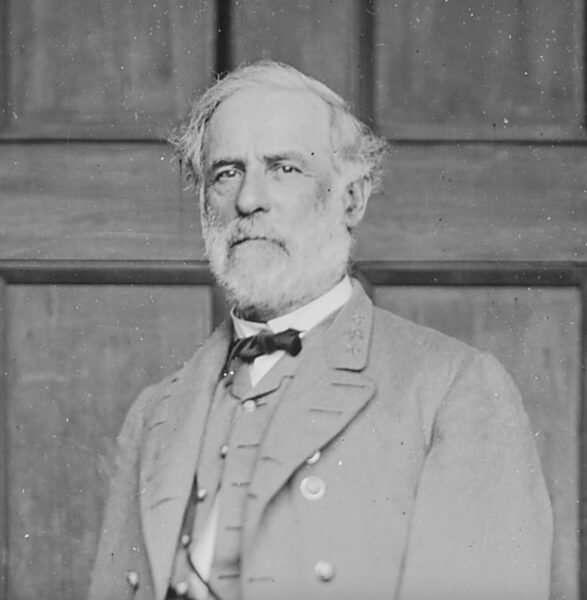
Robert E. Lee
So McClellan has these opportunities to really damage Lee’s army. Lee’s army, when you look at the strength returns of the army immediately after the battle, I think their first strength return was like September 30 or something, it was about 37,000 men. So, they’re really weak. They’re foraging from the countryside for supplies. They have nearly 20,000 stragglers broadcast all over the place. They have thousands of wounded that they’re trying to collect. They don’t have enough transportation to get their wounded and move them. The whole process is really slow. So what does Lee do? What Lee does is really, to me, pretty brilliant. He adopts a very pugnacious, kind of aggressive posture—like “I’m strong, I’m really strong”—in the hopes that McClellan will react the way McClellan has typically reacted: cautiously. And that’s exactly what McClellan does.
So, he squanderers a rare opportunity. Because these sorts of opportunities in the war did not come around very often. And it’s one of the reasons why I say intelligence gathering is so vital to a military commander. And not just the intelligence gathering, but the commander has to have an open mind about the intelligence that he’s receiving. And if the intelligence that he’s receiving contradicts his bias, he has to consider that maybe his bias is wrong.
Terry Johnston: Yeah. Well, and that missed opportunity is something that Lincoln notices, right? Because it’s not much longer after McClellan’s failure to pursue Lee aggressively that he’s out of a command position.
Scott Hartwig: Yeah. And, you know, one of the other things that’s interesting about the whole Lincoln-McClellan relationship—I’ve read a number of times, you know, particularly people who were very defensive about McClellan, that Lincoln was just looking for an excuse to get rid of him. He just didn’t like McClellan. He wanted to get rid of him. And it’s well documented that Lincoln did not think McClellan was the man who was going to win the war and should command the army. However, the reasons that he selected McClellan to command the army all proved to be good reasons. McClellan had the confidence of the army. He had taken a defeated, demoralized army and he turned it around in the blink of an eye, it seemed like. And he had very competently moved the army across Maryland. He’d engaged the Confederates at South Mountain. He defeated them in that battle. He engaged the Confederates that Antietam. He won that battle. They withdrew out of the states, so he won an operational victory.
I think what Lincoln wanted was, “Hey, if I can work with this guy, great.” So, what I see is Lincoln really trying to guide McClellan. Like, “Look, you’ve got to understand this is a political war. I know your men need supplies. I know that. I see it. But the people won’t stand for that. You don’t have unlimited time to do these things. You have to take the fight to the enemy. That’s your job. Your job is to produce plans on how you’re going to take the fight to the enemy.” And McClellan just fails to do that.
And then there’s some other things that occur in there that I think really angered Lincoln. One was, after Lincoln issues the Emancipation Proclamation, McClellan spent three weeks sounding the waters of all of his Democratic friends, his business acquaintances who were strong in the Democratic Party, on how should I respond to this Emancipation Proclamation. Because McClellan is very conservative. He doesn’t like to rock the boat. This is going to have profound social change in America. He doesn’t like that. And he thinks it’s going to lead to a slave insurrection in the South. But the other part of it is that—I can actually understand when you’re looking at it strictly as a soldier—you don’t want to create more insurgents, and this proclamation might create more insurgents. It’s going to make your fight harder. Because more people might say, “Oh, okay, now you’re really taking the gloves off. Okay, we’re going to go volunteer for the army.”
But McClellan’s job, and he knows this, is to execute the policies of the administration that has been elected by the people. But he spends three weeks and finally he issues a message to the entire army. He doesn’t write it. This officer on his staff who’s like a political consultant to McClellan writes it. It’s not like a full-throated endorsement of what the proclamation is saying. It’s just saying, well, you know, it’s our job. We have to follow the policies of the president and we’re going to do it, and I expect everybody to do it.
So, I think Lincoln knew what McClellan’s political views were. I don’t think that really upset Lincoln so much. But what upset Lincoln is that Lincoln, I think it was October 5, had ordered McClellan to cross the Potomac River and bring the Confederates to battle. And McClellan said, “We’ll do it. We’ll get underway. As soon as I’ve got the supplies that I need, we’re going to do it.” Well, on October 11, he still hasn’t moved. He slips away from the army, goes back to Philadelphia, and he picks up his wife to bring her out to the army. Now, an army commander who is going to get his wife and bring her to the army, or bring her out to the army in the field, is not planning a forward move.
Terry Johnston: No.
Scott Hartwig: And it’s the same time that he does this, that Jeb Stuart takes 1,200 cavalry troopers and rides entirely around the 100,000 men of the Army of the Potomac and takes two wounded in the whole operation. So that really, really upset Lincoln. Because what he’s seeing from this general is that this guy is not going to take the fight to them. He doesn’t want to advance into northern Virginia, which was very true. And then ultimately Lincoln decides, “Okay, I have to provide some sort of a mark that McClellan has to exceed or I’m going to relieve him.” And that was, when McClellan does finally start to move, if the Confederates beat him and get across his path to Richmond, that’s it. He’s gone. And I think anybody could have predicted that was probably going to happen.
McClellan’s movement into northern Virginia was well executed, but it was very methodical, very careful. Everybody’s supporting everybody. And I don’t think McClellan had learned that if you’re going to defeat Robert E. Lee, you’re going to have to take risks. You can’t fight the conventional sort of fight or you’re not going to win against him. You have to take certain risks. And he doesn’t do that. And Longstreet’s corps gets crossed in front of him. And that was it for Lincoln. Now Lincoln does wait until the November elections are over. He wants to see how that’s going to turn out because he knows that relieving McClellan is going to create a political firestorm because he’s the darling of the Democrats and he’s very popular with the army. So he has to be careful how he proceeds. He waits till the election’s over and then he relieves him of command.
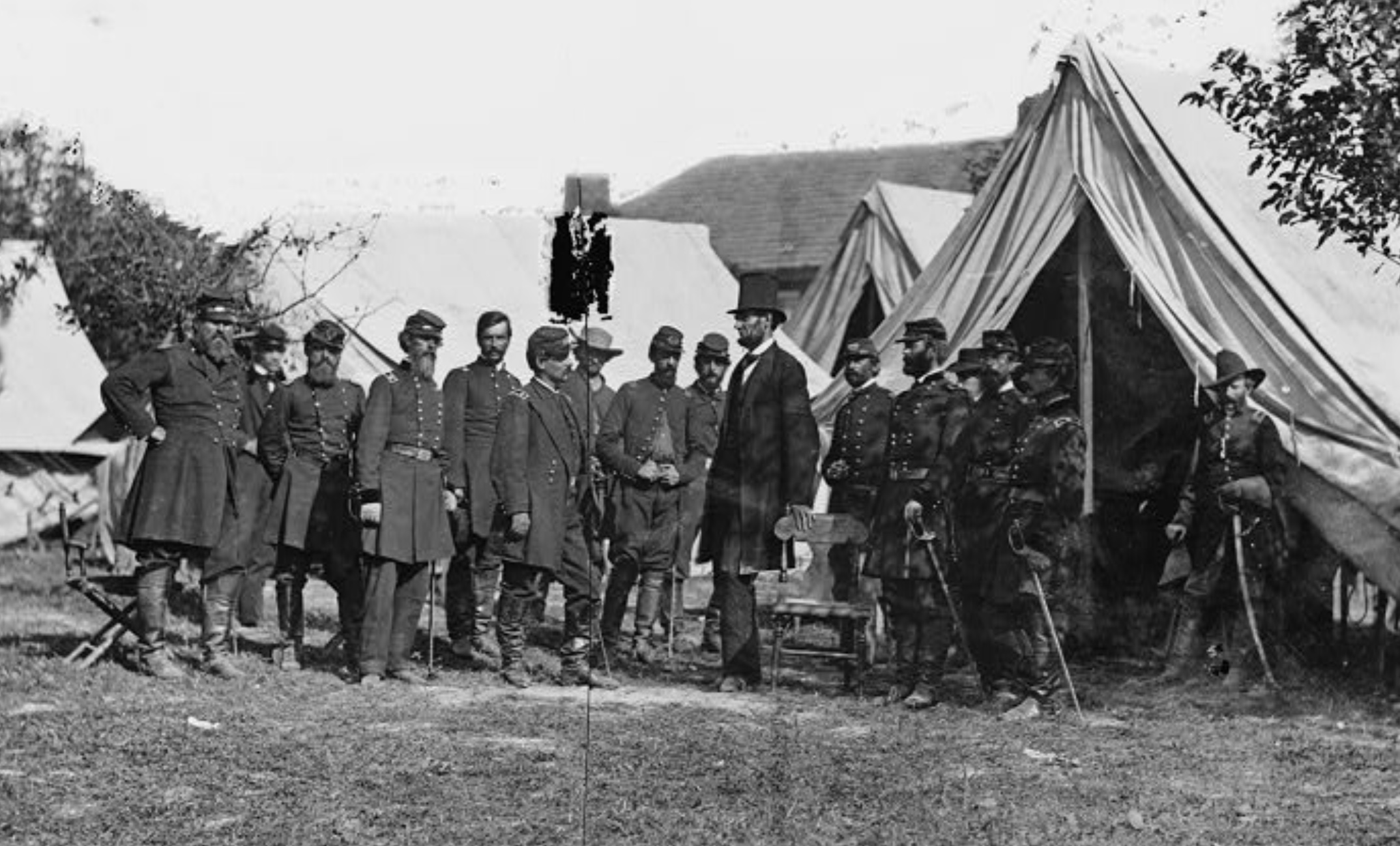
One other point on this is that Lincoln visited the Army of the Potomac at the very beginning of October. He came out unannounced. Visits McClellan, spends a couple days with the army. And during the course of his visit, they tour the battlefield. He inspects some of the army corps. And he talks to all of the corps commanders in the army. He also talks to McClellan quite a bit. And the corps commanders, it’s very interesting to see what those who left their impressions, what they write. Most of them were not impressed with Lincoln. Some of them were like, “Ah, he’s a nice guy. You know, he tells some funny jokes and stuff like that, but he’s not the man for the moment.” And others are like, “Ah, he looks like a gorilla riding around in an ambulance.” Very derogatory sorts of things.
 Library of Congress
Abraham Lincoln meets with George McClellan (sixth from left) and other Union generals at Antietam not long after the battle there.
And what none of them realized is that Lincoln was playing them all. Because Lincoln could play the, “Aw shucks, I’m just a country boy.” He could play that as well as anybody. And so imagine yourself, you’re a corps commander and you’re a little bit suspicious. What’s the president doing out here? And then the president marches in like some corporate executive and starts grilling you with questions. What are you going to do? Open up? No, you’re going to clam up. You are not going to tell him anything. He comes in, you’re like, “Oh, this guy’s just kind of a country bumpkin.” And what Lincoln was seeking is, is your loyalty with McClellan or with the country? And what he learned in meeting with these corps commanders, their loyalty was with the country. They thought McClellan was a good general. They supported him. But their loyalty was with the country. And that was very important for Lincoln because then he knew if he had to relieve McClellan, he could do so and we would be okay.
Terry Johnston: He did so just a few weeks after that, right?
Scott Hartwig: Exactly. A few weeks afterward.
Terry Johnston: Well, it was a natural ending, I suppose, to the whole Maryland Campaign. It wasn’t too surprising given McClellan’s relationship with Lincoln and Lincoln’s expectations.
Scott Hartwig: Yeah. The reality is that there’s these two groups of people out there. There’s the “McClellan was wronged, he was a much better general than anybody thinks he was.” And then there’s the other group that is, “McClellan was the worst general of the Civil War.” He wasn’t either of those things. He had definite strengths. There were things that he did with the Army of the Potomac that made that a really good professional army. He was a very good organizer. He was really good at building the morale of his troops. He was also very good at selecting talent. Now sometimes he would pick people because they were loyal to him. But Joe Hooker wasn’t loyal to him. Joe Hooker was a fighter. And he wanted fighters and he promoted Joe Hooker, even though Joe Hooker criticized him quite a bit.
But at the same time, he never understood the war. He never understood what this war was about. And he understood in one level what it was about, but he always thought in terms of, “If I capture Richmond, the rebellion will topple.” And what Lincoln and others would try to tell him is like, “No, they won’t.” The heart and soul of the Confederacy is their armies. Not their capital, it is their armies. And you have to fight their armies and you have to defeat their armies or you will not defeat the Confederacy. Because they can move their capital to another place. And, he never understood that. He never could comprehend that. He could never comprehend why a document like the Emancipation Proclamation essentially made Antietam a strategic victory for the Union. He never could understand that.
So, he wasn’t the commander who was going to win the war. I’ve studied McClellan very carefully in his Peninsula Campaign and the Manassas Campaign and the Maryland Campaign. And while he did definitely show some signs of improvement in the Maryland Campaign, after the campaign is over, he reverts to just what he’s always done before, which is, “I need to resupply my army.” No consideration that the enemy army might be far worse off than you are, in far worse shape and much smaller than you think they are. He just doesn’t show the growth in places that I think you need to show growth, that he’s going to be a commander who can go to the next level. I just don’t think he was capable of it, and I think Lincoln saw that and felt he had to make the change.
About the Guest
 D. Scott Hartwig, former supervisory park historian at Gettysburg National Military Park, retired in 2014 after a 34-year career at the National Park Service. He is the author of To Antietam Creek: The Maryland Campaign From September 3 to September 16 (Johns Hopkins University Press, 2012) and I Dread the Thought of the Place: The Battle of Antietam and the End of the Maryland Campaign (Johns Hopkins University Press, 2023).
Additional Resources
Sponsored By