Lindsay Rae Smith Privette discusses the wartime evolution in military surgeons’ training, knowledge, and practices.
Transcript
John Heckman: Lindsay, it’s so good to be reunited with you once again, and it’s fantastic to have you here on the podcast. Thank you for your time.
Lindsay Rae Smith Privette: Thank you so much for having me. I’m really looking forward to this.
John Heckman: You’ve written about the tension between theory and practice in 19th-century medicine. How did the battlefield collapse that divide?
Lindsay Rae Smith Privette: Yeah. So, one of the things that is really startling to think about when we’re thinking about medical education in the 19th century is if many of us have been sick, gone to a hospital in 2026, you go to a teaching hospital. You have the doctors that come through, and they’re getting hands-on training with patients and these real-life experiences. They’re going through rotations of different types of medical care. You’ll hear medical students talk about their “peds” rotation or ER, neuro. That’s not how medical education worked in the 19th century, and in fact, many doctors or physicians, if you will, become physicians by sitting through lectures that talked about the human body and presented various cases. But you could very easily graduate from medical school, get your certificate, without ever putting your hands on a physical patient. So there’s a lot of learning on the job.
And then when we get into the midst of the Civil War, the Medical Corps of the Civil War is very much like Civil War armies. Most of your surgeons who are practicing are not career military surgeons. They’re civilians who were more apt to treat broken bones or appendicitis or cases of malaria. So, in the midst of a battlefield scenario, you have all of these surgical cases that are being presented, and surgeons are, in many instances, learning on the job. They had their hands on numerous different injuries—different types of bodies, different types of ailments, both surgical infections, diseases—and it really broadens their experience of how to treat patients in all sorts of varying ways.
John Heckman: How did you find that these surgeons responded once they’re confronted with more casualties than they thought they would be seeing, or it’s their first time actually seeing these wounds? How is their response to that when they’re starting to be overwhelmed by all of this?
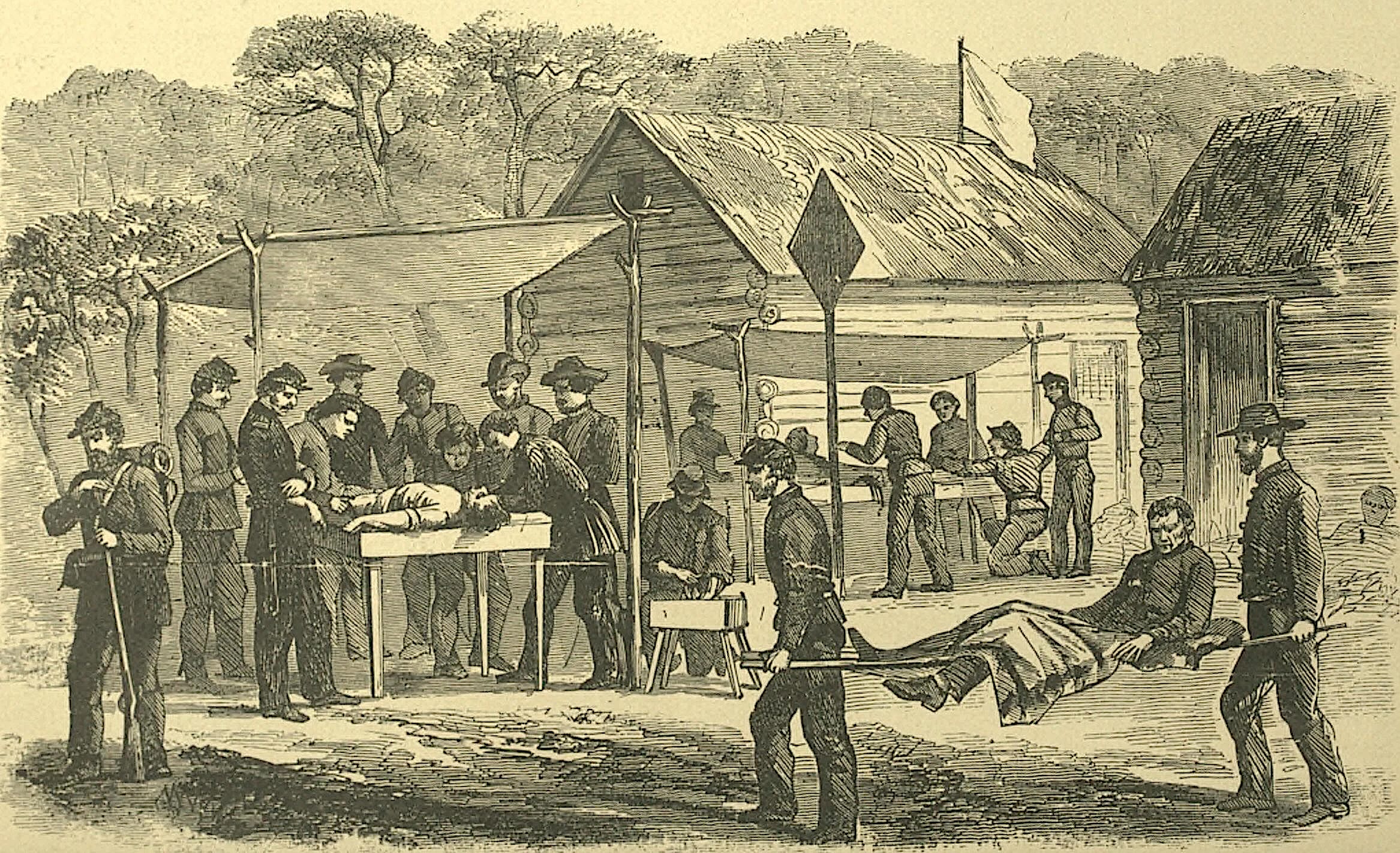
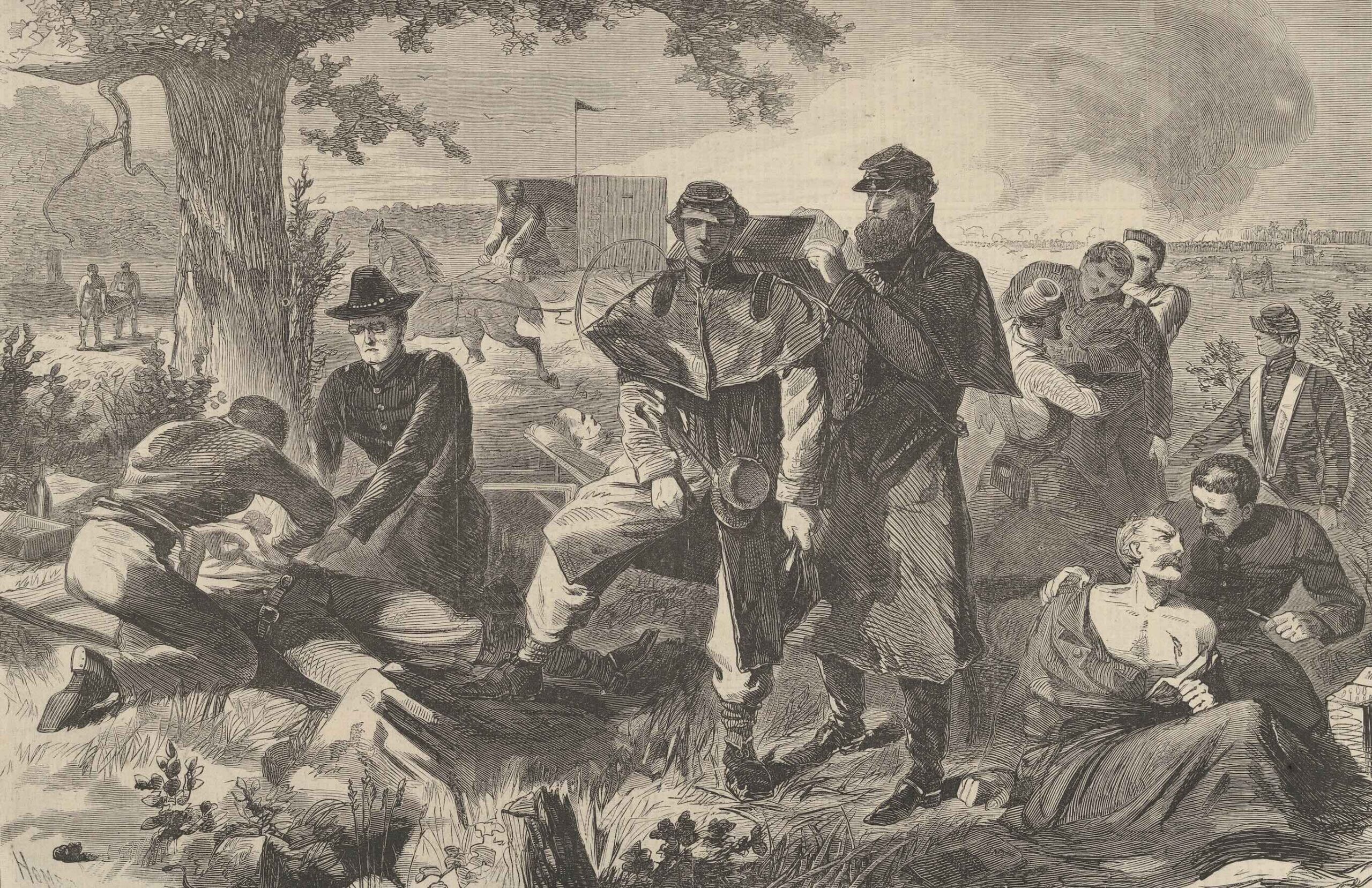 Harper's Weekly
Union army surgeons are depicted treating battlefield wounded in this illustration by Winslow Homer from 1862.
Lindsay Rae Smith Privette: Yeah. I think that’s an excellent question, and it’s one that I want to do more with. Because when you are reading surgeons, when you’re reading the diaries and the memoirs and the letters that they leave behind, the pesky thing sometimes is that they don’t tell you directly how they’re feeling about this. And part of that, I think, is because of that professionalism, that emotional detachment that medical providers are trained to have in order to navigate situations. So you have to read between the lines just a little bit and figure out some of these different experiences or different ways that they’re processing.
There is one surgeon who wrote a dissertation for Jefferson Medical College after the war. He was the medical director for the XIII Army Corps at Vicksburg. His name’s William Forbes. And he has this amazing quote where he is talking about modifying bandage dressings in the field, that they’re using something he calls a wet bandage dressing, which must not have been widely accepted at the time. But he says, “If you were to find yourself standing in the midst of acres of men who are all moaning and groaning and pleading for your attention, the satisfaction of being able to care for these men and care for them quickly is of utmost importance. And there’s no feeling quite like it, being able to perform that task and perform it well.”
John Heckman: You’ve talked to many people about your research over the years. What do you see as the most misunderstood aspect of Civil War surgical work, especially when we talk about amputations or ideas around triage or ethics?
Lindsay Rae Smith Privette: I think a lot of times when we think of Civil War medicine, we think of the lying on the table, the biting of the bullet, the biting of the stick, right? That this isn’t done with anesthesia, that all surgeons were these saw-happy sawbones who are just gleefully taking off limbs, almost to the point where they may even be operating on autopilot. I think that image comes to us in two very specific ways. One is that we have spent a lot of our time learning about Civil War medicine not from surgeons, but through their patients. And when patients are on the table, when they’re lying in a hospital and they’re watching the chaos, what is organized chaos to the field medical staff looks like anarchy to the patient who doesn’t understand all of these nuances, the small decisions that are being made, the background knowledge that the surgeon’s often bringing to the table. And so in many instances, that’s the depiction that they write about.
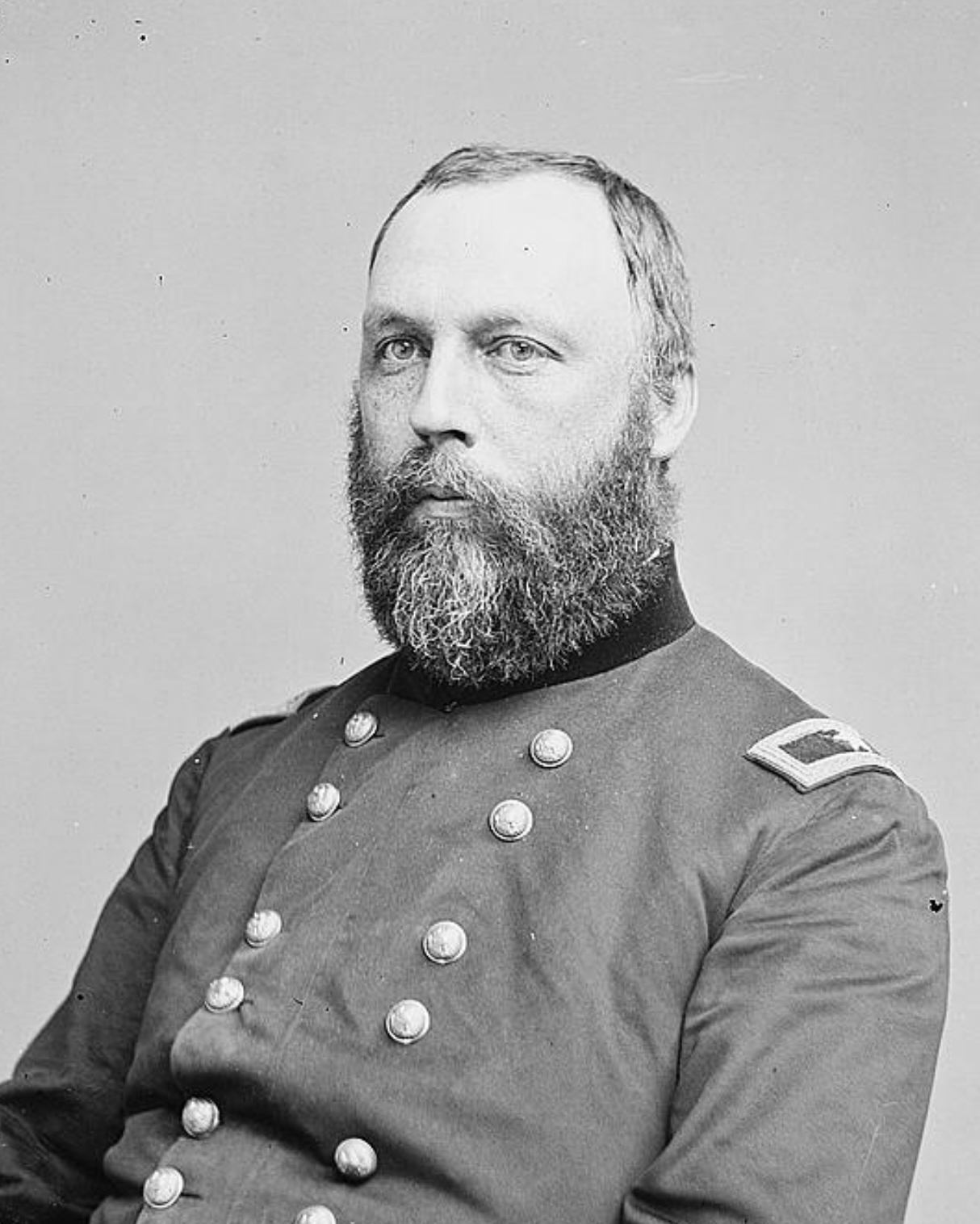 Library of Congress
William Hammond
And then I also think that we also have popular culture that has taken that and given us these very vivid medical scenes. I’m thinking Gone with the Wind depicts a couple of those amputations with no anesthesia and these visceral kind of reactions. One of the things that I always find really interesting, though, is when you look at how the medical department is functioning, William Hammond becomes the surgeon general in April 1862, and he’s not just recognizing that the distance between theory and practice is collapsing. He wants to codify the knowledge that is gained in that collapse. So he’s interested in data collection. He’s interested in having surgeons write reports, of circulating this information and getting it into as many hands as possible. And what you begin to see is, within the profession, surgeons having conversations about statistics, about if a person or a soldier with an injury to their arm is presented to you, do you amputate or do you go for another procedure? Can you preserve the limb and preserve the life? And you can really see when you get in some of those documents, surgeons trying to make the best decision with the information that they’re given, recognizing that if they make the wrong decision, particularly on the battlefield, this soldier very likely will pay for that wrong decision with their life later. So they carry a bit of a weight with them, and many of them are really aware of the weight and the responsibility that they shoulder.
John Heckman: A lot of people who are going to be listening to this series are immediately going to think of the Letterman System. A lot of us Civil War nerds have talked about the Letterman System for years. It’s often described as a revolutionary thing. In your view, what made it so transformative, not just logistically, but also intellectually?
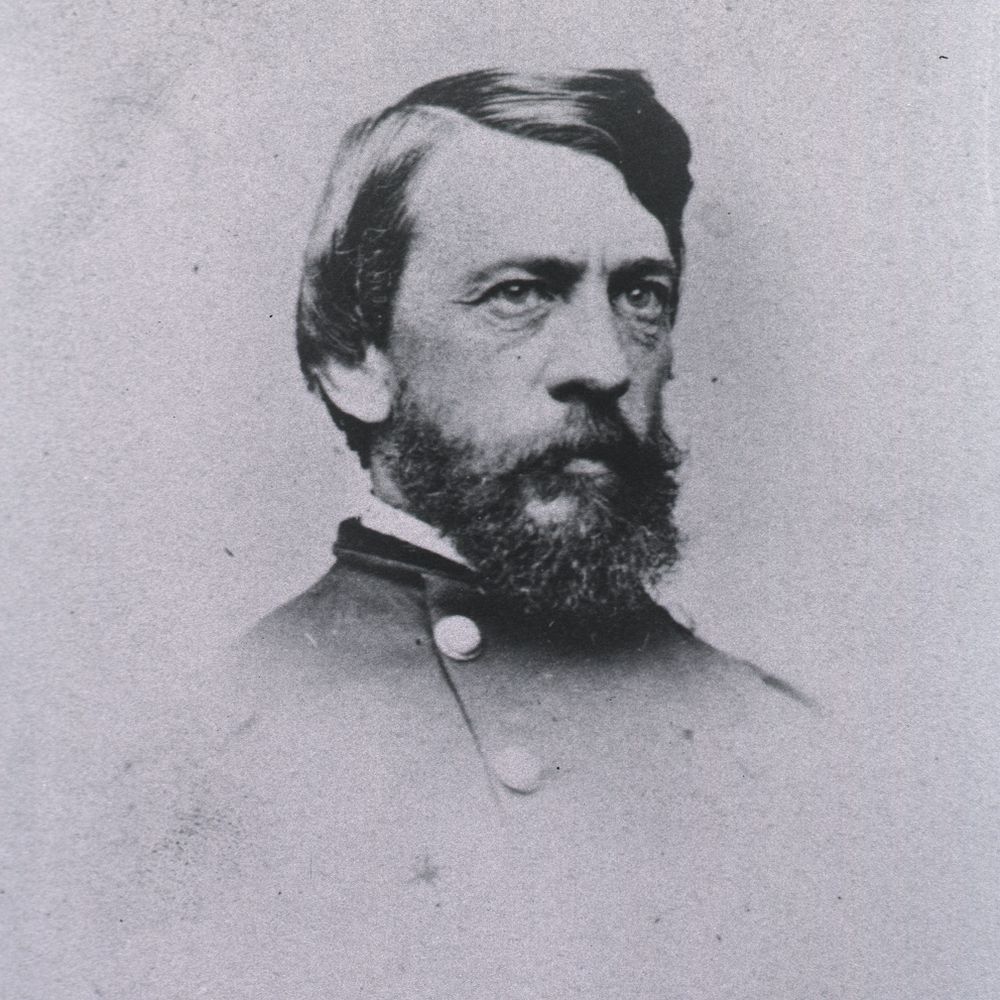 National Library of Medicine
Jonathan Letterman
Lindsay Rae Smith Privette: So the Letterman System, if we have anyone who hasn’t heard of the Letterman System, I would say that the Letterman System is probably the biggest innovation that Civil War medicine brings to the world that kind of really sticks. I mentioned William Hammond becomes surgeon general in April 1862. That summer, Jonathan Letterman is appointed medical director of the Army of the Potomac. And the two of them work toward reforming a whole bunch of different inefficiencies. Letterman, in particular, creates an ambulance corps, which first arrives at the Battle of Antietam. That’s the first time it’s utilized. And then he also utilizes a tiered hospital system. So, if you’re thinking about the battlefield, casualties immediately coming off the battlefield are going to first interact with a dressing system. That’s triage, that’s first aid. Can this soldier go back on the battlefield? Do they need more extensive care? From there, they go back to a field hospital. That’s where your operations would happen, your amputations, bandaging up of severe wounds, head injuries. And then you have the general hospital. The evacuation lines go that way.
One of the things that’s fascinating about this is how the management of resources, both people and medicine, is mimicking what the larger Union army is learning about how to manage resources. How do you get massive amounts of troops from one place to this place? How do you get ammunition? How do you get food? So the medical department is learning along the same lines that the army is full scale, and one of the great benefits that comes with that is data collection. So, at these field hospitals, you would take—the field hospitals were organized at the division level—so they would take all of the surgeons of the division, they would identify two or three primary operators. These were going to be the people actually doing the surgery. Rather than seniority, these individuals were identified by skill. So they got this position by skill. Each of them would have an assistant, and then you would break down responsibilities. Someone would do the cooking, bandages, and record keeping. And these records would be your patient’s name, their rank, which company and regiment they’re from, what their injury was, what the treatment was, and then ultimately would track their information until that soldier was put on a train or a riverboat or wherever and sent to the general hospital.
Once they get organized enough, there is a surgeon who is at the Battle of Chickasaw Bayou just north of Vicksburg in December 1862, and he actually takes all of the men who were treated at Chickasaw Bayou, and he manages not just to collect all of the information about what happened to them on the battlefield, but he actually traces them 10, 20, 30 days out from receiving their injury, and in that way is able to gather the information of where their injury was, what was the immediate decision made by surgeons, who had to have a secondary amputation, which would’ve been a amputation after 24 hours, whose injuries had extensive bleeding, who survived, who didn’t. And then all of that information gets brought into the medical department that helps further that decision-making process. Not just the management of people and resources, but also data becomes really significant to this process.
John Heckman: It’s a really great segue into my question concerning the relationship between surgeons and the soldiers they treated. It seems like there’s an ongoing relationship with some of them where they check in with the soldier 23 days out, maybe just to get their numbers straight about a certain thing that they want to jot down and talk with other surgeons about. But there has to be a level of trust or consent or emotional labor involved in that. What kind of a system does that allow for these men to have between each other? What kind of relationship is formulating between these surgeons and the men around them?
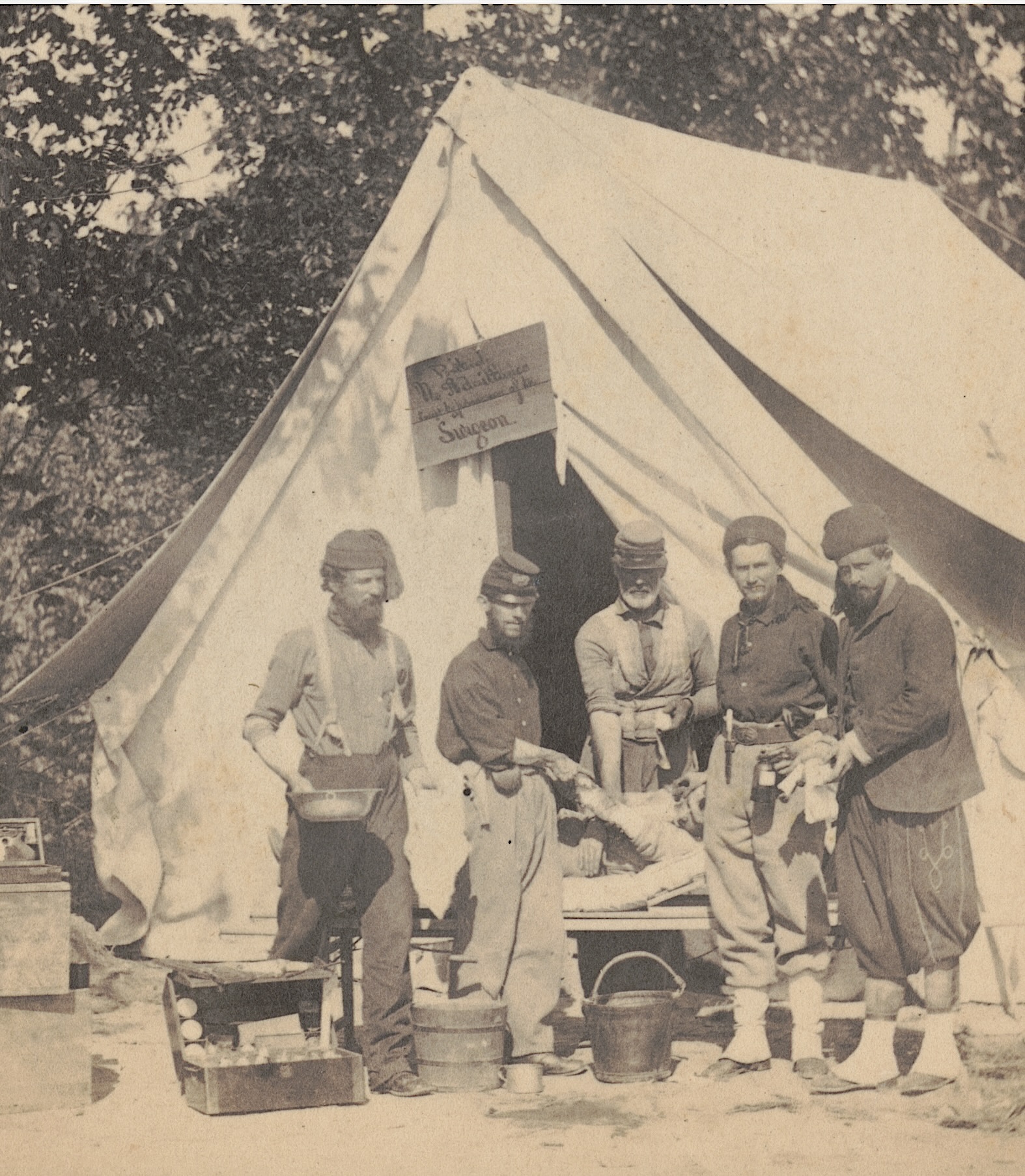 Library of Congress
A surgeon in the 74th New York Infantry prepares to perform an amputation on a member of the regiment outside the surgeon’s tent in camp.
Lindsay Rae Smith Privette: I think that relationship’s very, very complicated, and I think it’s especially so depending on who you’re looking at at any given moment of time. For regimental surgeons or medical providers—so we could say surgeons, assistant surgeons, you even have hospital stewards—chances are they actually have a much more personal connection for the men under their immediate care. They would see them during sick call. They would deal with kind of the daily ins and outs. But when we get to the battlefield and everything consolidates to that big division hospital, you would have instances where a particular medical provider recognizes other soldiers. There’s a hospital steward named Charles Johnson at the Battle of Vicksburg who writes pretty extensively of—I think it’s the assault on May 22—an 18-year-old boy that he recognized being brought in from the battlefield, and he has this horrific injury to his abdomen. It’s pretty clear that it is not something that is treatable. It’s not fixable. And Johnson talks about the soldier recognizes him and calls him by name. And one of the things I’m really interested in is when medical providers choose to tell specific stories, pull out specific patients. What is it about those patients that are the memorable patients? That’s one of the questions that helps us get at how and why they’re processing. So, this personal connection, the fact that he knew this young man, he was 18 years old. Not too much longer, his father actually, who was in the same regiment, appears at the field hospital and sits with the young man until he passes away.
So you have that kind of emotional labor, someone who recognizes you as a medical provider, as a surgeon, as a physician, and is looking to you to interact with him in that way. And then Johnson’s response kind of keys the young man into the fact that he’s not going to receive treatment. This isn’t something that is fixable. But at the same time, there’s this great fear. Because you have all of these medical providers at the division hospital, and then when you think about going to general hospitals, there’s no personal interaction with those surgeons. So there’s this great tension and I think concern that comes out of soldiers who have become patients about bodily autonomy and consent, and will things happen to my body without my consent? There’s a loss of control that being injured brings upon them. And a lot of times that interaction with surgeons exacerbates that loss of control. So there can also be a very, like, tense relationship between the soldiers/patients and their surgeons, medical providers.
John Heckman: We have a lot of data about anesthesia being used during this conflict, or at least we know it was used a lot during this conflict. It’s not like the movies, like in Glory, where you see someone who’s having their leg cut off and you hear them screaming. It’s not always like that. What does the evidence actually tell us about its use or its reliability and how people had their cultural attitudes maybe changed about it or their thoughts changed about it? Because you mentioned soldiers who are putting their trust in these surgeons, but they’re also understanding, “I’m not going to be with it when this is going on. I’m not going to realize what is happening and what’s going to happen on the other side of this.”
Lindsay Rae Smith Privette: Anesthesia, I think, is a really unsettling narcotic. Culturally, it’s fairly new. This is one of the first wars that the United States has been in where there is extensive use. And there’s a lot of conversation about using it, how to use it, how to use it appropriately. If you think about it, especially from religious terms, you have this episode where you’re taking a body and you’re mimicking what death looks like to the point that you can cut it open and you can do things to it and this body’s not going to respond, the person’s not going to wake up. So it’s, they look like they’re sleeping, but it’s something not quite sleeping, and then you’re going to bring that body back to life at the end of it. So there’s a lot of kind of interesting tension. There’s also cases, even leading up to the Civil War, it’s very easy to overdose somebody on anesthesia. So, you put them under and they don’t come back. Respiration ceases, the heart eventually stops. And so a lot of physicians, and I would say more of the old guard, are going to be very wary of using anesthesia.
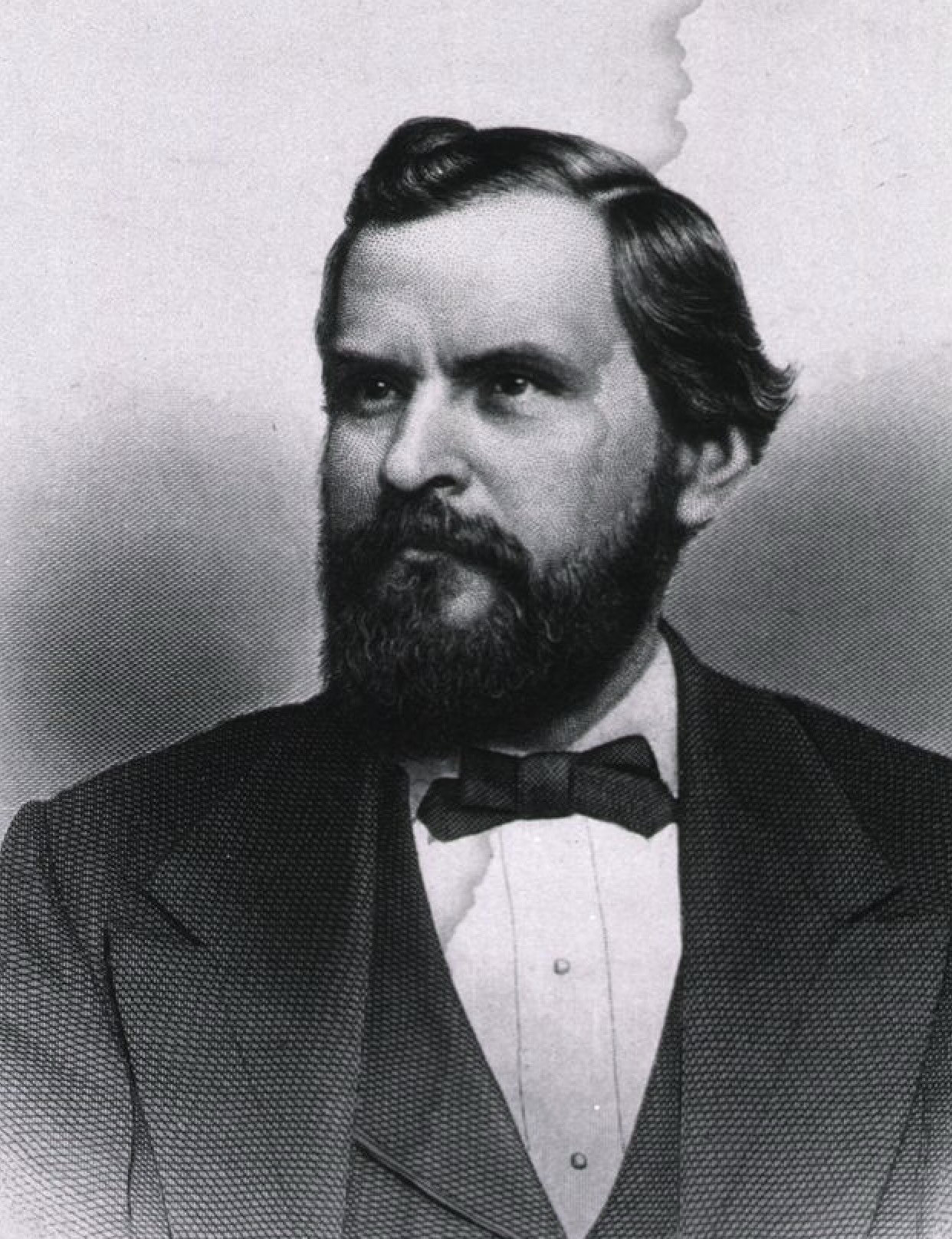 National Library of Medicine
Julian Chisolm
So it’s really interesting when you get to 1862, and the medical department actually comes out and issues a circular that says using anesthesia is actually not something that surgeons get to decide whether they will or will not do. The standard treatment is going to be to use chloroform, is going to be to use anesthesia. And by the time we get to the 1860s, it is much more reliable, people are a little bit better practiced. There’s actually a surgeon in the Confederacy, Julian Chisolm, who during the course of the war will actually invent an inhaler for chloroform and ends up getting it patented. And he’s interested in how do you streamline this? How do you prevent overdoses? How do you make sure that you’re using just enough? But anesthesia’s a very precious commodity, so you don’t want to overuse it and end up wasting a bunch of it. So you have a lot of people working toward how you implement anesthesia during wartime scenarios. And it is supported by the army, by the medical department, and by the profession.
John Heckman: In your research, how have you seen race or class or even regional identity shaping access to care or quality of treatment or even expectations placed on medical personnel?
Lindsay Rae Smith Privette: So I mostly, with my research, will hit that regional aspect because I have western soldiers. What I’ve worked on primarily has been Vicksburg, the Mississippi River Valley, so I have a lot of western soldiers who also tend to be a lot of rural soldiers. And one of the things that is beginning to change right at the beginning of the Civil War is that medical education question. Shifting from just sitting, listening to lectures, to being in hospitals, putting your hands on patients, and all of the practical experience. But the best place to get that practical experience is in a hospital, and hospitals carry a particular type of connotation with them. Hospitals are traditionally for the impoverished, for the homeless, for people who don’t have a place. They’re traditionally seen as places where diseases run rampant, infection runs rampant. In fact, you could probably argue that hospitals at the time are more places where you might go to die than you would go to be healed.
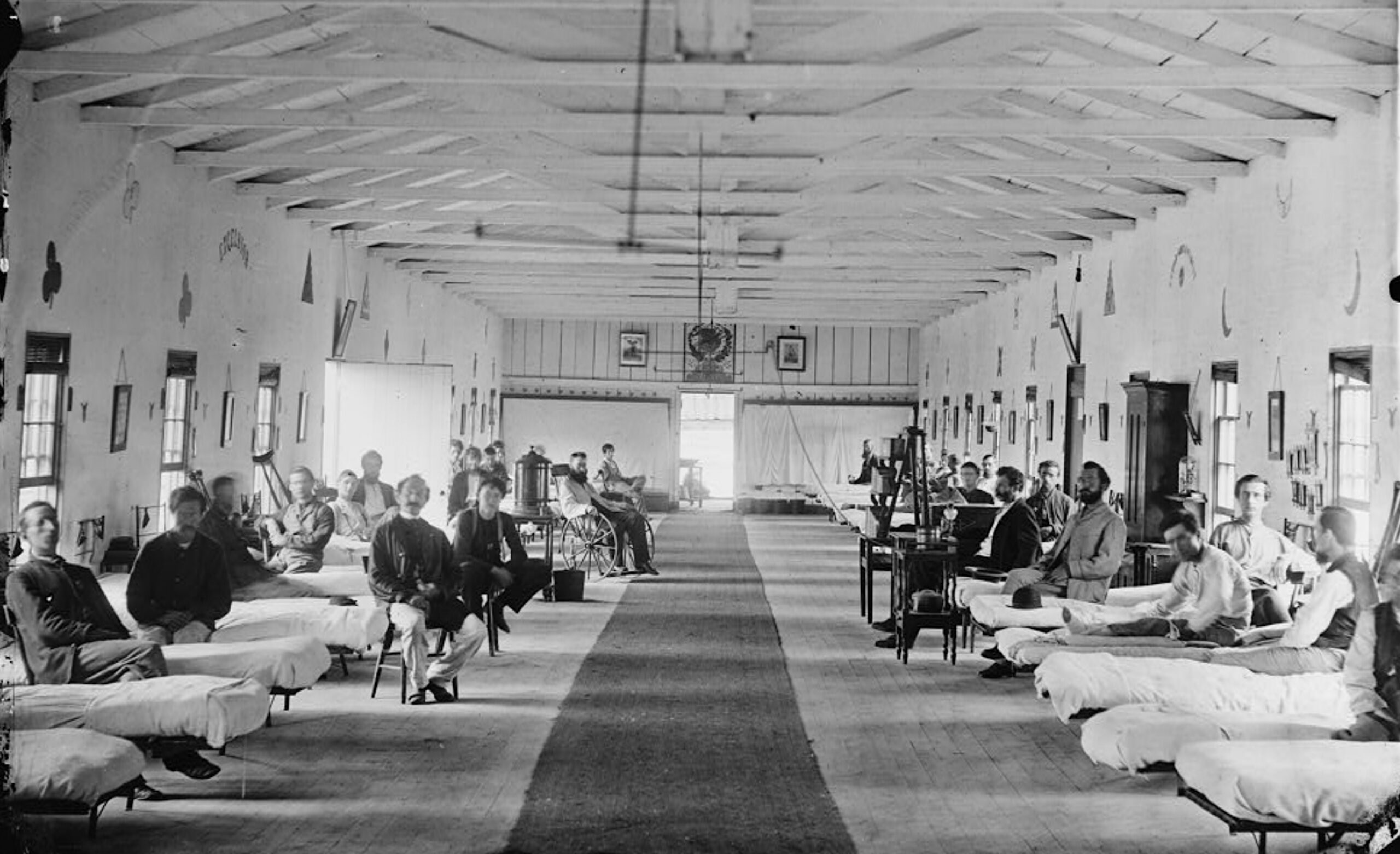 Library of Congress
Patients in Ward K of Armory Square Hospital in Washington, D.C.
So the practice, especially among upper class, is to be treated and cared for at home. And then in rural communities, it is to be treated and cared for at home, in many instances by your family. The female members of your family would do a lot of the caring, and then you would bring physicians in as you needed them. So one of the tensions that is really emerging is you have all of these soldiers, they enlist, they get into camp, they get sick, they get measles, they get dysentery, they get malaria, all sorts of things, or they get injured on the battlefield, and their knee-jerk reaction, their desire, is to go home and to be discharged home. And the army’s not going to want to do that. The army wants to keep them in general hospitals or in the field, depending on what the ailment is. And you have a twofold reason for this. From a practical level, from the commander’s perspective, once you start discharging soldiers, it is hard to get them back. Once they get better, once they get healed, you don’t have time to go and track these people down or re-enlist them. [Ulysses S.] Grant, famously, as he’s working in Vicksburg, tries to keep everyone in the region. He doesn’t even want to go so far as to send soldiers up to general hospitals in Memphis or Keokuk unless he absolutely has to, because he’s noticed that once they leave his command structure, they could be well and it could be another two, three, four, five weeks before he can get them back into the field.
But you also have a medical corps that is recognizing that this is an unprecedented amount of access to bodies that have had trauma, that have been exposed to all sorts of diseases and ailments, and that this is an unprecedented opportunity to gain that practical experience and gain that knowledge. So there’s another reason that the desire is to not discharge out, but to keep patients there in general hospitals. And that rubs up against soldiers’ expectations of what it means to be sick, their ability to choose who their healthcare provider is, their ability to choose where they get to be sick, their ability to choose to have that bodily autonomy that they’re going to be struggling with at the time.
John Heckman: So not only did it change how people thought of their own bodily autonomy and injury, it must have changed how the professional identity of surgeons and medical staff was seen, especially in terms of authority, specialization, like you said, some people are put in positions because they’re better at something. Instead of being in the service for 20 years of doing that one thing, we’re putting someone in younger because they’re better at that perhaps. And even ideas of public perception. How did the war reshape a lot of those ideas for the postwar years?
Lindsay Rae Smith Privette: So, typically, when we think of professionalization of medicine, we’ve typically had that be a story set in the 1880s and the 1890s. And I think more and more research is beginning to pull that transition a little bit further. Not necessarily saying that professionalization happens in the ’60s, but we’re beginning to have more and more people in the medical community who are thinking in these terms, and they’re priming themselves to move into areas of specialization, of committing themselves to medical societies and researching and publishing in journals and all sorts of things like that.
 Library of Congress
Members of the Union army’s medical corps treat wounded at a field hospital during the Battle of Bristoe Station.
I think for a period of time, because this tension exists and soldiers have led the way with helping us craft the narrative of Civil War medicine, you get a little bit of fear coming into the 1870s and the 1880s with the veterans coming out of the Medical Corps that their work will be forgotten, that their work will be misrepresented, that their challenges—the things they faced, the things they contributed, the things that they overcome—will not be honored. Barbara Franco wrote a book last year called Gettysburg Surgeons, which is a really interesting look into the different surgeons that served at Gettysburg. And one of the ways that she ends it is with this recognition, the fact that they actually put the money together to craft their own little memorial. And it’s small, it’s nothing like any of the major memorials that you would know when you go and visit Gettysburg. So, there’s this fear about being lost to history.
And then when we begin to move into the 1880s and 1890s, and we’ve developed a more advanced knowledge of bacteriology, virology, we have an understanding of these microscopic organisms that are making people sick, we’re beginning to think in terms of how do you create vaccines, there is a stark difference between how medicine is being practiced in the 1890s and the 1860s. And I think physicians in the next generation lean into that a little bit. “Look how far we’ve come. We’ve advanced all of these causes, and we’ve learned all of this about the human body. If the Civil War were fought today, we would never have the same problems that we did back then.” And I think that also compounds a little bit of that perception of Civil War surgeons as not contributing as much as they did.
John Heckman: For you as a historian, researcher, and scholar, what does it mean for you when you hear someone say, “What is the legacy of Civil War medicine?”
Lindsay Rae Smith Privette: I think there’s a lot of different ways that you can take that. I’m prone, because I tend, even though I do medicine, I tend to think of the social side, so I tend to think of people and how the legacy can be rooted in these individual experiences between patients and surgeons, and how that ultimately shapes our perception both of the war, but I would also argue, I think some of these tensions, this concern of bodily autonomy, the fear about consent and having someone make decisions about your body, I think those fears follow us into today.
And so when I’m reading soldiers who are now patients, when I’m reading about their healthcare providers, when I’m reading about their fears and their frustrations, I see a lot of some of the conversations that we’re having today reflected in their concerns. And I think that’s something that we can probably even do a little bit more with and lean into a little bit more because I think that kind of gives us this moment of time where people are in crisis over their health, over their physical abilities, and there’s a lot of people who are experiencing similar things and they’re reacting in very similar ways to how we would react.
You have a medical corps that is recognizing that this is an unprecedented amount of access to bodies that have had trauma, that have been exposed to all sorts of diseases and ailments, and that this is an unprecedented opportunity to gain that practical experience and gain that knowledge.
About the Guest
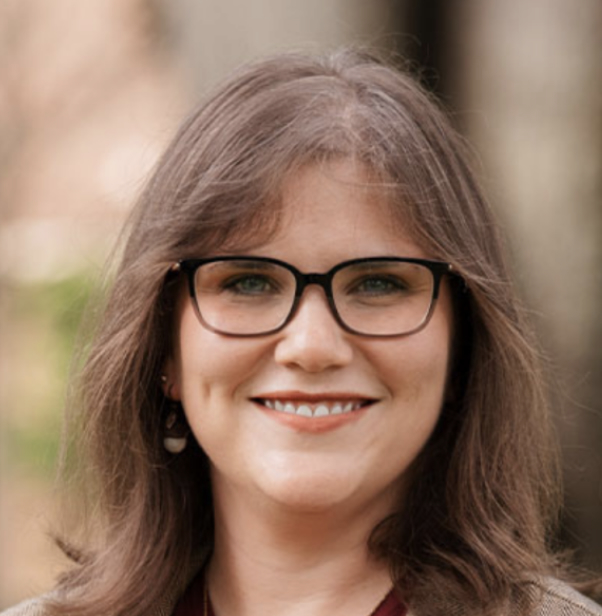 Lindsay Rae Smith Privette is an associate professor of history at Anderson University and author of The Surgeon’s Battle: How Medicine Won the Vicksburg Campaign and Changed the Civil War (2025).
Additional Resources
Sponsored By