Historian Allen C. Guelzo discusses the various causes behind the outbreak of the American Civil War.
Transcript
Terry Johnston: Thanks for joining me today, Allen. Our question for you was one submitted anonymously. It asks, “Why did the Civil War happen?” Now that’s of course a big one, and I know from chatting with you before that you have a multi-pronged approach to answering it. So, why don’t you explain that framework and then we can jump into the first part of your answer.
Allen Guelzo: This is always the big question. It’s the question I start my classes on the American Civil War with. And it’s the question that I think bedevils many people, even to this day: What is the thing which caused the war? Now, that’s the problem right at the very start because it assumes that there is a single thing which caused the Civil War. And if we stop for a moment and reflect on how things are caused in our lives, then we realize, no, it never usually is going to be just one thing which causes a certain result in our life. It’s really a multiplicity of things that will come together. And perhaps one thing or another will have a larger percentage, but those other factors are also there. So, realistically speaking, if that’s true for us on an ordinary daily basis, we shouldn’t be surprised that it’s also going to be true, this multiplicity of causes, for larger historical events in the human experience.
 Smithsonian Libraries and Archives
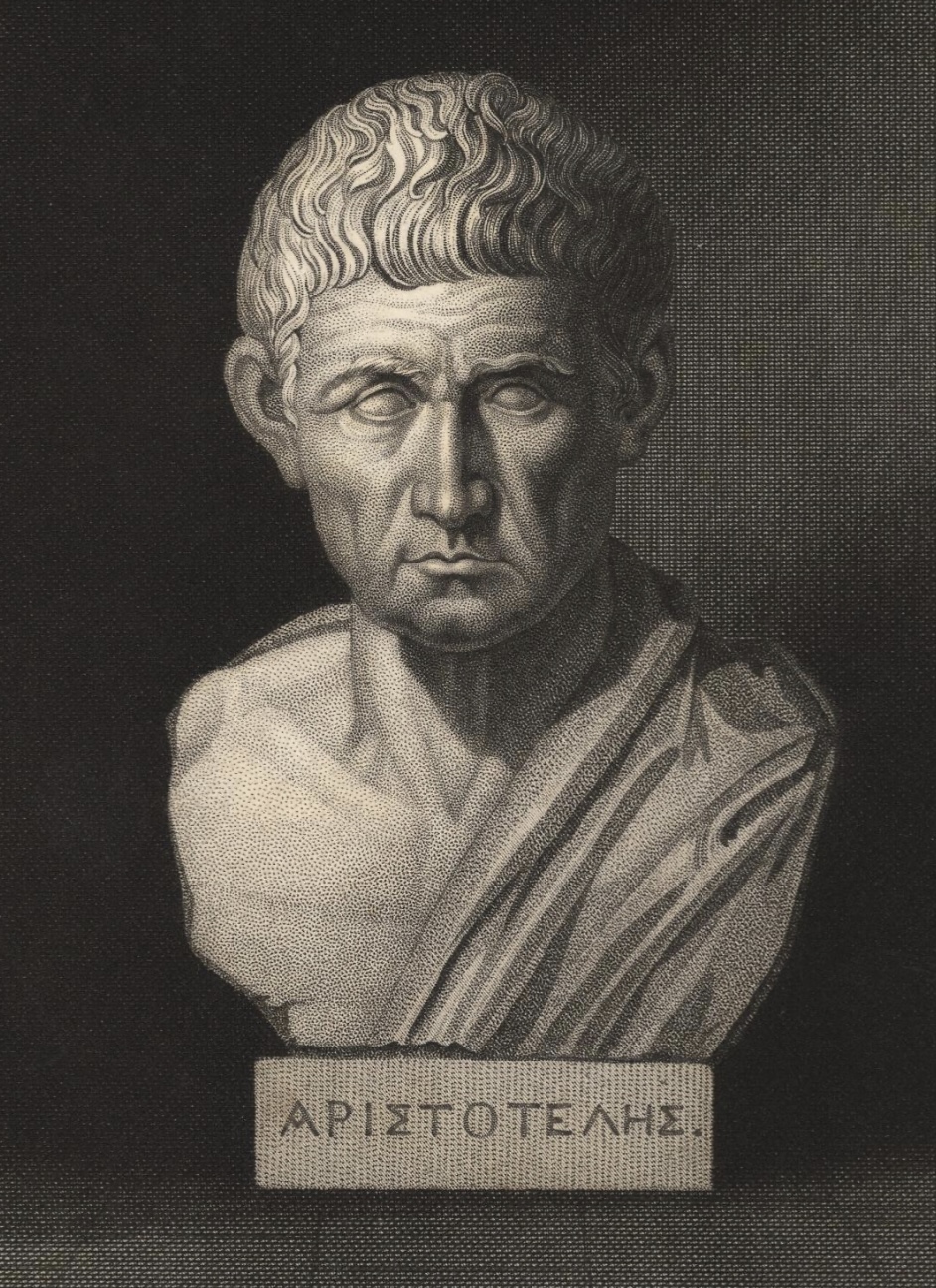
A Classical bust of Aristotle with his name in Greek
So I’m asking, alright, what are the multiple ways we can think about cause? My co-author, so to speak, in thinking in these terms is the Greek philosopher Aristotle. Because Aristotle asked us to think seriously about cause. Likewise, Aristotle understood, it tends not to be “A results in B,” it tends to be “A, B, C, D, E results in F.” Well, in that respect, he said, “What kind of causes can we say? You might get a single result, but what kind of things trunk into the making of it?” And he identified four kinds of cause, which very simply are: efficient cause, formal cause, material cause, final cause.
Efficient cause is the cause which is nearest to the result itself. It is, so to speak, the immediate trigger. It is the immediate thing which says, “This is why things are happening.” It’s the closest one to the result. Formal cause says, “What’s the structure that made it possible for that efficient cause to wreak the kind of havoc or damage that it does?” And then you take a step back from that. And then you ask about the material cause. What about the, let’s say people, places, things that are involved in this: “Is there something unique about the people, places, and things, which also contributes to a cause?” And then you ask about a final cause. The final cause really is the ultimate reason. The ultimate reason, the 30,000-foot-altitude reason that certain events happen, that’s the final cause, Aristotle says.
Okay, let’s take that fourfold causality, that Aristotle idea. And, by the way, I will be the first to admit that I do not have any evidence or any track that anybody in the Confederate or the federal government stood up and said, “Let’s talk about Aristotle before the shooting started in 1861.”
Terry Johnston: That’s a shame.
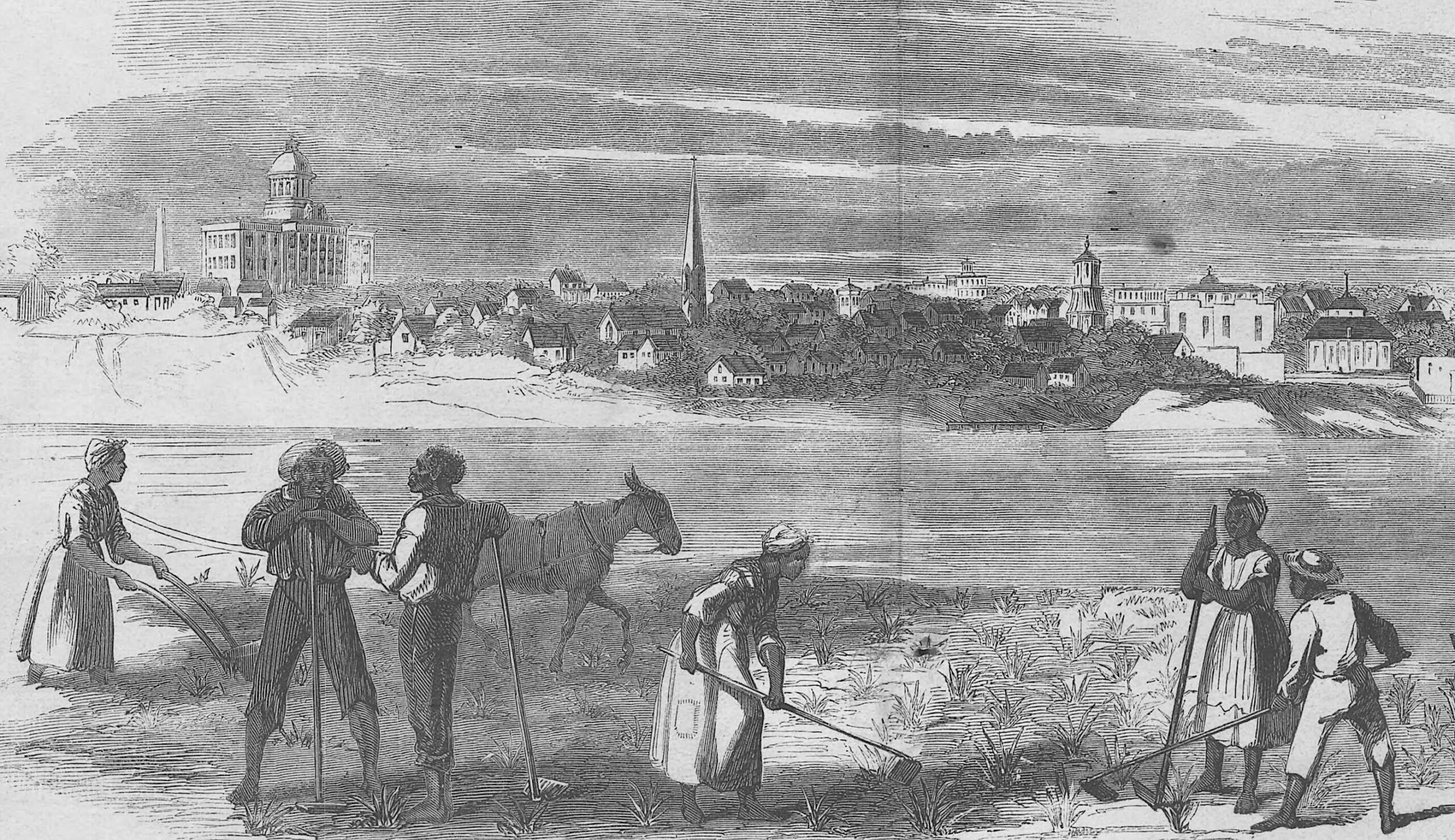
Allen Guelzo: But I’m going to impose this because I’m half a philosopher and half a historian. So here we go. Efficient cause. What is the one thing without which nothing else would happen in this situation? That is slavery. Now, I’m aware of the fact that there’s a lot of people who will get very huffy at this because slavery is an embarrassing thing to talk about today, and there are many people who want to say, “Oh no, no, slavery was not a cause of the Civil War.” And Terry, that is malarkey—sliced, diced, put into a sandwich, heated up in a microwave. I’m sorry. That’s an attempt to evade historical responsibility. The efficient cause of the Civil War is slavery. There’s no other way you can construe this. If you take slavery out of the algorithm, then nothing, nothing that we describe as the Civil War would’ve happened.
 Harper's Weekly
This illustration from Harper’s Weekly depicts slaves at work outside Montgomery, Alabama, during the Civil War.
What else? What else were people North, South, West—what were they fighting about? Were they fighting about who was going to have transit rights on the Mississippi River? Were they fighting about who was going to try to lay tolls on traffic on the Ohio River? Are these the things people were thinking about? Yeah, there were disagreements between people, regions, and parties, but none of them would rise to the lethal level of civil war except slavery. Take slavery out of that picture and you would not have the Civil War. Put slavery into that picture, and that is the thing that, unarguably, we have to come up honestly and say slavery is the efficient cause of the American Civil War.
Now, that much said, here’s where I want to start opening up the complexities. And I think everyone will see where I’m going as I do this step by step. Even if there is slavery in the American Republic before 1861, what is peculiar about that slavery is how it’s concentrated in one section. And the way I talk about it is like this. If slavery had been legalized in, let’s say, Minnesota, Maine, Florida, and Louisiana, there would never have been a Civil War. Because those individual states would never have looked at themselves and said, “Oh, we can wing this on our own. We can defy the conclusions of Congress or the conclusions of the federal government on the subject of slavery. We can defy those just on our own.” Even if you had those four states trying to act on the subject of slavery, look, they’re totally disconnected from each other, physically speaking. So, the formal cause that you have to take account of here in the Civil War is sectionalism. Because slavery was legalized and rooted, not just in a handful of disjointed states, but across a band of southern states, all of which shared contiguous borders. And there were enough of them that when you piled them all together, they actually looked like the size of a worthwhile nation state. They were larger than many of the states in Europe at that time.
And so, the logic of sectionalism plays here into this problem because the fact that the slave states and the southern states were co-terminus with each other gave the notion that, “Hey, we can, in fact, set up our own proslavery government, and it will be immune from any kind of control by the United States government, and we can get along with this because, look, we are a section, we’re all sharing the same boundaries. We look like we can function as a nation state.” As I say, if it had been scattered across the country, then no one would’ve come to that conclusion and there would not have been a civil war on the subject of slavery. We would’ve gotten rid of slavery, and it might have been long, it might have even been politically difficult, but we would’ve gotten rid of it over a period of time. It’s the fact that slavery looks like it could function as an independent nation. And I say “looks,” I’m going to double underline “looks” because, in the event, that actually turns out to be an illusion. But on a map, the illusion looks like it has substance.
So, sectionalism in this case. Which is reinforced to a certain degree by how much the culture of the southern states differed from, let us say, the culture of New England, the culture of the upper Midwest. Each of these regions in the United States, in an age when, alright, granted, the United States population before the Civil War is a much more mobile population than the populations of Europe. Even so, in the 1830s, 40s, and 50s, there are restraints on the kind and speed of mobility you can have. So, you have a certain fostering of sectional identities, cultural sectional identities. Those alone are not going to make for a civil war. They’ll make for people who have different accents. It’s going to make for people who have different ways of talking in their literature. It’s not going to make for civil war, though. It’s when you see that a southern section that comprises, certainly at the start of the secession crisis, seven states, then expands to 11 states, could have expanded even more if they’d drawn in the border states—when you look at that on a map, that looks like an argument in favor of secession. It looks like an argument that says, “We can go to the mat for the benefit of slavery because we look like a functional nation.”
Now I mentioned succession and that brings things to the third cause, which is…
Terry Johnston: Well, Allen, I’m sorry to interrupt you. This is fascinating. But before we move on, I just want to underline the point that slavery’s concentrated in the South. I think it was some 25 or 30% of all households, not individuals, but households in the South owned slaves at the outbreak of the war. So, it’s really ingrained down there.
Allen Guelzo: It’s not only ingrained. Even that percentage can be somewhat deceptive. That percentage is drawn from a photograph, so to speak, taken at the time of the 1860 census. What that doesn’t tell you is how households would own slaves at one point, maybe, in fact, small scale, maybe the ownership of two, three slaves. Alright. They might own slaves, let’s say, in 1851, and so it doesn’t show up in the 1850 census, and they might in fact have sold those slaves, or, I would hope, emancipated them, let’s say in 1858. That means there’s a household that wouldn’t show up as a slaveholding household in either the 1850 or the 1860 census. See, that doesn’t mean that they didn’t, in fact, hold slaves. There’s a mobility in slave ownership, and when you start looking at those possibilities, then you realize that slave ownership is much more broadly spread in the South, even than the percentages will give you an idea of.
Terry Johnston: Well, so, it’s got an even bigger impact than I was even making out, then. I guess the larger point I’m trying to make is that you didn’t need to be a slaveowner in America to have some kind of interest in what was going on with the institution. I mean, the free labor movement in the North, which underpins the Republican Party that’s founded in years before the war, the constant congressional wrangling over the decades about slavery’s expansion into the territories and the like. I mean, it was the issue of the day, is the point we’re trying to make here.
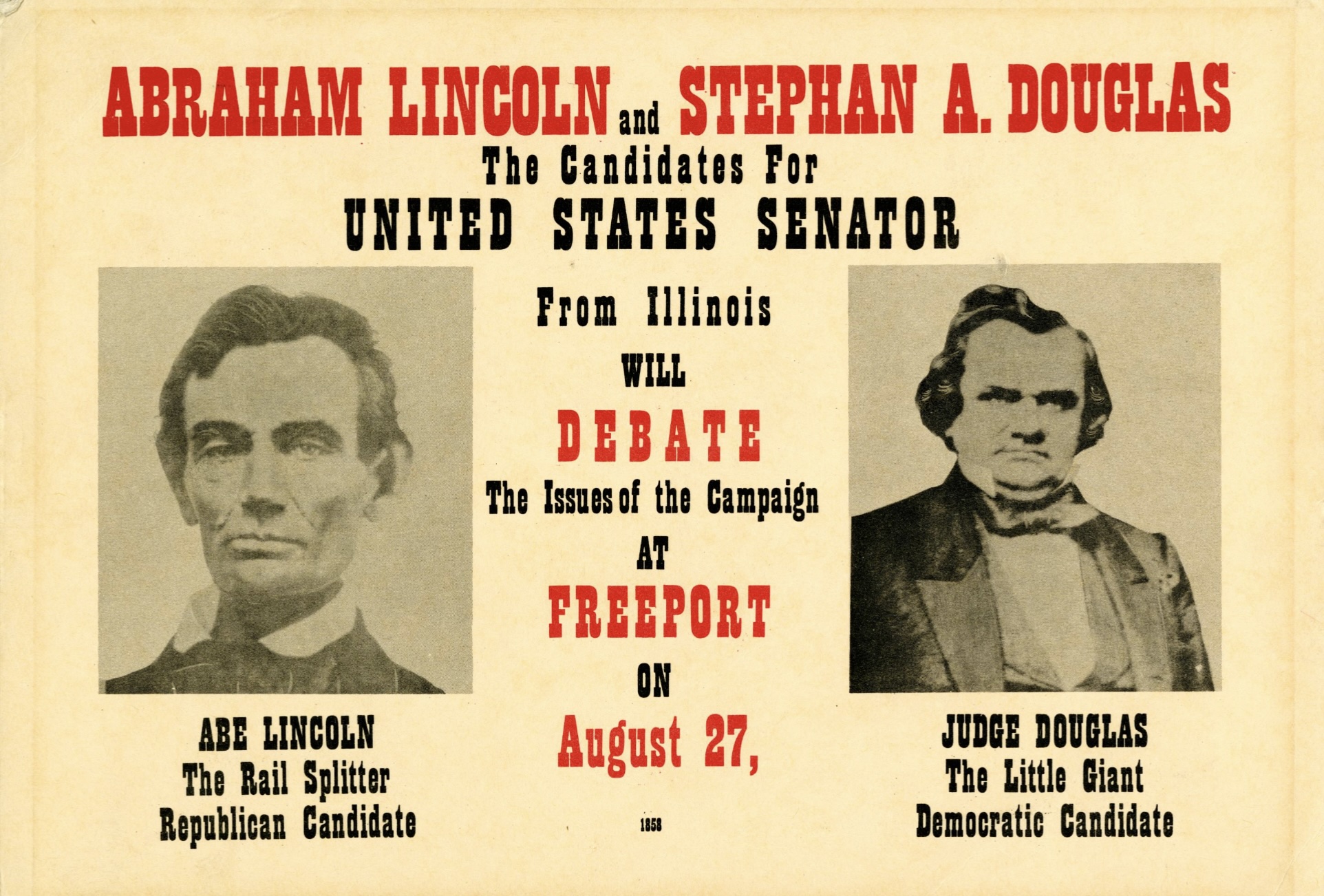
Allen Guelzo: If you look, I mean, Terry, the thing which clinches exactly what you’re saying is what takes place in the Lincoln-Douglas debates in 1858 when Lincoln and Douglas are facing off for the senior U.S. senate seat in Illinois. They have these seven famous debates, and if you look at the text of the debates—and we have the text of the debates because both sides had shorthand transcribers who took the words down as they were being uttered—you look at those debates, the only issue they talk about is slavery, and especially slavery in the territories. They don’t talk about tariffs. They don’t talk about currency. They don’t talk about economic issues. They don’t talk about foreign policy. None of those things. Seven debates that are supposed to decide the possible reelection of the most powerful and famous politician in the Senate. That’s Stephen Douglas. They only have one subject from start to finish from late August to mid-October 1858. All they’re talking about is slavery.
 American History Museum
A broadside advertising one of the Lincoln-Douglas debates in 1858
Terry Johnston: Okay, so if slavery is the immediate trigger, the efficient cause, and sectionalism is the formal cause, what is our material cause?
Allen Guelzo: This becomes the substance, so to speak, the substantial issue of the Civil War. And that is secession. Because you could have slavery and you could have sectionalism. You didn’t necessarily have to have civil war. And, in fact, we had slavery. We had slavery from the foundation of the republic. We had slavery before the foundation of the republic. We had slavery before 1776. We had slavery, well, all the way back to 1619. And, in fact, even before that we had, I’m only speaking in that respect of the English-speaking colonies, you have slavery in the European establishments in North America. You have slavery even with the Spanish-owned domains in Florida, for instance, and that’ll take us back even into the 16th century.
When you talk about slavery and sectionalism, yes, they’re there. They are, so to speak, the gunpowder, the keg of gunpowder that can make a war. But they don’t necessarily make a civil war just on their own. There has to be something that is going to, so to speak, light the match. What lights the match is this idea of secession, that a section (the formal cause) in defense of slavery (the efficient cause) will resort to a legal strategy called secession. And this becomes the material cause because over and over and over again, this is what leads the federal government, in this case the Lincoln administration, to announce that it is going to have to deal with this attempted secession because there is no legal provision for secession in the United States Constitution. If you’re going to be part of the United States of America, if you’re going to be a state of the Union, then you are going to be subject to the Constitution as the law of the land. The Constitution makes no provision for something called secession. The Constitution, in fact, begins by saying that its purpose, in 1787, is to create a more perfect Union, not to make an opportunity for a less perfect one.
And within the Constitution, there is no reversion clause. If you and I, for instance, if you and I were in business and we created a partnership, and this partnership was going along very nicely, there might come a moment when you and I decide, well, you know, we’re really interested in some other things, we’re going to terminate the partnership. What governs that? There’s going to be a reversion clause in the original partnership that says, “This is how you’re going to divide the assets once you decide to terminate this partnership.” There is no reversion clause in the Constitution. And the reason for that is that there was nothing in the Constitution that had in view the notion that a state or states were going to secede from the Union. That means that secession is not a constitutional possibility. What people are calling secession is, in fact, really revolution. Revolution, and the core of revolution, insurrection.
 Library of Congress
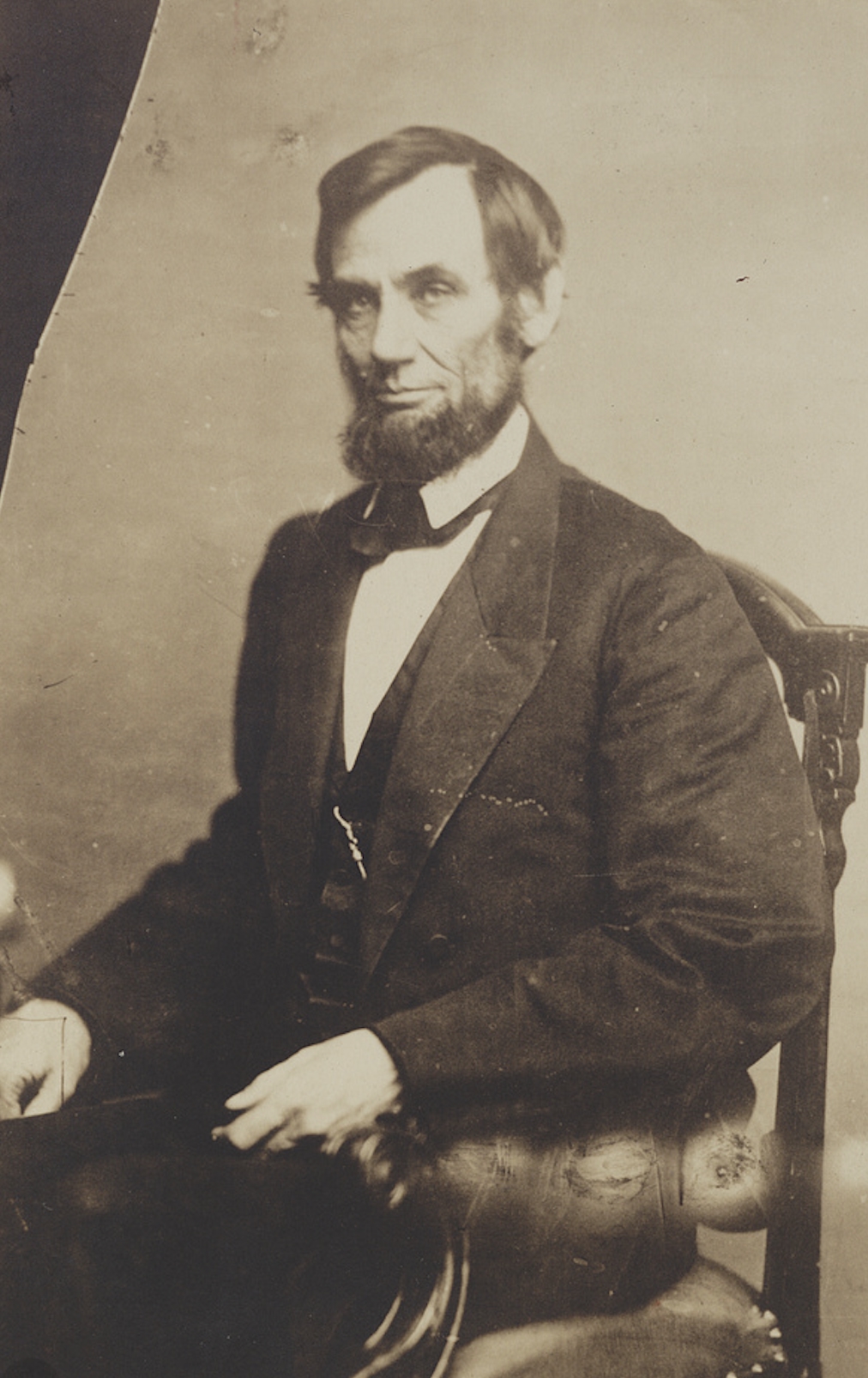
Abraham Lincoln in 1861
This is how Lincoln defines things when he describes the reasons for the outbreak of the war in his special message to Congress on July 4, 1861. He reviews all of the legality of this. Look, the man is a lawyer, so he does know how to deal with these issues. He lays it out. There is no provision for secession. There’s no legal provision. There’s no stated provision for secession. In fact, the very idea that one part of a country can simply pick up and walk away without asking permission, walk away from the rest of it, he said, “That’s destructive of the very idea of government itself, much less destructive of the Constitution.” “Besides,” he says, “this is supposed to be a democracy.” In a democracy, how are decisions made? Well, they’re not made by unanimous consent because you’re never going to get absolute unanimity over any issue. What happens in a democracy is the majority has the privilege of setting policy. Now, the majority is not thereby licensed to execute all the minority, all the dissenters, but it is licensed to move ahead and set policy. The minority may disagree and, within a democracy, that degree of disagreement is legitimate. But that does not license the minority to subvert the decision. The moment a minority can subvert a majority’s decision, then what you have is not democracy anymore. It’s anarchy. And I suppose the best comparison I could make would simply be that if you get a bunch of the neighborhood kids together to play baseball, like we used to do when I was a kid, you get out in the middle of the street and you’re playing Wiffle ball, you know what the drill is like. If one or two of them say, “Hey, we are losing this game. We don’t like the rules. We’re going to take the bat and ball, we’re going to go home and go someplace else.” What do you have as a result? Do you still have a baseball game? No. What you’ve got is a mess.
Lincoln’s argument, and the argument of people in 1861, is that this thing called secession is simply an invented term. What’s really going on here is an insurrection. And in the environment of an insurrection, it is perfectly legitimate—in fact, it’s necessary—for a government to put down that insurrection. Otherwise, it’s not a government, it’s simply a paper tiger. So, secession becomes the material cause that makes sectionalism and slavery turn from being simply inert realities into being politically explosive.
Now that takes us to the final cause.
Terry Johnston: Alan, I’m sorry to do this to you again, but I just wonder: Is this insurrection, as we’re calling it, is it the election of Abraham Lincoln to the presidency, is that what sparks that insurrection?
Allen Guelzo: I mean, a month does not go by after Lincoln’s election—in fact, it’s only a matter of days and weeks—before the governor of South Carolina is calling for the assembling of a secession convention. They’re not even waiting for the man to be inaugurated and to find out what his policies are likely to be. The very fact he’s elected president becomes the trigger, so to speak. I’m using the word trigger again. It becomes the material cause for people to start talking about secession. And that’s a violation in the most basic sense of majority rule in a democracy. Because if you look at the election of a president, and the election goes the way that you approve, well, of course, you’re very happy, you’re very pleased with yourself. If the election turns out to have elected somebody that you didn’t particularly care for, what are you going to do? In a democracy, you say, “All right, four more years, and we’ll have another go at it.” And Lincoln says the very same thing in 1861 when he says, “Alright, I’m going to be in this office for four years, but at the end of four years, people get to vote again. And if what I have done is mistaken, if what I have done has been badly executed, alright, then you get to elect somebody else.”
This is why elections are vital to the functioning of a democracy, because elections are what in a democracy we use to always remind office holders that they’re accountable to the people. Because the people are sovereign in a democracy. But if a group of those people simply say to the others, to the majority, “We don’t really care what you think and we’re not going to let you have the privilege of setting policy. We are going to withdraw from this and we are going to set up our own.” Again, that’s not democracy, that’s anarchy. And what you get long-term with anarchy is dictatorship, because no one can live with anarchy. You start looking around for what is sometimes called the man on the white horse. Or you look, you look around for some authoritarian personality who’s going to promise to bring law and order back to a situation. So, what do you wind up with? You wind up with dictatorship, you wind up with tyranny, you wind up with a Napoleon Bonaparte. That’s not democracy. That’s subversion of democracy.
Terry Johnston: So then, Lincoln being elected, to go back to your Wiffle ball analogy, that’s the moment that caused the South to take their bat and ball and go home, in effect.
Allen Guelzo: And the response of Lincoln, we might say, is that, “Well, you can try to call that a baseball game, but it’s not. Because you’re not playing. There’s no bat, there’s no ball. You took them.” And his response is, “I’m obligated by my oath, which is to preserve, to uphold, to defend the Constitution, and I’m going to do that.” And he takes his first step. He calls out the militia from the states. He then takes the steps with the blockade, with additional recruitment for the Regular Army. Eventually, Congress is going to not only approve those, but it’s going to authorize the creation of the volunteer system. And at that point we are off and running to towards civil war.
Terry Johnston: Alright. Well, then, your fourth and final cause is what?
Allen Guelzo: Final cause is really asking, “What’s the large-scale picture that made all of this possible?” And, ironically, what I want to say is that the large-scale picture that made all of this seem believable, seem credible, seem plausible, was the federal union itself. Why did people think that secession could work? Why did people think that secession was somehow a privilege they could exercise? Because the United States is not a unitary nation. We are a union of states. And this is what is embodied in our Constitution. We’re a federal union. It’s what reflected the experience of the Articles of Confederation. It really reflects the experience even of the Continental Congresses in the American Revolution.
We are a union of states. We’re not a single unitary nation, per se. The states of the Union are not just administrative sub-departments. Sometimes it might seem that way, but actually, if you examine anything closely enough, you will see that, even after 200 years, our federal constitution is exactly that. It is a federation of states. And although there are many powers which are reserved to the federal government, there are still significant powers that are reserved to the states to exercise. The problem with a federation is, if a federation is made up of these pieces, like a puzzle made up of pieces, I mean, a puzzle in some respects is a kind of federal union—you won’t have a meaningful puzzle unless all the pieces are put together and put together in the right relationship. The difficulty is that a piece might get lost. It might fall off the table. Somebody might have forgotten to bring it to the table when you were trying to put it together. You would not have a puzzle then.
With the federal unions, this gives the idea that these separate parts, these states, can detach themselves. And that is what leads people to say, “All right, what’s the mechanism for detaching us from the federal union? Oh, that’s secession.” Or, “Who’s going to secede? Our section.” “Why are we going to secede? We’re going to secede to protect slavery.” So, you see how these multiple causes, starting with, at the very largest context, the fundamental idea that we are a federal union—which cannot be changed, because that’s what’s encoded in the Constitution—the very fact that we are a federal union can give people who really want to think in some lethal and unpleasant ways, the idea that they can take their state and detach it and use secession as the means.
So, you see how these four work together. Take any one of them off the table, and the notion of civil war becomes at least unlikely and at most impossible. But that also underscores why you have to take this detailed view. Because the Civil War is an event of such complexity. It represents such a crisis to the whole idea of a federal union, a crisis of the Constitution, a crisis of democracy itself. It’s not just a single-cause event. It draws in so much of what identified Americans as Americans in the middle of the 19th century. So if we think of the Civil War as some kind of large-scale skirmish that could somehow have, with a few adroit maneuvers, been avoided, for one thing, we’re greatly underestimating the costs, the blood, the treasure, the suffering that arise out of the Civil War. The reason that this confrontation that we call the Civil War runs so deeply and costs so much is that it is the product of such a complicated accumulation of causes. And when we estimate all of those costs, whether we do it in terms of the number of dead, of maimed, or if you do it in terms of economic numbers—no matter how we do it, the costs of this war are so enormous that you just can’t account for them simply because, well, one thing made it happen. No. The bill, so to speak, for the American Civil War is so long and so deep and so expensive that you can only begin to account for it by the multiplicity of these causes.
Terry Johnston: In your mind, was there any sort of fait accompli moment where civil war has to happen? We touched upon the election of Lincoln. Where does Fort Sumter fall into this? I want to say it was James McPherson who, when asked the same question that we’re asking you today, points to Fort Sumter as the cause and then backs up and colors between the lines with all the various reasons why this happened. But is Sumter as significant as I think most people think it is in this equation? Or, again, once Lincoln’s elected, is there going to be a spark that’s going to set off the powder keg no matter what?
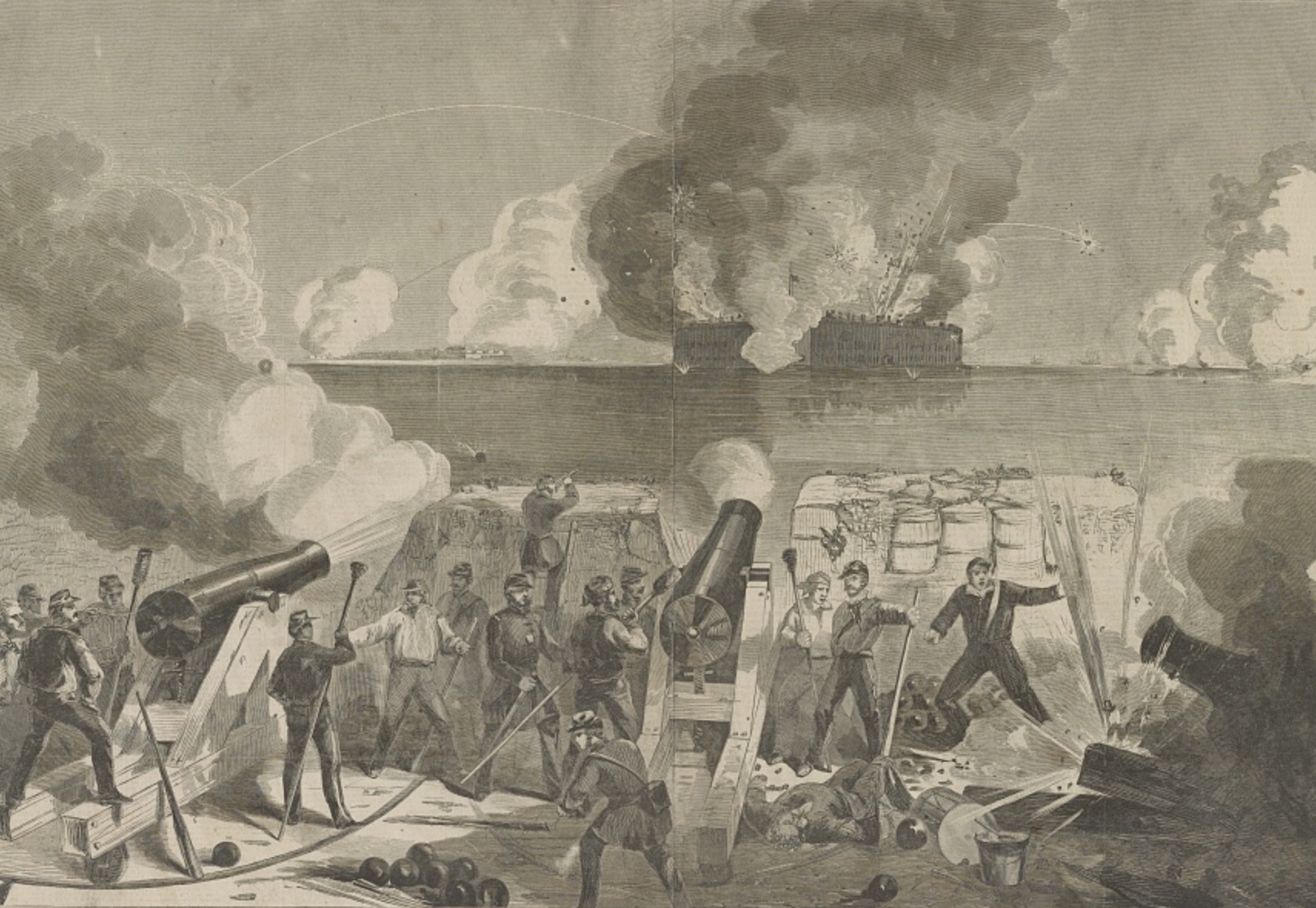
Allen Guelzo: The powder is going to blow up. Whether it blows up at Sumter, whether it blows up at Fort Pickens in Pensacola Harbor, whether it blows up along the Ohio River or Potomac River border. The powder is there and it is waiting to be blown up. Now, the distinction I would probably draw between the election of Lincoln and the firing on Fort Sumter is this: Sumter is a very specific event. It is a very symbolic event. Lincoln’s election is the cause for what is going to happen at Sumter. Sumter would not have become a crisis. In all likelihood, Sumter would not even have been occupied. I mean, remember, up until late December 1861, there’s no garrison of any account. There’s no garrison in Fort Sumter. The Charleston garrison is in Fort Moultrie. And it’s in Fort Moultrie because Sumter’s not finished. Congress has been dragging its heels for three decades without finishing the construction of Fort Sumter.
 Library of Congress
The firing on Fort Sumter in April 1861
So, Sumter itself really is symbolic of Charleston’s claims that it has severed its connection with the Union. Who could possibly credit what South Carolinians are claiming to have done with their secession convention so long as there is a federal military installation sitting right in the craw of Charleston Harbor, right beside the ship channel? So long as the United States flag is flying over Fort Sumter, then it makes the whole notion that South Carolina has seceded from the Union, it makes it look farcical. So, Sumter has more symbolic power than it really has military power, but that symbolic power is going to translate into political power. The really key event is the election of Lincoln. Even though Lincoln only polls 39% of the popular vote, he is elected by a substantial majority in the electoral college. And he wins because of the electoral college, because the states that go for Lincoln are the ones heaviest in electoral votes. And that says to southerners, the handwriting is on the wall. No longer can we expect into the future to be able to elect proslavery, dough-face politicians like James Buchanan or Franklin Pierce. That’s over. The election of Lincoln shows that the North has now acquired sufficient political heft to always elect antislavery candidates. Antislavery candidates are going to make sure that there are no slave states carved out of the western territories. Instead, those states that are formed out of the western territories are going to be free states. They’re going to send representatives to Congress. And, eventually, they’re going to have enough representatives and enough senators that there’s going to be a majority who will pass some kind of legislation or adopt some kind of amendment that is going to end slavery in the southern states. November 1860, southerners look at each other and they say, “It’s over. We can see what’s going to be happening over the next 10, 15, 20 years, and it’s time to get out while the getting is good.”
So it’s Lincoln’s election, which is the key event. Sumter becomes the issue because Sumter is a question about whether South Carolina really did leave the Union. If it really left the Union, then you would expect the federal government would’ve evacuated, not only Fort Sumter, but Castle Pinckney, Fort Moultrie—anything that was, strictly speaking, federal property. When the Lincoln administration indicates it’s not going to do that, then South Carolina, and eventually the Confederate government, have to come to the conclusion, “Look, we’re going to look stupid, we’re going to look futile if we permit the continued occupation of these properties. So, we’re going to have to do something—maybe with negotiations, but ultimately by force—to lever the federal government out those properties.” And that, of course, is only going to be by violence, it’s going to be accomplished by bombardment. It’s a relatively bloodless bombardment, but it’s a bombardment all the same, and that means insurrection and that means war. And everything that will occur over the next four years then flows downstream from that movement from Lincoln’s election to the bombardment of Fort Sumter.
Terry Johnston: Yeah. And that bombardment, we can’t ignore the large role that South Carolina itself and its people play in this. There’s a great book by an author named Stephen Channing called Crisis of Fear. I think it came out in the early 1970s. It very effectively shows how the people there in the state were gripped with just outright hysteria over the thought that they might lose control over their enslaved population, whether that was slave rebellion or through northern invasion, post-election of Lincoln. And that’s a fear that radical politicians exploited. But it almost seems like it was a mini perfect storm that this was happening. Sumter is in Charleston Harbor; South Carolinians are really a special kind of paranoid. It’s the cradle state of secession for a reason.
Allen Guelzo: Take it a step further. I have talked about the response of southerners to Lincoln’s election as a long-term line of thought. What’s going to happen to us in 10 years? What’s going to happen in 15 or 20 when you have consistently antislavery presidents in the White House? Closer to home, southerners had to be anxious about the powers that the president had for patronage appointments within their own borders. I mean, this is an era when there’s no civil service, officially. That means that just about every appointment that was within the gift of the executive branch—and that could be customs officials, that could be postmasters—all of that really, ultimately—directly or indirectly—went back to the executive office. It went back to the president. Now, if Lincoln is an antislavery president, wouldn’t you be, if you’re a South Carolinian and a slave owner, just a little bit anxious that Lincoln is going to install an antislavery federal sheriff, perhaps an antislavery federal attorney general, or at least a federal district judge? Are you not anxious that there’s going to be, oh, let’s see, perhaps, a federal appointment here that’s antislavery? Especially a federal postmaster, because beginning in the 1830s, Democratic administrations had turned a blind eye to southern postmasters censoring the mail. Anything that looked like northern abolitionist material, they censored the mail. It was illegal, but they censored it anyway because the administrations being in the hands of Democrats who owed their elections to southerners weren’t going to do anything about it.
Alright, now that’s over. Now you have a Republican president. Suppose the postmaster in your area is now somebody from Massachusetts, who’s very friendly to the antislavery cause. Is that person going to allow mass mailings of William Lloyd Garrison’s Liberator? And if that happens, is that not going to destabilize slavery? Isn’t that going to give an opportunity, an encouragement for slaves themselves to take their futures in their own hands? Even if you’re not thinking 10 years, 15, 20 years out as a result of Lincoln’s election, you’ve also got to look at what might be happening in your neighborhood. Because you will need those federal marshals, you will need those federal attorneys, you will even need those postmasters, to enforce slave codes, to enforce the apprehension and punishment of fugitive slaves. You’ll need all this. If they belong to a different allegiance, then the whole structure of slavery begins to flake and crumble. And southerners had to factor that into their anxieties, not just about the distant future, but about what might be happening within three or four months.
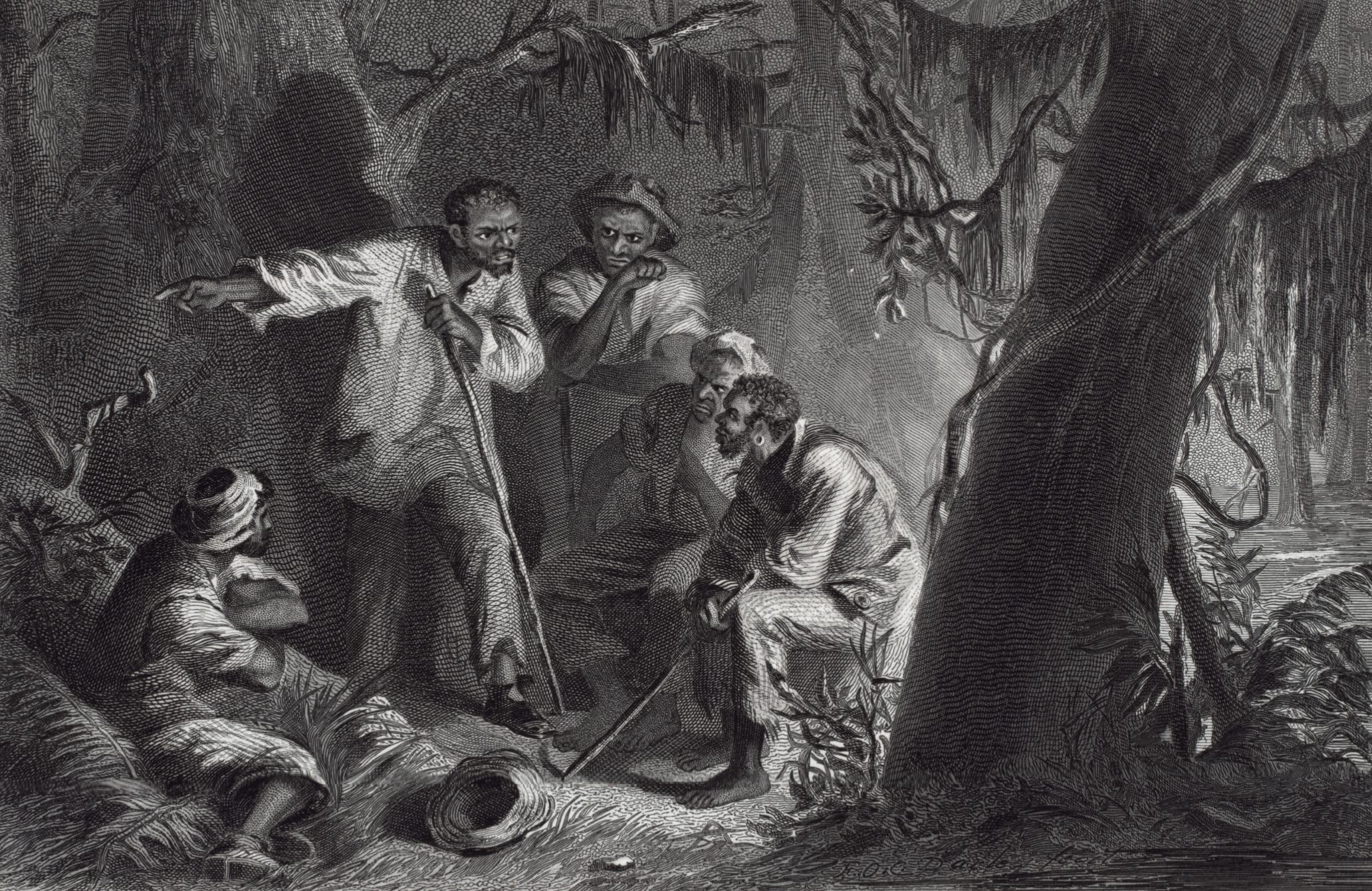
Terry Johnston: Yeah, it’s true. I mean, they’re worried about the next Nat Turner or the next John Brown.
 New York Public Library
Artist F.O.C. Darley’s work “Nat Turner & His Confederates in Conference”
Allen Guelzo: Exactly. Nat Turner set so much of southern nerves ajangle that 30 years after Nat Turner, they’re still worrying about Nat Turner. And, of course, John Brown only aggravates that because what John Brown wants to do is not just a slave insurrection, Brown wants it to be led by white northerners who are going to invade the South and who are going to trigger these kinds of responses. We’re talking paranoia on a massive scale, and it makes you wonder why if there was that much terror, why if there was that much fear, that much anxiety, why didn’t southerners simply say, “This isn’t worth it? It is costing us too much. We should just make some kind of provision, create some kind of plan, and get rid of slavery because this has become a millstone around our necks.” You would think that that might be a conclusion they’d come to. It’s not. And it’s not because, take the South as a whole, slave labor is producing the most valuable commodity in the transatlantic economy, and that’s cotton. Cotton is the white gold of the industrial revolution, and there’s lots and lots of money to be made from cotton. They can’t disentangle themselves from that. So even though they are possessed by all these fears, and especially after Lincoln’s election, they’re possessed even more strongly by them, they’re still not going to let go because the profitability that is flowing into their pockets from the export of slave-produced cotton is simply too great for them to give up.
Terry Johnston: Yeah. Well, Allen, I think we’ve done it. And I’m already thinking about a conversation for another day. We’ve just gone through a nice discussion about the causes in general of the Civil War, not necessarily the same thing as a discussion of why individuals decided to fight for one side or the other. Although, admittedly, there’s a good amount of overlap there. But, still, we’ll save that for another discussion, I suppose. But any final thoughts on all of this?
Allen Guelzo: Individuals come to conclusions that are often based on their own decisions. I remember reading the account of one border state volunteer. I won’t say for which side, but he laid out his cause, he says, “I’m inclined to go with my section. And if my section is of two minds and can’t make up its mind, then I’ll go with my state. And if my state can’t make up its mind and is divided, then I’ll go with my city. And if my city can’t make up his mind which side it’s going to back, then I’ll go with my side of the street.”
And, all right, there are probably people who came to fairly anodyne conclusions like that, or at least those are the ones they would talk about afterwards. But always lying behind them are the larger canvases of these enormous causes. Because even that one individual’s kind of decision would never have had to be made in the first place if these other causes had not been rumbling and operating for decades. And that, in all of its complexity, is what brings us to the brink of a civil war which costs hundreds of thousands of lives, costs billions of dollars—I mean, I’m talking billions of 1865 dollars—and, in many respects, leaves a scar on the American consciousness which has never entirely healed and quite possibly never will. So, yeah, there’s a lot of cost, but the reason there’s a lot of cost is because the causes run so deep.
About the Guest
 Allen C. Guelzo is a professor of humanities at the University of Florida’s Hamilton School for Classical and Civic Education. A three-time winner of the prestigious Lincoln Prize, his books include Lincoln’s Emancipation Proclamation: The End of Slavery in America (2004); Fateful Lightning: A New History of the Civil War and Reconstruction (2012); and Gettysburg: The Last Invasion (2014). He, together with James Hankins, has a history Substack, The Golden Thread.
Additional Resources
- Steven A. Channing, Crisis of Fear: Secession in South Carolina (1970)
- William Lloyd Garrison’s The Liberator
Sponsored By