Historian Joan Waugh discusses the postwar relationship between Ulysses S. Grant and Robert E. Lee, as well as whether former Union and Confederate military leaders got along after the conflict.
Transcript
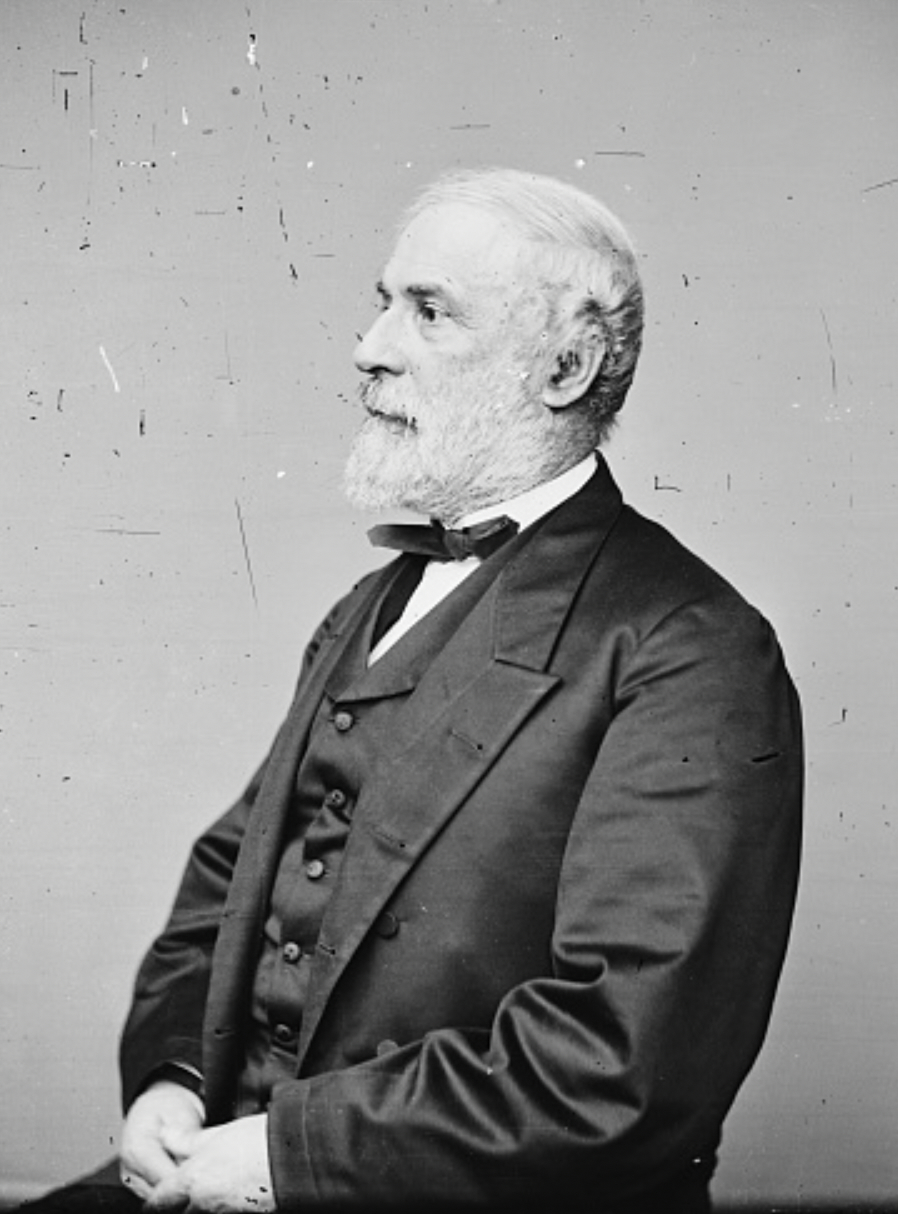 Library of Congress
A post-Civil War image of Robert E. Lee
Terry Johnston: Thanks for joining me today, Joan. Our question for you is a two-parter from Peter in Texas. He asks, “Did Ulysses Grant and Robert E. Lee have any interactions with each other after the war ended? And was it common for Union and Confederate generals to get along after the war, or was there a lot of animosity between higher-level military men?” Why don’t we tackle these in order. Let’s start with what, if any, kind of interaction did Grant and Lee have post-war?
Joan Waugh: Well, the most famous interaction that I know is a meeting in Washington, D.C., that occurred where President Grant was informed that Lee was visiting Washington to discuss a business proposition. Of course, not with Grant, but with other people. And Grant invited him into his office in the White House. Lee at that time was president of Washington College and he paid this call on Grant. The meeting has been described by many people who knew Grant as very brief, very formal. And it lasted about 15 minutes. And we don’t know what they talked about, but it was probably things to do with Reconstruction.
Terry Johnston: So, they weren’t fast friends after the war?
Joan Waugh: No, they were not. They were not fast friends at all. Personally, I think that the surrender at Appomattox and both Lee’s and Grant’s behavior toward each other and toward others at that event were impeccable. But it wasn’t by any means some kind of reconciliation between the two men in terms of how they viewed each other. There was a certain admiration on Lee’s side for Grant and vice versa, but Lee was not interested in really reconciling any more than he already had.
Terry Johnston: Well, can we talk more about what we know about what they actually did think of each other? Grant does famously write specifically about the Appomattox surrender ceremony in his memoirs. There’s that nice scene that he sets where he seems to be rather nervous. He’s trying to make small talk with Lee and mentioning their old mutual Mexican War service. And I think Lee responds that he really doesn’t remember Grant as Grant remembers Lee. But from Grant’s memoirs and maybe from Lee’s postwar interviews or writings, do we have any way to sketch in what they actually thought about each other?
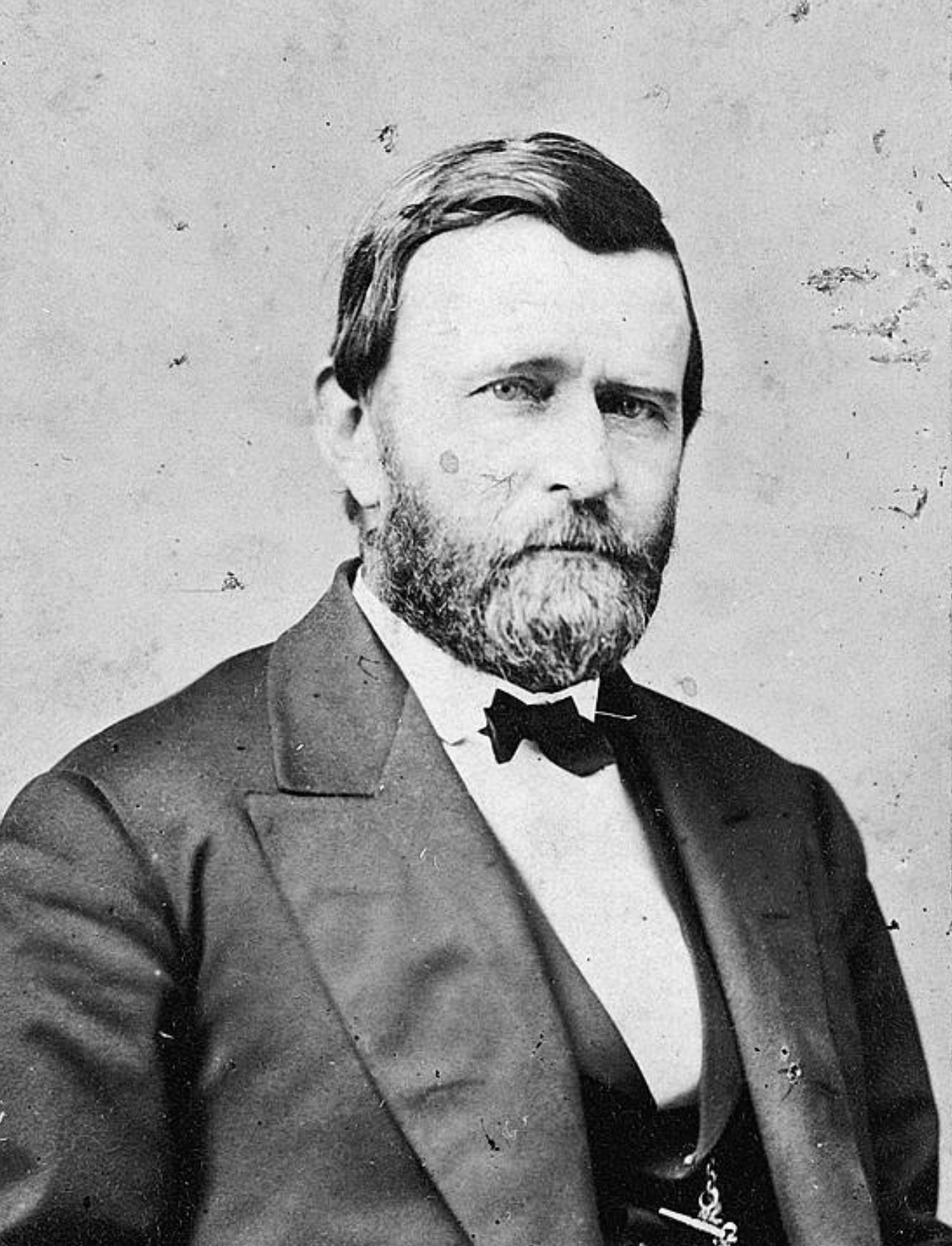 Library of Congress
A post-Civil War image of Ulysses S. Grant
Joan Waugh: Well, I think that Grant was certainly respectful of Lee’s achievements in the Civil War. There’s no way that he wouldn’t have appreciated that. And that he realized that Lee was the most formidable Confederate general and the Army of Northern Virginia was the most formidable army that he had faced. But he did not respect the Confederate cause. And he did not respect Lee’s position on slavery or many other things. And, especially, breaking up the Union like this. And on Lees part, I think that, I mean, in other words, if we have a warm, fuzzy picture of them being all reconciled to each other and to their respective causes, I don’t think that is correct at all. I think Grant was offended somewhat of the valorization of Lee that was already occurring, even among some northerners. And that was certainly not his idea about what happened between them. He estimated Lee obviously very highly as the superb general who, I mean, no Union general before Grant had tested Lee like Grant did. And I believe that Lee respected Grant in that same way, that he was the toughest general he ever fought in the Civil War. And it’s quite a story, but Grant was a little bit, I think, jealous of Lee’s reputation and that he thought might go away, but of course it didn’t. Grant did not live to see the full dimensions of the Lost Cause, but it was already being promulgated and shaped.
Terry Johnston: Do we want to talk a little bit about how that happens?
Joan Waugh: Well, I think this is really fascinating. It has to do with the interweaving of Civil War history, the veterans, the politics around it, the postwar politics. I think the fact that Grant became president of the United States for two terms and was in charge of Reconstruction policy, along with the Republican Party, which was absolutely hated by most of the ex-Confederate states, one can understand why, but, I mean, I think that was a big feature of it as well. If Grant hadn’t been president, maybe things would’ve turned out a little bit differently between them. Or Grant’s reputation as a general might not have been as sullied as it was by the Lost Cause historians going well into the 20th century. But we know what we know, right?
Terry Johnston: Right. Well, we’re definitely going to get back to the Lost Cause, I think, in a few minutes. But for now, let’s go ahead and shift to the second part of Peter’s question. And in that part, he asked, “How common was it for former Union and Confederate generals to get along?” Obviously, Grant and Lee had a respect for each other, but, as we’ve established, did not become anything close to warm friends after the war. What about others?
Joan Waugh: Well, I think that William Tecumseh Sherman is a good example of a Union general who became friends with a Confederate general, Joe Johnston. And also, James Longstreet obviously worked with Grant and he became quite unpopular in the South for this friendliness with former Union generals. But I don’t think in general that there was this reconciliation among the top Confederate and top Union generals that has often been talked about. They softened toward each other, became friendlier, perhaps, as the 20th century neared. But it was pretty much, they stayed on separate sides. And I think that is understandable in the immediate decades after the Civil War because it was obviously such a violent and unsettling and destructive war. I mean the southern landscape was just, as you know, has been described as being attacked by giant moles. There was so much work to do to restore it.
Terry Johnston: A lot of scarring, in other words.
Joan Waugh: But they did start having reunions, for example, at some battlefields. And this was, it really took place, I think when Grant left the presidency and then when he came back from his around-the-world trip and he contracted cancer. There was some kind of softening in that. And I know from doing much research on his death and funeral, there was this period of time where Confederate officers, but also, I think, many people in the Confederacy, had a different view of him temporarily.
Terry Johnston: Yeah. Right. So, reunions were one way that these former foes interacted. Were there any others? I mean, did Grant correspond much with former adversaries or even friends on the same side? There are instances I know from Grant’s memoirs and—you invoked the Lost Cause earlier—there were a lot of former Confederates who went after each other after the war, the opposite of forming friendships, really, and pointing fingers. I think of Jubal Early and James Longstreet. How Early is just on a campaign to paint Longstreet as the person responsible for the Confederate defeat at Gettysburg. So, I mean, there are these dynamics happening…
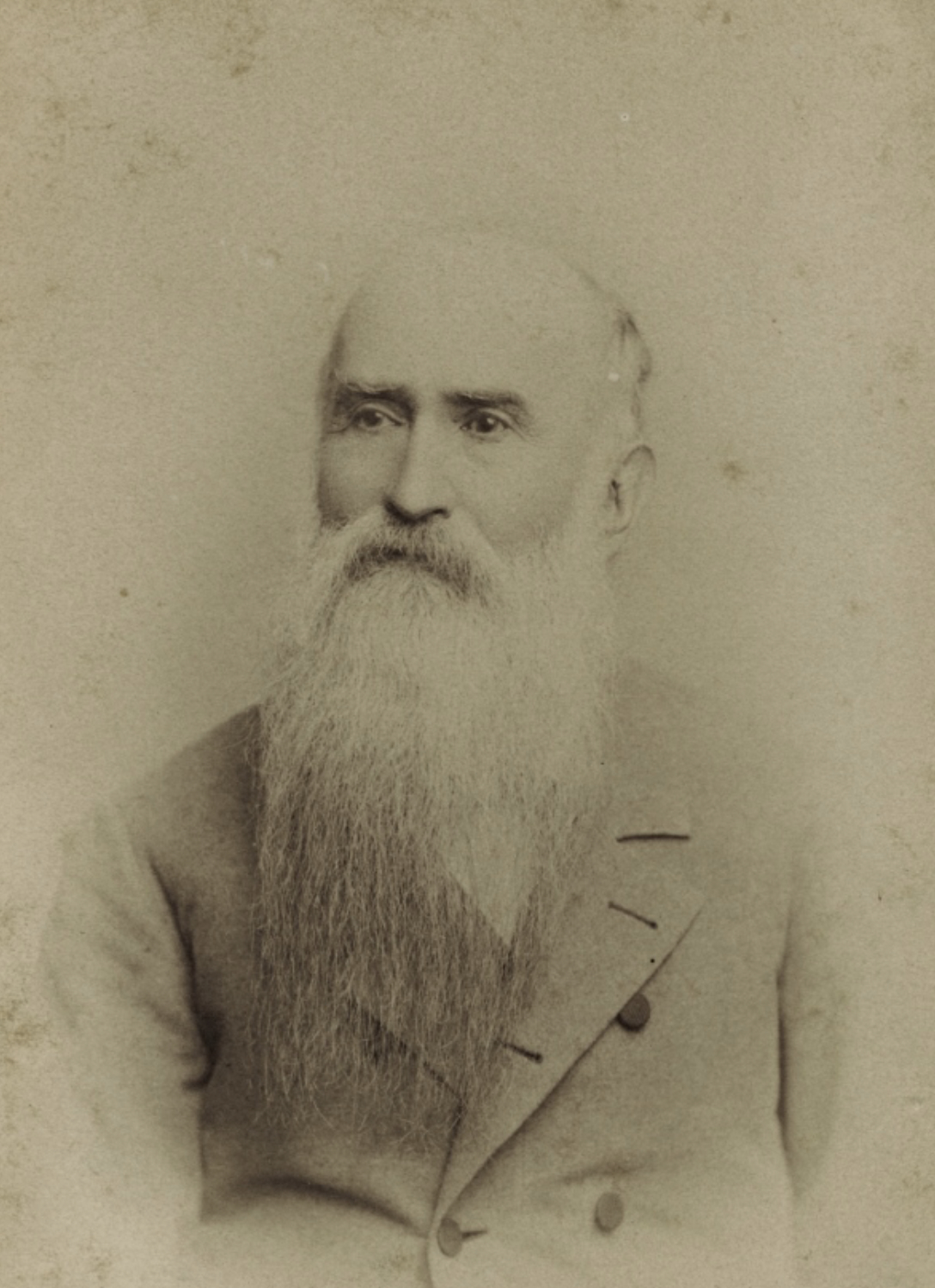 The Lynchburg Museum
Former Confederate general Jubal Early
Joan Waugh: Well, Jubal Early was, yeah, he was angry at everybody. But Jubal Early is the face of the Lost Cause. He’s one of the main, I think, founders of the Lost Cause ideology and spreading it. And I think that, I mean, I think it’s perfectly understandable that most Confederate officers and perhaps most Confederate soldiers preferred to honor their cause and their fight than forgive the United States. It was, I mean, it was really the most destructive war in our history. There were 2.2 million men in arms for the Union and a significant number in arms for the Confederacy. I mean, just tremendous death rates and destruction. It wasn’t going to be easy to restore the Union. It just wasn’t. And, obviously, I have a more sympathetic portrayal of Grant as president than many historians do. But I just think he had a hard task. And I don’t think there’s anyone who could have done it as well as he did.
Terry Johnston: Is your impression that the destructiveness of the war, these rifts that the war created, were they more or less common than any potential friendships that were kept or formed as a result of the conflict? It would seem that that might be the case.
Joan Waugh: I think that is the case. And I think, with exceptions that we’ve mentioned, Johnston and I think Simon Buckner became friendly with Grant or fairly friendly with Grant. I know just before he died, he visited him. And James Longstreet. I don’t know of very many other prominent Confederate officers who followed in those gentlemen’s footsteps. And I think what you had happen, and it’s understandable. The Union won the war. The United States won the war. And then there was the task of restoring the Union. Many historians today have very interesting takes on, or revisions of, this time. Michael Vorenberg’s book Lincoln’s Peace: The Struggle to End the Civil War argues that there was no end to the Civil War, or if it did end, it ended far after the Appomattox surrender on April 9, 1865. Carrie Janney also suggests that, not quite as strongly, in her wonderful book, The Ends of War. And then, Greg Downs’ book After Appomattox. I’ve read all three. I’ve reviewed two of them and blurbed one, so I know their arguments and I respect them. But Greg Downs’ book, he said Appomattox really meant nothing. Or not what we think. It didn’t end the war and the conflict went on and equality was, for African Americans, unresolved.
Well, yes, I mean, that might be true. A lot of the South was in upheaval during Reconstruction. We know that. And we know that the United States tried to impose a Reconstruction upon the South that they did not want, especially in terms of giving rights to the freed African Americans. And so, there were all kinds of these knotty issues that weren’t resolved by Appomattox. But here’s the thing that I come back to ever since I’ve heard this argument about the war and its never ending: It did end in a profound sense—the Union army disbanded. So, I mean, really. And, yes, there were soldiers sent down South during Reconstruction constantly, especially in Louisiana, as we know, and in some other states. But that’s not war. That’s Reconstruction.
Terry Johnston: You made me think, just a minute ago, about friendships themselves. I mean, we’ve established that, maybe contrary to popular belief, they probably weren’t too terribly common, at least among former adversaries at the command level. But what about the John Gordon / Francis Barlow story? And, I don’t know, it seems like it’s of possibly dubious origin. For people who don’t know, Gordon was a Confederate general who reportedly aided Barlow after Barlow, who was a Union general, was seriously wounded at Gettysburg. And both thought the other had died afterward…
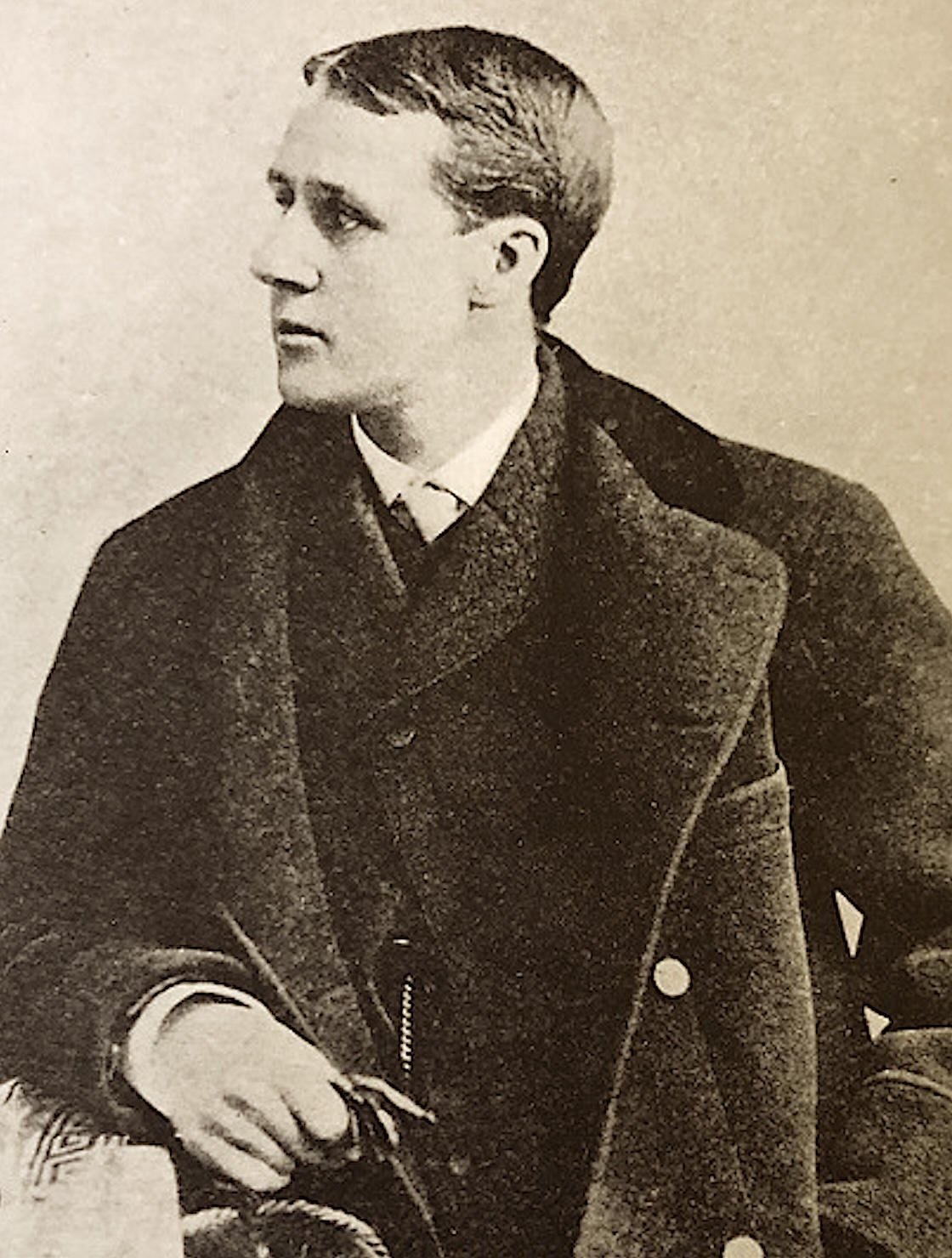 In Memoriam: Francis Channing Barlow, 1834-1896 (1923)
Francis Channing Barlow
Joan Waugh: Yes.
Terry Johnston: …until they met at a postwar dinner, I think it was maybe in New York City. Again, we don’t know about the origins and the facts underlying this. Is this friendship genuine? But it makes me think there’s got to be something there as to why people latched onto this story so much at the time that they did.
Joan Waugh: Oh, I, yes. I think it was a great story of reconciliation. And I think it’s the exception that proves the rule. It’s a wonderful story. And Francis Channing Barlow is somebody I’m very familiar with, because he was a brother-in-law of the woman that I wrote a biography about, my first book, Josephine Shaw Lowell. And he was very good friends with her brother, Robert Gould Shaw. Yes, there are stories—and I’m sure there are more stories like that, but I think that is the exception that proves the rule, to be honest with you.
Terry Johnston: No, I think you’re right. So, before we wrap this up, is there anything that we’re missing talking about regarding postwar interactions between Union and Confederate generals? Something that’s important to mention?
Joan Waugh: Well, I think that Grant’s death, which was so widely reported across the nation, and his funeral and commemoration and then, of course, the building of Grant’s Tomb in New York City, commanded a lot of southern sympathy. And I think it was the beginning of this tentative and fragile era of reconciliation where I think we can see it developing. And developing in a way that perhaps people today, historians today, don’t like. And that is the northern willful forgetfulness of the African American problems in the South in order to conciliate with the South. But nevertheless, I would say that Grant’s funeral had a very large sprinkling of former Confederate officers in it. And throughout the South when Grant died, when he was suffering from his cancer and then he passed away, there was great interest. And it’s true that many former Confederates perhaps rejoiced in his suffering and rejoiced at his death. But I think there was a great sympathy at that time for him. I kind of date the beginning of this strong reconciliation between the white soldiers of the South and the North at the Gettysburg commemorations. And I think those are really important. The Gettysburg reunions really became a flashpoint for reconciliation.
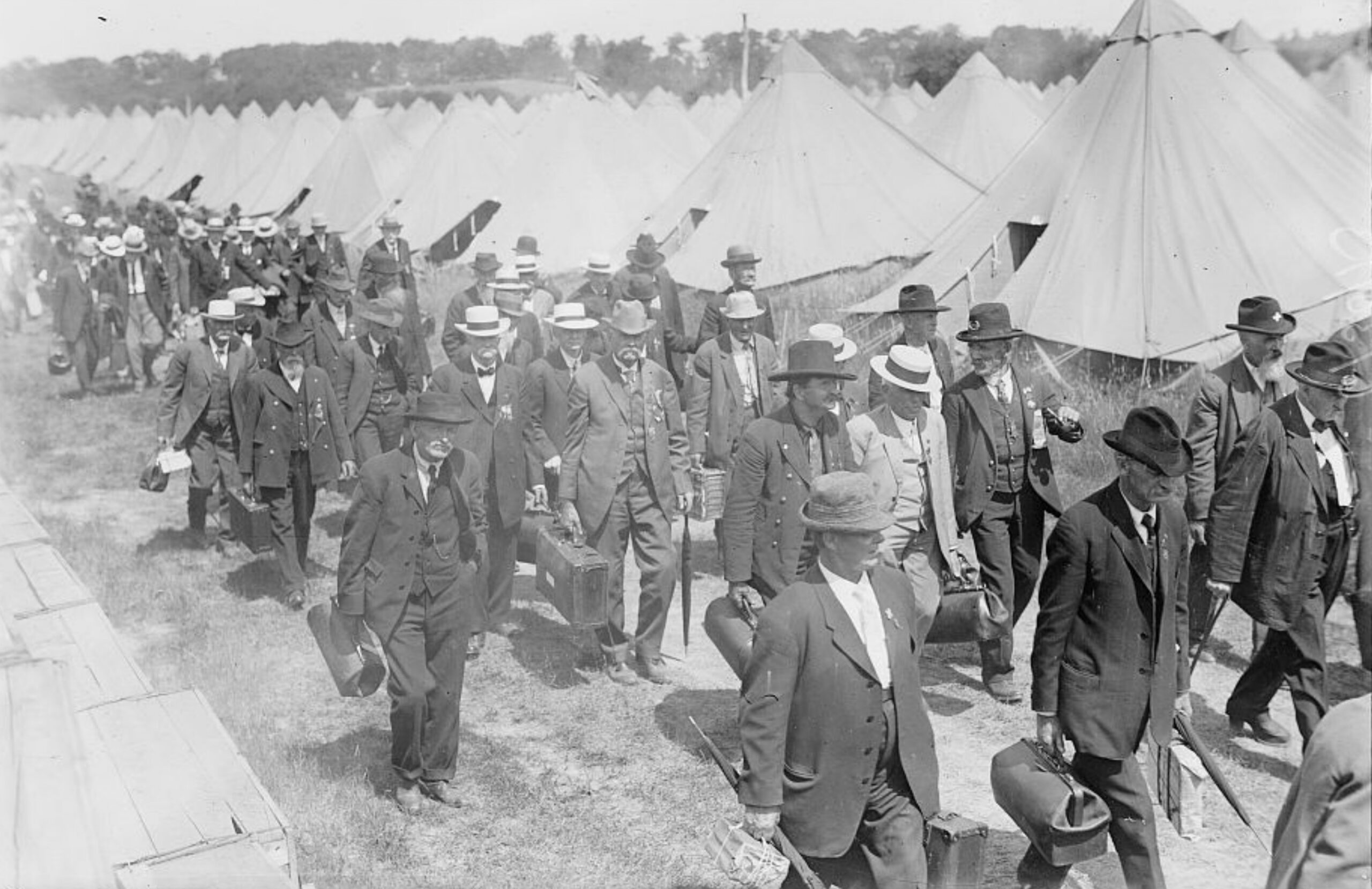 Library of Congress
Veterans arriving at the 50th anniversary Battle of Gettysburg reunion in July 1913
Terry Johnston: Now you’re saying plural, so both maybe the 25th and then…
Joan Waugh: Yes.
Terry Johnston: …the 50th.
Joan Waugh: Yeah. Especially the one with Woodrow Wilson. I think it was in 1913.
Terry Johnston: Right, the 50th. Yeah.
Joan Waugh: Yeah. And then the one with FDR, the 75th, so….
Terry Johnston: Well, there couldn’t have been many veterans left then, but…
Joan Waugh: But there were some and it’s not only, you see, it was so pregnant with meaning, both of them really. Because what many Americans took away from it is, “We’re finally reunited.” Even though there was much bad feeling still obviously left in the southern states at this time. And then the other, I mean, one of the big things is that the memory traditions really came into play by this time. And the competing, the emancipationist memory tradition, the Union, the reconciliationists. I mean, there’s all kinds of currents flowing when it comes to the memory of the Civil War and its lasting impact on public policy, on politicians, and on voters.
Terry Johnston: Please feel free to talk more about that if you want to delve in more deeply.
Joan Waugh: Well, I think that there’s just no end to the fascination about this gigantic conflict and its ramifications. They’re still going today. I mean, we’re still having debates over, I mean, a lot of Confederate monuments have been removed. But it might be worth understanding why they went up. And a number of Confederate monuments have had new interpretation put on them, which I think is good. But, you know, I was in Richmond a few years ago and saw the obliteration of all the monuments on Monument Avenue. And it was shocking. I don’t know how you feel about it, and I don’t want to come out for any side or be political about this, but it just seems that you can’t remove history by removing monuments. I mean, it’s still the same history.
Terry Johnston: Well, that’s true enough. Before we actually do close, in talking about Grant’s funeral, you got me thinking about that one friendship between Joseph Johnston, the Confederate general, and William Sherman, his Union adversary. What was the story? One of them attended the other’s funeral and got ill and then ended up dying themselves. How did that go?
Joan Waugh: You know, you got me on that one. I think I… I don’t know. I actually don’t remember.
Terry Johnston: I think it was Sherman’s funeral and Johnston took his cap off in rainy weather and fell ill and was dead within X amount of days or weeks or months as a result of it. And I think, again, speaking of the reconciliationist drive, that was a story held up as, “Oh, wow. Look what this former adversary respectfully did at the funeral of the other.” And, “Isn’t this wonderful that we’re all coming back together?” And this is a sterling example of that.
Joan Waugh: I agree. I mean, it’s a touching story and friendship. And there were friendships, there’s no doubt about it. But there were also, I mean, the thing is that once the war was over and the decades after the war were over, gradually each side, Union and Confederate—ex-Union, ex-Confederate—developed its own story, its own histories of the Civil War. And it’s up to us historians to sift through to see what’s true and what’s false on both sides.
About the Guest
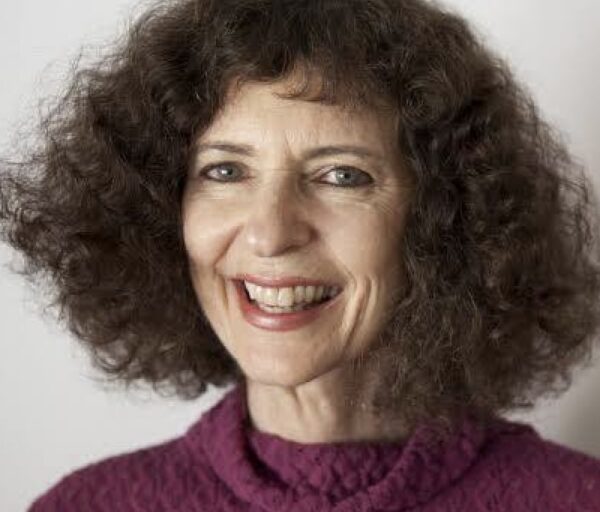 Joan Waugh is a professor emeritus of history at UCLA and the author of a number of works on the Civil War era, including U.S. Grant: American Hero, American Myth (2009), The Memory of the Civil War in American Culture (2004), and, with Gary W. Gallagher, The American War (2023).
Additional Resources
- Michael Vorenberg, Lincoln’s Peace: The Struggle to End the American Civil War (2025)
- Caroline E. Janney, Ends of War: The Unfinished Fight of Lee’s Army after Appomattox (2021)
- Gregory P. Downs, After Appomattox: Military Occupation and the Ends of War (2015)
- Joan Waugh, Unsentimental Reformer: The Life of Josephine Shaw Lowell (1998)
Sponsored By