Historian Gary W. Gallagher discusses how the Confederate flank attack at the Battle of Chancellorsville was able to succeed, as well as which of the opposing commanders—Joseph Hooker or Robert E. Lee—was more responsible for the battle’s ultimate outcome.
Transcript
Terry Johnston: Thanks for joining me today, Gary. We’ve got two questions for you, both pertaining to the Battle of Chancellorsville. The first was submitted by Mike in Wisconsin, and he asks, “I’ve always wondered about the flank attack made by Stonewall Jackson at Chancellorsville. Weren’t there Union pickets that could detect the approaching Confederate soldiers? And if not, why not? It seems incredible that an army would not send out pickets to detect an attack long before it occurred.” Now, before you answer, I wonder if you might first provide some background on the Battle of Chancellorsville for listeners who aren’t overly knowledgeable about it. It’s a resounding Confederate victory, but how does it all come to pass?
 National Portrait Gallery
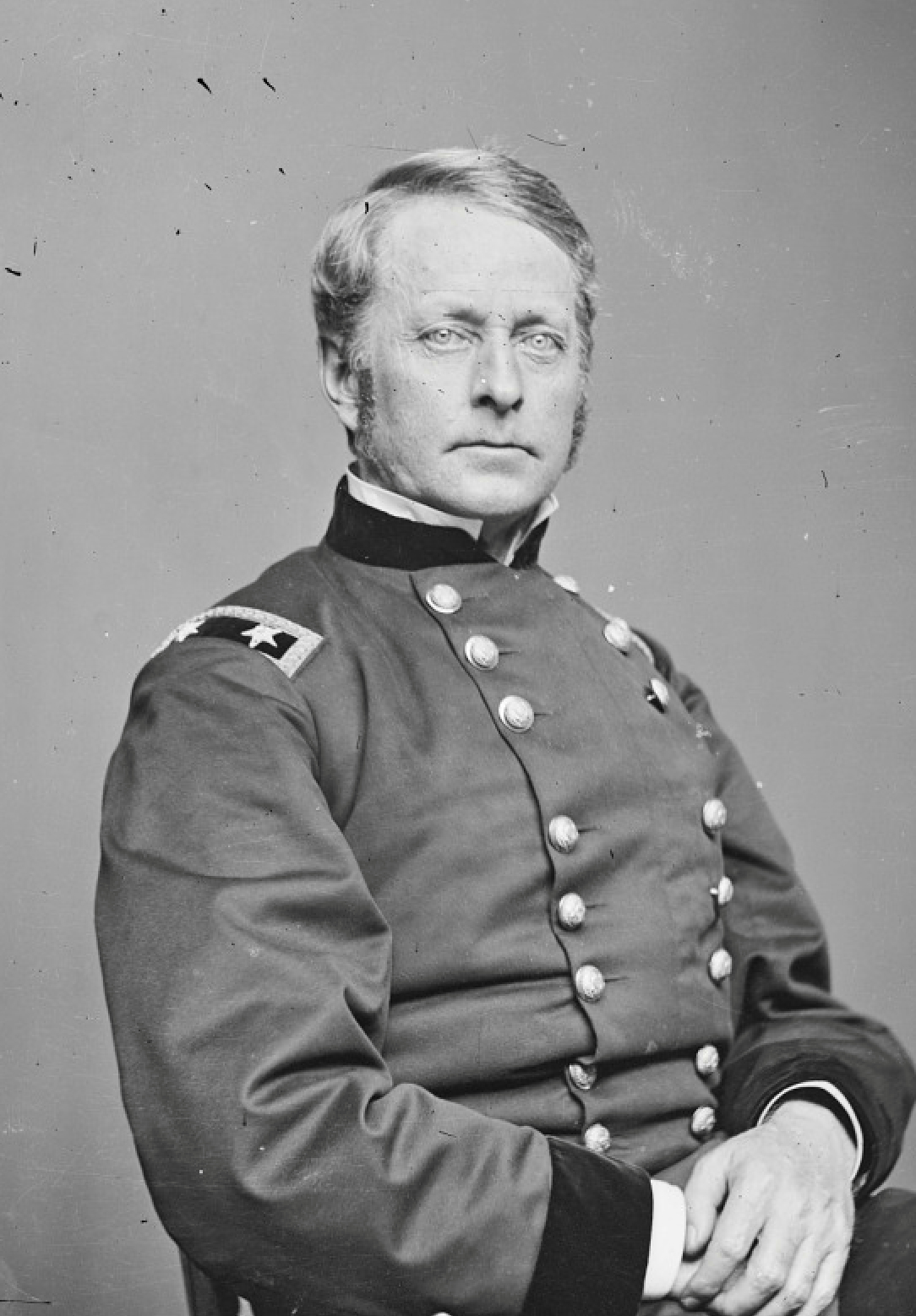
Joseph Hooker
Gary Gallagher: Well, Chancellorsville is a fascinating campaign. It’s the first major campaign in the eastern theater in 1863, if you don’t count Ambrose Burnside’s abortive Mud March up the Rappahannock at the end of January. There’d been another change of command on the Army the Potomac side. Joseph Hooker had replaced Ambrose Burnside. And Hooker had actually done an excellent job of getting the Army of the Potomac better fed, better organized, he just got it into better shape as he was in command from late January into April 1863. There was a lot of political maneuvering in the Army of the Potomac as always, but he had an army that was more than 130,000 strong, and he would be competing against Robert E. Lee’s Army of Northern Virginia, which had fewer than 65,000 men. And both sides knew what the numbers were. Hooker had a very good intelligence service in the Army of the Potomac. He knew that he had about a two-to-one advantage over Lee. There was tremendous pent-up demand among the civilian population in the United States for someone to defeat the Army of Northern Virginia and Hooker, they hoped, would be the person who did that. Hooker was very confident. He made a lot of very confident statements, which came back to haunt him.
But his campaign began very well. In late April, he moved part of his army up the Rappahannock, got around Lee’s left flank. His plan was to hold Lee’s attention at Fredericksburg, where the armies had been since the previous November, facing each other across the Rappahannock. And while Lee was held in that position by part of the Army of the Potomac, the other part would get around his flank and present Lee with a dilemma of what to do with powerful Union forces both in front of him and coming in from the west. He hoped that Lee would retreat toward Richmond if that happened, and then he could harass the Rebel army as it retreated.
Unfortunately for Hooker, Lee didn’t respond the way that Hooker hoped and thought he would. Lee divided his own army, left a little piece of it under Jubal Early to keep track of what was going on in Fredericksburg. Took the rest, Stonewall Jackson’s Second Corps, most of it, and two divisions of James Longstreet’s corps, the other two were in Southside, Virginia, and faced Hooker near the Chancellorsville crossroads, about a dozen miles west of Fredericksburg. And the upshot was that as soon as fighting began on May 1, Joseph Hooker lost all offensive thoughts, pulled back to the Chancellorsville crossroads, hunkered down, and over the next two and a half days, just simply waited for Lee to do whatever he was going to do. What Lee did was divide his army again on May 2, sent Jackson around the right flank of the Army of the Potomac—this is what your first question relates to—and shattered the Union XI Corps in the most famous flank attack of the war. But in fact, that “success” in quotation marks, actually, in my opinion, left Lee more vulnerable than he’d been before it. Now his army is in three pieces with Early at Fredericksburg, Lee with two divisions watching Hooker at Chancellorsville, and Jackson’s Second Corps—with Jackson having been wounded, it’s now commanded by J.E.B. Stuart—farther west. And in between those pieces is the bulk of the Army of the Potomac. It’s an incredible opportunity for Hooker, but he didn’t do anything with it.
 Library of Congress
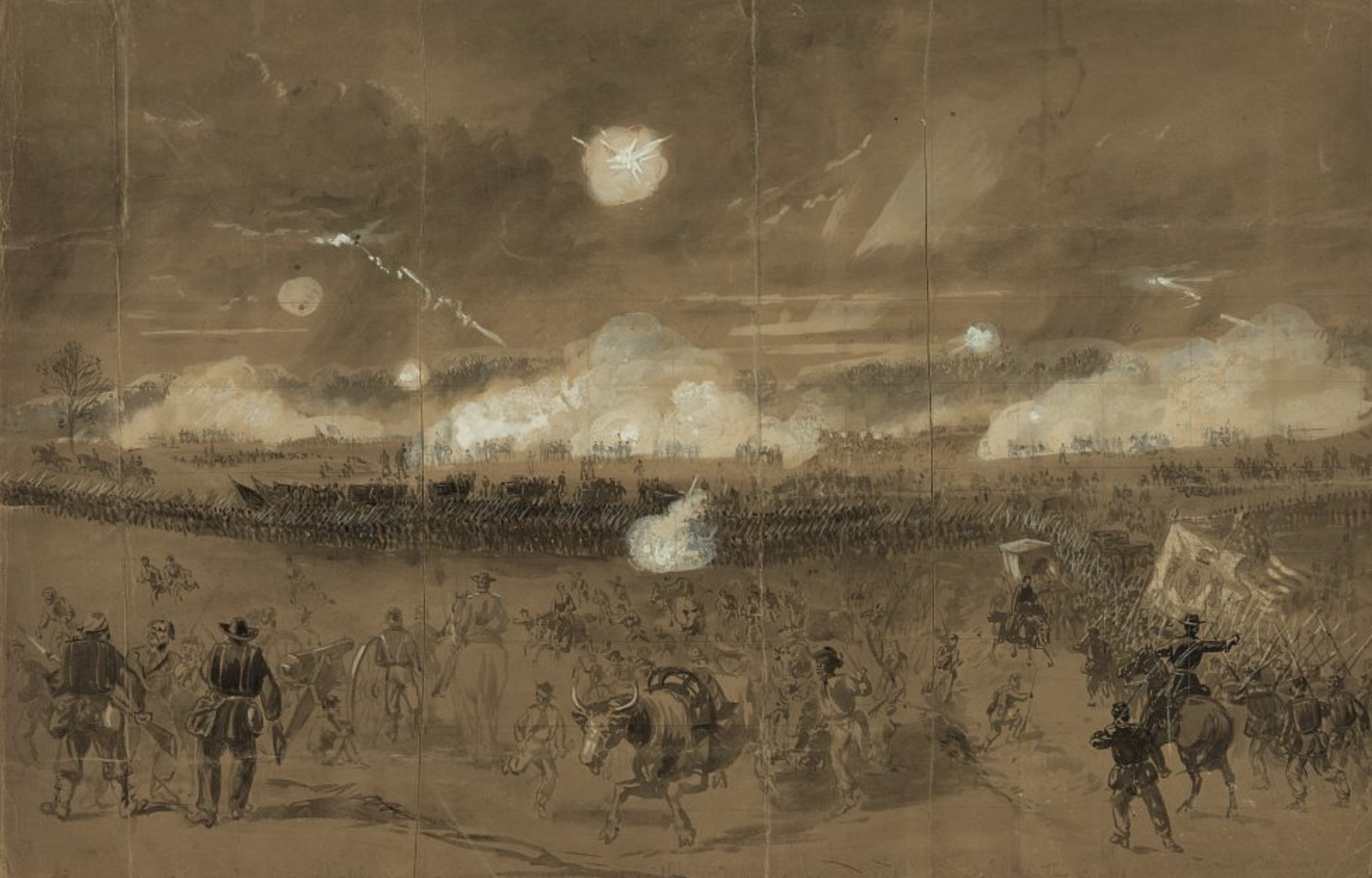
This sketch by Alfred Waud depicts the panicked retreat of the Union XI Corps in the face of Stonewall Jackson’s flank attack at the Battle of Chancellorsville.
The heaviest fighting came on May 3. May 3 is one of the bloodiest days of the Civil War. Enormous casualties on May 3 as the two pieces of Lee’s army at Chancellorsville fought their way together in vicious fighting that began about 5 a.m., culminated at about 10 a.m. with Hooker retreating from the Chancellorsville crossroads, having been stunned by an artillery round that hit a pillar he was leaning against on the Chancellor House. He retreated toward the Rappahannock fords, established a strong line protecting his access to those fords, and hoped that John Sedgwick, whom he had left at Fredericksburg, who had about a fifth of the Army of the Potomac, would essentially rescue Hooker’s much larger piece. He didn’t, as I think your listeners know. He got as far as Salem Church, Sedgwick did.
But the upshot was that Sedgwick retreated. Hooker retreated. The whole Army of the Potomac was back across the Rappahannock River by May 6, and Lee had won his most dazzling and improbable victory, a victory he never should have been able to win. To me, it’s the most striking example of a failure on the part of one commander. A mental failure, a failure of a willingness to risk anything on Hooker’s part when he first ran into the other army, whom he should have defeated. It’s an astonishing example of one commander kind of wielding his will against another commander. Never should have happened. Never. This should have been a great United States victory. Instead, it was a dazzling victory for the Confederates and another profound disappointment for Abraham Lincoln and the civilian population of the United States. And it’s especially important because the political situation in the U.S. was very touchy for Lincoln at that point. Tremendous debate over the Emancipation Proclamation. Many, many, many thousands of men, even in the Army of the Potomac, weren’t on board with that. And conscription had just started in the United States as well. So there are these political problems for Lincoln and they are exacerbated because, once again, the most important army of the republic, the largest and most important army, had been defeated by a much smaller army commanded by Lee.
Terry Johnston: Well, we’ll get into the impacts and the larger command decisions, but let’s now get back to Mike’s question. Let’s unpack that flanking movement. So, why was it so successful? Was it a matter more of Confederate skill? A lack of Union vigilance? A bit of both? I mean, how do we explain what exactly happened? And it was a massive flanking maneuver. Jackson had how many thousands of men? I mean, it was just really enormous, wasn’t it?
Gary Gallagher: Jackson moved three divisions. He had about 28,000 men on his flank march, and it’s a march that went more than 10 miles and took all day. The march really got going about seven o’clock on the morning of May 2. As he started his way westward, he had found roads, local people had helped knit together a route that would take him on kind of back roads and keep him, they hoped, out of sight of the Federals. But, in fact, the column was sighted before 8 a.m. They hadn’t even been one hour into the march before, from the high ground at Hazel Grove, some Federals saw this column moving across their front, moving toward the west, across their front. They even ran a couple of guns out and lobbed some shells at them—about 8 a.m. a Union battery did—and forced Jackson to change a little bit the way he was moving, get his wagons and artillery onto different roads as they went.
But the upshot is, one hour into a march that would take until about five in the afternoon to get into place, the Federals knew that the Confederates were moving across their front. And they sent word up to headquarters. It drew Hooker’s attention and in fact Dan Sickles’ attention, who commanded the Union III Corps. Sickles wanted to strike at this column in motion. The question was, Was the column retreating or was it trying to get around to the Union right flank? That’s the question. Either one of those was a possibility. Hooker realized that, but he didn’t really do anything about it. He didn’t unleash Sickles, so to speak. Several hours went by before he finally allowed Sickles to probe against Jackson’s column, and by that point, the column had pretty much gotten past the point where it would really be in danger.
 National Portrait Gallery
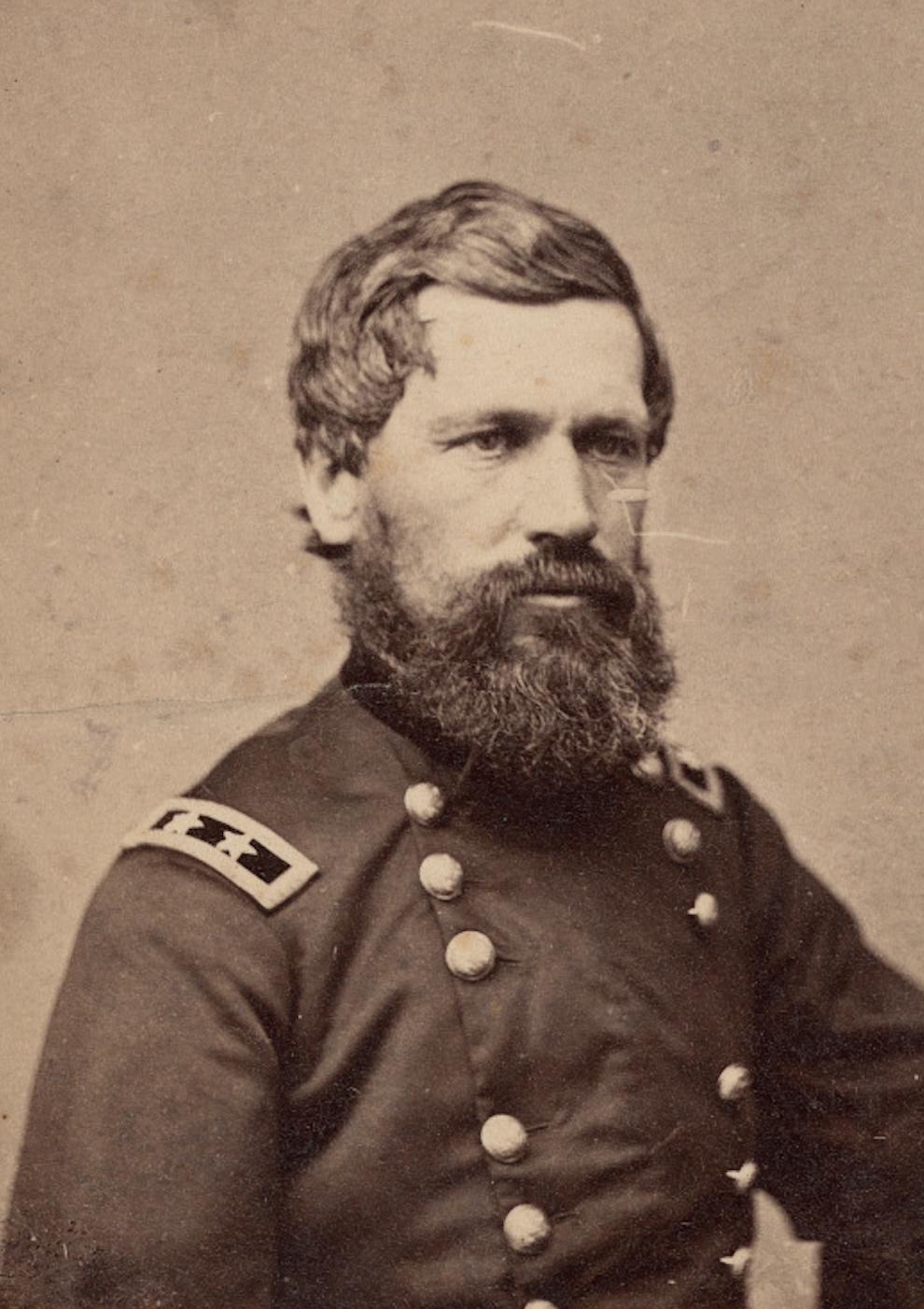
Oliver Otis Howard
But even out on the Union right flank, Oliver Otis Howard commanded the Union XI Corps, which held the Union right, stretched out along the turnpike plank road out to the west toward Wilderness Church. He was also aware that there was a column moving. He sent messages to army headquarters that he saw troops moving in that direction. Hooker told him to be ready for trouble coming from the west, even though the Confederates might be retreating. In the end, Howard did not really do that. He turned just a couple of regiments around to face the west and left himself vulnerable. It really is an instance of not doing something that obviously should have been done, even if it were only a possibility that the Confederates were trying to get around the flank and not retreat.
The assault was a success. Your questioner wondered how could it be such a great success? Because Jackson got two and a half of his divisions in position. He didn’t wait for the rest of A.P. Hill’s to come up. But it was more than 20,000 Confederates that had a perfect position from which to hit. It’s like “Crossing the T” in naval terms, tremendous power coming down on a weak opponent who is facing south and you’re coming from the west. And so it shattered the XI Corps.
Terry Johnston: And they were really, it seems, taken by surprise. Again, remarkably so. The story is, I mean, it’s about 5:30 and these troops, many of them are sitting down to their dinners, and they’re disturbed by rabbits and other wildlife that are getting pushed by these oncoming Confederates through the woods toward them and running in panic themselves.
Gary Gallagher: That’s absolutely true. They were absolutely taken by surprise. As the deer and the rabbits and the other animals came through them, they sort of laughed and cheered and so forth as that happened. And then they were just overwhelmed. But the Confederate lines extended more than a mile to the north and to the south of the turnpike plank road. And so there was just, it was a hopeless position for the XI Corps to be in, absolutely hopeless. Carl Schurz did a pretty good job of trying to get his division in position to resist it near Wilderness Church, but the defense was gone within 20 minutes. And O.O. Howard performed very bravely. He stuck a—he’d lost an arm at the Battle of Fair Oaks—he stuck the flagstaff of a flag under his amputated arm and tried to rally the troops, but it was about 20 minutes and that was it.
Terry Johnston: And the XI Corps, for people who don’t know, was comprised in some significant part by German—German born, German American—troops. And they had a reputation, maybe it started at Chancellorsville, of not being as reliable as native-born troops. But, as you’re alluding to, they acquitted themselves rather well, once they got their feet under them. I mean, this wasn’t the end of the battle.
Gary Gallagher: Yes. The XI Corps, a lot of people think it was all Germans. It wasn’t. German-speaking soldiers didn’t make up even half of the corps. But there was substantial number of Germans and German-speaking men. Many of the officers were Germans. And this is where their reputation as the damned—there was tremendous ethnic prejudice against them in much of the Army of the Potomac—the “damn Dutchmen” they were called. No troops would’ve stood in the face of this attack, wouldn’t have mattered at all which troops they were. They had very bad luck. And then they had very bad luck again on the first day of Gettysburg when the same thing happened to them again. Confederate got on their flank and they broke. So those two very unfortunate situations for the XI Corps fastened this reputation on them as unreliable German soldiers who just didn’t fight as well as real American soldiers would have.
Terry Johnston: So just to sum up, are we basically pointing the finger here at Howard? Is he maybe the most culpable in allowing this, for lack of a better word?
Gary Gallagher: Yes. I think Howard is most culpable, but I also would point a finger at Hooker, who wouldn’t let Sickles—it’s really, Terry, it’s fascinating to me that Hooker had spoken so aggressively and pompously about what he was going to do to Lee. He tried to present himself as the anti-McClellan, but in fact he absolutely behaved as the McClellan culture in the Army of the Potomac always behaved, which is tentatively, not aggressively, be careful, don’t take risks. That is what Hooker was doing between 8 a.m. on the morning of May 2 and finally about noon when he allowed Sickles to probe this Confederate column that was in motion. So I think Hooker has some culpability, but the principle culpability is on Howard.
Terry Johnston: Well, that’s a decent segue to our second question. It was submitted to us anonymously and it asks, “Whose decisions were more responsible for the outcome at Chancellorsville, Robert E. Lee’s or Joseph Hooker’s?” You sketched out some of your thoughts already there, but what are your thoughts? Whose decisions really were more significant to the ultimate outcome at Chancellorsville?
 Library of Congress
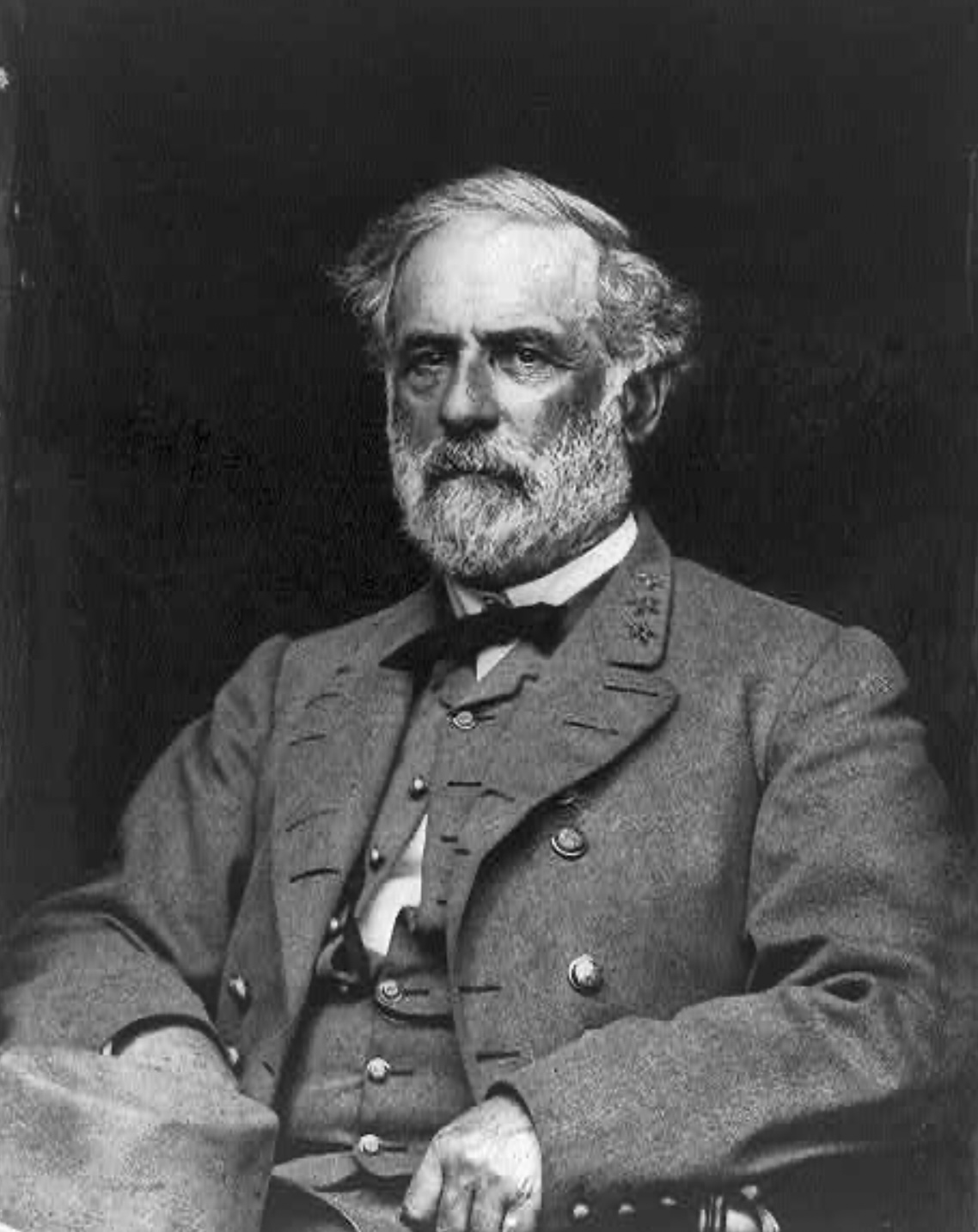
Robert E. Lee
Gary Gallagher: Well, that’s a sort of, you know, it takes two to tango question. I mean, the decisive decision that Lee made was—and it’s perfectly within how he always reacted. He always reacted aggressively, if at all possible. His decision not to retreat when he found out that Hooker was approaching from the west at the end of April is the key decision on his part. Divide his army, very bold, and use most of it to match Hooker. But that shouldn’t have made any difference, in my view. Hooker is the one who’s most responsible because Hooker actually put together an excellent plan. The early execution was flawless. He got three corps all around, and then the two other corps coming up to support those quickly. He was exactly where he wanted to be. And he said he might force Lee to come out and attack him in unfavorable circumstances for the Confederates if he didn’t retreat. He got that as well. But he, at the moment of truth, simply lost his nerve when, on the morning of May 1, the two forces collided along the plank road in the turnpike near Zoan Church. As soon as the fighting started Hooker ordered his troops to withdraw back to Chancellorsville. It’s absolutely on Hooker, as far as I’m concerned. It’s a battle that Lee never should have been able to win. Hooker did very well until the key moment, and then he simply lost what they would’ve called in the 19th century his, he did, he lacked the moral courage, in my view, to go toe to toe with Lee here, even though all the circumstances were in his favor.
Terry Johnston: Well, many people look to Hooker being concussed on the morning of May 3 as the point at which he officially unravels at Chancellorsville. But weren’t most of his bad decisions already made by then?
Gary Gallagher: Yeah. I know people argue that, and he was clearly concussed. I mean, he threw up after this, they’re soldiers who saw him vomiting afterward. And he was in very bad shape. But the key decisions had come before that. To me, the key decisions come on the morning of May 1, when Hooker stops being aggressive. He absolutely hands Robert E. Lee the opportunity to dictate, rather than react to, what the Army of the Potomac is doing. That to me is the key moment. But the second key moment is on May 2 when he doesn’t do anything about Jackson’s column in motion. So, yes, I think he was concussed. But I think the battle had already been lost before then, because Hooker had lost his willingness to do anything but just hunker down, let Lee do whatever he was going to do, and rely—he was very nasty toward John Sedgwick after the battle, blaming Sedgwick for the defeat. He expected Sedgwick to march from Fredericksburg to save the bulk of the army, which was at Chancellorsville. It’s ridiculous.
Terry Johnston: Yeah. I wonder, too, how big a factor, in relation to the others, I mean, obviously we’re saying that May 1, Hooker’s worst decision was made then when he relinquishes the offensive, but when he pulls back Sickles’ III Corps from that high ground at Hazel Grove, which is then occupied by Confederate artillery and really plays a factor in that bloody day’s fighting on the 3rd, I mean, if he had not done that, would things have gone differently?
 The Photographic History of the Civil War (1911)
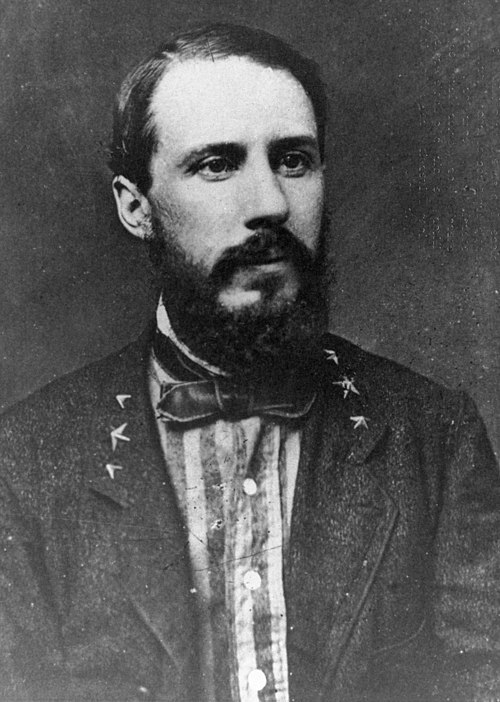
Edward Porter Alexander
Gary Gallagher: Absolutely. He would’ve vastly complicated Lee’s life if he hadn’t just abandoned Hazel Grove. Hazel Grove is a high plateau that is a little bit to the west of the Chancellorsville crossroads and overlooks the Chancellorsville crossroads in the clearing at Fairview, where there was a lot of Union artillery. What giving up Hazel Grove allowed the Confederates to do was to, for the only time in the entire war in the eastern theater, achieve significant tactical superiority in terms of artillery over the Army of the Potomac. Porter Alexander, the Confederate artillerist, crammed Hazel Grove with batteries. There were also Confederate batteries on the turnpike. You’re in the middle of the woods here, so there are only a few places where you can put guns. The Confederates had two great places, but the key place is Hazel Grove, which allowed their artillery to have superiority over the Union guns under Clermont Best at Fairview. So yes, that’s another horrible decision on Hooker’s part. And Sickles didn’t want to give it up. And this comes back to haunt the Army of the Potomac at Gettysburg, because the same thing happened with the Peach Orchard. Sickles looked out at the Peach Orchard, I believe, and in his mind thought, “Well there’s Hazel Grove again. The Confederates will put artillery there if we don’t have it.” And, of course, Porter Alexander again put Confederate artillery on the Peach Orchard at Gettysburg. But Hazel Grove is critical.
Terry Johnston: That’s interesting to connect those dots between Sickles’ performance at Chancellorsville and Gettysburg. I had never really thought about it like that. Well, so all of this is happening. Hooker’s lost his nerve, the battle goes into May 4. Do Union forces still have a chance? I mean, he just seems to keep relinquishing any sort of control. I mean, they’re dug in. He holds a council of war, doesn’t he? And all of his, or most of his generals, they want to keep fighting on and…
Gary Gallagher: Most of his corps commanders wanted to maintain—they had a tremendously powerful position that he retreated to on the 3rd: significant entrenchments, powerful artillery positions. Again, he still has overwhelming superiority in numbers. And Lee was planning to attack him again on the 5th. That was Lee’s plan. He wanted to maintain the attacks. It would’ve been catastrophically bad for the Confederates. When Porter Alexander saw the Union works, he said that he just was so thankful that they hadn’t attacked again on the 5th. And Stonewall Jackson’s cartographer, Jed Hotchkiss, when he saw the Union works, he wrote in his diary right after the battle he couldn’t believe that the Federals retreated from those works. Couldn’t believe it. Couldn’t believe it. So, no, the battle wasn’t lost. The battle still could have been and should have been won. But Hooker was of a mind that he needed to get back across the river. And then issued this amazing order to his army, congratulating them on what they had accomplished. The soldier letters are fascinating here. They’re not fooled by that. They knew what had happened. They had been defeated again when thousands of them had never even fired their muskets. It’s the same old problem in the Army of the Potomac, and something that drove Lincoln crazy.
Terry Johnston: Well, right, and isn’t it true too that Hooker didn’t even engage thousands of men. I mean, he had more men at his disposal, didn’t he? Or am I getting that wrong?
Gary Gallagher: Oh no, you’re absolutely getting it right. Thousands and thousands of men who were in the Army of the Potomac, near the battlefield, did not get into the fighting. I mean, we all know that McClellan had 20,000 troops he didn’t use at Antietam. There are more than 20,000 that Hooker doesn’t use at Chancellorsville. And the soldiers are aware of that. A lot of their letters afterward and diaries say it would be one thing if we had a real effort and were defeated. But we were defeated basically fighting with only using one of our hands. We didn’t even use a lot of our troops. They didn’t even get into the fight, which is absolutely true.
Terry Johnston: What about the impact—and we’ve discussed this a little bit already—but the impact of the battle on the larger war? We usually think of that in terms of the loss of Stonewall Jackson, which was admittedly significant. But are there other really important or lasting ways in which Chancellorsville’s outcome affected the Union and Confederate war efforts?
 Library of Congress
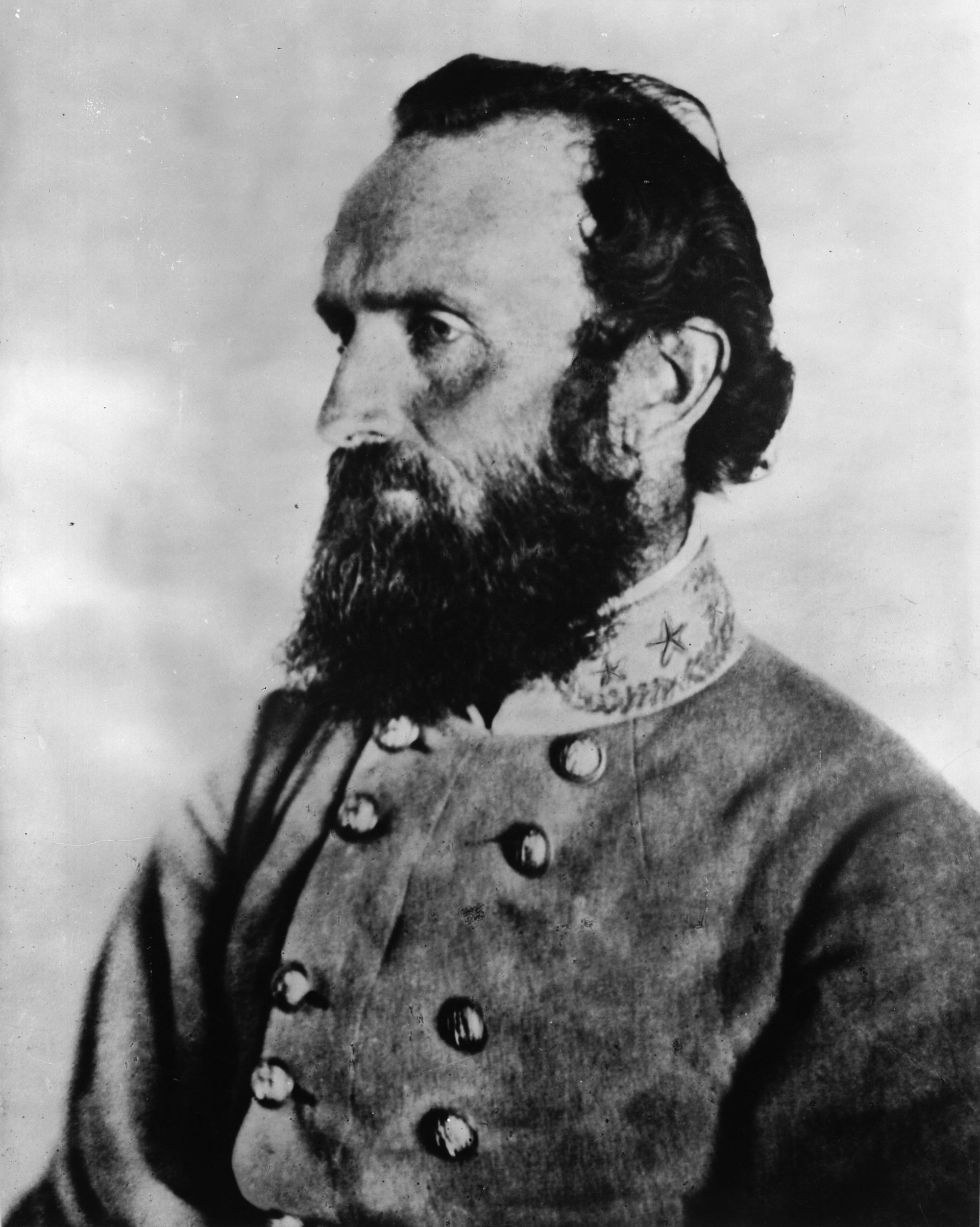
Thomas J. “Stonewall” Jackson
Gary Gallagher: Well, I think in the short term in the United States what it did is just create an even greater sense of frustration at what was going on in the eastern theater. And Gettysburg helped change that, although we often overlook the fact that once Lee was allowed to get away from Gettysburg, that took a lot of the luster off the Battle of Gettysburg. It’s one reason why Vicksburg was so much more important at the time than Gettysburg was because Vicksburg was an unequivocal victory. Gettysburg was tarnished because Meade didn’t follow up. Again, it’s the culture of the Army of the Potomac.
But within the Confederacy, I think Chancellorsville finished this not-quite-yearlong process by which Lee and the Army of Northern Virginia became the most important national institution in the Confederacy. And they did so because they’re the only place where the Confederate people get any good news from the battlefield. They essentially did what the colonists did in the Revolution: They identified Washington and the Continental Army with the nation. And that’s what happened in the Confederacy. It’s why Appomattox is so important. If Lee’s gone, there’s no Confederacy. Chancellorsville finished that process by which Lee and his army become so important. Lee never won another great victory, never even won another unequivocal victory after Chancellorsville. But it didn’t make any difference. His army still functioned that way. And I think it functioned the same way in the United States. Lee became a sort of bogeyman for people in the United States for the loyal citizenry.
So Chancellorsville is really important in that way. Lee was unhappy with it because the Federals got away and he couldn’t hurt them anymore. That’s his usual way of interpreting that. But he understood how important his battles were in terms of affecting the political situation in the United States. And in that regard, he was underestimating, I think, how important Chancellorsville was. Losing Jackson is a big deal. There’s no other Jackson waiting in the wings, of course. But the Army of Northern Virginia still operates very efficiently for most of the rest of the war.
Terry Johnston: Well, how big really do you think the loss of Jackson was? I mean, it was big, but…
Gary Gallagher: I don’t think, I don’t know if Jackson’s presence would’ve changed—I try to think of how his presence would’ve changed—would it have made a difference if Jackson had been in the army during the Overland Campaign, for example? I don’t know what difference it would’ve made. I really don’t. Jackson was good at semi-independent command, not so good tactically on many battlefields, and he certainly was an important rallying point in the Confederacy. He’s the most important Confederate general between his Valley Campaign and sort of early 1863, I think, till Lee passed him. So it is a big, it’s a big problem. But I don’t think, you know, the old Gettysburg thing, if only Jackson had been here, if only Jackson had been here, I’m not in that school. I don’t know what real difference Jackson would’ve made going on through the war. Lee would’ve preferred to have him. It’d be better to have Jackson and Longstreet as your two corps commanders than having Longstreet and either Richard Ewell or A.P. Hill. Jubal Early’s the only other person who ever really showed, I think, aptitude for corps command in Lee’s army. And he’s not Stonewall Jackson.
Terry Johnston: Yeah. And getting back just quickly to the May 2 flanking maneuver, there’s that famous meeting between Lee and Jackson to go over their plans. Do we have any sense as to whether one of those men was pushing that tactic more than the other? Was it a Lee idea? A Jackson idea? Did it just sort of organically come up during the meeting? What do we know?
Gary Gallagher: Well, it is Lee. I mean, it’s a perfect example of how these two guys were on the same—I talked about the culture in the Army of the Potomac, which is McClellan’s cautious culture. It’s an aggressive culture in the Army of Northern Virginia. And Lee and Jackson are in perfect accord on that. And the whole idea on May 1 is, “Okay, here we are. How are we going to get at the enemy?” Lee went out personally and saw that the Federal left was too strong. Engineers said the center was too strong. The only option was to get around to the right. They were both on board with that. So the first key decision is, “Yes, let’s do this.” The second one is, “How many troops are we going to send?” And Lee decides to send 28,000 men that way and just keep 14,000 basically to watch the mass of Hooker’s army. It’s very daring. Very daring. But I would say it’s a decision mutually agreed upon. Lee’s the key one who would make the decision, but Jackson’s perfectly on board with it.
One other long-term influence of Chancellorsville, to take a little bit different tact here, is that in terms of the Lost Cause memory of the war, this is a tremendous moment when the two great Confederate paladins are together. They’re at high tide. Gettysburg’s in the future. Never mind that Appomattox is in the future. Anything’s possible here. And then Jackson is struck down. E.B.D. Julio’s painting “The Last Meeting,” this last meeting of Jackson and Lee, becomes unbelievably iconic after the war for former Confederates. And engravings of that painting that Julio did hung on innumerable walls and in courthouses and in public spaces in the South. It’s a very important battle in that regard, in terms of the memory of the war for the people who embraced the Lost Cause.
Terry Johnston: Well, good. Before we wrap up, is there anything else about Chancellorsville that we haven’t discussed that you think is important that we mention?
Gary Gallagher: No, I think we touched a lot of bases in a hurry. It’s just, it’s a fascinating battle and a fascinating example of how individual personalities have enormous influence on how events go. I mean, this really is a study of Lee and Hooker, I think. That really is what’s going on at Chancellorsville and you get this highly improbable result.
About the Guest
 Gary W. Gallagher is the John L. Nau III Professor of History Emeritus at the University of Virginia. He is the author or editor of a number of books on the Civil War, most recently The Enduring Civil War: Reflections on the Great American Crisis, and has recently finished writing a history of the Battle of Chancellorsville.
Additional Resources
- Everett B.D. Julio, “The Last Meeting of Lee and Jackson”
Sponsored By