Historian Christian McWhirter discusses the importance of music during the Civil War, both in the armies and on the homefront.
Transcript
Terry Johnston: Christian, thanks very much for joining me today. Our question for you is from Alyssa in New York. She asks, “How prevalent was music in Civil War armies and what were its most important uses?” Now, before you dive in and answer, I wonder if you might do some table setting for us. Just how deeply ingrained was music in the lives of Americans at the time the Civil War began?
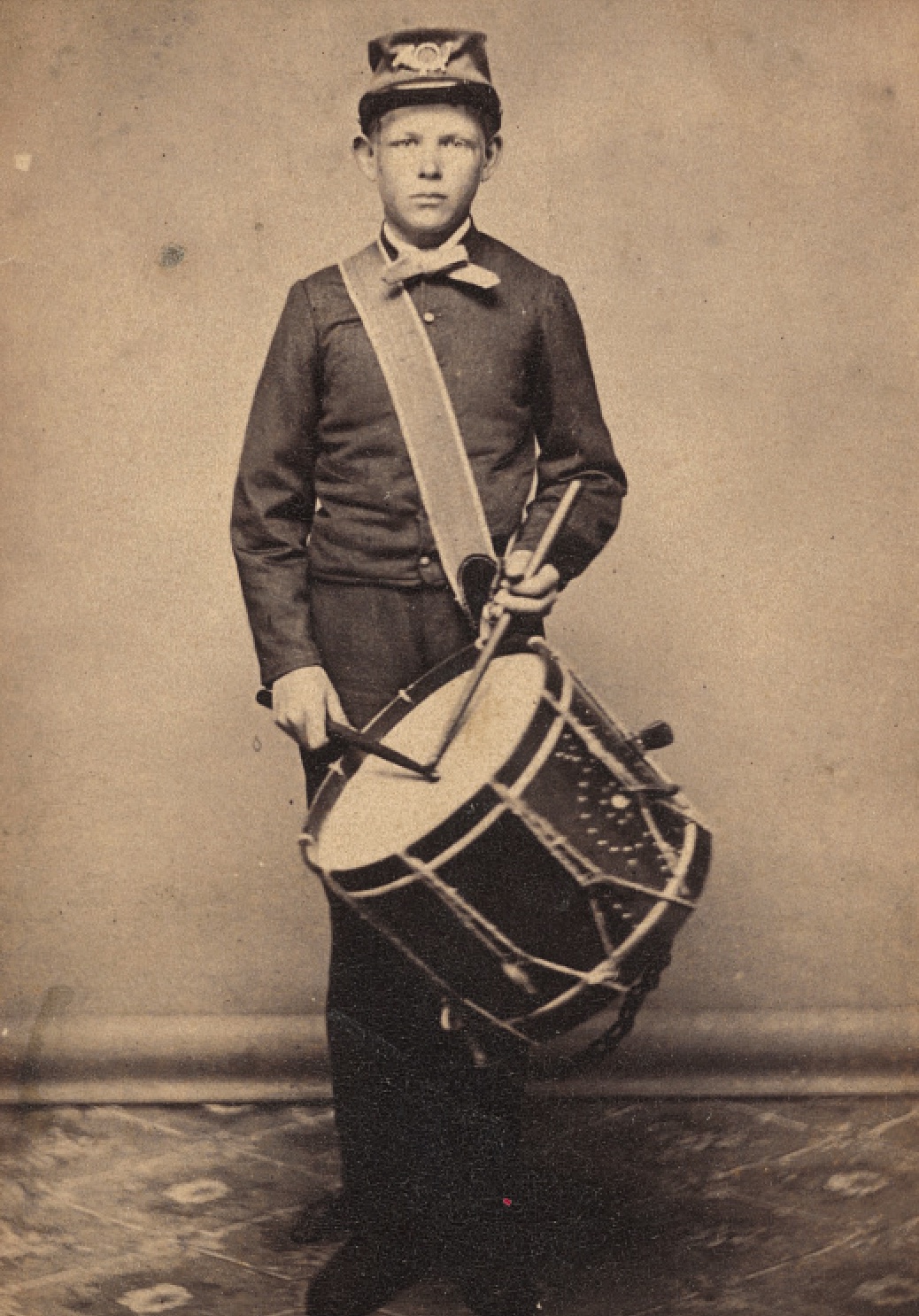 Library of Congress
An unidentified Union drummer boy
Christian McWhirter: Yeah. Thank you for having me on, Terry. Yeah, that question is a wonderful question and you could argue it’s, you know, the question my whole book tries to answer. So, yeah, let’s break it up into parts. The Civil War occurred at a moment in American history when the music industry was coming into its own for the first time. And when I say music industry, I don’t really mean anything like what we have today. At that time, the music industry basically was made up of music instrument producers and sellers, and then sheet music publishers and stores and anything that goes into that, then—musicians, songwriters, all that. Those two industries had been climbing rapidly in the 1840s and especially the 1850s, in part because in America, musical instruments, especially pianos, were cheaper than they were anywhere else in the world. And so there was a wide availability of pianos and other instruments that people could buy. And, you know, people had been making music forever before that. But this availability of musical instruments created, then, a need for things to play on those instruments. And so then this whole new class of songwriters arises and they’re producing all different kinds of music. They’re producing stuff that today we’d call classical music. They’re writing, you know, waltzes and things without lyrics. But they’re also writing lots of what at that time would’ve been the popular music of the day: ballads, political songs, joke songs that have simple, catchy melodies and easy to remember lyrics.
And so when the Civil War breaks out in 1861, the American population is primed to turn to popular music as a way for them to understand what’s happening in the war and also to shape what’s happening in the war, using that music. And so that’s where we’re at when the first shot is fired on Fort Sumter in 1861.
Terry Johnston: So, in other words, these northerners and southerners who flocked to join the Union and Confederate militaries in 1861, they’re bringing this familiarity with music, this dependence on music with them into the ranks. That’s a fair statement?
Christian McWhirter: Yes. And so, specifically with soldiers, then, yeah, you have all these people, all these mostly men, who have been performing music with their families, with their friends, right? There’s no recorded sound in the 1860s. So if you’re going to engage with music, you’re either going to hear someone else playing it or you’re going to contribute yourself. And there was less of a stigma at that time around public musical performance than there is now. Like, almost anyone who entered the ranks would’ve been comfortable performing music, singing, even if they didn’t have a very good voice. A lot of them are bringing instruments in with them, which leads to this whole culture of regimental bands that we can get into later.
But all these people from these disparate places, they all bring their musical traditions with them. And, you know, you have to think about the Civil War. These armies become these groups of people who were living very locally before they entered the armies. Now they’re all coming together into these massive bodies of people, and they’re all performing music. Any downtime they have in camp, they’re performing music. Their bands are setting the rhythm of their marches. And so music becomes a quintessential part of their experience, and they bring that music with them. Then they also learn new songs while they’re in the army. And then they also modify those songs as they go through the war.
Terry Johnston: So let’s break down exactly the roles that music played in the armies. You alluded to regimental bands. We should talk about that some. Regimental field musicians was another role. Can you talk about those military musicians that were present during the Civil War?
Christian McWhirter: Yeah, sure. There’s two professional or, you know, official kinds of musicians in both the U.S. and Confederate armies. Although I would say anything I’m talking about today is more prevalent in the U.S. Army than the Confederate army, simply because the Confederate army didn’t have as many resources to equip their musicians. But every regiment and every company would have one or two, sometimes three, field musicians. These are the guys you see in movies and things who are blowing on bugles with the different calls that the soldiers will have to respond to, you know, things like retreat and charge, at the end of the night, taps. They needed these guys because, again, they didn’t have radio. And so the only way you’re going to hear what your commanders want you to do over the din of battle is if there’s a bugle blowing it. And then there would usually be a drummer to accompany them. Often these were young boys. This is also a cliche of the Civil War, the drummer boys. They would set the rhythm of march and things like that with their drums. They would do other signals with their drums. And sometimes you would see a fifer. These people were trained specifically for that role. So their rank was a field musician, a bugler, a fifer, a drummer, and that was all they would do. That would be what they would do during the extent of their service. And this was true before and after the Civil War.
The regimental bands are a bit of a different thing. So, the cool thing in music in 1860 in America was brass bands, which, you know, sounds very uncool to us now. But at that time, this tradition had come over from Germany and it was very militaristic. It had been prominent in the Crimean War. And so when anybody enlists in the Civil War, they want to have a regimental band with them. These guys also had set ranks and pay on the rosters of Civil War units. And they did have some official duties. So they would, especially in marching, they would march often in front of the regiment with instruments that aim backwards. And they would play music, again, to help set the rhythm of march, to help boost morale. They would play in camp, again, mostly to boost morale. But during combat, except for a few rare instances, they would not play music during combat like the field musicians. What they would usually do is they would put down their instruments and they would be the stretcher bearers for the surgeons.
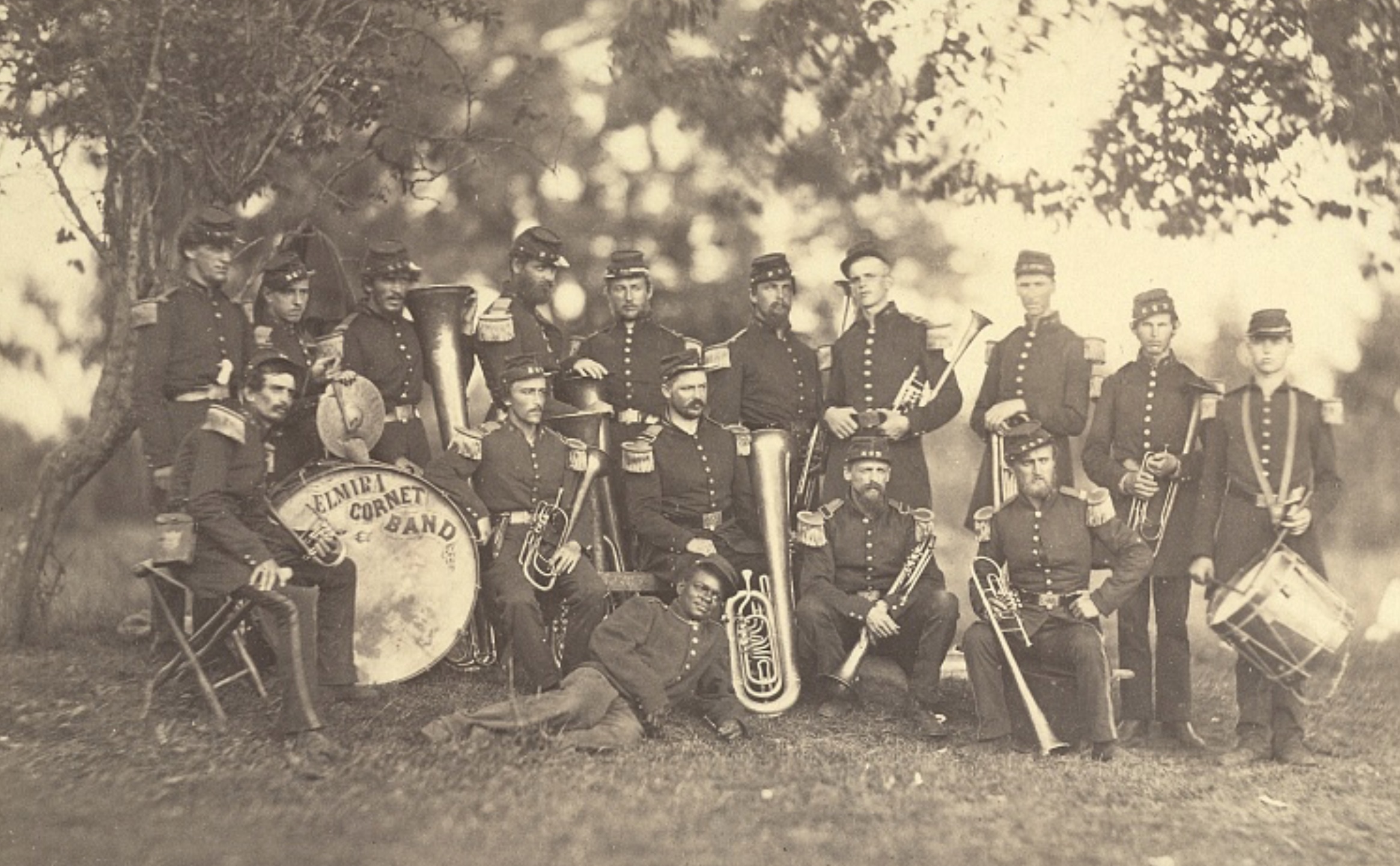 Library of Congress
Members of the “Elmira Cornet Band,” 33rd New York Infantry, in July 1861.
But these bands were huge. Sometimes they would have as many as 30 people in them. They were a huge expense. Both the Confederacy and the United States had to deal with the enormous cost of these bands, and they dealt with them in different ways. And they were extraordinarily popular. Even soldiers who had bad regimental bands tended to still be fond of them. But when they were good, I mean, they were extremely proud of these bands and they would write about them all the time. You know, it would be the equivalent of having the Rolling Stones march along with you into battle today or Taylor Swift or something like that. Like this was an extremely cool and popular thing. And they would play all kinds of different music. And in that way that’s how songs got popularized in the ranks as well, is when these bands would take them up. So they’re extremely influential to the soldiers and extremely influential to Civil War culture more broadly.
Terry Johnston: Well, and you mentioned that they were very expensive to maintain. Wasn’t there, at least in some of these regiments, an actual regimental tax whereby soldiers would help subsidize their own regimental bands?
Christian McWhirter: Yes, that’s true. Early in the war, some of these units that have larger bands, the soldiers are giving up part of their pay to support the bands. And then, in the summer of 1862, the Lincoln administration and Congress retrench in a number of ways, because the war isn’t going as well as they want it to. And so, of course, that’s when Lincoln considers the Emancipation Proclamation. There’s another call for 300,000 volunteers. Another element of that that people don’t mention is they actually make regimental bands illegal because there are so many people in them and they’re costing so much money, the federal government wants to get rid of them and instead only have bands at the brigade level. And soldiers often react to this by just disobeying the order. So they just keep their bands and then they hide them on the roster with different titles. Sometimes they just keep them on the roster as is, just defiantly still having them. They call them privates or whatever rank they want to call them, but they give them—because they made more than privates, right? That’s one of the reasons they’re so expensive, is because these musicians had a higher pay. And so these taxes then become more common after the summer of 1862 as well, because that’s how these soldiers are keeping their bands around because the federal government doesn’t want to pay them the extra money anymore.
Terry Johnston: Was that basically the main, at least stated, reason why Congress stepped in and discharged the regimental bands? Or were there other reasons at play that at least they were telling people?
Christian McWhirter: It’s, no, it’s mostly expense and manpower. But there’s a public outcry, not just from the soldiers, but from the home front as well. The Sanitary Commission protests the move, arguing that the bands are extremely good for the mental health of the soldiers. There are articles in newspapers written about it. This is a really unpopular thing. And as far as I could tell, that’s why it never really fully becomes a thing. You still see these bands right up until the end of the war. I think it mostly is just ignored.
The Confederacy, I should say, has no such order. The bands, there’s less of them to begin with, and they simply seem to start to dissolve as the war goes on. And the soldiers in them either, you know, go home or they take up a rifle, because they’re needed more in the ranks. So there’s not as much of an official push in the Confederacy, but it happens anyway. There are two things going on here. One, it shows how quintessential these bands are to the experiences of soldiers, how important they are to their morale. But it also shows that as the Civil War goes on, you know, one of the things I always try to stress when I talk about the Civil War is its brutality. This war got romanticized so much after its conclusion and these regimental bands became one of the ways it was romanticized, right? All these stories with these soldiers listening to music makes the war seem almost a pleasant thing to participate in. What we can see, you know, as we get to the end of 1862 and beyond is there has to be a reckoning with that attitude. And as the war goes on, it becomes more and more brutal, these guys who are playing these instruments need to be doing something else in a lot of cases because the war just needs them to be doing that because it’s just dragging on so long and it’s becoming so massive.
Terry Johnston: Sure. So regimental bands, field musicians. You also alluded to the fact, and it makes sense, that there were a lot of soldiers musically inclined who brought their own instruments with them. I remember reading from your book how a lot of soldiers on both sides formed things like glee clubs to play music together. Was that another big factor in keeping music alive in the armies?
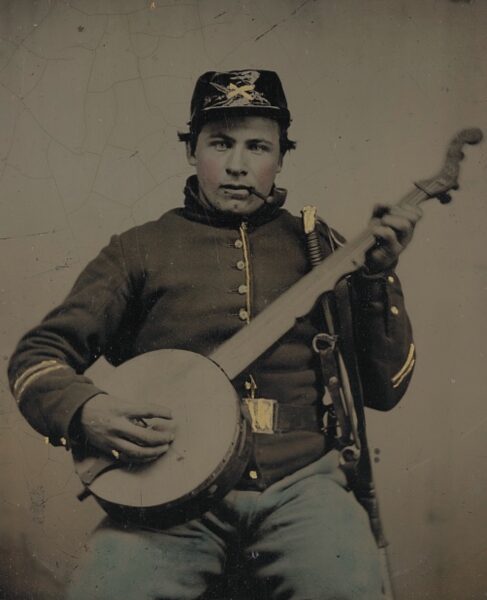 Library of Congress
An unidentified Union soldier and his banjo
Christian McWhirter: Yeah. Thanks for pulling me back to that, because I was going to mention that earlier. So there’s the official musicians in both armies. But far more prevalent, probably more influential, especially once these musicians maybe start to become less common, is the amount of amateur music going on in both armies. These soldiers were accustomed to public singing. They were well-versed in the songs of their day: popular music, political music, religious music. And they would perform both formally and informally all the time. So, you know, when soldiers are sitting around the campfire, they’re going to be singing songs. And the songs they choose to sing, they’re going to have reasons for choosing those songs. Maybe because they need a laugh, they’re going to sing goofy songs. But they’re also going to sing songs that reflect their emotions as they try to grapple with what’s going on in the Civil War and why they’re fighting. They’re going to embrace songs that they think reflect their politics, or as those politics change over time. So there’s a lot of that going on.
And on the march they’re going to sing songs, and they’re going to sing songs that make the march seem less grueling, that set the pace. So the kind of songs they’re going to like are going to be songs that are repetitive and easy to either remember the lyrics or modify the lyrics. The best example of this in the North is the song “John Brown’s Body.” “John Brown’s Body” has a pretty stable chorus and it has just three repeated lines. So soldiers love that song. One soldier said that song never ended. What he meant is they would just make up new verses as they went because it would just be a way to pass the time while they were on these long, grueling marches.
And then, yeah, like you said, they also do kind of formal things. So they form glee clubs. The best singers in a regiment would get together and they would sing songs together in a more kind of complicated way with harmonies and things like that. And they would perform for the other soldiers. I mentioned “John Brown’s Body” earlier. That’s how that song comes about. It’s a Massachusetts glee club that creates that song. And they would also perform shows. So when they’re in winter quarters, there’s all kinds of records of them having plays where the soldiers would stage plays for each other, but they would also stage musical performances.
So, music is just saturated into their lives completely. And it’s affecting everything they do. And it’s coming at them from multiple different directions, both organized music and just kind of random, spontaneous music. It’s just everywhere.
Terry Johnston: Well, good. I think that basically answers the first part of Alyssa’s question. Let’s get to the second part, and we’ve touched upon this a little bit already, but what were the most important uses of music during the Civil War? You touched upon morale some, maybe we can dive back into that a little bit more. But beyond morale, what were the other most significant impacts of music to Civil War soldiers?
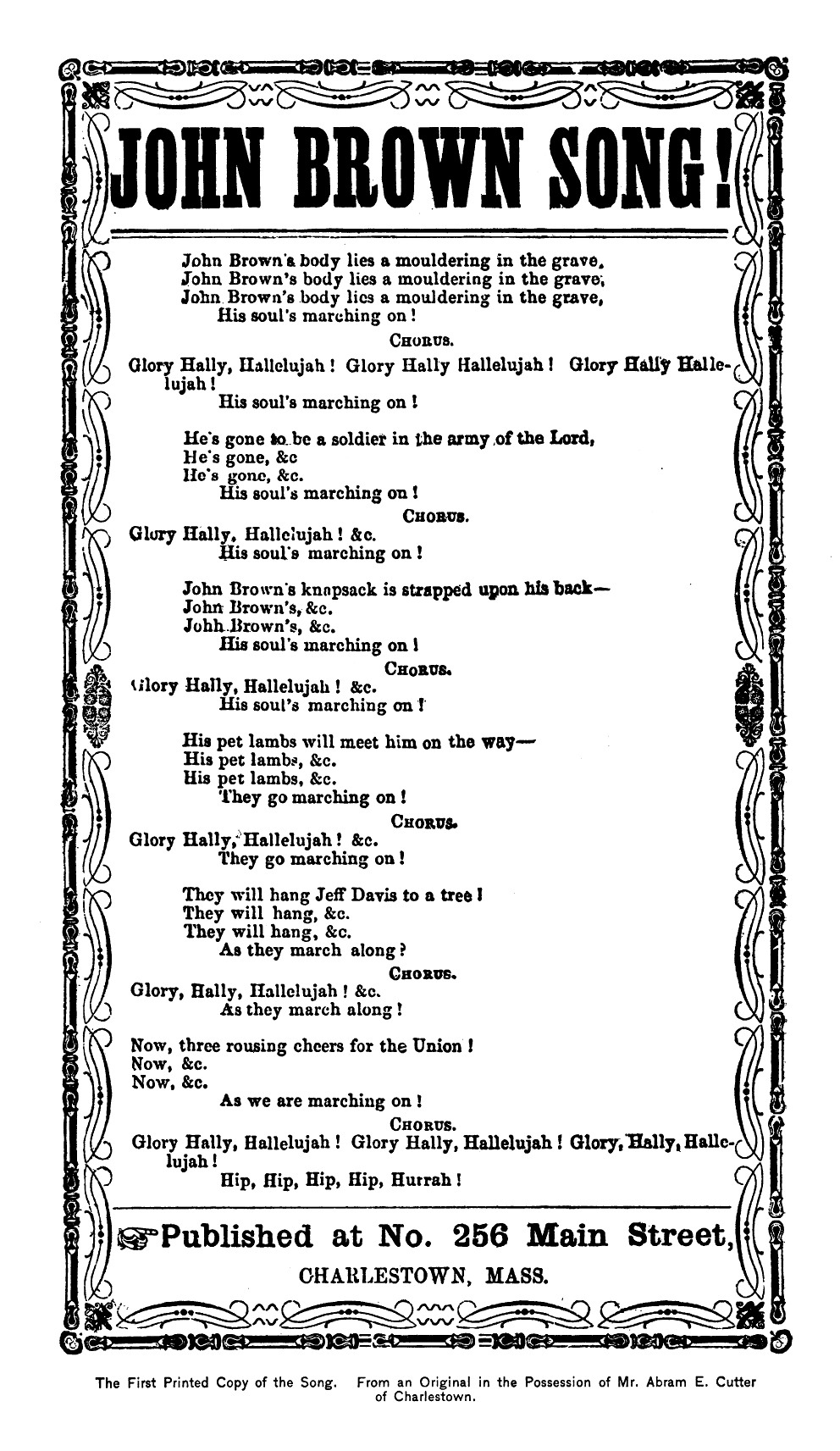 Cornell University Library Making of America Collection
The original publication of the text of the “John Brown Song,” or “John Brown’s Body,” in 1861.
Christian McWhirter: Yeah, so like I said earlier, Civil War soldiers intellectually and emotionally digested the war using music, if that doesn’t sound too highfalutin. And the songs they chose became a core part of their experience. So, you know, when I got into this project, when I started researching this book, I already had an idea that most soldiers, either during the war or in the memoirs they wrote or things like that, talked about music. What I quickly realized, though, is that they talked about the same songs. The same songs came up frequently and those songs were mainly political. They adopted anthems early in the Civil War, and they carried those anthems with them throughout the Civil War. So in the North it was “John Brown’s Body” and “The Battle Cry of Freedom.” Those two songs are cited by soldiers and performed by soldiers more than any others. In the South, it’s “Dixie” and “The Bonnie Blue Flag.” Those two songs just pop up again and again and again. And I think why the soldiers are doing that is because those are songs that they can use to understand why they’re fighting. And also they can manipulate those songs. They can sing them as is, or they can change the lyrics to express to others why they’re fighting.
And so the other big discovery that I made is, as I mentioned earlier, these armies are these like conglomerations of these huge numbers of men from disparate places throughout the United States, right? Well when they get together and they start singing, and especially once they pick their favorite songs, they sing those songs then wherever they go. And particularly early in the war, a lot of Civil War armies are encamped next to urban centers like Washington, D.C., and Richmond and Nashville and New Orleans. What happens is there’s kind of a cross-pollination then: The songs that the soldiers embrace and they sing get heard by the people on the home front and then become hit songs. That’s what we call them today, is hit songs. The soldiers aren’t just using music for themselves. They’re also the largest agents for popularizing music during the Civil War. And the songwriters who understood that during the war and the publishing houses who understood that during the war tended to be the most successful. They start writing music that they think the soldiers will take up because they know if they do that, then their song will be a hit and it’ll sell lots of copies and, you know, whatever else. So, it’s not just important to the soldiers themselves. The soldiers themselves are this extremely powerful agent for spreading and popularizing music.
Terry Johnston: Well, and they do that too through exchanging sheet music with folks back home, don’t they? And that goes both ways, as I recall from your book.
Christian McWhirter: Yes. The soldiers and the people on the home front are always telling each other about the music they’re performing. So, in their letters they’ll be saying, you know, “Oh, I just heard this new song, ‘Just Before the Battle Mother.’ You should look it up.” Or they’ll even write the lyrics of songs to each other. But, yes, if they can get their hands on sheet music, they will actually mail sheet music to each other to say, like, “Well, here’s this song.” And again, they’re doing this because they like the song, but they’re also doing this because I think they want to share the messages of these songs with each other. And so there’s a lot of that going on.
I’ve talked about sheet music a lot, but there’s also other ways music is published. There are song books. And then there’s these little books that could fit in your pocket called songsters. Songsters would contain like 50 different songs that were set to melodies that people already knew. So all they would contain is lyrics and it would say, like, to the tune of, you know, “The Irish Jaunting Car,” for instance, which is the tune that “Bonnie Blue Flag” is set to. And soldiers would buy these, but they would also request them from their families or their sweethearts or their friends. They would write home and say, “Hey, do you remember that songster that I had? Can you send it to me? It really helps me on long marches” or whatever. So, yes, besides just like vocally sharing songs with each other they are also physically sharing the material culture of music with each other as a way to spread these songs, and as a way for the home front and the battlefront to communicate with each other.
Terry Johnston: How frequently would soldiers craft or embrace songs about various commanders of theirs, or opposing commanders? I’m thinking about songs I’ve seen over the years in soldiers’ letters about George McClellan or Stonewall Jackson. Were they prevalent as well, embraced by soldiers on both sides?
Christian McWhirter: I think there’s kind of two answers to that question. So there is a small genre of music that are songs about specific commanders, or songs about Lincoln and Jefferson Davis too. And depending on the singer, those could either be positive or negative. A pretty prominent song in the South was “Stonewall Jackson’s Way,” which is, yes, a song praising Jackson’s prowess as a commander. And it seems to have been popular in the ranks and on the home front. In the North, there are some McClellan songs. The one that popped up the most was this song called “Give Us Back Our Old Commander,” which is actually a song the soldiers performed after McClellan was removed from command. And it becomes the rallying cry for Democrats in the ranks or just soldiers who think that ever since McClellan was removed, you know, the Army of the Potomac went belly up, right? There don’t seem to be as many songs about Grant. Those tend to pop up later, during his political campaigns.
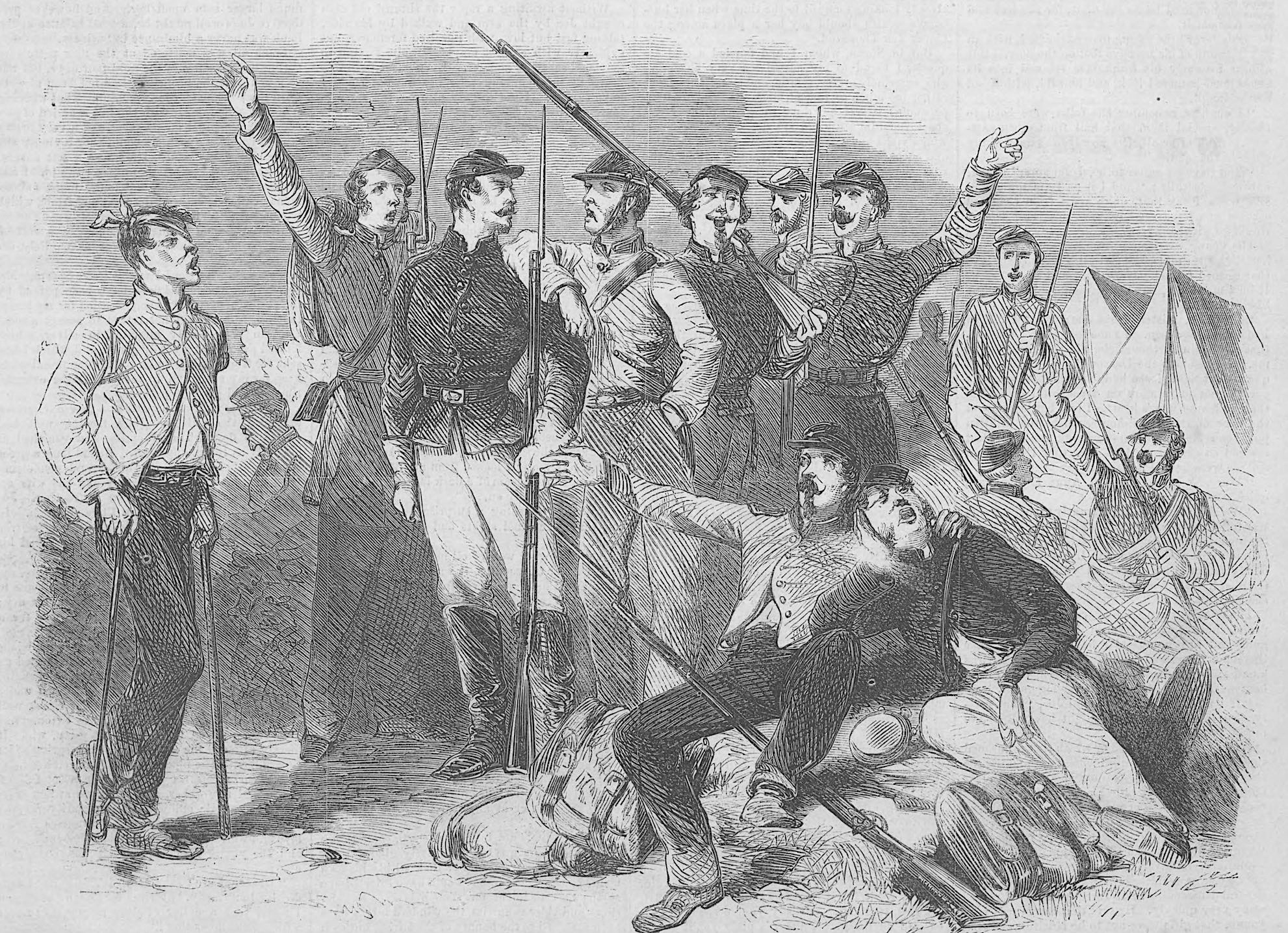 Harper's Weekly
This August 1862 Harper’s Weekly illustration depicts Union soldiers singing the popular song “McClellan is Our Man” in camp.
But then aside from that, too, the soldiers, as I mentioned, are always, constantly improvising new lyrics to the songs they know. So we know that soldiers would sing complimentary but also often crude things about their commanders, especially when the war wasn’t going so well. And we know that was happening, but the soldiers were smart. I found a lot of references to kind of dirty and crude songs about, you know, about anything, about soldier life, about sex, things like that, but also about their officers and commanders. But the soldiers were smart about not writing that stuff down, so it was hard to track down what they actually said in these songs. But there’s also, yeah, this just constant unofficial music bouncing around as well within the ranks and outside too, where soldiers are using music to gripe about or celebrate all kinds of things about their lives as soldiers, including their commanders.
Terry Johnston: Well, let’s get back quickly to the home front. Beyond soldiers interacting with loved ones, either through the mail or through visits home and sharing music that way, civilians at home—and again, this is something I grabbed from your book—in many ways relied on music to help inform them of the war’s significant events. Can you talk some about that?
Christian McWhirter: Yeah. So on the home front, they’re engaging with music too, but there is a real division between home front and battlefronts. Like we talked about ways that they’re influencing each other, but it’s also pretty clear that the songs people are singing on the home front, while they’re also singing these kind of soldier songs or whatever, they’re also seeking out different kinds of songs. So, before I wrote my book, one of the standard lines about Civil War music was that the most popular kind of music during the Civil War were these long, sentimental ballads. And we know some of those, like “When This Cruel War is Over” and “Just Before the Battle Mother,” even “When Johnny Comes Marching Home,” which has like a martial rhythm, right, but is kind of a sentimental song of how they can’t wait for Johnny to come back from the battlefront. Or even songs like about death, like “The Vacant Chair” or “All Quiet Along the Potomac Tonight.” Those songs, while they were sung in the ranks and while there were more of them, more than were published during the war, what I found was soldiers weren’t singing them as often, but people on the home front were. And when you think about that, then, that changes how we think about some of those songs.
So, for those who aren’t familiar, a really great example of this is a song called “Just Before the Battle Mother.” And this is a song about a soldier who’s about to go into combat and what he’s thinking about right before he goes into combat. He’s not thinking about whether he is going to die. He’s not thinking about if he should run away. He’s not thinking about how many of the enemy he’s going to kill, right? All these more unseemly things that a soldier might think about. Instead, he is thinking about his mother and his loyalty to his country. Now, I’m not arguing that no soldiers did that, but we know soldiers think about a lot of other things too. But what that created, then, was an impression that, oh, so the soldiers would sing these sentimental songs and it showed the soft side. I saw almost no evidence of soldiers singing these kinds of songs. The people who are singing these songs are the people left behind on the home front, because that’s what they want to think their boys in the army are doing. They want to think that, you know, if you’re a mom and your boy’s fighting in the Army of the Potomac or the Army of Northern Virginia or whatever, it would be really comforting to think that just before he goes into combat, he might die, his last thought is of you. And so that’s why they’re gobbling up these songs.
They’re also taking in music and crafting music that expresses their view of the war and what helps them deal with the emotions and the politics of the war. That’s what’s going on there. So the same phenomenon are happening on the battlefront and the home front, and sometimes they influence each other. But the motivations and the kinds of songs they’re embracing do seem to be a little bit different.
Terry Johnston: Did you find this happening rather evenly between North and South, Union and Confederate, or was there any significant divergence between the two sections as it came to how they used music?
Christian McWhirter: The biggest difference between the North and the South, there’s two big ones that we haven’t talked much about yet. So, among the white South, or at least the white, pro-secession South, music, you know, they’re under “occupation” by Federal troops. And so music becomes a major means of resistance to U.S. soldiers by women when their towns have been liberated or occupied, depending on how you look at it. And so there’s a really famous story that probably some of your listeners will know, where Benjamin Butler in New Orleans outlaws “The Bonnie Blue Flag” because women are singing it so much. In my book I talk about that story. Since then, some evidence has come out that maybe that never happened. But the fundamental thing behind that story, which is that these women, when Union soldiers go by, they’re opening up their windows and they’re blasting “Dixie” and “The Bonnie Blue Flag” on their pianos, or they’re singing it, you know, at meetings when, like, a U.S. officer is trying to get them to do something. That was absolutely happening throughout the South and to the point that as the war goes on, U.S. soldiers start targeting pianos. There are all these stories where, when they enter a southern city or during the sack of Fredericksburg especially, there’s some really detailed stories of them dragging pianos out into the street and smashing them. And the reason they’re doing that is because pianos were the weapons pro-Confederate women were using to resist U.S. soldiers coming into their towns.
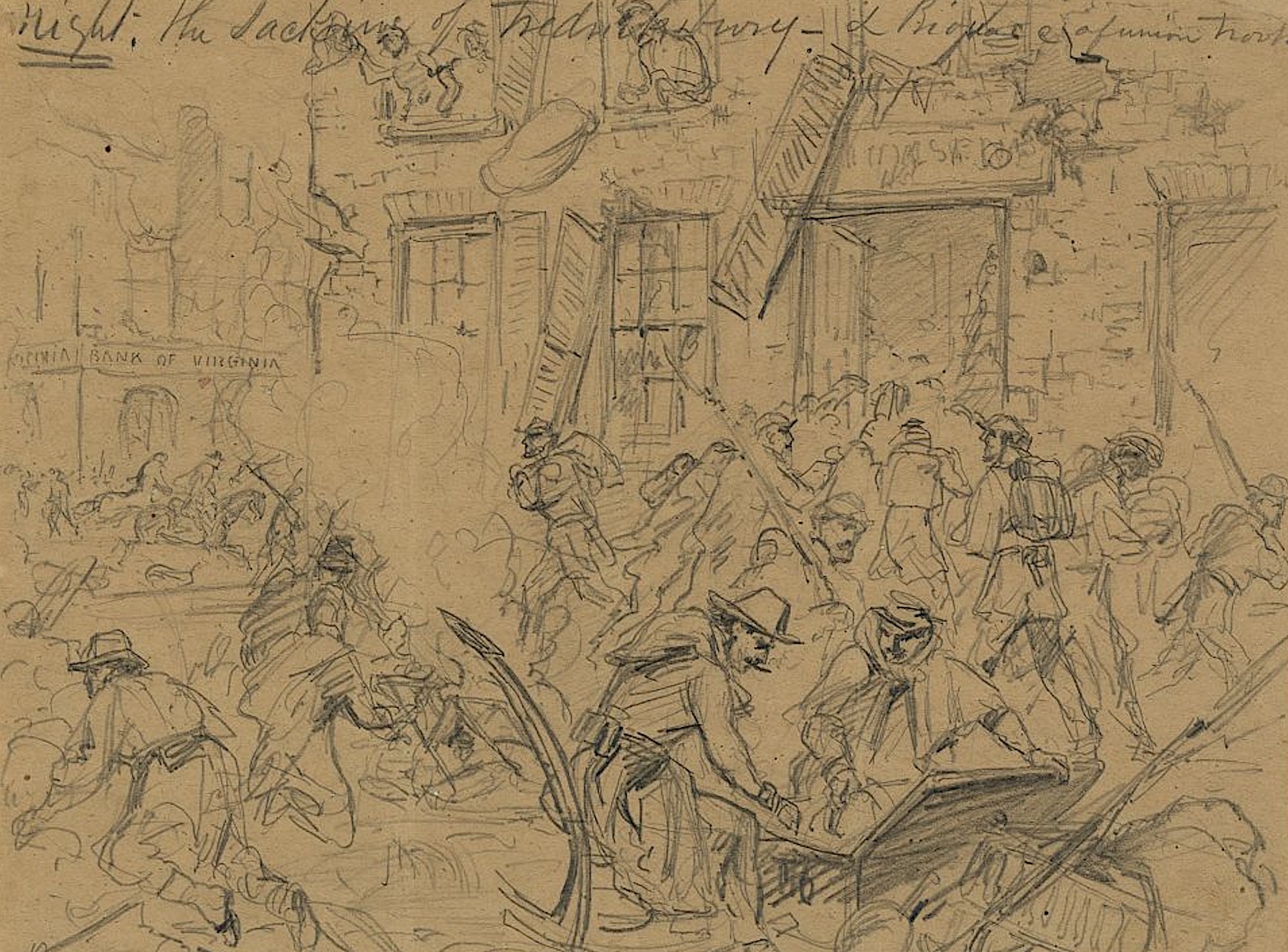 Library of Congress
This Arthur Lumley sketch depicts Union soldiers looting houses in Fredericksburg, Virginia, during the battle fought there in December 1862.
The other group we haven’t talked about at all who have entirely their own story of Civil War music who are mostly in the South, of course, is enslaved people. And enslaved people recognize the potential for emancipation in the Civil War more quickly, and more than many others, especially many white people. And they start using music excessively, especially when U.S. troops are around. They’re doing the opposite of what these Confederate women are doing. When U.S. troops are around, African Americans are singing songs within hearing distance of how much they want to be free, how loyal they are to the United States, and how much they want to fight. Because those are the ideas they want white northerners to go home with. And this blows the minds of many white northerners, because many white northerners who grew up with minstrelsy and other things, they don’t understand what actual black music sounds like. And they’re kind of struck by it and they engage with it all kinds of different ways.
Abolitionists come down and start scribing these songs and transcribing them so they can be preserved. Others try to get African Americans to stop singing this way because it’s so different than the music they’re used to. They think it’s somehow like barbaric or lesser. And then others, once African Americans start serving in the U.S. Army, they embrace these same songs, the soldiers did. So suddenly African Americans, they’re also singing songs like “The Battle Cry of Freedom” and “John Brown’s Body,” but they’re inventing their own lyrics for it, which is about their desire to fight for Uncle Sam and destroy slavery. And so that’s another group in the South that kind of bleeds into the North who are using music in a very unique way, but again, another central way to the way they’re experiencing and influencing the war.
Terry Johnston: That’s fascinating. Especially, I never thought of Union soldiers targeting southern families’ pianos, sort of plunder with a purpose.
Christian McWhirter: Well, and so in many of those stories, too, they drag the piano into the street. That’s important, because they want it to be a public display of destroying this musical instrument, right? They don’t do it inside the house every time. They drag it out so everyone can see them do it. There has to be a message behind that. That’s not just reckless destruction.
Terry Johnston: Yeah. So any final points about music during the Civil War that you think are important to mention that we haven’t touched on yet?
Christian McWhirter: The only thing I would add is, the last two chapters of the book are about memory and music. So because music is so quintessential for the way the Civil War generation experiences the war, it then becomes central to the way they remember the war and to their competing efforts to set narratives for the war. So after the war, both sides embrace certain songs that they think will convey to people why they fought and what they think they achieved. And so in the South, the attempt to spread the Lost Cause narrative, music becomes central to that. And so “Dixie” and “The Bonnie Blue Flag” continue to be popularized. The United Daughters of the Confederacy even create a creation myth for “Dixie,” because “Dixie” was written by a northerner in New York City before the war. They write like a whole new story, basically, of someone writing it in Alabama instead to make it more southern as a way to help their project of creating the Lost Cause narrative.
And then the North, Civil War soldiers or veterans in particular, they embrace “The Battle Hymn of the Republic.” I keep mentioning “John Brown’s Body.” One of the most surprising things I found is that during the war I found almost no performances of “The Battle Hymn of the Republic,” which generally is considered to be the song of the Union. But I think why that happened is because after the war, soldiers who had sung “John Brown’s Body” during the war—“The Battle Hymn of the Republic” is just a rewriting of “John Brown’s Body”—I think after the war, the soldiers embrace “The Battle Hymn of the Republic” as kind of their version of “John Brown’s Body.” They want to sing because it conveys this sense that God was behind them and that they were agents of God in destroying the Confederacy and destroying slavery. And as a result, people then who saw Union soldiers and Union veterans in these parades sing that song projected it backwards into the Civil War. And that’s why we today think “The Battle Hymn of the Republic” was sung a bunch during the Civil War. It’s because the veterans embraced it.
And so, there’s a whole kind of battle that goes on then after the war between both sides as they continue to fight each other with music and try to use music to shape the way people remember the war. Just as they tried to shape the way people were thinking about the war when it was going on.
Terry Johnston: Actually, one final thing for you, Christian. You mentioned “John Brown’s Body” and “Dixie,” those are the most obvious popular songs back then. Was there one that you came across in your research that wasn’t as well known, at least to us today, that you were particularly struck by for some reason?
Christian McWhirter: Ooh, let me think about that for a second.
Terry Johnston: Okay.
Christian McWhirter: That’s a good question. I mean, I mentioned earlier, “Give Us Back Our Old Commander,” that song, I’ll dig a little deeper into that song. Not only was I surprised that song was as popular as it was—I knew that the soldiers rallied around McClellan—what was especially surprising about that song is there’s all these stories then about the Lincoln administration, especially [Secretary of State William] Seward and [Secretary of War Edwin] Stanton, trying to make “Give Us Back Our Old Commander” illegal and raiding the printing press that made it and destroying the plates they used for it. And I was never able to completely confirm that these stories were true. If they were, I mean, that’s remarkable that this extreme effort of censorship was going on against this one song. But I was never able to confirm it. These stories are out there, but yeah, how much of that was propaganda? I don’t know.
I think the other thing that surprised me on the Confederate side was the popularity of “Maryland, My Maryland.” “Maryland, My Maryland” remained a super popular song in the Confederate ranks and it’s all about Maryland joining the Confederacy. Something that is essentially a dead issue by the end of the Antietam Campaign. And some of it’s because the Confederacy isn’t producing as many songs, I think, as the war goes on. But right behind “Dixie” and “The Bonnie Blue Flag” for popularity in the Confederacy is “Maryland, My Maryland.” And it’s got this slow, like romantic melody. It’s “O Christmas Tree.” But yeah, the fact that that song remains so popular among Confederates, even after Antietam, really struck me. I did not realize that song was so central to their experience.
About the Guest
 Christian McWhirter serves as a historical initiatives consultant for the Lincoln Presidential Foundation and editor of The Journal of the Abraham Lincoln Association. He is the author of Battle Hymns: The Power and Popularity of Music in the Civil War.
Additional Resources
Sponsored By