Historian Melanie Kiechle discusses how the fear of “bad air” guided the daily decisions and medical practices of Civil War soldiers and physicians.
Transcript
John Heckman: Melanie, thank you so much for coming on this series. I greatly appreciate your time.
Melanie Kiechle: Oh, it’s my pleasure, John. Thanks for inviting me.
John Heckman: Let’s dive into this because I haven’t talked about miasma stuff in probably 10 years, and so I’m really looking forward to this. Miasma theory gets treated as a punchline today when people say, “Oh, bad air causes disease or makes you sick.” But you’ve argued it was a working evidence-based framework. What did that actually get right, and where did it lead some people astray?
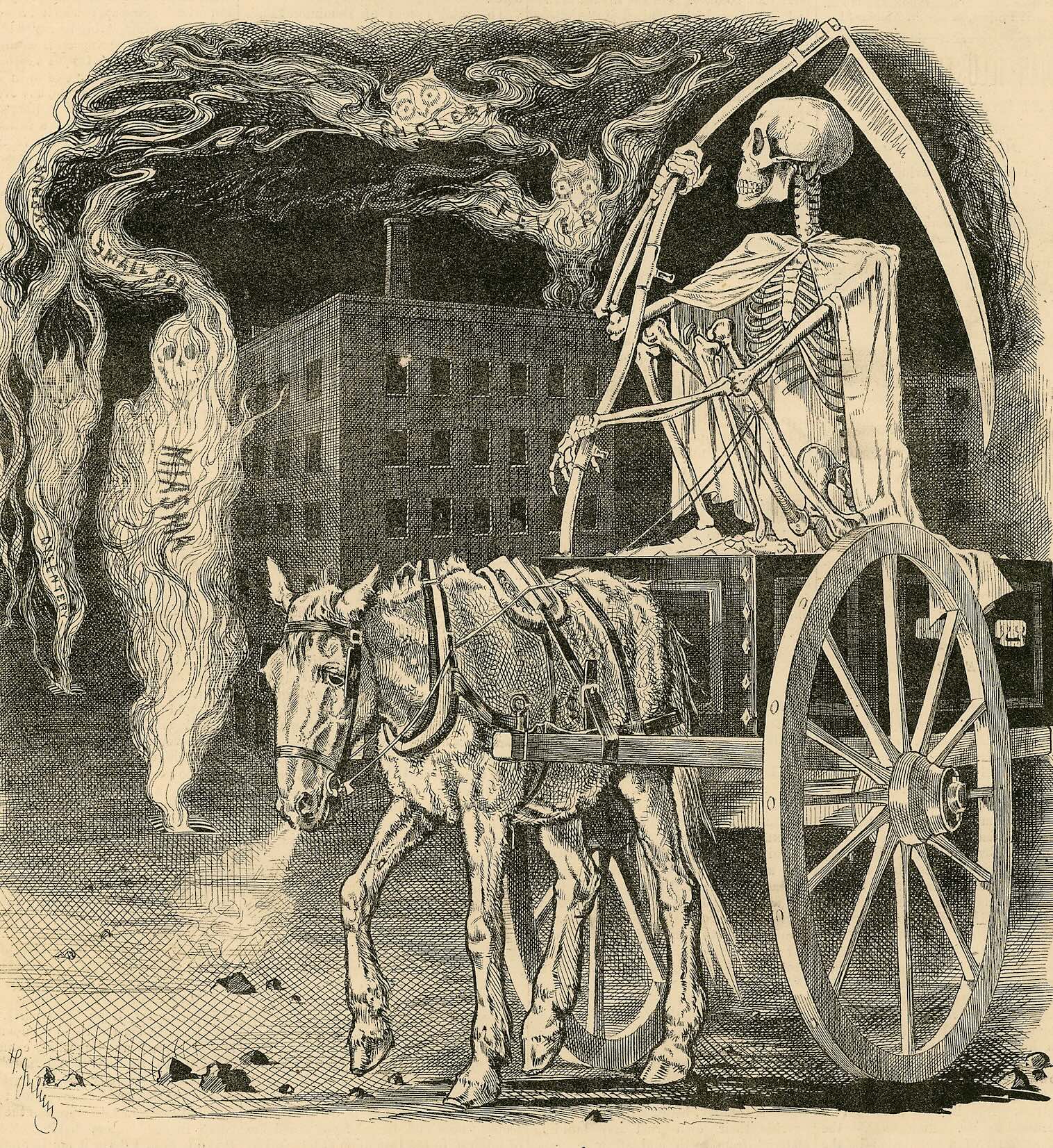 Canadian Museum of Health Care
A depiction of illness-laden clouds of miasma entering a town in the 19th century
Melanie Kiechle: Oh, that’s a really good question. I want to start by saying we have this tendency to think all things that are older are kind of a joke, that no one had anything right. And I always work with my students to think about what did people know and how did they use that knowledge? And that’s really the way I approach miasma theory, is thinking about what people who lived in the period before germ theory knew and understood about what made them sick, and then how they were able to use that knowledge to try to protect their health. So, we look at it as being completely wrong. But I think a better way of thinking about miasma theory is that it’s imperfect knowledge. We still have lots of imperfect knowledge today about disease.
So, the things that people used miasma theory for was really an understanding that any place where there was bad air, and they had various ways of defining bad air, were places that were dangerous to your health. So the classic understanding of miasma is that it arises from decomposition, and this is why people avoided swamps, because of course swamps are full of decomposing matter, and that would be a very dangerous place to be. Not everyone avoided swamps. We know that Maroon communities fled into swamps and were able to use that fear that white Americans had to their advantage. It’s not a complete way of understanding things. There are ways that people worked within miasma theory. But when they paid attention to the air they were breathing, they often were alert to particularly foul smells and the ways that those were affecting them. And so, one thing that I think they got right with miasma theory is you have to be careful in crowded spaces. After scientific advances in how they understood respiration, the chemistry of respiration at the end of the 18th century, everyone came to believe that what we know as carbon dioxide was carbonic acid gas, and that was dangerous. If there was too much of that, if that’s what you were inhaling, you were essentially inhaling decomposition from other people’s lungs. That sounds crazy, except we know after the COVID pandemic that being in a closed room where lots of people are breathing is a place where you might inhale a virus. So miasma theory might be technically wrong, right? They’re talking about decomposing matter. But the things that people were doing weren’t always bad in terms of protecting their health.
John Heckman: You mentioned germ theory. Before germ theory, how did ordinary Americans actually decide a place was making them sick? What were they looking for or smelling for? You said about how they smelled certain things, and we thought of it later as what it actually was. But are they looking for anything as well when they’re looking around, deciding what is actually making someone ill?
Melanie Kiechle: They’re looking for so many things, and they’re not just looking. They’re really sensing the world around them. And this is particularly true of Americans that were moving into new spaces. So, Conevery Bolton Valenčius has written this incredible book, The Health of the Country, where she explains how people, as they moved west, were evaluating the healthfulness of the environs that they were moving into. And there are particular activities and particular times of the year that were understood to be more dangerous. So, in the spring, when you plow new ground, that’s when you’re going to release all the stuff that had been pent up in the soil. That was a point of time that could be particularly dangerous for your health if you believe in miasma theory. On the flip side, if you live in a space that gets good, constant breezes, if you’re far away from swamps, if you’re elevated, those are all things that would work in your favor because it means the air wouldn’t pool and be stagnant around you, but that the breeze would push those miasmas away. So, people wanted to be upwind typically rather than downwind.
John Heckman: When we’re discussing Civil War era camps and field hospitals we’re really talking about environments that could be very foul. How did soldiers’ and doctors’ own descriptions of smell function as an early warning system for them?
Melanie Kiechle: I’m pausing because a warning system makes me think that they would change something in their behavior. But when we’re talking about camps and hospitals and battlefields, individuals often had very little control. So they might recognize, “Oh, this is dangerous,” but what they could do, could they move themselves, could they resituate, that was often out of reach. So, a lot of their efforts are trying to ameliorate situations that they recognize already as being problematic. One of the first places that I found people really interacting and trying to change the environment in their camps is when we look at the tents, and with the tents that soldiers were in, they’re pretty crowded, and the tents are really close together in camps, particularly early in the Civil War. And then because they’re in those year-round, they also are putting stoves in the tents, so they could be enclosing bad air as well, carbon monoxide as well as the carbon dioxide I just mentioned. And so recognizing that they needed to ventilate the tents, to lift the sides, to find ways to space tents out so air would flow between them, that’s one of the first places that I could really see the impact of how they understood the dangers and then were trying to change camps to make them safer. A lot of these changes were also top-down. Because when you think about military structure and camp structure, people are doing what they’re told to do by their commanding officers. They’re building camps, they’re building tents, they’re putting latrines in, in pretty tight spaces. So they had to learn in the course of the war to space those things out and to often use more space than they might think is best for protecting everyone and keeping everyone tight in.
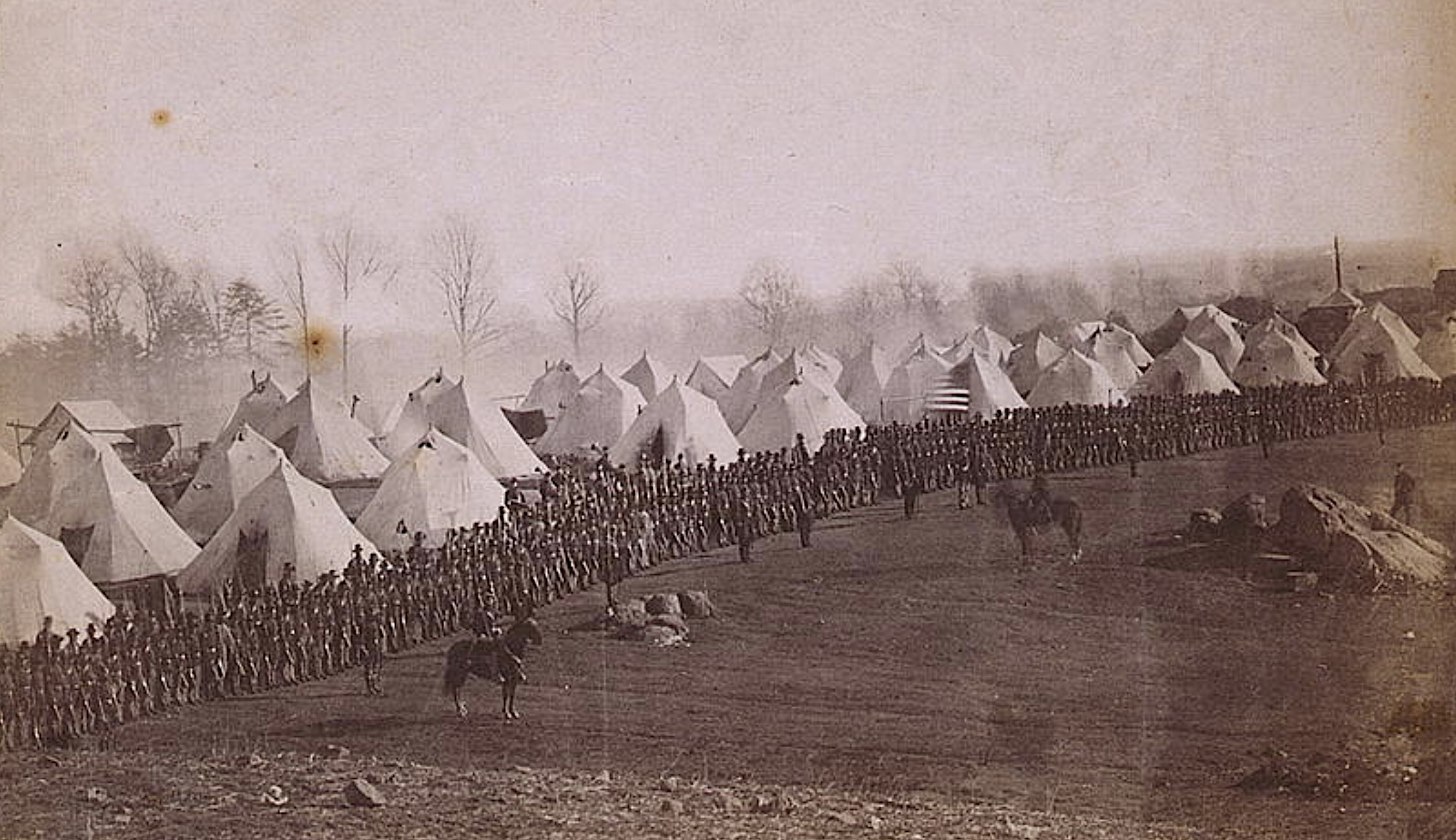 Library of Congress
Soldiers—and tents—of the 5th Vermont Infantry at Camp Griffin in Virginia
The other thing that we can see, and KT Meyer has written about this really well in Nature’s Civil War, is that individual soldiers, when they thought things were dangerous, would make decisions for their own health, and those decisions were often looked at by commanding officers as malingering or as fleeing their duty. But these individual soldiers were like, “The air in that camp is bad, the air in the tent is bad, I’m going to go out and sleep in the forest.” And so they’d be gone overnight, maybe for a couple of days, and then they would come back. And this pattern of behavior among Civil War soldiers also indicates that individuals were taking steps to protect their health when military superiors and the military organization hadn’t quite reached that point yet.
John Heckman: Is that idea of ventilation and trying to get this smell out their version of disinfecting an area, basically, or is it something else?
Melanie Kiechle: Disinfection is complicated in this period with miasma theory. And so, what we think of as disinfection today, which is often chemical and it’s treating surfaces, is not the understanding that they had in the 19th century. When you think that infection is caused by the air, then disinfecting practices are also going to address the air. And you can see this not so much in hospitals or camps, but when we look at people’s homes, that there’d be lilac bushes around outhouses. It’s just a standard that archeologists know. If you see lilac bushes, that’s where you should dig. And the reason that the lilac bushes are there is because they’re trying to stop the odors from reaching the house, from reaching other people, and that is the disinfecting practice. So, for people who are on the move, disinfection is actually about making sure you’re not going to inhale that nasty air, and one of the best ways to do that when you’re on the move is by smoking tobacco, because you would be inhaling that scent, the scent from your pipe, rather than whatever is in the air around you. This is also the same reason, and I don’t think that this was a strong practice during the Civil War for the conditions that soldiers were in, but it’s the reason that boutonnieres were so popular. People would wear a flower on the lapel so you could stick your nose in it when you passed a butcher shop or something rancid, not just as this colorful accent for the clothing.
John Heckman: Is there a measurable effect on disease rates or just camp sanitation based on doing these kinds of activities, or is it more just about morale and discipline and that’s the extent of it?
Melanie Kiechle: So their measurements are very different in the 19th century than what we would look for today, and I think that’s one of the things that makes this really challenging to look at. No one’s really offering statistics to say, “Oh, this many people didn’t die,” or, “The disease rate was 30%, but it could’ve been 60%.” That’s not quite how they’re calculating everything yet. However, particularly for physicians, when they looked at the camps early in the war versus camps that were put together following sanitary principles—so the tents are further spread out, latrines are located at a distance—they do see noticeable differences. And this is one of the things that Union soldiers who were captured and in Andersonville Prison really recognized and commented on, that Andersonville was the inverse of all the sanitary principles that they had been subject to, whether they wanted to or not, in the Union camps, and that disease rates, death, misery was really high there. So, I think when those two stories are circulating, there’s both a morale, but there’s also a practical that fewer people are sick in a normal camp than are sick and dying in Andersonville.
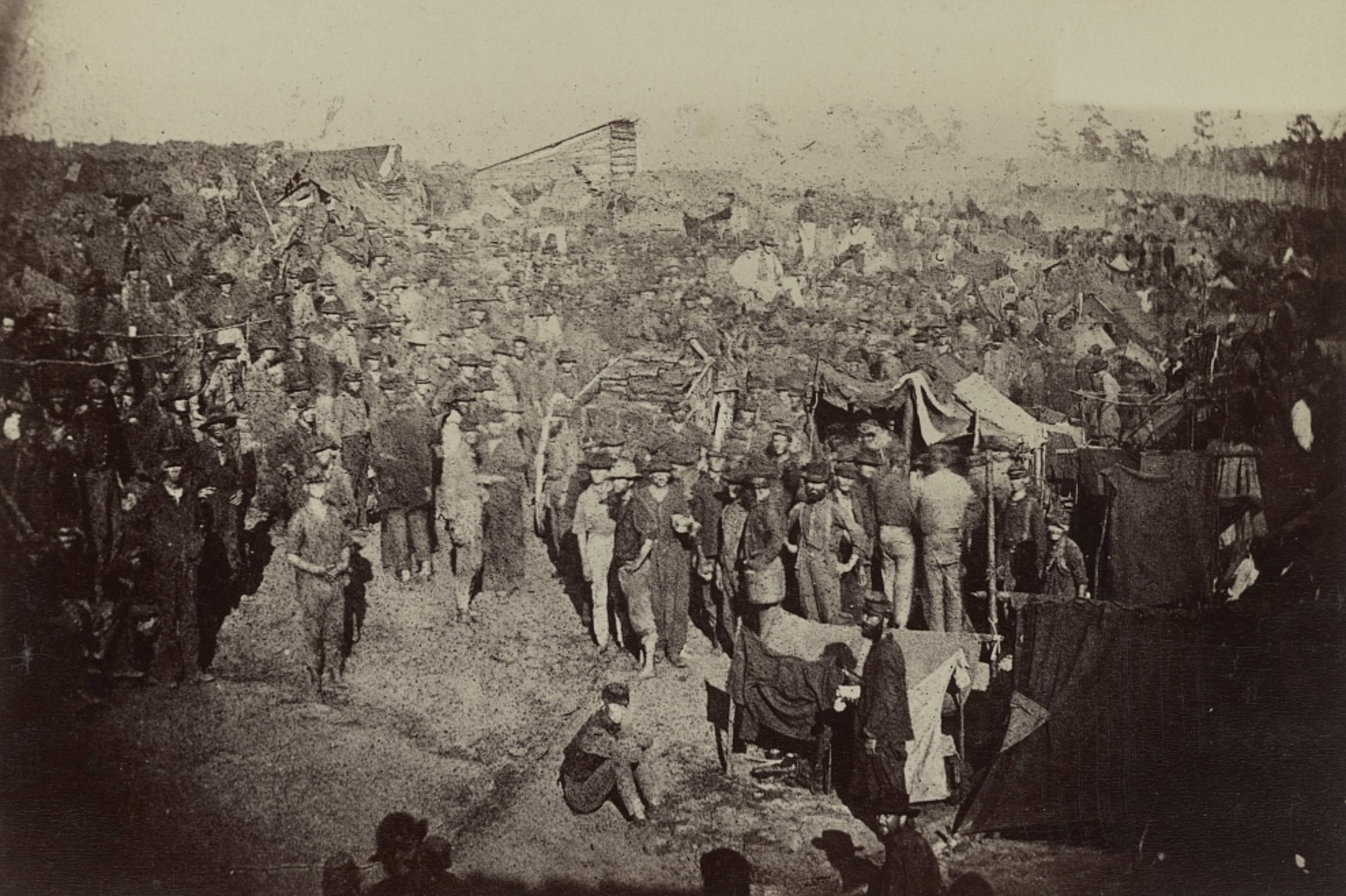 Library of Congress
Union POWs in Andersonville Prison
John Heckman: The U.S. Sanitary Commission’s often credited with introducing systematic public health practices in camps especially. From what you’ve seen in your research, how much of that is genuinely new, or is it an extension of what civilian sanitary efforts are like in cities in America at this time?
Melanie Kiechle: So, public health during the Civil War is both a medical project and it’s a political project, and it doesn’t have purchase in U.S. cities yet before the Civil War. So, there are individual doctors and reformers who are pushing the United States and pushing individual city governments to be more proactive in preventing disease, but they don’t have control. They’re not able to do the things that the United States Sanitary Commission does. And so, one of the turning points with the Civil War in terms of public health and sanitation is giving physicians control through the U.S. Sanitary Commission. And this is something where the United States is lagging behind European countries. Both France and England have already started putting public health bureaucracy in place in governments, and that’s the model that U.S. physicians before the war were really pushing for. So, the United States Sanitary Commission isn’t necessarily breaking new ground, but it’s the first time that physicians have the chance to really implement their ideas on a large scale, and then they show that it works.
And that’s one of the things that does push governments after the Civil War to make public health an arm of government charged with taking care of sanitary conditions to prevent disease. So, when we put the Civil War in the larger context, that’s one of the places where the U.S. Sanitary Commission really matters. That they show that by making this part of the bureaucracy and part of the setup, implementing these sanitary principles from the start does have an impact, a positive impact on curbing disease.
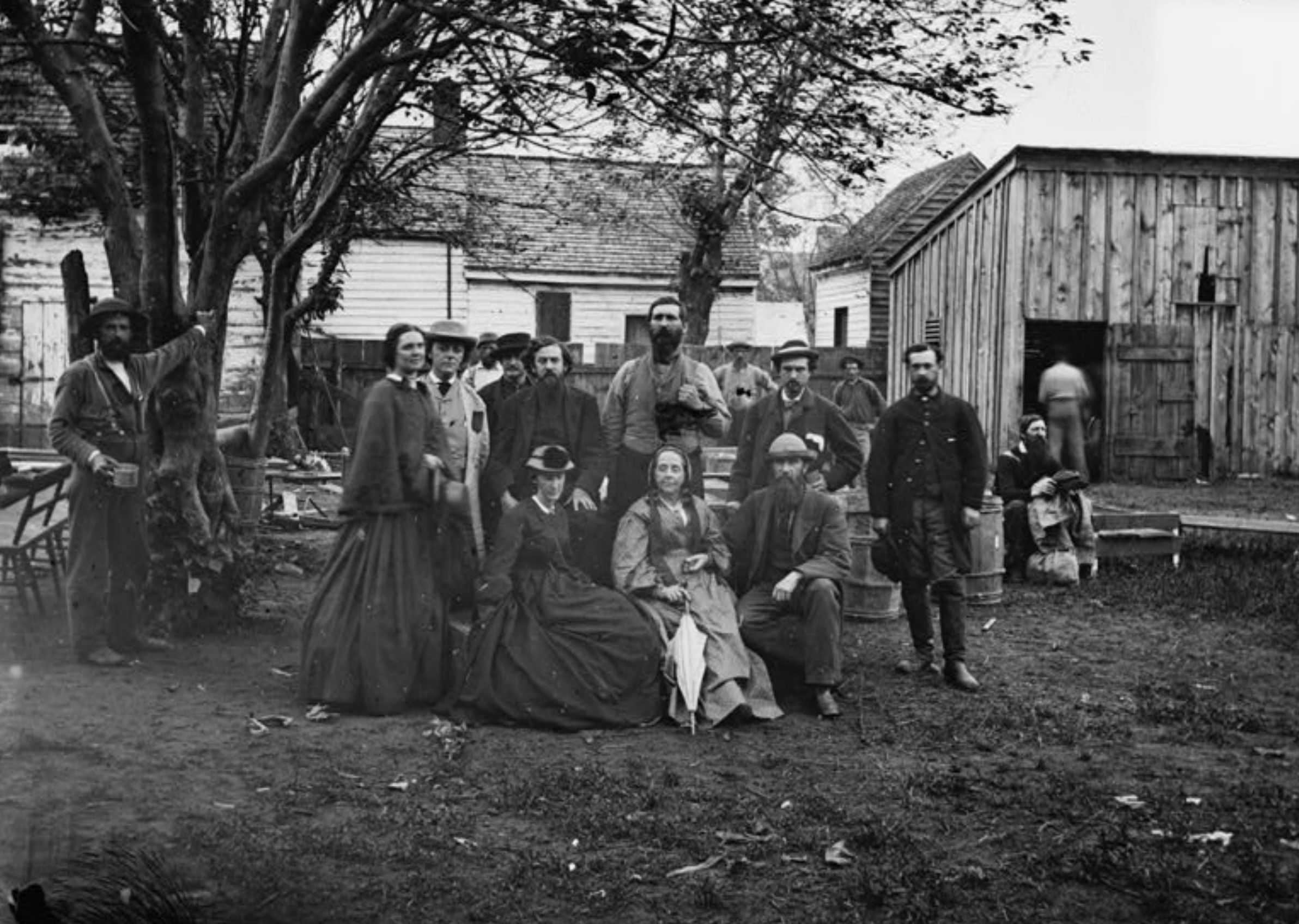 Library of Congress
Members of the United States Sanitary Commission at Fredericksburg, Virginia, in 1864
John Heckman: To me, it seems like it’s a little bit of a parallel course between when we discuss how certain technologies come out in military circles first and then end up in the civilian world, such as GPS, cellular phones, smartphones, etc. It seems like there’s a little bit of a parallel here where new ideas around public health are, in a way, being tested in the military camp first to see what’s actually happening, and then deciding should we make it a political thing in New York City or Charleston, South Carolina, or somewhere else after the war. Is that a different way to say something like that or to put that kind of a thing into context?
Melanie Kiechle: I think that’s a really great way to think about it, but also to think about the popularization of the new idea or the new technology, to follow your metaphor. The physicians who are trying to implement this, they are not coming up with these ideas themselves. The ideas have been around. Florence Nightingale and the Crimean War had really made the case publicly for why these things were important, ventilation chief among them. But how do you implement that? And how do you get people on board with an idea that they haven’t been exposed to? That’s something that’s really difficult. People didn’t go into the war hoping to have their minds changed about sanitary issues, but the exposure to these ideas at really large scale, I think, does change the public attitude towards what is possible, what is okay, and seeing the efficacy or surviving—and therefore thinking that there is efficacy in these sanitary ideas. That does have a lot of power coming out of the war.
John Heckman: How much of what the military, especially the soldiers individually, knew about preventing illness came from some kind of medical instruction versus folk practices? I know a lot of people from where I’m from still use old home remedies to do things and to fight against certain things like sore throats and things like that. Are some of those men or many of those men still engaging with those kinds of ideas rather than saying, “I heard this doctor tell me this and it must be true”?
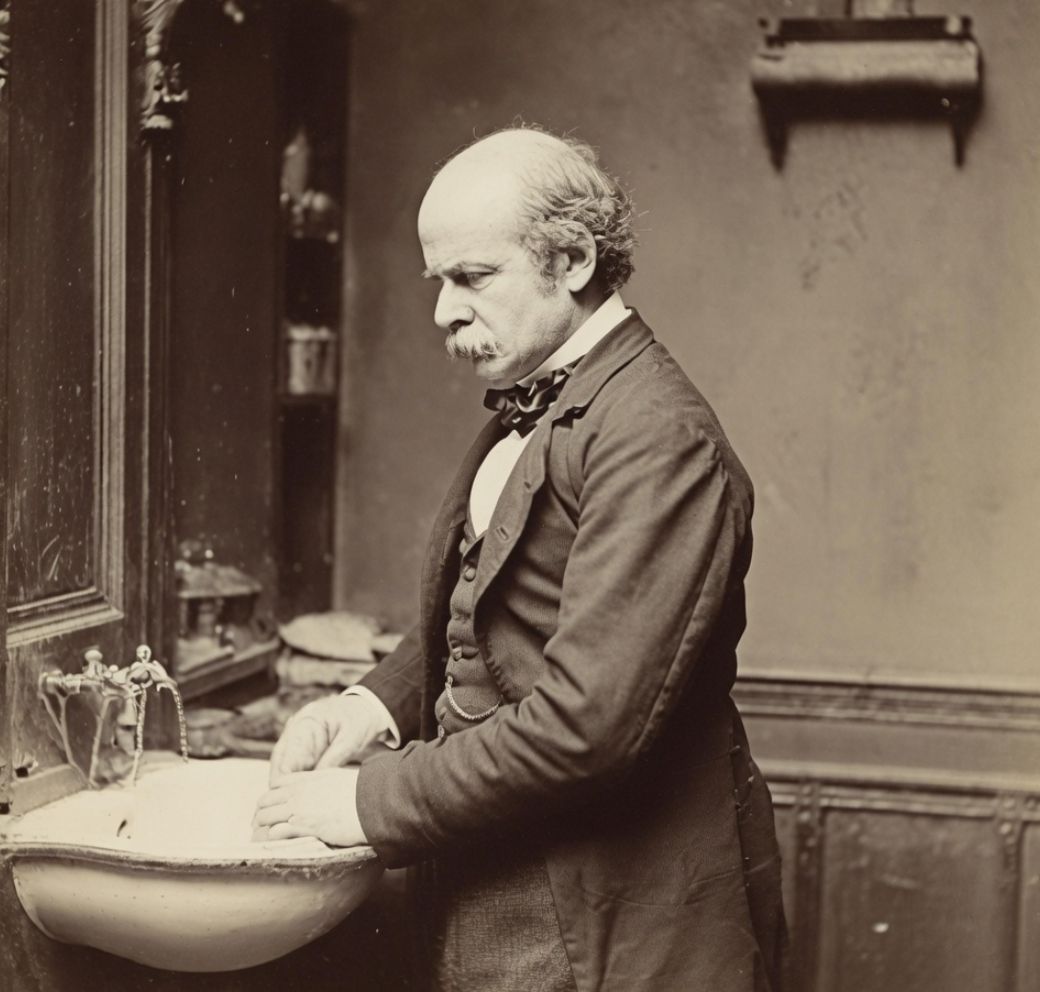 Library of Congress
Ignaz Semmelweis
Melanie Kiechle: I think this is very difficult to discern. What is folk practice versus what is medical practice? And I give an example from talking to my students this year. I was walking them through, like, all these different moments that the medical field moves towards germ theory, and one of them is Ignaz Semmelweis teaching people to wash their hands. And then I ask the students how many of them use medical theory in their daily lives, and they’re all like, “No, none of us do.” And then I ask, “How many of you wash your hands?” And they, like, all raise their hands, thankfully. But that’s a great example of an everyday practice that people don’t recognize has medical origins. And so, when we’re looking at those home remedies and we’re thinking about, like, folk knowledge, we’re thinking about indigenous knowledge, we’re thinking about African knowledge systems and their ideas of healing, the question of whether or not that is medical isn’t necessarily the right question for us to ask. It’s, “Is it effective? Do people understand that it’s effective? And then how regularly do they implement that knowledge into their daily lives?”
So the soldiers are coming from a lot of different places, a lot of different backgrounds, and when they get to camps, they’re all thrown together. And so, this question of what they’re learning really comes down to, like, their day-to-day, what do they understand to be effective, and then what do they understand to be burdensome? Learning to use a latrine is a very strange thing for men who are used to being really spread out on farms across the United States. The idea is you shouldn’t be able to smell human waste. That’s dangerous. So concentrating that in a latrine is a fundamentally odd thing for soldiers to get used to during the war. And then understanding that the latrine has to be this far away. That’s actually what’s protecting us, and it’s not dangerous to go there and leave. It would be dangerous if that were right next to the camp, though. And again, that’s knowledge that’s very difficult for individuals to say, “Oh yeah, I learned that from a doctor,” as opposed to, “Of course you wouldn’t want a latrine next to your house.”
John Heckman: Were there cases when you were looking at these miasma-based preventions where it actually worked against soldiers and led to something, a kind of wrong intervention, if you will, in the camps or beyond?
Melanie Kiechle: I’m trying to think about that, like where it might have led to the wrong intervention, and I think the place to really focus on this is the hospitals. So, the hospitals are makeshift. They’re tents. They’re requisitioned barns, requisitioned houses. None of them have really been set up as hospitals in the way that we encounter a hospital today. And the idea of disinfection is, I think, the place where we would get really hung up if we were to teleport or something into one of these camps. Because disinfection as an aerial practice means you want the hospital to be sweet-smelling. Sweet means healthful. It’s the opposite of noxious. And you might bring in pine boughs, depending on how long the hospital is in place. But you wouldn’t disinfect the instruments—to sterilize them, to boil them—and that is actually the thing that it’s much more effective at stopping the spread of infection. So, the things that they’re doing to try to disinfect hospitals, like spreading lavender water around the beds, that’s not so effective. And I think this is, again, this is just a moment where their knowledge is limited.
John Heckman: Was the Civil War itself this transition point that some think it is of medical lessons being absorbed and we’re seeing germ theory coming into being instead of being shunned away, where kind of miasma theory is being replaced? Or is it something else?
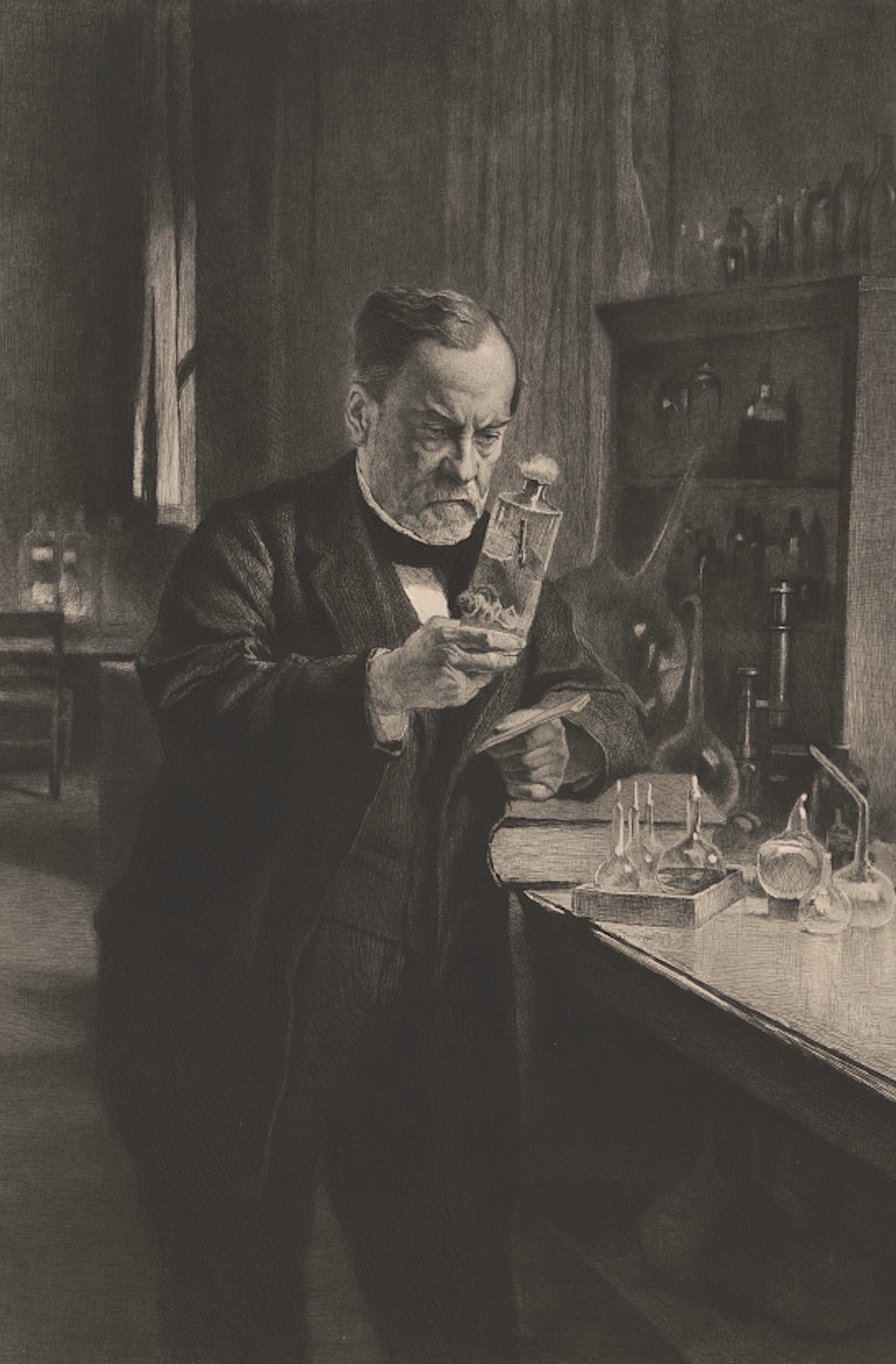 Library of Congress
Louis Pasteur
Melanie Kiechle: I’d have to say it’s something else, because germ theory, the way that we commonly think about it, is something that is introduced in the 1880s, and this is again through European scientific discoveries. The work of Louis Pasteur in France and Robert Koch in Germany, really indicates that there are specific microbes, we can’t see them, that are the cause of specific illnesses. And that’s what germ theory is. It’s understanding there are specific causes of specific illnesses, and if we can eliminate the specific cause, you could eliminate the illness. This miasma theory is an environmental theory of disease, and it’s like everything around you somehow is affecting the body. So during the course of the Civil War, the understanding is very much it’s everything around you. They don’t spend a lot of time even investigating how a disease is being spread in the camps. They know that they’re crowded, and when things are crowded, it’s dangerous. William Hammond, who’s the surgeon general, writes about the fact that the population density in Civil War camps is greater than the population density in London or in Paris. So of course they’re incubating disease. This is something that’s understood as an urban problem. The thing that I think really changes is the recognition that doctors know something, that they can be helpful, and that they can be helpful both in preventing disease, perhaps even more than they can in treating someone who is sick or wounded.
John Heckman: If Civil War-era doctors had a firm grasp of germ theory, since they’re not going to know about it for a while yet, if they had that kind of firm grasp, what do you think camp practices would’ve looked like in a different way? How would it have changed or how would it have evolved at that time? And this is obviously your opinion of it, and we’re being a little bit facetious with this, but I think it’s an interesting point to think of how the camps may have looked different at that time.
Melanie Kiechle: Yeah, this is the kind of thinking I typically don’t do as a historian because I’m curious about what actually happened, not what might have happened. So, in terms of thinking about that, if physicians had germ theory, if they had known that there are specific microbes that they needed to watch for, the things that might have been different, I don’t think like the camp structure, creating guidelines and regulations for how to set up camp, I don’t think that would change very often. I do think the practices for quarantining individuals who are ill might have been more rigorously enforced, continuously enforced. The place where I think we would see the most significant difference is really in the hospitals, where if there was an understanding of germ theory, if there was an understanding of how illnesses spread, practices would have been significantly different. They would have tried, I don’t know if they could have succeeded, at spreading everyone out quite a bit more and not going from one bed to the next directly. Washing hands, again, is something that they probably would have done a lot more of if they had known the impact that could make.
John Heckman: You wrote about how the recent COVID-19 pandemic revived interest in 19th-century sanitary thinking—or just the study of it in general—and trying to come to terms with what it was and how it worked. Could you explain that to us as far as why you think the pandemic reignited this issue and how we can study it now in the 21st century?
Melanie Kiechle: Yeah. So, one thing that we need to inject, I think, is what happened to miasma theory when germ theory was introduced. And by about 1900, people no longer believed that the air would make them sick. Everyone was worried about things that they were touching, and particularly in public spaces, if you were sharing a bus, if you were sitting on the same velvet cushion, what invisible germs might be there for the next person to pick up? That was really the concern. And then across the 20th century, almost all of our practices around disinfection were contact disinfection. So you could think about early in the pandemic when people would get their groceries delivered and then were, like, wiping everything down with Clorox wipes. That wasn’t effective. That wasn’t going to work against a virus that is being transmitted through the air, but people didn’t know. And once the knowledge that the virus, the COVID-19 virus, was airborne, what came out and was more thoroughly accepted in scientific communities, by the World Health Organization, that really changed practices. And the biggest way that it changed practices, of course, is we all donned masks for quite a while, whether people wanted to or not. That was the thing that was supposed to be effective to really stop us from inhaling what other people were exhaling. So that’s the big picture of why recognizing that an illness is being spread through the air reinvigorated interest in miasma theory and how people used to understand the spread of disease, because there were a lot of practices that we could have implemented sooner if we had any cognizance that’s the way a disease could travel.
John Heckman: If a student comes to you or if someone who’s been studying the Civil War era for 30 years comes to you and says, “I don’t know much about this and I would like to learn more,” or, “I would like to study more,” how would you tell them to go about doing that?
Melanie Kiechle: I think one of the things, particularly if people want to understand medical knowledge during the Civil War, the knowledge that people brought with them into these spaces, one of the places to look would be all of the publications of the United States Sanitary Commission. But before that, I would look at domestic health guides, the books that people had in their homes that they turned to when people got sick or something was wrong, and see what are the remedies, what are the recommendations there, what knowledge did people have that they were bringing with them into this very different atmosphere and experience when the world is turned upside down for war.
About the Guest
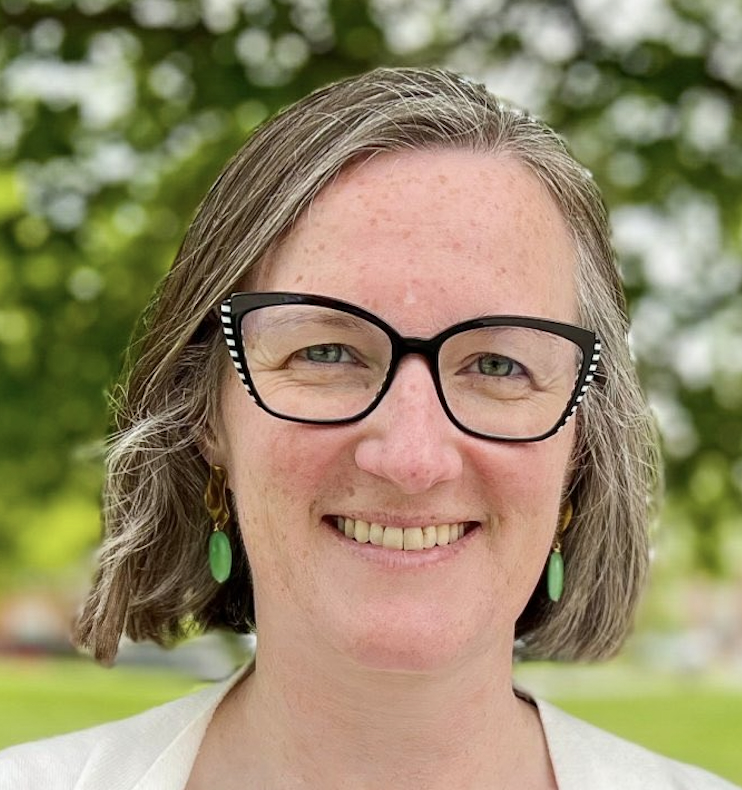 Melanie Kiechle is an associate professor of history at Virginia Tech and author of Smell Detectives: An Olfactory History of Nineteenth-Century Urban America (2019).
Additional Resources
-
- Conevery Bolton Valenčius, The Health of the Country: How American Settlers Understood Themselves And Their Land (2002)
- Kathryn Shively Meier, Nature’s Civil War: Common Soldiers and the Environment in 1862 Virginia (2015)
Sponsored By