Sarah Handley-Cousins discusses the presence and treatment of the “invisible wounds” suffered by Civil War soldiers.
Transcript
John Heckman: Sarah, it’s a real pleasure to have you on. Thank you so much for your time.
Sarah Handley-Cousins: Thanks for having me. I’m excited to be here.
John Heckman: Let’s dive right in. What’s the most common mistake in popular history and media when we talk about Civil War era mental health?
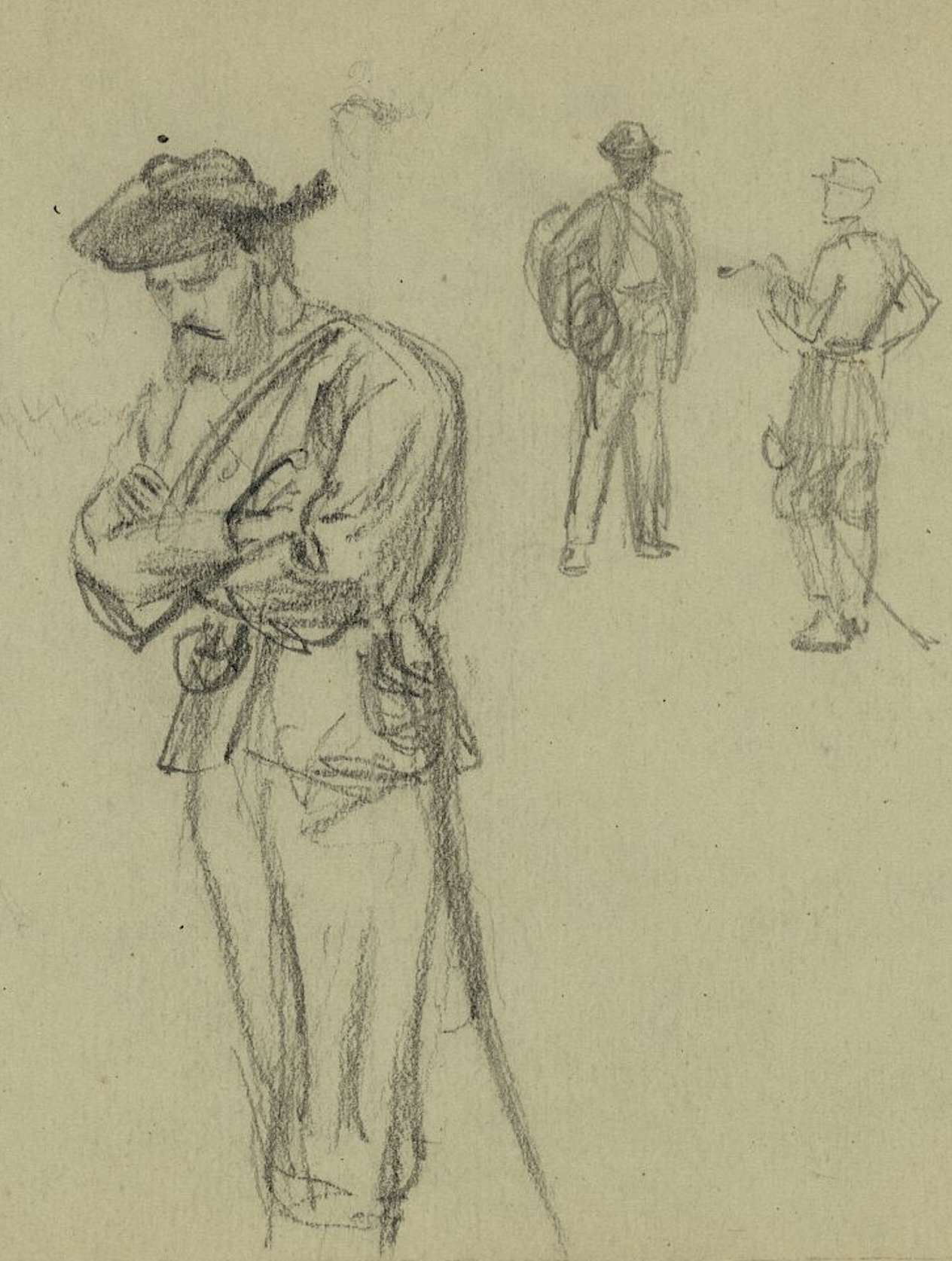 Library of Congress
Afred Waud’s wartime sketch of an outwardly glum Union soldier standing in isolation
Sarah Handley-Cousins: I think the biggest one is that it didn’t exist, that it wasn’t a problem, that there weren’t any mental health ramifications for Civil War soldiers after the war. I think part of that comes from another myth, another assumption that a lot of people have, which is that psychological fallout or psychological problems from war only come from what we consider, quote unquote, “bad wars,” and that the Civil War was a, quote unquote, “good war,” right? And the war that we associate with mental health problems is the Vietnam War, which is, culturally, we think of as a, quote unquote, “bad war.” And because the Civil War can easily fall into a framework of being a good war, a war that was fought for clear motivations on both sides, it was a war that did not result in negative mental health outcomes. That’s the biggest, most overriding-ish, myth that exists about the psychological aftermath of the Civil War, is that it just, there wasn’t one.
John Heckman: Let’s consider that distortion a little bit further because now in our contemporary world, we often just reach for PTSD as the overarching kind of theme with all of these discussions. Does that term apply backwards into the 19th century at all?
Sarah Handley-Cousins: That’s such a good question, and it’s a question that I think has spurred a lot of debate in the field. A question that comes up really often is what scholars of this are doing, essentially just taking this phenomenon that we recognized after Vietnam and just assuming that it happened and applying it back into the past—that PTSD helped scholars to think about the possibilities that existed for soldiers who fought wars, period. As we started to understand or to see or to recognize the psychological aftermath of a war—after the Vietnam War, and then again in the United States after Iraq and Afghanistan, or during Iraq and Afghanistan, those conflicts—as what we knew about war-related trauma evolved, it helped scholars to ask new questions then about the past. So I don’t think what scholars are trying to do—the scholars who are really doing this work in a meaningful and thoughtful and careful way—are not simply saying, “PTSD exists now, and therefore it existed in the past.” That’s not what they’re doing.
Instead, they’re saying, “Okay, we’ve seen that war can do these things. These are the symptoms that are associated with PTSD. Are we seeing those kinds of symptoms? Are we seeing people talking about mental struggles, mental difficulties, or difficulty reintegrating into society? Where are we seeing that and how are we seeing it? What language are they using in the 19th century?” So most scholars, I would say almost all scholars, do not use the phrase PTSD. Like, I don’t say, this soldier from the 20th Maine definitely had PTSD. Most scholars now, I’m thinking of me, Diane Miller Sommerville, Jonathan Jones, there’s a couple others as well, use the term “war trauma” just to like make it a little bit more broad, make it a little bit more neutral. And also, I think importantly, to account for the fact that diagnoses are contingent on the cultures that created them. PTSD as a diagnosis is a diagnosis tied to the Vietnam War era. It’s a diagnosis that exists in that moment. And it has continued to evolve, right? What we know about PTSD now is different than what we knew in the ’70s and ’80s and early ’90s.
And so, we can learn from that and then look to the past and then say to ourselves, “What is the historically contingent experience that soldiers were having at that time?” And so by using this other term war trauma, it separates us a little bit from that historically contingent diagnosis that exists right now.
John Heckman: A little bit of a rhetorical exercise that you’ve also performed in a very positive way is you’ve written about non-visible disability in the post-Civil War North specifically. What makes an injury or a condition legible to other people back then, or perhaps what made it invisible to them since we’re discussing these terms like PTSD and non-visible disability and war trauma.
Sarah Handley-Cousins: Yeah. Thank you for that question. This was not something that I had ever actually considered, the distinction between a visible disability and non-visible disability. And it really only struck me when I was giving one of the first presentations I ever did on this very early project that I was working on, Joshua Lawrence Chamberlain. Most people thought I was, like, completely nuts to be writing about this guy in the first place. And I gave this presentation. I was really struggling with trying to make sense of his experience, and a mentor of mine named Erik Seeman said, “I think one of the things that’s really different here is that no one can see these wounds that he has.” And I thought, “Gosh, yeah, there is really something to that,” because there had been a lot of scholarship about the representations of disability. The idea of the empty sleeve is really common after the Civil War, right? There’s a lot of art in Harper’s Weekly. There’s a lot of poems. There’s very popular images that associate Civil War disability specifically with the amputee, and so amputation becomes this kind of stand-in for all Civil War disability. And amputation is—this is not to downplay the ramifications of an amputation by any means—legible to 19th-century Americans in the way that other kinds of disabilities are not. You can see it. It is very obvious to 19th century Americans why that disability might stop you from being able to perform work in the same way that you would otherwise do, right, manual labor. Why you might need support, why you might need a pension, why you might need other kinds of community supports or monetary support.
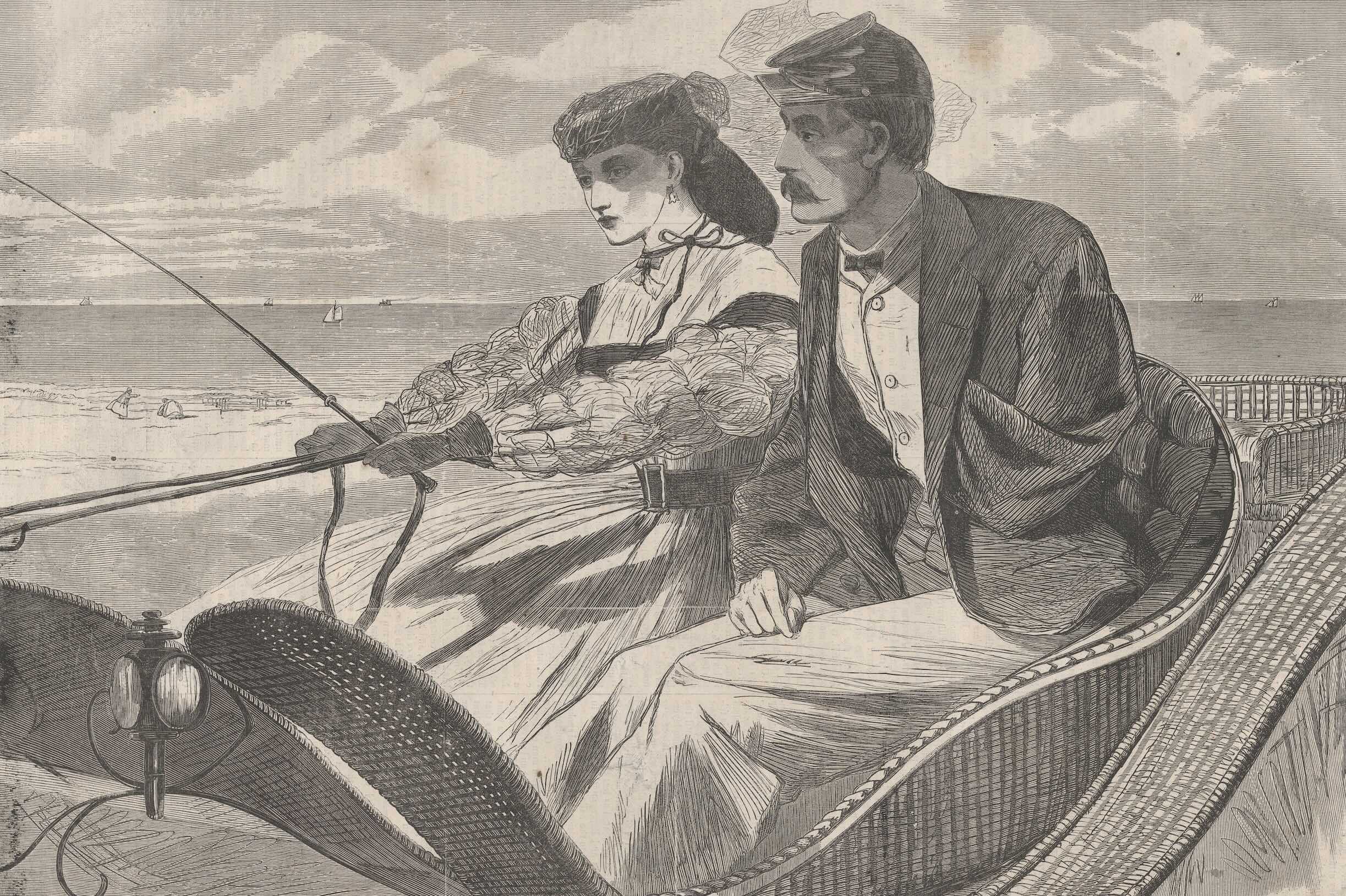 Harper's Weekly
In 1865, Harper’s Weekly published this Winslow Homer illustration, titled “Our Watering Places—The Empty Sleeve at Newport,” which depicts a wounded Civil War veteran.
And that helped me realize, oh, there’s a myriad ways that the Civil War affects people’s bodies and minds, and only this tiny slice of it is actually super understandable or legible to the public. So what do we do? How are people experiencing all these other things that they come out of the war with? And so that’s what really drew me to that question. And I think that one of the most important parts of that that I discovered was that there is an inherent suspicion that many 19th-century Americans—whether just average civilians or physicians or asylum attendants and pension bureau bureaucrats—there’s this suspicion that they have that people who say that they are disabled and in need of some kind of public support, but whose disability is not super obvious, are frauds. They’re cons, they’re malingerers, they are paupers. They’re actively trying to get something out of you, and particularly they’re trying to get something out of the government. And so this is one reason among, I think, a couple, why people who are struggling with mental illness after the war really don’t find a lot of support, because it isn’t legible. It doesn’t make sense to people in a way that amputation does.
John Heckman: With Chamberlain, I’m sure most people listening to this podcast know a thing or two about Joshua Lawrence Chamberlain. I think they do because they watched the movie [Gettysburg] and/or the Ken Burns [PBS] series. But there’s a lot more to learn about him, which we won’t go into in this episode. But could you tell us a little bit about what wound he’s actually carrying at this time—because he doesn’t have the empty sleeve—and how this psychological or non-visible wound could be hidden under this idea of heroism because he’s seen as the hero of Little Round Top, therefore he’s one of the heroes of the Battle of Gettysburg. How is that kind of a facade to the pain that he’s actually experiencing?
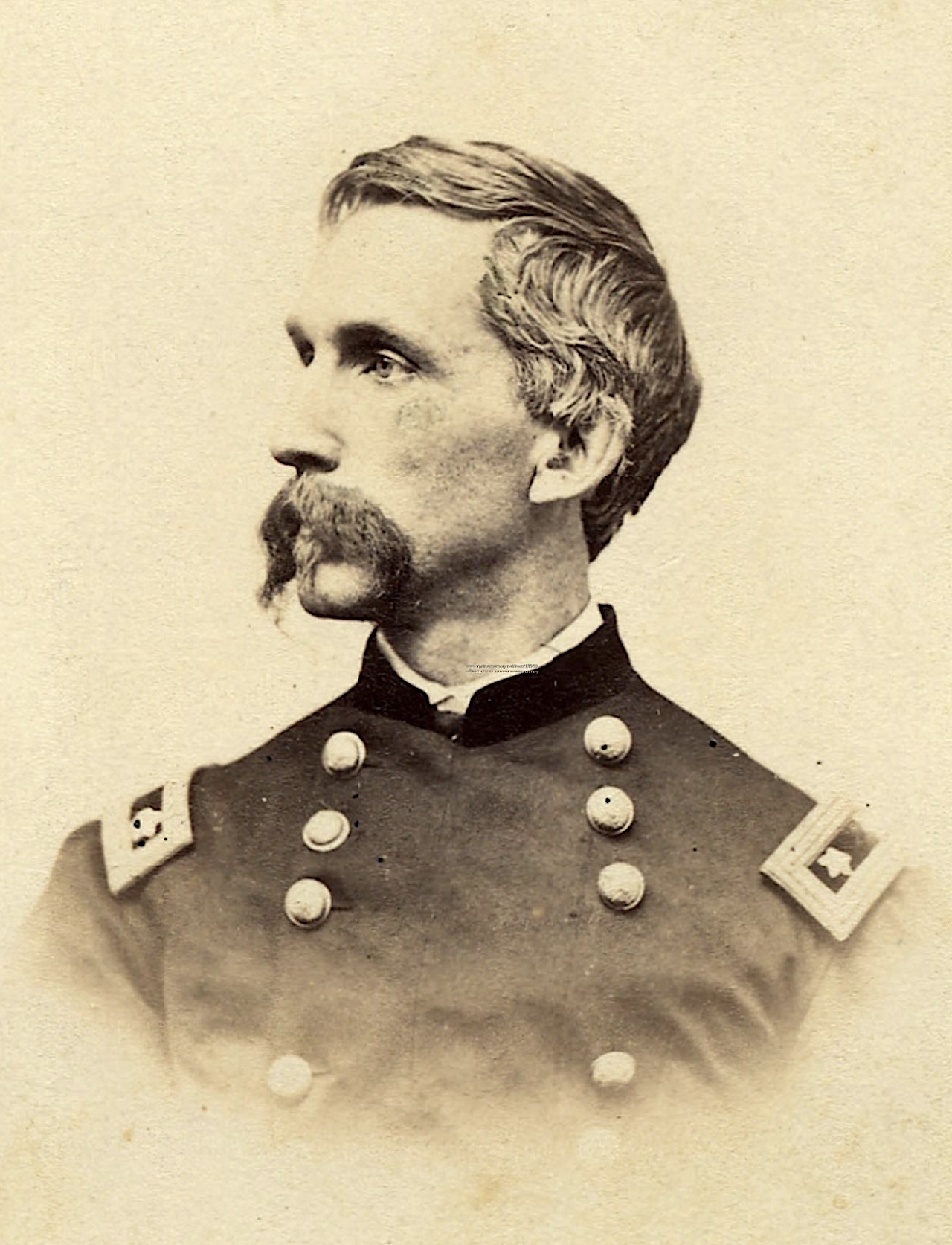 Brewer Public Library
Joshua Lawrence Chamberlain
Sarah Handley-Cousins: Yeah, and this is why I think people thought I was a little wacky for wanting to study Chamberlain in this way, because Chamberlain does have this sort of outsized presence. And for a lot of Civil War historians, because of that, they kind of roll their eyes. They’re like, “Okay, I’m over Chamberlain. I don’t want to know anything else about Chamberlain.” So Chamberlain is wounded at the Battle of Petersburg in June 1864. He is shot—there’s a lot to this story. It’s a really powerful story, but I’ll keep it really simple. He’s shot through the hips, and the mini ball crushes his hip bones and slices through his body, cuts through his urethra, and impacts his urinary system. And it is assumed that he is going to die. As most people know, if you were wounded in the body, in the trunk, often physicians just assumed that there wasn’t much that they could do for you. And this is a particularly complicated wound because his joints are involved. There’s a lot of sort of genital impact to this wound, and it will be complicated to resolve.
And so the field hospital surgeons explore a little bit. Of course, it’s immensely painful. He’s bleeding significantly. And he says, “Please, just let me die.” And he does worry a little bit because he isn’t totally sure himself about what the extent of the wound is, and his worry is, in terms of the sensation of the shot, he thought he’d been shot in the back. And he thought, “Oh my God, what is my mother going to think? Is she going to think that I was a coward?” Which I think is a really touching aspect of this. And they assume that he will die, and he does not die. And so when he does not die after several hours, overnight, he makes it through the night, then they realize if he’s going to survive, we actually do have to do some repair work here. And so they patch him up as best they can in the field hospital. This involves the use of a catheter that has long-term ramifications, the use of that catheter. He’s eventually removed to a divisional hospital, and he is then, eventually, after some time convalescing there, sent home. And he starts to heal. He starts to recover from this wound that truly everyone assumed that he was going to die of. And the reality of that, within months, he says five months, I say six months based on my math, but in a matter of months, he’s back at the front, he’s riding, and of course, as any scholar of Chamberlain knows, he’s at Appomattox.
So he goes back to fighting. He looks to most people like something of a miracle that he has survived this, and he spends the rest of his life in sort of high-profile positions in one way or another. He’s hugely involved in the GAR. He helps to organize one of the reunions at Gettysburg. He writes a lot. He is the governor of Maine for four years. He’s a well-known person and a very respected person, and he does not let on how much suffering is going on beneath the surface. It’s very difficult for him to walk for long periods. He has a special chair made that he uses in the governor’s office that is extra wide to accommodate his painful hips. He has various different accommodations in his house that you can go visit in Brunswick, Maine, to make it possible for him to change the heat in his house without having to bend over, because the action of bending over was so painful. And the only place that he really acknowledges this is in private letters to his family and in his pension file.
And what I think was so revealing about this is that most people, when they think about Civil War disability, are thinking about those amputees. They’re even thinking about famous amputees like Dan Sickles, right? And they don’t think about Joshua Lawrence Chamberlain as a disabled veteran. He does not rise to that sort of level. Most people think of him as a hero of Little Round Top. Debatable. Some people would debate that. But they don’t think of him as a disabled veteran. That’s not one of the titles that he carries. And I think what’s really interesting about that is, to me, it was a really good entry point into exploring how little we really knew about Civil War disability, the physical and psychological ramifications of the war, and how hard many veterans worked to make sure that they were not perceived as disabled veterans. Chamberlain works very hard to make sure that people see him as Chamberlain and not as somebody to take pity on.
And the tension that’s created, though, is that the reality was that they were disabled and they did need support, and they needed support from the federal government. And so they have to reveal themselves in these really, in some ways, embarrassing ways. These ways that are very stigmatizing, make them very uncomfortable, in order to get that kind of support. And so some people just went without support because they didn’t want to go through that. And in Chamberlain’s case, he has to settle for a very low level of support because his invisible wounds were just not legible to the Pension Bureau.
John Heckman: When a Civil War soldier came home changed, maybe not from a physical wound, but they’re just changed. They’re different because of the trauma they’ve experienced, the trauma of their friends, etc. What language did people use around them to actually consider what was happening?
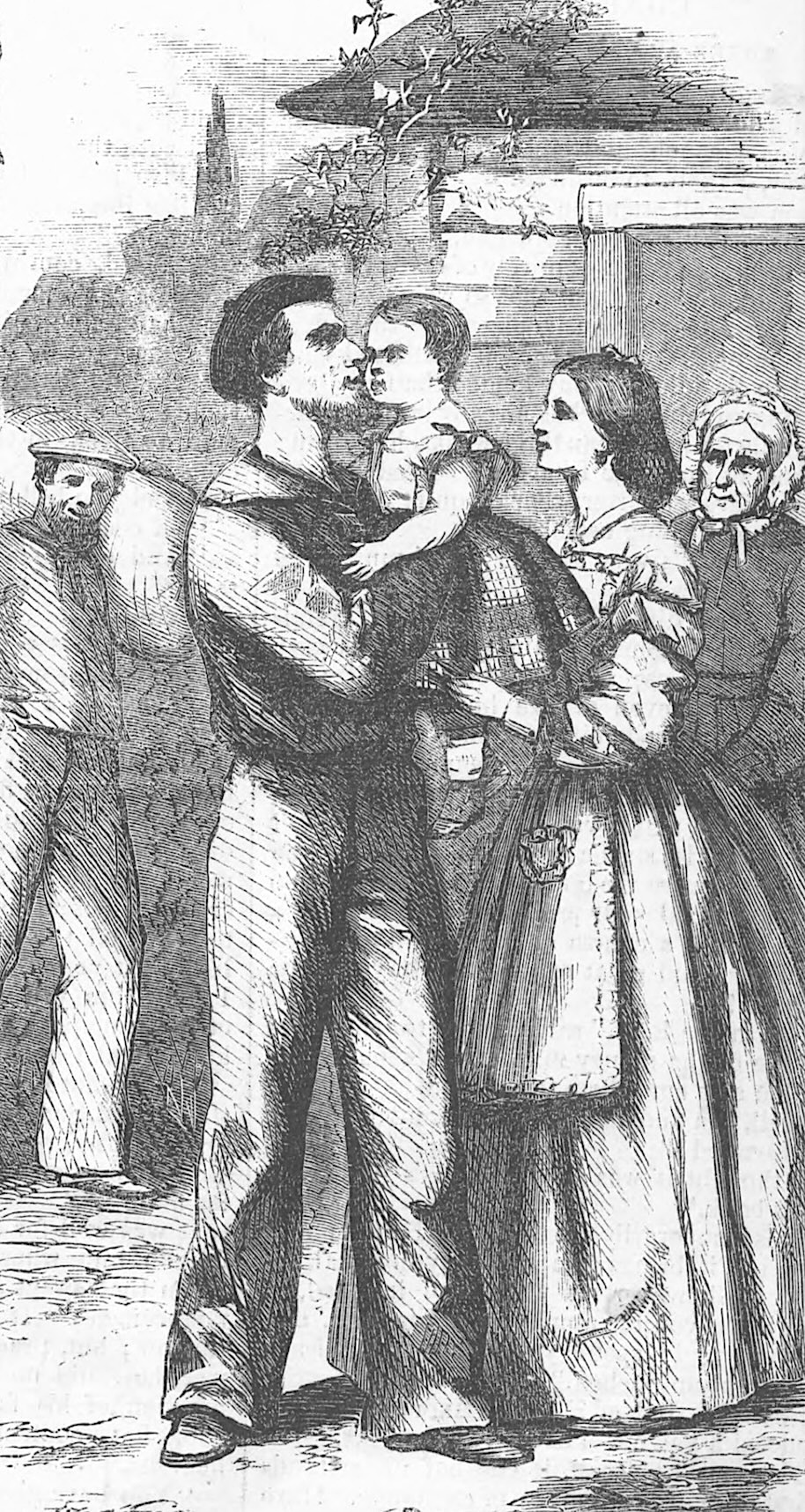 Harper's Weekly
Harper’s Weekly published this depiction of a Union sailor returning home to his family in 1865.
Sarah Handley-Cousins: That’s a great question, and I think this is where it gets really complicated, because today, a soldier coming home, we have language to make sense of the experience they’re having. And we have networks of care. There is still crises in mental health today, right? I don’t mean to make it sound as though we’ve got everything solved. But we at least have a network around us where we know where we can get that help, that PTSD and sort of war-related psychiatric problems are understood enough that there are, for families, for friends, whatever, there are chains that you can go through to try to get that person assistance. And there’s language that we can use to help us to make sense of what they’re going through. That didn’t really exist after the Civil War. And so what language did people use to describe what they were experiencing themselves or seeing their soldier, their loved one experience? Very little. It doesn’t have a name. Even if you think of after World War I, or during World War I even, we have shell shock, this concept of shell shock. There isn’t a singular diagnosis that we can associate with the Civil War that helps people to put this into a framework. And so it has to get filtered through what people at the time understood about mental illness. So when I go through, say, patient records at an institution, I am not seeing a specific diagnosis in those patient records that says something akin to post-traumatic stress disorder, something that’s specific to a person who has had a traumatic experience and is having a psychiatric response to that.
Instead, they’re going to get labeled with the same labels that every other person who would be institutionalized. It’d be mania, melancholia, these kind of big bins that they put people into. I think I’ve only found one or two that used the term “war excitement,” a phrase that I’ve seen in patient records. Chamberlain, actually, after the Battle of Gettysburg, gets a furlough for a couple weeks, and that’s for “nervous exhaustion.” Another thing that we could interpret as something PTSD-like, right? Some kind of traumatic response. But for the most part, people are talking more about what they’re seeing in the soldier. A soldier who is not reintegrating into the family, can’t hold down a job, is drinking a lot, is self-medicating in other ways, is struggling. So we see more of the symptoms that help us to put it into that kind of framework, and families absolutely did connect that to the war. The families are making those connections. Doctors are making those connections. “I believe that this person was perfectly healthy until they were wounded. This person was perfectly healthy, had no problems with, quote-unquote, ‘insanity,’ until they were held prisoner in Andersonville,” or whatever it was. But there isn’t a single diagnosis.
Just briefly, I will add, there are two specific wartime mental illnesses that get to the level of becoming a diagnosis, and that is “soldier’s heart” and “nostalgia.” Soldier’s heart is really intriguing to people. They’re really fascinated by it. It’s understood as a cardiac problem. I think today we might think of it as a kind of anxiety. How you have a lot of kind of like cardiac symptoms when you’re having like a panic attack, say. But it’s really limited. I’ve never seen a soldier diagnosed with soldier’s heart ever, in any of my research. So it’s really more specific to one particular doctor who was interested in this thing. And then nostalgia is specific to the war, so you only were diagnosed with nostalgia while you were in camp. No one’s diagnosed with it after the war that I’m aware of. I’ve also never seen that. But nostalgia was a kind of mental illness that you could experience during the war that essentially was pathological homesickness, like a real desire to go home and be with your family, an inability to cope. But those don’t seem to translate to a larger extent or after the war.
John Heckman: How did gender shape this psychological distress when you’re naming it or when it’s being seen? I’m thinking of the ways in which some soldiers saw it as this was the manly thing to do, was to go off to war. And some women, obviously in that era and beyond, thought, “Yes, this is what a man’s duty is, and you’re supposed to ingest all of this trauma and continue as if nothing occurred.” Does that shape what was going on in gender in the 19th century in any way?
Sarah Handley-Cousins: Absolutely, yeah. All of this is very much shaped by gender. War trauma comes with an emotionality, a sense of weakness that are all associated with women, with femininity. Even mental illness in general, especially emotive, melancholic mental illness, is very much coded as female. And if you think, too, about the fact that Civil War soldiers are really, especially at the end of the war, and especially in the North, I think, they are the victors of the Union. They are the best of the best. They are the most masculine. They have done this patriotic duty. How could the most masculine people in the United States also be weak? And so it causes this real kind of cognitive dissonance for people. It just does not seem to compute. And so that’s one reason why I say that some family members and doctors do specifically point to the war experience to explain why a soldier might be struggling after the war by saying they were the perfect man. They were doing their duty. They were courageous, all of this stuff. They were a war hero in some way. And now, one of the phrases that you see over and over again, they are a wreck. They are a wreck of their former self. They are a wreck of humanity. And so there has to be an explanation for that for some people. We have to be able to point to a cause, and that cause, the obvious cause to many people, is the war. There was something about the war that caused that. But that creates issues, too, because real men are supposed to be able to do that. They’re supposed to be able to serve in combat and have no issues.
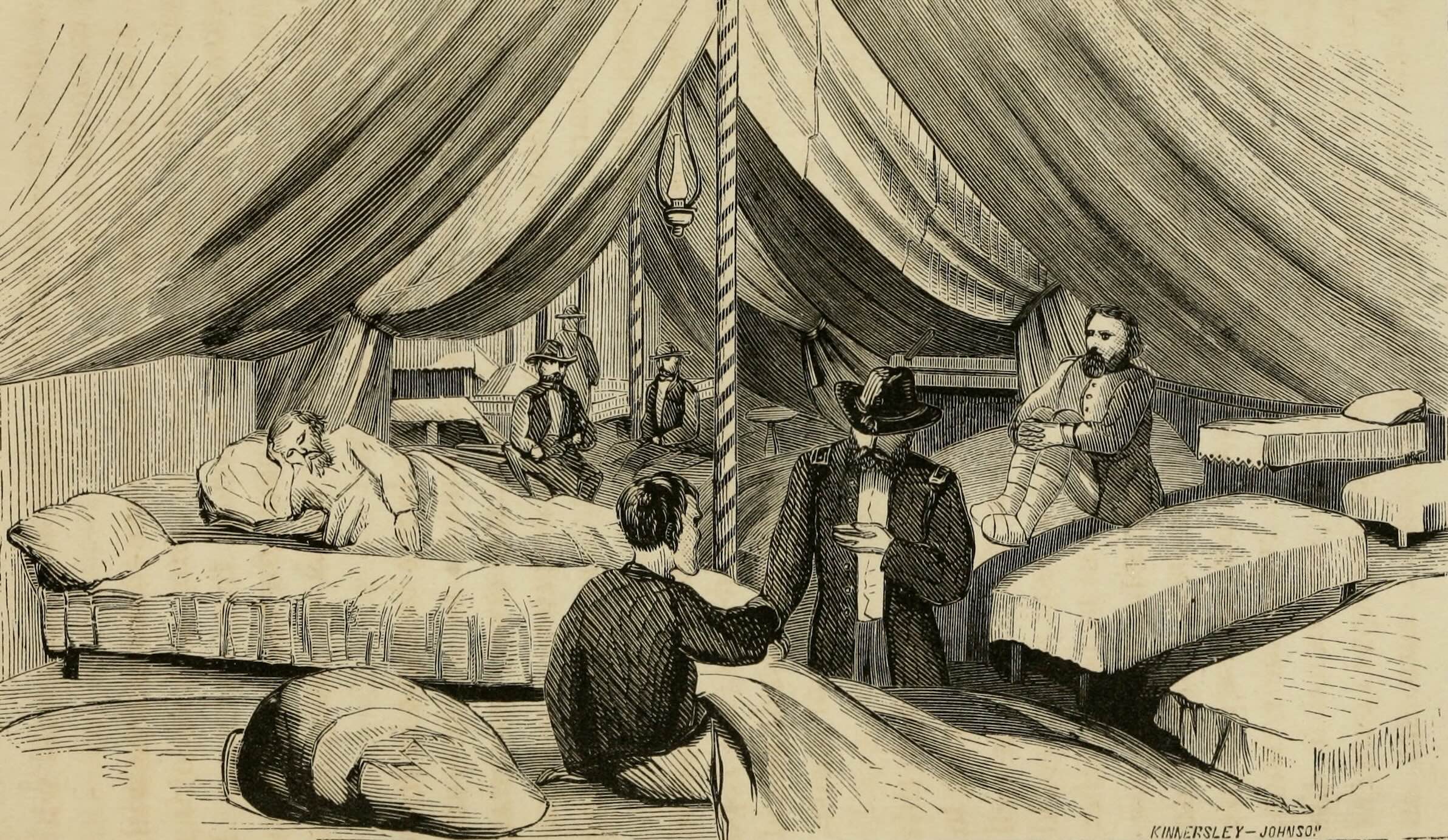 The Story of Aunt Becky's Army-Life (1867)
A postwar illustration depicts a military doctor visiting soldier-patients.
So, for individual soldiers, this means that many of them are unwilling to really grapple with what it is that they’re experiencing. As a historian, that makes things really challenging because that means they didn’t write anything down. There aren’t records. It means that I can only access some of this stuff when things got as bad as they could possibly get and they were institutionalized. So I don’t often get to see how things progressed before that point, because soldiers were really reluctant to admit to struggling. I think one of the other ways that we see this is with what I just mentioned, nostalgia is a good way of kind of accessing this too, because it’s during the war itself. And there’s at least one surgeon that comes up with a cure for nostalgia that’s detailed in The Medical and Surgical History of the War of the Rebellion after the war. And his cure for nostalgia is essentially to make the men suffering as masculine as possible. So they have to drill. He keeps them drilling constantly. They have to be extremely physically active. They have to do all of these things. And his theory is that by re-masculinizing these emasculated men, it will cure them of this mental illness because good soldiers and good men do not experience this. It’s actually caused by a kind of pathological emasculation. So gender is very much tied up into all of this stuff.
John Heckman: Personally, I think it’s folly to just say that only soldiers could experience war trauma or trauma in general from war. And so civilians obviously can, and this war obviously touches civilians in numerous ways, whether it’s a loss of a loved one or even violence around their own home places, loss of their homes, etc.
Sarah Handley-Cousins: Yeah.
John Heckman: Was there any comparable framework for naming what the war did to them or is this just seen as kind of the cost of war and everyone just said, “Okay, we’ll just move on from that”?
Sarah Handley-Cousins: Yeah. That’s a fantastic question. It’s one that I don’t know that I have a fabulous answer for. I would absolutely direct listeners to Diane Miller Sommerville’s work on suicide during and after the war in the South, and this is something that she had to grapple with there. Because it is not just soldiers who are dealing with the war trauma. It’s also formerly enslaved refugees. It’s women. One thing that I would love to see more of is with children too. Like, how does, in terms of coping, how does the war affect children in that way? And Diane’s work gets into all those questions, I think, a lot more.
One really powerful way that I did see this, though, was with families, because I got to see letters from family members writing to doctors and trying to understand, asking doctors to help them to understand what had happened to their loved one. And in that process they are sometimes working through their own trauma. So a really powerful one that I found came from the adult son of a man. He’d been quite young when the war was happening, he was maybe four or five. His father had gone off to fight and had never come home, because then he had been transferred to St. Elizabeths Hospital for insane soldiers in Washington, D.C. Now he’s an adult. He’s writing to the doctor at that institution, and is just asking basic questions about his dad. Is his hair gray? Does he talk about us? Does he know that we exist? And that gives you a real glimpse into almost these ripples of trauma out. This was a guy from Indiana. He wasn’t on a front line. He didn’t have his house burned in Sherman’s March or something like that. The war didn’t touch him in this immediate way. But we still see these ripples of trauma caused by the war decades later and states away from where the fighting is happening.
John Heckman: When a historian finds records of psychological suffering during this era, what do those sources usually look like, Sarah? Are we relying on what the soldiers are actually saying themselves or former soldiers are saying, or is it mostly how society’s describing these men and their service?
Sarah Handley-Cousins: It’s challenging because the sources, I think Civil War historians are very lucky because we have a lot of sources. We have all sorts of sources to learn about the Civil War, and many of my colleagues use a lot of letters and diaries and things like that to get right into the minds of soldiers. And that’s really challenging when mental illness was as stigmatized as it was. Soldiers are not recording that stuff. And so the way that I accessed it was often through the writing of people around them rather than themselves. So I had to largely rely on, as my kind of core source base, patient case files from institutions. So I used records from St. Elizabeths Hospital, which is a federal institution in Washington, D.C., but then also the Utica Asylum and the Willard Asylum in New York State. And those asylums, doctors took records of all their patients. So it would say, especially at Utica, they kept really specific sort of intake notes. “This is where this person came from. This is why they were brought to us. This is what they’re dealing with.” These kind of long patient histories. Those are immensely revealing because in those you see the doctors trying to make some attempt at an early understanding of what has caused this problem. So you’re getting information through the doctor.
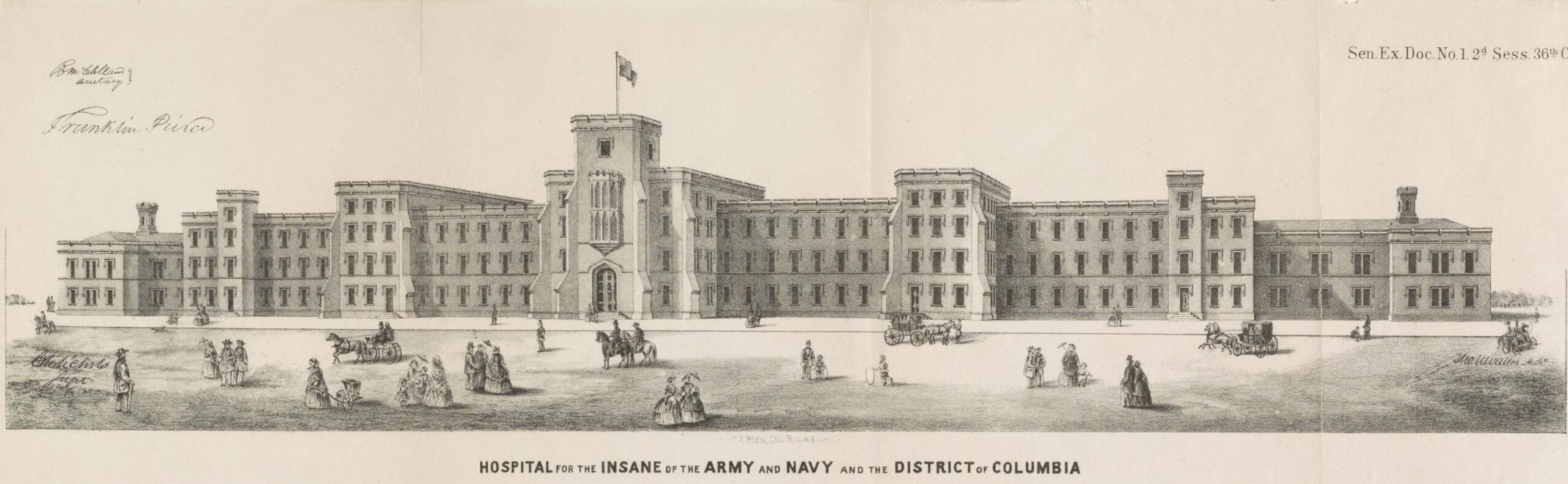 Library of Congress
St. Elizabeths Hospital, Washington, D.C.
St. Elizabeths’ records are different because those doctors there did not really take any patient case files, or very few. Instead, it’s more of a residential facility. Soldiers are getting treatment, but there’s no attempt to cure them. So they don’t really care as much what their diagnosis is. They just live there. And those case files are full of letters from their family members. And so their family members are writing to the doctor and asking what’s going on, and then the doctor is writing back and explaining what the situation is. And in some very lucky cases, a soldier themself would try to write out of the institution, and then often that letter was confiscated and put in their case file. So then you can see what the soldier is saying themselves, and that was immensely helpful. But it is a way where you’re coming at it from kind of these authority figures around them, these doctors, and trying to access their own voices through these institutional records.
John Heckman: Based on how you went into this research and what it was like on the other side of that research after you had finished the book and had moved on from that just a little bit, we start thinking about how we researched the particular thing, whether it’s a book, an article, etc. What advice would you give to researchers who wish to understand this topic at a deeper level? Because I feel that we are all students of history, and we’re all learning also how to research. How would you say to go about doing that for someone who just wants to get involved in this kind of topic and learn something new?
Sarah Handley-Cousins: I think that this is a challenging one. I think this is a challenging subject to take up without being willing to devote some really annoying bureaucratic time to it. Because a lot of these patient case files that I was just describing are restricted, and archives will not allow you to just roll up, like you could at the National Archives. Many Civil War historians, both professional and non-professional historians, can just go to the National Archives and read stuff. And patient case files at many institutions are not that way. They’re restricted, and so you have to go through several—it’s not even worth explaining all the different processes because it’s different per institution and per state. So it is just truly a crapshoot. But that makes it challenging because some of those places won’t even let you look at those records unless you can show that you are a professional historian. They would then deem you a qualified researcher, and then you have to go through an institutional review board. And that’s just challenging to do for the average researcher.
But there are really cool ways of getting at this, I think, outside of that. The St. Elizabeths Hospital records are completely unrestricted at the National Archives. Anyone can go and look through them, and they are incredibly rich. Incredibly rich. I spent a lot of time researching in those records, and I could have spent a lot more time because there is a lot there. And that institution is fascinating because it is primarily built to provide care for soldiers, but then it also provides care for residents of Washington, D.C., and for people of color in Washington, D.C. It’s not necessarily integrated, but it does provide care for all these different groups. And so, there’s a lot in that. There’s just a lot of material there. The other thing is, one of those perennial source bases that I feel like we all end up getting dragged into, is the pensions. Pensions are full of this stuff, too. It is a little challenging when it comes specifically to mental health records, again, because soldiers are reluctant to write about it, to talk about it. But you have widows writing and explaining what’s going on with their family members. You have quote unquote, “orphans.” And you do have some soldiers saying, “This is a symptom that I picked up during the war, and therefore I’m entitled to a pension for it.” Oftentimes they’re unsuccessful. The pension bureau doesn’t give them a pension for it. But from the historian’s perspective, you still have that source where that soldier is explaining their experience.
So anyone can access those. Go to the National Archives and do that reading. And then the final thing I’ll say is I think a lot of disability history is hiding in plain sight. I think that we can do a lot of rereading of sources that we already have, things that you’ve already read, and find disability in it. I’ll give you one example. I was just rereading for a project this summer, Miss Ravenel’s Conversion from Secession to Loyalty. It’s a novel that many people are familiar with. A lot of that book is about Civil War medicine and disease, and how we understand camp disease and what that means. How is, like, a camp disease different than getting an honorable wound, and what does that mean for masculinity? There’s a lot of that in that book that’s hiding in plain sight. So I think that there’s a lot more that we can find out from sources that we think we know really well.
About the Guest
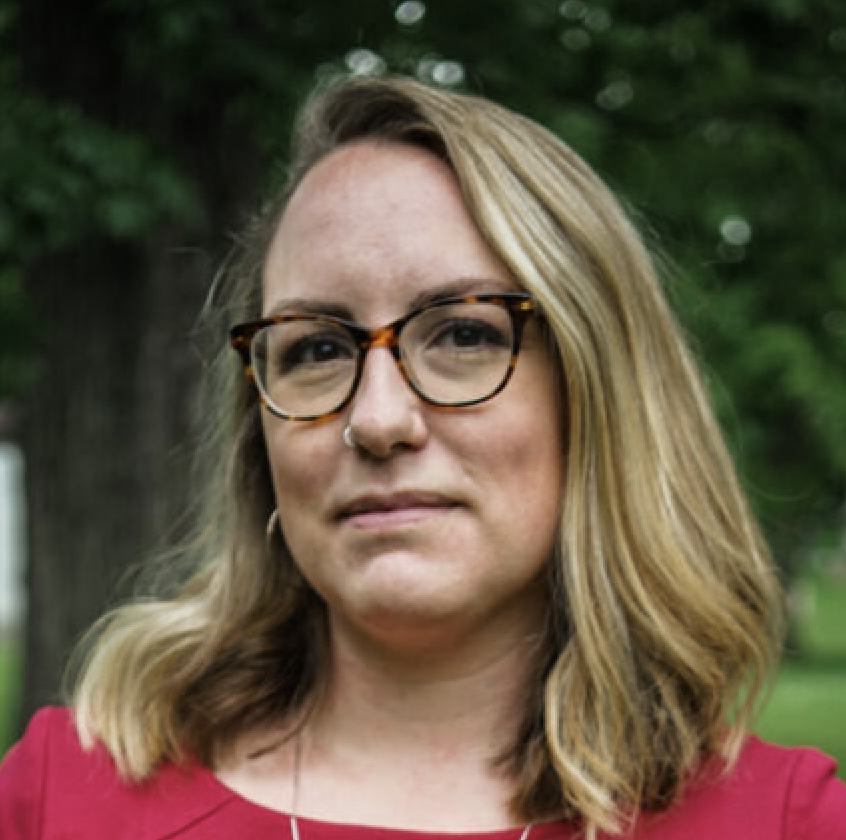 Sarah Handley-Cousins is an Associate Teaching Professor in the Department of History at the University of Buffalo and author of Bodies in Blue: Disability in the Civil War North (2019).
Additional Resources
-
- Diane Miller Sommerville, Aberration of Mind: Suicide and Suffering in the Civil War–Era South (2018)
- Joshua L. Chamberlain Museum
- The Medical and Surgical History of the War of the Rebellion (1870–1888)
- John W. De Forest, Miss Ravenel’s Conversion from Secession to Loyalty (1867)
Sponsored By